Likes
Comments
Share
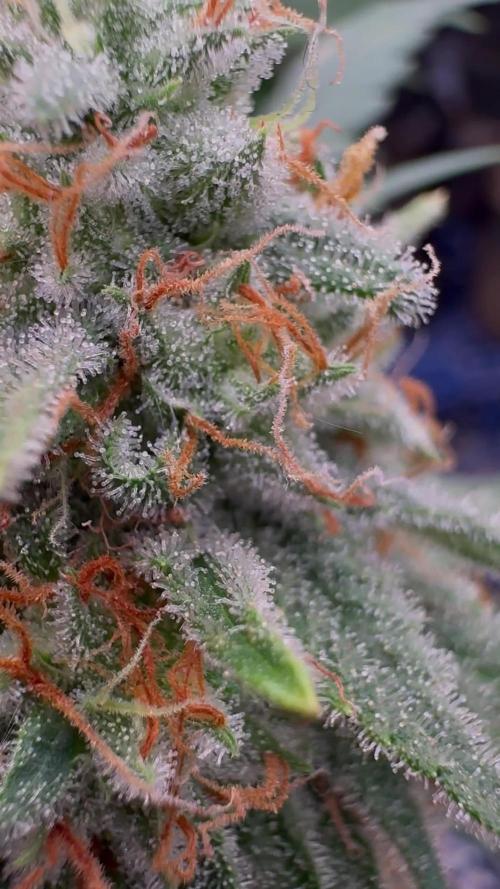
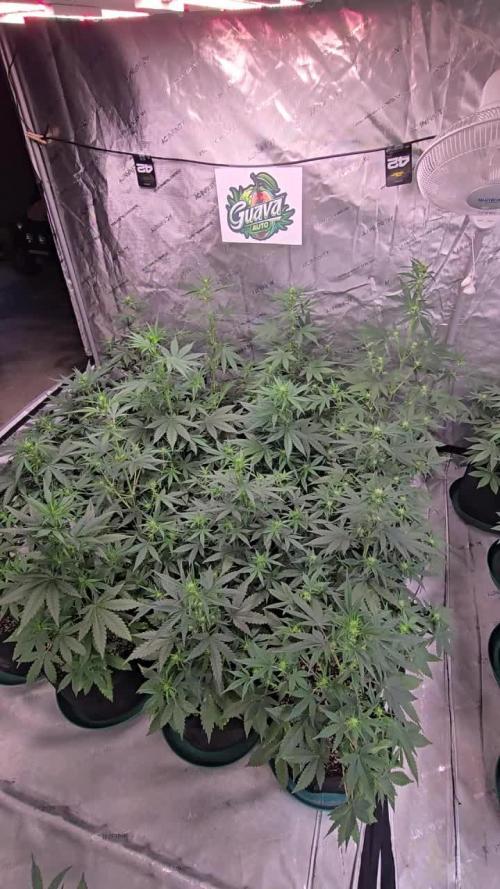
The plants are looking amazing. Iam happy that all effort i put into these plants got rewarded. The plants are from 2 mother plants some of them got very purpleish / black leafs some very dense buds all have purple touch in the buds. The sugar amount is insane they all look very beautiful altough the buds are not the biggest. Its around 1-2 weeks left till harvest . Today ive watered with clear rainwater to flush.
Likes
21
Share
@3lementa1
Follow
Lots of pistils coming out. It looks like kind of a mix of its parent strains, which makes sense. I was going to do some final defoliation this week, but the colas are all pretty well spaced out and they're growing so fast you can practically see it with the naked eye. Idk if the added stress from further defoliating the bottom will be worthwhile right now. Dec 26. I went ahead with the defoliation. This always happens, it's just scary to cut pieces off your beautiful babies when they're thriving. But this is the perfect time to do it, when they're healthy and growing strong. Whether or not it helps yield, it will still help with airflow and most importantly, it will allow me to see into the plant to catch any problems before its too late. Several of the leaves I took off were yellowing already. It was hard to take the healthy ones that had been there a long time, but it's for the best. I didn't go overboard, and I can see a lot more of the bud sites now. Things are looking great. I can't get good lighting for photos unfortunately.
Likes
10
Share
Que pasa familia, vamos con la cosecha de estas Papaya Sherbet de FastBuds. Por dónde empezar, las flores son bien compactas y van repletas de resina, tienen tonos verdes bastante bonitos, y tiene unos aromas afrutados bastante marcados con toques cremosos. Es muy sencilla de cultivar, es de ciclo de 2 meses y medio, pero bien agradecida. Hasta aquí todo, Buenos humos 💨💨💨
Likes
39
Share
@SamDo
Follow
Slt, déjà la fin de la semaine 5. Les plantes ont très bien récupérées de leur topping et de leur défoliation. Les plantes semblent être en bonne santé. Je viens juste de refaire une défoliation et du LST, pour avoir la structure voulu et donner toute l’énergie de la plante pour les tiges principales, en espérant que cela soit profitable aux plantes. J’espère ne pas m’être trompé.🙏 En photos et vidéos je montre avant et après la défoliation et le LST, et le fonctionnement du sytème d’irrigation. A la semaine prochaine... Happy grow😎 Ps: le rendu des couleurs sur les vidéos et photos peu être bizarre à cause de la LED.
Likes
10
Share
Trainwreck is now an established strain in the history of cannabis, now we can see how it turns out on the automatic one from Zamnesia. Remember that we are growing a plant worked with the techniques indicated and another left to grow without pruning to preserve its speed; in the previous/next diary you will find the other plant of the same variety. In this diary we find worked with the Main Lining. Topping at the second internode to create the MainFold, growing shoots worked parallel to the ground for another three internodes and then topped again. We have removed the branches of 1 internode on each side and topped the remaining two branches on each side. Slow down the use of nitrogen during this technique, you may not need everything recommended by the manufacturers. So, if the leaves become too dark or, worse, the tips of the leaves arch downwards and the leaf becomes "crunchy", it is time to lighten or stop the basic fertilizer. She is a bit dark and I slowed down by giving only additives. Comparison is the salt of experience, so the plant in the other diary will be treated very differently, go see it to compare. We started the Plagron fertilization program, we are in 100% organic configuration, the soil is recycled Promix + 1/3 fresh soil + 10% Perlite + RQS Mycorrhizae Mix (4 g in the mix, 1 g under the small fiber pot). We fertilize with: 1 ml/l Power Roots - 1 ml/l Pure Zym - 1 ml/l Sugar Royal - 3 ml/l Alga Grow We sprayed 3 ml/l Vita Race foliar fertilizer once a week. https://plagron.com/it We always have the excellent RQS mycorrhizae flowing in the soil. https://www.zamnesia.io/it/5778-mix-micorrize-easy-roots.html Take a taste of this strain, it's a cross of legendary strains https://www.zamnesia.io/en/11055-zamnesia-seeds-trainwreck-automatic.html Short Description Zamnesia // Trainwreck Automatic is the autoflowering descendant of the popular cannabis strain Trainwreck (a stunning cross of Thai and Mexican landraces). Much loved for its 70% sativa genetics and sativa-like effects, Trainwreck Automatic is as easy to grow as an indica (even in cold climates). This autoflowering strain goes from germination to harvest in 11–12 weeks, meaning you'll be harvesting sativa buds in no time. It prefers warmer climates, but thanks to its short life cycle, it can also be grown in more northern areas (provided it is germinated a few weeks early when growing outdoors) Trainwreck Auto offers delicious lemon and lime flavors that enhance the classic sativa profile of its parents. Furthermore, thanks to the spicy and earthy notes, the overall experience will be even more intense, regardless of whether you smoke or vape it. In terms of its effects, Trainwreck Auto is euphoric, uplifting and energizing. Fueled by a THC content of around 21%, this strain is perfect for socializing and best suited to smokers who prefer to stay active after consuming cannabis, rather than lazing around doing nothing. The whole world of cultivation and much more is from Zamnesia: just take a look at the site and you will find "all the best that nature has to offer" in various shapes and colors. -- // www.zamnesia.com
Likes
8
Share
Start week 6! Looking nice and starting to fatten out! Can’t wait for harvest time! PATIENCE! Very happy so far with how they are all doing!
Likes
23
Share
Likes
15
Share
@Mqxle
Follow
Update day 65: Exactly one week after switching to 12/12 and they have stretched by about 20cm. The stretch will probably continue for another week and then the real flowering will begin. Both are also developing identically in the stretch. The plants are slowly consuming more and more water and the metabolism will change. By the way, the fan was in the same place. You can therefore use it as a good reference. At the end of the stretch, I plan to remove the side branches that I didn't remove in the last few weeks of the veg. This will leave only the actual main branches from the mainlining. Update day 67: Nothing to say Update day 69: It's day 11 since 12/12h and the stretch has almost completely stopped. The #2 also shows the first pistils. That's why I decided to trim the plant today, as you can see in the pictures. I removed the side branches except for those at the top of a branch or if they have developed extremely well. I also removed a few leaves. I hope that this will allow the lower branches to catch up a little. Interestingly, #2 has developed even better with stronger shoots than #1. I'm not a fan of major defoliation so just a little. Maybe I'll remove more in the future.
Likes
16
Share
@DrLaggis
Follow
🌱 Day 57 - Start of the Second-to-Last Flowering Week 🌱 Hello, Grow Friends! Today marks the start of the second-to-last flowering week—Week 9 overall, and Week 5 of flowering. 🌿 I’m getting more and more excited as my first grow nears its end. As I approach harvest, I’ve decided, based on my research, to stop feeding nutrients and stick to just pH-adjusted water for the final two weeks. 💧⚖️ Watering Routine: I’ll keep the same watering schedule—1 liter every two days, which is about 10% of the pot volume. 🌱💧 This should be enough to flush out the remaining nutrients, ensuring a clean finish for the plant. Temperature & Humidity: The temperature remains stable between 19-23°C, which I believe is ideal for this stage of the grow. 🌡️🍂 No more high temperatures to worry about! The humidity is fluctuating between 45-58%, and I’m keeping a close eye on it to stay below 60%. 💧🔍 Everything seems on track for now. 🌿 Plant Health & Growth: The plant still looks very healthy overall. 🌱💪 However, I’ve noticed that in the past three days, there haven’t been any visible changes in the size of the buds. 🤔 It could just be that I’m not seeing the growth clearly, but the only noticeable change is the daily opening of new flower calyxes. 🌸 Harvest Preparation: I’m already getting my equipment ready for drying after harvest. 🛠️ Once it’s time to cut, I’ll be hanging the plant to dry for the first 10 days. 🌿✂️ I want to make sure everything is set for a smooth drying process. Stay tuned for more updates, and as always, daily photos of the plant will be posted! 📸🌱 Day 62 - Last-Minute Decisions with Urgent Changes 🌱 Hello, my grow friends! Due to the trichome pictures I took on Day 61—which you can check out too—I’ve made an unexpected decision to harvest my plant a bit earlier than planned and make some changes. 🌿 Watering and Flushing: The last time I watered was on Day 61, using all the usual nutrients at the doses I mentioned before. But after seeing the trichome pictures, I decided to start a light flush today. I gave the plant 4 liters of plain water to begin flushing and will now only water lightly on Day 64. After that, no more water until harvest on Day 67. 🌑 Dark Period: From Day 66 to Day 67, I plan to keep the plant in darkness. I’m not entirely sure if this will make a difference, but I’m curious to try it out. ✂️ Defoliation: The plant is doing well, and I’ve done a thorough defoliation. I removed all leaves that aren’t sugar leaves or directly attached to the buds to improve air circulation and reduce the risk of mold as I approach the end of the grow. 💭 Trimming Decisions: I’m still undecided about whether to do a wet trim or a dry trim. Based on what I’ve read, especially regarding the yield from trim, I’m leaning towards dry trimming, as it might give me more usable trim material. I can feel the plant entering its final phase, and I’m getting really excited about the results and what the next few days will bring. Remember, I post a video update every day. If you have any tips or suggestions, I’d love to hear them! Until next time! 🌱
Likes
18
Share
@Dunk_Junk
Follow
Nice flowering growth this week! She is very bushy!! Hopefully she makes plenty of nice buds!
Likes
19
Share
When you open the tent now,there are all Kinds of terps and colors that coming towards you. Just absolutely beautyful! 1.Rainbow Melon 2.Papaya Sherbert 3.Gorilla Melon
Likes
1
Share
@tterpy
Follow
End of week 2 (day 14) 6/2/26
Likes
31
Share
@Tackle123
Follow
She has stretched 30cm in a week!!! I don’t know if this is the moment where i should feel happy about or not LOL. But my grow space is kinda limited and she has stretch so much it made my SCroG looked like it is the base of the plant. I bought a dehumidifier cuz i reckon the grow room was too humid for the plant during flowering phase but unfortunately i think the room is too big for the dehumidifier to work efficiently. The humidity is around 55-60 % which i think is a little bit too high but there is no better options . For the next grow i will have to invest on a new grow tent since growing in a room is kinda hard to manipulate the environment . By this week i cannot turn off my AC unit at all since the smell is very strong almost like i’m in a supermarket full of vegs .XD I put turn my AC and dehumidifier on full time and let’s hope that she stops the stretch before i run out of room!!
Likes
3
Share
@BruWeed
Follow
Se secó bastante rápido. En 5 dias. Y metí todo en un frasco grande para que empiecen a curarse. Todo perfecto.
Likes
1
Share
Woche 5 Die Ladys wurden mittlerweile entlaubt und die gelben Blätter entfernt. Ich achte jetzt mehr drauf den weniger Wasser zu geben, scheinbar ist die Verdunstung nicht so hoch.
Likes
6
Share
Started lst this week that's about it just cruzing. I do hate pics maybe it's my phone but they much greener in person.
Likes
17
Share
@Island
Follow
Week 8 - Dead line is coming, starting week 8 of flowering. The routine is maintained, feeding only with water. I think Black Jack will pass 10 weeks of flowering.
Likes
128
Share
💩Holy Crap We Are Back At It And Loving It💩 Growmies we are at DAY 35 and she's just killing💀it👌 👉Added straws within the Tiny pot to help watering in week 4 👈 So I'm starting to see she needs watering every single day and now need nutrients 🙃 Lights being readjusted and chart updated .........👍rain water to be used entire growth👈 👉I used NutriNPK for nutrients for my grows and welcome anyone to give them a try .👈 👉 www.nutrinpk.com 👈 NutriNPK Cal MAG 14-0-14 NutriNPK Grow 28-14-14 NutriNPK Bloom 8-20-30 NutriNPK Bloom Booster 0-52-34 I GOT MULTIPLE DIARIES ON THE GO 😱 please check them out 😎 👉THANKS FOR TAKING THE TIME TO GO OVER MY DIARIES 👈
Likes
2
Share
Topped once, turned off IR @ nights, slowed vertical growth back down, and took off both of the very lowest internodes on each plant. Eisenia fetida Stratiolaelaps scimitus Armadillidium vulgare Red wigglers (Eisenia fetida) are highly beneficial. They are considered an ideal choice for "no-till" or container-based organic growing because they live in the upper layers of soil, feeding on organic mulch rather than the plant's root system. Red wigglers accelerate the breakdown of organic amendments and produce high-quality, nutrient-dense worm castings directly in the root zone. Clover is another exceptional component of an organic rhizosphere, offering a sustainable, self-sustaining alternative to synthetic nitrogen fertilizers produced via the energy-intensive Haber-Bosch process. By forming a symbiotic relationship with Rhizobia bacteria, clover converts atmospheric nitrogen N2 into ammonium NH4, providing a steady, slow-release nutrient source that enhances soil health and reduces environmental impacts. Red clover offers superior nitrogen fixation and biomass production compared to white or yellow clover, making it the premier choice for maximum soil vitality, particularly for improving soil structure and providing a high-volume nitrogen credit for subsequent crops. If it is fully functional and efficient soil, the rhizophagy cycle is superior long-term than any synthetic delivery when it comes to preventing deficiencies, not because it's "better," per se. The medium will require a very high CEC to make it to harvest without re-fertilization. The rhizosphere acts as a dynamic, interactive exchange where plants and soil microbes trade resources based on immediate needs. When a plant lacks a specific nutrient, it changes its physiology and releases specialized chemical cocktails—root exudates—into the surrounding soil. These exudates, which include sugars, amino acids, and organic acids, serve as a "shopping list" to attract specific microorganisms, which in turn return higher levels of desired nutrients. There is nothing in comparison when using synthetic delivery, which can cause plants to stop producing exudates, effectively "starving" the beneficial soil life, over time turning the soil barren and void of microbial life. Responsible use, applying the right amount at the right time, can minimize these negative effects. Relying solely on synthetic fertilizers without replenishing organic matter is what typically leads to exhausted soil. The use of synthetic fertilizers can utilize the Cation Exchange Capacity (CEC) of the soil, but without a robust rhizosphere and active microorganisms, the efficiency of this process is significantly reduced. This makes synthetic growing more difficult to prevent deficiencies overall compared to an efficient organic living soil with a robust rhizophagy cycle, as there is no "one size, fits all" when it comes to different nutrient profiles of strains/genetics, making it trickier to "guess" and prevent creeping deficiencies. CEC does not contribute towards EC. Add more CEC using biochar, problem solved. If you keep pH between 6.3 and 6.7, hydrogen is exudated to cycle the medium's CEC for its needs. Keeping the pH between 6.3 and 6.7 creates an environment where plants release H+ to displace positively charged nutrients (like Ca2+, Mg2+, K+ held on soil particles or within artificial media this cycle through nutrients via the medium's Cation Exchange Capacity (CEC) Microorganisms generate a stable potential of approximately 0.5 V EC. The rhizosphere creates its own food, similarly to chelation, using 1000's of varying combinations to create its own food. Start to finish, just add water. Eventually, more materials will need to be added at the beginning of each new grow, but very attainable to go from seed to harvest without ever fertilizing. ATP is important when it comes to biomass accumulation. Cellular root respiration and cellular respiration are essentially the same biological process, the breakdown of glucose to create usable energy (ATP) in the presence of oxygen, just taking place in different parts of the plant. Synthetic (salt-based) grows have significantly lower levels of total rhizosphere respiration, often referred to as root-zone activity, compared to organic living soil grows. While the plant roots themselves may respire in both systems, the surrounding soil ecosystem in a living soil setup is vastly more active, teeming with bacteria, fungi, and beneficial microorganisms. 2 pools of ATP, it won't double in growth buuuut, but improving root respiration by ensuring high oxygen in the soil is crucial. Good aeration ensures roots can fully utilize glucose to generate the ATP necessary for nutrient uptake, leading to healthier and more productive plants, even if growth isn't exactly doubled. The ATP created using root respiration is dedicated to rootzone growth; the ATP created using regular cellular respiration in a synthetic system would have to dedicate a lot of ATP to the roots when there is little or no root respiration. It's true that there is less of an initial ATP cost in breakdown when nutrients are already in their final form (synthetic), but you lose a solid chunk of ATP when the entire plant is reliant on cellular respiration alone; a large portion of ATP is dedicated to root zones for "forced" nutrient uptake rather than traded. Making it overall less efficient, even if the initial cost of breakdown is higher. Not sure if I butchered that but one can hope It makes sense. Oxygen is of critical importance when growing in living soil compared to synthetic soil because it supports the metabolic needs of the microbial, fungal, and insect ecosystem, rather than just the root respiration required by the plant itself. While synthetic grows can survive in lower-oxygen environments with precise mineral feeding, living soil systems rely on aerobic microbes to decompose organic matter (microbial mineralization) to create plant-available nutrients, which is an oxygen-intensive process. While a specific fair percentage is difficult to guess, my experience points to a massive, compound difference between the two methods and the amount of oxygen required. All the ATP spared is used on more biomass, not only that, but the extra root respiration can achieve a much higher CO2 compensation point naturally than you could with synthetic and atmospheric CO2 alone. As a plant grows faster and increases in size, its demand for nutrients to support that growth increases, requiring a higher rate of nutrient uptake. As plants enter phases of rapid vegetative/floral growth, their metabolic demand for nutrients increases exponentially. Without a robust buffer zone—whether in the soil (cation exchange capacity) or in a hydroponic reservoir—deficiencies will occur rapidly because the instantaneous demand for specific nutrients can quickly exceed the rate of supply. A growing body of evidence suggests that organic living soil provides superior long-term soil health and environmental benefits compared to synthetic fertilizers, which are often criticized for promoting a cycle of dependency and degradation. While synthetic fertilizers offer short-term convenience and high yields, they often come at the expense of long-term soil health, sustainability, and increased corporate control over growers/ farmers. Organic living soil, while slower and requiring more care to establish, creates a sustainable, resilient, and, ultimately, more fertile environment. We don't really grow; we facilitate energy conversions, and energy is just numbers. Because the universe works the same way today as it did yesterday, there is a single, fundamental mathematical quantity that remains constant. We call this quantity energy. You cannot put "energy" under a microscope. You observe matter and forces (like heat, motion, or light), but energy is just a scalar number calculated to help predict how these things will change and interact. When an object falls, or when a battery powers your phone, matter shifts and changes form. Through it all, the universe ensures the "total score" of the numbers remains exactly the same. Once all water is removed, approximately 95% to 97% of a plant’s dry matter consists of carbon, oxygen, and hydrogen. These three elements form the structural backbone of all plants. NPK & all the rest 3-5%. Indigenous Amazonians created, or at least significantly enhanced, the fertile, dark soil known as Terra Preta de Índio (Portuguese for "Indian Black Earth") by incorporating biochar and other organic materials into the soil. This anthropogenic (human-made) soil technique, which dates back roughly 2,500 to 8,000 years, allowed ancient civilizations to flourish in regions with naturally poor, acidic, and nutrient-poor tropical soils.