


Likes
11
Share


@punktkomma
Follow
2x GZ und 1x BPP angesetzt 28.03.2024. PH 6.1 100ppm (50% Leitungswasser / 50% destilliertes Wasser) in Wattepads.
Wird mein erster richtiger Grow in der Legalität. Deutschland erlaubt 3 Pflanzen für den Eigenanbau.

Likes
15
Share


@Growbody
Follow
Tag 106: Die Cosmos F1 Automatic von Royal Queen Seeds ist eine der größeren Cannabispflanzen und hat die schönsten Farben im Growroom gehabt. Die Buds sind richtig dick und fett. Das Nassgewicht ist mit einer groben Küchenwaage gewogen und nicht sehr aussagekräftig. Das Trockengewicht läßt sich dann genauer ermitteln. Jetzt ist erstmal schonende Trocknung angesagt. 🥦 😎
Habt eine gute Zeit. ✋

Likes
19
Share


@Captensmokey
Follow
Het spijt me dat de info zegt 4 weken groei het heeft 3 weken gegroeid en zit nu een week in de bloei. Ik doe me best voor de wedstrijd van dutch passion. Want ik vindt mezelf een master grower in hart en nieren. Maar dat laat ik jullie wel gewoon zien werkt het best😉 jammer dat me kat een heeft opgegeten. Maar heb daarom extra zorg voor deze twee dames. Ze moet en zal me in de Top 3 bij dutch passion moeten brengen. 😁


Likes
79
Share


@Hou_Stone
Follow
I preferred to remove my net this week, to more easily access my plants and water them. I hope the branches will hold
I cut a lot of leaf this week. I hear different opinions that say it's beneficial others not... At least it will have the advantage of lowering the humidity.
---------------------------------------------------------------------------
- Water: tap water at 300 PPM, I add 0.7G of Hybrid powder and 0.3g of booster PK+ per liter to reach 950PPM and I adjust the PH to 5.8. I watered daily until water drained from the pot (to release nutrients from previous waterings) and I take a 3-4 day watering break to let it dry out before resuming a daily watering schedule.
-Daytime temperature: 22-26°C
-Night temperature: 20-24°C
-Humidity: 50-75% ( Too high but it's hard to lower it... I need advice please contact me if you have :) )
-Lamp: Mars Hydro FC3000. intensity 90% at 35cm from the top leaves
-Room: Mars Hydro 100x100x180cm
-Extractor: Mars hydro 402 CFM Max. power 3/10
-Substrate : 70% coco, 25% perlite, 5% vermiculite.
My instagram : https://www.instagram.com/p/CuMhQ_BsjRP/?utm_source=ig_web_copy_link&igshid=MzRlODBiNWFlZA==
Looking for MarsHydro equipment for your crop? 🔥
You can use my promo codes! 🙏😻
3% off with "houstone3" for: TS LED Grow Light, Tent, Ventilation
5% off with "houstone5" for: FC&FC-E&SP LED Grow Lights; Grow Tent Kits
https://www.mars-hydro.com/?acc=hou-stone

Likes
6
Share


@Xpie77
Follow
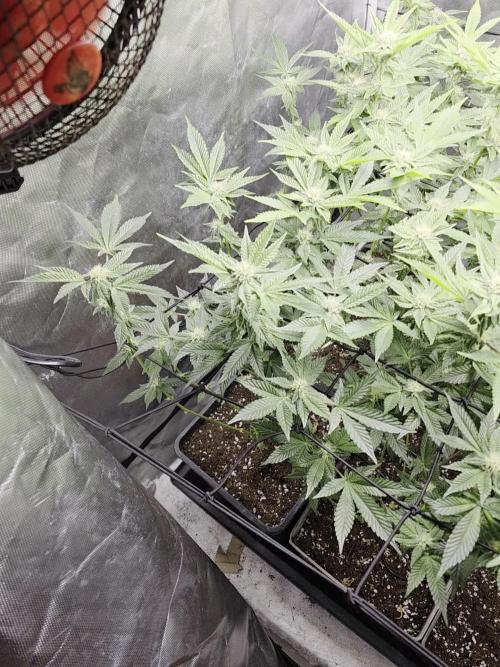
The Seriously Old School strain from Serious Seeds is a hybrid created by crossing two renowned cannabis strains: AK-47 and Warlock. AK-47 is a Sativa-dominant hybrid with a complex genetic heritage involving Colombian, Mexican, Thai, and Afghani strains, known for its potent effects and sweet, earthy aroma. Warlock, on the other hand, is an Indica-dominant strain derived from Afghani Skunk genetics, offering a relaxing experience with a fruity and spicy flavor profile.
This hybrid strain is feminized, meaning it produces only female plants, making it a reliable choice for growers. It has a flowering period of about 8–10 weeks and can be cultivated indoors or outdoors, offering moderate height and yielding dense, resin-rich buds. The combination of the AK-47’s uplifting effects with Warlock’s calming properties makes it a balanced strain that appeals to both recreational and medicinal users.
If you're interested in growing or learning more, you may explore resources at Serious Seeds or reputable seed retailers.



Likes
47
Share


@Ultraviolet
Follow
The cannabis strain Grape Guava can be a purple strain, depending on its specific phenotype and genetic makeup. While not all phenotypes of Grape Guava are purple, some variations, such as the Zatix Grape Guava, are noted for their striking purple appearance due to the genetic expression of anthocyanin pigments.
https://www.youtube.com/watch?v=cKdVmdoKJ5k
In a garden of green, Grape Guava gleams,
With its fruity aroma, enchanting dreams.
Clusters of grapes, guava's sweetness ignite,
A strain so divine, in purple and white.
Euphoria whispers, a lush fruity haze,
Grape Guava's embrace, a tranquil daze.
Off and away.@1400ppm. The increased CO2 allows plants to thrive at higher temperatures, which in turn necessitates higher humidity to maintain the ideal VPD for healthy growth and transpiration. 80F -5F = 75F LST with 70% RH = 0.72 kPa. Higher temperatures and humidity promote rapid growth, nutrient uptake, and photosynthesis while maintaining a lower stress level. Temperature influences the rate of enzymatic reactions involved in aerobic respiration. Enzymes, such as those involved in glycolysis, the Krebs cycle, and the electron transport chain, work most efficiently at an optimal temperature range. In low temperatures, enzymatic activity will slow down, thus reducing the rate of aerobic respiration. In high temperatures, enzymes can become denatured, thus impairing their function and stopping the process of aerobic respiration. Glucose is the primary fuel for aerobic respiration. The rate of aerobic respiration increases with the availability of glucose, as it is the starting point for glycolysis. If glucose levels are low, cells may rely on alternative energy sources such as fatty acids or amino acids , but these processes may yield less ATP or be less efficient. To determine this effect, carbon dioxide volume was measured (as carbon dioxide is an output of aerobic respiration)
18/6 with the 6 being IR. The near infrared (IR-a) borders around 700nm up to 1400nm @ photon par flux density of 1.8 instead of darkness, keeping temps overnight a neat 77F-80F.
Think of my tent as a lung. What goes in must come out. When the rate of air going out exceeds the amount of air coming in, it creates a negative pressure. Tent concaves (bends in). If set up correctly, your RH will begin to drop slowly to the desired level you set, and the extraction turns off when it reaches desired% RH. The plant, as it performs cellular respiration, will always be releasing more water into the air, so the RH% of the tent overnight will always increase, so long as oxidative phosphorylation is occurring. As soon as the RH% creeps back up to 55%, the extraction turns back on, over and over. This creates a strong pressure differential which will work wonders on your grow. Replicating high and low-pressure fronts in nature. Critical for oxygen diffusion at the critical time of peak cellular respiratory function..
Moisture will not transfer from a saturated atmosphere to another if that air is already at or above its saturation point, meaning the air can't hold any more water vapor. Once I understood that water is produced as a by product during cellular respiration, specifically at the very end of the electron transport chain (ETC) where electrons are finally transferred to molecular oxygen, the higher the RH of the air, the more resistance there is for more moisture to be added to that environment, and effects the ease with which it does so. But none of that water comes from the pot; it's pulled from the air. If you run high daytime RH, your medium/pot is 100% reliant on transpirational root pull to move water. ZERO evaporation happens across the atmosphere if the tent air has high RH%, the medium cannot release its water through evaporation. Once a canopy develops, light no longer slowly wicks and evaporates from the topsoil. The Soil-Plant-Atmosphere Continuum (SPAC) describes the continuous pathway and process of water movement, driven by a gradient in water potential, from the soil, through the plant's roots, stem, and leaves, and finally evaporating into the atmosphere through transpiration. There is evaporation, there is transpiration, and then there is evapotranspiration; Evapotranspiration (ET) is the combined total of two processes: evaporation (water lost directly from soil and surface water into the atmosphere) and transpiration (water released from plants to the atmosphere through their leaves). Evapotranspiration represents the total amount of water that moves from the medium into the air. There is no such thing as a medium with too much water, only a medium that retains too much for too long.
The water must always flow efficiently from one atmosphere(Medium) to another(Air) in a timely manner. Moisture is a critical factor for bacterial growth and decay. Dictating how long it's allowed to sit in any one location for any given period is a key preferred control. To ensure a net reduction in a bacterial population, the rate of removal (ET) must exceed the rate of bacterial growth (decay rate), which is often modeled as a growth rate for the specific bacterium under the given conditions. By optimizing daytime VPD, we also optimize conditions for bacterial growth to explode exponentially above 77°F.. If water is allowed to sit in a medium without an escape within a timeframe, nothing good will happen. IF High RH is maintained overnight as well as during the day, placing 100% of water movement at the behest of daytime transpiration, roots can only pull where they can reach, and if soil is compressed above a certain point, moisture will become trapped in a medium with no way of moving day or night. This will begin the countdown for decay to take hold. When water stagnates in a medium, it loses oxygen, creating anaerobic conditions that foster the growth of harmful microorganisms like bacteria and fungi, which can produce toxins and disease vectors.
Thigmomorphogenesis, the process by which plants respond to mechanical stimuli like touch by altering their growth and development, results in significant morphological changes to improve survival against mechanical perturbations. This complex response involves sensing touch and initiating physiological and genetic responses, leading to changes in form and structure over days or weeks. The process is triggered by physical forces such as wind, rain, or touch. Plants adapt to these stimuli by changing their shape and structure, which may include slower growth, thickened stems, or altered leaf development. Plants possess sophisticated mechanisms to detect even subtle mechanical stimuli and initiate responses. A variety of molecules, including calcium ions, jasmonates, ethylene, and nitric oxide, are involved in signaling these mechanical inputs. Touch can induce the expression of genes that encode proteins for calcium sensing, cell wall modification, and defense mechanisms. A plant exposed to constant wind may become shorter and sturdier. A plant that is touched frequently might grow more slowly to conserve energy and develop thicker cell walls. These changes increase a plant's resilience and ability to survive in harsh environments.
Let's get Thiggy with it.


Likes
6
Share


@Cainb
Follow
The one on the right is still stalling putting bud on. Coming from dry amendments to coco has been fun but back to soil on my next run
Likes
21
Share


@crystal_garden_0
Follow
Good week, noticed I mutant plant out of all the strains I started. These are good to go .so far plants are really healthy and happy. Just did the sort transplant from 4.5 inch pots to 5 gallon pots.
Likes
39
Share


@XxxAuto
Follow
It's my second grow of this baby.... and I'm in love 😍 so easy and with big buds hard as stones 💎
The tasting is fcking goooood !!
Do yourself a favor and try this 🌳
Soon ill grow another of this strain again.... PEACE ✌️🏼

Processing
Likes
8
Share


@Squaregrouper
Follow
she is just as lovely and sticky as can be normal traits of

Likes
6
Share


@cdxxbuds
Follow
Plants came down at day 53. Nice weight and drying commenced. More purple coloring and smell is amazingly fruity

Likes
8
Share


@MrAutoGrowerUK
Follow
packing on the Weight on the final few weeks. Added fox farm tiger bloom

Likes
10
Share

@TrickzCutz
Follow
Servus Moin!
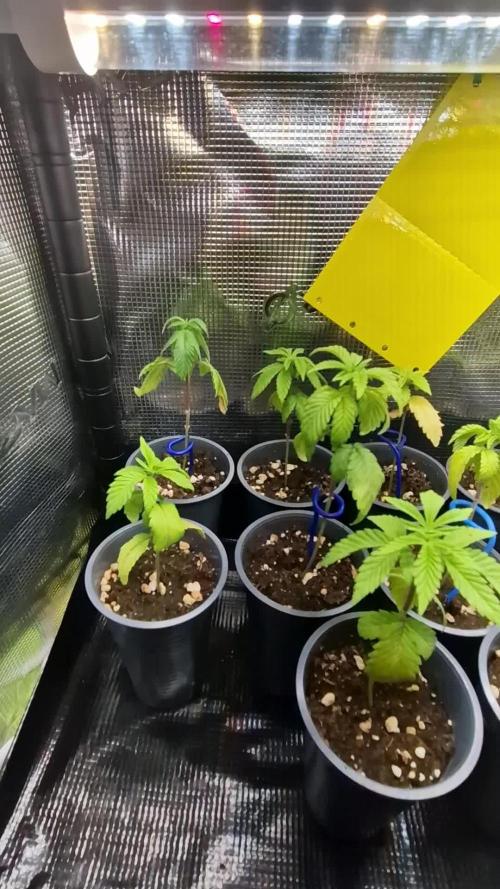
Die Sweat Bean OG schreien nach Nährstoffen, deswegen gab es diese Woche das erste mal Dünger. Mal schauen ob alles klappt.


