The Grow Awards 2026 🏆 







Likes
Comments
Share
@Organic473
Follow
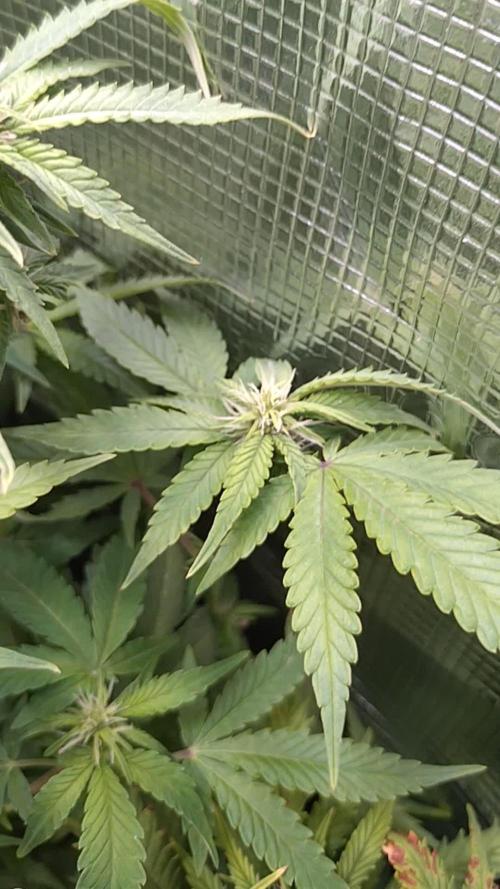
Defoliated the inner leaves and noticed her stretch was inevitable. This could be her last week in veg mode as her stretch is extreme and I would like to avoid breaking when shows up the buds.

Likes
20
Share
@PhinolaGreen
Follow
9. Woche
Läuft soweit, aber mit den angegebenen 9 Wochen von Fastbuds komm ich nicht ganz hin 😜

Likes
6
Share
@Hazecat_420
Follow
Están creciendo lindas y sanas, la estructura se va formando sin problema. Ya todas muestran señales de haber tomado de buena manera el cambio de fotoperiodo por lo que ya entramos de lleno a estimular raíces, cambio de fotoperiodo y próximamente engorde.

Likes
31
Share
@JuicyFruit
Follow
Day 76 - 07/12/19
The Quick One has turned into a Fat One! The colas are just huge! nice lavender smell and very sticky! the buds also look a lot more dense this time compared to my last diary probably due to adding calmag and pk13/14 and this plant is over twice as tall haha. it finished its stretch at 43cm so shouldnt be a bad sized harvest.
I fed the plants last night with their last dose of nutes and im going to start flushing from today right up until harvest.
My tap water is at 140ppm so this should be okay for flushing. ive grown all my plants with this tap water and tbh i used to let it sit out for a day or two to evaporate chemicals but i havent done that in ages. plants dont seem to mind it straight from the tap. but yeah flushing from today right up until around the start of next week. it should only need a week flush as its coco coir but im expecting to harvest on Day 85.
The top of the main cola started to look weird and was definitely getting burned from the light. i took a small bit off as i cant adjust the height of my lights just now, gotta fit these rope rachets the light is just so damn heavy lol. im not worried tho, expecting about an ounce from this harvest, maybe more from my diesel auto diary.
Still im very proud. this is my first plant with big colas, and not only tall but fat! cant wait to see how dense the buds turn out to be and i think my last harvest was at week 9 so this has had much more time to mature.
I pulled a lot lot of leaves off this plant as they were crispy and yellowing. ive been feeding light amounts of nitrogen for a while so its either just the plant yellowing or the crispiness is light burn. either way you will notice from the pictures. upper colas have no fan leaves lol. and i added a couple of photos through the jewelers loupe, couldnt really get a good angle. but the breeder estimate is 8-9 weeks and il be finishing on week 12 so itll most likely be ready.
I got a few more seeds and they are going to be stunning! award winning genetics and also exotic and high thc autoflowers! im using biobizz light mix and i should be starting once i harvest this diary so keep an eye out for that and check out my other diaries if you get a chance.
Day 78 - still giving 1.8l of water per day. wanted to ensure im getting all the nutes and salts out of this so i gave 1.8l of phed water earlier in the day and 1.8l of phed water 6 hours later. going to try stick to the 1.8 per day as the soil dries out overnight with that amount :)
Other than that the plant is looking great. some faint purple colors and its pretty frosty! nice big buds. once the plant is harvested and trimmed im gonna dry some on a drying rack for about a week. and some hung up to dry in a cardboard box for 2 weeks.
Day 79 - 10/12/19
Harvested the top half of a side cola today so its cured just before christmas 🎄 and i wanted to let light penetrate the lower buds!
Have a look at the pictures and let me know what you think in the comments :)
Biobizz light mix arrived and im thinking of starting my next batch of seeds, keep an eye out for those diaries starting up :)
I plan to harvest on day 85! so excited for this one!
Day 79 same day update:
Took a few pictures of the bud drying :) im gonna dry it slowly and just let the 21-23c room temperature 50-60% humidity do its job. and let me know what you guys think about using a drying rack like in the picture for buds?
Day 80 - 11/12/19
A few days shy of 12 weeks now so i decided to harvest another couple of side colas! Snipped a cola down to individual buds removing all trim and the other cola i didnt break down i just trimmed. il add photos tomorrow to show what i mean :)
The trim was really frosty and looked quite cloudy/plastic and the buds are covered in cloudy/amber pistils.
I smoked a couple of bongs of the test bud which has been drying for about 24 hours now and im pretty stoned! very relaxed in my back and shoulders. no muscle pain. my head is heavy with enhanced audio and visuals :) this is turning out to be a beautiful afternoon smoke! very proud of myself :) Only a few more days until full harvest and i cant wait to cut the main cola down. id say the main cola could be near an ounce when dried as it looks thicker than my arm 😂
Day 81 - 12/12/19
What a night ive had :) been up for ages fine trimming 2 side colas i pulled off the plant tonight. the flushing was worrying me with the extra humidity rise. i added a ton of pictures to show off the whole ordeal as best as possible :) and i came across some mold halfway up one of the giant colas. was a very small pocket of fluff so i cut around the affected area and didnt lose too much (about 2g if dried) the side colas were so much bigger than expected. completely filled my whole raw tray with buds and my drying rack is starting to fill up.
Im like a small child again as these colas are the biggest individual piece of weed that ive held :) really proud that i grew this!
I also got a lot of trim and little popcorn buds. gonna keep then for edibles and dry up these test buds.
3 Days until harvest of the main cola :) and check out the pictures and videos i added at the end. huge colas! :)

Likes
62
Share
@Roberts
Follow
Do-Si-dos auto has grown good on a lower nutrition amounts then my normal. The buds were smaller unfortunately. She smells super fruity and good. I have switched her to ph water yesterday. The next update will be her harvest. Thank you Zamnesia seeds, Medic Grow, and Athena. 🤜🏻🤛🏻🌱❄️
Thank you grow diaries community for the 👇likes👇, follows, comments, and subscriptions on my YouTube channel👇.
❄️🌱🍻 Happy Growing 🌱🌱🌱
https://youtube.com/channel/UCAhN7yRzWLpcaRHhMIQ7X4g

Likes
7
Share
@BIYEI
Follow
Floracion (Tiempo estimado 64 dias)
Decima Semana de Floracion
11/03/2024 - 5:00hrs y 22hrs: Se hace cambio de cubeta y solucion, Se hace Lavado de cubetas, tuberias, bomba, humificador, y perifericos, Se realiza limpieza completa del indoor, Se verifican parámetros básicos del agua, mantener cuidados específicos, el olor empieza a ser mucho mas penetrante con solo abrir el indoor se nota el aroma muy delicioso, empiezan a observarse mas el crecimiento de los Cogollos.
Agua de osmosis: Ph 6.0, PPm 550-750, Ec 1.2-1.4, Temperatura 18°C - 24°C
Ambiente: Temperatura 19-25 °C, Humedad 55%, Ventilación 20%, 12 hrs de luz , 12 hrs de obscuridad.
12/03/2024 - 5:00hrs y 22hrs: Se verifican parámetros básicos del agua, mantener cuidados específicos.
Agua de osmosis: Ph 6.0, PPm 550-750, Ec 1.2-1.4, Temperatura 18°C - 24°C
Ambiente: Temperatura 19-25 °C, Humedad 55%, Ventilación 20%, 12 hrs de luz , 12 hrs de obscuridad.
13/03/2024 - 5:00hrs y 22hrs: Se verifican parámetros básicos del agua, mantener cuidados específicos.
Agua de osmosis: Ph 6.0, PPm 550-750, Ec 1.2-1.4, Temperatura 18°C - 24°C
Ambiente: Temperatura 19-25 °C, Humedad 55%, Ventilación 20%, 12 hrs de luz , 12 hrs de obscuridad.
14/03/2024 - 5:00hrs y 22hrs: Se verifican parámetros básicos del agua, mantener cuidados específicos.
Agua de osmosis: Ph 6.0, PPm 550-750, Ec 1.2-1.4, Temperatura 18°C - 24°C
Ambiente: Temperatura 19-25 °C, Humedad 55%, Ventilación 20%, 12 hrs de luz , 12 hrs de obscuridad.
15/03/2024 - 5:00hrs y 22hrs: Se verifican parámetros básicos del agua, mantener cuidados específicos.
Agua de osmosis: Ph 6.0, PPm 550-750, Ec 1.2-1.4, Temperatura 18°C - 24°C
Ambiente: Temperatura 19-25 °C, Humedad 55%, Ventilación 20%, 12 hrs de luz , 12 hrs de obscuridad.
16/03/2024 - 5:00hrs y 22hrs: Se verifican parámetros básicos del agua, mantener cuidados específicos.
Agua de osmosis: Ph 6.0, PPm 550-750, Ec 1.2-1.4, Temperatura 18°C - 24°C
Ambiente: Temperatura 19-25 °C, Humedad 55%, Ventilación 20%, 12 hrs de luz , 12 hrs de obscuridad.
17/03/2024 - 5:00hrs y 22hrs: Se verifican parámetros básicos del agua, mantener cuidados específicos.
Agua de osmosis: Ph 6.0, PPm 550-750, Ec 1.2-1.4, Temperatura 18°C - 24°C
Ambiente: Temperatura 19-25 °C, Humedad 55%, Ventilación 20%, 12 hrs de luz , 12 hrs de obscuridad.


Likes
12
Share
@GREENPHOENIX6262
Follow
*Week 4 Flower 09/24*
Both Mimosa girls appear to be running fine with Mimosa (1) running a little behind but is catching up accordingly. Small oversight in early growth resulted in a minor stunt but she is improving dramatically.
Water Feed has increased by half a gallon ( 1gallon clean - .5 gallon nute feed)
*Week 4 Flower 09/28 - Mid week update*
Both plants are flowering accordingly - Mimosa (1) is a bit taller then Mimosa (2)
Buds are becoming dense and covered in trichomes.
No deficiencies - No areas of concern - Potassium and Phosphate feeds continue
*Week 5 Flower end of week recap - 09/30*
Both Mimosa's are flowering nicely - Budsites covered in frosty trichomes.
Mimosa (2) looks shorter but that is because her COLA was tied down to expose bottom budsites.


Likes
12
Share
@cookingwithninja
Follow
day 30 video day 30 note crossed bridal party x pink paradise
day 31 crossed blackberry oreo bigstuff x pink paradise
day34 videos of each, a lot of photos. Rh% high I keep my terps non-volatile. Bridal rubbing sugar leafs smells like some sort of candy watermelon, blackberry neat skunky AF sugar leaf rub, pink is nice mellow I will have to check tomorrow. Dr. Thunder very oily with sugar leaf rub I swear you could deepfry with it. It also smells mellow skunky but will check again tomorrow it may have been terps overload on my fingers regarding thunder and pink paradise aromas. Pink caylaxes have shriveled and accepted pollen locations. I just don't think the seeds will be ready when harvesting in a few weeks. Start week 5 tomorrow and I don't think crosses will be ready so I will figure it out. Pink crosses would be fun next round but I have so many more selections to choose from to grow my next 4.Thunder smells like a citrus cleaner, almost pineapple front notes then a full citrus.
day35 defoliated like madd. no lie so sticky: 2 fingers lifted a ceramic cup like I was spiderman. 1 finger was a struggle.. science

Likes
124
Share
@Legendaryseedthumb
Follow
Day 9: they are all looking super healthy and ready to explode! I’ll just veg these fast. Let them grow a node or two more then top them all and wait some days then switch to 12/12.
I’m having 9 plants in the same tent.
Processing
Likes
5
Share
@PETEROG
Follow
Hey everyone at week 4 know and wow have these girls grown early this week I applied some LST and all took really well to say it was my first time trying this
Likes
25
Share
@Gutismoke102
Follow
Wow look at her grow we are in the second week of her flowering stretch and she looks amazing. Smells good already omg super excited about this one ☝️🏽


Processing
Likes
Comments
Share
@Mugatu
Follow
The screen is slowly filling up! I will admit the ScrOG method is a little more work than other LST/HST, but I love messing with my plants anyway. Its like solving a puzzle trying to find the next spot to pop up a cola. The Lucas method is going great. Still no water changes, and I haven't had issues with algae or root rot. Some people report their reservoir smelling bad without water changes, but all I smell is ganja 😀
Likes
14
Share
@Thckaos
Follow
01-11-20 Se cambia la solución y se realiza un lavado de raíces. Para bajar la conductividad de las raíces de 2.25 a 0.2 ms para que la solución nueva sea más efectiva. Se corrige el PH de 6.1 a 5.6. La solución tiene 2.6 ms y 5.6 PH. Se añade una pastilla de CO2.
Se realiza poda apical, LST y deflación.
01-11-20 (2 horas más tarde) Se corrige el PH 6 a 5.6 Conductividad 1.9 ms con los nutrientes ya.
02-11-20 Se corrige el PH 5.8 a 5.6 Conductividad 1.97 ms.
03-11-20 El PH 5.6 Conductividad 2.00 ms.
04-11-20 Se corrige el PH 5.3 a 5.6 Conductividad 1.96 ms.
06-11-20 Se corrige el PH 5.3 a 5.6 Conductividad 1.99 ms.
07-11-20 Se corrige el PH 5.4 a 5.6 Conductividad 1.94 ms.
Likes
11
Share
@Gamestationx360
Follow
April 28th, 2021
8th week of flower. Only adding Shine bloom booster at 1.5 grams per gallon. PH'd to 6.0


Likes
26
Share
@BlackForestGrower
Follow
Plant 1 is ready the other two get another 12h and 24h in dark tent
Taste fruity and berrys
White Ash

Likes
23
Share
@Hashy
Follow
********************************************
Week 16 Fade (week 10 flower)
********************************************
Light cycle=12/12
Light Power=120w 50%
Extractor controller settings (during lights on).
High temp= 25c
Temp step=0c
High Rh= 50%
Rh step=0%
Speed max=10
Speed min=5
Extractor controller settings (during lights off).
High temp= 21c
Temp step=0c
High Rh= 55%
Rh step=0%
Speed max=10
Speed min=5
Smart controller settings (during lights on).
Lights on=9.00am
Radiator on= -22.c
Radiator off=+22.5c
Top fan on=
Smart controller settings (during lights off).
Lights off=9.00pm
Radiator on=-19.0c
Radiator off=+19.5c
Top fan on
VPD aim=1.0-1.4
DLI aim=30-40
EC aim=0.2-0.8
PH aim=6.0-6.5
💧💧💧💧💧💧💧💧💧💧💧💧💧💧💧💧
NPK= 0-0-0
Method= Automatic
Feed=Finishing nutes.
Neutralise=0.1ml/L
Flawless Finish=2ml/L
Easy Ph down=0.02ml/L
(1ml=24 drops, 1 drop=0.04ml)
Easy Ph Up=0ml/L
(1ml=24 drops, each drop is 0.04ml)
Ec=0.34 PH=6.1/6.0
Runs=18
Run times=4mins (L/L each)
Gap times=16 mins
Total runtime=72mins(L/L each)
Total flowrate= ml/min(ml/min each)
Auto start time=10.00am
Auto stop time=15.44pm
💧💧💧💧💧💧💧💧💧💧💧💧💧💧💧💧
********************************************
********************************************
📅19/1/25 Sunday (Day 106)(flower day 66)
📋
💧
Automatic finishing nutes
Ph down=0.01ml/L, 2 drops
Ec=0.3 PH=6.4/6.3
Volume=8.0L
Volume left=2.5L
Volume used=5.5L(90ml/min)
Volume each=5.5L(90ml/min)
Runoff.
Total runoff=0.8L
Ec=1.9 PH=/6.7
💧
📅20/1/25 Monday (Day 107)(flower day 67)
📋 Tops are ready, lowers not far off. Going to decide if im just going to harvest the tops and let the lowers mature a bit more, I'll check again in a few days and make the decision.
📅21/1/25 Tuesday (Day 108)(flower day 68)
📋
📅22/1/25 Wednesday (Day 109)(flower day 69)
📋
💧
Automatic Water (Neutralise)
Easy Ph down= 0.01ml/L (2 drop total)
Ec=0.15 PH=6.4/6.4
Volume=8L
Volume left=2.75L
Volume used=5.25L(90ml/min)
Volume each=5.25L(90ml/min)
Runoff.
Total runoff=1.3L
Ec=1.3 PH=/6.8
💧
📅23/1/25 Thursday (Day 110)(flower day 70)
📋 Small defoliation
📅24/1/25 Friday (Day 111)(flower day 71)
📋
📅25/1/25 Saturday (Day 112)(flower day 72)
📋 That's it for miss Zoap, she has matured as much as I want so she has got the chop today.
********************************************
Weekly roundup.
📋 She has bulked up enough now. Shame I can't get more light to lower parts of the plant.
Back soon.
Take it easy.
********************************************

Likes
4
Share
@Pechu420
Follow
The growth is very good. Plant 3 has the fewest buds, is the smallest, and seems slightly more indica than the others. Plant 4 has very striking colors.
12/12 from seed
Watering with filtered tap water every 2/3 days, when the pot is lighter, 500-1000ml
Soil:
peat, coconut powder, perlite, carbonized rice husk, sheep manure and worm humus. essential mineral mix, vegetable flours, vegetable cakes, biochar, bokashi EM1 and other organic inputs, Algae ascophyllum nodosum
small pots 3,7liters // 1gallon
light: lm301h-evo
120watts with other plants