


Likes
Comments
Share


@Sider79
Follow
Didn't get the potential. Very happy with the look of the finished product , so far I'll give this particular strain 9.3. In it's best stability this would be my go to phenotype cause of the overall potential and ratio. Very happy for it being my first auto grow experience now I'm hooked. Definitely would suggest this bad girl for a first time auto enthusiast and for the connoisseur . I've been looking into that Purple Lemonade by Fast Buds and very excited to purchase also that Black Berry cause they remind me of the Blue Dreams large flower to plant ratio. For now and my next auto grow will beee......🥁
FB.Six Shooter,
VS.Super Xtra Skunk,
Seedsman's Northern Lights
Seedsman's Limited Edition
Strawberry Cheesecake.
I decided to do multiples this time because of finish times I feel will never be the extact either way
I'll try to get a rotation going .😃

Likes
5
Share


@Stoney_Stark
Follow
Sorry I have been slacking on this diary, the plants look great. The 3WOK OG is nice and big with plenty of bud sights



Likes
4
Share


@Elguacho420
Follow
Buenas a tod@s... Segunda semana de floracion de la psicodelicia de sweet seed, la variedad se la ve bien, fuerte, los nutrientes son muy buenos, aún q es mi segundo armario ya se va notando un gran cambio, espero q siga todo bien, se que si... 💪🏻💪🏻 A seguir trabajando... Buenos humos para tod@s.. 💨💨💨🔥🔥
😎💎
🇦🇷🤝🏻🇪🇦

Likes
5
Share

@Growmigos
Follow
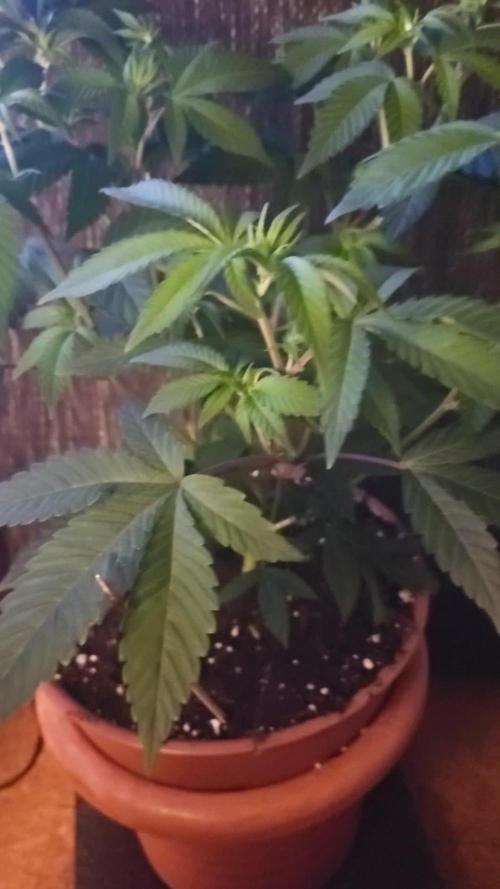
Nächste Woche wird umgetopft und getoppt,Sie entwickelt sich im 4 Liter topf besser als ihre sister im 13 l topf hmm mal 👀👀👀👀

Processing
Likes
8
Share


@Shellshocked
Follow
Week 8 of flowering was rough did not look in the tent for 2 days as my perimeter were all good and I watered every plant so I thought but did not water the gg4 as she felt heavy (her pot) and as I opened the tent on the second day i was shocked and very upset as she looked dead with the ph problems I already had a lot of her leaves were already damaged. Lost a lot of leaves and could probably pull off every fan leaf as all of them have damage now but were in the final week now so she should make it. The bud is not so frosty, nice size buds but with all my mess ups there was no time to create triclones. That my theory as I have gg4 clones at 4 weeks that are twice as frosty fingers crossed last week goes Smooth. Well hope it's last week blimburn seeds says 9-10 weeks so ill go 10. I'll try my jewlers loop but it's only 40× and does not work well if it don't look ready it will go to week 11

Likes
17
Share


@Skinnytalls420
Follow
Day 8-19/12/21 so unfortunately only 5 of the 8 seeds survived!!! But the 5 survivors are looking good!!! Day 10-21/12/21 they 5 of them are looking good!!! Day 13-24/12/21 still looking good

Likes
92
Share


@DogDoctorOfficial
Follow
🌱 Week 1: The Journey Begins! 🌟
Hey Grow Fam! 🙌 We’re off to an epic start with our TrolMaster adventure, and I’m already feeling the love for the setup, the seeds, and the growth happening in the room! So, let’s dive right in and get into the details of this exciting week!
🌿 Germination Update:
Our first Gorilla Melon seed from Fast Buds didn’t sprout, but no worries—round two was a success! 🦍🍈 The second seed has germinated and is looking full of potential. I’m throwing in a Sweet Seeds Papaya Zoap into the germination station too, so we’re keeping this exciting lineup going strong! Germination is such a key part of the journey, and having a healthy start is what it’s all about.
🔧 Room Build & TrolMaster Setup:
The build is coming along beautifully, and I gotta say, the TrolMaster system is blowing my mind! Everything’s under control like magic 🎩✨, and the TM+ app? Wow, just wow. I mean, I can literally be in the bathroom and still keep an eye on the plants—check all the metrics, adjust settings, and fine-tune what I need, all from my phone! 😂💧 This level of control is next level. I’m loving how smooth and seamless it makes managing the room. The gear is just unreal, and seeing it all come together is truly something special.
🌱 Nutrition Talk:
As for feeding, we’re starting light but smart! I’ve begun with 0.15ml of Regulator and 0.25ml of Startbooster per liter for now. I always believe in starting easy and ramping up as the plants develop. These early stages are crucial—balance is everything. For the time being, I feel this is more than enough to keep the babies happy and healthy. 🌿💧 The Regulator is working wonders in maintaining plant structure and health, while the Startbooster is fueling the early root and vegetative growth, laying down a solid foundation for the weeks to come. It’s about getting it right from the start—too much too early can be a killer. Keeping it steady with precision, that’s the goal!
Big Shout-Outs:
To the amazing team at @TrolMaster, @Fast_Buds, @Sweet_Seeds, @AptusHolland, and all the incredible sponsors—I’m beyond grateful for the support! 💚 And to my GrowDiaries fam and followers, you guys make this journey what it is—thank you for the love, and I’m so honored to have you along for this ride. 🙏
We’re just getting started, and I can’t wait to show you what’s next. Stay tuned for more updates, epic builds, gear reviews, and plenty of insight. Don’t forget to follow me on GrowDiaries, YouTube, and IG for exclusive content, and let’s make this grow the best one yet! 🌿🔥
Growers Love to All 💚💚💚
P.S.- A deep dive into the Full Spectrum Quantum Sensor (MBS-PAR):
The Full Spectrum Quantum Sensor (MBS-PAR) is an essential tool for any serious grower looking to optimize their light environment. This sensor measures photosynthetically active radiation (PAR), which refers to the spectrum of light that plants actually use for photosynthesis—typically between 400 and 700 nanometers and more depending .
What makes the MBS-PAR sensor special is its full spectrum capability, meaning it accurately detects not just visible light but also far-red and UV light—which are crucial for maximizing plant growth, development, and flowering. With this tool, I can monitor the exact intensity of light my plants are receiving, making sure they’re getting the optimal levels for every stage of growth.
By using this sensor in my grow room, I’ll be able to ensure that the light distribution is uniform across the canopy. Plus, it allows me to fine-tune the light output from my ThinkGrow LED setup, ensuring my plants are thriving under the best conditions. Whether it’s increasing light during the vegetative phase or fine-tuning it for flowering, the MBS-PAR sensor helps me keep everything on point. And the best part? I can monitor it all through the TrolMaster app, ensuring I can make adjustments whenever needed—even if I’m not in the grow room!
This level of precision means healthier plants, better yields, and maximum efficiency. It’s a game-changer for taking the guesswork out of lighting and getting closer to growing perfection! 🌱💡
Growers Love to All 💚💚💚


Likes
25
Share


@Blaze_With_Haze
Follow
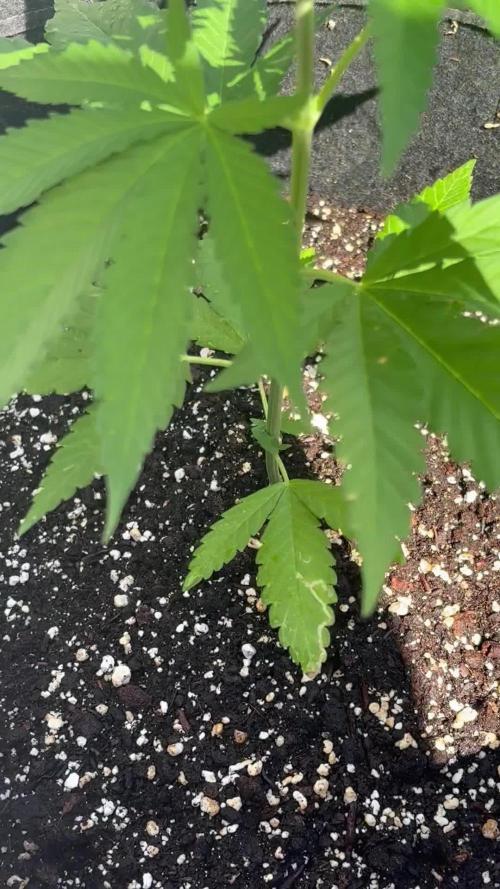
All babies growing up very fast. Very happy so far. Started to use lowdose Advanced Nutrients fertilizer.



Likes
29
Share


@Naujas
Follow
great, everything is going really smoothly, @Zamnesia Runtz auto, copes perfectly with leaf spot and LST, started to bloom, so I think it will soon stop growing upwards, and I won't have to hurt it anymore :) @Plagron This is the first time I've used nutritional fertilizers, but I already understand that it definitely won't be the last :) good luck to everyone :).

Likes
8
Share



Processing
Likes
49
Share


@MadeInGermany
Follow
Hi everyone :-)
This week I did extreme LST again, and I guided all the shoots to the middle :-)
Now the time should be perfectly bridged until there is space in the flower chamber, there will be in about 40 days :-) .
I wish everyone a good start to the new week, stay healthy and let it grow 😎🙏🏻☘️
Typ:
Sour Diesel (Zamnesia)
☝️
Genetik:
Diesel x Northern Lights
👍
Vega Lampe: 2 x Todogrow Led
Quantum Board 100 W
💡
Flower lampe: 2 x Todogrow Led
Cxb 3590 COB 3500 K 220 W
💡 ☝️
Erde: Canna Terra Professional +
☝️
Dünger: Canna Termittel Vegra Vega, Canna Terra Flores, Rizotonic, Cannazym, CANNA Boost, Pk 13/14,
Canna Cal/Mag, Canna Ph - Grow,
Canna Ph - Flores
☝️ 🌱
Water:
Osmosis water mixed with normal water (24 hours stale that the chlorine evaporates) to 0.2 EG. Add Cal / Mag to 0.4 Ec Ph with Organic Ph - to 6.0
💦 💧
Likes
69
Share


@Teamdirtbag2
Follow
She is now a skinny 17 inches tall. Defoleated all the bottom crap and cleaned her up. A little newt burn last week at 600 ppm. I have raised ppm to 680 so she may not be happy come the end of the week. She will have to get use to it. I'm sure she will be fine. Added second light, so it should get interesting.


Likes
22
Share


@Growfun
Follow
I don't know what else to say. It was fun and hopefully the cheese was my fault and not the genetics of ilgm. But hell we will see. This my be my first journal but definitely not my last. Peace

Likes
21
Share


@BB_UK
Follow
Ok let’s go!
She’s doing so amazing! She’s catching up at such a fast rate! I guess that’s brand new genetics for you plus that added Zamnripper umph combined force lol I trimmed away the lower leaves off her and she loved it appreciated it and boosted up! Dynomyco is obviously doing it’s thing too helping her get to canopy! And with help of the new light TSW2000 from mars hydro it will be a better outcome! I continue to give her a little spray a few times a day only lightly but it helps with the low humidity! I am in 2 minds with the flip! Like do I wait for this to go 4 weeks at least or just go for it so I’ll decide very soon! As that’s in a few days lol so she’ll be 3.5 weeks! So should be alright!
Likes
20
Share


@Justa_Retard
Follow
Day 36 update;
Nothing to add. Bit more crystals, tho not too much..
Day 37 update;
Looks like the tap water fixed the magnesium problem. And added some fertilizer today.
Day 38 update;
Progress still be progress.
Day 39 update;
Trichomes definitely spreading.
Day 40 update;
Still not that great at holding the microscope still, so pictures aren't really that good..
Strong aroma from the plants now tho, very nice fruity smell I can't quite pinpoint what is, but very intense when I open the tent.
Day 41 update;
She's starting to pop some purple colour on the top leaves.. Not exactly sure why, as she's had the exact same treatment as the other one, while that one isn't showing any purpling. I'm not entirely against it, but since I'm not sure if it's genes or what, it's a little, well...
- Added a few extra pics of the other one, since she's looking a little better bud wise.
- Smell in the tent is fantastic.. A little more purple on the leaves, and definitely more progress on the buds as well.
- The other one is further ahead, even tho it's only day 39
Day 42 update;
End of week 6..
- Getting closer and closer. Harvest gonna be in a couple of weeks.
Likes
1
Share

@HoneyBlunt42
Follow
Day 84
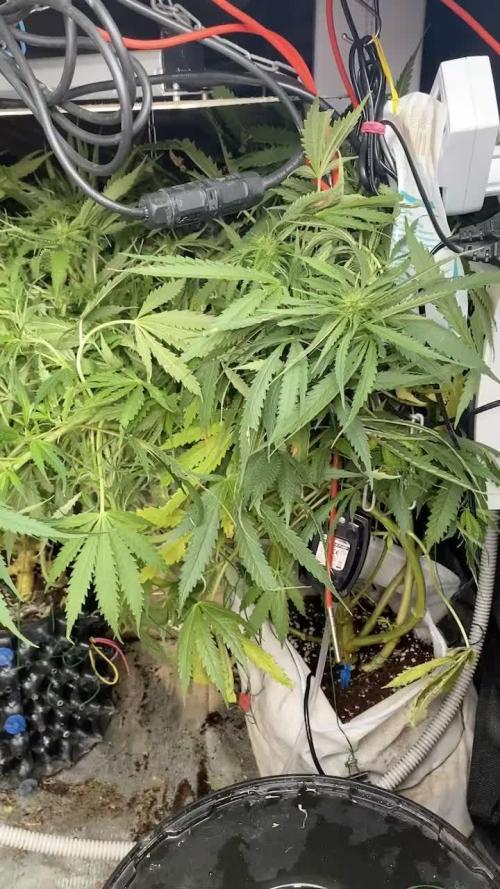
The Durban plants are actively growing foliage and reaching for the light, despite being bent. Every day after the lights go out, I bend their tops parallel to the floor (training). Sometimes the stems break slightly, but they are still flexible enough to recover. In 2-3 weeks, I plan to transplant them to a permanent location, where there will be 20-30 cm of space above the tops for ventilation.
In the next cycle, I think four weeks of vegetation will be enough for ripening. At Gordem Delicatesies (GD), Brazilians have stretched in 20 weeks, sometimes faster. For me, this variety develops more slowly; I'm not chasing maximum speed. Meanwhile, the Jack Herer is ripening in the box above them.
I'm waiting for a manicure table (thanks to Mila for the tip!). As soon as it arrives, I'll start harvesting. I'm glad that with this device I can meet the deadlines precisely.
Day 87
They hit a lamp and set one top on fire. The others miraculously survived. Today I tied the plants to their pots again with wire. I bent them so they were 10-15 cm from the lamp.
Some were tighter. I cut out a 5-liter bag containing the lower branches, which were turning yellow from lack of light, and the leaves the plant had shed on its own. Watering was light but regular.
I watered 3 liters by hand on top of the automatic watering. I added 1.5 liters of Simplex Taste and 1.5 liters of Simplex Aroma Punch. I started adding Simplex SilliX again—organic silicon is needed to strengthen the stems. Right now they look rather stiff; they bend easily by hand. This is a plus in my situation, but in a couple of weeks I want to see stronger, more vigorous central colas in the box.
Mold was appearing on the dry leaves at the bottom that I didn't remove in time. I took out all the bushes and carefully removed all the dry and yellow leaves. I chose the ones that came off without effort. Their plant has already finished growing. After this procedure, the fan was able to blow air through the base, meaning less mold.
Young buds are ripening on both plants, about 1 cm in diameter. The upper leaves and flowers are healthy; they were eating the lower burdock leaves. It's interesting to watch the biofertilizer from Greens work. I'll add Simplex Mass and Simplex Power separately in the next few days. And after that, HB-101. I'll water with Fitosporin at least once. I also want to add "33 Bogatyrs" bacteria – @NBRZ recommended it.
Once a week, I manually pour a liter of solution with Simplex Taste (very similar to horse manure from the garden) and Simplex Aroma Punch – a potassium-sulfur additive to enhance aroma and flavor.
