


Likes
Comments
Share


@Ninjabuds
Follow
It's a nice change of pace to have these warmer temperatures, even if it's not quite spring yet. Low 40s during the day is a lot more comfortable than what we've been dealing with lately. Hopefully, this is a sign that spring's around the corner.
It's crazy how much my permanent marker plants have grown! They've really taken off. One's got these super cool purple stems, and the other's covered in buds – it's gonna be beautiful when they bloom.

Likes
19
Share


@EeyoreTheHomie
Follow
This strain was a pain in the ass honestly. I will never grow bagseeds again, when real genetics are so cheap.
This plant hermmed so I have a metric fuckton of seeds that I have no idea what to do with.
But for a first grow, this plant was really good at letting me know when I was doing something wrong. My other runs suffered the same treatment, but their strong genetics didn't mind as much. But this plant, this plant bitched and moaned about everything. Its leaves faded like 2 weeks early. It had all these weird mutations. When she was a babe (Weeks 1-4), I literally thought that she died from how she didn't grow much at all. Every other plant I've popped since, has been a dream compared to this one. But now I know how to diagnose all these things. I feel like I got 10 grows worth of wisdom in one. So for that, I am thankful.
RIP Big Bertha. You may be gone but, with the amount of seeds you've given me, your lineage will never die.
Likes
68
Share


@715creeks
Follow
Lots of pictures of the buds for the start of this week. Worried i might have bananas 😞
Decided to let this run it's course, removed a couple of bananas but no more came. i might have been lucky

Likes
10
Share


@Mr_nugs_lover_David
Follow
This is another beautiful pheno of my beloved strain Do-si-dos OG I wasn't expecting to grow 3 plants this year, just wanted 2 however it was a doble root seed and I didn't want to throw her away so I'm gonna grow her anyways! I love how good she has developed in this 4 weeks since planted, she developed without any issues and has become a happy and strong lady!! Let's get to work for our beloved medicine, I hope you like my outdoor diaries this year!! 💛💚💓👨🌾

Processing
Likes
9
Share


@HollowSource
Follow
This girl has been topped twice. She has responded really well. The plants look like they could take a feed so I'm going to start introducing nutrients again and a quarter the recommended dose and raise this gradually before flipping them all to flower in a weeks time.

Likes
6
Share


@Yeyup
Follow
First week so far so good 🌱
Planted and lighty watered for first 2 days when soil was dry
27/11 the 5th day since being planted I fed her 1.5 ml of canna terra vega following the food chart that came with the food
28/11 all still seems good didn’t need to water
29/11 lightly watered
30/11 gave her a bit more water she’s getting bigger and looking good

Likes
Comments
Share

@Budhunter
Follow
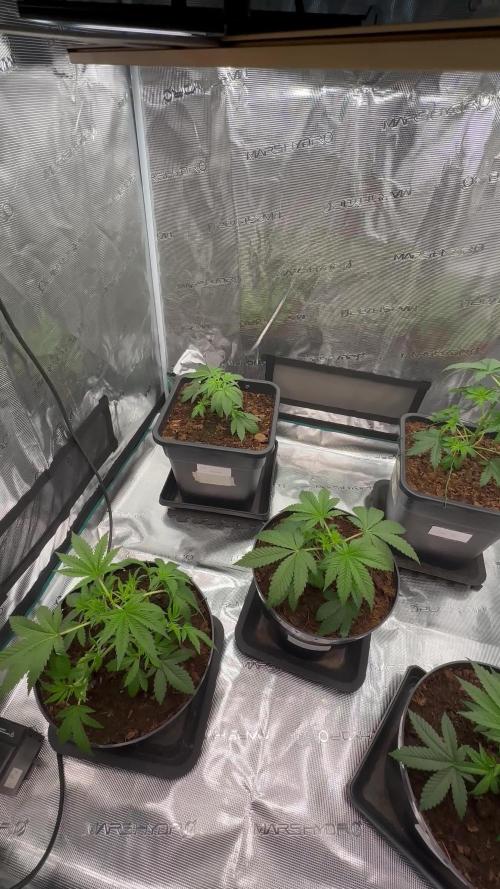
Lemon Cherry Pie apparently seems happy and healthy. Not super grown but going well.
I topped her on day 26 and soon I will start with some lst. Let’s go 💪🏼🙏🏼🙌🏼
Likes
2
Share

@SGrommer_300
Follow
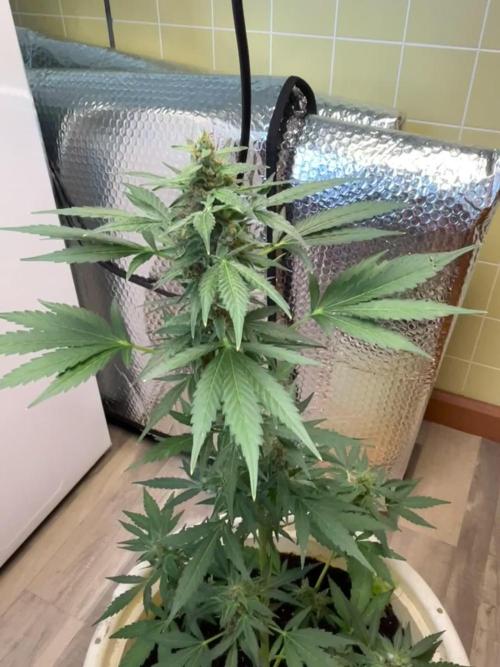
Any advise anyone what’s goin on here gpt asked it about half a dozen times says is not mold but is frost I looked it under loop it looks like icy shit but when I flake the leaves it goes everywhere !? lol
Likes
4
Share


@eldruida_lamota
Follow
Venga familia, cosecha de estas Thunder Banana de Seedstockers, que ganas que tenia ya de darles machetazo.
No veas que pinta que tienen estas plantas.
Las flores aparte se ven bien resinosas, prietas, aparte son aromáticas huelen bien fuerte.
En general es una genética con la que disfruté bastante cultivarla, la genética es perfecta para cultivos de floración corta con rangos entre los 20/25 grados en interior, es de dificultad media cultivarla y bien resistente, es excelente para cultivadores algo experimentados y con algo de conocimientos.
Hasta aquí es todo, espero que lo disfrutéis, buenos humos 💨💨.

Likes
14
Share


@simps
Follow
Really impressed with this strain from dinafem seeds it's a great plant to grow super ez growth is fast have a lot of fun with this one

Likes
10
Share


@YAKDADDYDWC
Follow
started this week off by changing it to 12/12 lighting once i see her start to bud i will change bulbs... will keep updated

Processing
Likes
51
Share


@Silverback_Guerilla
Follow
11/30-12/5:
Major stretch from the Muscadine Wine's and one of the Sucrose Overdose. I supercropped and tied down the apex on the big SO and I'll probably have to supercrop both MW's before it's over. The Platonium and GG4 aren't stretching vertically nearly as quickly, but have massive leaves and huge diameters (problem children). Sugar Bref is a shorty, like the Berry Bomb, but both have very thick stalks and may, yet, do some stretching.
Both MW's and the big SO not only have red stems, but they have red leaf veins and the outer edges of the fan leaves have a nice pale-green to red gradient coloration....swexy!😍


Likes
6
Share


@colla69
Follow
reinforced water, let's see if a reservoir change will be needed.. (reservoir 14 days old now, addding myco and bennies regularly)
added :
+ 4ml micro
+ 8 ml bloom
+ 8 ml fulvic
+ 8 drops pro roots
+ 8 drops advanced silica
PH dropped on it's own to 5.6 (that's my goal)
Update:
That was yesterday, actually day 13 😅
Topped on day 14
She is also starting to drink quite a lot (down to 7 liters) but EC is falling. Thinking about topping up the reservoir the next days.
Update:
Day 19 - changed reservoir to prepare transition to bloom and started scrogging
Likes
47
Share


@terpproducer
Follow
Finally, I found the time to finish the report. Thanks for joining me!

Likes
4
Share


@mr_smooke
Follow
Christmas update
she starting to put some holiday weight on it seems. next watering I will ad some molasses. the smell is amazing, full of fruit. here is day 49 of flovering
I wish you all a Merry Christmas
Likes
40
Share


@CampaCavallo
Follow
Buongiorno amici! I draghi di coccinella stanno mutando🐞🐞 e la piccola BRUCE LEMON DIESEL AUTO di SUPER SATIVA SEED CLUB sta buttando fuori dei bei fiorellini!
Ha un bel tronco pricipale robusto ed un profumo già intenso🚗

Likes
10
Share

@eldruida_lamota
Follow
Que pasa familia, vamos con la décima y última semana de floración de estas Papaya Sherbet feminizadas de fastbuds.
Vamos al lío, de las 3 plantas, me quede con 2 por espacio, siempre pongo alguna semilla de más por si no abriese alguna por no perder ese hueco del indoor.
También se trasplantaron a su maceta definitiva, en este caso de 7 litros que además provocó un shock que también solucione.
El ph se controla en 6.2 , la temperatura la tenemos entre 20/24 grados y la humedad ronda el 50%.
Las flores están bien prietas y sacan unos aromas afrutados bien llamativos, que bomba como se han puesto.
Hasta aquí todo, Buenos humos 💨💨💨.

Likes
5
Share


@MrFriday
Follow
26.08.2024
1. RDWC: I run a DIY system made of 4 Buckets 17L+separated control/tank bucket (12L operational water per bucket used) fallponic plus underwater current. I don't know why I have made such system I just wanted to be sure that I have included every possible option. I'm not sure but maybe I'll upgrade it to rainponic it's not that hard of a job. I'm not using my 100L reservoir this run becose it needs replacement old one made a small flood in my garden.
2. TENT AC Infinity 5x5
3. Airpump Hailea ACO 388 D 70L/min.
4. Water chiller: hailea water chiller hc-150a.
5. LED GROW light Grand Master Level Tarantula voyager 1500W 2 chanel's plus controller (it will be my first run with this monster it just arrived).
6. INLINE FAN: AC Infinity cloudline S6 carbon filter.
7. CLIP FAN: AC infinity Cloudray S6 3 pcs. For low middle and over the LED air movement.
8. Humidifier AC INFINITY T3 (I don't need stronger one naturally the humidity here is around 65-70%)
9. TENT CONTROLLERS: controller 69 PROX2
10. Germination/humidity dom by AC infinity with germination lamps 40W Ionabeam S11 only for the first 2 weeks before VEG.
DAY 1
Closed in a box hiden in a dark boiler room.
Room temperature 25C
EC 850
RH 90%
Instruments used for measuring:
AC Infinity Hydroponic Meter PRO
AC infinity VPD thermometer
DAY 2 5/6 seeds have start to crack open I guess tomorrow or the day after they will be all ready for the cubes.
DAY 3
ROOM TEMPERATURE 26 C
Relative Humidity 83%
5/6 seeds are showing signs of life. The 6th one is a little bit slower it's cracked as it can be seen on the picture but it refuses to show it's tale. I believe tomorrow it will be ready. On day 4 I'll put them in the "Root Riot" cubes and after that I'll just monitor the RH and RT until I see the sprouts.
DAY4
ROOM TEMPERATURE 24.5
RH 94%
6/6 seeds have germinated so far. Today I'll move them in the Humidity dom where they will stay until they become seedlings and I'll keep them there until they are ready to be moved in the RDWC system and coco coir. In the video I have show my method of preparing the cubes for the seeds next update will be tomorrow probably only for temperature and humidity.
DAY 5
ROOM TEMPERATURE 25-27.
RH 89-95
I can't believe that I'm seeing first sprout today. Maybe this strain is one who can take a little push 🤣🤣🤣 I'll keep in mind and I'll se how much I can push it. Unfortunately I still don't have CO2 for veg and flower but I can try other different little tricks. I'm happy with this seeds obviously 42 Fast Buds are giving a really quality seeds. Let's see what kind of buds will come out of this seeds. I hope tomorrow everything will be sprout out and i will turn on the lamps.
DAY 6
PPFD 120
ROOM TEMPERATURE 24.5
RH 92.1
It's day six 4/5 seeds are successfully germinated. Maybe the next two will pop out but for one of them I'm not so sure. Anyway I have one spare seed that I can pop out for the coco project plus I have one Papaya Cookies Auto for the fifth bucket so that's no problem. The seeds ar under the light AC Infinity Ionabeam S11 on level 3 equal to 115 ppfd plus the DOM extension.
DAY 7
ROOM TEMPERATURE 25C
RH 82%
I have 4/6 successfully germinated seedlings. Tomorrow I'll open up the humidity dom a little bit. It's good to have spare seeds. Now I'll have to plant my spare peace of gorilla cookies and probably one Papaya Cookies Auto (gift) becose my plans were for 6 plants. Anyway this 4 soon will be transplanted in the RDWC flowering pot. Let's see what tomorrow have to say.
DAY 8
ROOM TEMPERATURE 25C
RH 82%
Amazing root development, I wasn't expecting this kind of speed but obviously tomorrow I'll transplant them in the RDWC even before the VEG state. Maybe I'll keep them a few more days when the first set of leaves is all out.
DAY9
ROOM TEMPERATURE 24.1
RH 58%
Today is the last day in the humidity Dom. I delayed the move becose i wanted to have a longer stems and becose my fertilizers got lost in the depo so ill receive them tomorrow. We have very healthy baby's with a lot of tiny roots so it will be perfect to start then from day 10.
DAY 10
ROOM TEMPERATURE 26-27C
RH 70%
EC 115
pH 7
This is the fastest seeds I ever see. I have never transferred seedlings in to RDWC so far, usually I make this procedure around day 17-20. While I was transferring them one of the seedlings accidently snapped a little bit but I hope it was not fatal enough and maybe it will survive, only the time will show, anyway I have another one in coco so I can always transfer it in to RDWC if needed. EC is only 115 for today becose of the little bit of ATHENA BALANCE I dropped in the water, so far the roots are not touching the water so i can add the fertilizers tomorrow while I'm fresh.
DAY 11
Water Temperature 18C
Room temperature 28C
EC 120
pH 7
PPFD 200
RH 70%
They look nice and healthy still not enough signs of roots for picture but so far the seedlings look fresh. One more day in the Formulex+tap water and they will go in the Athena by day 13.
DAY 12
Water temperature 18C
Room temperature 27C
pH 7
PPFD 220
RH 70
AC 240
Everything is going g quick and perfect. So far this run is going smooth as never. I never had root development that quick as this with this seeds. I'm almost in love with them. After a quick summary with my previous runs I decided to double the AC before tomorrow when I'll change the water and I'll replace it with 6.0 pH RO water and the full athena program for the RDWC. So far so good let's see what the Athena nutrients will show after one week.
DAY 13
RH 70
Room temperature 27-28
EC 290
pH 6.1
Water Temperature 20C
PPFD 300
Light cicle 20/4
I couldn't resist to flip the fertilizer to athena. After all as soon as I teach em what its better. Full water change of the tank and new suplements. Formulex is amazing suplement for the first two weeks maybe it can carry most people to whole VEG if it's in soil or coco, but I want the real food in RDWC. So far all the plants have amazing small roots so that means the system work well. Let's see the progress tomorrow, but I beleave in the middle of the week this plants will be already in official VEG period.
DAY 14
RH 70
Room temperature 26C
EC 290
pH 6.0
Water temperature 19.5-20C
PPFD 350-400
Light cicle 20/4
I needed a little bit more light. I don't know how to explain it but its a grower thing and now my seedlings are looking better than the morning. They were looking a little bit "dizzy" if I can use this terminology. So basically in perfect water temperature, perfect fertilizer level and good aeration, there was nothing left beside the light. As I'm saying you can't feed a lot if you don't have enough light. I added the spider farmer SF 1000 EVO over the water container, becose the big fixture is too far from them, but I can't put them under the Voyager, becose my previous grow is in the final week. So now they are on a separate light 🤣🤣 🤣 370-400 PPFD is a little bit much but I beleave they will manage it. After all the plan of this run is to reach 1000 PPFD in the final days.
DAY 15
RH 70
Room temperature 26C
EC 290
pH 6.0
Water temperature 19.5-20C
PPFD 350-400
Light cicle 20/4
So far the progress is mainly on roots and some new leafes are coming out. Probably next set of leafes is going to be the first that will mark the veg stage. I have added a little bit of ATHENA clense today and by far notging ha e changed since yesterday.
DAY 16
RH 70
Room temperature day 26C
Room temperature night 23C
EC 290
pH 6.1
Water temperature 19.5-20C
PPFD 350-400
Light cicle 20/4
As I was expecting most of the job is pre-veg, what I mean is that the results we can see are mostly in root development and ohh boy this is a crazy root spike in just 24 hours. I don't know is it becose of the Athena or just the genetics of the seedling but Im really amazed. In just 11 days from first seedling until today and I'm seeing some crazy root development. I truly beleave that the next set of leaves will be marking the vegetative stage and then we can start the game.
DAY 17
RH 55-60
Room temperature day 26C
Room temperature night 21-23C
EC 320
pH 6.18
Water temperature 19.5-20C
PPFD 350-400
Light cicle 20/4
I decided to add a little bit more Athena Ca-mag. It feels like that my little ladies are struggling for it. I'll see the results tomorrow.
DAY 17
RH 55-60
Room temperature day 26C
Room temperature night 21-23C
EC 320
pH 6.18
Water temperature 19.5-20C
PPFD 350-400
Light cicle 20/4
I decided to add a little bit more Athena Ca-mag. It feels like that my little ladies are struggling for it. I'll see the results tomorrow.
DAY 17
RH 55-60
Room temperature day 26C
Room temperature night 21-23C
EC 320
pH 6.18
Water temperature 19.5-20C
PPFD 350-400
Light cicle 20/4
I decided to add a little bit more Athena Ca-mag. It feels like that my little ladies are struggling for it. I'll see the results tomorrow.
DAY 18
RH 55-60
Room temperature day 26C
Room temperature night 21-23C
EC 320
pH 6.18
Water temperature 19.5-20C
PPFD 350-400
Light cicle 20/4
Okay two more days and we will be in veg. It's Not like we are not in veg today I just want to keep the update from Sunday to Sunday.
DAY 19
RH 55-60
Room temperature day 26C
Room temperature night 21-23C
EC 320
pH 6.18
Water temperature 19.5-20C
PPFD 350-400
Light cicle 20/4
We are in veg tomorrow so today we change nothing. Tomorrow will be great day.
Likes
29
Share


@CanadianFillmore
Follow
Greeting growfessors! Today the SLH was moved to the 4x4 flowering room and flipped to 12/12 light cycle. She did not dry out completely from last week's feeding, so I'll leave her as is for this week and start with th flowering nutes next week.
Thanks for looking! 👽🌳


