Likes
Comments
Share
@MrLahey
Follow
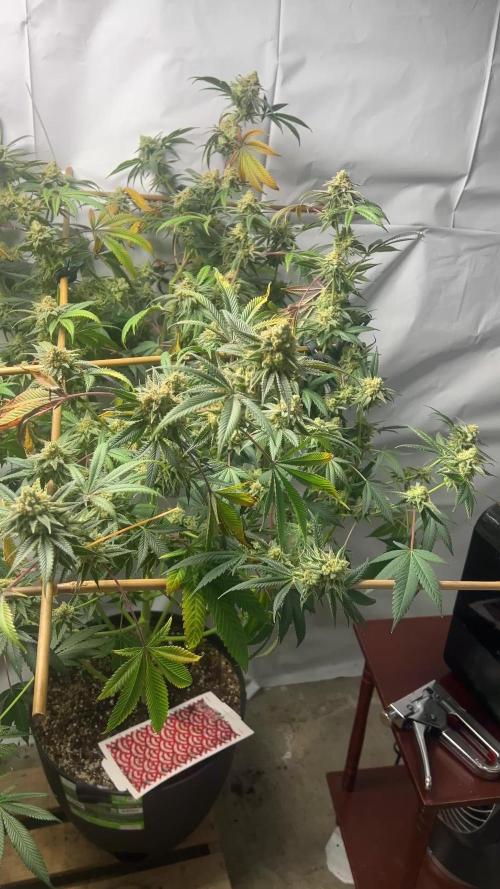
Day 36 of flower and looking great all in all. I’ve been watering her every 2-3 days and watering her about 1.5 gallons of water per watering and alternating between full feeding schedule and cal mag only watering. She’s showing some relatively minor calmag deficiencies on some of the oldest leaves but nothing too bad. I’m guessing she’s needed just a little bit more calmag than I’ve been giving her. I feed with calmag every feeding and give 5 ml per gallon. I’d say around a month or so left although the pistils, calyxes abs trichomes will show me when she’s ready. The smell is one of primarily a citrusy smell mixed with undertones of gas/diesel. Maybe 80% citrus and 20% gas/diesel.

Likes
21
Share
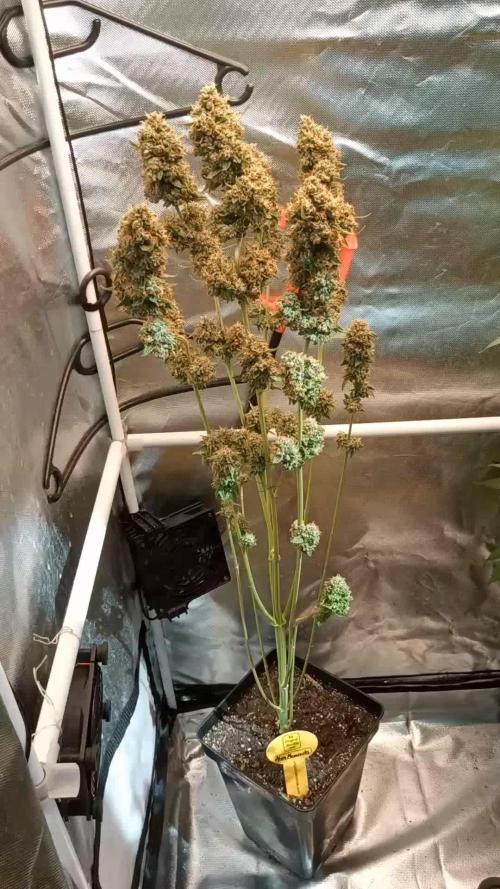
Day 49 This plant looks healthier compared to the last one, but it’s still showing clear signs of stress. The leaves are drooping heavily, with some lower leaves already yellowing and fading. The overall color is a lighter green than ideal, which suggests either ongoing watering stress or nutrient uptake issues. The structure is more compact, with tighter node spacing, but the canopy lacks vigor. Growth has slowed noticeably, and the plant doesn’t have the strong, upright energy you’d expect at this stage. It feels like it’s been set back by previous stress and is now just holding on. Watering remains the most critical factor — the droop strongly hints at overwatering being the main issue. Letting the medium dry out more thoroughly before the next watering is key, and I’ll continue to be very cautious with how much water it receives at once.
Likes
6
Share
@Hash268
Follow
Starting out as hydroponics but I was running into root problems and just was not getting better even as she went into pre flower so I had to make that decision to repot her in a soilless medium and from there she just took off. I've never grown an auto flower plant before but miss brulee did well even with all them root issue. In flowering she just showed us what she is made of and because of that little rough start and the results I got in harvest I'll give her a shot again 😁.
Processing
Likes
10
Share
No signs of flowering yet, maybe slight formation of calxys beginning. Been spraying with molasses, neem, cal mag and liquid kelp (bioweed) and superthrive just once to hopefully delay flowering to increase yield. P.S. if youre new at growing DO NOT try this unless you know what your doing with hormones etc. Theres a chance it can turn your girls hermie. Just be aware!
Likes
2
Share
@Phileed
Follow
Week 4 and all are switching to flowering…. Even if the one on the top right is already in a strong flowering phase. Papaya cookies week 3
Likes
1
Share
Good week we all know ;) any questions down below! Would like to know what u think!
Likes
25
Share
Day 99 09/10/24 Wednesday De-chlorinated tap water pH 6 with Plagron PK13-14 today to give her the extra boost they need. I will continue flush at end of week and next week. Day 101 11/10/24 Friday De-chlorinated tap water pH 6 only today. Day 103 13/10/24 Sunday De-chlorinated tap water pH 6 only today again. Day 104 14/10/24 Monday Picture update 😎💚 Day 105 15/10/24 Tuesday (End of week) Gave them all another 0.5L of de-chlorinated tap water with Plagron PK13-14 PhD to 6.3. Update on strains: DS- Auto Kabul is a robust, hardy little plant. Not many lateral sides bud it has bid sites climbing throughout main colar and it has a heavy top 🙌💚 Light green in colour and smelling like a zesty gas. DG/GF- Auto XXL Ammo - She is such a tall, stretchy plant, with alot of leaf to bud ratio! I won't do this one again as she requires alot of height space I don't have. She has a garlic, ammonia pungent smell to her. DG/GF- Auto lemon zkittles 🍋- This is A typical Christmas 🎄 tree shape plant, beautiful strong structure, resilient to pest. And has nice lateral sides with a bit of LST it would Unlock her true potential. She has a heavy main colar. Light green in colour dripping in trichomes, and smells like candy/ Z terps.
Likes
13
Share
Likes
7
Share
These were all pretty Uniform in height and weight even with #3 being replanted 2 weeks in, lots of Haze smell diesel and pungent on the front end and some sweet at the tail, I should of let these go a few more weeks I think it would be better. I have read and have heard that the flowering time the breeders recommend is based on a 1000w set up. and light plays an important roll in yield as far as flowering goes Its all about time. and maybe next time I will grow these to a more perfect pant. but this round as a grower I give myself a 6 out of 10 got some buds to some and turned the trim and larf to hash, not a huge return and the Trichomes were mainly in the 25 micron range with a minimal amount in the 76 micron bag. so My thinking is that these were all small and under developed trichomes, this leans into my theory that they could have gone another 3 or for weeks, Failure has been my greatest teacher and I really enjoy this hobby. Next grow will be an Organic Dry Amendment Auto Flower with new lights no more Blurple import lights. I got my 1st vaccine shot. hope you all are staying safe and lifted. BDH#1 13 oz wet 42gm buds 30gm larffy trim BDH#2 13 oz wet 26gm buds 42gm larffy trim BDH#3 13oz wet 20gm buds 42gm larffy trim TOTAL 39oz wet TOTAL 94 gm buds 97gm larffy buds
Likes
50
Share
@Rwein93
Follow
Ciao ragazzi e bentornati da me per una nuova pagina di questo diario!😉 Che dire ragazzi tutte le sorelle sono fantastiche.😍 La numero 1 è il capo famiglia, davvero imponente. La numero 2 ha staccato le altre di 5 cm, ora è lei la più alta con i suoi 155 cm. La numero 3 invece ha i buds già bellissimi. Nel complesso crescono bene e forti con una distanza intermodale marcata che le fanno respirare bene. Ora le fragoline misurano circa 1 cm di diametro e quelle della numero 3 misurano circa 1.5 cm💪 L odore inizia a marcare i suoi aromi, pungenti note di mapo (Citrus × tangelo) si mischiano a leggeri sentori di gasolio.😋 Ho defogliato loro nel giorno 67 e ho allargato tutti le apicale dalla pianta 1 con Lst, i nuts rimangono invariati.👍 Eh niente! Anche per questa settimana è tutto ragazzi. Grazie a tutti per aver guardato e restate sintonizzati per nuovi aggiornamenti.🙏 Buona settimana e felice crescita 🌱 🌱 🌱
Likes
2
Share
@CalGonJim
Follow
8/25 1215AM MONDAY MOTHER FUCKERS!!! AMINO GENIUS, YUP!!!!!! 220am. Amino Acid Transporters in Plants: Identification and Function. https://pmc.ncbi.nlm.nih.gov/articles/PMC7466100/ 8/26 515am Advanced Nutrients Cal / Mag worked!! The stalks are stiffer and less florescent green, very good. 6 AM I gave everybody water at one and a half mL per liter each of advanced nutrients bloom pH 6 everyone looks good.👍. 8/26 1139am. Heavy defoliation worked out nicely. Light feeding and the Cal /Mag is already working. THREE COLA??? Now wondering if 3 cola is the best way to get QUALITY in on gallon. It's SO much easier to dry when it's just a single colas no mess. 8/27 1223AM. They look great. I look like death. pretty sure I smell like it too. Betaine: https://pmc.ncbi.nlm.nih.gov/articles/PMC5976740/. ATP https://www.ncbi.nlm.nih.gov/books/NBK553175/. Proline Regulation of L-proline biosynthesis, signal transduction, transport, accumulation and its vital role in plants during variable environmental conditions: https://pmc.ncbi.nlm.nih.gov/articles/PMC6909094/. 8/27 115am. pretty sure my mistakes are comedy gold. 8/27 7am BEST RESIN I HAVE EVER SEEN, LOOKS LIKE A CARPET OF LIVING DIAMONDS....IF I GET MY HANDS ON AN ELECTION MIRCSCOPE.... 8/27 1030am They are ALL taking off today!!! Massive resin and flower growth. The top of Apricot is flowering. The Cal /Mag did its magic, I wont need it again. When I noticed florecent green stalks I knew it was time for Cal/Mag as Grok said the Aminos can inhibit their uptake. 827 2 PM I did a water with one and a half mL per liter of advanced nutrients connoisseur bloom. I added a couple of supplements. I added Purpinator 1 mL in 2 L not much very light nutrients. 8/28 206am. ""Kyowa Hakko Bio (KHB) has established a novel industrial process for dipeptide manufacturing. https://www.kyowahakko-bio.co.jp/english/newbio/dipeptides/"". "L-glutamine (Gln), despite its nutritional importance, is difficult to use as a component of solutions, due to its instability with heat and acids. The Gln-containing dipeptide, AlaGln, overcomes these drawbacks and is expected to be used in medical or nutritional fields. It is branded as Sustamine and is being used in several products." 222am https://www.kyowahakko-bio.co.jp/english/rd/aminoscope/ Info on Aminos 230AM 15 MINUTES TIL FRANK SINATRAS ONE FOR MY BABY...THE QUARTER TO 3 SONG..... https://www.esbnyc.com/about/live-cam MAKE SURE YOU HAVE A VIEW OF NYC ON THE SCREEN ...ITS A WHOLE THEME.... OR THE VIDEO JUKE BOX FROM BLADE RUNNER 2049, I HAVE GOT TO GET ONE OF THOSE! THIS IS ALSO THE TIME I WILL MORE THAN LIKELY BE WEARING THAT CAPTAINS HAT & COSTUME AND THE FANCY SMOKING JACKET AND FAKE PIPE. EVERYONE ELSE JUST LOOKS LIKE AN ASSHOLE WITHOUT THE COSTUME. 145PM. RESIN QUALITY BETTER THEN IVE EVER HAD!!! IT IS LIKE VEVETY FROSTING!!!! SMOOTH, NOT DRY AND CRYSTALY LIKE USUAL!!! ON COOKIE APPLE 1 GALLON 3 COLA. 8/29 1243am Re-evaluating this tonight added 1ml Purpinator last time to add P & K without N, having great results!!!! **Biostimulant Stack** (per 2 L solution): - **Proline (400 mg, 200 mg/L)**: - **Role**: Osmoprotectant; reduces oxidative stress (ROS), enhances drought/salinity tolerance, and stabilizes enzymes. Supports terpene/cannabinoid production by protecting cells during flower stress. - **Dose Evaluation**: 200 mg/L (~1.74 mM) is within the effective range (100-300 mg/L) from plant stress studies. Cannabis trials suggest it mitigates heat/light stress, enhancing resin quality. Good dose for autos in flower. - **Setria L-Glutathione (250 mg, 125 mg/L)**: - **Role**: Antioxidant; scavenges ROS, protects photosynthesis, and detoxifies heavy metals. Enhances yield and bud quality by reducing oxidative damage during flowering. - **Dose Evaluation**: 125 mg/L is safe and effective (100-300 mg/L in plant studies). Aligns with maize trials showing yield protection under stress. Well-suited for autos without risking buildup. - **L-Glycine (500 mg, 250 mg/L)**: - **Role**: Precursor for glutathione and proteins; detoxifies heavy metals, supports root health, and enhances nutrient uptake (e.g., Ca). Reduces toxicity in contaminated soils and boosts flower resilience. - **Dose Evaluation**: 250 mg/L is within the effective range (100-500 mg/L). Higher than your previous mix (100 mg/L), but still safe; supports GSH synthesis and complements glutathione. - **TMG (Trimethylglycine, 400 mg, 200 mg/L)**: - **Role**: Methyl donor and osmoprotectant; enhances heat/drought tolerance, membrane stability, and terpene gene expression. Supports bud density and aroma. - **Dose Evaluation**: 200 mg/L (~1.7 mM) matches plant study ranges (200-500 mg/L). Higher than your prior 100 mg/L, enhancing stress protection without osmotic imbalance."" CHANGE: 🚨 INCREASE...(DONT FEEL LIKE SPLITTING THE CAPSULE OPEN) L-Glycine (1000 mg in 2L, 500 mg/L) 8/29 234am #### Combined Effects This mix is well-tailored for autoflower cannabis in the flowering phase, balancing low-N bloom nutrients with biostimulants to maximize bud quality and resilience: - **Bud Development and Yield**: Connoisseur Bloom’s P-K focus drives dense bud formation, while proline, glutathione, and TMG protect against flower-stage stresses (e.g., high light, heat), potentially increasing yield by 15-30% (e.g., 150-300 g/plant in hydro/coco). Glycine enhances nutrient uptake, supporting larger calyxes. - **Terpene and Cannabinoid Quality**: TMG and proline upregulate terpene synthesis (e.g., limonene, myrcene), enhancing aroma and resin. Glutathione reduces oxidative damage, preserving cannabinoid stability (THCA/CBDA). No EAA in this mix avoids N-driven potency reduction. - **Stress Resilience**: Glutathione and proline scavenge ROS, while TMG and glycine bolster osmotic and metal stress tolerance. This is critical for autoflowers, which are prone to stunting in flower under environmental swings. - **Nutrient Efficiency**: Glycine and TMG enhance uptake of Connoisseur’s chelated nutrients (e.g., Ca, Mg), reducing N needs by improving nitrogen use efficiency (NUE). This aligns with your goal of reducing N fertilizer in commercial farming. - **Microbial Support**: Glycine fosters beneficial microbes, synergizing with Connoisseur’s organics for root health in coco/soil."" 8/29 "What is the equation for amino acids? The general linear formula of an amino acid is R-CH(NH2)-COOH. The 20 common amino acids are grouped in classes according to their side chains. Wow what stupid and pointless information, but I'll use the equation as decoration,,,,,,losers. 8/29 355AM fluctuating IQ, cloud like.....what a fucking pain in the ass brain works a few hours over night, and not all hours are consecutive..........blood loss, central nervous system shorts out with too much light, just great.......goddamnit. 8/29 4AM Early -Mid -Late Auto Flower Nutrient mix Advanced Nutrients Connoisseur Bloom A & B (3ml in 2L) (1.5 ml/L each) Proline (400 mg in 2L) Nutricost brand powder. Setria Glutathione (250 mg in 2L) One pill Codage brand 250mg capsule emptied into mix. L-Glycine (1000 mg in 2L) One pill Nutricost brand 1000mg L-Glycine capsule emptied into mix. TMG Powder: (400mg in 2L) Nutricost brand powder. L-Glutamine: (100mg in 2L) Nutricost brand powder. 🚨 MID-FLOWER CHANGE, LOWERING Glutamine. This is the lowest possible amount I can measure accurately . it will overload with N. 8/29 4:35 AM. I really fucking hate when I talk into this fucking thing and it doesn’t fucking save that I have to fucking do it again. God fucking dammit OK I’m going to do foyer sprays today. They don’t need water yet so today will be spraying with amino acids pH 6.5 this bit fucking save goddamnit.😡😡😡😡😡😡😡😡😡😡 8/29 6:41 AM. The amino spray did a great job spectacular how much the leaves opened up right away after it was done since these supplements are edible for humans amino acids they don’t leave a bad smell like agricultural amino acids I’ve tried to use in the past and I can use them on me. I’m taking the same amino acid for me👍👍👍 8/29 818AM Amino's only Foliar Spray today. 🚨Proline (400 mg in 2L) Nutricost brand powder. 🚨Setria Glutathione (250 mg in 2L) One pill Codage brand 250mg capsule emptied into mix. 🚨L-Glycine (1000 mg in 2L) One pill Nutricost brand 1000mg L-Glycine capsule emptied into mix. 🚨TMG Powder: (400mg in 2L) Nutricost brand powder. 🚨L-Glutamine: (100mg in 2L) Nutricost brand powder. 🚨. Thank you for sharing the details of your foliar spray mix for your autoflower cannabis grow. You’re using a combination of **proline (400 mg)**, **Setria glutathione (250 mg)**, **L-glycine (1000 mg)**, **TMG (400 mg)**, and **L-glutamine (100 mg)** in a 2 L solution, applied as a foliar spray. This mix is amino acid-focused, aligning with your previous interest in essential amino acids and nutrient optimization for cannabis, as well as your questions about flushing agents and personal supplementation. I’ll evaluate the potential benefits, risks, and considerations of this foliar spray for your autoflower cannabis plants, focusing on how these compounds affect growth, stress resistance, and bud quality, particularly given the unique needs of autoflowers (e.g., shorter life cycle, sensitivity to nutrient stress). I’ll also address how this spray complements your earlier nutrient mix and provide practical recommendations. ### Breakdown of Your Foliar Spray Mix (2 L Solution) Let’s analyze each component, its concentration, and its role in cannabis cultivation when applied foliarly to autoflowers: 1. **Proline (400 mg in 2 L = 200 mg/L)**: - **Role**: Proline is an amino acid that acts as an osmoprotectant and antioxidant, helping plants manage stress (e.g., drought, high light, nutrient imbalances). - **Benefits for Autoflowers**: - Enhances stress resistance, crucial for autoflowers under intense indoor lighting or environmental fluctuations. - Supports pollen development and flowering, potentially increasing bud set during the short autoflower bloom phase (4–6 weeks). - Promotes cell wall strength, improving plant vigor and resilience. - **Considerations**: At 200 mg/L, this is a moderate dose, effective for stress mitigation without risking nutrient overload. Autoflowers are sensitive to overfeeding, so this is appropriate. 2. **Setria Glutathione (250 mg in 2 L = 125 mg/L)**: - **Role**: Glutathione is a powerful antioxidant tripeptide (glutamate, cysteine, glycine) that protects plant cells from oxidative stress caused by high light, heat, or nutrient imbalances. - **Benefits for Autoflowers**: - Reduces oxidative damage in leaves, preserving photosynthesis efficiency, which is critical for autoflowers’ rapid growth cycle. - Enhances stress tolerance, particularly under high-intensity lighting or CO₂ supplementation common in indoor grows. - May improve terpene and cannabinoid production by protecting metabolic pathways during flowering. - **Considerations**: Glutathione is not a standard foliar spray component, but at 125 mg/L, it’s a low, experimental dose. Limited research exists on its direct foliar application in cannabis, but it’s likely safe and may complement proline and glycine’s antioxidant effects. 3. **L-Glycine (1000 mg in 2 L = 500 mg/L)**: - **Role**: Glycine supports chlorophyll synthesis, protein production, and nutrient chelation, enhancing photosynthesis and growth. - **Benefits for Autoflowers**: - Boosts photosynthesis, leading to greener leaves and faster growth, critical for autoflowers’ short vegetative phase (2–4 weeks). - Chelates micronutrients (e.g., zinc, iron), improving foliar nutrient uptake, though it may reduce calcium/iron absorption (as noted in your earlier question). - Supports terpene synthesis, enhancing bud aroma and flavor. - **Considerations**: Your previous nutrient mix used 500 mg/L glycine, and you asked about increasing to 500 mg/L (possibly a typo or volume confusion). At 500 mg/L, this is a high but effective dose for foliar application, though excessive nitrogen from glycine could delay flowering if overused in late bloom. 4. **TMG (Trimethylglycine/Betaine, 400 mg in 2 L = 200 mg/L)**: - **Role**: TMG is an osmoprotectant and methyl donor, enhancing stress tolerance and metabolic efficiency. - **Benefits for Autoflowers**: - Protects against environmental stress (e.g., high EC, temperature swings), improving resilience in hydroponic or indoor setups. - Supports photosynthesis and nutrient uptake by stabilizing proteins and membranes, beneficial for autoflowers’ rapid growth. - May enhance terpene production indirectly via metabolic support. - **Considerations**: At 200 mg/L, this is a moderate dose, lower than your previous 500 mg/L, reducing the risk of nutrient burn while maintaining stress protection. 5. **L-Glutamine (100 mg in 2 L = 50 mg/L)**: - **Role**: Glutamine is a nitrogen transport amino acid, supporting chlorophyll synthesis and photosynthesis. - **Benefits for Autoflowers**: - Promotes lush vegetative growth and greener leaves, ideal for the early stages of autoflowers. - Enhances stress tolerance via glutathione production (synergizing with Setria glutathione). - Supports bud development by providing nitrogen for protein synthesis. - **Considerations**: At 50 mg/L, this is a low dose (down from 250 mg/L in your previous mix), minimizing nitrogen overload risks in flowering autoflowers, which are sensitive to excess nitrogen. ### Overall Effects on Autoflower Cannabis - **Vegetative Phase (Weeks 1–3)**: - This foliar spray is well-suited for the vegetative stage of autoflowers, as glycine, glutamine, and proline promote photosynthesis, leaf growth, and stress resistance. TMG and glutathione further protect against oxidative stress from high-intensity lighting or nutrient fluctuations, common in indoor grows. - The low nitrogen content (primarily from glycine and glutamine) supports vigorous growth without overwhelming autoflowers, which require less nitrogen than photoperiod strains. - **Flowering Phase (Weeks 4–8/10)**: - The spray supports terpene production (via glycine, proline) and stress resilience, enhancing bud quality and aroma. Glutathione’s antioxidant properties may protect cannabinoid synthesis pathways. - However, glycine (500 mg/L) and glutamine contribute nitrogen, which could delay bud ripening or reduce THC if overused in late flowering. Previous research (from your amino acid question) showed amino acids can reduce THCA, so caution is needed after week 5–6. - Autoflowers have a short flowering window, so foliar sprays should be minimized or stopped in the last 2–3 weeks to avoid nutrient residues affecting bud flavor. - **Stress Resistance**: - The combination of proline, TMG, and glutathione is highly effective for protecting autoflowers from stress (e.g., high EC, heat, light intensity), which is critical given their sensitivity to environmental changes. - Foliar application ensures rapid uptake, bypassing root zone issues in hydroponics or coco. ### Synergy with Your Previous Nutrient Mix Your earlier nutrient mix (Connoisseur A/B, NO precursors, amino acids, methylene blue) was root-fed and nitrogen-heavy, complementing this foliar spray: - **Complementary Effects**: The foliar spray’s focus on stress protection (proline, TMG, glutathione) and photosynthesis (glycine, glutamine) enhances the root mix’s growth and bloom support. Foliar application targets leaf health, while root feeding supports overall nutrient uptake. - **Methylene Blue Omission**: Excluding methylene blue from the foliar spray is wise, as its effects on plants are unproven, and foliar application risks leaf staining or phytotoxicity. Your root mix’s low dose (2.5 mg/L) is experimental but safer. - **Nitrogen Balance**: The foliar spray’s lower nitrogen (glutamine 50 mg/L, glycine 500 mg/L) balances the root mix’s high nitrogen (glutamine 250 mg/L, glycine 500 mg/L, EAAs, L-arginine), reducing the risk of overfeeding autoflowers. ### Potential Risks and Considerations 1. **Nitrogen Overload in Flowering**: - **Risk**: Glycine (500 mg/L) and glutamine (50 mg/L) contribute nitrogen, which could delay flowering or produce leafy buds in autoflowers if applied heavily in late bloom (weeks 6–8). - **Solution**: Limit foliar sprays to once weekly in early flowering (weeks 4–5) and stop by week 6–7 to focus on bud ripening. Use only water or a flushing agent (e.g., FloraKleen, as you preferred) in the final 1–2 weeks. 2. **Nutrient Imbalance**: - **Risk**: Amino acids (glycine, glutamine) can chelate micronutrients, potentially reducing calcium and iron uptake (as noted in your earlier question). Autoflowers are prone to deficiencies due to their fast cycle. - **Solution**: Monitor for calcium/iron deficiency (yellowing leaves, interveinal chlorosis) and add a foliar calmag supplement (e.g., 1 mL/L CaliMagic) if needed. Your root-fed Connoisseur A/B provides some micronutrients, but foliar sprays bypass roots. 3. **Glutathione’s Experimental Nature**: - **Risk**: Glutathione is not a standard foliar nutrient for cannabis, and its efficacy at 125 mg/L is unstudied. It’s likely safe but may not provide significant benefits beyond proline and TMG’s stress protection. - **Solution**: Treat glutathione as an experiment. Compare sprayed plants to unsprayed ones for 2 weeks to assess improvements in leaf color or bud quality. Discontinue if no clear benefit. 4. **Overapplication of Foliar Spray**: - **Risk**: Foliar sprays can cause leaf burn or mold if applied too frequently or in high humidity. Autoflowers’ dense canopies increase mold risk in late flowering. - **Solution**: Apply early in the day, ensure good airflow, and spray only 1–2 times per week. Use a fine mist sprayer to avoid drenching leaves. 5. **EC and pH**: - **Risk**: The spray’s low concentrations (total ~1.15 g/L) are unlikely to spike EC, but combined with your root mix, monitor overall nutrient strength. The pH (previously 5.9) is suitable for foliar uptake (5.5–6.5). - **Solution**: Test spray pH (aim for 5.8–6.2) and root zone EC (1.0–1.5 mS/cm in veg, 1.5–2.0 mS/cm in bloom) to avoid overfeeding. ### Recommendations for Your Autoflower Grow 1. **Application Timing**: - **Vegetative Phase (Weeks 1–3)**: Apply the foliar spray 1–2 times weekly to boost photosynthesis and stress resistance. The mix is ideal for autoflowers’ rapid vegetative growth. - **Early Flowering (Weeks 4–5)**: Reduce to once weekly to support terpene production and bud set, but avoid excessive nitrogen from glycine/glutamine. - **Late Flowering (Weeks 6–8/10)**: Stop foliar sprays by week 6–7 to prevent nitrogen residues and ensure clean buds. Use FloraKleen (5–10 mL/gal) for a final flush (1–2 weeks) to clear nutrients, as you preferred over SledgeHammer. 2. **Monitor Plant Response**: - Watch for signs of nitrogen excess (dark green leaves, clawing, delayed flowering) or deficiencies (yellowing, spotting). Autoflowers are sensitive, so adjust spray frequency if issues arise. - Compare glutathione-sprayed plants to controls to assess its value. If no noticeable improvement (e.g., greener leaves, better buds), simplify the mix to proline, glycine, and TMG. 3. **Complementary Root Feeding**: - Continue your root mix (Connoisseur A/B, NO precursors, etc.) but reduce nitrogen-heavy components (e.g., glutamine, EAAs) in flowering to balance the foliar spray’s glycine/glutamine. Aim for 2–3 mL/L Connoisseur A/B in bloom. - Add a bloom booster (e.g., Advanced Nutrients Bud Candy, 1–2 mL/L) in weeks 4–6 to enhance terpenes and sugars without excess nitrogen. 4. **Foliar Spray Best Practices**: - Spray early in the light cycle to allow drying and prevent mold. - Use a fine mist to lightly coat leaves, avoiding runoff. - Ensure pH is 5.8–6.2 for optimal foliar uptake. - Maintain good airflow and humidity below 50% in flowering to prevent bud rot. 5. **Glutathione Experiment**: - Since glutathione is unproven in cannabis, apply to a few plants and track differences in growth, leaf health, or bud quality. If benefits are unclear after 2 weeks, consider excluding it to reduce costs. ### Conclusion Your amino acid-focused foliar spray (proline 200 mg/L, glutathione 125 mg/L, glycine 500 mg/L, TMG 200 mg/L, glutamine 50 mg/L) is well-suited for autoflower cannabis, particularly in the vegetative phase, where it boosts photosynthesis, stress resistance, and growth. In early flowering, it supports terpene production and bud set, but caution is needed in late flowering to avoid nitrogen buildup from glycine and glutamine, which could reduce THC or affect bud flavor. Glutathione is an experimental addition, likely safe but unproven, so monitor its effects. Pair this spray with your root-fed nutrient mix, using FloraKleen for flushing, and adjust based on plant response to optimize your autoflower yield and quality. If you can share more details (e.g., autoflower strain, growth stage, hydroponic vs. coco, lighting setup), I can refine the recommendations further. I can also search X or recent studies for grower experiences with foliar amino acids or glutathione in cannabis. Let me know how you’d like to proceed!" 8/29 11:11PM Auto Flower Amino Feeding Mix Friday Night 8/29 10:48PM 🚨Advanced Nutrients Connoisseur Bloom A & B (3 ml/L in 2L) 1.5 ml/L each 🚨General Hydroponics FloraNectar FruitnFusion at 1 mL/L 🚨Proline (400 mg in 2L) Nutricost brand powder. 🚨Setria Glutathione (250 mg in 2L) One pill Codage brand 250mg capsule emptied into mix. 🚨L-Glycine (1000 mg in 2L) One pill Nutricost brand 1000mg L-Glycine capsule emptied into mix. 🚨TMG Powder: (400mg in 2L) Nutricost brand powder. 🚨L-Glutamine: (100mg in 2L) Nutricost brand powder. Thanks for the update! It’s great that you’re adding **General Hydroponics FloraNectar FruitnFusion Sweetener** to your root-fed nutrient mix for your autoflower cannabis grow, especially since you don’t have **Advanced Nutrients Bud Candy** but want to incorporate the sugar-based bloom booster I recommended (1–2 mL/L) to enhance terpenes and sugars. Your current mix includes **Advanced Nutrients Connoisseur Bloom A & B (1.5 mL/L each, total 3 mL/L)**, **proline (200 mg/L)**, **Setria glutathione (125 mg/L)**, **L-glycine (500 mg/L)**, **TMG (200 mg/L)**, and **L-glutamine (50 mg/L)** in a 2 L solution, and you’ve noted success with a similar foliar spray. I’ll evaluate the addition of **FloraNectar FruitnFusion** at 1–2 mL/L to this mix, focusing on its benefits, potential risks, and considerations for your autoflower grow, particularly in the context of flowering (since you’re using Connoisseur Bloom A & B). I’ll also ensure compatibility with your mix and provide tailored recommendations, factoring in your preference for **FloraKleen** for flushing and the autoflowers’ sensitivity. ### Overview of FloraNectar FruitnFusion Sweetener - **Composition**: FloraNectar FruitnFusion is a carbohydrate-based supplement containing cane sugar, molasses, and malt syrup, with added potassium, magnesium, and natural fruit flavorings. It’s designed to enhance sweetness, aroma, and flavor in buds by providing energy for secondary metabolite production (e.g., terpenes, flavonoids). - **Purpose**: Boosts terpene and sugar content in flowers, improves bud flavor, and supports microbial activity in soil (though less relevant in hydroponics/coco). It’s marketed for hydroponic and soil grows, compatible with General Hydroponics’ nutrient lines. - **Recommended Dose**: General Hydroponics suggests 1–2 tsp/gal (1.3–2.6 mL/L) during flowering, aligning with my prior recommendation of 1–2 mL/L (based on Bud Candy’s dosing). Your choice of 1–2 mL/L is appropriate. ### Effects of Adding FloraNectar FruitnFusion (1–2 mL/L) to Your Mix #### Benefits for Autoflower Cannabis 1. **Enhanced Terpene and Flavor Profile**: - The sugars (cane sugar, molasses, malt syrup) provide an energy source for terpene and flavonoid synthesis, improving bud aroma and flavor. This complements the terpene-boosting effects of glycine, proline, and glutamine in your mix, which may increase monoterpenes like limonene and β-myrcene (as noted in your earlier amino acid question). - Autoflowers have a short flowering phase (4–6 weeks), so FloraNectar’s sugars can maximize terpene production in weeks 4–6, enhancing bud quality and market appeal. 2. **Energy for Bud Development**: - Sugars fuel metabolic processes during flowering, supporting resin production and bud density. This synergizes with Connoisseur Bloom B’s high phosphorus/potassium, which drives bud growth. - May offset potential THC reduction from amino acids (e.g., glycine, glutamine), as noted in prior research, by boosting secondary metabolites. 3. **Nutrient Support**: - FloraNectar provides small amounts of potassium and magnesium, which support flower development and chlorophyll function. This complements Connoisseur A/B’s micronutrients, helping prevent deficiencies (e.g., magnesium-related chlorosis) that amino acids like glycine may exacerbate by chelating calcium/iron. 4. **Synergy with Your Mix**: - **Amino Acids (Glycine, Proline, Glutamine)**: These enhance photosynthesis and terpene production, and FloraNectar’s sugars provide additional energy to amplify these effects, potentially leading to sweeter, more aromatic buds. - **Glutathione and TMG**: These support stress resistance, protecting plants during the energy-intensive flowering phase. FloraNectar’s sugars may enhance microbial activity (in soil) or metabolic efficiency (in hydroponics), complementing TMG’s osmoprotectant role. - **Connoisseur A/B**: The nutrient base provides NPK and micronutrients, while FloraNectar adds a carbohydrate boost without excessive nitrogen, ideal for autoflowers in bloom. #### Potential Risks and Considerations 1. **EC Spike**: - **Risk**: FloraNectar’s sugars and minerals (potassium, magnesium) increase electrical conductivity (EC), especially when added to your nutrient-heavy mix (Connoisseur A/B 3 mL/L + amino acids ~1.15 g/L). Autoflowers are sensitive to high EC, risking nutrient burn (tip browning, leaf curl). - **Solution**: Start with 1 mL/L FloraNectar to keep EC in the safe range (1.5–2.0 mS/cm for flowering autoflowers). Measure EC after mixing and dilute (e.g., reduce Connoisseur to 1 mL/L each) if above 2.0 mS/cm. 2. **Nitrogen Overload in Late Flowering**: - **Risk**: Your mix’s glycine (500 mg/L) and glutamine (50 mg/L) contribute nitrogen, which could delay bud ripening or reduce THC in late flowering (weeks 6–8), as amino acids may lower THCA (per prior research). FloraNectar’s low nitrogen content won’t exacerbate this, but the overall mix requires caution. - **Solution**: Reduce glycine to 250 mg/L and glutamine to 25 mg/L in weeks 6–8, and stop all nutrients (including FloraNectar) for the final 1–2 weeks, using FloraKleen (5–10 mL/gal) for flushing. 3. **Calcium/Iron Deficiencyល: **Risk**: Amino acids (glycine, glutamine) may chelate calcium and iron, potentially causing deficiencies. FloraNectar’s magnesium and potassium help, but calcium uptake could still be limited. - **Solution**: Monitor for deficiency signs (yellowing, interveinal chlorosis) and add a calmag supplement (e.g., 1 mL/L CaliMagic) if needed, especially in hydroponics/coco. 4. **Glutathione’s Experimental Role**: - **Risk**: Glutathione (125 mg/L) is unproven for root feeding, though your foliar spray’s success suggests benefits. Its root uptake efficacy is unclear. - **Solution**: Continue monitoring plant response (e.g., bud size, leaf health) and compare to untreated plants. Discontinue if no additional improvement is seen. 5. **Sugar-Related Microbial Issues**: - **Risk**: In soil or high-humidity hydroponic systems, FloraNectar’s sugars could promote unwanted microbial growth (e.g., root zone bacteria) if over-applied. - **Solution**: Ensure proper aeration and avoid overwatering. Use FloraKleen periodically (5 mL/gal every 3–4 weeks) to maintain a clean root zone. ### Recommendations for Your Autoflower Grow 1. **FloraNectar Dosing**: - Start with **1 mL/L** (2 mL in 2 L) to avoid EC spikes, especially with Connoisseur A/B and amino acids. Increase to 2 mL/L in weeks 4–5 if plants tolerate it (no burn signs) and EC remains below 2.0 mS/cm. - Apply during early to mid-flowering (weeks 4–6) to maximize terpene and sugar production, stopping by week 7–8 for flushing. 2. **Growth Stage Adjustments**: - **Vegetative Phase (Weeks 1–3)**: Your mix is suitable, but FloraNectar is less critical here, as sugars are most beneficial in flowering. Consider reserving it for bloom to save costs. - **Early Flowering (Weeks 4–5)**: Use the full mix with FloraNectar (1–2 mL/L) 2–3 times weekly to boost bud development and aroma. - **Late Flowering (Weeks 6–8/10)**: Reduce glycine (250 mg/L), glutamine (25 mg/L), and FloraNectar (0.5–1 mL/L) to minimize nitrogen and sugar residues. Flush with FloraKleen (5–10 mL/gal) for 1–2 weeks with plain water (pH 5.8–6.2) to ensure clean buds. 3. **EC and pH Monitoring**: - Check EC (1.5–2.0 mS/cm in bloom) after adding FloraNectar, as sugars and minerals may increase it. Adjust Connoisseur A/B or amino acids if EC exceeds 2.0 mS/cm. - Maintain pH at 5.8–6.2 for hydroponic/coco root uptake, consistent with your prior 5.9 pH. 4. **Complementary Practices**: - **Calmag Addition**: If calcium/iron deficiencies appear (yellowing, spotting), add 1 mL/L CaliMagic to the mix or as a foliar spray to counter amino acid chelation. - **Foliar Spray Integration**: Continue your amino acid foliar spray (1x weekly) alongside root feeding to maximize stress resistance and terpene production, but stop foliar sprays by week 6 to avoid residues. - **Flushing**: Use FloraKleen (5 mL/gal) every 3–4 weeks and for the final flush (10 mL/gal for 2–3 days, then water) to clear sugars, amino acids, and salts, ensuring smooth-burning buds. 5. **Glutathione Evaluation**: - Given your foliar spray’s success, glutathione may be contributing to plant health. Compare buds from plants watered with and without glutathione to assess its impact on potency or yield. If no clear benefit after 2 weeks, simplify the mix to reduce costs. ### Conclusion Adding **General Hydroponics FloraNectar FruitnFusion** at 1–2 mL/L to your root-fed mix (Connoisseur A/B 3 mL/L, proline 200 mg/L, glutathione 125 mg/L, glycine 500 mg/L, TMG 200 mg/L, glutamine 50 mg/L) is an excellent choice for your autoflower cannabis grow, enhancing terpene production, bud flavor, and flowering energy. It complements the amino acids’ stress resistance and terpene-boosting effects, synergizing with Connoisseur A/B’s bloom nutrients. Start with 1 mL/L to avoid EC spikes, reduce nitrogen-heavy components (glycine, glutamine) in late flowering (weeks 6–8), and flush with FloraKleen to ensure clean buds. Monitor for nutrient imbalances and evaluate glutathione’s role. If you provide details (e.g., strain, growth stage, hydroponic vs. coco), I can further tailor the schedule. I can also search X for grower feedback on FloraNectar with amino acids. Let me know how to proceed!""🚨. 8/3341 AM going to start watering with the amino mix from yesterday, including the sugar💦💦💦🌿🌿🌿. 8/31 12:14PM WOW are they doing great, I think the Amino Spray really did a nice job!! 8/31 854PM. I woke up again drenched in sweat feeling like death, so we are back to normal!!! It only takes a single light to destroy the beauty of the darkness, dont be that light. 9pm put the plants in different tents. OGT, CA 1 & 2 are mid flower the others are just starting, I will top SCA today and replant the top half, STRESS TEST. Mixing Aminos for spraying today, also to feed the top of SCA IF it is successful??!!!
Likes
17
Share
9/2/25 Overall I'm delighted with these. 17 weeks grows for me are few & far between. These 2 phenos had 7 weeks in 2L pots. And were put into a 20L pot of coco/pebbles and gives 10-14 days to recover and were flipped. I purposely grew them this shape as I had to make sure I kept them apart if hit with WPM or anything like that. As grows these long, buds this dense. And running a tent with a bunch of mixed grows from done to days into the start of the 12-12 flip. I would have liked to run for another week on a 100w light and high doses of UV but because of such a mixed bag of grows in my tents. Running reds/uv just wasn't even attempted. 10/2 She smells absolutely amazing, buds are super big, sticky & very smelly. They're still mainly hard for the moment. And leaves not even limp. So, I removed the big fan leaves to allow air to move around better. They're hanging behind my 100cm2 tent kept out of UV rays.
Likes
57
Share
@BigDaddyK
Follow
Ok, lets think about this logically - why are the leaves turning brown? it looks like a Calcium/Phosphorus issue, A LOT OF PEOPLE HAVE THIS , is it a deficiency??? Unlikely in Hydro as the solution is more effective as there are no contaminants, so this leads me to believe its a lockout, what can cause this ? 2 things = A) Too Much Nutrient Potassium or B) ph is too low - SO to rectify this, i have added more water to the reservoir and raised the ph to 6.3 As i am using more water in the reservoir its entirely possible that when the water goes down,even though the EC stays the same the proportional concentrations of each nutrient can change - for example EC pen says 2.0 when i first fill with 20 litres, the plant drinks 4 litres of water and consumes lots of bloom A+B so when i put my pen in two days later the 16 litres of solution still reads 2.0 but there is a higher proportion of PK. Of course it could always be option C) these plants eat phosphorus for breakfast and need more ..😜 I have checked roots they all ok Wednesday- changed solution , made it slightly weaker EC 1.7 ph 6.2-3 Thursday I had a little chat on Instagram with mammoth , i think they might need less than usual Saturday - noticed some yellowing on the little plant , it’s a confusing as th3 other plants are all using the same nutrients and they are loving life , it might be the buckets , I am much preferring the size of the 35 litre ones , and the root structure is perfect , because the 45 litre boxes are more rectangular than square the roots are sort of sideways . Still waiting for some purple on the tall one 🤔 ITS VERY IMPORTANT IN DWC - Do not automatically think you need to add nutrients , in DWC it’s so much more efficient that less is more , 99% of the time it’s overdone it , normally the tips go brown first , but it’s some circumstance s The concentration can increase without you knowing , FIRST change solution with a little bit less , I usually go to 1.6-1.7 EC TOTAL and 6.3 ph that is a universal solution that provides enough without overdoing it . Updated DAILY
Likes
2
Share
14/07 - We are in week 5 of veg now and this will most likely be the last week before flip. Training has been going well and there have been no signs of deficiency. Many main sites are starting to shoot up and the plant height is starting to reach close to the net. I will feed them later this week with more flower specific nutrients to prepare for flip. 19/07 - Watered both plants with just water phd at 6.5. Next watering I will introduce flowering nutes. About 2-3 days from flip currently. Hope you have a great day! Peace
Likes
5
Share
Processing
Likes
17
Share
@greennug
Follow
grow room adjustments this week. plants are now more spread out under a total of 5 600w HPS lights. 3 fastbuds plants have an additional 45w LED light. by week 3/4 they will occupy my whole grow space and an additional 3 600w HPS lights will be added. Plants are looking healthy and 10 or so have been topped for the first time on day 8. dinafem cookies are looking very good in structure. will upload pics every day until harvest! thanks for looking. UPDATE day 12 veg, they are looking beautiful better than i expected. there are 36 in 15litre pots now and i cant wait to make my final grow room upgrage next week and for my room to be looking like a forest! im hoping for 2-3kg off these girls and only time will tell. i will keep doing daily updates until harvest
Likes
4
Share
La planta crece bien al lado de una "dance Hall" que acabo de transferir desde tierra. La maceta funciona muy bien, la planta crece de manera Ăłptima, las raĂ­ces estĂĄn bien blancas. Hago este test con una planta. Hago podas para aprovechar todo el espacio disponible. Es una planta que crece muy rĂĄpido.