The Grow Awards 2026 🏆
Likes
78
Share
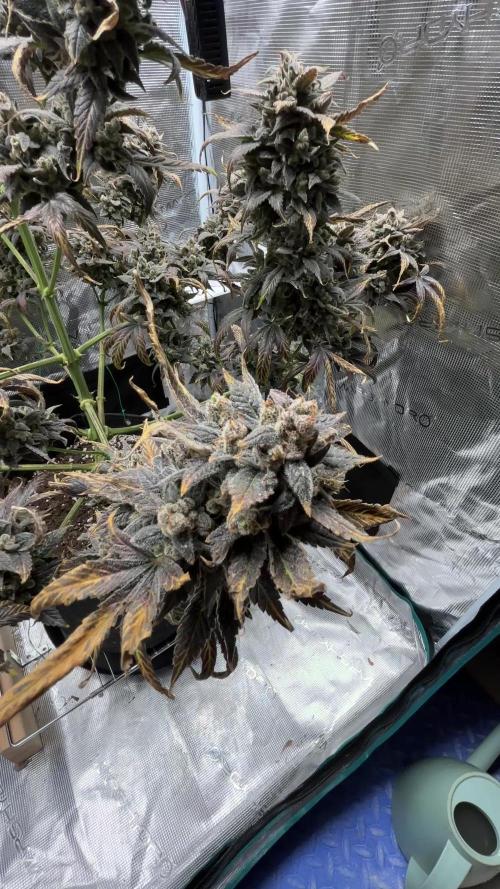
This is my second time growing a Girl Scout Cookies autoflower! She turned out amazing! She showed signs of high potency, from early on in flower!
Likes
26
Share
@MG2009
Follow
03/13/2021 Side branches are developing nice, I may do a little more lst to help lower tops to catch up before flowering starts Ps. Couple videos uploaded Day #6 doing some bending, and broke a branch off so I dipped in rooting powder,threw it in some vermiculite soaked with Bonide Garden Rich Root & Grow 4-10-3 with (IBA) Lets see if she will root! Fingers crossed🙏
Likes
4
Share
Poderia ter saĂ­do melhor mais foi muito boa a experiĂȘncia !! ValeuâœŒïžđŸŒđŸ‘œ600
Likes
2
Share
@ChiTaN
Follow
It's been another successful week.It's another successful week. The girls will soon get mineral food because the deficits are definitely too large despite the increase in food doses.đŸ’Ș
Likes
3
Share
@Wiffz_CBD
Follow
.5tsp of Recharge added to self watering pots. Roughly.5tsp/1.5 gal I put her in with her clones for the last 13 days. Working on the time lapse from seed to now.
Likes
12
Share
2ÂȘ Settimana di Fioritura 💐: La bella e vigorosa Critical Lemon⚡🍋, Continua nella sua crescita e mette in mostra tutti i suoi nuovi fiori!😍 Sotto il vigile controllo di TENT-X đŸ€–, la piccola sta dando il suo massimo nel vaso da 6,5 litri...... Abbiamo settato anche alba e tramonto con una durata di 10 minuti (figata) â˜șïžđŸ‘đŸ»đŸ‘đŸ»
Likes
3
Share
well my girl is in her final days. My scope is broken so I need some insight, her flowers look so ripe, this update had to be for tomorrow but she looks so good don't want to get an over ripe bud need her to be perfectâœ‚ïžâœ‚ïžâœ‚ïžâœ‚ïžâœ‚ïžâœ‚ïžâœ‚ïžâœ‚ïžâœ‚ïžâœ‚ïžđŸ”đŸ”đŸ”
Likes
33
Share
Hey guys welocome in week 10 of the flowering Sensi Seeds Silver Haze, there is bot Michael to tell inkt that the plants react good in swiching nutrients, buds are lightly covered in crystals, buds getting denser by the day and there is already a nice sweet smelly welkome when i open the tent. The clowns starters to chill and are growing perfecly fine, startend to give a little bit of nutrients. Thats it see you guys in week 11!
Likes
6
Share
6 plants temporary moving out to the new room until new seeds arrive 4 days later: 9 more (all) plants moving out to the new room ____________________________________________ light- and watering schedule: see photos now: 15 plants 3 x Auto Orange Bud > Dutch Passion (early80's) 1 x Haze Berry Automatic > Royal Queen Seeds (2018) 2 x Auto Euforia > Dutch Passion (late 90's) 2 x Auto Bubblegum > TH Seeds (late 80's) 2 x Original Auto BubbleGum > Fast Buds Company (late 80's) 1 x Strawberry Pie Auto > Fast Buds Company 1 x Gorilla Cookies Auto Seed Stockers (2015) 2 x Auto White Widow x Big Bud > Female Seeds setup + strategy: 18 seeds 3 x Auto Orange Bud > Dutch Passion (early80's) 3 x Haze Berry Automatic > Royal Queen Seeds (2018) 3 x Auto Euforia > Dutch Passion (late 90's) 2 x Auto Bubblegum > TH Seeds (late 80's) 2 x Original Auto BubbleGum > Fast Buds Company (late 80's) 2 x Strawberry Pie Auto > Fast Buds Company 1 x Gorilla Cookies Auto Seed Stockers (2015) 2 x Auto White Widow x Big Bud > Female Seeds setup: 18 x gronest 2 liter 60 cm x 120 cm x 180 cm (2 x 4) growtent 4 l humidifier 25 watt axial fan 15 watt clip fan ro-filter bath room with a 50 watts room fan (-> carbon filter not necessary) ...and a lot of odds and ends. grow strategy: max yield by stressing with: 1. tiny shoes (2 l fabric pots standing on 3 plastic rings (4 cm) for max oxygen) 2. tiny growspace (18plants on 0.72 sqm) 3. many strains (8 strains) 4. annoying neighbourhood (mixing old - i.e. bubblegum (late 80's) - with young- i.e. hazeberry (2018) - genetics) 5. no stress by light or food or water 6. unintentionally too much food plus: - no lst - no hst - just leaf tucking - positioning bigger strains (euphoria, orange bud, haze berry) or just bigger phenos on less intense light spots (end of tent + edges) - music-rotation: 24 hrs reggae (for sativas) - 24 hrs classicals (because it's scientifically proofed) - 24 hrs traditionals from the hindukush region (for the indicas) max efficiency (min electricity - max yield): - light: 23 h on - 1 h off - keeping the distance of 18" (45 cm) and dimming to the right par (lux) - value depending on growing stages (see sheet: beginning 185 par ( 10000 lux/100 watt )/end 340 par ( 18000 lux/175 watt )) => ends up in approx. 170 watts in average over max 15 weeks temperatur management: - using approx. max. half of what the lamp can do keeps temperature low: my tsl 2000 is pulling max. 360 watts of the wall - i need only 175 watts, results in less temperature than using a 175 watts lamp - adjusting the temperature by using a humidifier outside of tent: blown in humidity is soaking degrees and is transported out by fan, works much better than doing the same with pure air summer extreme: no humidifier: 36°C / 35 rh - with humidifier: 29°C / 65 rh works for 1-2 weeks of real hot summer days, no mould, no signs of stress in two summers germination: seeding in waterglass spraying "basic"-water: ro-water (22 ppm) + calmag to 180 ppm every 4 - 8 hours until sprouted man versus fungus gnat: 5 days before seeding i'm running the tent with "basic"-watered pots as if there were plants inside - led on, fans on, humidifier on. Fungus gnats coming with the soil might take the chance to come out now for breeding. i'm waiting with a 9 mm rifle. in the past i found 6 gnats in 2 of 8 x 50 l biobizz lightmix bags coming out of the soil. i could eliminate every single gnat successfully ;) rotating harvest: the little ones will be harvested completely when ready. at this point only the top branches of the big ones will be cut...and the new (basic-watered) pots of the new grow will move into the tent. 2-3 weeks later the secod half of the big ones will be cut and the second half of the new grow will move in... nutes: biobizz / soil: biobizz lightmix bloom,grow,topmax,activera,algamic + aminopower instead of bio heaven (too expensive) individual feeding schedule/once a week: veg: 200 - 600 ppm bloom: 600 - 900 ppm water: ro-water with: veg: 100-150 ppm calmag bloom: 150 ppm calmag
Likes
60
Share
@Natrona
Follow
FBA2502 Week 3 April 13-19 Veg 2 This week I introduced nutrients to the watering schedule. My planned feed schedule will be to feed, feed, water each week until the time to flush. , adjusting nutrients per the growth cycle. Hopefully this will keep from overfeeding and reduce salt build up in the soil. Nutrients: I will be using General Hydroponics Flora line at œ feed rate and Cal mag throughout this grow. My tap water measures 8.3-8.5 so even after adding nutrients, I have to PH down my feed solution. Regarding nutrients, I’ve tried Fox Farm, TPS1, Plagron and now General Hydroponics. What I am looking for is organic, ease of use, minimal individual bottles that will yield large, dense sticky buds that hit hard in effect. Plants range in height from 5-7” except #1 which has been pinned to the soil. I will try wrapping her around the perimeter of the pot. Since she leaned over, I pinned her down and have been anchoring along the rim, twisting the stem so the node is on the side or top rather than underneath. I don’t think she likes training since the stems are a bit floppy. They are all still in veg, bushy with large indica leaves. I’ve been tucking the large leaves under the bud sites to give more light under the canopy. I’m tempted to top one of the bigger plants to have a comparison on resistance and final yield. This week I made a short video for each 2502 tester and a pic or 2. GH Flora Micro œ tsp /gal Gro œ tsp /gal Bloom œ tsp /gal Fox CalMag œ tsp /gal PPM 573 & 715 when I added Plagrons Royal Rush 4ml. PH 6.7 Temp 65 Your likes and comments are appreciated. Thanks for stopping by. Growers love 💚🌿 đŸ’«NatronađŸ’«
Processing
Likes
9
Share
@Kushizlez
Follow
Harvest: Everything dried up to 347 grams + 96 grams of super high quality trim. Overall I am not too pleased with the smoke of the product. Although the bud size, bag appeal, smell and taste are pretty much all there, the shitty burn is a deal breaker for me and the majority of this weed is quite frankly useless. Another downside is while smoking I’ve found 4 seeds in an ounce from almost every strain. Light leaks? At least I learned a ton, including how to get super good burn for my next crop. I’m hoping that curing for a month or so will improve the burn but I wouldn’t really count on it. I have seen weed dried for 4 days with no cure and no flush smoke clean and not go out once. I have been told that the key to white ashes/clean burn is proper mineral content in the soil and there is tons of scientific studies on cigar ash going back 100 years. Plants grown in a medium with high levels of decomposing organic matter, phosphorus, magnesium, chlorine and heavy metal ratio tend to produce black/grey ash. Whereas plants grown in a medium with a higher ratio of trace minerals like calcium carbonate and potassium in the form of wood ash, rock dusts, oyster shell flour and lower levels of decomposing organic matter will produce a dense, uniform white ash that rarely goes out. But this is still all theory until I test it to confirm for myself a few times. My last few outdoor harvests did not improve with curing at all so I’m hoping this will be the missing link. Plain peat moss and coco clearly lack essential minerals that help burn. If said theory is correct I should find a synthetic nutrient line with more trace minerals. Makes me wonder if growing if rockwool/basalt rock could improve burn in a hydro setup. I think I did a fairly decent job for my first grow. I went wrong in a million different places but I still stuck it out and got some decent herb. Things went wrong early when I got black spot mold, nitrogen/magnesium deficiencies and powdery mildew. I corrected most of it but things didn’t get really bad until mid veg when I intentionally skipped a few feedings and defoliated quite heavily stunting the plants. I also didn’t even top or start LST until the 6-9th node which was really stupid and hurt my yield. My temperatures were all over the place from the learning curve. I was severely overwatering without realizing it. 100% peat moss is a shitty medium. I also fed way too late in flower (not what caused shitty burn). I also used synthetic nutrients in soil. Zkittlez bonsai Yield: 1.9g Smell: 7/10 - sweet, candy, berry, gassy, piney hints Bag appeal: 7/10 - slightly leafy/stemy Crystal coverage: 7.5/10 - very impressed Ash: 6/10 - flaky, mostly white/grey Fire holding: 4/10 - stays lit for 10-30 seconds Smoke: 6/10 - taste is decent, needs curing High: 6/10 - indica dom Comment: looks nice, smells nice, tastes nice, burns like shit. 43.5/70 = 62% đŸ‘ŽđŸ—‘ïž Black Garlic #1 Yield: 53.6 Smell: 8/10 - gassy, piney, earthy, skunky Bag appeal: 7/10 - slightly leafy/stemy Crystal coverage: 7.5/10 - very impressed Ash: 8/10 - thick, uniform white ash Fire holding: 7.510 - stays lit for 45+ sec Smoke: 7.5/10 - taste is good until the end High: 7/10 - sativa dom Comment: looks nice, smells nice, tastes nice, burns great but quite leafy. 52.5/70 = 75% đŸ‘đŸ”„ Black Garlic #2 Yield: 42.3 Smell: 7/10 - woody, earthy, tea Bag appeal: 6.5/10 - slightly leafy/stemy Crystal coverage: 7/10 - impressed Ash: 6/10 - flaky, mostly white/grey Fire holding: 4/10 - stays lit for 10-30 seconds Smoke: 6/10 - taste is decent, needs curing High: 8/10 - sativa dom Comment: looks nice, smells nice, tastes nice, burns like shit. 44.5/70 = 63% đŸ‘ŽđŸ—‘ïž Zkittlez Yield: 39.4 Smell: 7/10 - sweet, candy, berry, gassy, piney hints Bag appeal: 6.5/10 - slightly leafy/stemy Crystal coverage: 7.5/10 - very impressed Ash: 8/10 - thick, uniform white ashes Fire holding: 8/10 - stays lit for seconds Smoke: 7.5/10 - taste is decent, needs curing High: 7/10 - indica dom Comment: looks nice, smells nice, tastes nice, burns great but smalls didn’t fill out. 51.5/70 = 73% đŸ‘đŸ”„ Blackberry Breath #1 Yield: 57.5 Smell: 9/10 - sweet, grape, berry, gassy, earthy, hashy Bag appeal: 8.5/10 - dense, sparkly buds Crystal coverage: 9/10 - super impressed Ash: 5/10 - flaky, mostly grey/blackish Fire holding: 4/10 - stays lit for 10-30 seconds Smoke: 5/10 - tastes like chalky shit High: 6/10 - indica dom Comment: looks amazing, smells amazing, tastes like shit, burns like shit. 46.5/70 = 66% đŸ‘ŽđŸ—‘ïž Blackberry Breath #2 Yield: 76.1g Smell: 6/10 - musky, tea, berry, herbal Bag appeal: 8/10 - slightly leafy/stemy Crystal coverage: 7.5/10 - very impressed Ash: 5/10 - flaky, mostly grey/black Fire holding: 4/10 - stays lit for 10-30 seconds Smoke: 5/10 - taste is shit High: 6/10 - indica dom Comment: looks nice, smells shitty, tastes shitty, burns like shit. 41.5/70 = 59% đŸ‘ŽđŸ—‘ïž Slurricane #4 Yield: 34.5g Smell: 8.5/10 - gassy, deep piney, fuel, earthy, Bag appeal: 8.510 - slightly leafy/stemy Crystal coverage: 7.510 - impressed Ash: 6/10 - flaky, mostly white/grey Fire holding: 4/10 - stays lit for 10-30 seconds Smoke: 6/10 - taste is decent High: 6/10 - indica dom Comment: looks amazing, smells amazing, tastes nice, burns like shit. 46.5/70 = 66% đŸ‘ŽđŸ—‘ïž Badazz OG Cheese Yield: 43.5g Smell: 6.5/10 - musty, woody, cheesy, piney hints Bag appeal: 6/10 - slightly leafy/stemy Crystal coverage: 6/10 - very impressed Ash: 5/10 - flaky, mostly white/grey Fire holding: 4/10 - stays lit for 10-30 seconds Smoke: 6/10 - taste is decent High: 6/10 - sativa dom Comment: looks like shit, smells decent, tastes decent, burns like shit. 39.5/70 = 56% đŸ‘ŽđŸ—‘ïž
Likes
1
Share
Likes
17
Share
This plant was really great. Beautiful structure, purple stems, dense sticky and stinky nugs. Super frosty and really did great overall. Super excited for the quality smoke. I left the two side branches on to allow the seeds to finish developing. Nice sativa side cross with Durban Poison and a nice Indica side cross with Big Bud 😎đŸ’Ș
Likes
36
Share
Que dire mise Ă  part que se strain est tous simplement magnifique ? Il porte bien son nom, il commence Ă  ĂȘtre bien Frosty! Et la couleur violet commence Ă  apparaĂźtre de plus en plus! Les bud sont beau et dĂ©gagent une belle odeur fruitĂ©, le plant a une sacrĂ© couverture rĂ©sineuse, je pense qu’elle pourrais ĂȘtre parfaite pour faire des extraction! Cette semaine je lui ai donnĂ© un thĂ© de compost oxygĂ©nĂ©, on va voir comment elle va rĂ©agir. Recette du tco pour 20 litres. (Grammes : gr) 50gr biochar 250gr zĂ©olite 3gr granulĂ© Micro-Organisme IT45 10gr pollen d’abeilles 10gr levure de biĂšre 3gr endomychorize 10gr consoude 20gr vers de farine 10gr cendre coque de ricin 12gr ortie microniser 15gr Kelp 10gr spiruline 10gr de cbd living soil 20ml de miel liquide 30ml de mĂ©lasse 20ml d’acide humiques et fluvic Mettre tous les ingrĂ©dients (sauf la mĂ©lasse ,l’acide h/f et le miel) dans un filtre 400micron, le placer dans un seau avec de l’eau (10litres). Rajoutez le miel et 10ml de mĂ©lasse Y mettre un micro bulleur alimenter sur une pompe Ă  air et faire oxygĂ©nĂ© le mĂ©lange pendant 24h. Rajout de 10ml de mĂ©lasse aprĂšs 12h le dĂ©but de la mise en route de la pompe. A la fin des 24h rajoutez le restant de mĂ©lasse et d’acide h/f, mettez y en plus 10litres d’eau au mĂ©lange. Reste plus qu’à arroser! Pour la Frosty j’y ai incorporĂ© 7litre de mĂ©lange La veille j’ai prĂ©parĂ© le pot Ă  l’arrosage avec 500ml d’eau et 2gr de Bacillus IT35 Amyloliquefaciens X5 Bacillus Amyloliquefaciens : rhyzosphĂšre, probiotiques. Aspersion et arrosage. Utilisable pour toutes cultures. La bactĂ©rie Bacillus Amyloliquefaciens se fixe dans la rhizosphĂšre en se nourrissant des exsudats racinaires. En contrepartie, elle stimule la croissance racinaire en sĂ©crĂ©tant des mĂ©tabolites de croissance et solubilise le phosphore en sĂ©crĂ©tant des phytases (enzymes). Effet probiotique consistant en l’utilisation de micro-organismes bĂ©nĂ©fiques pour la nutrition et la santĂ© des plantes. La spiruline, le plus riche et le plus complet des amendements organiques La Spiruline est une algue aquatique connue comme complĂ©ment alimentaire, la Spiruline est aussi un amendement organique et Ă©cologique trĂšs complet. D'une grande qualitĂ© nutritive, elle apporte Ă  vos plantes une quantitĂ© de nutriments, dont l'azote, phosphore, potassium, minĂ©raux, acides aminĂ©s, vitamines, chlorophylle et protĂ©ine. Le charbon vĂ©gĂ©tal actif est capable d’absorber jusqu’à cinq fois son poids propre en eau ainsi que les Ă©lĂ©ments nutritifs qui s’y trouvent. Il joue ainsi le rĂŽle de catalyseur et d'amplificateur pour les fertilisants traditionnels, qu'ils soient d'origine organique ou minĂ©rale. Ce pourquoi il est idĂ©al pour activer un sol et pour les thĂ©s de compost oxygĂ©nĂ©s. Le charbon vĂ©gĂ©tal amĂ©liore la diffusion et la disponibilitĂ© des Ă©lĂ©ments nutritifs dans le sol et offre des conditions propices au dĂ©veloppement des micro-organismes. Le Biochar peut ĂȘtre introduit dans une grande variĂ©tĂ© de sols. Il est particuliĂšrement efficace dans les sols pauvres, difficiles et acides. Pour faire agir rapidement et efficacement sa capacitĂ© d’amendement, le charbon vĂ©gĂ©tal est enrichi et biologiquement activĂ© avec des micro-organismes. Le Biochar se comporte ainsi comme un structurateur et un activateur dans le but de valoriser les sols. Composition : ‱ Charbon vĂ©gĂ©tal actif 31%‹‱ MatiĂšre organique 33%‹‱ MatiĂšre sĂšche 75%‹‱ C/N : 17‹‱ PH : 7,2‹‱ Azote (N) : 2,1 % dont 1,2 % azote organique‹‱ Phosphore (P205) : 0,74%‹‱ Potassium (K20) : 1,18%‹‱ Calcium (Ca) : 6,8%‹‱ MagnĂ©sium (MgO) : 0,65% Le pollen est l'ingrĂ©dient de base de la fabrication du miel par les abeilles. Riche en vitamines et minĂ©raux, il est qualifiĂ© « d'aliment parfait », y compris pour les plantes ! Les zĂ©olithes sont des roches cristallines, prĂ©sentant des capacitĂ©s d'adsorption particuliĂšrement importantes vis Ă  vis des polluants que l'on rencontre dans l'eau et dans certains liquides, ainsi que dans l'air et les gaz. Elles sont extrĂȘmement poreuses comme les charbons activĂ©s et elles peuvent ĂȘtre chargĂ©es Ă©lectriquement pour opĂ©rer comme des Ă©changeurs d'ions. La zĂ©olithe est un produit naturel qui respecte notre environnement. UtilisĂ© dans le milieu industriel depuis de longues annĂ©es dĂ©jĂ , ce minerai aux propriĂ©tĂ©s filtrantes particuliĂšres commence Ă  se vulgariser dans le domaine de la piscine privĂ©e, de l'aquariophilie, des bassins d'agrĂ©ment, de la rĂ©cupĂ©ration des eaux de pluie, ou encore de la culture des bonsaĂŻs et autres plantations diverses par exemple... 4 points techniques majeurs : - GrĂące Ă  leur propriĂ©tĂ© hydrophile, les zĂ©olithes peuvent adsorber l'eau jusqu'Ă  30% de leur poids total et sans aucune variation de volume : pas de gonflement en prĂ©sence d'eau ni de craquement en cas de dĂ©shydratation comme certaines argiles. Les zĂ©olithes sont d'ailleurs de puissants agents anti-mottant (anti-agglomĂ©rant). Cette propriĂ©tĂ© est trĂšs apprĂ©ciĂ©e dans le cas des terrains de golf et autres aires de jeux. - Les zĂ©olithes ne captent pas l'eau de façon irrĂ©versible, elles se comportent comme une rĂ©serve au voisinage des racines. Celles-ci peuvent capter l'eau en fonction de leur besoin. Les zĂ©olithes permettent ainsi de rĂ©duire les besoins d'arrosage jusqu'Ă  35 %. - Une zĂ©olithe se comporte comme une "Zone de Stockage" qui retient l'azote et les Ă©lĂ©ments minĂ©raux nutritifs au voisinage des racines et les relĂąche lentement en fonction des besoins de la plante. Cela se traduit par une croissance harmonieuse mais rapide du vĂ©gĂ©tal. - La capacitĂ© d'adsorption et l'Ă©norme rapport surface/volume des zĂ©olithes, vont permettre Ă  la fois la rĂ©tention de la solution du sol et une bonne oxygĂ©nation au voisinage du systĂšme racinaire. Les zĂ©olithes favorisent donc l'organisation biologique des sols en contribuant au dĂ©veloppement de la micropopulation. L'apport en nutriments (N, P, K) est rĂ©duit de 20 Ă  25 %. Ces derniers, adsorbĂ©s par la zĂ©olithe, sont beaucoup moins sensibles au lessivage et Ă  l'Ă©vaporation. Composition minĂ©ralogique : * Chabasite 70 % * Phillipsite 2 % * Feldspath 5 % * Augite 3 % * Illite - Mica 2% Analyse atomique: * Sio2 52 % * AL2o3 17 % * CaO 5,7 % * K2O 6,1 % * MgO 2 %, * Na2O 0,6 % * Fe2O3 3,6 % Amendement calcaire, dolomie et gypse avec prĂ©paration microbienne Ă  base de Bacillus Amyloliquefaciens IT45 et Saccharomyces cerevisiae LYCC6420 Formulation : micro granulĂ©s (1 – 1,6 mm) Ă  base de rhizobactĂ©ries favorisant la croissance des plantes qui se multiplient et colonisent rapidement la zone des racines, et de levures Saccharomyces cerevisiae souche LYCC ayant un effet probiotique. Les PGPR produisent des enzymes qui solubilisent le phosphore Ă  partir de complexes inorganiques et organiques dans le sol et stimulent la croissance des racines efficaces augmentant ainsi la zone d'interception des Ă©lĂ©ments nutritifs. Les levures LYCC permettent une occupation de la rhizosphĂšre par une flore bĂ©nĂ©fique. Composition :‹‱ MatiĂšre sĂšche : 96,8%‹‱ MatiĂšre organique : 91,5%‹‱ N total : 6,6% dont N soluble dans l'eau 0,17%‹‱ P total : 2%‹‱ K total : 1,7% Micro-granulĂ©s : ‹‱ Oxyde de calcium (CaO) total : 30%‹‱ Oxyde de magnesium (MgO) total : 7%‹‱ Anhydride sulfurique (SO3) : 13% La levure de biĂšre est une matiĂšre vivante qui permet un meilleur fermentation pour les thĂ©s de compost oxygĂ©nĂ©s notamment conseillĂ© pour accompagner les croissances ou apporter un gros coup de pousse pendant la floraisons.  La levure stimule la vie des sols Ă©galement Ă  l'arrosage direct en apportant tout aussi bien que dans le TCO sa population l'espĂšce micro-bactĂ©rienne positive pour votre sols ainsi que des oligo-Ă©lĂ©ments et diverse vitamines.   Composition : ‱ 2,8% (N) total dont 1% (Norg), ‱ 2,3% (P205) ‱ 1,6% (K20) ‱ 35% de MO ‱ C/N : 8. PH : 8,4. Sous forme de poudre mouillable. Il contient des spores du champignon mycorhizien Rhizophagus Irregularis MUCL57891 avec des levures inactivĂ©es spĂ©cifiques. 2000 spores/gramme d’endomycorhize Rhizophagus Irregularis MUCL57891 et Saccharomyces Cerevisiae LYC6420 inactivĂ©e. Se connecte efficacement au systĂšme racinaire et forme un vaste rĂ©seau souterrain de filaments, qui agissent comme des extensions pour atteindre les nutriments et l’eau au-delĂ  de la rhizosphĂšre Composition : ‱ Poudre contenant 2000 spores/g. d’endomycorhizes Rhizophagus irregularis  La Consoude (Symphytum Officinale) est une plante prĂ©sentant de nombreuses propriĂ©tĂ©s. ParticuliĂšrement riche en Potassium (K) organique, la consoude est une alliĂ©e idĂ©ale pour les pĂ©riodes de floraison. La consoude a tout pour plaire : riche en vitamine B12, elle agira Ă©galement comme stimulateur racinaire, mais aussi comme biostimulant cellulaire, grĂące aux alcaloĂŻdes, aux allantoĂŻnes et jusqu'Ă  30% de protĂ©ine ! 100% dĂ©jection de vers de tĂ©nĂ©brions.‹TrĂšs riche en microorganismes, le guano de vers de farine est une matiĂšre directement compostĂ© par les vers. En effet, c'est bien la digestion de matiĂšres vĂ©gĂ©tales par des larves, insectes ou autres arthropodes qui valident le processus de compostage, que ce soit en zone de production de cultures d'insectes, pour le compost maison ou la dĂ©gradation de litiĂšre forestiĂšre. Les bactĂ©ries et autres champignons obtenus grĂące au systĂšme digestif de nos vers, permettent la dĂ©gradation accĂ©lĂ©rĂ©e des Ă©lĂ©ments nutritifs dans vos supersoils, et les symbioses permettant l'assimilation des Ă©lĂ©ments nutritifs. Cette bio-activation intense mettra dans vos sols, Ă  la disposition de vos plantes, un panel tellement variĂ© de nutriments frais qu'il nous est aujourd'hui technologiquement impossible de pouvoir tous les nommer et de les compter.  Le guano de vers de farine fournit une grande polyvalence. TrĂšs Ă©quilibrĂ©, il s'utilise en entretien ou en apport ciblĂ© seul ou en complĂ©ment de d'autres amendements ou fertilisants organiques. Il agit comme un puissant activateur de sol et/ou de substrat. Cendre coque de ricin NPK 0,1-18,6-16,5. 0,1% (N-Azote), 18,6% (P205-Phosphore), 16,5% (K2O-Potasse), 11,7%(Ca0), 9,1 (Mg0) - Origine : Inde ACTION SOL ‱ rend rapidement accessible au sol Phosphore, Potasse, MagnĂ©sium et Calcium. ACTION PLANTE ‱ Apport aux stades agronomiques propices. ‱ Produit riche en Ă©lĂ©ments fertilisants : combinaison NPK 35%. ‱ RĂ©gularitĂ© de l’apport, milieu et fin de floraison. . Favorise la sĂ©nescence. Analyse chimique : ‱ NPK 0,1-18,6-16,5 ‱ N-Azote 0.1% ‱ P205-Phosphore 18,6% ‱ K2O-Potasse 16,5% ‱ CaO-Calcium 11,7% ‱ MgO-MagnĂ©sium 9,1% Ortie bio micronisĂ©e Stimule la vie du sol et la vĂ©gĂ©tation. Composition : ‱ 2,8% (N) total dont 1% (Norg), ‱ 2,3% (P205) ‱ 1,6% (K20) ‱ 35% de MO ‱ C/N : 8. PH : 8,4 KELP poudre‹ascophyllum nodosum‹- amendement sol Croissance et floraison - Meilleure germination - Meilleur dĂ©veloppement racinaire Meilleure assimilation - RĂ©sistance aux stress osmotiques - Augmente la production de chlorophylle = plantes plus vertes = lumiĂšre mieux captĂ©e - Lutte contre le stress osmotique - DĂ©veloppement des Micro-Organismes dans le sol – Riche en vitamines, fer, iode, oligo-Ă©lĂ©ments, hormones de croissance auxines et cytokinines - IdĂ©al en Ă©pandage et pour les thĂ©s de compost oxygĂ©nĂ©s. Important : notre Kelp est un goĂ©mon noir mais il n'est pas le varech bien moins fertile de la mĂȘme famille qui est l'algue qui pullule et pollue la Bretagne, notre algue pousse uniquement Ă  plus de 50 mĂštres de fond dans les grands courants froids au large de la NorvĂšge.
Likes
2
Share
This strain was everything the breeders promised. All the buds were purple and some fan leaves turned pink. She isn’t really dripping in resin but I still needed gloves during trim.