


Likes
Comments
Share


@Guerillafarm
Follow
Day 39 Die pflanzen stehen in ihrem endgültigen Zelt die seitliche Beleuchtung wird nur 3 stunden täglich angeschaltet
Die PurplePunch bekam 2 mal Vegan Phosphor Boost jetzt Wechsel ich zu Biobizz.
Bei der QuickOne mach ich das gleiche nur eine Woche später.
Die QuickOne geht auch in blühte und streckt sich in die Länge


Likes
60
Share


@BudBoutique
Follow
Welcome to Bud Boutique Grow Diary - really appreciate all your love and support :)
Dont forget to check out my other current grows!
🗓️ This Week:
- Day 52: the end is near - fading out colors really yellowing
- Day 53: Trichomes check - looking super good almost all cloudy, a few amber and clear. perfect point to chop
- Day 54: this one is finished, let's chop them !! ✂️✂️✂️
- now its time to dry inside the tent at about 60%rh and less than 20°C/68°F trying to get it even lower for the next 10-14 days - in complete darkness
Thank you for still staying with me 💚
___________________________________________
--- 🌱 Strain (Sponsor) 🌱 ---
🏷️ Cookie Haze by Kannabia Seed Company
https://www.kannabia.com/en/feminized-cannabis-seeds/cookies-haze
--- 🥗 Nutrients and Feeding (sponsored by APTUS: APTUS Ambassador) ---
🍸 APTUS: full nutrient schedule extreme
-- Regulator, N-Boost, P-Boost, CaMg-Boost, K-Boost, Allin1 Liquid, Startbooster, Topbooster, Enzym+ every feeding
-- Fulvic-Blast, NutriSpray as Foliar each once a week
🔗 https://aptus-holland.com/
--- ♻️ Grow Control (Sponsor) ---
TROLMASTER: TENT-X + LM14 Light Adapter to dim/sunrise/sunset lights + Temp & rH Sensor all remote on App
🔗 https://www.trolmaster.eu/
--- 🚿 PetraGrow (Sponsor) ---
CannaFogger Foliar Spray
🔗 https://www.petratools.com/product/petragrow-cannafogger-atomizer-new-mini-fogger
--- 🏭 Grow Setup ---
💡LUMATEK Zeus Pro 600
* 🏠🌿 Indoor: Homebox 120x120x200cm (4x4)
* 📐🌀 PrimaKlima exhausting Fan 1180m3/h (running on 60-80%)
* 🌀 Can Light Filter 800m3/h & 1x Fanbox 1x Dyson fan for Air circulation
🔗 https://lumatek-lighting.com/zeus-600w-pro-29/
🔗 https://primaklima.com/de/shop/ventilatoren-de/ec-ventilatoren/pk160ec-tc/
🔗 https://canfilters.com/products/filters/
All Likes and comments are highly appreciated!!!
👨🌾 don't forget to check out my Instagram for daily educational content: budboutiquee
- Bud Boutique

Likes
17
Share


@HowtoBubatz
Follow
We’ve hit week five of flowering, and things are getting really exciting! 🌸
The plant is now covered in trichomes, and many of them are already turning a milky color—such a great sign that things are progressing perfectly.
The buds are starting to look really frosty. ❄️✨
I’ve been following the BioBizz week 6 feeding schedule, as it’s almost time to flush the plant—just 2-3 more weeks to go! 💧
I’m getting more excited each day as we move closer to harvest. Can’t wait to see how everything finishes up! 😁🌱


Likes
9
Share


@Knaller
Follow
Ende Woche 5 Anfang Woche 6
Bruce Banner 1 hat vermehrt Rostflecken eventuell durch zu geringen Abstand zur Lampe in Wochen 2 und 3
Alle anderen zeigen nur geringe Probleme
Der Geruch wird immer intensiver
Processing
Likes
9
Share


Likes
3
Share

@zalolalo
Follow
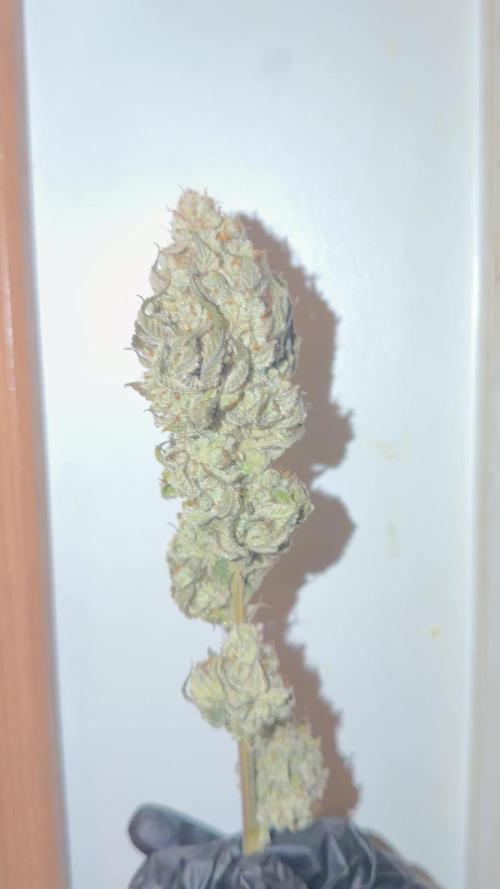
Thanks again to Humboldt Seed Company for AMAZING genetics. I can’t wait to grow more of her.



Likes
1
Share

@c1note
Follow
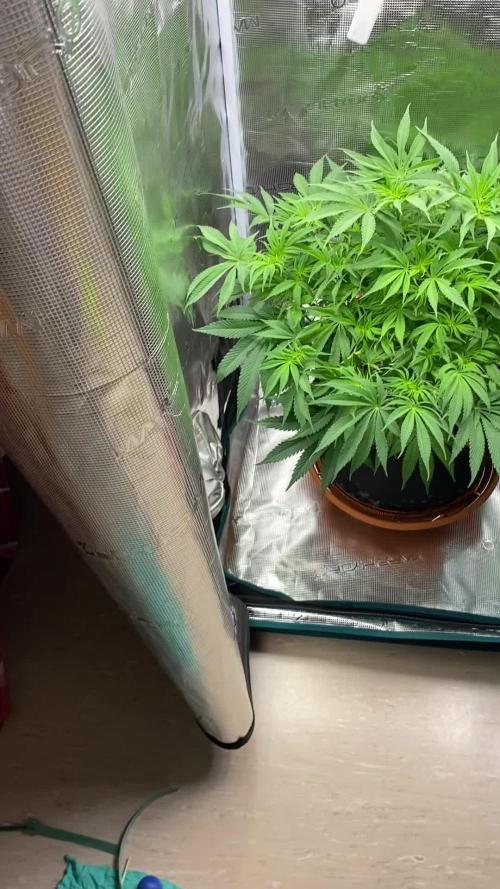
19.11 letzter Tag einer guten Blütewoche . VPD 1.1. 2L mit 1.85 Ec.
17.11 Lampe auf 100% PPFD 850-950. DlI 38 - 41. Vpd 1- 1.1. 1.5L mit 1.9 Ec.
14.11 gute erste Blütewoche gehabt. DLI auf 33-36 erhöht. Ernährung bleibt erstmal gleich bis auf ne kleine Steigerung beim CalMag. Ich scorg wieder im Verlauf der Woche.
Likes
30
Share


@eaglestarled
Follow
Eagle Star LED USA Large Stock LED Grow Lights
Top Manufacturer Since 2010
Full Spectrum Best Led Grow Lights
ESF8800 880W UV+IR Spectrum Tunable Timer Dimmable LCD Display Full Spectrum Foldable LED Grow Light
Web: https://eaglestarled.com/


Likes
8
Share


@StonedandSteady
Follow
#AutoWhiteRussian and #AutoMontreal *Fems* breed by Team #DivineSeeds #DivineSeedsSquad #DivineSeedsBreedingCompany Looking Magnificent and Amazingly Great in thier 3rd week of Veg Growing under the #Growatt600w and in my #TopoLite 24×24×48 Grow Tent! I'm also using #TNBNaturals #TheEnhancer Co2 Despersal Canister and using thier Ph⬆️⬇️ for my Decolinated Tap Water!
#AutoWhiteRussian breed by Outstandingly Awesome Team #DivineSeeds #DivineSeedsSquad #DivineSeedsBreedingCompany
Yo!!! This Lil Beauty popped open in under between 16-18 hours of Germination using this Wet Papertowel Method, this New Heat Mat, Baked potato ToGo Container and Regular Tap Water Helped Tremendously! Heck Yeah Growmies and Growmets!!! Let's Grow!!!
DivineSeeds:
#AutoWhiteRussian
Origin:Afghanistan
Type:Indica/ Sativa/ Ruderalis
Flowering:65 days
THC:24 %
Harvest:400-600 g/m2
Height:100-150 cm
#AutoMontreal breed by Top of The Line Team #DivineSeeds #DivineSeedsSquad #DivineSeedsBreedingCompany
Yo!!! This Lil Beautiful Bean Popped under between 20 hours of Germination using this Wet Papertowel Method, this New Heat Mat, Baked potato ToGo Container and Regular Tap Water Helped Tremendously! Heck Yeah Growmies and Growmets!!! Let's Grow!!!
DivineSeeds:
#AutoMontreal
Origin:Canada
Type:50% Indica/ 40% Sativa/ 10% Ruderalis
Flowering:65 Days
THC:23%
Harvest:550-750 g/m2
Height:120-160 cm
https://divineseeds.net/
https://instagram.com/divine.seeds?igshid=osxe2v7en33v
I love and Appreciate Everyone!!! Thanks Again Team! Cheers Famz!!! Much Props and Much Topz!💯

Likes
20
Share


@CanadianFillmore
Follow
Flush week, straight water flush and I expect to chop and harvest this coming Sunday, maybe Saturday depending on trichomes and how dry the promix HP is. Overall I'm happy with this plants growth, she survived a heat stress issue and has developed lots of bud. While not huge buds, compared to my last grow of this strain, I'm still super pumped with this strain/plant. Updates will come after harvest and after drying for final weight total.


Likes
31
Share


@MrJones
Follow
MrJones VIPARSPECTRA XS1000 LED
📜 SUMMARY - I have been given the opportunity to run the next generation of LED lights by VIPERSPECTAR, the XS1000! I set up a Stealth Cabnient and moved 3 Cream Manderain Auto XL.s under these lights, the cabinet set up is automated with WIFI light controllers, and INKBIRD Temperature and Humidity Controllers, I am very excited about this opportunity!
Specs and Discount Codes Listed Below.
🔹🔹🔹🔹🔹🔹WEEKLY GOALS 🔹🔹🔹🔹🔹🔹
🌞Environment - 80F and 50%Humidity - using Humidfyer as needed.
💧 Feeding - Feeding with FOOP Canna Organic Nutrient Line
🍃Training / Keeping Stems Stable and Strait
🕷️ IPM - Will be using Green Cleaner" 1 OZ per Gallon, and CannControl from Mammoth alternating between product each month for Integrated Pest Management.
💡 Vegetation & Flower (new) Viparspectra XS-1000 Release on March 15th.
🔹🔹🔹🔹PLANT UPDATES🔹🔹🔹🔹🔹
🌱 Plant #1 - Week 5 Flowering is starting to happen, should see more stretch this week, she is about 15 inches wide not.
🌱 Plant #2 - Week 5 Flowering is starting to happen, should see more stretch this week, she is about 12 inches wide not.
🌱 Plant #3 - Week 5 Flowering is starting to happen, should see more stretch this week, she is about 12 inches wide not.
🔹🔹🔹🔹🔹🔹🔹🔹🔹🔹🔹🔹🔹🔹🔹
▶️Monday 03.23.21 / Plants are starting to flower, I decided to defoliate and remove many of the small sucker branches, I would prefer the hormones being spent in the larger and more productive colas, I also fear that these plants may outgrow their space, we will see,I am moving the feed up to the next level as well. I am amazed that just at a week under these VIPARSPECTRA XS1000 LEDs they have almost doubled in size, the FOOP Canna nutrients are so easy to use and the plants just love them!
▶️Tuesday 03.24.21 / These girls just keep stretching, not much room left under the lights feeding FOOP 30 ounces each day.
▶️Wednesday 03.25.21/ Feeding FOOP 30 ounces per day.
▶️Thursday 03.26.21 / Feeding FOOP 30 ounces per day.
▶️Friday 03.27.21 / Feeding FOOP 30 ounces per day.
▶️Saturday 03.28.21 / Feeding FOOP 30 ounces per day.
▶️Sunday 03.29.21 / Feeding FOOP 30 ounces per day.
🔹🔹VIPARSPECTRA XS1000 LED🔹🔹
Amazon US:
XS1000 10% off: in10MrJones http://yx-8.cn/0y-6
XS1500 5% off: in15MrJones http://yx-8.cn/0yA
XS2000 5% off: in20MrJones http://yx-8.cn/0y2Y
XS4000 5% off: in40MrJones http://yx-8.cn/0y5k
Amazon Canada
XS1000 10% off it10MrJones https://amzn.to/38udUVe
XS1500 5% off: it15MrJones https://amzn.to/3esVUyr
XS2000 5% off: it20MrJones https://amzn.to/3l5zAfg
XS4000 5% off: it40MrJones https://amzn.to/3l7k5Uj

Likes
Comments
Share

@DeepRootsGrowTrees
Follow
JAW BREAKER / ROYAL QUEEN SEEDS
WEEK #22 OVERALL
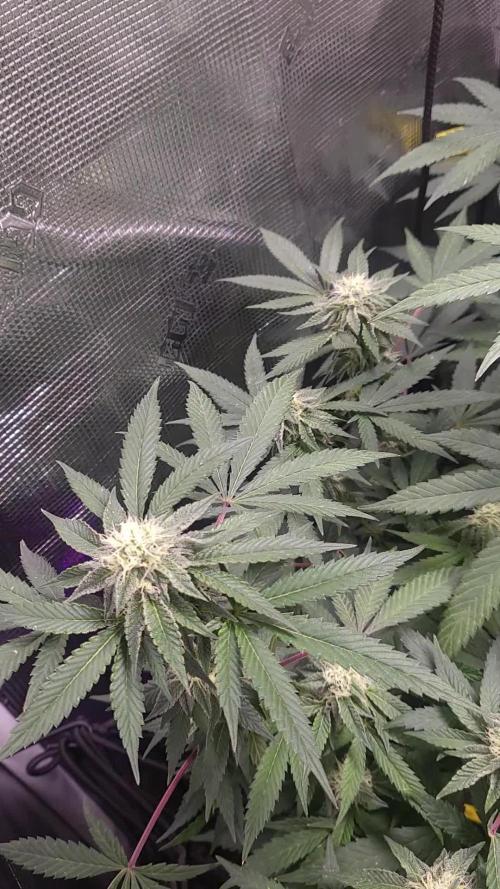
WEEK #3 FLOWER
All is good this week she's got nice amount of buds sites she's not showing any sighs of stress she's still stretching a little to make room for the bud she's about to pack on! Stay Growing my Friends!!
Thank you 😊 for stopping by and taking a look it's much appreciated!!
BUDTRAINER.COM code "Deeproots" gets you 10% off your purchase.
JAW BREAKER / ROYAL QUEEN SEEDS
Likes
11
Share


@Walg9126
Follow
I gave them a good wash slowly slowly took about 1 hour to give them 25 l each now u just give water and wait to flower fatten up

Likes
22
Share


@Appoldro420
Follow
Allright... starting today (20-12-2021) as day 1. 9 ladies in a whole new setup (see germination week). All looking great, curious about the performance of this setup and the lights in particular. Let's have some fun.
21-12-2021: First 12 hours of light was on the ladies @600Watt. Measured some PAR values to calculate current DLI. Average DLI: 61.7 mol/m2d, Peak DLI: 84.9 mol/m2d, PAR: Average: 1404, Peak: 1989 So it could be a little less😆 Will raise CO2 level next week when first nodes are there. I guess I start with 1000 ppm and raise it with 100 every week.
23-12-2021: Great... all still alive.. Put power down on the lights a bit because a DLI of 50 is a bit on the high side for seedlings I believe. Noticed a huge drop of PH so added some fresh water and will reevaluate tonight. My guess is that the buckets are finally full with water and so the older water is flushing through now. If I am right I should not see a PH drop tonight. If I am not right I will raise the irrigation frequency.
26-12-2021: The PH problem is solved... my PH- bottle seal was leaking😡. 7 days old now.... I believe they look fine. Raised the power of the lights again to see how temperature will hold. Total power now is 950W (just for a few hours to monitor the temperature).

Likes
7
Share


Likes
15
Share


@Messypies
Follow
Yellowing on plant seems to have stopped after the increase in mg on last feed. Will continue to feed at a higher vol and fingers crossed will recover enough
Happy for any advice :)


