



@DogDoctorOfficial
Follow
Discount Codes so you can save big on your next check out 💚💚💚
Kannabia - DOGDOCTOR 30% off
SeedsmanSeeds - DOGDOCTOR 10% off
CannaKan- DOGDOCTOR 15% off
terpyz.eu - DOCTOR 15% off
Fast Buds - DOGDOCT 15% off
As always thank you all for stopping by, for the love and for it all , this journey of mine wold just not be the same without you guys, the love and support is very much appreciated and i fell honored and so joyful with you all in my life 🙏
With true love comes happiness 💚🙏 Always believe in your self and always do things expecting nothing and with an open heart , be a giver and the universe will give back to you in ways you could not even imagine so 💚
Friendly reminder all you see here is pure research and for educational purposes only
Growers Love to you all 💚💚💚









@Marshydrots1000
Follow
Comeing on great see a couple seeds lower down but no more balls no where. So happy days !


@AsNoriu
Follow
Day 57. They are running amazingly good, will leave for 7-8 days more, trim heavy, defoliate and will put them into main tent. I need this space for drying ...
Today only pure water, next time I will give them feed .
Happy Growing !!!


@Njanne
Follow
This monster is almost ready for harvest. Next weekend the chop will begin. The colas are huge and heavy. The trichomes are starting to turn.


@ZombieKushAddicted
Follow
June25:🤦♂️🏿🙆♂️🏿🤷♂️🏿
June27: the lizards have attacked again... for this... today we are going to raise the girls and place a mesh
June28: I have no idea how they did it... but they got in again!


@Legendaryseedthumb
Follow
Day 39: haha one girls is so fast already got flowers and I totally failed scrogging these girls! But I hope for nice bud anyways
Mars hydro SP3000
High PPFD at 2.8 umol/j, average yield at 2.5g/w, increasing your yield 50% or more compared with old blurple and HPS lights, 300 watts output.
Dimmer knob added, more convenient to adjust the brightness. Up to 30 lights can be daisy-chained and control together on just one light, or just have one lamp in 120x60 tent is perfect for light.
https://www.instagram.com/marshydro_aliexpress2/

@Terp-a-derp
Follow
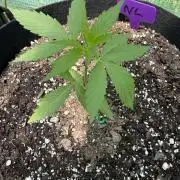
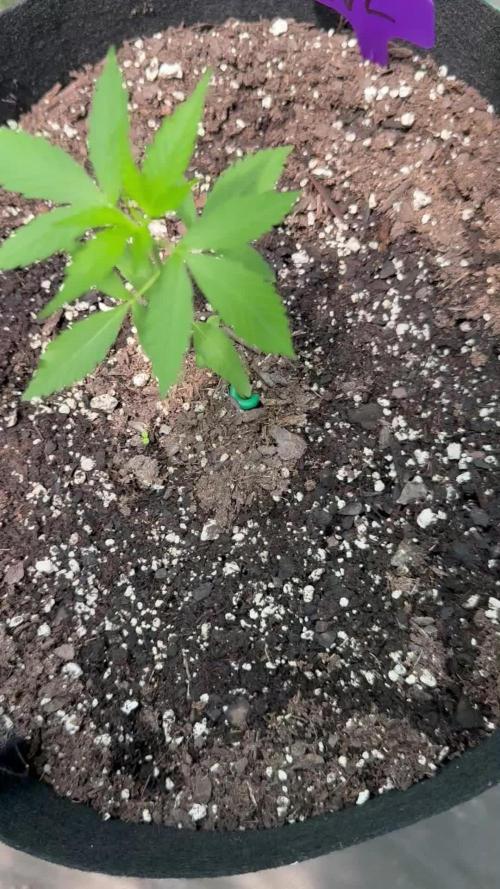
Plants doing well a little delayed due to rainy weather all week with not many sunny days. Temps been good. Possible perfect conditions when plants are going in to flowering phase. Thanks to all who are following along. Accepting any tips on topping autoflowers, thinking about trying one these.



@Ultraviolet
Follow
What's in the soil? What's not in the soil would be an easier question to answer. 16-18 DLI @ the minute. +++ as she grows.
Probably not recommended, but to get to where it needs to be, I need to start now.
Vegetative @1400ppm 0.8–1.2 kPa 80–86°F (26.7–30°C) 65–75%, LST Day 10, Fim'd Day 11
CEC (Cation Exchange Capacity):
This is a measure of a soil's ability to hold and exchange positively charged nutrients, like calcium, magnesium, and potassium. Soils with high CEC (more clay and organic matter) have more negative charges that attract and hold these essential nutrients, preventing them from leaching away.
Biochar is highly efficient at increasing cation exchange capacity (CEC) compared to many other amendments. Biochar's high CEC potential stems from its negatively charged functional groups, and studies show it can increase CEC by over 90%. Amendments like compost also increase CEC but are often more prone to rapid biodegradation, which can make biochar's effect more long-lasting. biochar acts as a long-lasting Cation Exchange Capacity (CEC) enhancer because its porous, carbon-rich structure provides sites for nutrients to bind to, effectively improving nutrient retention in soil without relying on the short-term benefits of fresh organic matter like compost or manure. Biochar's stability means these benefits last much longer than those from traditional organic amendments, making it a sustainable way to improve soil fertility, water retention, and structure over time. Needs to be charged first, similar to Coco, or it will immobilize cations, but at a much higher ratio.
a high cation exchange capacity (CEC) results in a high buffer protection, meaning the soil can better resist changes in pH and nutrient availability. This is because a high CEC soil has more negatively charged sites to hold onto essential positively charged nutrients, like calcium and magnesium, and to buffer against acid ions, such as hydrogen.
EC (Electrical Conductivity):
This measures the amount of soluble salts in the soil. High EC levels indicate a high concentration of dissolved salts and can be a sign of potential salinity issues that can harm plants.
The stored cations associated with a medium's cation exchange capacity (CEC) do not directly contribute to a real-time electrical conductivity (EC) reading. A real-time EC measurement reflects only the concentration of free, dissolved salt ions in the water solution within the medium.
98% of a plants nutrients comes directly from the water solution.
2% come directly from soil particles.
CEC is a mediums storage capacity for cations. These stored cations do not contribute to a mediums EC directly.
Electrical Conductivity (EC) does not measure salt ions adsorbed (stored) onto a Cation Exchange Capacity (CEC) site, as EC measures the conductivity of ions in solution within a soil or water sample, not those held on soil particles.
A medium releases stored cations to water by ion exchange, where a new, more desirable ion from the water solution temporarily displaces the stored cation from the medium's surface, a process also seen in plants absorbing nutrients via mass flow. For example, in water softeners, sodium ions are released from resin beads to bond with the medium's surface, displacing calcium and magnesium ions which then enter the water. This same principle applies when plants take up nutrients from the soil solution: the cations are released from the soil particles into the water in response to a concentration equilibrium, and then moved to the root surface via mass flow.
An example of ion exchange within the context of Cation Exchange Capacity (CEC) is a soil particle with a negative charge attracting and holding positively charged nutrient ions, like potassium (K+) or calcium (Ca2+), and then exchanging them for other positive ions present in the soil solution. For instance, a negatively charged clay particle in soil can hold a K+ ion and later release it to a plant's roots when a different cation, such as calcium (Ca2+), is abundant and replaces the potassium. This process of holding and swapping positively charged ions is fundamental to soil fertility, as it provides plants with essential nutrients.
Negative charges on soil particles: Soil particles, particularly clay and organic matter, have negatively charged surfaces due to their chemical structure.
Attraction of cations: These negative charges attract and hold positively charged ions, or cations, such as:
Potassium (K+)
Calcium (Ca2+)
Magnesium (Mg2+)
Sodium (Na+)
Ammonium (NH4+)
Plant roots excrete hydrogen ions (H+) through the action of proton pumps embedded in the root cell membranes, which use ATP (energy) to actively transport H+ ions from inside the root cell into the surrounding soil. This process lowers the pH of the soil, which helps to make certain mineral nutrients, such as iron, more available for uptake by the plant.
Mechanism of H+ Excretion
Proton Pumps: Root cells contain specialized proteins called proton pumps (H+-ATPases) in their cell membranes.
Active Transport: These proton pumps use energy from ATP to actively move H+ ions from the cytoplasm of the root cell into the soil, against their concentration gradient.
Role in pH Regulation: This active excretion of H+ is a major way plants regulate their internal cytoplasmic pH.
Nutrient Availability: The resulting decrease in soil pH makes certain essential mineral nutrients, like iron, more soluble and available for the root cells to absorb.
Ion Exchange: The H+ ions also displace positively charged mineral cations from the soil particles, making them available for uptake.
Iron Uptake: In response to iron deficiency stress, plants enhance H+ excretion and reductant release to lower the pH and convert Fe3+ to the more available form Fe2+. The altered pH can influence the activity and composition of beneficial microbes in the soil. The H+ gradient created by the proton pumps can also be used for other vital cell functions, such as ATP synthesis and the transport of other solutes. The hydrogen ions (H+) excreted during photosynthesis come from the splitting of water molecules. This splitting, called photolysis, occurs in Photosystem II to replace the electrons used in the light-dependent reactions. The released hydrogen ions are then pumped into the thylakoid lumen, creating a proton gradient that drives ATP synthesis.
Plants release hydrogen ions (H+) from their roots into the soil, a process that occurs in conjunction with nutrient uptake and photosynthesis. These H+ ions compete with mineral cations for the negatively charged sites on soil particles, a phenomenon known as cation exchange. By displacing beneficial mineral cations, the excreted H+ ions make these nutrients available for the plant to absorb, which can also lower the soil pH and indirectly affect its Cation Exchange Capacity (CEC) by altering the pool of exchangeable cations in the soil solution.
Plants use proton (H+) exudation, driven by the H+-ATPase enzyme, to release H+ ions into the soil, creating a more acidic rhizosphere, which enhances nutrient availability and influences nutrient cycling processes. This acidification mobilizes insoluble nutrients like iron (Fe) by breaking them down, while also facilitating the activity of beneficial microbes involved in the nutrient cycle. Therefore, H+ exudation is a critical plant strategy for nutrient acquisition and management, allowing plants to improve their access to essential elements from the soil.
A lack of water splitting during photosynthesis can affect iron uptake because the resulting energy imbalance disrupts the plant's ability to produce ATP and NADPH, which are crucial for overall photosynthetic energy conversion and can trigger a deficiency in iron homeostasis pathways. While photosynthesis uses hydrogen ions produced from water splitting for the Calvin cycle, not to create a hydrogen gas deficiency, the overall process is sensitive to nutrient availability, and iron is essential for chloroplast function.
In photosynthesis, water is split to provide electrons to replace those lost in Photosystem II, which is triggered by light absorption. These electrons then travel along a transport chain to generate ATP (energy currency) and NADPH (reducing power). Carbon Fixation: The generated ATP and NADPH are then used to convert carbon dioxide into carbohydrates in the Calvin cycle. Impaired water splitting (via water in or out) breaks the chain reaction of photosynthesis. This leads to an imbalance in ATP and NADPH levels, which disrupts the Calvin cycle and overall energy production in the plant. Plants require a sufficient supply of essential mineral elements like iron for photosynthesis. Iron is vital for chlorophyll formation and plays a crucial role in electron transport within the chloroplasts. The complex relationship between nutrient status and photosynthesis is evident when iron deficiency can be reverted by depleting other micronutrients like manganese. This highlights how nutrient homeostasis influences photosynthetic function. A lack of adequate energy and reducing power from photosynthesis, which is directly linked to water splitting, can trigger complex adaptive responses in the plant's iron uptake and distribution systems.
Plants possess receptors called transceptors that can directly detect specific nutrient concentrations in the soil or within the plant's tissues. These receptors trigger signaling pathways, sometimes involving calcium influx or changes in protein complex activity, that then influence nutrient uptake by the roots. Plants use this information to make long-term adjustments, such as Increasing root biomass to explore more soil for nutrients. Modifying metabolic pathways to make better use of available resources. Adjusting the rate of nutrient transport into the roots. That's why I keep a high EC. Abundance resonates Abundance.


@MoneyGrowup
Follow
Currently have my first Grow finishing up, two bag seeds was told they were Pink kush and death Bubba they are coming out looking as the strains are supposed to. Lights will be switched to 18/6 in a week or so



@in_a_few_weeks
Follow
I seperated them now. The bigger one stays in the 90ltr Pot. The other got in a 13ltr pot. Later in 20ltr. Topping the small on in 1 or 2 weeks. Than LST and 12/12. Its a bit hot the next weeks. Have to look more after the plants.
shorts_status_processing


@Herbz_Unkraut
Follow
Defoiled all overlaying leaves again
Increased lights to setting 3/4


@bkickstand
Follow
Week 24: Flowering Week 2
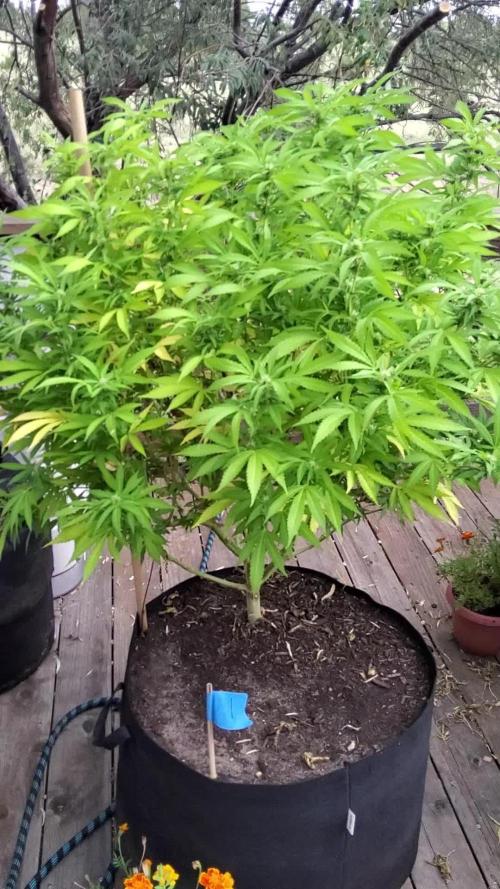
We are officially sitting at Day 169 for the Durban Poison crew. Transitioning deeper into flower has brought on a couple of minor hurdles, specifically some early chlorosis showing up on the lower fan leaves. To tackle that deficiency head-on, I started a calcium-magnesium supplement this morning and plan to mix it into every other watering moving forward to help them green back up and power through the
The canopy is stretching nicely and responding to the ongoing low-stress training. The recent top-dressing is settling in well, and even with the slight magnesium fade we caught early, the bud sites are multiplying and stacking up nicely against the stakes. The furniture dollies are still making it easy to rotate the 25-gallon fabric bags around the deck to catch the best angle of the afternoon sun, keeping airflow steady between the heavy branches.


@ILoVeThiSpLaNt
Follow
Tanta roba!!! Dopo 4 giorni ho assaggiato qualche cima e oltre a essere pulita e quasi non sentire il tiro che ti fai ha già dei sapori ben definiti. Quando tiri il fumo è talmente pulito che non lo senti neanche poi in bocca esplosione di sapori molto fruttati con retrogusto diesel. Peccato solo non averla fatta fiorire il giusto tempo. Raccolta una settimana prima causa freddo e mancanza di posto nel box. Sicuramente Cannarado Genetics e Archive seed bank hanno scavalcato ogni banca seme fatta fi


@yvet_te
Follow
So far so good. No major changes in week 11. Added my second trellis in. Timelapse should be done by next week. I can only do 30 days max so will have to start another and stitch the two together.
One of my plants looks like it may have nitrogen claw so I plan to flush with some plain water tomorrow.


@puffin_ganja
Follow
*Sorry for the shitty pics and video... my iPhone camera will not stop glitching and is having trouble focusing.
Flushed about 4.5 liters of R/O water with 100ppm of Cal/Mag as a buffer to keep PH stable at 6.0 in my res. About 3 days later flushed again with 2 liters and continuing to repeat as medium drys out every other day. Plants are almost all faded to a nice purple. Trichomes are cloudy and will be chopping a couple of days into week 9. Smell is amazing as usual - pungent fruit punch gas. Looking forward to turning this room around and repeating. I'll try to start posting some other journals of different strains as well. Keep an eye out for Garanimals and Sundae Driver both by Cannarado Genetics.


@GrowerGaz
Follow
Plain sailing this week , just water for the Sweet n Sour and the Blackberry Gum, the Cheesy auto just had one last feed of Iguana Juice and PK booster BAC . Few more days and the SNS and BG should be done.


