


Likes
8
Share


@deepsheeba
Follow
Hope you like the music
Ok third week, they had some deficiencies. That's why I switched to mineral. To many plants to focus on, so I do a mixed feeding. Organic growing only with one plant ahaha. No techniques used.

Likes
1
Share


@fabialien
Follow
Lunes 19 Agosto 2024
Primera semana de plangulas, desafortunadamente solo dos de 4 blueberrys se dieron, de orange Blossom 3 de 3, una va muy débil pero las demás van muy muy bien, a ver que tal se van desarrollando.

Likes
4
Share


@DrBud420
Follow
17.06.
White Runtz-Day 49#
Today is the end of the seventh week for the plant, it made great progress this week.
Stay High and Keep Growing!!!


Likes
4
Share

@Black_Widow
Follow
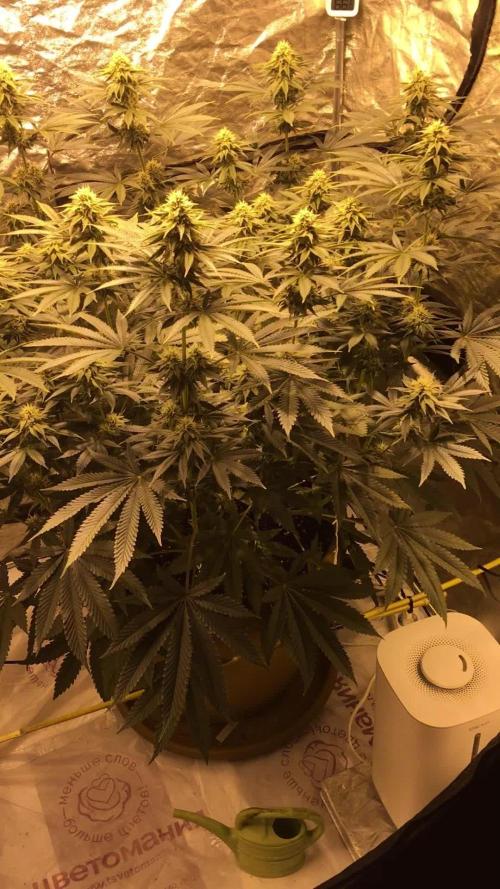
Привет садоводы !!!
Началась новая неделя
Растение чувствует себя хорошо
сегодня я полил ее чистой водой из скважины
поливать я стал ее чаще ,примерно 1 раз в 3 дня по 5 литров
эта красавица источает сильный запах во время цветения
Likes
77
Share


@Ukfarmer420
Follow
So this week the little gelatocake is on week 8 and is really starting to eat herself now, full of trichomes and smells like tutti fruity chewie sweets.
Last week of nutes for her then mollases only. Week 7 for the othere gelatocake and shes starting to fatten up now as well as fade also.
Babys have got big since re potting I will.bend them over later.
Sherbert mimosa are still taking there time I think they are starting to get bigger 🤔🤣 I Will keep you updated lol.
Happy growing guys 👌💪💚


Likes
14
Share


@Korinthius
Follow
Well, this slow started lady has started to take off. Any concerns about her slow start are gone. Root system is extending nicely into her new home, She is not drinking a ton, but that is of no surprise at this age.
I can confirm, I did start her off a little low in her net pot, but next week, when she gets topped, I will be able to add some extra clay pellets for stability.

Likes
17
Share


@Elmobud
Follow
So this week they have definitely stopped growing in height and now time to fill out they have definitely got heavier as I have had to tie a few more colas up good signs and they have started to smell really sweet 😋 Happy Times Happy Growing 😁 🌿
Keep Safe 😁

Likes
17
Share


@P_Silas
Follow
Really loved this. Nothing more to say for now lol, it's been my first grow and grew her with 2 wild dwarfs and loved both, would grow them again. Really excited to try it out.

Likes
21
Share


@Mrs_Larimar
Follow
2024-06-06
Finally Weather turned to sunny and warm
So i placed the Outdoors 2 days ago.
they are quite stressed because of the changed conditions, but ia sure they will look fine soon
i kinda under watered them the last 10 days and i fertilised them,
so not enough water and fertiliser- they are burned.
shit happens
iam sorry Girls.
next update in a few days because this pne is 11 days from the last, big Progress on the plants, as they already show good Flowers.
Fatso GMO F1 Auto, a feminized hybrid strain, emerges from the crossbreeding of two autoflowering varieties: Fatso Auto and Cotton Candy Auto. This California-derived cultivar leans slightly towards sativa, offering growers a straightforward cultivation experience coupled with impressive yields, robust THC levels, and a delightful palate featuring sweet, candy, and fuel undertones.
Thriving both indoors and outdoors, Fatso GMO F1 Auto exhibits above-average resistance to mold, while still benefiting from adequate ventilation, particularly in environments with higher humidity levels. Its exceptional resistance to pests and pathogens ensures hassle-free cultivation. While indoor plants maintain a compact stature of around 100cm or less, outdoor specimens can stretch a bit taller, reaching heights of up to 130cm when grown in open ground. Completing its entire lifecycle within a maximum of 75 days from germination to harvest, Fatso GMO F1 Auto delivers yields considered average yet impressive for an autoflowering strain. The combination of high resin production and elevated terpene levels renders it an excellent choice for cannabis extract production.
Its terpene profile presents a sweet and funky aroma with savory hints of Skunk complemented by pine and floral notes. On the palate, it delights with flavors reminiscent of sweet candy underscored by subtle fuel undertones. With THC levels reaching a high of 24% and minimal CBD content, Fatso GMO F1 Auto delivers a balanced and uplifting effect, appealing to enthusiasts seeking a satisfying and harmonious experience.

Likes
4
Share

@DogDoctorOfficial
Follow
💙 Project Blue Tent – Week 9
🥒 Pickle Lemon Haze F1 – Pheno B
🌿 When The Girls Decide They're Bigger Than The Room
Hello everyone, and welcome back to another chapter of Project Blue Tent! 💙🌱
And what a chapter this has been.
If you're new to this diary, welcome aboard!
Project Blue Tent follows four individual plants through their journey from seed to harvest, with each phenotype receiving her own dedicated diary.
All four girls share the same tent, lighting, irrigation, nutrition, environment and overall cultivation strategy.
The idea remains simple:
Keep the variables as consistent as possible...
And let the plants tell their own story.
And this week?
The plants had quite a story to tell.
Because apparently...
we ran out of room before they ran out of energy.
😂🌱
Today we're giving the spotlight to Pickle Lemon Haze F1 – Pheno B.
And just like her sisters...
She's shining.
🌸 Week Nine – Okay Girls, We Get It... You're Growing
Last week, we knew the stretch was coming.
We talked about it.
We expected it.
We knew that seven weeks of vegetation, warm temperatures and four incredibly vigorous plants could potentially create a serious flowering stretch.
Well...
They delivered.
😂
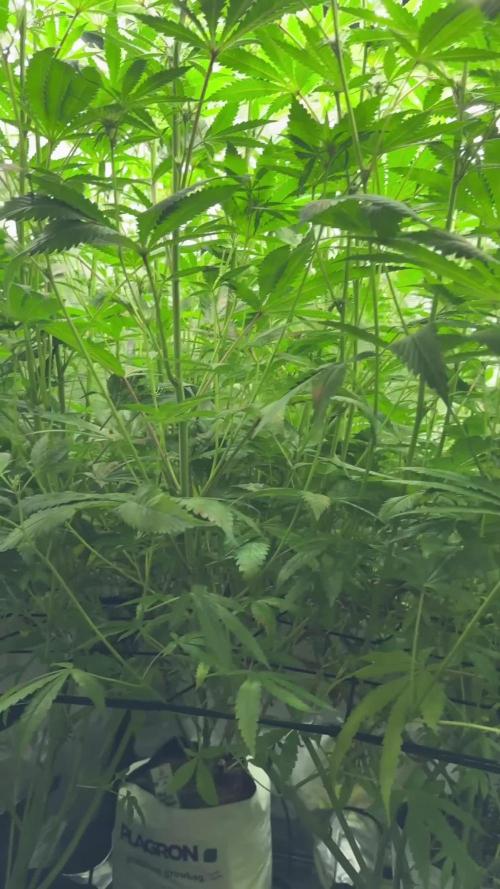
Pickle Lemon Haze Pheno B has reached approximately 145 cm.
And that's before we start adding the height of the pot, substrate and drainage system underneath her.
Suddenly, our vertical space became a very serious consideration.
The plants were simply getting too close to the LEDs.
So this week wasn't about watching from the sidelines.
We had to adapt the room.
And honestly?
I'm very happy with the result.
💡 Making More Vertical Space
The first major change was moving the carbon filter and extractor outside the tent and onto the top.
Previously, that equipment was occupying valuable space inside the tent.
By relocating it, we were able to reclaim some of that vertical room.
The extraction setup now pulls air from inside the tent through the carbon filter and extractor positioned above the tent before exhausting it away.
That gave us the opportunity to raise the LEDs much closer to the top of the tent.
And those few extra centimetres?
They suddenly became extremely valuable.
The plants aren't getting shorter.
😂
But at least now they have more room between the canopy and the lighting.
And that's exactly what we needed.
🔥 A Little Too Close To The LEDs
Before we made the adjustment, some of the taller tops had already gotten a little too close to the LEDs.
There were some burned leaves and affected tops.
Nothing dramatic.
Nothing that changed the overall health of the plant.
But definitely enough to tell us:
They had pushed the limits.
So we caught it.
We raised the lights.
We opened the canopy.
And now we're watching the plants respond.
These things happen in a real grow.
You can plan your distances.
You can watch the numbers.
You can calculate your available space.
And then four plants decide they're going to ignore your calculations.
😂🌱
Message received.
✂️ Deep Defoliation – Opening The Room Again
After creating more vertical space, we also needed to deal with the incredible amount of foliage these plants had accumulated.
So we went through the room with a proper deep defoliation.
We removed the leaves that were no longer helping us maintain the structure we wanted.
The objective wasn't simply:
"Remove leaves."
It was about cleaning up an extremely dense flowering environment.
Opening the interior.
Improving visibility.
Creating more space between developing flowering sites.
And making the structure easier to manage as flowering progresses.
Pickle Lemon Haze Pheno B handled the process beautifully.
And now, looking at her after the cleanup...
I can actually see the plant again.
The branches.
The flowering sites.
The structure.
The support underneath.
Everything is much more visible.
And that's exactly what I wanted.
🌿 Why We Defoliate
I think it's important to explain what we're actually trying to accomplish when we do this.
Healthy leaves aren't bad.
They're part of the plant's engine.
So we're not removing foliage because leaves are somehow unwanted.
We're managing excessive density.
After seven weeks of vegetation and an enormous flowering stretch, the plants had simply produced more vegetative material than we wanted to carry into the next stage.
The defoliation gives us a cleaner structure and allows us to better observe what's happening inside the canopy.
It isn't a magic button.
It doesn't guarantee anything.
And I'm certainly not expecting the plant to suddenly produce more flowers simply because we removed leaves.
It's about managing the structure we've created.
Now the work is done.
The plants get to respond.
🕸️ The Second SCROG Is Installed
Another major change this week was the addition of a second SCROG net.
The first net did exactly what we wanted during vegetation.
It helped us spread the canopy and create the structure.
But now we're looking at plants around 145 cm tall, with flowering still developing.
Those branches are going to have a lot more weight to carry as the flowers mature.
So the second net is there primarily as additional support and organization.
We're preparing the structure for what's coming.
And I think we'll be very happy we did it.
Because looking at these girls now...
I don't think they're planning on producing tiny flowers.
😂💙
🌬️ More Airflow – One Fan Up, One Fan Down
We also added a second Zamnesia clip fan underneath the canopy.
Previously, we had airflow higher in the room.
Now we've added another source lower down.
The idea is to keep air moving throughout the entire plant structure rather than concentrating circulation in only one zone.
With one fan higher and one lower, we're creating a more dynamic, vortex-like circulation pattern through the room.
Air moves.
It changes direction.
It travels through the canopy.
And the lower portion of the plants isn't being forgotten.
This is particularly useful now that we've opened the canopy with the defoliation.
We created more space.
Now we want that space to have good air movement.
And honestly...
the room looks beautiful.
✂️ Clean Scissors – Always
Another small detail that deserves a mention is the Zamnesia curved scissors.
I really like using these for the smaller and more delicate work.
For much of my defoliation, I actually prefer using my fingers.
If I can gently remove a leaf without bringing a blade anywhere near the plant, that's often what I'll do.
But some leaves are awkward.
Some are tucked into delicate spaces.
Some simply need a precise cut.
That's where the scissors come in.
And regardless of whether they're brand new or already used:
Clean scissors.
Always.
It's a simple habit, but it's one I don't compromise on.
Clean tools make sense.
🌿 Pickle Lemon Haze Pheno B – Taking It All In Stride
And this is where I have to give Plant B some special credit.
Look at her.
She's gone through the same crazy stretch as her sisters.
She's been through the room reorganization.
The LEDs were raised.
The canopy was deeply cleaned.
A second SCROG was installed.
Another fan was added.
And she's still standing there looking perfectly happy.
😂💙
That's what I like about this girl.
She doesn't seem particularly interested in making things complicated.
She just grows.
And grows.
And grows.
At some point, I think the entire room realized:
We're all Pickle Lemon Haze now.
😂
🌸 Flowering Is Really Taking Shape
The most exciting part is that underneath all this structural work, flowering is continuing exactly as we want.
The plants have entered this phase with enormous momentum.
The flowering sites are developing.
The branches are carrying new growth.
The structure we've spent weeks building is now becoming the framework for the flowers.
And after this week's cleanup, those developing flowers are much easier to appreciate.
The plants are no longer simply preparing to flower.
They're doing it.
And now we're watching the transition from flowering sites into increasingly substantial flowers.
That's the part I'm really looking forward to.
🥒 Different Strain, Same Room, Same Challenge
Pickle Lemon Haze F1 is obviously a different genetic line from the Blue Waffle F1 girls sharing this tent.
And that's exactly what makes this project so interesting.
Different genetics.
Different diaries.
Different plants.
But under the same conditions...
this week they've behaved remarkably similarly.
They stretched.
They became too tall.
They needed more vertical space.
They needed a serious cleanup.
They needed additional support.
They benefited from improved airflow.
And now they're all standing there looking remarkably happy.
That's an interesting result in itself.
Sometimes genetics give you very obvious differences.
Other times...
different genetics find remarkably similar ways to respond to the same environment.
This week has been one of those times.
💧 Nutrition – The Girls Are Loving It
The nutritional program has also moved forward slightly.
The current recipe is:
Plagron Hydro A — 2.2 ml/L
Plagron Hydro B — 2.2 ml/L
Plagron Hydro Roots — 1 ml/L
Plagron Power Buds — 1 ml/L
pH adjustment as required
That has brought the EC up to approximately 2.49 mS/cm.
And the plants are clearly responding well.
The foliage remains healthy.
The plants are vigorous.
Flowering development is progressing.
And the overall room is showing us that these girls are consuming what we're giving them.
So we're staying consistent.
No unnecessary drama.
No wild changes.
Just watching what the plants tell us.
And right now...
they're telling us they're hungry.
😂🌱
🌡️ Blue Tent – Current Conditions
The room remains under the same general environmental conditions:
🌸 Flowering: Week 9
📏 Height: approximately 145 cm
💡 Light schedule: 12/12
☀️ Day temperature: 27°C
🌙 Night temperature: 27°C
💧 Relative humidity: 67%
⚗️ pH: 6.01
⚡ EC: approximately 2.49 mS/cm
🌡️ Solution temperature: 25.3°C
🌱 Substrate temperature: 24°C
💨 CO₂: approximately 666 ppm
? Pot size: 8 L
💦 Watering: approximately 1.6 L per plant / 24h
The biggest difference this week isn't really the environment itself.
It's how we've reorganized the physical space around it.
The plants grew.
So we adapted.
🌬️ Airflow Becomes Even More Important
With a room this full, airflow becomes something I want to pay increasing attention to.
The canopy has been opened.
The second fan is now moving air underneath.
The upper airflow remains active.
And extraction has been moved outside the tent.
That gives us a much cleaner overall setup.
We're not trying to create some artificial hurricane inside the tent.
😂
We're simply making sure the air doesn't sit stagnant around a dense flowering structure.
The goal is movement throughout the room.
And with the second fan underneath the canopy, I feel much happier about the circulation we're creating.
🕸️ The Second Net – Preparing For The Finish
The second SCROG is also going to become increasingly useful as flowering progresses.
Right now, the branches are still relatively light.
But we're not at the end.
We're approaching the stage where those flowers are going to become much more substantial.
So the second net is there before we need it.
That's something I've learned over the years:
Preparation is much easier than trying to solve a support problem after the weight arrives.
For now, everything is positioned.
The structure is organized.
And we're ready to see what these girls can build.
🌿 What I Expect From The Defoliation
Now that we've completed the major cleanup, I'm not expecting to constantly interfere.
Quite the opposite.
We've done the work.
Now I want to watch the plants respond.
I don't expect them to stop growing overnight.
I don't expect some magical transformation.
And I certainly don't expect the defoliation to replace good environmental management.
What I do expect is a cleaner structure that's easier to observe and manage while the plants continue flowering.
And that's enough.
Sometimes the best thing you can do after making a significant adjustment...
is nothing.
Just watch.
💙 Plant B – Still Shining
There's something really satisfying about looking at Pickle Lemon Haze Pheno B now.
She's tall.
She's vigorous.
She's flowering.
She's healthy.
And she's survived another week of us rearranging her world.
😂🌱
The plant hasn't suddenly become something different.
She's still the same energetic girl we've been following.
The difference is that now the room is better prepared for what she wants to do.
And I think that's an important distinction.
We're not trying to force her into being smaller.
We're not trying to fight her genetics.
We're simply giving her the structure and space to finish properly.
That's the goal.
🌸 The Blue Tent Is Finally Organized Again
After all the work this week, I have to admit...
I really like looking inside this tent now.
The carbon filter and extractor are outside.
The LEDs are raised.
The canopy has been cleaned.
The second SCROG is installed.
The second fan is moving air underneath.
The flowering structure is visible again.
And the girls?
They're happy.
That's the important part.
We may have had a little chaos getting here...
but the end result looks beautiful.
👀 Looking Ahead
From here, I think the plan becomes much simpler.
Observe.
Maintain.
Support.
And let them flower.
The major structural work is done.
The room has more vertical space.
The lights have been raised.
The canopy has been opened.
The second support net is ready.
Airflow has been improved.
Nutrition has been adjusted slightly to match their appetite.
Now I want to see how Pickle Lemon Haze Pheno B responds as flowering continues.
Will the stretch finally slow?
How quickly will the flowers gain size?
How much weight will those branches eventually carry?
And how will her individual phenotype become more obvious as maturity approaches?
Those are the questions I want answered now.
And thankfully...
I don't need to answer them today.
The plants will.
💙 Final Thoughts – Last But Definitely Not Least
And here we are...
last but not least. 💙😂
And I'm writing this with a huge smile on my face because, honestly...
these four girls are amazing.
This week was intense.
They stretched far more than we wanted.
They became too tall for the original equipment arrangement.
We had to move the carbon filter and extractor outside the tent.
We raised the LEDs.
We dealt with a few areas of LED stress.
We performed a deep defoliation.
We installed a second SCROG.
We added another fan underneath the canopy.
We adjusted the nutrition.
And after all of that...
I look inside the room and think:
Beautiful.
😂💙
Pickle Lemon Haze Pheno B is standing there looking healthy, vigorous and completely ready for the next stage.
She's approximately 145 cm tall.
She's flowering.
She's building.
She's supported.
She's getting airflow.
She's getting nutrition.
And she's still shining.
That's what I love about this project.
We can plan.
We can prepare.
We can train.
We can measure.
We can make mistakes.
We can lose a little vertical space.
😂
But ultimately...
the plants get the final word.
And this week, their message was very clear:
We're happy. Keep going.
So that's exactly what we're going to do.
The major work is behind us.
Now we enter the much quieter part of the journey.
We provide what they ask for.
We keep the environment stable.
We watch the flowers develop.
We support the branches.
And we let these beautiful girls finish the story they started seven weeks ago.
Pickle Lemon Haze Pheno B doesn't need a dramatic rescue story.
She doesn't need a complicated intervention.
She simply needs her space, her support and her time.
And now...
she has all three.
💙🌸🥒
🙏 A Huge Thank You
A huge thank you once again to Zamnesia for making Project Blue Tent possible and for giving us the opportunity to explore these beautiful Pickle Lemon Haze F1 genetics individually.
A massive thank you to Plagron for the Hydro nutrient line supporting these girls through their incredibly vigorous growth and now deeper into flowering.
A special thank you to Zamnesia for the Phytonaut LED lighting, the curved scissors and the clip fans that continue helping us manage this increasingly impressive room.
Thank you to Mars Hydro for the automatic drip irrigation and drainage system that continues keeping these plants consistently supplied as their demand increases.
And of course, thank you to GrowDiaries for providing this platform where we can document the successes, the mistakes, the unexpected moments and everything in between.
And finally...
thank you to everyone following Project Blue Tent. 💙
Four plants.
One room.
Different genetics.
And somehow...
this week they all decided they wanted to become giants.
😂🌱
We gave them more room.
We cleaned them up.
We supported them.
We improved the airflow.
And now we're going to let them do what they do best.
Grow.
Flower.
Shine.
Pickle Lemon Haze Pheno B is ready.
The room is ready.
The second net is ready.
The airflow is ready.
And the flowers are just getting started.
Let's see how beautifully this girl finishes.
Until next week...
Keep shining, beautiful girl. 💙🥒🌸
Growers Love, happy growing, and take care everyone! 🌱💙
Likes
39
Share


@Fronti89
Follow
Wachsen vor sich hin ...
Ab Tag 20 wird gedüngt mit BioBizz Grow und letztmalig mit Root Juice !

Likes
10
Share


@Iamjeeves
Follow
So excited that this grow went well. Just making sure the dry tent stays the right conditions for a slow dry and will trim and weigh these girls before putting them in jars for a few weeks to cure. Sticky and with a earthy fruity berry smell. Maybe a hint of citrus. Can't say enough good things. Happy to luck out with good genetics and optimal conditions during the grow cycle.

Likes
1
Share


@Paul_on
Follow
Can't upload video or photo ,keeps telling me video didn't upload try again 😕

Likes
7
Share

@Chubbs
Follow
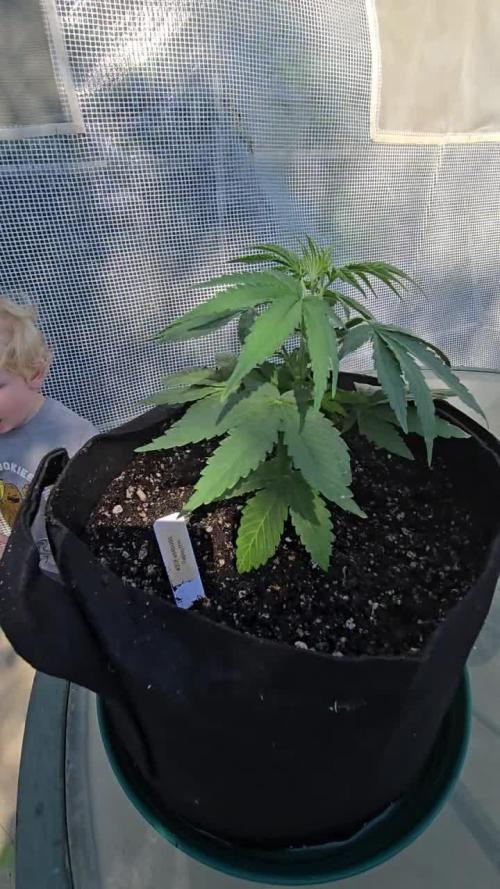
The Papaytons got transplanted today into 3gal fabric pots in RootsOrganics707 soil. These are staying outdoors for the rest of the season. Fingers crossed, it's not too late, but I have a good feeling it'll all work out.
All in all Happy Growing.
Likes
24
Share


@Frank_cultiva
Follow
Las 4 nenas del scrog iniciaron con el ciclo 12/12 el día 05/11/2021: están siendo alimentadas con advanced nutrients(dosis indicadas en la foto de la tabla).
Las 2 nenas en macetas de 30LT iniciaron el ciclo 12/12 el día 26/12/2021:
por el momento están siendo alimentadas con advanced nutrients(dosis indicadas en la foto de la tabla)

Likes
2
Share


@Pot_Portraits
Follow
Another week and flower and all is good! happy vibes in the tent, plants transitioned well even with some technical errors like power cuts etc.
Looking forward to the late stage of flower, structure is beautiful !!
Likes
1
Share



Likes
7
Share


@Adam22
Follow
Day 28 week 4 of flower plants looking good I dropped a 3L water bottle on a string which snapped a whole branch from the bottom 😳 on right plant 😭