


Likes
Comments
Share


Likes
93
Share


@Hologram
Follow
Goodday growmies
as i already told you, i could not log in for 11 days (mayb 10 but i like the number 11..😎)
Luckily GD finally let me in today..(finally ..sigh)
so i can show off my sweet Candy girl!
she is so awesome
dont tell the other girls but she is the most beautifull RN.. Hedge hogs are multiplying and getting fat in a fast speed!
looks like she is leaving then all behind ..
😇👌
it was cold and rainy but Candy still kept showing off her potential anywayz
she is not the tallest in my garden but iam feeling this is gonna be a FAT lady 👊 (LOVE BIG BUDS I CANNOT LIE ;))
she has a lotof Arphids too (pix of them are in purple diary) but i try to catch them in their tracks and i let loose some ladybugs, i have kidnapped from my garden..
they are the best @ hunting invaders. and clean up the whole plant👏
this week weather is gonna be much better so good times🙌
there is a lot of wind so lets hope the ladybugs hold on...
happy growing for all ✊
***KISS! growing technique: KeepIt Simple, Stupid!
PS enjoy the ladybugs (c pix)

Likes
8
Share


@Ieiogrow94
Follow
Eccoci di nuovo qui!!!
Super eccitato per questa nuova collab con Anesia Seeds, team davvero al top, che mi ha dato l’opportunità di testare questa nuova genetica e di condividere i progressi con tutti voi!!!
Come sempre partiamo nei bicchieri per poi travasare.. Questa volta verrà svolto tutto sotto la Lumatek Zeus 465 ProC, mi aspetto molto da questo ciclo!!
Settimana pazzesca!!!!
Piante davvero incredibili!!!
Grazie a tutti per il supporto ❤️🍀🔥


Likes
40
Share


@SubliminalSociety
Follow
Week 27 - 1 week til harvest
She's so pretty! The colas are really swelling up and looking nice. The weather forecast is looking good for the next days after that we'll get some heavy rains and storms. The wind is already strong but due to my radical defoliation, she's unaffected. So enjoy her beauty one last time. Next week we're going to CHOP!

Likes
17
Share


@FrankieBones
Follow
Hi 420 Family.
Start of week 6, and we are well into the blooming stage. So far so good, these ladies have gained a lot of growth over the past 2 weeks, they have stretched a lot and have now shifted their energy into making buds. The one WW is a little ahead of the rest in maturity it seems, the other two WW's not far behind. PL's I think will flower for an extra week or two looking at the bud sites and the pistils. At this stage they are getting about 1L of bloom feed every 1.5 days but it does seem to pick up and they are getting more thirsty every watering. I guess they will eventually settle on about 1L per day.
D36 - 11 Aug - All good and no complaints, other than the stretchy PL's. Let's hope they just make for awesome bud sites.
D38 - 13 Aug - Steady as it goes... Bud sites are forming nicely and I have not again spotted any sacks on the WW that initial had about 6/8 sacks on the oldest branches, nodes closest to the main stem. Very happy that I didn't kill her; I am still keeping a close eye tho. The PL's have again stretched a little bit but not as much as last week, thank goodness. They were watered yesterday morning and will be letting them dry out properly before giving them another feeding.
D38 Heights:
WW1 - 46CM
WW2 - 45CM
WW3 - 62CM
PL1 - 65CM
PL2 - 72CM
PL3 - 76CM
Stay blessed and I wish you all a happy grow!
Likes
8
Share

@Bncgrower
Follow
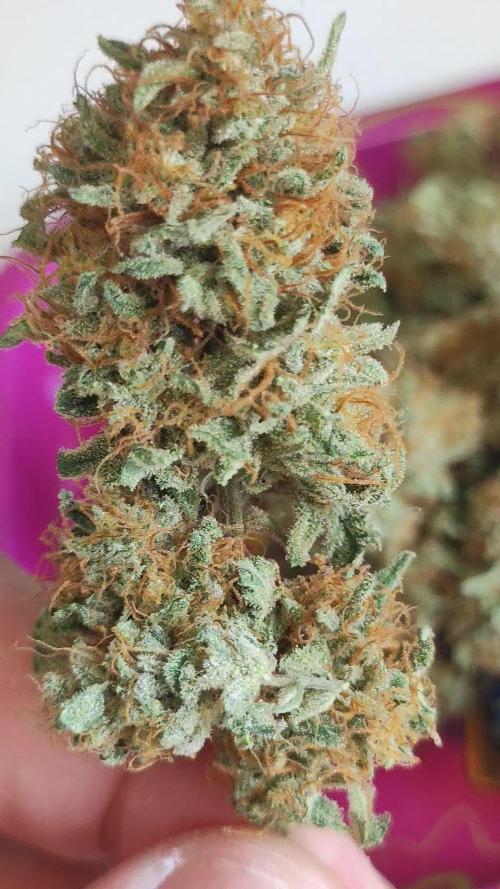
Another successful grow! This strain has an intense, sweet aroma and resinous buds. Despite their small size, I'm happy with the result. ✌️
Likes
8
Share


@viriato0811
Follow
Well all going good around here. This week will see a significant stretch, now that she is heading towards full flowering. Will stay close and keep removing leaves blocking the light to bud sites. 👍🏻👍🏻🌱🌱
Likes
48
Share


@pifflestikkz
Follow
Day 57
26/08/24 Monday
Feed today using de-chlorinated tap water pH 6.
Day 59
28/08/24 Wednesday
De-chlorinated tap water pH 6 only today, 1.5L with little to no run off.
Day. 61
30/08/24 Friday
Another feed today using de-chlorinated tap water pH 6 with Plagron products.
Picture and videos now 📸💚
Day 63
01/09/24 Sunday ( end of week)
De-chlorinated tap water pH 6 only today. 2L no run off but moist container all around.
She's now full flower mode 💪💚
Likes
10
Share


@mr_smooke
Follow
I'm a little late with update, I was very busy. In grow room it is all under control. the buds are filling up. Strech has stoped. Here is 17 days since flowering.
Smeel is pretty strong, i just need to set up carbon filter. Next update will be in a fev days.
✌️🤘💚💜

Likes
9
Share


@NewOfficialDrillInvaders
Follow
Smell like 🥦🍋 but like skunky little bit pungent smell kick good looks good just look at the video 😉love that orange bud looking colour
Likes
12
Share


@Kinghaze
Follow
This was the last week of veg.
I will switch to bloom nutrients from advanced nutrients.
So far so good.
I lowered the ec by 0.3 a few days, because I got a slight tip burn.
In my previous grow I had to deal with nutrient lockout, I am trying to avoid that this time.
I measure the values of the water tank 2 times a day, In particular the ph values keep rising daily.
I will defoliate when they are done stretching , around week 2 or 3


Likes
69
Share


@AsNoriu
Follow
Day 92. Trim day. Wet trim chosen. Result could be better, but 100 will be reached I guess for sure ;)))
Day 101. My friend has new record ! Not bad for screw up run ;)))))
Happy Growing !!!

Likes
19
Share


@GrownwithLED
Follow
During week 7 the 3 plants continue to grow outstandingly well! The BADAZZ-CHEESE and ZHEETOS from BIG BUDDHA SEEDDS have a healthy green color and grow so much foliage that I have to defoliate on a regular basis. On day 43 (=flowering day 19) I take off all bigger fan leaves in order to ensure a better airflow thru the closet. The humidity is unfortunately still on the high side and sometimes exceeds 80% in the daily maximum, that is MUCH too high during flowering. I increased the dose of BIO NOVA nutrients according to their feeding scheme and all plants LOVE IT! The ZHEETOS #1 plant grows much taller than her sister ZHEETOS #2, therefore I decide to SUPER-CROP her on Day 48 (=FD 23). This technique developed by SOMA from SOMA-SEEDS is one of my favorites and I use it since years in order to bush out plants, which grow to high. Appr. 15-20 cm from the top of the plant, right above an internode, I take the main stem between two fingers and press very hard until I can feel the fibres inside the stem brake. By slowly pressing all around the diameter of the stem I create a weak spot at which I bend over the stem, so it looks 90-180 degrees downward. I do this very carefully to NOT BRAKE the outer skin of the stem while I bend the stem downwards. Even if some fibres brake, the stem will repair itself within a few days to a week and then start to point upwards again...👍😃 During the time the main stem needs to repair itself, all other side-stems will grow more upwards and this makes the plant bush out more. At the same time a super-cropped plant will produce bigger buds at harvest time, than a plant where you did not do that. Somehow the plant reacts to being hurt by getting stronger and producing more! CHECK OUT THE VIDEO ABOVE TO SEE ME SUPER-CROP! 😎 I also took a video ONE DAY after the procedure (on DAY 49), in order to show how resilient the plant is and how much she immediately repairs herself. Already then the main top has turned and points upwards to the light again, ITS FANTASTIC TO SEE! Simply a miracle plant...

Likes
3
Share

@Lvnsource
Follow
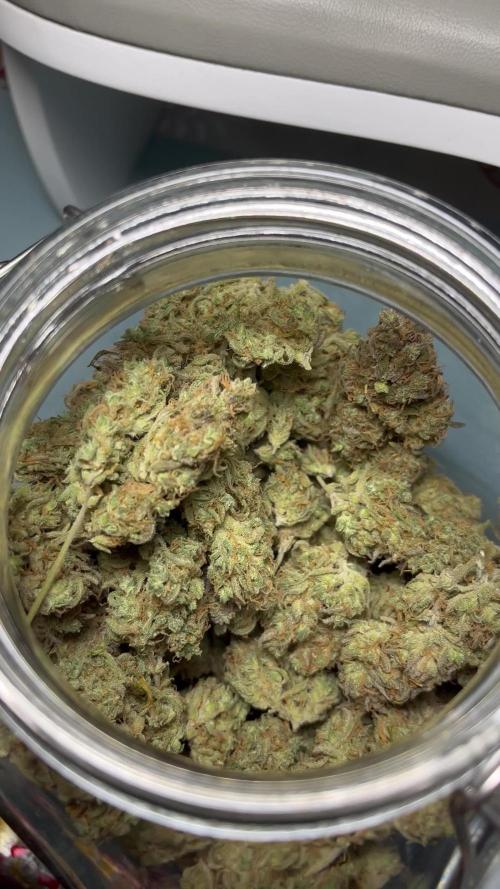
Total dry weight is 215g: despite the growing hiccups this strain managed to deliver.
Buds themselves have a fair amount of resin too :)
Likes
26
Share


@KingSalomonsWeed
Follow
Duftet. DUFTET hervorragend. Total irre. Caramel Schokolade, vanille süß.
KLEBRIG. ALLES!
GRINS
BUD MACHINE!
Day 51 laut breeder fertig. Ok noch 5 tage.
Aber fertig, ja. Defenitiv. Lasse sie trotzdem noch im Reaktor, denn sie dürfen gerne noch ein wenig reifen. Heute nochmal mit dünger. Den Rest ihrer Zeit dann nur noch Wasser.
19.09.16 16? Ok 17? Egal.
TRICHOME CHECK was successfull..
Har har ok mostly milky. A lot of trychomes not ready.. Buds re not rock hard. Like you touch a dog. Not the fat ones i mean.
And they grow up. Everyday. The buds. I mean theyre not the biggest. But i saw gelato buds spend in dispenserys
(www). Who re smaller than mine.
They grow up in height, tall and weight. Trichomes re the same as always... 😛
Har har.. GANJA THERE EVERYWHERE.
STEAM.
SOME LEAVES(heavy you can see there where she eats aphids. NO JOKE.(@sugarleaves)
First trichomes surrounded it. Than one day later you see them stuck in some trichoms. Than Abracadabra NO JOKE after a few days and nights only some darker trichomes left there. By the time they go brighter again as the others, but bigger).
Sticky smell girl. Mjam
HALLEJUULIA 13 FINGERS A LEAF!
Ganjaloveriamtobringsomedelicious GELATO41FASTfromSEEDSTOCKERStomyworld.
Im satisfied :)
Day 54 of flower. Anything going well.
Did a little pre chop. 3 buds like( with milky trichoms) because of room problems.
They hang dark inside the tent.
And switched my blue light off.
Now only white and red. For faster ripening
20.09.,growing growing growing.
21.09 trichomes re ready. Milky most but ready. 8 weeks of flower, and they're ready. GOOD WORK SEEDSTOCKERS
But i will give her1or 2 more weeks.
Because this strain is so
OUTSTANDING..
She DESERVES a little more time because of some inaccuracies from me......................
And i really want this indica Punch.
For this is better to become some amber trichoms... And weight.. 😛 💪
DAY 58 OF FLOWER.
She is ok. Ripening.
But the aphids.
NOW ITS TIME TO GO TO WAR
☣️ ☣️ BIO LOGICAL WEAPON ☣️ ☣️
BASIL WATER
B weapon for aphids.
Day 59 of flowwring: in progres.
And found the first trichoms going amber.!!!!!!! YES.!!!!!
Day 61. Nuggets or Buds? BUDS!
Day 63. Waiting.
Day 65 Chop of Buds the Rest needs more time. Where re my buds? Fallen, washed, now about to dry.


Likes
21
Share
@Bncgrower
Follow
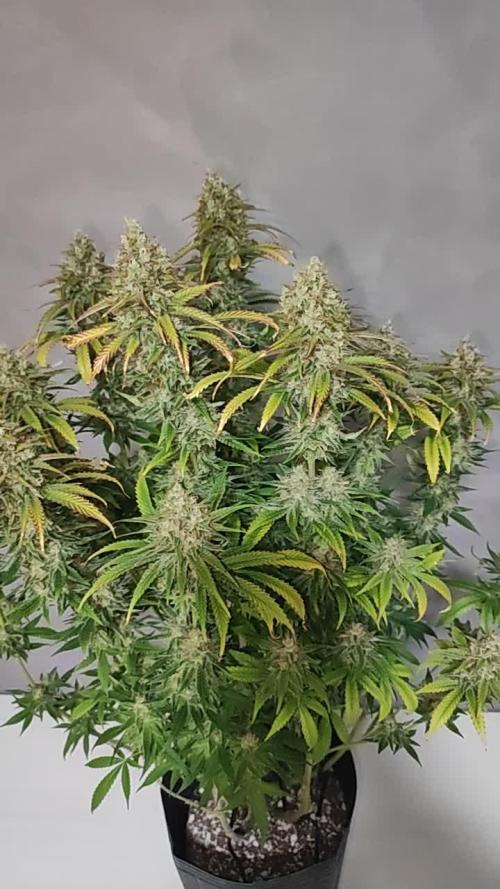
In the penultimate week, the buds are dense, resinous, and most of the trichomes are amber. The smell is surreal; I believe this will be a very significant harvest...
In these 15 days before harvest, I start watering only with RO water and a pH of 6.2. At the beginning of the last week, and around 3 days before harvest, I flush with RO + Cleanse 10mL.
Likes
3
Share


Likes
8
Share


@JohnnyBarrel
Follow
Week 14 - July 30
Last vegetation weeks. On 4 plants: 2 healthy / 2 injured.
Royal Moby and GMOxZombieK were seriously contaminated with aphids. To stop the propagation I did many washes with black soap and neem oil but may be I treated at the wrong time: morning, even soon; is too late by a hot sunny summer day. I think the 2 plants are suffering from sunburn… and they still have aphids…
I stopped soap treatments and try another recipe which seems working very good against aphids and revitalizing all plants: spraying Garlic + Laurel
-I cooked separately during 1h garlic (5 cloves) and Lauren leaves (12) in approximately 1L of water
-filtered the preparations and wait 4 days
-for 1L of water to spray: 15cl garlic mixture + 5 cl laurel BEWARE: checking Ph… last year I burned plants with garlic + chili mixture: it was catastrophic.
Brake Pad Breath and Flash Back are beautiful and healthy. Aphids aren’t interested by this 2 plants.
I did preventive treatments Neem oil and soap but not so much. Good reaction to the Garlic+Laurel.
Plants are bushy, densely ramified. Deep green color, the female sexual signs are visible.
Ready for flowering.
Watering with a little bit of nutrients 1.5L/plants each 2 or 3 days
Defoliation
Now I quit the “garden” for 7 days…traveling to Amsterdam (NL) and Prague (CZ) for holidays.
I installed automatic watering systems (Blumat) and sticky traps, locked the veranda, programmed the Ventilation and crossed fingers.
I’m not afraid about heat or dry…. More about pests and diseases….and rubbery too cause I have 6 auto flowering quasi ready.
I’m writing this in Prague, returning in my country to the west side in 2 days.
After smoking lot of joints in Amsterdam (3 days)
Amnesia haze
Tangerine dream
Kush Mints
Super Lemon Haze
Dynamite cookie
Intergalactic toad
Super Silver Haze
In Prague Weed (THC) is prohibited. But I discovered that you can buy pre roll joints (100% pure hemp-Thc-sativa, hybrid etc…) in strange gifts shops for 6€. It’s really not the best weed but it’s Strong and easygoing.


