The Grow Awards 2026 🏆
Likes
Comments
Share
@EZgrower
Follow
day 50 - everything going OK. im using only water right now. day 52 - today I was in the local Grover's store where I was given a trial package of supplements 10 grams of powder feeding PK Booster. so today will be the first day of irrigation using PK Booster. dosage is 0.25 g per 1 liter - total ppm 140. (pure water ppm is 70) day 54 - another defoliation
Processing
Likes
15
Share
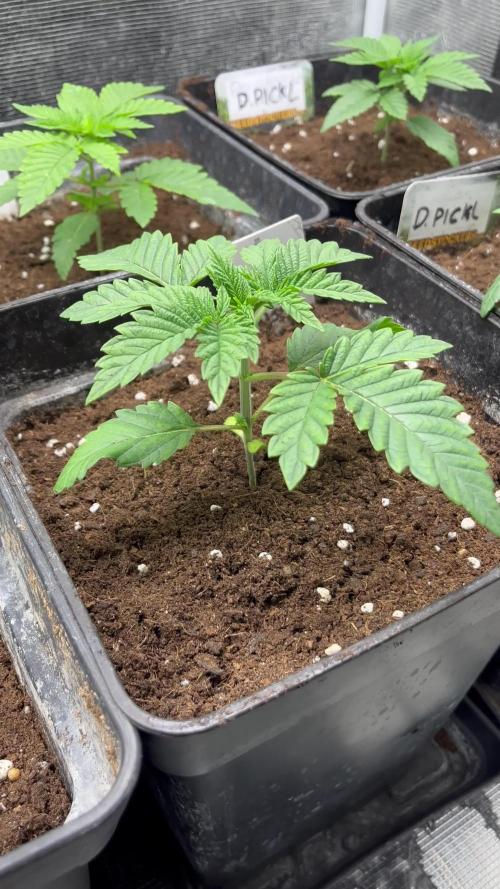
Put the seeds into the soil about 1cm deep, mist sprayed. I've put them on a window sill as it's predicted frost tomorrow and the day after 😳 in the middle of May! Transferred outside to the pollytunnel after 48hrs on a windowsill. Watered with rainwater.
Likes
21
Share
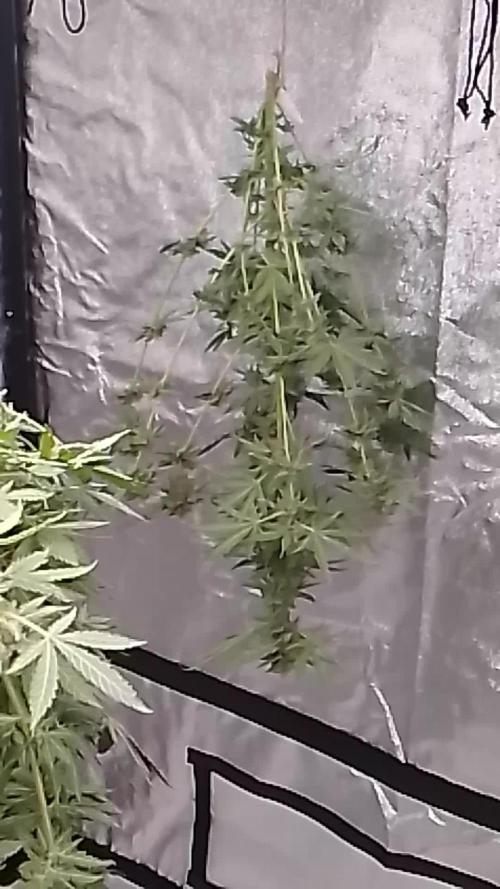
🗓️ WEEK 8 (flo) - HARVEST WEEK (56° FLO) 💧 Midway through this final week of flowering, I performed a complete DWC reservoir change. I replaced the nutrient solution with plain tap water, EC 0.4 - pH 5.8. This flushing solution was maintained for 4 days, right up until the moment of harvest. 🌱 On the 56° day of flowering (day 84 from the dry seed), the plant appeared perfectly ready for harvest. The buds are dense and glistening with resin, nearly all pistils have browned and retracted, and the trichomes show a beautiful mix of milky and enough amber. Immediately after chopping her down, I removed all the large fan leaves and I've decided to dry these too as they are remarkably full of resin. ✅ DRYING PHASE The entire plant was hung to dry inside the grow box, which was kept completely dark with constant, gentle air circulation for 8 days. The average VPD during this period was maintained around 1.2 (approximately 20°C and 50% RH). Once this drying period was complete, I trimmed off all the sugar leaves. These resinous sugar leaves will be combined with the already dried fan leaves and larf buds, and I plan to use them to make cannabutter for edibles. ⚖️ DRY WEIGHT After the 8-day drying period, and once all the remaining small leaves and branches were removed from the buds, I weighed the final product: The harvest yielded: - 150 grams of dense buds. - 5 grams of finger hash collected during handling. For edibles: - 30 grams of larf. - A large amount of fan and sugar leaves. ⚠️ In the next coming days I'll update the harvest week with info about curing stage and a smoke review.
Likes
45
Share
@BodyByVio
Follow
Beautiful flower full of trichomes. Smell and test fantastic. Very fast flowering. She was done on day 49 but I cut her down few days later. I love the strain, the only thing that I will like this strain to have is a better yield. Beast quality buds I ever grew.
Likes
52
Share
So we've reached the end of Week 4 from Seed, day 28 and things are looking much better than they did before..... Apart from one of the plants which I explain in the video I have uploaded. Happy Growing guys, any questions just ask away! 👍🏾🌱💚😎
Likes
25
Share
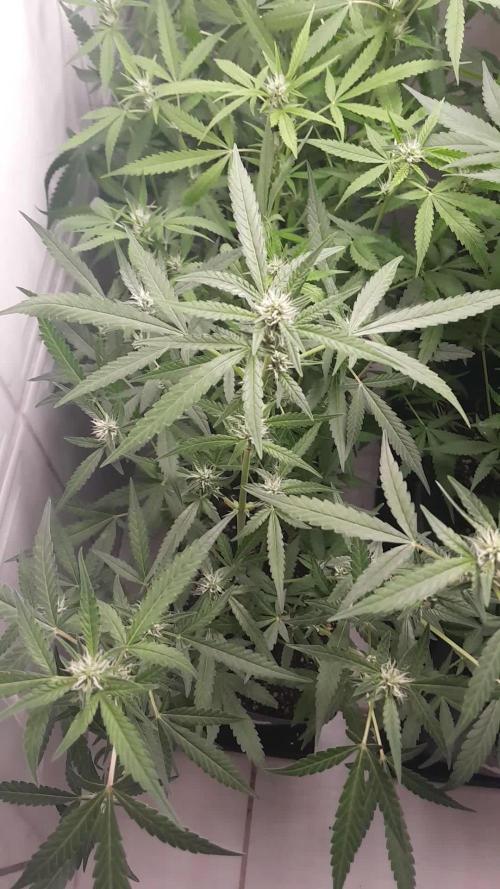
Great week. Everything is going well. Fat stocky plants, buds starting. Lst and tucking the leaves. Should be nice plants. Still growing daily
Processing
Likes
14
Share
She’s fat and happy! Every other day I’ll bring her out and move the hooks to keep her flat. String each cola to the pot once they hit the sides. Feeding her right at 1/3 gallon twice a week. And watering now on two off days. Thirsty is happy in my book. Still 2 1/2 weeks from the flip. Prob 3. Till next week.
Likes
5
Share
Too much N is observed and also some heat as there is an heatwave again and inside the tent it was around 31 c°, i only used half dosis of iguana grow in a light mix and it still seems to be too much, the ppm was around 380 so not sure if its just heat stress, but i think they will be fine, i will just only give water the next week and apply some slow absorbing nutrients on the top of the soil, something like guanokalong or biobloom, im sure they will be fine 😁
Likes
15
Share
@MG2009
Follow
04/03/2020 All are doing well. #5 (Male) has gotten a lot more sturdy, all other will be Given numbers when Repotted to final pots. Today is day 21 and will be first real week of veg at 18-6 will veg until mature enough to flower, 55 days maybe?, that will give me time figure out how many males and females I got to work with. I will most likely pollinate a branch of each female to try and isolate some cherry vanilla terps mmm! Ps. As soon as they are big enough I will get one clone of each female and male. (Future Breeding ideas). And save to compare with the next 5 beans out of my 10 pack. I'm dreaming of cherry cheese cake flavor, or cherry lifesaver.
Likes
12
Share
This week I noticed the buds got more bigger but also the calcium deficiency has gotten worse and so to battle that I added gypsum to the medium and gave them two waterings with banana peels 🍌in the water ( I read banana peels give off Potassium, Phosphorus, Calcium, and magnesium) hopefully they bounce back and my yield isn’t affected too bad.
Processing
Likes
5
Share
@ladyjane
Follow
8/12 - Dropped 3 seeds into RO water to germinate 8/13 - Placed seeds into moist paper towel and into plastic bag to germinate on heat mat. 8/15 - All three seeds sprouted. In the morning I prepared three 3-gallon pots with Roots Organics Original Soil and Nature's Living Soil Autoflower mix. I will be doing Super Soil method for this grow. I filled the bottom one third of the pot with regular soil, then added 1 lb of Nature's Living soil and mixed it in. Then filled the rest of the pot with the regular soil. I topped it with Mosquito Bits for added BTI for pest prevention. Finally, I wet the pots down with RO water and Organic Black Strap Molasses. After about 8 hours, I planted the three seeds and placed them in the 4x5 tent with a humidity dome to keep in moisture. 8/16 - Two of the three already have their true leaves. So, I have removed the humidity domes from those two. 8/17 - The last of the GSCs have sprouted her true leaves so I have removed her dome. I sprayed them lightly again today with RO water and molasses.
Likes
14
Share
I was selected to test some of Fastbuds new genetics. Seeds germinated in 48hrs and 5 days later it broke ground and hasent slowed down. This grow is in my 4x4ft grow space located in an uninsulated shed. Each plant has a dedicated 150-200w LED from Viparspectra or Mars. Winter Temps in my area spike to -15C or more in Jan and Feb, so this will be an interesting and challenging grow. The grow room is 20-30C above ambient temperature, so there is a little manual and auto manipulation of grow Temps. See my video Lights 50-75%, 30 inches, 75-120w per plant Soil temp: 21-25C Light cycle: 5:1 Air temp: 18-27C
Likes
25
Share
Whew, what a hot, humid and wet week. Although we had a major storm this week, Zamnesia Mango Kush proved her strength to withstand all of the elements that have continued to be thrown her way. This week I took the time to go the Zamnesia Website and read about some of her characteristics. I wanted to read up on her because I had been giving her Miracle Grow nutrients and didn't feel like she was my best grow. As a result, I have made an executive decision to give her Advance Nutrients Jungle Juice Grow. I am hoping this will help Zamnesia produce great big buds. On another note, My Zamnesia Mango Kush is only 31 inches tall, whereas Zamnesia Seeds says it should boast a height of 39 inches for an outdoor grow. I am excited to see what the next couple of week will produce. Miss Zamnesia Mango Kush has definitely proven to be resilient because we have had some terrible tough weather to deal with during this grow and Mango Kush has stood the test of time. Until next week, please comment and let's chat it up:)
Likes
27
Share
Processing
Likes
8
Share
Que hay fumetillas, terminamos el primer mes de floración, pensé que serían algo más rápidas pero bueno, tengo tiempo, aun así hay que ver hasta el final que es lo que sucede. Controlamos ph humedad por debajo de 45% temperatura media de 24.5 grados, aumentó una vez por semana la cantidad de ml por producto, último cultivo con advancednutrients, los próximos proyectos los trabajaré con AgroBeta. Buenos humos fumetillas 💨💨💨
Likes
25
Share
ANTHOCYANIN production is primarily controlled by the Cryptochrome (CR1) Photoreceptor ( !! UV and Blue Spectrums are primary drivers in the production of the pigment that replaces chlorophyll, isn't that awesome! 1. Diverse photoreceptors in plants Many civilizations, including the sun god of ancient Egypt, thought that the blessings of sunlight were the source of life. In fact, the survival of all life, including humans, is supported by the photosynthesis of plants that capture solar energy. Plants that perform photosynthesis have no means of transportation except for some algae. Therefore, it is necessary to monitor various changes in the external environment and respond appropriately to the place to survive. Among various environmental information, light is especially important information for plants that perform photosynthesis. In the process of evolution, plants acquired phytochrome, which mainly receives light in the red light region, and multiple blue light receptors, including his hytropin and phototropin, in order to sense the light environment. .. In addition to these, an ultraviolet light receptor named UVR8 was recently discovered. The latest image of the molecular structure and function of these various plant photoreceptors (Fig. 1), focusing on phytochrome and phototropin. Figure 1 Ultraviolet-visible absorption spectra of phytochrome, cryptochrome, phototropin, and UVR8. The dashed line represents each bioactive absorption spectrum. 2. Phytochrome; red-far red photoreversible molecular switch What is phytochrome? Phytochrome is a photochromic photoreceptor, and has two absorption types, a red light absorption type Pr (absorption maximum wavelength of about 665 nm) and a far-red light absorption type Pfr (730 nm). Reversible light conversion between the two by red light and far-red light, respectively(Fig. 1A, solid line and broken line). In general, Pfr is the active form that causes a physiological response. With some exceptions, phytochrome can be said to function as a photoreversible molecular switch. The background of the discovery is as follows. There are some types of plants that require light for germination (light seed germination). From that study, it was found that germination was induced by red light, the effect was inhibited by subsequent far-red light irradiation, and this could be repeated, and the existence of photoreceptors that reversibly photoconvert was predicted. In 1959, its existence was confirmed by the absorption spectrum measurement of the yellow sprout tissue, and it was named phytochrome. Why does the plant have a sensor to distinguish between such red light and far-red light? There is no big difference between the red and far-red light regions in the open-field spectrum of sunlight, but the proportion of red light is greatly reduced due to the absorption of chloroplasts in the shade of plants. Similar changes in light quality occur in the evening sunlight. Plants perceive this difference in light quality as the ratio of Pr and Pfr, recognize the light environment, and respond to it. Subsequent studies have revealed that it is responsible for various photomorphogenic reactions such as photoperiodic flowering induction, shade repellent, and deyellowing (greening). Furthermore, with the introduction of the model plant Arabidopsis thaliana (At) and the development of molecular biological analysis methods, research has progressed dramatically, and his five types of phytochromes (phyA-E) are present in Arabidopsis thaliana. all right. With the progress of the genome project, Fi’s tochrome-like photoreceptors were found in cyanobacteria, a photosynthetic prokaryotes other than plants. Furthermore, in non-photosynthetic bacteria, a homologue molecule called bacteriophytochrome photoreceptor (BphP) was found in Pseudomonas aeruginosa (Pa) and radiation-resistant bacteria (Deinococcus radiodurans, Dr). Domain structure of phytochrome molecule Phytochrome molecule can be roughly divided into N-terminal side and C-terminal side region. PAS (Per / Arndt / Sim: blue), GAF (cGMP phosphodiesterase / adenylyl cyclase / FhlA: green), PHY (phyto-chrome: purple) 3 in the N-terminal region of plant phytochrome (Fig. 2A) There are two domains and an N-terminal extension region (NTE: dark blue), and phytochromobilin (PΦB), which is one of the ring-opening tetrapyrroles, is thioether-bonded to the system stored in GAF as a chromophore. ing. PAS is a domain involved in the interaction between signal transduction-related proteins, and PHY is a phytochrome-specific domain. There are two PASs and her histidine kinase-related (HKR) domain (red) in the C-terminal region, but the histidine essential for kinase activity is not conserved. 3. Phototropin; photosynthetic efficiency optimized blue light receptor What is phototropin? Charles Darwin, who is famous for his theory of evolution, wrote in his book “The power of move-ment in plants” published in 1882 that plants bend toward blue light. Approximately 100 years later, the protein nph1 (nonphoto-tropic hypocotyl 1) encoded by one of the causative genes of Arabidopsis mutants causing phototropic abnormalities was identified as a blue photoreceptor. Later, another isotype npl1 was found and renamed phototropin 1 (phot1) and 2 (phot2), respectively. In addition to phototropism, phototropin is damaged by chloroplast photolocalization (chloroplasts move through the epidermal cells of the leaves and gather on the cell surface under appropriate light intensity for photosynthesis. As a photoreceptor for reactions such as escaping to the side of cells under dangerous strong light) and stomata (reactions that open stomata to optimize the uptake of carbon dioxide, which is the rate-determining process of photosynthetic reactions). It became clear that it worked. In this way, phototropin can be said to be a blue light receptor responsible for optimizing photosynthetic efficiency. Domain structure and LOV photoreaction of phototropin molecule Phototropin molecule has two photoreceptive domains (LOV1 and LOV2) called LOV (Light-Oxygen-Voltage sensing) on the N-terminal side, and serine / on the C-terminal side. It is a protein kinase that forms threonine kinase (STK) (Fig. 4Aa) and whose activity is regulated by light. LOV is one molecule as a chromophore, he binds FMN (flavin mononucleotide) non-covalently. The LOV forms an α/βfold, and the FMN is located on a β-sheet consisting of five antiparallel β-strands (Fig. 4B). The FMN in the ground state LOV shows the absorption spectrum of a typical oxidized flavin protein with a triplet oscillation structure and an absorption maximum wavelength of 450 nm, and is called D450 (Fig. 1C and Fig. 4E). After being excited to the singlet excited state by blue light, the FMN shifts to the triplet excited state (L660t *) due to intersystem crossing, and then the C4 (Fig. 4C) of the isoaroxazine ring of the FMN is conserved in the vicinity. It forms a transient accretionary prism with the tain (red part in Fig. 4B Eα) (S390I). When this cysteine is replaced with alanine (C / A substitution), the addition reaction does not occur. The effect of adduct formation propagates to the protein moiety, causing kinase activation (S390II). After that, the formed cysteine-flavin adduct spontaneously dissociates and returns to the original D450 (Fig. 4E, dark regression reaction). Phototropin kinase activity control mechanism by LOV2 Why does phototropin have two LOVs? Atphot1 was found as a protein that is rapidly autophosphorylated when irradiated with blue light. The effect of the above C / A substitution on this self-phosphorylation reaction and phototropism was investigated, and LOV2 is the main photomolecular switch in both self-phosphorylation and phototropism. It turns out that it functions as. After that, from experiments using artificial substrates, STK has a constitutive activity, LOV2 functions as an inhibitory domain of this activity, and the inhibition is eliminated by photoreaction, while LOV1 is kinase light. It was shown to modify the photosensitivity of the activation reaction. In addition to this, LOV1 was found to act as a dimerization site from the crystal structure and his SAXS. What kind of molecular mechanism does LOV2 use to photoregulate kinase activity? The following two modules play important roles in this intramolecular signal transduction. Figure 4 (A) Domain structure of LOV photoreceptors. a: Phototropin b: Neochrome c: FKF1 family protein d: Aureochrome (B) Crystal structure of auto barley phot1 LOV2. (C) Structure of FMN isoaroxazine ring. (D) Schematic diagram of the functional domain and module of Arabidopsis thaliana phot1. L, A’α, and Jα represent linker, A’α helix, and Jα helix, respectively. (E) LOV photoreaction. (F) Molecular structure model (mesh) of the LOV2-STK sample (black line) containing A’α of phot2 obtained based on SAXS under dark (top) and under bright (bottom). The yellow, red, and green space-filled models represent the crystal structures of LOV2-Jα, protein kinase A N-lobe, and C-robe, respectively, and black represents FMN. See the text for details. 1) Jα. LOV2 C of oat phot1-to α immediately after the terminus Rix (Jα) is present (Fig. 4D), which interacts with the β-sheet (Fig. 4B) that forms the FMN-bound scaffold of LOV2 in the dark, but unfolds and dissociates from the β-sheet with photoreaction. It was shown by NMR that it does. According to the crystal structure of LOV2-Jα, this Jα is located on the back surface of the β sheet and mainly has a hydrophobic interaction. The formation of S390II causes twisting of the isoaroxazine ring and protonation of N5 (Fig. 4C). As a result, the glutamine side chain present on his Iβ strand (Fig. 4B) in the β-sheet rotates to form a hydrogen bond with this protonated N5. Jα interacts with this his Iβ strand, and these changes are thought to cause the unfold-ing of Jα and dissociation from the β-sheet described above. Experiments such as amino acid substitution of Iβ strands revealed that kinases exhibit constitutive activity when this interaction is eliminated, and that Jα plays an important role in photoactivation of kinases. 2) A’α / Aβ gap. Recently, several results have been reported showing the involvement of amino acids near the A’α helix (Fig. 4D) located upstream of the N-terminal of LOV2 in kinase photoactivation. Therefore, he investigated the role of this A’α and its neighboring amino acids in kinase photoactivation, photoreaction, and Jα structural change for Atphot1. The LOV2-STK polypeptide (Fig. 4D, underlined in black) was used as a photocontrollable kinase for kinase activity analysis. As a result, it was found that the photoactivation of the kinase was abolished when amino acid substitution was introduced into the A’α / Aβ gap between A’α and Aβ of the LOV2 core. Interestingly, he had no effect on the structural changes in Jα examined on the peptide map due to the photoreaction of LOV2 or trypsin degradation. Therefore, the A’α / Aβ gap is considered to play an important role in intramolecular signal transduction after Jα. Structural changes detected by SAXS Structural changes of Jα have been detected by various biophysical methods other than NMR, but structural information on samples including up to STK is reported only by his results to his SAXS. Not. The SAXS measurement of the Atphot2 LOV2-STK polypeptide showed that the radius of inertia increased from 32.4 Å to 34.8 Å, and the molecular model (Fig. 4F) obtained by the ab initio modeling software GASBOR is that of LOV2 and STK. It was shown that the N lobes and C lobes lined up in tandem, and the relative position of LOV2 with respect to STK shifted by about 13 Å under light irradiation. The difference in the molecular model between the two is considered to reflect the structural changes that occur in the Jα and A’α / Aβ gaps mentioned above. Two phototropins with different photosensitivity In the phototropic reaction of Arabidopsis Arabidopsis, Arabidopsis responds to a very wide range of light intensities from 10–4 to 102 μmol photon / sec / m2. At that time, phot1 functions as an optical sensor in a wide range from low light to strong light, while phot2 reacts with light stronger than 1 μmol photon / sec / m2. What is the origin of these differences? As is well known, animal photoreceptors have a high photosensitivity due to the abundance of rhodopsin and the presence of biochemical amplification mechanisms. The exact abundance of phot1 and phot2 in vivo is unknown, but interesting results have been obtained in terms of amplification. The light intensity dependence of the photoactivation of the LOV2-STK polypeptide used in the above kinase analysis was investigated. It was found that phot1 was about 10 times more photosensitive than phot2. On the other hand, when the photochemical reactions of both were examined, it was found that the rate of the dark return reaction of phot1 was about 10 times slower than that of phot2. This result indicates that the longer the lifetime of S390II, which is in the kinase-activated state, the higher the photosensitivity of kinase activation. This correlation was further confirmed by extending the lifespan of her S390II with amino acid substitutions. This alone cannot explain the widespread differences in photosensitivity between phot1 and phot2, but it may explain some of them. Furthermore, it is necessary to investigate in detail protein modifications such as phosphorylation and the effects of phot interacting factors on photosensitivity. Other LOV photoreceptors Among fern plants and green algae, phytochrome ɾphotosensory module (PSM) on the N-terminal side and chimera photoreceptor with full-length phototropin on the C-terminal side, neochrome (Fig. There are types with 4Ab). It has been reported that some neochromes play a role in chloroplast photolocalization as a red light receiver. It is considered that fern plants have such a chimera photoreceptor in order to survive in a habitat such as undergrowth in a jungle where only red light reaches. In addition to this, plants have only one LOV domain, and three proteins involved in the degradation of photomorphogenesis-related proteins, FKF1 (Flavin-binding, Kelch repeat, F-box 1, ZTL (ZEITLUPE)), LKP2 ( There are LOV Kelch Protein2) (Fig. 4Ac) and aureochrome (Fig. 4Ad), which has a bZip domain on the N-terminal side of LOV and functions as a gene transcription factor. 4. Cryptochrome and UVR8 Cryptochrome is one of the blue photoreceptors and forms a superfamily with the DNA photoreceptor photolyase. It has FAD (flavin adenine dinucle-otide) as a chromophore and tetrahydrofolic acid, which is a condensing pigment. The ground state of FAD is considered to be the oxidized type, and the radical type (broken line in Fig. 1B) generated by blue light irradiation is considered to be the signaling state. The radical type also absorbs in the green to orange light region, and may widen the wavelength region of the plant morphogenesis reaction spectrum. Cryptochrome uses blue light to control physiological functions similar to phytochrome. It was identified as a photoreceptor from one of the causative genes of UVR8 Arabidopsis thaliana, and the chromophore is absorbed in the UVB region by a Trp triad consisting of three tryptophans (Fig. 1D). It is involved in the biosynthesis of flavonoids and anthocyanins that function as UV scavengers in plants. Conclusion It is thought that plants have acquired various photoreceptors necessary for their survival during a long evolutionary process. The photoreceptors that cover the existing far-red light to UVB mentioned here are considered to be some of them. More and more diverse photoreceptor genes are conserved in cyanobacteria and marine plankton. By examining these, it is thought that the understanding of plant photoreceptors will be further deepened.
Processing
Likes
6
Share
sour 76 stopped stretching at 22, 23 and 24 inches. yeti number 4 stopped at 32 inches, while yeti 3 stretches another few inches as sour "tower" begins stacking and starting to trich up
Likes
11
Share
La planta 1 esta recibiendo solo agua. La planta 2 que era la mas débil, ha resultado ser la mas poderosa con muchos cogollos. Por la ansiedad, corte dos florcitas de la planta 1 y han estado muy buenas. Manicure en verde a la planta 1, ver si las flores bajas agarran algo. Ahora a esperar, la planta 1 estará lista esta semana o la próxima.
Processing
Likes
37
Share
Flowering coming along very well. THE BIG STRETCH has begun haha. All the plants stretching and getting ready for flowering is what I mean haha. Smell is super nice from the gorilla glue and the mold is decreasing rapidly. Used half milk and half ph solution along with many copper treatments to help cure the mold situation which came up from bringing an outdoor plant indoors, never so this!
Likes
114
Share
💩Alrighty Then Growmies We Are Back At it 💩 Well folks we just finished up the last run and so we are back to do it all over again 😁 So what do you say we have some fun 👈 We got some Gorilla Punch 👊 👊 👊 DAY 14 👉 Its been a really good week , lots of growth , just given water 💧 👌 Never the less we are moving along and so far so good folks👌 FC4800 from MarsHydro Lights being readjusted and chart updated .........👍👉Added an RU45 too the mix 👍 www.marshydro.ca 👉I used NutriNPK for nutrients for my grows and welcome anyone to give them a try .👈 👉 www.nutrinpk.com 👈 NutriNPK Cal MAG 14-0-14 NutriNPK Grow 28-14-14 NutriNPK Bloom 8-20-30 NutriNPK Bloom Booster 0-52-34 I GOT MULTIPLE DIARIES ON THE GO 😱 please check them out 😎 👉THANKS FOR TAKING THE TIME TO GO OVER MY DIARIES 👈