The Grow Awards 2026 šŸ†
Likes
Comments
Share
Did she stretch 2cm? I'm saying: yes! Otherwise same old. Oh, just realising I didn't measure bud width. Man, it's depressing. So many leaves in the bud, it's going to be hell trimming these two sad colas. But she's doing her best, so I should do, too. Chopping time is close.
Likes
34
Share
So growing this strain was very easy i first topped her and then tied down every branch that came too high and she maintained a really compact form measuring only 40 cm from stalk to top.. Bud to leaf ratio was amazing too it had really few leaves and has been really easy to wet trim.. The wet weight was around 360 grams wet trimmed and the total dry weight after 5 days of drying was around 80 grams wich of this quality its outstanding for just 11 weeks from seed to harvest!! So in general i truly enjoying growing her looking at her wonderful colours in flower and will surely grow again.. Thanks again to everyone passing by and liking my diaries hope you have a great day and wish you all happy growing!!!
Likes
47
Share
2nd net is up. Early bud formations are promising. holding up to the extremes pretty well, some leaves taking minor damage, but overall, she is holding up, gave her 1 night at 50F see how she would react, stressful. Not advised as it messes with her metabolism, but I want to see if it triggers any anthocyanin response. Love to see her purp up but no signs yet. Remember, For every molecule of glucose produced during photosynthesis, a plant needs to split six molecules of water. This process provides the hydrogen needed for synthesizing glucose and other organic compounds, while oxygen is released as a byproduct. Homework. If Rubisco activity is impaired and it cannot properly function or regenerate its substrate, the plant's leaves are likely to turn a pale green or lime green, a condition known as chlorosis. Essentially, Rubisco activity is highly regulated and susceptible to various environmental and metabolic factors that can cause it to become inhibited, leading to an apparent failure in RuBP regeneration due to a lack of consumption. Rubisco regeneration is intrinsically linked to nitrogen supply because Rubisco is a major sink for nitrogen in plants, typically accounting for 15% to over 25% of total leaf nitrogen. The regeneration phase itself consumes nitrogen through the synthesis of the Rubisco enzyme and associated proteins (like Rubisco activase), and overall nitrogen status heavily influences the efficiency of RuBP regeneration. RuBisCO is a very large enzyme that constitutes a significant proportion (up to 50%) of leaf soluble protein and requires large investments in nitrogen. Insufficient nitrogen supply limits the plant's ability to produce adequate amounts of RuBisCO, thereby limiting the overall capacity for photosynthesis and carbon fixation. Maintaining the optimal, slightly alkaline pH is crucial for the proper function and regeneration of Rubisco. Deviations in either direction (too high or too low) disrupt the enzyme's structure, activation state, and interaction with its substrates, leading to decreased activity and impaired RuBP regeneration. (Lime/yellowing) Structural Component: Nitrogen is an essential building block for all proteins, and the sheer abundance of the Rubisco protein makes it the single largest storage of nitrogen in the leaf. Synthesis and Activity: Adequate nitrogen supply is crucial for the synthesis and maintenance of sufficient Rubisco enzyme and Rubisco activase (Rca), the regulatory protein responsible for maintaining Rubisco's active state. Nitrogen deficiency leads to a decrease in the content and activity of both Rubisco and Rca, which in turn limits the maximum carboxylation rate, Vmax, and the rate of RuBP regeneration Jmax, thus reducing overall photosynthetic capacity. Nitrogen Storage and Remobilization: Rubisco can act as a temporary nitrogen storage protein, which is degraded to remobilize nitrogen to other growing parts of the plant, especially under conditions of nitrogen deficiency or senescence. Nitrogen Use Efficiency (NUE): The allocation of nitrogen to Rubisco is a key determinant of a plant's photosynthetic nitrogen use efficiency (PNUE). In high-nitrogen conditions, plants may accumulate a surplus of Rubisco, which may not be fully activated, leading to a lower PNUE. Optimizing the amount and activity of Rubisco relative to nitrogen availability is a target for improving crop NUE. Photorespiration and Nitrogen Metabolism: Nitrogen metabolism is also linked to the photorespiration pathway (which competes with carboxylation at the Rubisco active site), particularly in the reassimilation of ammonia released during the process. To increase RuBisCO regeneration, which refers to the process of forming the CO2 acceptor molecule Ribulose-1,5-bisphosphate (RuBP) during photosynthesis, the primary methods involve optimizing the levels and activity of Rubisco activase (Rca) and enhancing the performance of other Calvin-Benson-Bassham (CBB) cycle enzymes. Biochemical and Environmental Approaches: Optimize Rubisco Activase (Rca) activity: Rca is a crucial chaperone protein that removes inhibitory sugar phosphates, such as CA1P (2-carboxy-D-arabinitol 1-phosphate), from the Rubisco active site, thus maintaining its catalytic competence. •Ensure optimal light conditions: Rca is light-activated via the chloroplast's redox status. Adequate light intensity ensures Rca can effectively maintain Rubisco in its active, carbamylated state. •Maintain optimal temperature: Rca is highly temperature-sensitive and can become unstable at moderately high temperatures (e.g., above 35°C/95F° in many C3 plants), which decreases its ability to activate Rubisco. Maintaining temperatures within the optimal range for a specific plant species is important. •Optimize Mg2+ concentration: Mg2+ is a key cofactor for both Rubisco carbamylation and Rca activity. In the light, Mg2+ concentration in the chloroplast stroma increases, promoting activation. •Manage ATP/ADP ratio: Rca activity depends on ATP hydrolysis and is inhibited by ADP. Conditions that maintain a high ATP/ADP ratio in the chloroplast stroma favor Rca activity. Enhance Calvin-Benson-Bassham (CBB) cycle enzyme activity: The overall rate of RuBP regeneration can be limited by other enzymes in the cycle. •Increase SBPase activity: Sedoheptulose-1,7-bisphosphatase (SBPase) is a key regulatory enzyme in the regeneration pathway, and increasing its activity can enhance RuBP regeneration and overall photosynthesis. •Optimize other enzymes: Overexpression of other CBB cycle enzymes such as fructose-1,6-bisphosphate aldolase (FBA) and triose phosphate isomerase (TPI) can also help to balance the metabolic flux and improve RuBP regeneration capacity. Magnesium ions, Mg2+, are specifically required for Rubisco activation because the cation plays a critical structural and chemical role in forming the active site: A specific lysine residue in the active site must be carbamylated by a CO2 molecule to activate the enzyme. The resulting negatively charged carbamyl group then facilitates the binding of the positively charged Mg2+ion. While other divalent metal ions like Mn2+ can bind to Rubisco, they alter the enzyme's substrate specificity and lead to dramatically lower activity or a higher rate of the non-productive oxygenation reaction compared to Mg2+, making them biologically unfavorable in the context of efficient carbon fixation. The concentration of Mg2+ in the chloroplast stroma naturally increases in the light due to ion potential balancing during ATP synthesis, providing a physiological mechanism to ensure the enzyme is activated when photosynthesis is possible. At the center of the porphyrin ring, nestled within its nitrogen atoms, is a Magnesium ion (Mg2+). This magnesium ion is crucial for the function of chlorophyll, and without it, the pigment cannot effectively capture and transfer light energy. Mg acts as a cofactor: Mg2+ binds to Rubisco after an activator CO2 molecule, forming a catalytically competent complex (Enzyme-CO2-Mg2+). High light + CO2) increases demand: Under high light (60 DLI is a very high intensity, potentially saturating) and high CO2, the plant's capacity for photosynthesis is high, and thus the demand for activated Rubisco and the necessary Mg2+ cofactor increases. Mg deficiency becomes limiting: If Mg2+ is deficient under these conditions, the higher levels of Rubisco and Rubisco activase produced cannot be fully activated, leading to lower photosynthetic rates and potential photo-oxidative damage. Optimal range: Studies show that adequate Mg2+ application can enhance Rubisco activation and stabilize net photosynthetic rates under stress conditions, but the required concentration is specific to the experimental setup. Monitoring is key: The most effective approach in a controlled environment is to monitor the plant's physiological responses e.g., leaf Mg2+ concentration, photosynthetic rate, Rubisco activation state, and adjust the nutrient solution/fertilizer to maintain adequate levels, rather than supplementing a fixed "extra" amount. In practice, this means ensuring that Mg2+ is not a limiting factor in the plant's standard nutrient solution when pushing the limits with high light and CO2. Applying Mg2+ through foliar spray is beneficial to Rubisco regeneration, particularly in alleviating the negative effects of magnesium (Mg) deficiency and high-temperature stress (HTS). While Mg can be leached from soil, within the plant it is considered a mobile nutrient, particularly in the phloem. Foliar-applied Mg is quickly absorbed by the leaves and can be translocate to other plant parts, including new growth and sink organs. Foliar application of: NATURES VERY OWN MgSO4 @ 15.0g L-1 in a spray bottle. For those high-intensity workouts when 1 meal a day is just not enough! Foliar sprays are often recommended as a rapid rescue measure for existing deficiencies or as a supplement during critical growth stages, when demand for Mg is high. Application in the early morning or late evening can improve absorption and prevent leaf burn. The plant was getting a little limey yellow in the centre. Shortly thereafter, she was back in business, green mostly regenerated. The starting point [of creativity] is curiosity: pondering why the default exists in the first place. We’re driven to question defaults when we experience vuja de, the opposite of dĆ©jĆ  vu. DĆ©jĆ  vu occurs when we encounter something new, but it feels as if we’ve seen it before. Vuja de is the reverse—we face something familiar, but we see it with a fresh perspective that enables us to gain new insights into old problems. Confidence is evidence... nothing more. You are confident because you have driven 10,000 times, you are confident because you have spoken 10,000 times. People think confidence is a feeling, but it's not. If you want more confidence, then you need to create evidence, take more shots, collect more data, build more experiences, take more risks; fail, confidence doesn't come first; it is the reward you get for doing the work. no one else wants to do.
Likes
35
Share
Starting this week examining tricomes.
Likes
8
Share
Well I having been laggin with update but I think am up to speed now...well u kno the fitess of the fitess must survive....still been having so water lag issue with the older one so finally decided to change the pot but she still managed that bit of stress good well see what happens in the rest weeks to come.....the other two are 6 weeks this week ...the one that got hst not by choice the crown is barely hanging on have some tape holding it managed to push a seed....this strain seem to be very resilient.....look at dem resin and this is jus the 2nd week of flower....until next time happy growing
Likes
7
Share
This was a little sad week. Since I dont have a properly dehumidifier, the humidity raised and botrytis appeared... Added a directly wind (24h/7) on my plants and removed all bud with botrytis
Likes
10
Share
Week 12, Day 12 of Flower. All is going well, she is doing nicely, gave her a light defoliation and lollipop. Her last feeding was just Phed water with a drop of super thrive. She’s starting to stretch, currently 20ā€ from the light and I can raise the light another 12ā€ so it should be good for the remainder of the flowering. I did see a slight purpling in some stems so I’ll probably add a little more calimagic in the next feed. All comments and suggestions welcome.
Likes
3
Share
Empezamos a darle el OVERDRIVE asƭ que en esta semana vamos a engordar un poco. Igual le voy a hacer en estos dƭas una poda selectiva de hojas porque estƔ muy verde, igual le saco un beneficio. Muy vigorosas las ramas laterales, un olor potente y mucho potencial por sacarle. Estoy muy entusiasmado. Un abrazo gente ya les mandarƩ los adelantos.
Processing
Likes
17
Share
Hello growers day 56 in the garden with the crystal candy and red poison all is well and good the red poison is very nearly done I’m watching the trics I have a few amber heads still flushing trying to get as much out of them as possible but they will probably come down next week the crystal candy’s are starting to swell so probably couple more weeks for them but all in all very good and nearly there so until the harvest next week be safe and happy growing āœŒļø
Likes
6
Share
@Headies
Follow
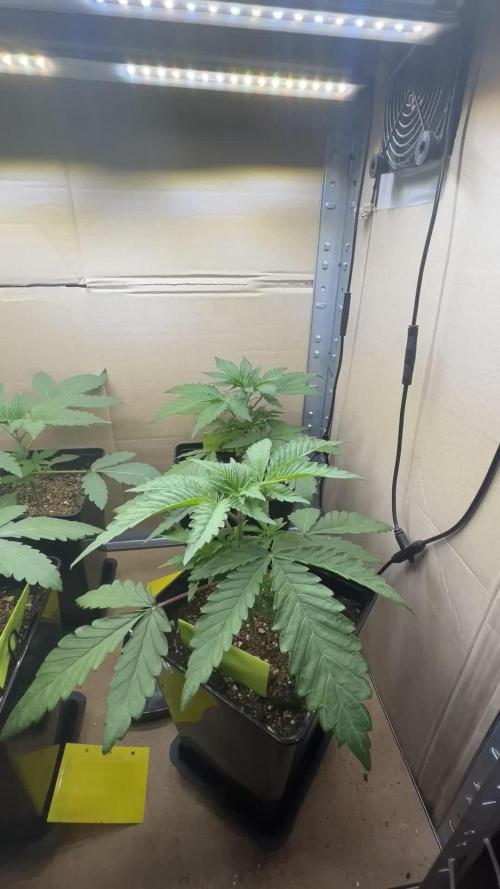
Upper growth slowed for about a week or two and root developed, but then the top started growing, and branches started forming. Leaves started getting bigger.
Likes
42
Share
@Theia
Follow
Sad news. Due to no fault but my own the sherberts were subjected to some very badly managed environmental factors. I have been busy building our new grow space and was not checking the plants at the back of the space. The 2 sherberts were there at the back and the RH went on a roller coaster over 4 days with temps swinging massively also due to an unmanaged dehumidifier.. the end result was both sherberts stressed out and grew some pollen sacs and I did not see so the burst and pollinated my entire flower room. Gutted. But I will push through the last few weeks of flower with all the current grows and see what we get. I had to chop alot of lower bud. Sacs had burst so I just did a very have clear. Have I mentioned I'm gutted. And this is not a reflection of weedseedsexpress genetics. I have looked at the data logs for last 9 days and it's so up and down with rh and temp it's no wonder they stressed. Next round less plants and I have to stop with the clones.. no room. Thanks for looking. Stay safe😷 Happy grows.🌱🌱
Likes
35
Share
Likes
3
Share
@Qaggy
Follow
Gave them all a defol as they was getting to bushy at the bottom. They all look great apart from number 3. I can’t seem to perk her up. Tried straight water for a week, ph is 6.3. Then tried her with nutes but nothing’s making her happy. Think she’s just 1 of them doom and gloom girls, we all have known them haha.
Likes
3
Share
@Chubbs
Follow
Weekly update on these wonderful girls. They've progressed beautifully, especially considering the day time temps have been in the mid 90's. Not seeing any signs of deficiencies and spraying once a week of either Athena's IPM and stack or PureCrop1 for pest management. So far since being transplanted they've only been fed well water. I'll probably start some Grow A & B nutes and calmag this week. All in all Happy Growing
Processing
Likes
3
Share
Processing
Likes
9
Share
TUESDAY 7/16: Today I transplanted her into a 3 gallon pot and moved her outdoors. She has a massive root system already. I watered her in with bottled water and some dolomite, azomite, and bokashi. I'll cook up some tea for her and everybody else I move outdoors in the next few days. WEDNESDAY: I watered her with about a half-gallon and added Kelp Me Kelp You. I also sprayed her a few times with Boom Boom Juice and she seemed to grow an inch almost immediately.šŸ˜€ THURSDAY: She grew two inches overnight! I FIM'd her today and inspected her for pests...all clear.šŸ‘ FRIDAY: Inspected for pests and repositioned her in a spot that gets another half hour of sunlight per day. I sprayed the area with Ortho again and bought a little air bubbler to aerate water for compost tea. SATURDAY: She put on a few more inches since Thursday..really stretching now, but I still see no pistils. I mixed up a fairly weak batch of Big Bloom and Grow Big plus some Kelp Me Kelp You and douched her with about a half-gallon right as the sun was coming up. I also prepared a foliar feed using Big Bloom and Kelp Me Kelp You and sprayed her well before the sun came up, and again after it was going down. I also started aerating 4 gallons of water today...will add the compost tea tomorrow morning and let it cook for 24 hours. SUNDAY: I foliar fed her and sprinkled little more Silicium Flash on top of the soil of all my plants and mixed about 4 grams of Bactrex into a jug with 3/4 gallon of bottled water and douched all my plants with about 2 pints each. That should really get the beneficial bacteria and fungus kicked into overdrive. I started brewing a 4 gallon batch of compost tea today. Since I don't have any Orgatrex, I am using a little Big Bloom, Kelp Me Kelp You, and Grow Big in the tea in addition to the PK Compost Booster tea from Bi Tabs. I'll add Mycotrex to it about 2 hours before it finishes and dowse them all, thoroughly, tomorrow morning. MONDAY: I think I FIM'd the FIM job..not acting right...but she's stretching like crazy now. She got about a liter of compost tea this morning along with a good foliar feeding.
Likes
14
Share
@Luv2Grow
Follow
Day 78 - The start of week 12 and from looking at her and the trichs, she probably won’t be getting chopped this weekend. Gave her a good flush with the sledgehammer yesterday so hopefully the depletion of nutes will push her to the end sooner rather than later. Day 79 - Still just waiting but her leaves are starting to yellow a bit so she seems to be sucking whatever she can out of them to finish up. Can’t wait for her to be done to get a taste. Day 80 - Leaves are starting to fade pretty good now and almost certain I’ll be chopping her this week or this coming weekend at the latest. Trying to push some more amber trichs into her. Day 81 - No real updates, she’ll be getting the chop no later than this weekend. Most likely on Saturday.