Likes
Comments
Share
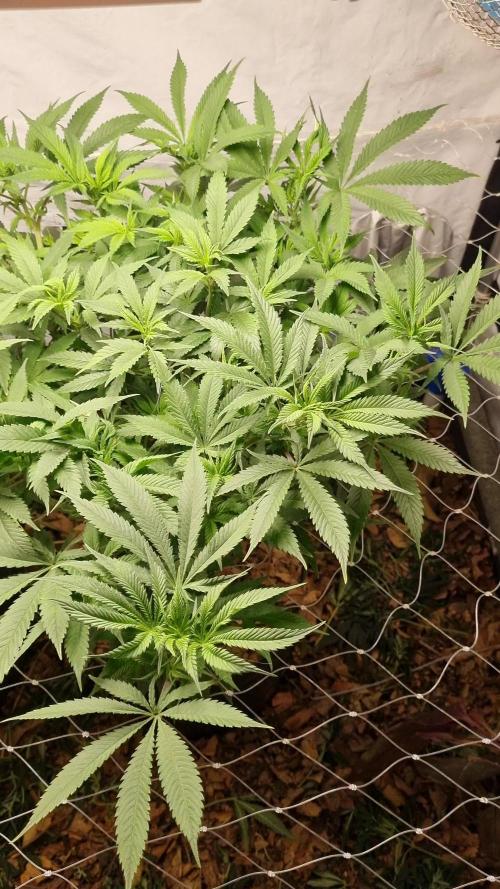
La bimba e cambiata alcuni pre fiori sono usciti e si e allungata vi aggiorno la prossima settimana.
Likes
2
Share
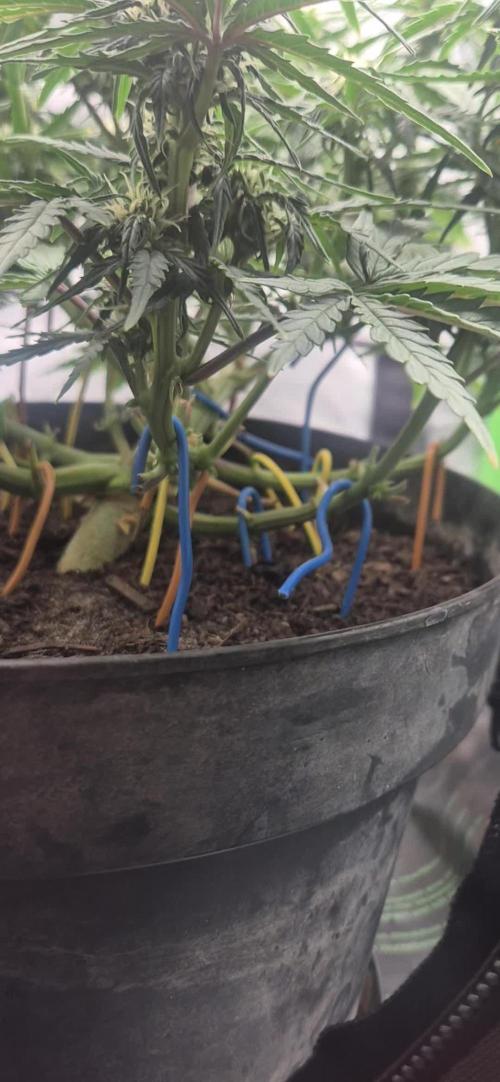
Also, ich habe so nichts mehr gemacht. Ich hatte sie entlaubt und so lass ich sie einfach machen
Likes
22
Share
@Swanberg
Follow
Just very happy with the structure of the plant and how well it was maintained. Was very worried during drying and cure as I lost a lot of terpene and became woody and until 10 days of curing the smell and taste just totally evolved into very desirable terpene. Very happy strain if you want “rock hard egg shaped buds” this is your go to, the main line did wonders. Will be trying this strain again when I upgrade light
Likes
1
Share
@TTerpz
Follow
Start of week 6 7/25/25 Fed with nutrients: 7/25/25 Fed with nutrients 7/30/25
Processing
Likes
1
Share
Likes
70
Share
Het is zover. Vandaag 27 december is de laatste dag met de lampen aan. Ze staat nu in het donker en morgenavond 28 december zal ze worden omgehakt en opgehangen. 28 december: de koningin is omgehakt en opgehangen aan de drooglijn. Oogst rapport komt als de toppen droog zijn To be continued..... stay tuned........🧐
Likes
10
Share
Everything is moving smooth with all of the plant except lots o bear by fox genetics it popped and just never grew so I’m planting the 3rd seed and if it doesn’t work I’m going to sub for purple punch auto
Likes
13
Share
@russrahl
Follow
Everything went good this week, having trouble keeping the humidity up but I got some plans to rectify that soon. Lol roots are all down into the buckets now except the runt of the litter in the back corner. But we are only a week in so it’s still early for her. Just been feeding plain water ph’d at 5.8 with some UC Roots added. Been scooping a cup of water daily from there bucket and pooring it over the rock wool and pebbles back into the bucket just to keep things wet and the roots moving. They are sitting around 5000 lux and seem to be enjoying it. I’m just using a phone app with a paper diffuser to test it but it seems to be pretty good and didn’t cost much. Well that’s about it for this week, be back again next week, Cheers💨
Processing
Likes
13
Share
@GrowGuy97
Follow
1 of the bubba kush & 2 of the gorilla zkittlez are a little behind but over all everything seems to be going good so far! Day 10 update transplanted all the ones in smaller pots to 5 gallon pots except 1 of the bubba Kush it still needs a few more days! Everything else seems to be going great!
Processing
Likes
12
Share
@GrowGuy97
Follow
Have seen a lot of good diary’s on these had to get some for myself to see how it goes! Hopefully we get some super purple buds! Stay tuned & happy growing friends!🤙🏼✌️🏼🌱 Day 1 - Finally got them planted & water with fox farm big bloom (6tsp per gal) Day 2 - all 5 have sprouted & doing great! Day 3 - 2 out of 5 seeds have fallen off but they are all still growing & looking good! Watered them a little more this morning👍🏼 Day 4 - Looking great🙏🏼 Day 5 - Grow babies Grow!! Day 6 - Plain PH water 6.4
Likes
24
Share
Man, I whipped these girls into shape! They got an amazing lolipoping~! its hard to sacrifice some of those branches but they look so much better for it and i hope it better allocates the plants resources! Did a big defoliation that really changed the way they look!
Likes
31
Share
Happy 4:20 everyone! 🙌 I hope everyone's doing well and please remember to stay safe! The buds in my plant are getting bigger! Two of the side branches of Pistachio could not hold the weight of the buds (you can see when they fall on the timelapse!) so I had to "hang" them to the tent, yikes! 👽 I also increased the amount of Silver PK by 0.5 but I believe the PPM was a little too high, so next week I'll try lowering the dose of CalMax to see if that helps. Some of the trichomes on the leafs are starting to turn ambar (while the rest of the plant are transparent or very milky) so I suppose the girls are getting there! They need a liiiiittle more time since there are still some immature hairs, specially on Matcha. The leaves of Pistachio are also turning lighter in color and I've been removing them everytime one pops up. Anyway, see you all in my next update! 👍
Likes
29
Share
Week two shes a fast grower right behind my gc feed made me foliar spray and the second fan has been excellent getting me sum plant ties and a carbon filter weds this my first grow so can any one help me wit a question how early can you start lst ion want to start too early or wait too late and also like. And i like back follow and i follow back all that good stuff peace good peeps
Likes
24
Share
@AsNoriu
Follow
Day 79. 3 liters go in. Girl got small haircut, fades quick and not nice, but i chosen that way without nutes and i stick to it. She is most behind, still has 14+ days till chop. Stinks, swapped her place in tent with Kush. Mars hydro TS 1000 works perfectly ! Happy Growing !!!
Likes
4
Share
@Adam22
Follow
Lost my phone so couldn't post I've found it now all is looking good. Had the gavita blasting out the heat and infrared after vegging 5 weeks without any warmth. Using the 50w veg led strip in the corner and the 150w mars hydro led in the front corner. This 5x5 tent I will put the 4x4 up ASAP. First I have to get some more led lights ordered tomorrow and a UV tube from migro. The 4x4 will have either a few panel led lights or a 5x5 led bar light not sure yet what I'm doing but either one its crammed in here. Tomorrow is feed day I will try get some light to the top of the container as the shade is covering most of it since past few days now and I noticed its better to have some light heat and warmth to allow the roots to be warm and not damp in the cold shade. I messed up last time by cramming too many in a small tent. Hope not to repeat this time. I did expect there to be a couple more males this but even the bagseed blue cookies is confirmed female now 😋 I will start a new diary now for that one plant separately
Likes
9
Share
@SamDo
Follow
Week 21 of the Pineapple Upside Down has been a slow, steady week of adaptation. Nothing dramatic happened, but this phase is crucial, because the plant is still adjusting to the new light spectrum. At the start of the week, I had bumped the PPFD up to around 500. But it became obvious pretty quickly that she wasn’t handling that intensity well. The apex looked tired, the leaves were curling downward like a soft saddle, and the whole plant was signaling that the metabolic shift wasn’t complete yet. So I made the decision to step the intensity back down to 300 PPFD. A gentler light, less metabolic pressure, and a better environment for the plant to recalibrate after the spectrum change. These adaptation phases always take time— forcing it only delays the recovery. Over the next few days, I started noticing some very subtle signs. The apex seems to be lifting again, and the leaves that were curling now look like they’re slowly opening back up. It’s still too early to confirm anything, so I’m keeping expectations realistic. Right now, visual impressions are all we have, and the plant still needs space to stabilize. For this stage, the strategy is simple: no adjustments, no extra stress, no forced progression. We keep the light at 300 PPFD and let her rebuild her momentum naturally. Only when she gives a clear, confirmed sign of vigor—not just a hint— will we start considering the transition to flower. So Week 21 was a quiet-looking week, but an important one metabolically. The plant is processing the spectrum change, resetting its rhythm, and hopefully setting the foundation for a clean, strong pre-flower phase. We’ll check back next week to see if the recovery continues and whether she’s finally ready to move forward. 😎
Likes
2
Share
For most crops, a slightly acidic soil pH between 6.0 and 6.8 is ideal because it optimizes nutrient availability. When soil pH rises above 7.0 (alkaline), the concentration of hydrogen ions H+ drops significantly, and they are replaced by calcium, magnesium, or sodium ions on the clay colloid exchange sites. To naturally lower alkaline soil pH, you can add organic matter (carbon-rich materials), which produces weak organic acids as it decomposes. Maintaining this slightly acidic range stimulates a highly active, diverse microbial community; these microbes decompose organic matter and release carbon dioxide CO2, which plants absorb through their roots and leaves to boost photosynthesis and sugar production. Furthermore, the added organic carbon acts like a sponge, drastically improving the soil's water-holding capacity. While soil biological activity does involve cellular electron transport, electrical conductivity (EC) in soil is actually a measure of dissolved mineral salts, not a voltage carried by individual microbes. Soil microorganisms secrete organic acids and chelate metallic and non-metallic minerals, transforming locked-up inorganic compounds into bioavailable organic complexes. Unlike harsh synthetic fertilizers that can dehydrate soil life in high concentrations, these naturally chelated nutrients safely nourish the plant, creating a thriving, self-sustaining ecosystem where plants can efficiently synthesize their own food. Metal-based: Could include elements like iron, manganese, copper, or zinc, which are essential nutrients for plants but can exist in forms not readily accessible. Non-metal-based: Examples like calcium carbonate, phosphate, or sulfur are also important for plant growth and potentially serve as building blocks for the organic salt. Chelation in a plant medium is a chemical process where a chelating agent, a negatively charged organic compound, binds to positively charged metal ions, like iron, zinc, and manganese. This forms a stable, soluble complex that protects the micronutrient from becoming unavailable to the plant in the soil or solution. The chelate complex is then more easily absorbed by the plant's roots, preventing nutrient deficiency, improving nutrient uptake, and enhancing plant growth. Chelation is similar to how microorganisms create organic salts, as both involve using organic molecules to bind with metal ions, but chelation specifically forms ring-like structures, or chelates, while the "organic salts" of microorganisms primarily refer to metal-complexed low molecular weight organic acids like gluconic acid. Microorganisms use this process to solubilize soil phosphates by chelating cations such as iron (Fe) and calcium (Ca), increasing their availability. Added sugars stimulate soil microbial activity, but directly applying sugar, especially in viscous form, can be tricky to dilute. Adding to the soil is generally not a beneficial practice for the plant itself and is not a substitute for fertilizer. While beneficial microbes can be encouraged by the sugar, harmful ones may also be stimulated, and the added sugar is a poor source of essential plant nutrients. Sugar in soil acts as a food source for microbes, but its effects on plants vary significantly with the sugar's form and concentration: simple sugars like glucose can quickly boost microbial activity and nutrient release. But scavenge A LOT of oxygen in the process, precious oxygen. Overly high concentrations of any sugar can attract pests, cause root rot by disrupting osmotic balance, and lead to detrimental fungal growth. If you are one who likes warm tropical high rh, dead already. Beneficial, absolutely, but only to those who don't run out of oxygen. Blackstrap is mostly glucose, iirc regular molasses is mostly sucrose. Sugars, especially sucrose, act as signaling molecules that interact with plant hormones and regulate gene expression, which are critical for triggering the floral transition. When sucrose is added to the growth medium significantly influences its effect on floral transition. Probably wouldn't bother with blackstrap given its higher glucose content. Microbes in the soil consume the sugar and, in the process, draw nitrogen from the soil, which is the same nutrient the plant needs. Glucose is not an oxygen scavenger itself, but it acts as a substrate for the glucose oxidase (GOx) enzyme, effectively removing oxygen from a system. Regular molasses (powdered if you can), as soon as she flips to flower or a week before, the wrong form of sugar can delay flower, or worse. Wrong quantity, not great either. The timing of sucrose application is crucial. It was more complicated than I gave it credit for, that's for sure. When a medium's carbon-to-nitrogen (C:N) ratio reaches 24:1, it signifies an optimal balance for soil microbes to thrive, leading to efficient decomposition and nutrient cycling. At this ratio, soil microorganisms have enough nitrogen for their metabolic needs, allowing them to break down organic matter and release vital nutrients like phosphorus and zinc for plants. Exceeding this ratio results in slower decomposition and nitrogen immobilization, while a ratio below 24:1 leads to faster breakdown and excess nitrogen availability. Carbon and nitrogen are two elements in soils and are required by most biology for energy. Carbon and nitrogen occur in the soil as both organic and inorganic forms. The inorganic carbon in the soil has minimal effect on soil biochemical activity, whereas the organic forms of carbon are essential for biological activity. Inorganic carbon in the soil is primarily present as carbonates, whereas organic carbon is present in many forms, including live and dead plant materials and microorganisms; some are more labile and therefore can be easily decomposed, such as sugars, amino acids, and root exudates, while others are more recalcitrant, such as lignin, humin, and humic acids. Soil nitrogen is mostly present in organic forms (usually more than 95 % of the total soil nitrogen), but also in inorganic forms, such as nitrate and ammonium. Soil biology prefers a certain ratio of carbon to nitrogen (C:N). Amino acids make up proteins and are one of the nitrogen-containing compounds in the soil that are essential for biological energy. The C:N ratio of soil microbes is about 10:1, whereas the preferred C:N ratio of their food is 24:1 (USDA Natural Resource Conservation Service 2011). Soil bacteria (3-10:1 C:N ratio) generally have a lower C:N ratio than soil fungi (4-18:1 C:N ratio) (Hoorman & Islam 2010; Zhang and Elser 2017). It is also important to mention that the ratio of carbon to other nutrients, such as sulfur (S) and phosphorous (P) also are relevant to determine net mineralization/immobilization. For example, plant material with C:S ratio smaller than 200:1 will promote mineralization of sulfate, while C:S ratio higher than 400:1 will promote immobilization (Scherer 2001). In soil science and microbiology, the C:S ratio helps determine whether sulfur will be released (mineralized) or tied up (immobilized) by microorganisms. A carbon-to-sulfur (C:S) ratio smaller than 200:1 promotes the mineralization of sulfate, when the C:S ratio is low, it indicates that the organic matter decomposing in the soil is rich in sulfur relative to carbon. Microorganisms require both carbon and sulfur for their metabolic processes. With an excess of sulfur, microbes take what they need and release the surplus sulfur into the soil as plant-available sulfate A carbon-to-sulfur (C:S) ratio higher than 400:1 will promote the immobilization of sulfur from the soil. This occurs because when high-carbon, low-sulfur materials (like sawdust) are added to soil, microbes consume the carbon and pull sulfur from the soil to meet their nutritional needs, temporarily making it unavailable to plants. 200:1 C:S 400:1: In this range, both mineralization and immobilization can occur simultaneously, making the net availability of sulfur less predictable. This dynamic is similar to how the carbon-to-nitrogen (C:N) ratio regulates the availability of nitrogen in soil. Just as microbes need a certain amount of nitrogen to process carbon, they also require a balanced amount of sulfur. Both mineralization and immobilization are driven by the metabolic needs of the soil's microbial population. Sulfur is crucial for protein synthesis. A balanced ratio is particularly important in relation to nitrogen (N), as plants need adequate sulfur to efficiently use nitrogen. A severely imbalanced C:S ratio can hinder the efficient use of nitrogen, as seen in trials where adding nitrogen without balancing sulfur levels actually lowered crop yields. Maintaining a balanced carbon-to-sulfur (C:S) ratio is highly beneficial for plant growth, but this happens indirectly by regulating soil microbial activity. Unlike the C:N ratio, which is widely discussed for its direct effect on nutrient availability, the C:S ratio determines whether sulfur in the soil's organic matter is released (mineralized) or temporarily locked up (immobilized). Glucose will hinder oxygenation more than sucrose in a solution because glucose is consumed faster and has a higher oxygen demand, leading to a more rapid decrease in oxygen levels. When cells respire, they use oxygen to break down glucose, and this process requires more oxygen for glucose than for sucrose because sucrose must first be broken down into glucose and fructose before it can be metabolized. In a growth medium, glucose is a more immediate and universal signaling molecule for unicellular and multicellular organisms because it is directly used for energy and triggers a rapid gene expression response. In contrast, sucrose primarily acts as a signaling molecule in plants to regulate specific developmental processes by being transported or broken down, which can be a more complex and slower signaling process. Critical stuff.
Likes
29
Share
@Rangaku
Follow
BM coming along nicely, I’m just keeping up the defol and looking to get bulk bud sites I’ve got a feeling she’s about to stretch out this coming week