




Likes
5
Share


@Fefa128
Follow
Hey there again! Just a couple of videos of the week, the treatment has been going for over a week now and it's almost over.

Processing
Likes
3
Share


@Sammy23
Follow
La semaine était très froide. La plante était en intérieur souvent. Très peu arrosé mais un peu quand même. Les bourgeons grossissent et prennent en maturité doucement mais sûrement. L'odeur est très alléchante...

Likes
11
Share
@squalino
Follow
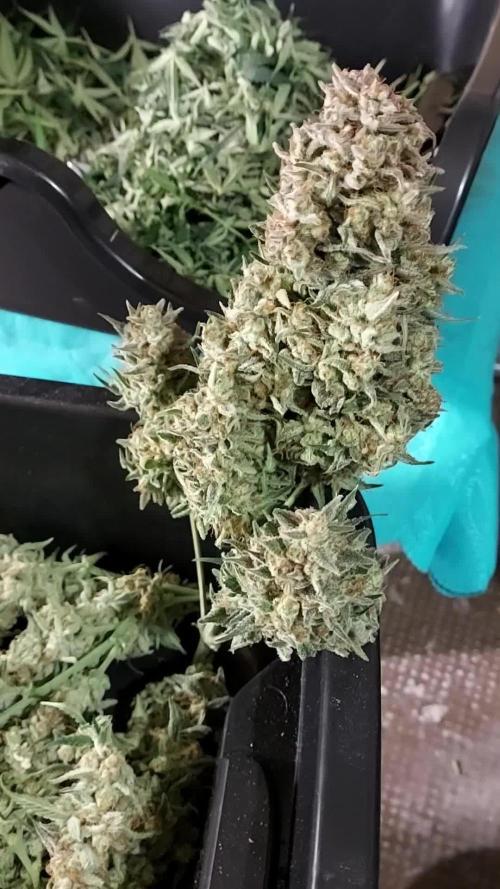
petit problème lors de la retirer de la tente.le filet de maintient ma plier beaucoup de branche lors de la sortie
sinon resultat super comme d'habitude avec gorilla cookies. belle plante stable facile et belle production de tête bien ferme et gros .

Likes
7
Share

@Elcogollosagrado
Follow
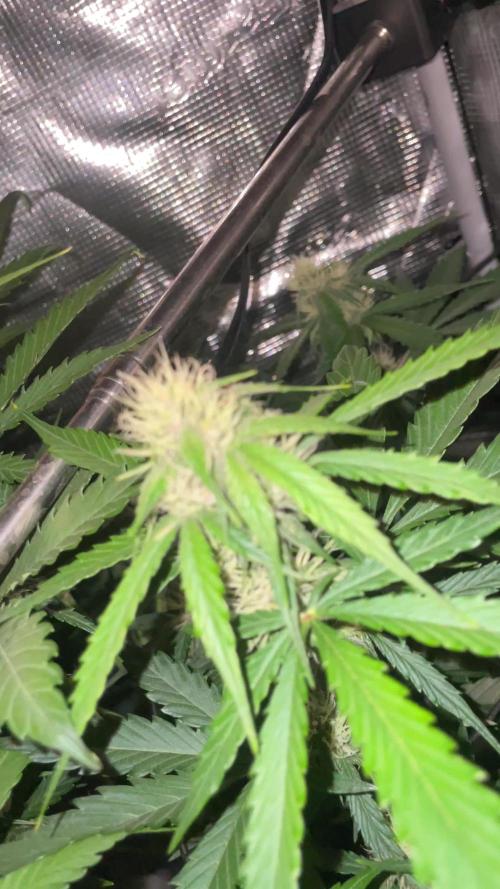
Esta semana ya ha entrado todas en floración la más lenta la Zombie kush auto y la más rápida la Radical juice


Likes
2
Share


@Krautbauern
Follow
the ladies did shoot up because they have got to few light. We repotted all of them after 11 days, we also hang our led deeper.
At the beginning she got the smallest pot, now she got the biggest one :)
Processing
Likes
15
Share


@Cultivators_Dream
Follow
Day 35: Well switched over this week to my bloom nutes. My previous watering I had mentioned I used SledgeHammer just to wash out the residues from my grow nutes. She actually seemed to take that well and watered her today to kick off week 5. Really starting to have her own smell and its already smelling awesome. Can't wait to see this lady start to pick up some weight. 🙌
Day 38: This lady is just stacking up man and the most beautiful colors are shining thru def gonna be a low yield but for me the quality is always better than quantity 👌 ✨
Likes
18
Share


@Gruenerfinger85
Follow
Hi meine sehr geehrten Pflanzen Homes.
Ich begrüße euch zu einer weiteren Wachstums Woche mit dieser wunderbaren Genetik von Ganja Farmer Seeds.
Wie man sehr schön erkennen kann geht es meinen Girls sehr gut, leider habe ich gleichzeitig zu meinen guten Neuigkeiten eine schlechte Nachricht zu verkünden.
Leider wird aus dem dritten Samen nichts mehr deshalb habe ich mich dafür entschieden in aus dem Rennen zu nehmen.
Am 21 Tag werde ich beide Pflanzen in ihren endgültigen Topf pflanzen, ich werde sie dann in 10l Töpfe mit Bio Bizz Light Mix verwenden.
Gefüttert werden sie mit S&R Organics ich habe vollstes Vertrauen in diesen Nährstoff, erst einmal ist dieser Benutzer freundlich, leicht in der Anwendung, versorgt die Pflanzen mit all den wichtigen Nährstoffen die die Pflanzen in den verschiedenen Phasen braucht und sorgt für ein guten Geschmack der seines gleichen sucht von den super Erträgen ganz zu schweigen.
Dieser Dünger sucht seines gleichen das ist nicht mal übertrieben mein Freund.
Wenn du auf der Suche nach einem Nährstoff bist der deine Pflanzen rundum versorgt dann ist der von S&R genau das richtige für dich.
Grow LED: Lumatek ATS 200 Pro
Flower Light: HortiOne 600er Serie
Room: 1.44 m*
Abluft: Prima Klima
Umluft: Secret Jardin
-------------------------------------------------------------------------------------------------------------------------------------------------------------------------------------------------
Tag:14
LFK: 52%
Umgebungstemperatur: 25,2 Grad Celsius
Bei einem Licht Abstand von: 50cm
-------------------------------------------------------------------------------------------------------------------------------------------------------------------------------------------------
Tag:16
#1 hat eine Höhe von 4 cm erreicht die #2 ist im Wuchs ein bisschen langsamer sie ist 2 cm hoch.
soweit ich das beurteilen kann hat die #1 einen normalen Wuchs und die #2 ein etwas langsameren.
Wär weiß das hat noch nichts zu sagen, vielleicht braucht die #2 ein bisschen mehr zeit wird aber vielleicht ein besonderen Geschmack ausweisen oder ein bomben Ertrag haben oder das hat alles gar nichts zu bedeuten, wir werden sehen wie die nächsten Wochen verlaufen werden, ich bin gespannt.
-------------------------------------------------------------------------------------------------------------------------------------------------------------------------------------------------
Tag:17
Die Umgebungsbedingungen sind alle im grünen Bereich Anfänglich hatte ich ein bisschen Schwierigkeiten gehabt die konstant auf ein Perfektes Niveau zu halten, mittlerweile habe ich alles unter Kontrolle.
Die LFK liegt Tags über zwischen 56% und 65%
Die Umgebungstemperatur bei 25-26 Grad Celsius
Bei einer Außentemperatur von 9 Grad Celsius
Der Lichtabstand ist 50cm
-------------------------------------------------------------------------------------------------------------------------------------------------------------------------------------------------
Tag:19
Umgebungstemperatur: 25 Grad Celsius
LFK: 56%
Lichtabstand:50
Außentemperatur:15 Grad Celsius
-------------------------------------------------------------------------------------------------------------------------------------------------------------------------------------------------
Es steht noch ein Update für Woche 3 an!
das am Tag 21 raus kommt.
Danke das du dir die Zeit genommen hast vorbei zu kommen.
Aktuelle Bilder/ Abschluss Bericht für Woche 3
PLAESE COMING SOON!
Vielen Dank mein Pflanzen Freund das du dir meinen Garten angesehen hast, ich hoffe dir hat gefallen was du gesehen oder entdeckt hast.
Ich weiß deine Unterstützung sehr zu schätzen.
Gerne kannst du hier ein bisschen Liebe da lassen, wenn du Interesse hast und mehr von mir und meinen hübschen sehen willst kannst du gerne auf mein Instagram Profil kommen und uns da ein Besuch abstatten und auch hier und da ein bisschen Liebe verteilen.
Das war's fürs erste ein weiteres Update folgt bevor die vierte Woche beginnt.
Schlusswort bitte verzeih wenn nicht alles perfekt ist, ich bin noch dabei mein Content zu Perfektionieren.
trotzdem hoffe ich das alles soweit stimmt habt ihr Fragen oder Tipps stehe ich gerne zur Verfügung.

Likes
3
Share


@LittleBigTrees
Follow
I've been feeding and pulled a few fan leaves.
They are all different heights and getting really tall despite only being in two litre pots.
The tallest pheno is already showing red buds.


Likes
18
Share


@Changman
Follow
I have chosen to transplant both plants as their roots have began breaking the bag. One i have dug a half a meter hole which i topped with my bag soil and then placed the bag ontop of the hole and deep watered the entire pot. Same with second plant except she has been placed into another grow bag with a larger width and depth giving her an extra half a meter to grow all round. Lets see if she takes as well as her sister the fruity pebbles next to her, time will tell
Likes
40
Share


@Cannabeast40
Follow
Things are still on point with this lady🤗💯💚
Stretch is about to end, lets gooo😎

Likes
18
Share


@20SYL
Follow
The plants are super vigorous. They’re growing very fast. And the LST is starting to take shape 🌳
Very impressed !
Likes
221
Share


@Ju_Bps
Follow
Hello growmies 👩🌾👨🌾🌲🌲,
👋 The end is here,
Final lap to the harvest,
No water this week,
Harvest tonight ✂️
💡Mars Hydro - SP 3000
80% 41 cm.
🔥 Thanks community for follow, likes, comments, always a pleasure 👩🌾👨🌾💚🌲.
Mars Hydro - SP 3000 💡💡
https://www.mars-hydro.com/sp-3000-samsung-lm301b-greenhouse-led-grow-light
NUTRI NPK 💥🔥
https://www.nutrinpk.com/product/npk-mix-pak-for-4-to-5-plants-cannabis-fertilizer/
Pure Instinto - Strawberry Shortcake Auto🌲🌲
https://pureinstinto.com/product/strawberry-shortcake-autoflower/

Likes
7
Share


@CannabisAprendiz
Follow
Esta cosecha fue muy buena con excelentes resultados de flores muy compactas y demasiado resinosas , la genética en sí es muy resinosa con olor muy característico , con sabores terrosos muy marcados .
Processing
Likes
15
Share


@Deli_Weed
Follow
Todo va muy bien, esta creciendo demasiado! El tronco se ve muy fuerte 💪🏻🌱

Likes
13
Share


@Lickey
Follow
Week two starting. The delux slurbet (rhs) are really stretching. The GSC (lhs) not so much
At end of week (day 14 from flip)had a nice haircut so the air and light can penetrate

Likes
23
Share


@HideAndFly420
Follow
Day 78🌱🙂🍊
This lady is doing her great job, Buda are increasing rapidly 🌱 difference between top flower and bottom is evident. For this reason I’m quite sure I’m going to cut in two times, around 85/87 days I’ll cut the high part of biggest bud and around day 95 the rest of the plant.
Day 80🌱🌱🌱🙂🍊
I’m going to go up to 90/95 days, smell now is really strong 👃🌱🤣
I keep giving some water when is really dry because some parts of the plant still needs it.
Day 81 🌱🌱🌱🌱🙂🍊
Hi all fellows, today a big defoliation cleaning to improve light in the bottom
Part of the plant before harvest.
I tought to harvest in like 10 days but as I have some water yesterday I noticed that she’s been quite not drinking anymore.
I’ll give another 2/3 days before harvest.
I will be perfectly in 85 days from seeding.
Smell is crazy now, I can smell cotton, orange, chocolate, pinus..
can’t wait to try it.
Let’s see!
ANY SUGGESTION IS REALLY WELCOME
🌱🌱🌱🌱🌱🌱🌱🏆🏆🏆🏆😊😊😊😊


Likes
111
Share


@Salokin
Follow
Hello Growmies,
I'm thrilled to update you on the plant's progress! In the last week, she has beautifully filled out the scrog. Just yesterday, I flipped her into the flowering stage. This means I'll slowly increase her feeding, although I don't plan to go too heavy on the nutrients since she seems to prefer a lighter touch.
She's quite particular about her nutrients, requiring me to change the reservoir every five days. If I delay, she shows signs of distress on her leaves, but these issues resolve immediately after I refresh the reservoir.
While she's stretching in the preflower stage, I'll continue to guide her growth into the empty areas of the scrog screen.
Also, here's a special offer: use the code ZAMMIGD2023 at Zamnesia's online store to get a 20% discount.
Thanks for dropping by, and I'll share more updates next week!