


Likes
Comments
Share


@Franco123
Follow
the plant and at the end of this week only water and ice 4 days and then 3 without water and then I cut it and leave it to dr

Likes
16
Share

@Karl_Heinz420
Follow
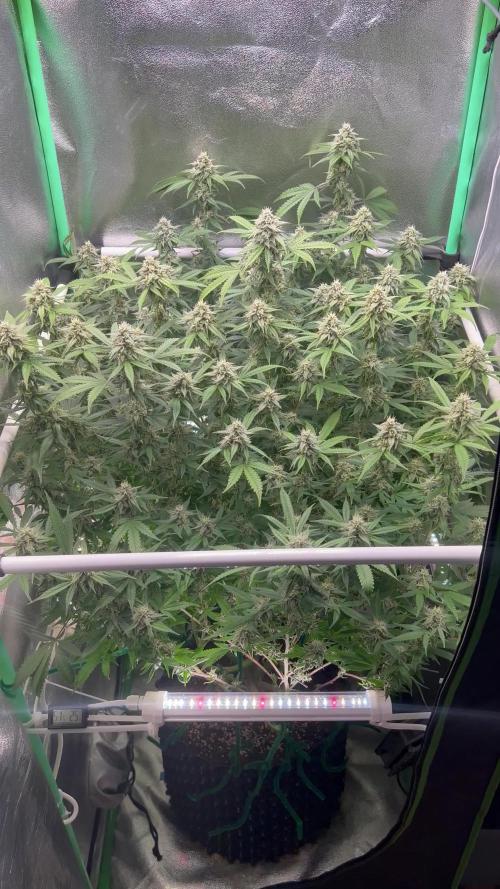
Original Sensible Seeds - Frosted Guava 🍈
🌸❄️ P-K 7-5 Boost 🌺🍭
Enjoy - Week 5 🌸
- 25-26 grad Celsius
- 50-55% humidity level
- 20l Air-Pot
(75% BioBizz All-Mix, 25 % BioBizz Worm Humus)
- RO-water (PH 6,3)
Sanlight Evo 3-60 100%: about 1100-1300 PPFD
Spider Farmer Glow30 12h/12h on

Likes
21
Share


@siLva_77
Follow
End of Week 9, the Trichomes on the Painkiller Loopings ready to Chop. The Blue Dream needs 1 more Week.
Bald wird geerntet !


Likes
3
Share

@Mrs_Larimar
Follow
2025-10-16
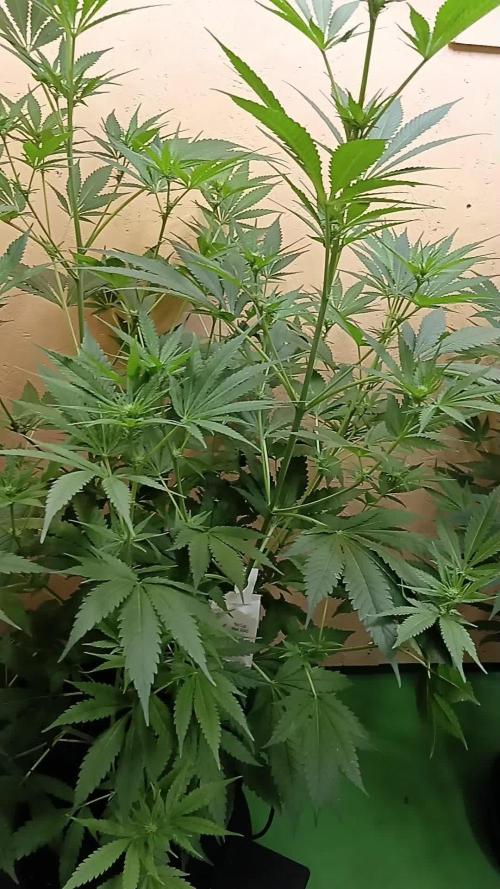
The kush´n Cookies plant does really well,
i was tucking some leaves and shoots- she spreads like she gets it paid.
RH was lowered,
Predaors were added for pestprevetion
watertank was filled
The fun can start.
Container: 35L Smart Pots
Growing Method: Autopot System with "Water-Only" strategy
🌿 Soil Preparation
Base Mix Recipe:
5g per liter soil - Startrex
5g per liter soil - Silicium Flash
Mixed thoroughly for optimal distribution
5x Fertilizer Tabs - strategically placed near bottom (20cm height) for autopot compatibility
1 tsp Mycotrex - applied directly in planting holes
Bactrex solution - used for initial watering
🏗️ Layer Construction
Bottom Layer (10cm): Drainage material (clay + perlite)
Air Circulation: Airdomes positioned
Growing Medium: Pre-mixed soil with embedded fertilizer tabs
Root Zone: Mycotrex application + seedling placement
Initial Watering: Bactrex solution
⚙️ System Activation
✅ Setup Complete - Autopot system now delivering automated water-only feeding
From this point forward: Pure water automation via Autopot system
🙏 Acknowledgments & Partnerships
Special Thanks:
Biotabs - Premium nutrient solutions
🏭 Puraplants - Autopot system provider
💰 Exclusive Discount Codes
🌐 Puraplants (Hamburg, Germany)
www.puraplants.de
Code: GrowBigger → 10% OFF
Biotabs Webshop
biotabs.nl/en/shop
Code: GDBT420 → 15% OFF

Likes
Comments
Share


@elsolo1
Follow
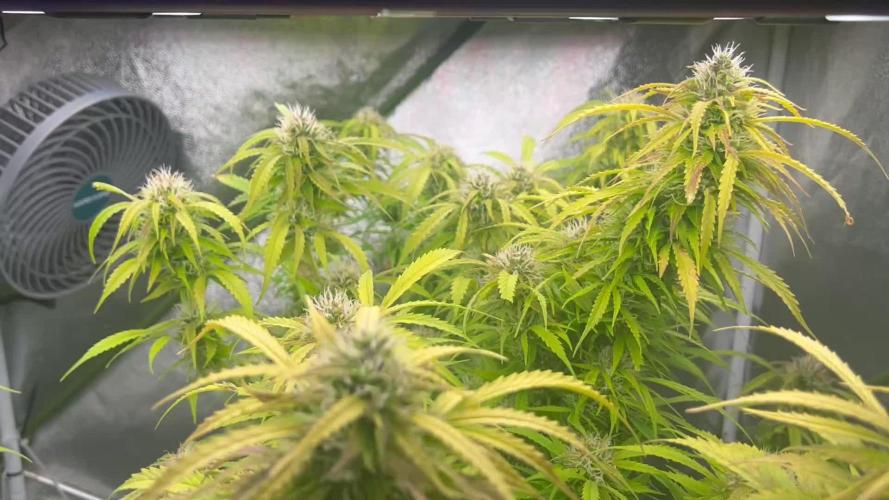
Week 11
Colas are growing nicely
I have 8 main nodes hoping to get at least 40-45 grams out of each node what you guys think?
Using both lights ( 350w total)
DWC water system
Water temp around 23-24C
Humidity still at 40%




Likes
6
Share


@Creatorknbsland
Follow
Semana de crescimento em alta! Seguindo so com.agua nessa semana que passou e entrei com fert hj 02/03 para obter os resultados nessa semana q começam hj !troquei elas de armario que improvisei com uma geladeira velha!mais uma semana e ja estão prontas para flora!obrigado mister soma por essa particularidade que sao suas genéticas!acredito que nao sao todas somango que ha possibilidades de ter outra cepa,ja que as semente vieram d presente de um amigo !

Likes
Comments
Share


@Mrd1ez
Follow
Sigo sacando hojas con este hongo en las hojas. La temperatura subió y la humedad bajó también, estamos en camino a bajar los nutrientes de acá a dos semanas más y luego todo water.
Likes
23
Share


@Mr_McNasty408
Follow
12/28/20
Nutes:
Veg A: 2.05 g/gal
Veg B: 1.38 g/gal
PPM: 570
Water temp: 64°F
pH: 5.9
12/29/20
Nutes:
Veg A: 3.07 g/gal
Veg B: 2.07 g/gal
PPM: 850
Water temp: 64°F
pH: 5.8
12/30/20
Nutes:
Veg A: 3.07 g/gal
Veg B: 2.07 g/gal
PPM: 850
Water temp: 64°F
pH: 5.8
12/31/20
Nutes:
Veg A: 3.07 g/gal
Veg B: 2.07 g/gal
PPM: 850
Water temp: 62°F
pH: 5.8
1/1/21
Nutes:
Veg A: 3.07 g/gal
Veg B: 2.07 g/gal
PPM: 860
Water temp: 62°F
pH: 5.8
1/2/21
Nutes:
Veg A: 3.07 g/gal
Veg B: 2.07 g/gal
PPM: 860
Water temp: 62°F
pH: 5.8
1/3/21
Nutes:
Veg A: 3.83 g/gal
Veg B: 2.58 g/gal
PPM: 1050
Water temp: 62°F
pH: 5.8
Likes
9
Share


@Juschiln420
Follow
Well it's safe to say the foop will work with legit strong good bacteria! But the focus has to be on the root health when it comes to how much food you can add and still maintain healthy roots.
But the game changer for me has been switching to a air stone, 1st and for most. The recirculation pump suggested by foop when running foop in dwc ran the solution temps into the high 70's around 77°F and anything over 75°F has been where root rot sets in for me. Even switched to way smaller recirculation pump with same results. So switching to running a air stone was big! But also found that running one Vivosun 317GPH Air Pump 15W split to 4 plants was not enough air for the roots to be happy in the foop plants. So I moved to a 2nd air pump, same size per tent. So now it's only split to 2 plants on the foop plants. And that made a big difference! But found after a few weeks that I had to bleed a slight amount of air off because there soo much extra air the humidity was sky rocketing in the tent to high 80%. So there's a sweet spot where they get extra air but not soo much that the humidity is affected.
But the 2nd most beneficial thing I've done is start running Orca. It has made such a huge difference. I think I need to go up with how much I'm using or find something that works even better if possible. But the sweet spot now is 8 to 9ml total of each foop veg/bloom 1,2 and sweener. When I go to 12ml with foop 1,2 the roots take a noticeable hit. So idk how I would go to the recommended 20 to 50ml per gallon as suggested on the foop grow chart.
I tried going to 10ml foop 1,2 on this one but the roots didn't like it and it shows they have never turned back to a blonde or white color again
Currently running around 6 to 10ml orca total per feeding. And adding 2 to 4ml when I add foop 1,2 mid week and got happy roots!
Also the Seaweed extract has made a difference in the smell the plant puts off. Last few grows have been really muted with smells and this grow I actually get hit in the face when entering grow room. So has made a difference forsure!! I'm soo excited!!
Currently has issues getting the humidity below 55% in the grow room. I was running 6 damprids 1 on intake(outside tent) to tent, one on inside of tent(at inlet) and 1 on exhaust(outside tent) for 2x4 tent and 2 hanging at 4x4 tent exhaust and one hanging by ac unit. That brought it down like 5% over all but now I'm running 12 damprids to try and get the room down humidity in the mid 40's. We will see. The house runs a swamp cooler and that basically makes the whole house pressurized. So even tho I sealed the grooe room door and the window with ac the best i can. it's a uphill battle! Once swamp cooler comes on the humidity in grow room climbs like 10%. So here's to hoping🤞🤞🤞🤞
6/25 added 2L
6/26 added 1.5L, 10ml Seaweed extract, 4ml orca, 4ml foop bloom 1&2, 4ml foop sweener, 3ml cal mag
6/28 added 2L
6/29 added 1.5L
6/30 added 1L, 20ml Seaweed extract
7/1 refreshed, gave 20ml hydroguard, 15ml orca, 25ml Seaweed extract, 9ml foop bloom 1&2. 10ml foop sweener, 6.5ml cal mag
Records kept here:
https://1drv.ms/x/c/fa218bbdbbfbd064/EelXI2vd0VdDoZBL4JvZ6xMB7lSyddsPGq8FdBGttRAjgg?e=rY8meL
👋👋👋 Hello, Thanks for checking out my grow!! Please like and follow I really appreciate it!🤟 Please feel free to leave questions and comments below!!👇 I really appreciate all advice!!! Check out my Instagram, you can message me there too! And check out my youtube for more content! Mistakes were made, but what better way then to live it and learn it yourself!!!!

Likes
6
Share


@gabigarcia
Follow
It is already the fifth week of vegetation and they are incredible, the autoflowering ones above all are beautiful and it is also noticing how the critical x are growing little by little. ! (Any questions, or any advice you can give me leave it in the comments, I also speak Spanish)

Likes
9
Share


@Mr_nugs_lover_David
Follow
Man oh man,without noticing I just found a new favorite strain man.Love the strong fruity and floral aroma coming from these flowers I can't wait to grow her Photoperiod version,it's been a pleasure to grow her,unfortunately I lost her four sisters,I would love to get a lot of full jars of this amazing haze 👃🔝🔝💚


Likes
8
Share


@Bdizzle
Follow
Growing strong and healthy!! Baby buds are coming in all over :) Can’t wait to watch them grow!! She has doubled in size over the past few weeks & has started to slow down to focus on flowering. Stems/stalks are growing strong & thick ready to support some good bud growth :)

Likes
9
Share


@NONSENSE
Follow
Good day everyone,
3 days ago I harvested the Pineapple express.
I can say only one - this was VERY fast grow. The fastest one I had ever.
So I know why - Fast buds genetic
DWC simple system
I can not say anything about the strain yet, but the aroma is amazingly sweet and fruity.
The buds are fully covered with the white crystals.
I will update the DRY bud weight within 1 week
the smoke report.
Good luck


Likes
7
Share


@sedygrows
Follow
Long time no see. Today i had to refill the system because my lady was very thirsty. She‘s looking beautiful. And for my first time dwc run im very proud so far. Have a nice day guys 😊🏻
Likes
5
Share

@baphomet_botanica
Follow
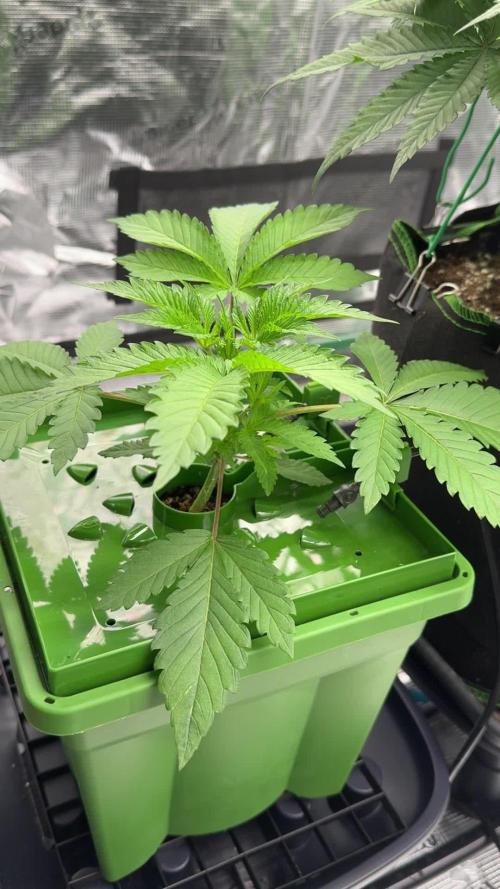
Welcome to the garden.
We are three weeks deep into the vegetative stage, and the ritual is officially underway. I prefer running from seed there is something alchemical about watching them crack open and rise from the soil and these girls have taken to their new reality with aggressive vigor.
The lineup for this run is a study in contrasts:
- NineWeeksHarvest - GrapePak: Expecting sweet, heavy resin production here.
- Solfire Gardens - Barf Breath: The name says it all. I’m hunting for that loud, offensive funk that Solfire is known for.
Current Status: Things are dialed in. The stems are thickening up, and fan leaves are praying to the light. No deficiencies, no stress. Just pure, unadulterated growth. I’ll be looking to start some light training soon to break their apical dominance and spread this canopy out before we flip.
Stay tuned as we push these genetics to their breaking point.
PS: I don't know which Plant is which. We'll find out during flower :)


Likes
1
Share


@Ultraviolet_
Follow
Turned off IR @ nights
Red wigglers (Eisenia fetida) are highly beneficial. They are considered an ideal choice for "no-till" or container-based organic growing because they live in the upper layers of soil, feeding on organic mulch rather than the plant's root system. Red wigglers accelerate the breakdown of organic amendments and produce high-quality, nutrient-dense worm castings directly in the root zone. Clover is another exceptional component of an organic rhizosphere, offering a sustainable, self-sustaining alternative to synthetic nitrogen fertilizers produced via the energy-intensive Haber-Bosch process. By forming a symbiotic relationship with Rhizobia bacteria, clover converts atmospheric nitrogen N2 into ammonium NH4, providing a steady, slow-release nutrient source that enhances soil health and reduces environmental impacts. Red clover offers superior nitrogen fixation and biomass production compared to white or yellow clover, making it the premier choice for maximum soil vitality, particularly for improving soil structure and providing a high-volume nitrogen credit for subsequent crops.
If it is fully functional and efficient soil, the rhizophagy cycle is far superior long-term than any synthetic delivery when it comes to preventing deficiencies, not because it's "better," per se. The medium will require a very high CEC to make it to harvest without re-fertilization. The rhizosphere acts as a dynamic, interactive exchange where plants and soil microbes trade resources based on immediate needs. When a plant lacks a specific nutrient, it changes its physiology and releases specialized chemical cocktails—root exudates—into the surrounding soil. These exudates, which include sugars, amino acids, and organic acids, serve as a "shopping list" to attract specific microorganisms, which in turn return higher levels of desired nutrients. There is nothing in comparison to synthetic delivery, which causes plants to stop producing exudates, effectively "starving" the beneficial soil life, over time turning the soil barren and void of microbial life. Responsible use, applying the right amount at the right time, can minimize these negative effects. Relying solely on synthetic fertilizers without replenishing organic matter is what typically leads to exhausted soil. The use of synthetic fertilizers can utilize the Cation Exchange Capacity (CEC) of the soil, but without a robust rhizosphere and active microorganisms, the efficiency of this process is significantly reduced. This makes synthetic growing more difficult to prevent deficiencies overall compared to an efficient organic living soil with a robust rhizophagy cycle, as there is no "one size, fits all" when it comes to different nutrient profiles of strains/genetics, making it trickier to "guess" and prevent creeping deficiencies.
CEC does not contribute towards EC. Add more CEC using biochar, problem solved. If you keep pH between 6.3 and 6.7, hydrogen is exudated to cycle the medium's CEC for its needs. Keeping the pH between 6.3 and 6.7 creates an environment where plants release H+ to displace positively charged nutrients (like Ca2+, Mg2+, K+ held on soil particles or within artificial media this cycle through nutrients via the medium's Cation Exchange Capacity (CEC)
Microorganisms generate a stable potential of approximately 0.5 V EC. The rhizosphere creates its own food, similarly to chelation, using 1000's of varying combinations to create its own food.
Start to finish, just add water. Eventually, more materials will need to be added at the beginning of each new grow, but very attainable to go from seed to harvest without ever fertilizing, regenerative cultivation.
ATP is king above all else when it comes to biomass accumulation. Cellular root respiration and cellular respiration are essentially the same biological process, the breakdown of glucose to create usable energy (ATP) in the presence of oxygen, just taking place in different parts of the plant. Synthetic (salt-based) grows have significantly lower levels of total rhizosphere respiration, often referred to as root-zone activity, compared to organic living soil grows. While the plant roots themselves may respire in both systems, the surrounding soil ecosystem in a living soil setup is vastly more active, teeming with bacteria, fungi, and beneficial microorganisms.
2 pools of ATP, it won't double in growth buuuut, but improving root respiration by ensuring high oxygen in the soil is crucial. Good aeration ensures roots can fully utilize glucose to generate the ATP necessary for nutrient uptake, leading to healthier and more productive plants, even if growth isn't exactly doubled. The ATP created using root respiration is dedicated to rootzone growth; the ATP created using regular cellular respiration in a synthetic system would have to dedicate a lot of ATP to the roots when there is little or no root respiration. It's true that there is less of an initial ATP cost in breakdown when nutrients are already in their final form (synthetic), but you lose a solid chunk of ATP when the entire plant is reliant on cellular respiration alone; a large portion of ATP is dedicated to root zones for "forced" (active) nutrient uptake. Making it overall less efficient, even if the initial cost of breakdown is higher. If that makes sense. Oxygen is of critical importance when growing in living soil compared to synthetic methods because it supports the metabolic needs of the microbial, fungal, and insect ecosystem, rather than just the root respiration required by the plant itself. While synthetic grows can survive in lower-oxygen environments with precise mineral feeding, living soil systems rely on aerobic microbes to decompose organic matter (microbial mineralization) to create plant-available nutrients, which is an oxygen-intensive process. While a specific fair percentage is difficult to guess, my experience points to a massive, compound difference between the two methods and the amount of oxygen required. All the ATP spared is used on more biomass, not only that, but the extra root respiration can achieve a much higher CO2 compensation point naturally than you could with synthetic and atmospheric CO2 alone.
As a plant grows faster and increases in size, its demand for nutrients to support that growth increases, requiring a higher rate of nutrient uptake. As plants enter phases of rapid vegetative/floral growth, their metabolic demand for nutrients increases exponentially. Without a robust buffer zone—whether in the soil (cation exchange capacity) or in a hydroponic reservoir—deficiencies will occur rapidly because the instantaneous demand for specific nutrients can quickly exceed the rate of supply.
A growing body of evidence suggests that organic living soil provides superior long-term soil health and environmental benefits compared to synthetic fertilizers, which are often criticized for promoting a cycle of dependency and degradation. While synthetic fertilizers offer short-term convenience and high yields, they often come at the expense of long-term soil health, sustainability, and increased corporate control over growers/ farmers. Organic living soil, while slower and requiring more care to establish, creates a sustainable, resilient, and, ultimately, more fertile environment.
We don't grow; we facilitate energy conversions.
Once all water is removed, approximately 95% to 97% of a plant’s dry matter consists of carbon, oxygen, and hydrogen. These three elements form the structural backbone of all plants. Corporate interest sells you the other 3-5% NPK & all the rest in RATIOS! Why not throw the 3-5% in a pot, and focus your energy on the other 95-97%?
Indigenous Amazonians created, or at least significantly enhanced, the fertile, dark soil known as Terra Preta de Índio (Portuguese for "Indian Black Earth") by incorporating biochar and other organic materials into the soil. This anthropogenic (human-made) soil technique, which dates back roughly 2,500 to 8,000 years, allowed ancient civilizations to flourish in regions with naturally poor, acidic, and nutrient-poor tropical soils.
