The Grow Awards 2026 🏆 










Likes
Comments
Share
@Kalyx
Follow
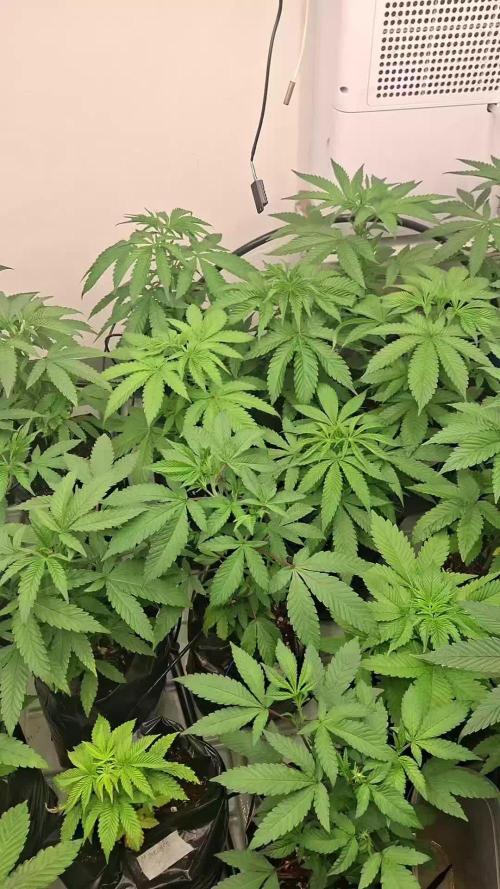
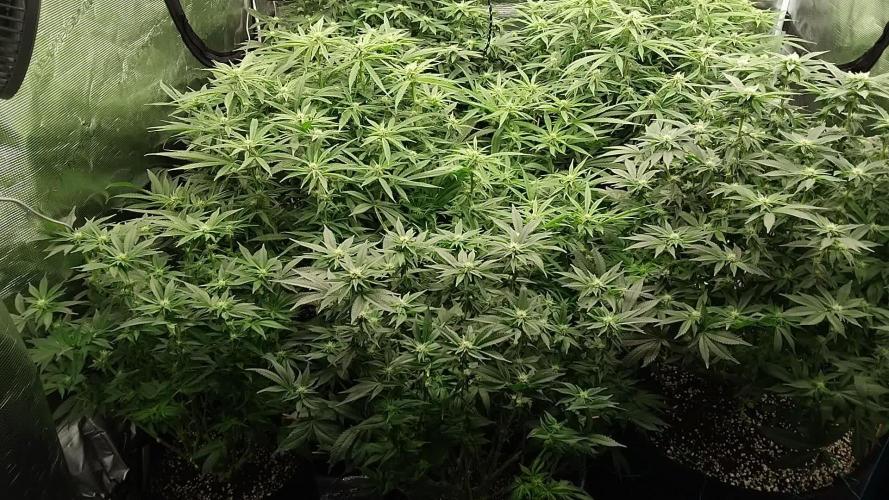
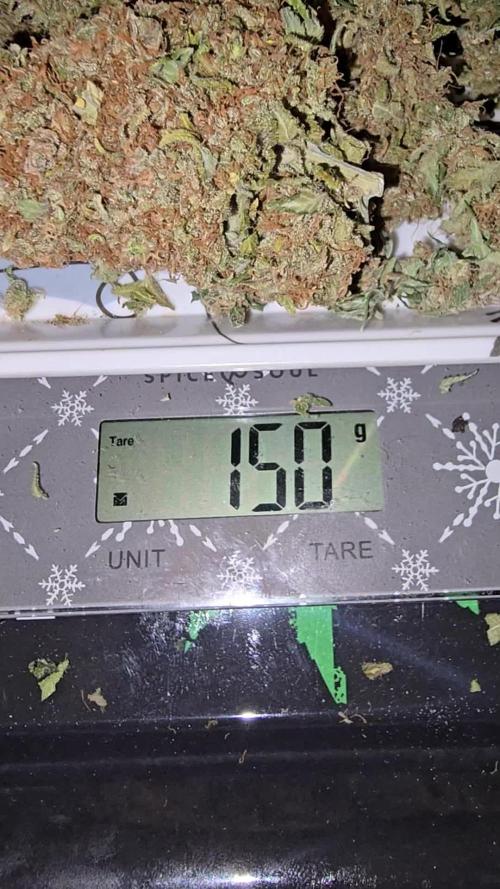
started flowering for the third as well also spreded her a bit to cover a bigger area


Likes
13
Share
@CBDezz
Follow
The plants are ready to be chopped and hung for 3-5 days. I removed all the fans leaves and left them all branches on the main stem. The ladies smell so strong I can wait to see how they turn out when they are dried and cured.
1) I plan to hang them for 3-5 days @ 71 f and 50-55 RH,
2) Do a final tight trim
3) Than I will move them to jars and cure for 2-3 weeks
I will update the diary with harvest pictures & weight before I move them to the jars for curing.
I think the seeds might have got mixed up when packing because these three plants were all supposed to be the same and you can clearly tell from the pictures that they are not.

Likes
16
Share
@420DeepGrow
Follow
Gracias al equipo de Sweet Seeds, Marshydro, XpertNutrients y Trolmaster, sin ellos esto no sería posible.
💐🍁: Big Devil Fast Version:
Atendiendo a las peticiones de nuestros amigos y clientes, presentamos la versión feminizada y fotodependiente de nuestra apreciada variedad Big Devil Auto (SWS15).
Para el desarrollo de esta variedad utilizamos nuestras mejores cepas seleccionadas de Big Devil Auto. Hemos eliminado el carácter autofloreciente de la Big Devil Auto hibridando estas cepas seleccionadas con un clon élite de características muy semejantes a la Big Devil Auto original.
El resultado es una planta muy vigorosa, de gran porte y de muy alta producción, con cogollos muy densos y repletos de resina. Desarrolla un fuerte tallo principal y largas ramas laterales. Conserva el aroma y sabor de nuestra Big Devil Auto original, muy dulce e inciensado.
💡TS-3000 + TS-1000: se usaran dos de las lámparas de la serie TS de Marshydro, para cubrir todas las necesidades de las plantas durante el ciclo de cultivo, uso las dos lámparas en floracion para llegar a toda la carpa de 1.50 x 1.50 x 1.80.
https://marshydro.eu/products/mars-hydro-ts-3000-led-grow-light/
🏠 : Marshydro 1.50 x 1.50 x 1.80, carpa 100% estanca con ventanas laterales para llegar a todos los lugares durante el grow
https://marshydro.eu/products/diy-150x150x200cm-grow-tent-kit
🌬️💨 Marshydro 6inch + filtro carbon para evitar olores indeseables.
https://marshydro.eu/products/ifresh-smart-6inch-filter-kits/
💻 Trolmaster Tent-X TCS-1 como controlador de luz, optimiza tu cultivo con la última tecnología del mercado, desde donde puedes controlar todos los parametros.
https://www.trolmaster.com/Products/Details/TCS-1
🍣🍦🌴 Xpert Nutrients es una empresa especializada en la producción y comercialización de fertilizantes líquidos y tierras, que garantizan excelentes cosechas y un crecimiento activo para sus plantas durante todas las fases de cultivo.
Consigue aqui tus Nutrientes:
https://xpertnutrients.com/es/shop/
📆 Semana 3:
Muy buena semana, he aplicado un riego solamente con agua de manantial para reducir la cantidad de sales acumuladas en el sustrato y se ha notado una mejoria .
Creo que le quedan unas dos semanas por estirar, parece que va a ser una buena cosecha.
Se mantiene un buen control del cuarto de cultivo gracias a @marshydro y @trolmaster.
Mantengo las dosis de 1/3 de nutrientes recomendados por el fabricante.
Potencia del foco 80%
Likes
4
Share
@GermanGrow182
Follow
Ich lass sie Machen. Sie hat sich berappelt, darum bei dieser gar kein Stress. Bis nächste Woche ✌️

Likes
28
Share
@Salgeezi
Follow
As usual my grows take forever. Healthy... just slow growth.
Ph is good.
Runoff EC is good.
Lights 150w at 17".
Humidity 59
Temps 79


Likes
15
Share
@NewOfficialDrillInvaders
Follow
Ladys Start to drink much more also one of 10 seed bag show off as a Autoflower i pass it to my friend because i dont like auto so i upload video how it looks she got really fruity smell

Likes
73
Share
@Andres
Follow
I mean this genetics it's excellent ... if I would grow zombie kush again ... good job ripper seed ... she fought and was very strong against the plagues after a beginning outdoors ... she fought against the white fly. worms .. red spider and other insects ... and deserves your recognition ... it will not be the most beautiful plant with its leaves impeccable ... but she is a champion ... thank you ripper seed .. .

Likes
2
Share
@walletinspector
Follow
The growth exploded last week, I just have no words on how beauty this is... On the other hand Im flipping officially tomorrow 🏾


Likes
7
Share
@NORTHWALESAUTOS
Follow
Another problem free week. This strain is impressive. She's grown unbelievabley quick and she's starting to give off a lovely aroma.
The next few weeks is where she's going to fill out.. just maybe... I might get this harvested for Christmas 🤣👌🏼🙌🏼💯

Likes
28
Share
@TheHighentist
Follow
Week 6 of to a good start!
They look happy and healthy. Time to flip to flower soon!
👽👉3/10
Climate is automated and working accordingly to my adjusted VPD settings.
Happy and healthy, actually surprised they've grown so much lately.
👽👉4/10 Waiting for their complete recovery, so they can be flipped to flower (Defoliation the 30/9, im giving them about a week)
👽👉5/10 Water day* Plain ph balanced water.
Need Runoff PH and EC down a little bit.
👽👉6/10 I applied the SCROG net.
👽👉7/10 Doing some minor tweaks to the setup + VPD settings(from 1.0 to 1.1). Approaching the flip to flower, so VPD
Did a bit of defoliation before the flip next week
👽👉8/10
Today, i learned from research on biobizz nutrients https://www.thcfarmer.com/threads/biobizz-nutrients-answers-from-biobizz.78899/ (Direct answer from biobizz)
With the answers, my view on feeding biobizz changed a bit, and i was luckily about to switch up the nutes. Good timing.
Waterday*
PH6.2
Introducing Biobizz CalMag(0.5ml/l) + BioBloom(0.25ml/l)+Topmax(0.25ml/l)+Rootjuice(0.25ml/l)
Still 2ml/L Fishmix+BioHeaven(Fishmix will be switched out with BioGrow)
👽👉 9/10 Last day of the week for my plants and last day in veg! They look fantastic and well recovered at lights on! (Look at the before/after lights vids/pics)
Raised VPD by 0.1: VPD settings(from 1.1 to 1.2)
Likes
38
Share
@Silverback_Guerilla
Follow
9/30:
All that remain are the 4 x FFT #4 clones. They are foxtailing a little, but getting so frosty. They've senesced pretty well on their own, but I flushed them with 8 gallons each today anyway...warm tap water with LiquidSoil. I'll harvest them on Sunday I think.
10/3:
I gave them a little water early in the day to keep them turgid, and late at night I did a wet trim on all 4 of them and put them in the dark until late tomorrow night. Then, I'll harvest and wash them and this crop will be a done deal.👍
10/5:
Early a.m., I cut them down, washed them, and hung them to drip dry.
That's a wrap!
I'll do harvest reports in another week or so, but early impressions of FFT's 2,4, and 10 are quite good. 👍

Likes
Comments
Share
@Topshelf_only
Follow
Remove a lot of the lower branches this week . Everything looking pretty good at the moment.snapped two tops of the bigger blue gelato defoliating at the end of week 😡


Likes
13
Share
@Aleks555
Follow
Divine Seeds - Opium
After 122 days of growth and 74 days of flowering, it's time to say goodbye to this stunning beauty and bring in the harvest! The buds are massive, dripping with resin, and have an incredibly strong, alluring aroma. We are absolutely thrilled with how she turned out!
We decided not to weigh the buds while they’re wet; we’ll wait until they’re dried to get the final weight. But from the looks of it, we expect a very satisfying yield.
A huge shoutout to Xpert Nutrients for their exceptional support, reliable service, and, most importantly, their outstanding fertilizers that have consistently helped us grow such powerful, high-quality plants. Year after year, your products prove to be a key element in our success.
We also want to express our deepest gratitude to Divine Seeds for providing such superior genetics. We’re beyond impressed with Opium and are excited to grow even more from your incredible lineup in the near future.
And yes, we’ve already sampled her, and the smoke is nothing short of premium quality. The strength and flavor are exceptional, leaving no doubt that this is top-shelf cannabis. It’s a true connoisseur’s dream!
Thank you again to Xpert Nutrients and Divine Seeds for making this grow so successful and enjoyable! We can’t wait for our next adventure with your products and genetics!

Likes
27
Share
@richsanfarmorganic
Follow
* Video 1
Cut off cloning 35 DAY
* Video 2
In flower 2 week
60 day
Miss you P'santipap
By richsanfarmorganic100%
Likes
5
Share
@TherealNICOGREEN
Follow
Jeg er så glad for at hende her bare for lov a være vært for det er VIRKELIG EN KÆMPE GOD FLOT PLANTE SYNES JEG SELV 😛 💚☮️💚☮️💚😇🇩🇰glæder mig helt sindssygt til hun går i blomst 🌸 💚💜🇩🇰☮️

Likes
38
Share
@PapaNugs
Follow
And that's that! The autos were ready quick at ten weeks time. It went by quick overall. These girls were super easy to grow. However they lack smell. Some good color on them. We'll test them at report back in the rest.
Dimmed to 80%
Here are the lights details:
Medic Grow Mini Sun-2 150W LED
Model: MN150-022
Spectrum mode: V1
Efficacy: 2.8 umol/J
Thanks for stopping by!
You can find the light on Grow Diaries:
https://growdiaries.com/grow-lights/medic-grow/mini-sun-2-150-watts
You can find the light on Medic Grow's website:
https://medicgrow.com/