


Likes
Comments
Share


@Unnamed
Follow
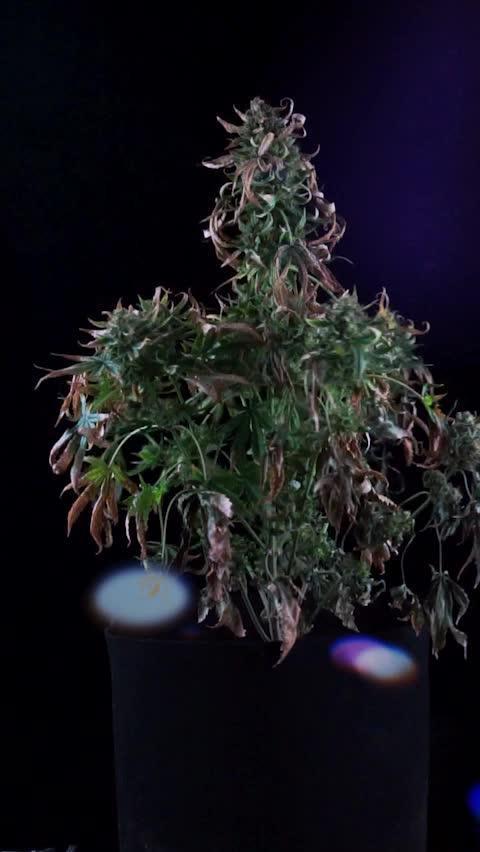
Bulking is in progress, nothing else to report, just waiting.
Values are average of the day.
DATE - EC(µS/cm)
20250419 1894
20250420 1894
20250421 1911
20250422 1942
20250423 1967
20250424 1979
20250425 2022
DATE - PH
20250419 6.16
20250420 6.13
20250421 6.12
20250422 6.12
20250423 6.12
20250424 6.14
20250425 6.13
DATE - ORP (mV)
20250419 74
20250420 70
20250421 66
20250422 63
20250423 65
20250424 64
20250425 59
DATE - °C - RH% (Tent Temp/RH)
20250419 23.6 49
20250420 24.2 53
20250421 23.6 52
20250422 23.9 52
20250423 23.8 52
20250424 23.1 52
20250425 22.4 53
DATE - °C (Reservoir)
20250419 20.7
20250420 21.2
20250421 21.0
20250422 21.0
20250423 20.9
20250424 20.8
20250425 20.6
DATE - CF
20250419 18.94
20250420 18.94
20250421 19.11
20250422 19.42
20250423 19.67
20250424 19.79
20250425 20.25

Likes
Comments
Share


Likes
22
Share


@Afterglow
Follow
Тупанул с удобрениями. Первую неделю растиха еще чего-то жрала, но под конец вижу, что чего-то не так: ну медленно растет, не должно быть так.
Потом понял, что кокос промывал двое суток, а растиху поливал через раз чистой водой, хотя по сути нужно постоянно проливать слабым компотом. Чуток словил хлороз.
На второй день после хорошей промывки растишка очухалась и начала развиваться. Хлороз остановился.
PH понизил с 6.5 до 5.6.
В целом неделя закончилась положительно. Растишки оклемались после жестокой голодухи, снова позеленели и начали расти дальше. Отставание от графика примерно на 4 дня из-за стресса.
В следующий раз надо не забыть заправить кокос под 1500-2000 PPM и потом неделю поливать чистой водой.


Likes
27
Share


@Dunk_Junk
Follow
Wow isn't she looking fab this week?? 😍
Flowers are really plumping up. 😎
Few more weeks yet I think.

Processing
Likes
15
Share


@Dico29
Follow
They are starting to shoot some pistils. I added some random store fertilizer that is 1-4-7 and put it in the 3 gallon. I poured it in a water bottle and just eye balled it pretty slow and not for long. It seems to help


Likes
88
Share


@CBD_Sweden
Follow
The growing cycle it self worked out as expected, except that the pH-level was way off from where it should be, and I found out a bit too late. Because of this the outcome of the harvest didn't say much about the potential of this strain, but as soon as I got enough time and space, she will get a new chance to shine.
2018-03-01.
This is my review / smoke report of this lovely cbd flower.
There are rock hard buds and almost no give at all, even in those smaller buds.
When you grind it the scent will appear more than just smelling on the buds.
It smells a little weak of grass, wood, bark, sweet, lemon, honey, skunk and some kind of spice.
The taste is orange, mandarin, honey, bark, popcorn and pepper.
The effect is directly, the thc feeling above the eyes and in the forehead, it fells like its a higher thc levels in this strain compered to the cbd strains i tried before.
A little light ringing in the ears and a slight dry mouth.
After 10 minutes, the cbd kicks in and and balance the thc high.
The neck and shoulders begin to relax and the feeling continues down over the back and chest down to the stomach.
A calming, relaxing, and slightly energetic feeling.
After 15-20 minutes it is down in the legs and feet, and you can feel a vibrating feeling in your muscles, joints in a pleasant way.
It reduces my tense muscles and some of the nervpain i got.
Its a good strain for releasing stress and get you in a relaxed and satisfied mood.
It is a very well-balanced strain and it fits in all sorts of contexts.
If you take this in the morning or mid day it will give you a small energy boost and get you in the mood for doing something.
I think this is a lovely strain and I highly recommend it to everyone but especially for more inexperienced people that dont like the high thc strains and want to have a good relaxant, pain controlling, anti depressant medication that also can give energy or help with getting to sleep.
This is a must try strain.

Processing
Likes
15
Share


@DeStarr_GhettoGrows100
Follow
Great Week! Girls are getting bigger and loving there new light. LST is going well. They are showing there sex and will be going into there stretching phase
Likes
26
Share


@Batista
Follow
This week nothing special. We stopped training and are just giving water and fertilizers. We're using a lower dosage than recommended by the manufacturers and so far the plant has not shown any apparent deficiency.

Likes
87
Share


@ThrashedTV_BakedByGlaze
Follow
Week 9 - Day 58 - 02/23 to 2/28 2021
All phone pictures. Go off site to my instagram for HD/DSLR content: https://www.instagram.com/glazedgrow/
Red Poison from @Sweet_Seeds makes my mouth water. A sweeter more candy tone overall compared to other earthy purples like the LSD-25 beside it. Great colour and cluster of bud sites on the main cola all fighting for light/chunk space so should end up with a nice amount of bag appeal/photo subjects nearing the end. Big thick white pistils with some starting to orange as it enters the 6th week of flower. Can't wait to see how the main nug looks.
Gave all the plants mostly water feeds this week in order to avoid salt build up. Some staining on the bottom of the fabric pots from the bottom feeds so just making sure the soil is fine for the final major nute feeds before flushing in a week or so.
Made some caps with homemade thc olive oil from a friend that sent me some "Intergalactic Cable" viewing materials as well 😎 Have to use them fast but been stable for a week and not just starting to come through the gel caps, will have to get something harder next time still a lot left in the bottle.
It's closest to the window and i keep my tent open so when the light is off it's getting a solid 16-18 Celcius helping out the genetic purple pop a bit more in the leaves.
Other than that, the new @MarsHydroLED TSL 2000 and @ViparSpectraLED PS1500 for veg definitely made a huge difference and the buds on the Dark Devil.
Big thanks to @ViparspectraJennie for putting a new XS1000 in the mail to test on my next grow. The FB testers finally came in so excited to get some of those in the tent and under the new tester.
*Sponsored Content*
Feel free to check out/save some money on your next @ViparSpectraLED using discount code "GLAZEDGROW" at this link: https://www.viparspectra.com/?aff=378&utm_source=affiliate
(Again check out my insta, very limited quality content will be posted here)
Thanks for checking out the latest #GlazedGrow🍩
--
Go off site and check out my Instagram for better content: https://www.instagram.com/glazedgrow/
Go off site and check out my CannaBuzz profile: https://www.cannabuzz.app/users/GlazedGrow
Likes
1
Share


@Dr_Med_Rasen
Follow
🗓️ Week 5 – Nutrient Refresh, Net Adjustment & Light Optimization
Arrived in week 5 with a complete nutrient solution refresh. This time using 2.5 ml/L Plagron Hydro A & B and 1 ml/L Plagron CalMag Pro, mixed into a total of 13 liters of water (the bucket turned out to be bigger than expected, according to the Amazon specs 15L). pH adjusted to 5.5 using Hesi pH-.
During the water change, I lifted the SCROG net briefly to check on the roots – they’re looking great: bright, healthy, and strong. Net was repositioned afterward.
The light is now running at level 8 out of 10, delivering around 800 PPFD in the center and about 700 PPFD at the edges, with a distance of 35 cm to the canopy – everything’s well dialed in!
—————
🗓️ Woche 5 – Nährlösung, Netz & Licht-Feinschliff
In Woche 5 gab’s ein frisches Nährstoff-Update: Die komplette Lösung wurde ausgetauscht – diesmal mit 2,5 ml/L Plagron Hydro A & B sowie 1 ml/L Plagron CalMag Pro auf insgesamt 13 Litern Wasser Eimer misst mehr als gedacht – laut Amazon-Beschreibung 15L. Der pH-Wert wurde auf 5,5 eingestellt mithilfe von Hesi pH-.
Beim Wasserwechsel habe ich das Scrog-Netz kurz nach oben gezogen, um den Wurzelzustand zu checken – sehen super aus: hell, kräftig und gesund. Danach das Netz wieder sauber positioniert.
Die Lampe läuft nun auf Stufe 8 von 10, was etwa 800 PPFD in der Mitte bringt. Am Rand sind’s ca. 700 PPFD, bei einem Abstand von 35 cm zur Pflanzenspitze – also alles gut im grünen Bereich!
Likes
6
Share

@Adammmmmmm
Follow
Wassup growers
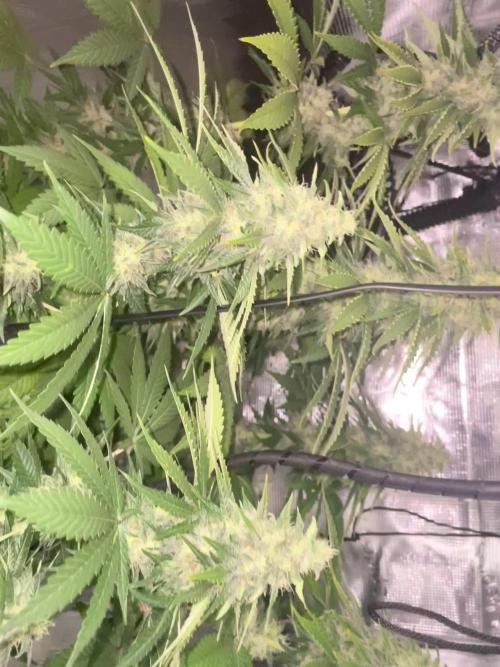
palice jsou brutalni a vune uplne jak mango proste tropical. Vše jde jak má cca 2 tydny sekyro. At to roste
Likes
3
Share

@BLAZED
Follow
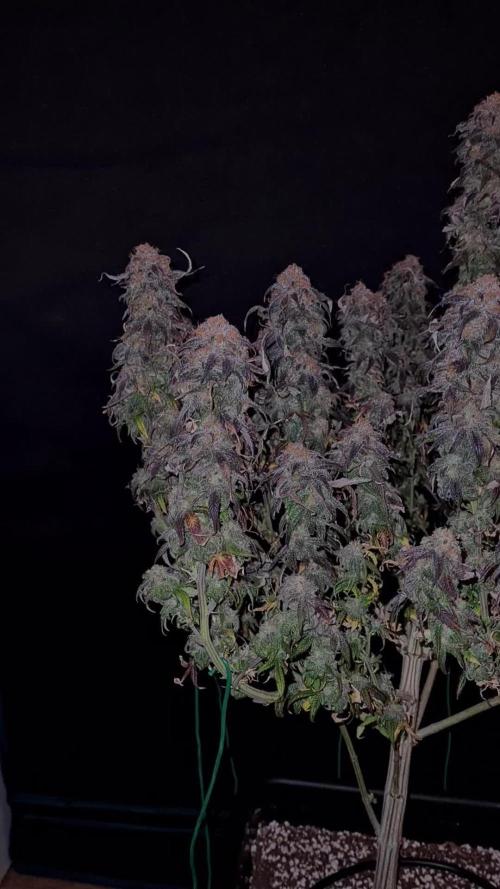
Week 23 (18-11 to 24-11)
18-11
Temps: 18.9 to 26.3 degrees
Humidity: 39% to 61%
Watering: Both 500 ml.
19-11
Temps: 18 to 25.4 degrees
Humidity: 44% to 60%
Watering: Both 500 ml.
Dry Weight #1 3.8 kg. #2 3.6 kg.
20-11
Temps: 17.6 to 25.5 degrees
Humidity: 42% to 59%
Watering: Both 500 ml.
Dry Weight #1 3.7 kg. #2 3.6 kg.
21-11
Temps: 17.1 to 24.9 degrees
Humidity: 43% to 63%
22-11
Temps: 16.9 to 24.9 degrees
Humidity: 42% to 61%
Watering #1: 500 ml. #2: 600 ml.
Dry Weight #1 3.7 kg. #2 3.6 kg.
23-11
Temps: 17 to 26.7 degrees
Humidity: 42% to 62%
24-11
Temps: 17.4 to 26.1 degrees
Humidity: 43% to 62%
Watering #1: 500 ml. #2: 600 ml.
Dry Weight #1 3.6 kg. #2 3.4 kg.
Likes
123
Share

@GreenHobbit
Follow
The Hobbit Hole – Woche 10
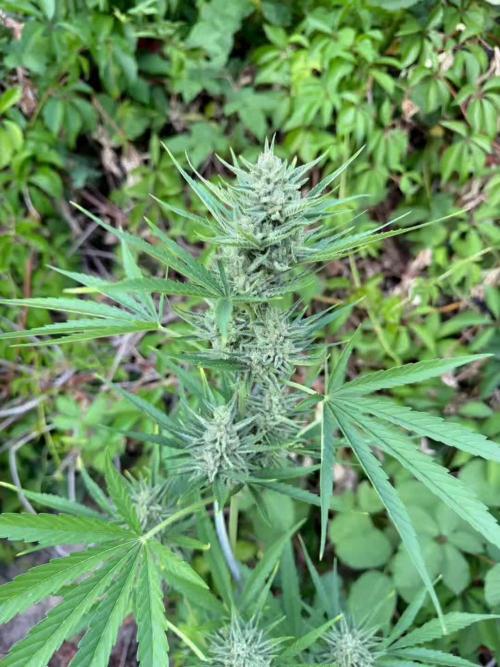
Woche 10 ist geschafft – und langsam wird es im Hobbit Hole richtig spannend.
Die drei Damen gehen inzwischen deutlich unterschiedliche Wege. Cinderella steht weiterhin sehr vital da und trägt inzwischen eine ganze Reihe schöner, frostiger Blüten. Unter dem Mikroskop zeigt sie überwiegend milchige Trichome, allerdings auch noch einige klare Köpfe und bislang kaum Amber. Sie bekommt also definitiv noch Zeit.
Purple Punch gefällt mir diese Woche besonders gut. Die Blüten werden zunehmend kompakter und die dunklen bzw. violetten Farbtöne kommen immer stärker durch. Auch hier zeigt das Mikroskop hauptsächlich milchige Trichome mit noch einigen klaren Köpfen. Wirklich viel Amber ist noch nicht vorhanden – auch sie darf weiterreifen.
Gelato bleibt dagegen die deutlich reifste der drei. Die Pflanze geht sichtbar in ihren herbstlichen Fade und unter dem Mikroskop sind inzwischen neben vielen milchigen Trichomen bereits eindeutig bernsteinfarbene Köpfe zu finden. Trotzdem werde ich sie noch nicht ernten. Ich möchte sie bewusst etwas weiter ausreifen lassen und bin gespannt, wie sich das Trichombild in den nächsten Tagen verändert.
Besonders erfreulich nach dem wechselhaften Outdoor-Wetter: Alle Pflanzen sind vollständig abgetrocknet und weiterhin ohne sichtbare Anzeichen von Bud Rot oder anderer Fäulnis. Das bleibt jetzt natürlich einer der wichtigsten Punkte bei den täglichen Kontrollen.
Ab jetzt entscheidet weniger der Kalender und immer mehr das Mikroskop. Die nächsten Tage könnten vor allem bei der Gelato interessant werden.
🇬🇧 English
Week 10 is complete – and things are getting really exciting in the Hobbit Hole now.
The three ladies are clearly starting to follow different paths. Cinderella still looks very healthy and has developed plenty of beautiful, frosty flowers. Under the microscope, most trichomes are cloudy, although there are still quite a few clear heads and hardly any amber so far. She definitely needs more time.
Purple Punch is one of my favorites this week. Her flowers are becoming increasingly compact and the darker, purple shades are showing more and more. The microscope also shows mainly cloudy trichomes with some clear ones remaining. There isn’t much amber yet, so she will continue to ripen as well.
Gelato, on the other hand, is clearly the most mature of the three. The plant is visibly entering her autumn fade, and under the microscope I can now see plenty of cloudy trichomes together with the first clearly amber heads. I’m still not harvesting her yet. I deliberately want to let her mature a little further and see how the trichome ratio develops over the coming days.
The best news after the changeable outdoor weather: all plants have dried completely and there are still no visible signs of bud rot or other fungal problems. This will remain one of the most important things to check every day from now on.
From this point forward, the calendar becomes less important and the microscope takes over. The next few days could be especially interesting for Gelato.
Likes
3
Share


@philippgrow
Follow
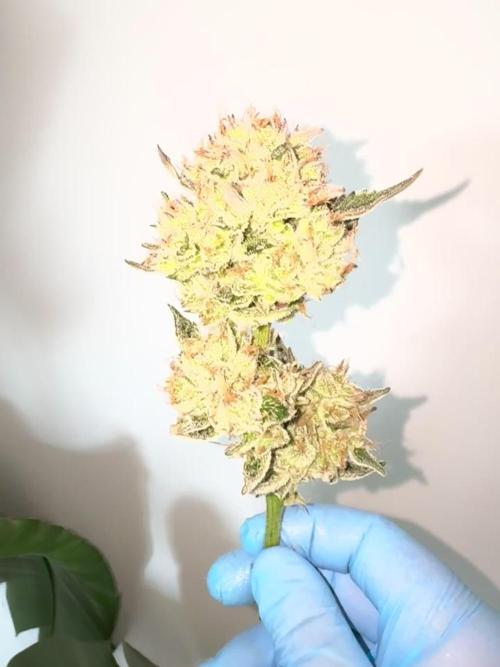
I defoliated my plants in week 7. The
plants have developed many new
shoots and look very healthy. The first
plants are clearly showing the spots
where they will form flowers.


Likes
57
Share


@Silverback_Guerilla
Follow
11/30 - 12/5:
The bigger Zenzations has the beginnings of a small apex flower. Both Zenzations continue to look great, but the big story is the turn around the Black Jacks have made. They've tripled in height in 2 weeks and have nice, long lower branching. Both Gorilla Girls are stretching well now and have huge fan leaves, so I think they've still got some stretching to do.
I dialed back the lights to 13 hours of daylight on the 4th.
12/6:
I fed them today.
Likes
50
Share

@Antifame
Follow
The harvest day has come! 😍 I can't get this song out of my head...
How I Make My Tincture / Vape Juice
Decarboxylate the material
Place about 15 g in the oven and heat for 1 hour at 120 °C.
Break it up
Once cooled, break the material into smaller pieces. Don’t grind it into a powder.
Ultrasonic extraction
Put the material into an ultrasonic cleaner with the heater set to 70 °C. Add 400ml of PG/VG base liquid.
When the temperature is steady, let it run for 30 minutes, stirring occasionally.
Filter
First strain the liquid through coffee filters, then filter again using a lab-grade vacuum filter.
Use
Fill the finished liquid into vape cartridges or take it orally. Both work well.
Enjoy 😇
