Likes
Comments
Share
@AustinRon
Follow
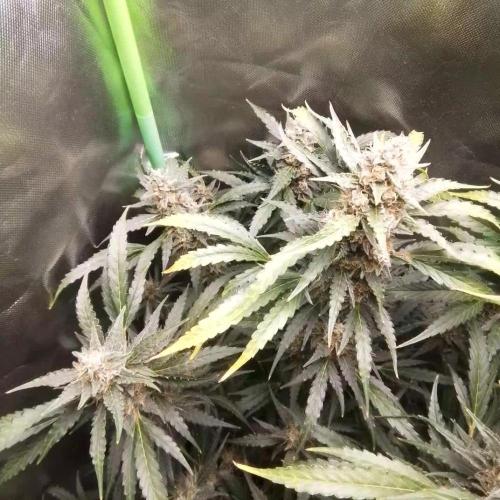
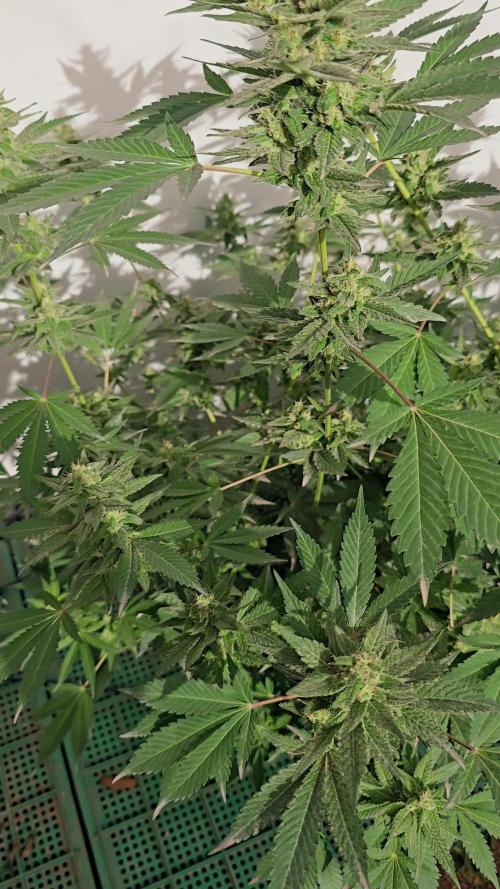
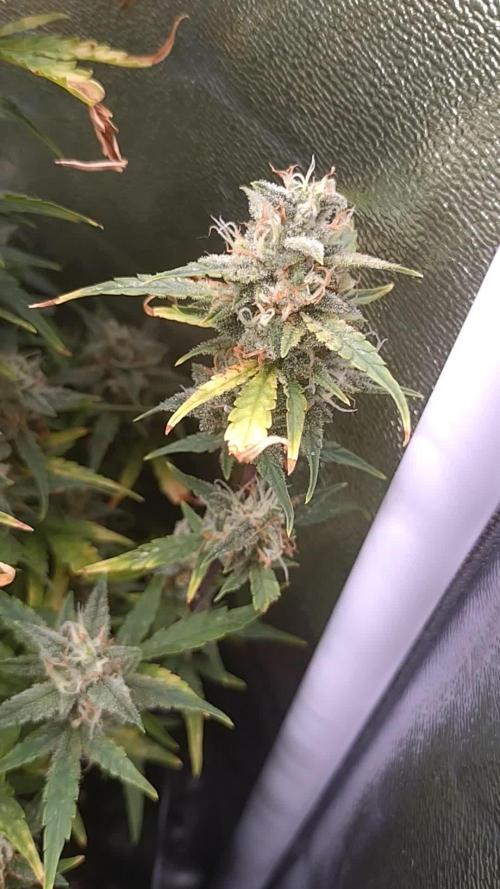
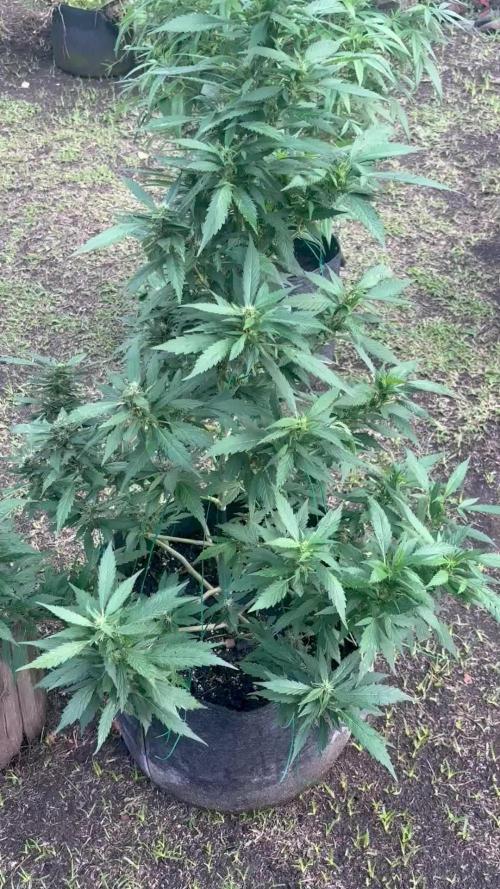
TH 1Q2025 - Week 8 - Flower 5 
(ON Haze X Original Haze) X Northern Lights #2 “Todd’s Haze” Objective - 8 Female Plants, Topped ONCE @ Flip, 12” when topped - Modified Sea of Green Seeds Wet: 1139PM, 28.2.2025 Germinated: 2.3.2025 Flip: 21.3.2025 Harvest: 77 Days, DATE: 6.6.2025 _________________________________________ __ Fri Apr 25, 2025 TH 1Q25 36:F:5:1 Cleaned Emitters - Replaced Pump Cleaned Manifold Filter = TWICE Replaced IRRIGATION Pump with mini-sump Photosynthesis plus produces enough biofilm to disqualify from running in the reservoir. - Remediate: Apply half diluted to watering zone, every other day. Include PCAL 1660 for Add’l Calcium and Phosphorous - [x] CEASED PHOTOSYNTHESIS PLUS IN RESERVOIR - The BIO film is ‘orange/pink,’ PSP is the SUSPECT. - [x] Harvest Dehu - [x] Refresh Reservoir - 2 Gallons - [x] EC: 2.3, 2.4 - [x] Primer A & B: [ 31, ml] - [x] Silica Skin GEN 3: [ 16, ml] - [x] SLF-100: [ 10, ml] - [x] 1900: Measure Runoff - [x] Amount: [ 1250 , ml] - [x] EC: [ 2.3, mS/cm] __ Sat Apr 26, 2025 TH 1Q25 37:F:5:2 - [x] Replace Main Feed (1/2 Silcone tubing) with 3/8” Black Chemical Resistant - [x] Refresh Reservoir - 2 Gallons - [x] EC: 2.3, 2.4 - [x] Primer A & B: [ 31, ml] - [x] Silica Skin GEN 3: [ 16, ml] - [x] SLF-100: [ 10, ml] - [x] 1900: Measure Runoff - [x] Amount: [ 950, ml] - [x] EC: [ 2.4, mS/cm] __ Sun Apr 27, 2025 TH 1Q25 38:F:5:3 - [x] Lower Defoliation in Preparation for Intra-Canopy Lighting Install - [x] Harvest Dehu: 3.5 Gallons (None Yesterday) - [x] Refresh Reservoir - 3 Gallons - [x] EC: 2.4 - [x] Primer A & B: [ 48.8, ml] - [x] Silica Skin GEN 3: [ 24.4, ml] - [x] SLF-100: [ 15, ml] RUNOFF: [ 950, ml, 2.4/5, mS/cm]  __ Mon Apr 28, 2025 TH 1Q25 39:F:5:4 Observations - @ 2.4 EC is making for DENSE GREEN in the leaves. We DON’T lack nitrogen. ;-} - Some Nitrogen Curling on NL2 Dominant (Pheno #2) - Will REDUCE EC if doesn’t abate today . . . - We have some White filmy scum forming on top surface of res water. Suspect Silica. Will clean out res TUESDAY and restart w/Out Silica Skin. If we’re clear FRIDAY - Start Re-adding until and unless white scum forms … Reducing EC: 2.3 # Will reduce Day by Day to 2.1 - [x] Harvest Dehu: 2.5 Gallons Runoff - [x] EC: [ TBD, mS/cm] - [x] Amt: [ 950, ml] __ Tue Apr 29, 2025 TH 1Q25 40:F:5:5 - [x] Install Intra-canopy Light 50% Dimmer Note: After H2O2 yesterday, and 1 cup (in about 2 gals) today - the amount of scum is REDUCED SIGNIFICANTLY. I filtered with hand strainer until there was no more film or particularate (there wasn’t a lot) - The overall appearance is better. Have refreshed with 3 Gallons and Primer A&B Only (and SLF-100). We’ll monitor. If it stays clean, we’ll test again with Silica Skin Gen 3. __ Wed Apr 30, 2025 TH 1Q25 41:F:5:6  Refresh Reservoir - [x] Amount: [ 2, Gal] - [x] Primer A&B: [ 32, ml] - [x] SLF-100: [ 10, ml] Runoff Amount: [ 2, gal] EC: [ 2.9, mS/cm] R&R Reservoir (Rinse components w/ 45% H2O2) - [x] Disconnect MAIN FEED Line - [x] Disconnect, Remove, and Clean PUMPS - [x] Flush Chiller - [x] Clean Reservoir Reassembly - [x] Reinstall components NOTE: We have a SMALL amt of white slate like precipitate - Most Likely Silica … __ Thu May 1, 2025 TH 1Q25 42:F:5:7 Mix 1 Liter of CalPhos for HAND APPLICATION Tonight CAL50K, 1 ml yields .5 EC (250 ppm)/Liter, or .125 EC per Gal ~16 ml’s/gal - ~2.1 EC - [ ] Mix and ApplyPCAL 1660 & CAL50K - [ ] Photosynthesis Plus - [ ] Quillaja 60 - [ ] Apply ~ 120 ml/plant - [x] CAL50K to EC: 2.1 (4 ml/qt) - [x] For 2.1 EC: [ 16, g] Cal50K *** RESERVOIR EMPTY!!! *** After REDUCING Per Event flow in Half - we STILL Emptied the reservoir … SINCE we ONLY HAD 2 GALLONS, We’re good (Catchment is 2 Gal) Last night I cleaned the manifold filter ~ 7PM (Start Time) and reduced to 18 minutes TOTAL time (9 Events, 2 minutes/event) Runoff Amount: [ 7600, ml] # We Emptied the Res Overnight, at 3 min/event - dropped to TWO ~2300 EC: 2.9 Refresh Reservoir: 2 Gal (Reclaimed DEHU) - [x] SLF-100: [ 10, ml] - [x] Primer A&B: [ 32, ml]
Processing
Likes
21
Share
Huge stretch this week! They really want to touch the light. Ended up removing ff9 from the room was a bit over full. Even with the 3 strains the room is full! Lots of smells from the three strains. Lots of different phenos as well. Ff 1 and 6 and very stretchy plants ff1 has good node spacing but ff9 got a bit lanky on my. Branches do look nice and solid on all plants. The buds are starting to form nicely
Likes
6
Share
@Chubbs
Follow
420Fastbuds-FBA2507 I'm excited as it's tester time. Germination week is complete. I planted 3 seeds and had all 3 sprout within 48hrs of being in the soil. I do soak them for 48hrs in a glass of water before planting. I can't wait to see what the weeks to come will have in store. Happy Growing
Likes
3
Share
@Rinna
Follow
Unfortunately, the Blue am and dynamighty (also due to their long flowering periods) didn't make it. Told my roommate to cut the plants when I saw that video and those pics but it was far to late already..
Likes
5
Share
Today is day 70 since the plants have sprouted, and day 27 of 12/12 light schedule. The buds have gotten a little plumper this week, particularly on the Train Wreck, but that plant seems to be a few days ahead in the flower process. I've been trying to overcome the yellow leaves on the Train Wreck plant, and I keep feeding the plant according to the "aggressive" feed chart from General Hydroponics, but it just isn't enough. I was a little worried about the pH in the soil getting too low or something, but the meter I have says it's actually on the high side. This point represents about halfway through the flower stage since I plan on going about 5 more weeks. The Train Wreck is expected to flower for 9-10 weeks, and the Royal Runtz for 8-9 weeks. The purple color on the Royal Runtz seems to be growing on each of the buds, and has a clear correlation to the amount of light hitting the bud. I'm interested to see if the buds below the canopy get the same purple coloration as the top buds. Temperatures were getting a little high early this week when I turned the light up to 95%, getting to about 82F. I moved the power supply for my light outside of the tent hoping it would reduce temperatures, but it only brought the temperatures down to 80F. On the bright side, my controller is generally keeping the humidity at 60% or less, compared to when the temperatures were at 82F and the humidity was closer to 65% most of the time. I measured the PAR for the tallest bud in the tent, which is getting about ~1200PAR, compared to the ~650PAR the Royal Runtz is getting. I wish I could lift up the Royal Runtz more to get it closer to even with the Train Wreck, but I've already lifted it up and both plants are bound by the scrog net. I noticed powdery mildew on a few leaves on the Royal Runtz, which I've been worried about given how bushy it is. The fan in the tent also doesn't blow directly on the plant, so I added a fan from my other tent to blow directly through the plant from the bottom, and moved the original fan to blow more directly on the Royal Runtz. I'll be turning off the humidifier completely for a bit while keeping a close eye on the plant to see if any more PM develops. Edit: While looking closer at what I thought was white powdery mildew, I noticed there were pollen sacks dropping pollen on the Royal Runtz plant. I sprayed the areas I saw polled/sacks with water and removed any buds I thought may have been affected as well as anywhere I saw pollen sacks. I'm sure I missed plenty, but I'll be watching the plants extra close from now on and assassinating any potential sacks I see. We'll see how seedy the tent gets, I guess.
Likes
11
Share
Blütewoche 6 verläuft ohne Probleme. Die Pflanzen sind gesund, Buds werden dicker, Trichome entwickeln sich gut. Kein Mangel, alles im grünen Bereich. Leichte Entlaubung für bessere Luftzirkulation, Gießen wie im Schema. Bin sehr zufrieden – weiter so!
Likes
19
Share
@Naujas
Follow
I visited her today!!!! Day 147!!! when I came I saw one broken branch, yesterday there was quite a strong wind, I think it's his fault :) but everything else looks good, just found 1 small ring of rot :), which allows me to leave it to grow for another week :) very beautiful girl :) there will be a renewal, good luck!!!!
Likes
5
Share
@AustinRon
Follow
TH 1Q2025 - Week 9 - Flower 6 
(ON Haze X Original Haze) X Northern Lights #2 “Todd’s Haze” Objective - 8 Female Plants, Topped ONCE @ Flip, 12” when topped - Modified Sea of Green Seeds Wet: 1139PM, 28.2.2025 Germinated: 2.3.2025 Flip: 21.3.2025 Harvest: 77 Days, DATE: 6.6.2025 _________________________________________ OBSERVATIONS A B C D E F G H (Convert to Plant ID) A - Moderate - Double Top B - Tall - Single Top C - Tall - Single Top D - REALLY TALL - Single Top E - Tall - Single Top F - Moderate - Double Top G - Moderate - Single Top H - Midget - Single Top __ Fri May 2, 2025 TH 1Q25 43:F:6:1 Harvest Dehu Amount: [ 4.5, gal] Runoff: [ 0.6, gal], [ 2.9, mS/cm] Res was empty. 2 Gal, there was a LITTLE Sol’n in the bottom of the res BUT Chiller Pump DRY. Chiller pump wouldn’t work for a couple of hours. After it cooled down and was re-submerged, it started cranking. These little Synchro/magnetic pumps are pretty resilient. The Little Giant as Feed Pump is awesome and pumps from the bottom 1/4”. The Synchro needs 2“ of water to submerge, with is 1/2 - 1 Gal, sitting around for ballast. Refresh Reservoir Amount: [ 2, gal] Primer A&B: [ 24.4, ml] EC: [ 1.9, mS/cm] 4 Gallon Refresh Amount: [ 4, gal] Primer A&B: [ 48.8, ml] Silica Skin: [ 24.4, ml] REVEG   Noted Revegging. Attribute it to HIGH EC (We ran up to 2.4 before bringing back down…) Dropped LightCycle to 11/13. - Looking to STAY COOLER ( 80°F) - Let’s reduce SUB-CANOPY Lighting to 50% (Dimmer @ 25%, lights for a 4x4) __ Sat May 3, 2025 TH 1Q25 44:F:6:2 Runoff Amount: [ , gal] EC: [ , mS/cm] We’re in reveg in earnest.      __ Sun May 4, 2025 TH 1Q25 45:F:6:3 Harvested Dehu: [ 3, gal] No Refresh No Pictures Bummed re: Reveg Today - Back to work tomorrow. __ Mon May 5, 2025 TH 1Q25 46:F:6:4 Only one thing to do - is to continue. Checked for Light Leaks. Re-adjusted Top Left Side Vent. Harvest Dehu: [ 1000, mll] Runoff Amount: [ 1, l] EC: [ 2.5, mS/cm] Refresh Reservoir - [x] EC: [ 1.8, mS/cm] - [x] SLF-100: [ 30, ml] - [x] Primer A&B: [ 40, ml] - [x] 3 Gallons (Dehu) Cleaned Manifold Filter: Silica Skin (White/Flake/Film) is clogging 2µ filter Need more stable Drip Rings - have to make my own, again. ;-} __ Tue May 6, 2025 TH 1Q25 47:F:6:5 Harvest Dehu - [ ] Amount: [ , ml] Runoff Amount: [ , ml] EC: [ , mS/cm] IF Runoff is 2 Liters: - Increase fertigation time to 3 minutes - Add Event 9 (9th HF Fertigation) - [ ] Consider reducing light Intensity, Main and Sub-Canopy __ Wed May 7, 2025 TH 1Q25 48:F:6:6 __ Thu May 8, 2025 TH 1Q25 49:F:6:7 - [x] Harvest Dehu: [ 3.5, gal] - [x] Dump & Clean Reservoir (Clean with H2O2). # No Silica ;-( - [x] Refresh Reservoir: - [x] 5 Gallons - [x] EC: 1.8 mS/cm - [x] Primer A & B: [ 67.7, ml] - [x] SLF-100: [ 25, ml] Our silica is creating a silica film in the irrigation manifold’s 2µ Filter. We’ll supplement separately, bi-weekly.
Likes
23
Share
Buds are really setting up nicely. French Macaron smells right on brand... and the Chem Brulee... my god! It smells like a Tropical Rocket Fuel. Amazong. The Pineapple Meatball has a really unique odor, but it is still fairly faint. Hoping that the neem/nute burn didn't somehow affect its resin/terp/bud production. It certainly hasn't seemed to affect the French Macaron and the Chem Brulee! This week, I sprayed 3 times with Dr Zymes, and it completely knocked out the small number of fungus gnats I was dealing with. Also released 4,500 ladybugs, and it's been fun watching them spread and work. Will probably stick with the once-per-week Zymes treatment for the next few weeks.
Likes
17
Share
The Banana Purple Punch is looking fantastic as it enters its 7th week of flowering! After checking the trichomes, it’s clear this plant needed a bit more time to mature compared to others, but the wait has been worth it.🌱 This week, I’ve started flushing to prepare for harvest. If all goes as planned, it’ll be ready to cut and hang by the week after next. The buds are looking dense and frosty, and I’m excited to see the final result!😊 So far, everything is progressing beautifully, and I’m really happy with how this plant is finishing up.
Likes
24
Share
Defoliation and supercrop a day before 24 hours of darkness. 12/12 following. Flip @ wee6 day1 from seed
Likes
10
Share
Another week closer, Not much to say but everything is dialed in and the girls are growing beautiful. Until next week, smoke a fatty, help out your fellow grower.
Likes
34
Share
Yellow butterfly came to see me the other day; that was nice. Starting to show signs of stress on the odd leaf, localized isolated blips, blemishes, who said growing up was going to be easy! Smaller leaves have less surface area for stomata to occupy, so the stomata are packed more densely to maintain adequate gas exchange. Smaller leaves might have higher stomatal density to compensate for their smaller size, potentially maximizing carbon uptake and minimizing water loss. Environmental conditions like light intensity and water availability can influence stomatal density, and these factors can affect leaf size as well. Leaf development involves cell division and expansion, and stomatal differentiation is sensitive to these processes. In essence, the smaller leaf size can lead to a higher stomatal density due to the constraints of available space and the need to optimize gas exchange for photosynthesis and transpiration. In the long term, UV-B radiation can lead to more complex changes in stomatal morphology, including effects on both stomatal density and size, potentially impacting carbon sequestration and water use. In essence, UV-B can be a double-edged sword for stomata: It can induce stomatal closure and potentially reduce stomatal size, but it may also trigger an increase in stomatal density as a compensatory mechanism. It is generally more efficient for gas exchange to have smaller leaves with a higher stomatal density, rather than large leaves with lower stomatal density. This is because smaller stomata can facilitate faster gas exchange due to shorter diffusion pathways, even though they may have the same total pore area as fewer, larger stomata. Leaf size tends to decrease in colder climates to reduce heat loss, while larger leaves are more common in warmer, humid environments. Plants in arid regions often develop smaller leaves with a thicker cuticle and/or hairs to minimize water loss through transpiration. Conversely, plants in wet environments may have larger leaves and drip tips to facilitate water runoff. Leaf size and shape can vary based on light availability. For example, leaves in shaded areas may be larger and thinner to maximize light absorption. Leaf mass per area (LMA) can be higher in stressful environments with limited nutrients, indicating a greater investment in structural components for protection and critical resource conservation. Wind speed, humidity, and soil conditions can also influence leaf morphology, leading to variations in leaf shape, size, and surface characteristics. Small leaves: Reduce water loss in arid or cold climates. Environmental conditions significantly affect gene expression in plants. Plants are sessile organisms, meaning they cannot move to escape unfavorable conditions, so they rely on gene expression to adapt to their surroundings. Environmental factors like light, temperature, water, and nutrient availability can trigger changes in gene expression, allowing plants to respond to and survive in diverse environments. Depending on the environment a young seedling encounters, the developmental program following seed germination could be skotomorphogenesis in the dark or photomorphogenesis in the light. Light signals are interpreted by a repertoire of photoreceptors followed by sophisticated gene expression networks, eventually resulting in developmental changes. The expression and functions of photoreceptors and key signaling molecules are highly coordinated and regulated at multiple levels of the central dogma in molecular biology. Light activates gene expression through the actions of positive transcriptional regulators and the relaxation of chromatin by histone acetylation. Small regulatory RNAs help attenuate the expression of light-responsive genes. Alternative splicing, protein phosphorylation/dephosphorylation, the formation of diverse transcriptional complexes, and selective protein degradation all contribute to proteome diversity and change the functions of individual proteins. Photomorphogenesis, the light-driven developmental changes in plants, significantly impacts gene expression. It involves a cascade of events where light signals, perceived by photoreceptors, trigger changes in gene expression patterns, ultimately leading to the development of a plant in response to its light environment. Genes are expressed, not dictated! While having the potential to encode proteins, genes are not automatically and constantly active. Instead, their expression (the process of turning them into proteins) is carefully regulated by the cell, responding to internal and external signals. This means that genes can be "turned on" or "turned off," and the level of expression can be adjusted, depending on the cell's needs and the surrounding environment. In plants, genes are not simply "on" or "off" but rather their expression is carefully regulated based on various factors, including the cell type, developmental stage, and environmental conditions. This means that while all cells in a plant contain the same genetic information (the same genes), different cells will express different subsets of those genes at different times. This regulation is crucial for the proper functioning and development of the plant. When a green plant is exposed to red light, much of the red light is absorbed, but some is also reflected back. The reflected red light, along with any blue light reflected from other parts of the plant, can be perceived by our eyes as purple. Carotenoids absorb light in blue-green region of the visible spectrum, complementing chlorophyll's absorption in the red region. They safeguard the photosynthetic machinery from excessive light by activating singlet oxygen, an oxidant formed during photosynthesis. Carotenoids also quench triplet chlorophyll, which can negatively affect photosynthesis, and scavenge reactive oxygen species (ROS) that can damage cellular proteins. Additionally, carotenoid derivatives signal plant development and responses to environmental cues. They serve as precursors for the biosynthesis of phytohormones such as abscisic acid () and strigolactones (SLs). These pigments are responsible for the orange, red, and yellow hues of fruits and vegetables, while acting as free scavengers to protect plants during photosynthesis. Singlet oxygen (¹O₂) is an electronically excited state of molecular oxygen (O₂). Singlet oxygen is produced as a byproduct during photosynthesis, primarily within the photosystem II (PSII) reaction center and light-harvesting antenna complex. This occurs when excess energy from excited chlorophyll molecules is transferred to molecular oxygen. While singlet oxygen can cause oxidative damage, plants have mechanisms to manage its production and mitigate its harmful effects. Singlet oxygen (¹O₂) is considered a reactive oxygen species (ROS). It's a form of oxygen with higher energy and reactivity compared to the more common triplet oxygen found in its ground state. Singlet oxygen is generated both in biological systems, such as during photosynthesis in plants, and in cellular processes, and through chemical and photochemical reactions. While singlet oxygen is a ROS, it's important to note that it differs from other ROS like superoxide (O₂⁻), hydrogen peroxide (H₂O₂), and hydroxyl radicals (OH) in its formation, reactivity, and specific biological roles. Non-photochemical quenching (NPQ) protects plants from damage caused by reactive oxygen species (ROS) by dissipating excess light energy as heat. This process reduces the overexcitation of photosynthetic pigments, which can lead to the production of ROS, thus mitigating the potential for photodamage. Zeaxanthin, a carotenoid pigment, plays a crucial role in photoprotection in plants by both enhancing non-photochemical quenching (NPQ) and scavenging reactive oxygen species (ROS). In high-light conditions, zeaxanthin is synthesized from violaxanthin through the xanthophyll cycle, and this zeaxanthin then facilitates heat dissipation of excess light energy (NPQ) and quenches harmful ROS. The Issue of Singlet Oxygen!! ROS Formation: Blue light, with its higher energy photons, can promote the formation of reactive oxygen species (ROS), including singlet oxygen, within the plant. Potential Damage: High levels of ROS can damage cellular components, including proteins, lipids, and DNA, potentially impacting plant health and productivity. Balancing Act: A balanced spectrum of light, including both blue and red light, is crucial for mitigating the harmful effects of excessive blue light and promoting optimal plant growth and stress tolerance. The Importance of Red Light: Red light (especially far-red) can help to mitigate the negative effects of excessive blue light by: Balancing the Photoreceptor Response: Red light can influence the activity of photoreceptors like phytochrome, which are involved in regulating plant responses to different light wavelengths. Enhancing Antioxidant Production: Red and blue light can stimulate the production of antioxidants, which help to neutralize ROS and protect the plant from oxidative damage. Optimizing Photosynthesis: Red light is efficiently used in photosynthesis, and its combination with blue light can lead to increased photosynthetic efficiency and biomass production. In controlled environments like greenhouses and vertical farms, optimizing the ratio of blue and red light is a key strategy for promoting healthy plant growth and yield. Understanding the interplay between blue light signaling, ROS production, and antioxidant defense mechanisms can inform breeding programs and biotechnological interventions aimed at improving plant stress resistance. In summary, while blue light is essential for plant development and photosynthesis, it's crucial to balance it with other light wavelengths, particularly red light, to prevent excessive ROS formation and promote overall plant health. Oxidative damage in plants occurs when there's an imbalance between the production of reactive oxygen species (ROS) and the plant's ability to neutralize them, leading to cellular damage. This imbalance, known as oxidative stress, can result from various environmental stressors, affecting plant growth, development, and overall productivity. Causes of Oxidative Damage: Abiotic stresses: These include extreme temperatures (heat and cold), drought, salinity, heavy metal toxicity, and excessive light. Biotic stresses: Pathogen attacks and insect infestations can also trigger oxidative stress. Metabolic processes: Normal cellular activities, particularly in chloroplasts, mitochondria, and peroxisomes, can generate ROS as byproducts. Certain chlorophyll biosynthesis intermediates can produce singlet oxygen (1O2), a potent ROS, leading to oxidative damage. ROS can damage lipids (lipid peroxidation), proteins, carbohydrates, and nucleic acids (DNA). Oxidative stress can compromise the integrity of cell membranes, affecting their function and permeability. Oxidative damage can interfere with essential cellular functions, including photosynthesis, respiration, and signal transduction. In severe cases, oxidative stress can trigger programmed cell death (apoptosis). Oxidative damage can lead to stunted growth, reduced biomass, and lower crop yields. Plants have evolved intricate antioxidant defense systems to counteract oxidative stress. These include: Enzymes like superoxide dismutase (SOD), catalase (CAT), and various peroxidases scavenge ROS and neutralize their damaging effects. Antioxidant molecules like glutathione, ascorbic acid (vitamin C), C60 fullerene, and carotenoids directly neutralize ROS. Developing plant varieties with gene expression focused on enhanced antioxidant capacity and stress tolerance is crucial. Optimizing irrigation, fertilization, and other management practices can help minimize stress and oxidative damage. Applying antioxidant compounds or elicitors can help plants cope with oxidative stress. Introducing genes for enhanced antioxidant enzymes or stress-related proteins over generations. Phytohormones, also known as plant hormones, are a group of naturally occurring organic compounds that regulate plant growth, development, and various physiological processes. The five major classes of phytohormones are: auxins, gibberellins, cytokinins, ethylene, and abscisic acid. In addition to these, other phytohormones like brassinosteroids, jasmonates, and salicylates also play significant roles. Here's a breakdown of the key phytohormones: Auxins: Primarily involved in cell elongation, root initiation, and apical dominance. Gibberellins: Promote stem elongation, seed germination, and flowering. Cytokinins: Stimulate cell division and differentiation, and delay leaf senescence. Ethylene: Regulates fruit ripening, leaf abscission, and senescence. Abscisic acid (ABA): Plays a role in seed dormancy, stomatal closure, and stress responses. Brassinosteroids: Involved in cell elongation, division, and stress responses. Jasmonates: Regulate plant defense against pathogens and herbivores, as well as other processes. Salicylic acid: Plays a role in plant defense against pathogens. 1. Red and Far-Red Light (Phytochromes): Red light: Primarily activates the phytochrome system, converting it to its active form (Pfr), which promotes processes like stem elongation and flowering. Far-red light: Inhibits the phytochrome system by converting the active Pfr form back to the inactive Pr form. This can trigger shade avoidance responses and inhibit germination. Phytohormones: Red and far-red light regulate phytohormones like auxin and gibberellins, which are involved in stem elongation and other growth processes. 2. Blue Light (Cryptochromes and Phototropins): Blue light: Activates cryptochromes and phototropins, which are involved in various processes like stomatal opening, seedling de-etiolation, and phototropism (growth towards light). Phytohormones: Blue light affects auxin levels, influencing stem growth, and also impacts other phytohormones involved in these processes. Example: Blue light can promote vegetative growth and can interact with red light to promote flowering. 3. UV-B Light (UV-B Receptors): UV-B light: Perceived by UVR8 receptors, it can affect plant growth and development and has roles in stress responses, like UV protection. Phytohormones: UV-B light can influence phytohormones involved in stress responses, potentially affecting growth and development. 4. Other Colors: Green light: Plants are generally less sensitive to green light, as chlorophyll reflects it. Other wavelengths: While less studied, other wavelengths can also influence plant growth and development through interactions with different photoreceptors and phytohormones. Key Points: Cross-Signaling: Plants often experience a mix of light wavelengths, leading to complex interactions between different photoreceptors and phytohormones. Species Variability: The precise effects of light color on phytohormones can vary between different plant species. Hormonal Interactions: Phytohormones don't act in isolation; their interactions and interplay with other phytohormones and environmental signals are critical for plant responses. The spectral ratio of light (the composition of different colors of light) significantly influences a plant's hormonal balance. Different wavelengths of light are perceived by specific photoreceptors in plants, which in turn regulate the production and activity of various plant hormones (phytohormones). These hormones then control a wide range of developmental processes.
Likes
3
Share
@51sGarden
Follow
Missed few weeks here so long story short Flowering day 25 (wouldn’t let me chose week 4, only week 5 and up smh) Had few stressed days for the plants But they are beautiful and healthy Tent smells like heaven Trichomes and buds building up
Likes
22
Share
Likes
11
Share
@Chubbs
Follow
420 Fastbuds Blue Dream Auto Week 6 Hello grow fam hope all is well on everyone's grows. This week has been fun especially seeing some yellowing on a few of the lower leafs. It's probably me over watering a little trying to combat this high heat waves we've been having in my area. The flower sites are getting super crystaly and starting to smell intoxicating. All in all Happy Growing
Likes
7
Share
@Soskar69
Follow
Since the second week I started doing LST on this strain. The plant grew very well, it was easy to train and had a very small amount of leaves, so I didn't defoliate it. Today I have done some lollipopping, taking off the branches that were too small. The buds start to grow in dimension and also start to smell. Also the resin production it's very good, if you try to touch the buds, your fingers will stick together.
Likes
5
Share
📆 Semana 6 ¡Qué semanita se ha marcado la Grease Monkey! Ya se nota que está bien metida en floración: los cogollos empiezan a coger buena forma, cada vez más apretados y resinosos. Tiene ese rollo pegajoso que tanto nos gusta, y las hojas cercanas a las flores ya brillan con tricomas por todos lados. Estoy siguiendo con la gama de XpertNutrients, que le está sentando de lujo. No he tocado mucho la receta esta semana, solo afinando un poco el riego para adaptarme al ritmo que lleva. Se nota que está en su punto dulce. Los Adlite siguen demostrando que son una inversión top. Gracias a la buena distribución de luz, incluso las ramas secundarias están desarrollando cogollos decentes, no solo las puntas. En cuanto al ambiente, las temperaturas se han mantenido suaves, entre 22 y 25 °C, y la humedad está en torno al 55%, un poco más alta de lo ideal, pero por ahora sin señales de problemas. Estoy ventilando bien y con el ojo encima por si acaso. El aroma empieza a ser un espectáculo: dulce y cremoso, con ese fondo a gas tan típico de la Grease Monkey. Los tricomas están en su mayoría lechosos, así que aún queda tiempo para que siga engordando y afinando perfil. Crecimiento firme, flores con presencia y resina a punta pala… ¡Seguimos creciendo fuerte! 💪
Likes
13
Share
I did final transport into 2 gl fabric pots with happy frog soil. I've increased the watering to 2 cups every 48-72 hours with a nice spray to get the leaves and the top soil. I also bought this grey container that you add water to and it feeds your plants CO2 for 2 weeks. There are some plants that are 9 in but majority is about 6 3/4-7 1/4 in tall. They seem like they will be bushy. And lastly some of the leaves on 2 or 3 plants are curling inward so I'm curious to understand what's going on. I haven't gotten nutrients cause the soil has enough for 30 days and by that time it will be 4 weeks left in grow and switching to flower so I may use some the 1st 2-3 weeks after veg and flush the last 1-2 weeks.