Likes
Comments
Share
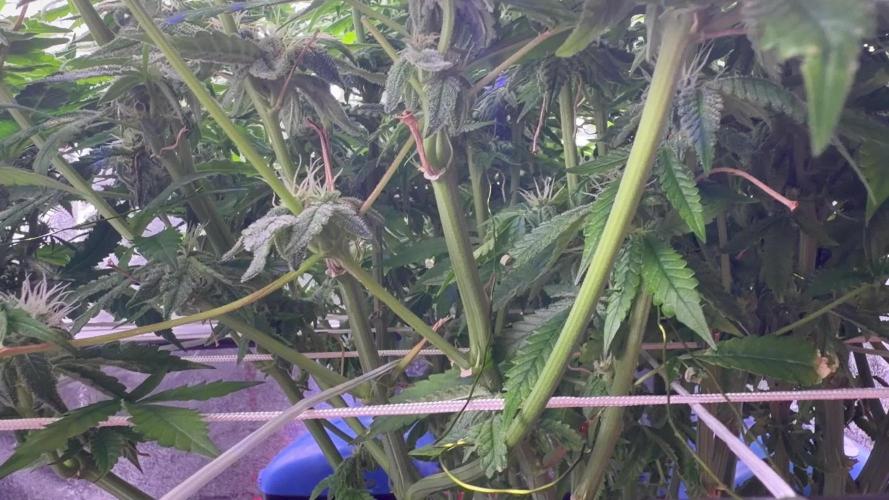
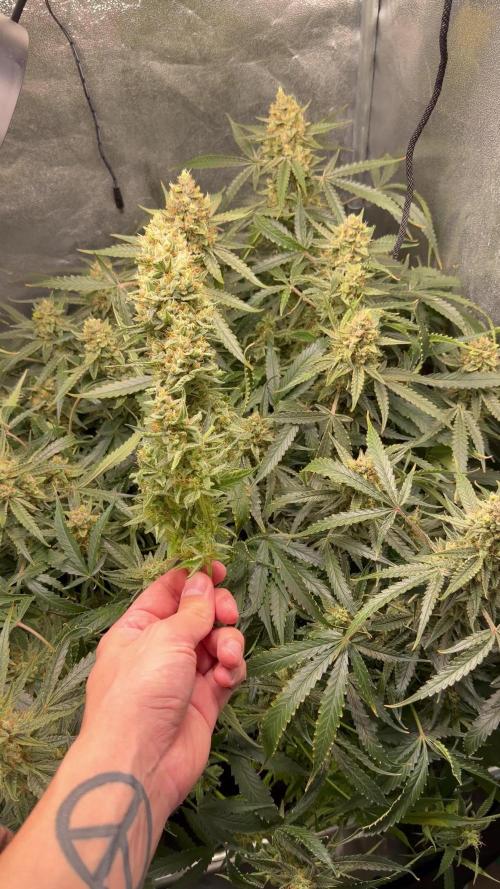
Nose Candi - Harvested Plant Overview — This final image showcases an exceptional harvest result. The plant displays dense, resin-rich colas with a heavy coating of trichomes, signaling high potency and well-developed cannabinoids. The buds are compact, chunky, and carry a stunning mix of deep purple hues, vivid orange pistils, and touches of lime green—a truly striking visual contrast. The sugar leaves and fan leaves are dark purple to nearly black, suggesting strong anthocyanin expression, likely influenced by genetics and possibly cooler environmental conditions during late flowering. The trichome coverage is thick and milky, with some amber likely present, indicating peak maturity at harvest. Overall, this plant appears to have reached optimal ripeness. Bud structure, coloration, and resin production all point to a top-tier result — both visually appealing and potentially very potent. This will likely cure into a beautifully aromatic and flavorful final product. Excellent work!
Likes
48
Share
SUMMARY: - I killed my first to tap-root seeds, I waited for them to grow "by the book" 0.5cm and I should have just planted, I saw them get worse and said "I must of messed up with something, lets wait another night until they bounce back" and instead they died. The next germination was super easy but my lights were too high, and the humidity was too low. All the fixes were done for the next weeks. Nov. 3 21:30 - dropped seeds into water 14:30 - get seeds into paper towel nov. 4 1:00 - seeds moved to damp paper towel nov. 5 18:00 - both seeds crack tap root emerging nov. 6 7:45 - both seeds tap root growing very long and thin, - third seed still not cracked 8:30 - both seeds placed into soil and watered lightly - placed into grow tent and LEDs turned on - 24H for the first day - 18/6 for the rest nov. 8 6:45 - first seedling spouted cotyledons leaves 13:00 - seedling (cotyledons leaves) looks droopy 19:00 - light moved down to 30” 23:00 - second seedling has reach the surface and started to sprout cotyledons - first seedling still getting taller - third seed still not cracked nov. 9 15:00 - both seedlings given 50ml of water - watered around the outside of pot - pH of water = 7.81 - pH of runoff = 6.31 nov. 10 - second seedling has created serrated second set of leaves and stretched up to same height, but much smaller than first seedling. Specifications:😎 Seeds: - 2x White Widow feminized seeds from Crop King Seed Tent: - 4x4x6 Mammoth Grow tent LED: - 2x Spider Farmer SF1000 LED (default 100 watt draw for seedling but will be bumped up to 125 Watt for flowering if not sooner) Pots: - 2x 0.5 L starter pots - 2x 5 gal smart pots after transplant Soil: - Pro-mix containing mycorrhizae and perlite, used for starter pots and mixed at roughly 1:3 ratio with Ocean Forest - Fox Farm Ocean Forest soil, used in the 5 gallon pots and mixed with roughly 3:1 ratio with pro-mix - note: pro mix was mixed thoroughly with ocean forest in the 5 gal pot, then pro-mix was used on the top layer, in and around where the transplant will be to help the early veg stage avoid getting too "hot" via nutrients. Nutrients: - Fox Farm Big Bloom - Fox Farm Big Grow - Fox Farm Tiger Bloom Inline Fans: - AC Infinity CLOUDLINE T6 6" (exhaust) - AC infinity CLOUDLINE S6 6" (active intake) - AC infinity 6" ducting Oscillating fans: - 2x Wind Devil 6" fans Carbon Filter: - 2x iPower Carbon Filter on both inline fans - note: carbon filter on intake fan as basement had mold issues in furnace room far removed but same floor, some mold issue in other room, cat litter in basement, thus, avoiding all risks and sleeping sound at night :) all mold was killed, scrubbed, cleaned, sprayed, painted, and sprayed again before setting up. Humidifier: - TaoTronics Cool Mist Humidifier Timers: - 2x Kuman 15A/1800W 24-Hour Digital Timer Overall: Good start to the grow, germinated 2/3 seeds, both growing and healthy. Both seedlings have developed their cotyledons and although they initially were quite droopy, they often bounce back to a decent upright/natural position. Third seed is undergoing "emergency germination" for the next 2 days as it experienced identical conditions to the other healthy seeds yet failed to germinate, likely due to its unviable nature. Waiting for extension cords to lower the lights further and a humidifier to hold rH steady in the next day or so. The seedlings appear to be reaching up for the light, stretching, but it appears to be within the acceptable range as they are upright and sturdy. The seedlings often get a little droopy, it is likely that this and even the stretching can be blamed on low humidity, temperature swings between low 60's up to 81 F. Nov. 2 - I killed 2 germinated seeds by waiting for tap root to grow to 0.5cm. - note: tap root looked great but was quite short so I waited another day for it to grow as instructed, the next day it looked like it had suffered, I assumed it was something I did like too damp, or too dry, but it really just needed to be planted before tap root grew to 0.5cm. So i waited another day to see the bounce back this time carefully ensuring right amount of dampness but when i looked it was clearly dead. RIP 😭 Nov. 3 21:30 - dropped seeds into water 14:30 - get seeds into paper towel nov. 4 1:00 - seeds moved to damp paper towel nov. 5 18:00 - both seeds crack tap root emerging nov. 6 7:45 - both seeds tap root growing very long and thin, - third seed still not cracked 8:30 - both seeds placed into soil and watered lightly - placed into grow tent and LEDs turned on - 24H for the first day - 18/6 for the rest nov. 8 6:45 - first seedling spouted cotyledons leaves 13:00 - seedling (cotyledons leaves) looks droopy 19:00 - light moved down to 30” 23:00 - second seedling has reach the surface and started to sprout cotyledons - first seedling still getting taller - third seed still not cracked nov. 9 15:00 - both seedlings given 50ml of water - watered around the outside of pot - pH of water = 7.81 - pH of runoff = 6.31 nov. 10 - second seedling has created serrated second set of leaves and stretched up to same height, but much smaller than first seedling. Summary of week: - A rocky but good start has resulted in 2 healthy seedlings with a decent set of serrated leaves. - MY growing pains and on the fly adjusting of grow tent climate likely resulted in a little bit of a tough week for the seedlings. LED hanging too high likely off the start (started at 60" and got as low as 30"), low rH (going down to as low as 40% and never really getting <60%), and poor temperature fluctuations (going as low as 61F early in the morning when the lights go off for 8H and as high as 81F when the lights are on for some time). - Luckily these factors did not do much damage but in all likelihood just resulted in a slower growth rate. - After initially planted into damp soil, I only watered once, with only 50ml for each plant and mostly watered around the edges of the pot.
Likes
5
Share
Processing
Likes
20
Share
@mikemobes
Follow
8/5 -Fed both plants with bloom nutrient solution. Lowered the concentration of nutrients by 1 mL/gal--14 mL/gal seemed to be too concentrated. -Cream Cookies is just exploding with growth. As she gets older she's getting much less sensitive to things like watering--super healthy looking. -Ca deficiency spots have not worsened or spread which is exactly what I was looking to see. Last week I raised the pH of the nutrient solution to 6.25 immediately after seeing those deficiency spots--nutrient solution pH was too low and consequently locked out calcium. Fixed the issue and the plants are doing amazing. -Cheese has seemed to stopped explosive vertical growth and instead focusing on flowering. Going to do some more defoliation this week to bring the light down under the canopy. -Cream Cookies canopy was beginning to become uneven with respects to even height-some heavy LST was done on all of the nodes (>10) to again even out the canopy height. Cream cookies is going to go through its second stretch very soon. 8/6 -Cream Cookies is going through a hardcore stretch. Going to do some LST once the super stretching subsides. -Cookies is filling out and I have a feeling is going to go through another stretch soon. -Plants still look extremely healthy--really amazing how hearty these plants are. -The time lapse videos I've been making have been hugely helpful in identifying patterns in the plants' growth. It helps me identify when any drooping is just part of the normal day/night cycle of the plant. Its also really cool to see how it grows over time. -Fed both plants with 500mL nutrient solution 8/7 -Both plants responded to the most recent watering extremely well. The droop was no where near as substantial as past feedings. Makes me feel confident in nutrient solution concentration. Im not going to increase concentration of nutrient solution past 13 mL/gal. -LST done on Cream Cookies--some nodes were stretching and creating an uneven canopy. LST done to even out the canopy. -Defoliation and LST done on Cheese. Defoliation was done to allow for some light to penetrate the canopy and get to the lower bud sites. 8/9 -Both plants continue to absolutely thrive. They are both doing amazing. Great color. No issues so far. They are loving the nutrients, as am i. -Cream cookies is really really wanting to stretch to the stars right now which is kind of annoying since it makes making a even canopy rather difficult. -LST done on Cream cookies to even out the canopy. Pretty extreme LST--branches bent almost 90 degrees. -Cheese is a slow but steady grower. Seems to be focusing a lot on undergrowth rather than stretching which is good. Im hoping the main cola branches will be evenly distributed. -Cream cookies looks to have around 10 main cola nodes now. FIMing created 4 and LST brought the undergrowth nodes to the canopy. So very extremely happy with the FIM method. I personally don't even consider it a "High-Stress" training. Sure you cut the main stalk of the plant but its not like you are damaging the roots. Just new growth. ITs like a scrape for the plant, it just slaps a bandaid on and focuses on other growth instead. Super efficient training method. -Ive been doing defoliation around once a week to keep some breaks in the canopy to get light down into those node sites under the top of the main cola branches. -Cream cookies is around 2 inches taller than Cheese is with the evened out canopy which might become a problem as I continue to raise the lamp. Cream cookies is really stretching. 8/10 -Plants look amazing as always -Cheese raised 3' and put on "stilts" -Lamp raised back to 18 inches. -Both plants watered with 500mL nutrient solution -Cream cookies canopy FINALLY evened out. -Cheese LST evened the canopy out very well. Very happy with results.
Processing
Likes
13
Share
On the final few days of a 10 day flush. Will be chopping down this week to harvest and hang dry. Really excited to try this one. The smells in the room are unreal.
Processing
Likes
9
Share
@mirillas1
Follow
29º *29 del 10. luz 1 led grow 140w 1 luz led 7w led ultravioleta 30cm tem 26 hum. 73% hum. tierra 40% tds tierra 1200 giro 90º maceta 30º *30 del 10. luz 1 led grow 140w 1 luz led 7w led ultravioleta 30cm tem 26 hum. 73% hum. tierra 35% tds tierra 900 31º *31 del 10. luz 1 led grow 140w 1 luz led 7w led ultravioleta 30cm tem 26 hum. 73% hum. tierra 30% tds tierra 600 32º *01 del 11. luz 1 led grow 140w 1 luz led 7w led ultravioleta 30cm tem 26 hum. 73% hum. tierra 25% tds tierra 400 33º *02 del 11. luz 1 led grow 140w 1 luz led 7w led ultravioleta 30cm tem 26 hum. 73% Riego 4 litros. hum. tierra 50% tds tierra 1500 34º *03 del 11. luz 1 led grow 140w 1 luz led 7w led ultravioleta 30cm tem 26 hum. 73% hum. tierra 45% tds tierra 1250 Realizó scrog 35º *04 del 11. luz 1 led grow 140w 1 luz led 7w led ultravioleta 30cm tem 26 hum. 73% hum. tierra 40% tds tierra 1000 CO2 333 gramos de azúcar 8 gramos levadura 1,5 litros agua sin cloro a 26º de temperatura 1 botella 2l asta el día 10 2 botella 2l asta el día 20 1 botella 6l asta el día 30 1 botella 30l asta el final
Likes
87
Share
Description With up to 27% THC, Strawberry Banana Auto is one of the most THC-rich strains to hit the market lately, this colossal autoflower grows up to 150cm and produces massive yields of up to 600gr/m2. An excellent strain for those looking for potent autoflowers that deliver both in quality and quantity. Expect an extremely sweet and fruity terpene profile with an obvious Strawberry and Banana aroma that comes hand-in-hand with a strong body high mixed with a cerebral high that boosts creativity; a strain that will surprise you with powerful yet well-balanced Indica and Sativa effects. Bud description The buds grow thick and slightly elongated with a light-green color and thin bright yellowish-orange hairs and dark-green leaves coming out of them; Expect super swollen calyxes that give the buds a distinct spiky look. Thanks to the outrageous trichome production the buds end up looking like it’s been snowing in the grow tent for days, and upon harvest they’ll reek of a delicious mix of freshly harvested strawberries with a background of ripe bananas, making it a marvelous choice for extractors and hash makers who need a trichome powerhouse to take their products to the next level.Smoke report Due to the high THC level, this strain offers a strong hybrid effect; Upon smoking, you will feel a mild head buzz that gradually turns into a strong euphoric and uplifted cerebral high that leaves you focused and alert. The Sativa effect comes along with a warming corporal buzz that slowly sedates your whole body and can leave you couch-locked with strong munchies if smoked in excess. This strain is seriously recommended for those with a high tolerance and medicinal patients looking for an alternative to alleviate chronic pain, appetite loss, or severe anxiety.Plant appearance This strain grows vigorously and will clearly show its mixed heritage; The main cola grows tall, reaching up to 150cm followed by several side branches that stay short when compared to the main cola, but still grow quite long and develop multiple flowering sites that get completely covered in greasy buds from top to bottom. This variety remains compact and, despite its height, will maintain that typical Indica structure until harvest, where it will end up looking like a beautiful and atypically huge Indica. Grow tips Make sure you have enough vertical space in your grow tent, this strain can grow up to 150cm so it’s recommended your tent is at least 200cm tall to avoid having problems in the last weeks of your grow cycle. Once the buds start fattening up they will get quite heavy so pay close attention to the branches and if you feel like they won’t be able to withstand the weight, use plant yo-yo’s or bamboo stakes to provide support and prevent them from snapping. The strong strawberry banana terps are clearly apparent but remember to flush thoroughly to enhance the potent fruity terps even more.Flavor This variety offers an unforgettable taste of sweet tropical strawberries with a faint bubblegum background on the inhale and a more apparent ripe banana with a strong earthy background on the exhale. The perfect potency and terpene profile for hash makers and extractors looking for the most powerful strains with the strongest terpene profiles.
Likes
4
Share
Twenty20 Ateam R&D Update! Wow this week went so great, Germination was 100%successful!! We went with the usual paper towel method an they all popped up in the soil on Saturday the 28th! Let’s grow lil babies let’s grow!!
Likes
19
Share
These auto berry bombs are taking off quick will be throwing them in 3 gal buckets this weekend will update with week four by Monday with the growth I am getting off these my weeks will run 5 days this is the second time I have grown these autos I feel like I have The nutes where I want them and they are showing their love of the nutes
Likes
17
Share
Likes
321
Share
🤔🤔🤔🤔🤔 HAPPY GROWING 🤔🤔🤔🤔🤔 (👉Bonus Video Showcases Everything I Have Going on in TropiCannibis HQ 👈) We are now 54 Days into flowering and everything is going great 👍 👈 We are now playing the waiting game👌 Just waiting on the tricomes to amber up a bit 👈 👍 decided to showcase the Mini BigBand , was a extra seed that germed so I kept it as a Mini Me 😊 She's killing it 👈 Except for some watering it's been pretty smooth I've done a little maintenance and manipulation of the canopy 👈 👉Soil Medium Provided by ProMix.ca 👉Nutrients Provided by Agrogardens 👉Lighting Provided by MarsHydro.ca I would like to thank the many growmies for support throughout the years 🙏 So Let's Do This 👊👊👊 Happy Growing
Likes
2
Share
@CalGonJim
Follow
8/25 1215AM MONDAY MOTHER FUCKERS!!! AMINO GENIUS, YUP!!!!!! 220am. Amino Acid Transporters in Plants: Identification and Function. https://pmc.ncbi.nlm.nih.gov/articles/PMC7466100/ 8/26 515am Advanced Nutrients Cal / Mag worked!! The stalks are stiffer and less florescent green, very good. 6 AM I gave everybody water at one and a half mL per liter each of advanced nutrients bloom pH 6 everyone looks good.👍. 8/26 1139am. Heavy defoliation worked out nicely. Light feeding and the Cal /Mag is already working. THREE COLA??? Now wondering if 3 cola is the best way to get QUALITY in on gallon. It's SO much easier to dry when it's just a single colas no mess. 8/27 1223AM. They look great. I look like death. pretty sure I smell like it too. Betaine: https://pmc.ncbi.nlm.nih.gov/articles/PMC5976740/. ATP https://www.ncbi.nlm.nih.gov/books/NBK553175/. Proline Regulation of L-proline biosynthesis, signal transduction, transport, accumulation and its vital role in plants during variable environmental conditions: https://pmc.ncbi.nlm.nih.gov/articles/PMC6909094/. 8/27 115am. pretty sure my mistakes are comedy gold. 8/27 7am BEST RESIN I HAVE EVER SEEN, LOOKS LIKE A CARPET OF LIVING DIAMONDS....IF I GET MY HANDS ON AN ELECTION MIRCSCOPE.... 8/27 1030am They are ALL taking off today!!! Massive resin and flower growth. The top of Apricot is flowering. The Cal /Mag did its magic, I wont need it again. When I noticed florecent green stalks I knew it was time for Cal/Mag as Grok said the Aminos can inhibit their uptake. 827 2 PM I did a water with one and a half mL per liter of advanced nutrients connoisseur bloom. I added a couple of supplements. I added Purpinator 1 mL in 2 L not much very light nutrients. 8/28 206am. ""Kyowa Hakko Bio (KHB) has established a novel industrial process for dipeptide manufacturing. https://www.kyowahakko-bio.co.jp/english/newbio/dipeptides/"". "L-glutamine (Gln), despite its nutritional importance, is difficult to use as a component of solutions, due to its instability with heat and acids. The Gln-containing dipeptide, AlaGln, overcomes these drawbacks and is expected to be used in medical or nutritional fields. It is branded as Sustamine and is being used in several products." 222am https://www.kyowahakko-bio.co.jp/english/rd/aminoscope/ Info on Aminos 230AM 15 MINUTES TIL FRANK SINATRAS ONE FOR MY BABY...THE QUARTER TO 3 SONG..... https://www.esbnyc.com/about/live-cam MAKE SURE YOU HAVE A VIEW OF NYC ON THE SCREEN ...ITS A WHOLE THEME.... OR THE VIDEO JUKE BOX FROM BLADE RUNNER 2049, I HAVE GOT TO GET ONE OF THOSE! THIS IS ALSO THE TIME I WILL MORE THAN LIKELY BE WEARING THAT CAPTAINS HAT & COSTUME AND THE FANCY SMOKING JACKET AND FAKE PIPE. EVERYONE ELSE JUST LOOKS LIKE AN ASSHOLE WITHOUT THE COSTUME. 145PM. RESIN QUALITY BETTER THEN IVE EVER HAD!!! IT IS LIKE VEVETY FROSTING!!!! SMOOTH, NOT DRY AND CRYSTALY LIKE USUAL!!! ON COOKIE APPLE 1 GALLON 3 COLA. 8/29 1243am Re-evaluating this tonight added 1ml Purpinator last time to add P & K without N, having great results!!!! **Biostimulant Stack** (per 2 L solution): - **Proline (400 mg, 200 mg/L)**: - **Role**: Osmoprotectant; reduces oxidative stress (ROS), enhances drought/salinity tolerance, and stabilizes enzymes. Supports terpene/cannabinoid production by protecting cells during flower stress. - **Dose Evaluation**: 200 mg/L (~1.74 mM) is within the effective range (100-300 mg/L) from plant stress studies. Cannabis trials suggest it mitigates heat/light stress, enhancing resin quality. Good dose for autos in flower. - **Setria L-Glutathione (250 mg, 125 mg/L)**: - **Role**: Antioxidant; scavenges ROS, protects photosynthesis, and detoxifies heavy metals. Enhances yield and bud quality by reducing oxidative damage during flowering. - **Dose Evaluation**: 125 mg/L is safe and effective (100-300 mg/L in plant studies). Aligns with maize trials showing yield protection under stress. Well-suited for autos without risking buildup. - **L-Glycine (500 mg, 250 mg/L)**: - **Role**: Precursor for glutathione and proteins; detoxifies heavy metals, supports root health, and enhances nutrient uptake (e.g., Ca). Reduces toxicity in contaminated soils and boosts flower resilience. - **Dose Evaluation**: 250 mg/L is within the effective range (100-500 mg/L). Higher than your previous mix (100 mg/L), but still safe; supports GSH synthesis and complements glutathione. - **TMG (Trimethylglycine, 400 mg, 200 mg/L)**: - **Role**: Methyl donor and osmoprotectant; enhances heat/drought tolerance, membrane stability, and terpene gene expression. Supports bud density and aroma. - **Dose Evaluation**: 200 mg/L (~1.7 mM) matches plant study ranges (200-500 mg/L). Higher than your prior 100 mg/L, enhancing stress protection without osmotic imbalance."" CHANGE: 🚨 INCREASE...(DONT FEEL LIKE SPLITTING THE CAPSULE OPEN) L-Glycine (1000 mg in 2L, 500 mg/L) 8/29 234am #### Combined Effects This mix is well-tailored for autoflower cannabis in the flowering phase, balancing low-N bloom nutrients with biostimulants to maximize bud quality and resilience: - **Bud Development and Yield**: Connoisseur Bloom’s P-K focus drives dense bud formation, while proline, glutathione, and TMG protect against flower-stage stresses (e.g., high light, heat), potentially increasing yield by 15-30% (e.g., 150-300 g/plant in hydro/coco). Glycine enhances nutrient uptake, supporting larger calyxes. - **Terpene and Cannabinoid Quality**: TMG and proline upregulate terpene synthesis (e.g., limonene, myrcene), enhancing aroma and resin. Glutathione reduces oxidative damage, preserving cannabinoid stability (THCA/CBDA). No EAA in this mix avoids N-driven potency reduction. - **Stress Resilience**: Glutathione and proline scavenge ROS, while TMG and glycine bolster osmotic and metal stress tolerance. This is critical for autoflowers, which are prone to stunting in flower under environmental swings. - **Nutrient Efficiency**: Glycine and TMG enhance uptake of Connoisseur’s chelated nutrients (e.g., Ca, Mg), reducing N needs by improving nitrogen use efficiency (NUE). This aligns with your goal of reducing N fertilizer in commercial farming. - **Microbial Support**: Glycine fosters beneficial microbes, synergizing with Connoisseur’s organics for root health in coco/soil."" 8/29 "What is the equation for amino acids? The general linear formula of an amino acid is R-CH(NH2)-COOH. The 20 common amino acids are grouped in classes according to their side chains. Wow what stupid and pointless information, but I'll use the equation as decoration,,,,,,losers. 8/29 355AM fluctuating IQ, cloud like.....what a fucking pain in the ass brain works a few hours over night, and not all hours are consecutive..........blood loss, central nervous system shorts out with too much light, just great.......goddamnit. 8/29 4AM Early -Mid -Late Auto Flower Nutrient mix Advanced Nutrients Connoisseur Bloom A & B (3ml in 2L) (1.5 ml/L each) Proline (400 mg in 2L) Nutricost brand powder. Setria Glutathione (250 mg in 2L) One pill Codage brand 250mg capsule emptied into mix. L-Glycine (1000 mg in 2L) One pill Nutricost brand 1000mg L-Glycine capsule emptied into mix. TMG Powder: (400mg in 2L) Nutricost brand powder. L-Glutamine: (100mg in 2L) Nutricost brand powder. 🚨 MID-FLOWER CHANGE, LOWERING Glutamine. This is the lowest possible amount I can measure accurately . it will overload with N. 8/29 4:35 AM. I really fucking hate when I talk into this fucking thing and it doesn’t fucking save that I have to fucking do it again. God fucking dammit OK I’m going to do foyer sprays today. They don’t need water yet so today will be spraying with amino acids pH 6.5 this bit fucking save goddamnit.😡😡😡😡😡😡😡😡😡😡 8/29 6:41 AM. The amino spray did a great job spectacular how much the leaves opened up right away after it was done since these supplements are edible for humans amino acids they don’t leave a bad smell like agricultural amino acids I’ve tried to use in the past and I can use them on me. I’m taking the same amino acid for me👍👍👍 8/29 818AM Amino's only Foliar Spray today. 🚨Proline (400 mg in 2L) Nutricost brand powder. 🚨Setria Glutathione (250 mg in 2L) One pill Codage brand 250mg capsule emptied into mix. 🚨L-Glycine (1000 mg in 2L) One pill Nutricost brand 1000mg L-Glycine capsule emptied into mix. 🚨TMG Powder: (400mg in 2L) Nutricost brand powder. 🚨L-Glutamine: (100mg in 2L) Nutricost brand powder. 🚨. Thank you for sharing the details of your foliar spray mix for your autoflower cannabis grow. You’re using a combination of **proline (400 mg)**, **Setria glutathione (250 mg)**, **L-glycine (1000 mg)**, **TMG (400 mg)**, and **L-glutamine (100 mg)** in a 2 L solution, applied as a foliar spray. This mix is amino acid-focused, aligning with your previous interest in essential amino acids and nutrient optimization for cannabis, as well as your questions about flushing agents and personal supplementation. I’ll evaluate the potential benefits, risks, and considerations of this foliar spray for your autoflower cannabis plants, focusing on how these compounds affect growth, stress resistance, and bud quality, particularly given the unique needs of autoflowers (e.g., shorter life cycle, sensitivity to nutrient stress). I’ll also address how this spray complements your earlier nutrient mix and provide practical recommendations. ### Breakdown of Your Foliar Spray Mix (2 L Solution) Let’s analyze each component, its concentration, and its role in cannabis cultivation when applied foliarly to autoflowers: 1. **Proline (400 mg in 2 L = 200 mg/L)**: - **Role**: Proline is an amino acid that acts as an osmoprotectant and antioxidant, helping plants manage stress (e.g., drought, high light, nutrient imbalances). - **Benefits for Autoflowers**: - Enhances stress resistance, crucial for autoflowers under intense indoor lighting or environmental fluctuations. - Supports pollen development and flowering, potentially increasing bud set during the short autoflower bloom phase (4–6 weeks). - Promotes cell wall strength, improving plant vigor and resilience. - **Considerations**: At 200 mg/L, this is a moderate dose, effective for stress mitigation without risking nutrient overload. Autoflowers are sensitive to overfeeding, so this is appropriate. 2. **Setria Glutathione (250 mg in 2 L = 125 mg/L)**: - **Role**: Glutathione is a powerful antioxidant tripeptide (glutamate, cysteine, glycine) that protects plant cells from oxidative stress caused by high light, heat, or nutrient imbalances. - **Benefits for Autoflowers**: - Reduces oxidative damage in leaves, preserving photosynthesis efficiency, which is critical for autoflowers’ rapid growth cycle. - Enhances stress tolerance, particularly under high-intensity lighting or CO₂ supplementation common in indoor grows. - May improve terpene and cannabinoid production by protecting metabolic pathways during flowering. - **Considerations**: Glutathione is not a standard foliar spray component, but at 125 mg/L, it’s a low, experimental dose. Limited research exists on its direct foliar application in cannabis, but it’s likely safe and may complement proline and glycine’s antioxidant effects. 3. **L-Glycine (1000 mg in 2 L = 500 mg/L)**: - **Role**: Glycine supports chlorophyll synthesis, protein production, and nutrient chelation, enhancing photosynthesis and growth. - **Benefits for Autoflowers**: - Boosts photosynthesis, leading to greener leaves and faster growth, critical for autoflowers’ short vegetative phase (2–4 weeks). - Chelates micronutrients (e.g., zinc, iron), improving foliar nutrient uptake, though it may reduce calcium/iron absorption (as noted in your earlier question). - Supports terpene synthesis, enhancing bud aroma and flavor. - **Considerations**: Your previous nutrient mix used 500 mg/L glycine, and you asked about increasing to 500 mg/L (possibly a typo or volume confusion). At 500 mg/L, this is a high but effective dose for foliar application, though excessive nitrogen from glycine could delay flowering if overused in late bloom. 4. **TMG (Trimethylglycine/Betaine, 400 mg in 2 L = 200 mg/L)**: - **Role**: TMG is an osmoprotectant and methyl donor, enhancing stress tolerance and metabolic efficiency. - **Benefits for Autoflowers**: - Protects against environmental stress (e.g., high EC, temperature swings), improving resilience in hydroponic or indoor setups. - Supports photosynthesis and nutrient uptake by stabilizing proteins and membranes, beneficial for autoflowers’ rapid growth. - May enhance terpene production indirectly via metabolic support. - **Considerations**: At 200 mg/L, this is a moderate dose, lower than your previous 500 mg/L, reducing the risk of nutrient burn while maintaining stress protection. 5. **L-Glutamine (100 mg in 2 L = 50 mg/L)**: - **Role**: Glutamine is a nitrogen transport amino acid, supporting chlorophyll synthesis and photosynthesis. - **Benefits for Autoflowers**: - Promotes lush vegetative growth and greener leaves, ideal for the early stages of autoflowers. - Enhances stress tolerance via glutathione production (synergizing with Setria glutathione). - Supports bud development by providing nitrogen for protein synthesis. - **Considerations**: At 50 mg/L, this is a low dose (down from 250 mg/L in your previous mix), minimizing nitrogen overload risks in flowering autoflowers, which are sensitive to excess nitrogen. ### Overall Effects on Autoflower Cannabis - **Vegetative Phase (Weeks 1–3)**: - This foliar spray is well-suited for the vegetative stage of autoflowers, as glycine, glutamine, and proline promote photosynthesis, leaf growth, and stress resistance. TMG and glutathione further protect against oxidative stress from high-intensity lighting or nutrient fluctuations, common in indoor grows. - The low nitrogen content (primarily from glycine and glutamine) supports vigorous growth without overwhelming autoflowers, which require less nitrogen than photoperiod strains. - **Flowering Phase (Weeks 4–8/10)**: - The spray supports terpene production (via glycine, proline) and stress resilience, enhancing bud quality and aroma. Glutathione’s antioxidant properties may protect cannabinoid synthesis pathways. - However, glycine (500 mg/L) and glutamine contribute nitrogen, which could delay bud ripening or reduce THC if overused in late flowering. Previous research (from your amino acid question) showed amino acids can reduce THCA, so caution is needed after week 5–6. - Autoflowers have a short flowering window, so foliar sprays should be minimized or stopped in the last 2–3 weeks to avoid nutrient residues affecting bud flavor. - **Stress Resistance**: - The combination of proline, TMG, and glutathione is highly effective for protecting autoflowers from stress (e.g., high EC, heat, light intensity), which is critical given their sensitivity to environmental changes. - Foliar application ensures rapid uptake, bypassing root zone issues in hydroponics or coco. ### Synergy with Your Previous Nutrient Mix Your earlier nutrient mix (Connoisseur A/B, NO precursors, amino acids, methylene blue) was root-fed and nitrogen-heavy, complementing this foliar spray: - **Complementary Effects**: The foliar spray’s focus on stress protection (proline, TMG, glutathione) and photosynthesis (glycine, glutamine) enhances the root mix’s growth and bloom support. Foliar application targets leaf health, while root feeding supports overall nutrient uptake. - **Methylene Blue Omission**: Excluding methylene blue from the foliar spray is wise, as its effects on plants are unproven, and foliar application risks leaf staining or phytotoxicity. Your root mix’s low dose (2.5 mg/L) is experimental but safer. - **Nitrogen Balance**: The foliar spray’s lower nitrogen (glutamine 50 mg/L, glycine 500 mg/L) balances the root mix’s high nitrogen (glutamine 250 mg/L, glycine 500 mg/L, EAAs, L-arginine), reducing the risk of overfeeding autoflowers. ### Potential Risks and Considerations 1. **Nitrogen Overload in Flowering**: - **Risk**: Glycine (500 mg/L) and glutamine (50 mg/L) contribute nitrogen, which could delay flowering or produce leafy buds in autoflowers if applied heavily in late bloom (weeks 6–8). - **Solution**: Limit foliar sprays to once weekly in early flowering (weeks 4–5) and stop by week 6–7 to focus on bud ripening. Use only water or a flushing agent (e.g., FloraKleen, as you preferred) in the final 1–2 weeks. 2. **Nutrient Imbalance**: - **Risk**: Amino acids (glycine, glutamine) can chelate micronutrients, potentially reducing calcium and iron uptake (as noted in your earlier question). Autoflowers are prone to deficiencies due to their fast cycle. - **Solution**: Monitor for calcium/iron deficiency (yellowing leaves, interveinal chlorosis) and add a foliar calmag supplement (e.g., 1 mL/L CaliMagic) if needed. Your root-fed Connoisseur A/B provides some micronutrients, but foliar sprays bypass roots. 3. **Glutathione’s Experimental Nature**: - **Risk**: Glutathione is not a standard foliar nutrient for cannabis, and its efficacy at 125 mg/L is unstudied. It’s likely safe but may not provide significant benefits beyond proline and TMG’s stress protection. - **Solution**: Treat glutathione as an experiment. Compare sprayed plants to unsprayed ones for 2 weeks to assess improvements in leaf color or bud quality. Discontinue if no clear benefit. 4. **Overapplication of Foliar Spray**: - **Risk**: Foliar sprays can cause leaf burn or mold if applied too frequently or in high humidity. Autoflowers’ dense canopies increase mold risk in late flowering. - **Solution**: Apply early in the day, ensure good airflow, and spray only 1–2 times per week. Use a fine mist sprayer to avoid drenching leaves. 5. **EC and pH**: - **Risk**: The spray’s low concentrations (total ~1.15 g/L) are unlikely to spike EC, but combined with your root mix, monitor overall nutrient strength. The pH (previously 5.9) is suitable for foliar uptake (5.5–6.5). - **Solution**: Test spray pH (aim for 5.8–6.2) and root zone EC (1.0–1.5 mS/cm in veg, 1.5–2.0 mS/cm in bloom) to avoid overfeeding. ### Recommendations for Your Autoflower Grow 1. **Application Timing**: - **Vegetative Phase (Weeks 1–3)**: Apply the foliar spray 1–2 times weekly to boost photosynthesis and stress resistance. The mix is ideal for autoflowers’ rapid vegetative growth. - **Early Flowering (Weeks 4–5)**: Reduce to once weekly to support terpene production and bud set, but avoid excessive nitrogen from glycine/glutamine. - **Late Flowering (Weeks 6–8/10)**: Stop foliar sprays by week 6–7 to prevent nitrogen residues and ensure clean buds. Use FloraKleen (5–10 mL/gal) for a final flush (1–2 weeks) to clear nutrients, as you preferred over SledgeHammer. 2. **Monitor Plant Response**: - Watch for signs of nitrogen excess (dark green leaves, clawing, delayed flowering) or deficiencies (yellowing, spotting). Autoflowers are sensitive, so adjust spray frequency if issues arise. - Compare glutathione-sprayed plants to controls to assess its value. If no noticeable improvement (e.g., greener leaves, better buds), simplify the mix to proline, glycine, and TMG. 3. **Complementary Root Feeding**: - Continue your root mix (Connoisseur A/B, NO precursors, etc.) but reduce nitrogen-heavy components (e.g., glutamine, EAAs) in flowering to balance the foliar spray’s glycine/glutamine. Aim for 2–3 mL/L Connoisseur A/B in bloom. - Add a bloom booster (e.g., Advanced Nutrients Bud Candy, 1–2 mL/L) in weeks 4–6 to enhance terpenes and sugars without excess nitrogen. 4. **Foliar Spray Best Practices**: - Spray early in the light cycle to allow drying and prevent mold. - Use a fine mist to lightly coat leaves, avoiding runoff. - Ensure pH is 5.8–6.2 for optimal foliar uptake. - Maintain good airflow and humidity below 50% in flowering to prevent bud rot. 5. **Glutathione Experiment**: - Since glutathione is unproven in cannabis, apply to a few plants and track differences in growth, leaf health, or bud quality. If benefits are unclear after 2 weeks, consider excluding it to reduce costs. ### Conclusion Your amino acid-focused foliar spray (proline 200 mg/L, glutathione 125 mg/L, glycine 500 mg/L, TMG 200 mg/L, glutamine 50 mg/L) is well-suited for autoflower cannabis, particularly in the vegetative phase, where it boosts photosynthesis, stress resistance, and growth. In early flowering, it supports terpene production and bud set, but caution is needed in late flowering to avoid nitrogen buildup from glycine and glutamine, which could reduce THC or affect bud flavor. Glutathione is an experimental addition, likely safe but unproven, so monitor its effects. Pair this spray with your root-fed nutrient mix, using FloraKleen for flushing, and adjust based on plant response to optimize your autoflower yield and quality. If you can share more details (e.g., autoflower strain, growth stage, hydroponic vs. coco, lighting setup), I can refine the recommendations further. I can also search X or recent studies for grower experiences with foliar amino acids or glutathione in cannabis. Let me know how you’d like to proceed!" 8/29 11:11PM Auto Flower Amino Feeding Mix Friday Night 8/29 10:48PM 🚨Advanced Nutrients Connoisseur Bloom A & B (3 ml/L in 2L) 1.5 ml/L each 🚨General Hydroponics FloraNectar FruitnFusion at 1 mL/L 🚨Proline (400 mg in 2L) Nutricost brand powder. 🚨Setria Glutathione (250 mg in 2L) One pill Codage brand 250mg capsule emptied into mix. 🚨L-Glycine (1000 mg in 2L) One pill Nutricost brand 1000mg L-Glycine capsule emptied into mix. 🚨TMG Powder: (400mg in 2L) Nutricost brand powder. 🚨L-Glutamine: (100mg in 2L) Nutricost brand powder. Thanks for the update! It’s great that you’re adding **General Hydroponics FloraNectar FruitnFusion Sweetener** to your root-fed nutrient mix for your autoflower cannabis grow, especially since you don’t have **Advanced Nutrients Bud Candy** but want to incorporate the sugar-based bloom booster I recommended (1–2 mL/L) to enhance terpenes and sugars. Your current mix includes **Advanced Nutrients Connoisseur Bloom A & B (1.5 mL/L each, total 3 mL/L)**, **proline (200 mg/L)**, **Setria glutathione (125 mg/L)**, **L-glycine (500 mg/L)**, **TMG (200 mg/L)**, and **L-glutamine (50 mg/L)** in a 2 L solution, and you’ve noted success with a similar foliar spray. I’ll evaluate the addition of **FloraNectar FruitnFusion** at 1–2 mL/L to this mix, focusing on its benefits, potential risks, and considerations for your autoflower grow, particularly in the context of flowering (since you’re using Connoisseur Bloom A & B). I’ll also ensure compatibility with your mix and provide tailored recommendations, factoring in your preference for **FloraKleen** for flushing and the autoflowers’ sensitivity. ### Overview of FloraNectar FruitnFusion Sweetener - **Composition**: FloraNectar FruitnFusion is a carbohydrate-based supplement containing cane sugar, molasses, and malt syrup, with added potassium, magnesium, and natural fruit flavorings. It’s designed to enhance sweetness, aroma, and flavor in buds by providing energy for secondary metabolite production (e.g., terpenes, flavonoids). - **Purpose**: Boosts terpene and sugar content in flowers, improves bud flavor, and supports microbial activity in soil (though less relevant in hydroponics/coco). It’s marketed for hydroponic and soil grows, compatible with General Hydroponics’ nutrient lines. - **Recommended Dose**: General Hydroponics suggests 1–2 tsp/gal (1.3–2.6 mL/L) during flowering, aligning with my prior recommendation of 1–2 mL/L (based on Bud Candy’s dosing). Your choice of 1–2 mL/L is appropriate. ### Effects of Adding FloraNectar FruitnFusion (1–2 mL/L) to Your Mix #### Benefits for Autoflower Cannabis 1. **Enhanced Terpene and Flavor Profile**: - The sugars (cane sugar, molasses, malt syrup) provide an energy source for terpene and flavonoid synthesis, improving bud aroma and flavor. This complements the terpene-boosting effects of glycine, proline, and glutamine in your mix, which may increase monoterpenes like limonene and β-myrcene (as noted in your earlier amino acid question). - Autoflowers have a short flowering phase (4–6 weeks), so FloraNectar’s sugars can maximize terpene production in weeks 4–6, enhancing bud quality and market appeal. 2. **Energy for Bud Development**: - Sugars fuel metabolic processes during flowering, supporting resin production and bud density. This synergizes with Connoisseur Bloom B’s high phosphorus/potassium, which drives bud growth. - May offset potential THC reduction from amino acids (e.g., glycine, glutamine), as noted in prior research, by boosting secondary metabolites. 3. **Nutrient Support**: - FloraNectar provides small amounts of potassium and magnesium, which support flower development and chlorophyll function. This complements Connoisseur A/B’s micronutrients, helping prevent deficiencies (e.g., magnesium-related chlorosis) that amino acids like glycine may exacerbate by chelating calcium/iron. 4. **Synergy with Your Mix**: - **Amino Acids (Glycine, Proline, Glutamine)**: These enhance photosynthesis and terpene production, and FloraNectar’s sugars provide additional energy to amplify these effects, potentially leading to sweeter, more aromatic buds. - **Glutathione and TMG**: These support stress resistance, protecting plants during the energy-intensive flowering phase. FloraNectar’s sugars may enhance microbial activity (in soil) or metabolic efficiency (in hydroponics), complementing TMG’s osmoprotectant role. - **Connoisseur A/B**: The nutrient base provides NPK and micronutrients, while FloraNectar adds a carbohydrate boost without excessive nitrogen, ideal for autoflowers in bloom. #### Potential Risks and Considerations 1. **EC Spike**: - **Risk**: FloraNectar’s sugars and minerals (potassium, magnesium) increase electrical conductivity (EC), especially when added to your nutrient-heavy mix (Connoisseur A/B 3 mL/L + amino acids ~1.15 g/L). Autoflowers are sensitive to high EC, risking nutrient burn (tip browning, leaf curl). - **Solution**: Start with 1 mL/L FloraNectar to keep EC in the safe range (1.5–2.0 mS/cm for flowering autoflowers). Measure EC after mixing and dilute (e.g., reduce Connoisseur to 1 mL/L each) if above 2.0 mS/cm. 2. **Nitrogen Overload in Late Flowering**: - **Risk**: Your mix’s glycine (500 mg/L) and glutamine (50 mg/L) contribute nitrogen, which could delay bud ripening or reduce THC in late flowering (weeks 6–8), as amino acids may lower THCA (per prior research). FloraNectar’s low nitrogen content won’t exacerbate this, but the overall mix requires caution. - **Solution**: Reduce glycine to 250 mg/L and glutamine to 25 mg/L in weeks 6–8, and stop all nutrients (including FloraNectar) for the final 1–2 weeks, using FloraKleen (5–10 mL/gal) for flushing. 3. **Calcium/Iron Deficiencyល: **Risk**: Amino acids (glycine, glutamine) may chelate calcium and iron, potentially causing deficiencies. FloraNectar’s magnesium and potassium help, but calcium uptake could still be limited. - **Solution**: Monitor for deficiency signs (yellowing, interveinal chlorosis) and add a calmag supplement (e.g., 1 mL/L CaliMagic) if needed, especially in hydroponics/coco. 4. **Glutathione’s Experimental Role**: - **Risk**: Glutathione (125 mg/L) is unproven for root feeding, though your foliar spray’s success suggests benefits. Its root uptake efficacy is unclear. - **Solution**: Continue monitoring plant response (e.g., bud size, leaf health) and compare to untreated plants. Discontinue if no additional improvement is seen. 5. **Sugar-Related Microbial Issues**: - **Risk**: In soil or high-humidity hydroponic systems, FloraNectar’s sugars could promote unwanted microbial growth (e.g., root zone bacteria) if over-applied. - **Solution**: Ensure proper aeration and avoid overwatering. Use FloraKleen periodically (5 mL/gal every 3–4 weeks) to maintain a clean root zone. ### Recommendations for Your Autoflower Grow 1. **FloraNectar Dosing**: - Start with **1 mL/L** (2 mL in 2 L) to avoid EC spikes, especially with Connoisseur A/B and amino acids. Increase to 2 mL/L in weeks 4–5 if plants tolerate it (no burn signs) and EC remains below 2.0 mS/cm. - Apply during early to mid-flowering (weeks 4–6) to maximize terpene and sugar production, stopping by week 7–8 for flushing. 2. **Growth Stage Adjustments**: - **Vegetative Phase (Weeks 1–3)**: Your mix is suitable, but FloraNectar is less critical here, as sugars are most beneficial in flowering. Consider reserving it for bloom to save costs. - **Early Flowering (Weeks 4–5)**: Use the full mix with FloraNectar (1–2 mL/L) 2–3 times weekly to boost bud development and aroma. - **Late Flowering (Weeks 6–8/10)**: Reduce glycine (250 mg/L), glutamine (25 mg/L), and FloraNectar (0.5–1 mL/L) to minimize nitrogen and sugar residues. Flush with FloraKleen (5–10 mL/gal) for 1–2 weeks with plain water (pH 5.8–6.2) to ensure clean buds. 3. **EC and pH Monitoring**: - Check EC (1.5–2.0 mS/cm in bloom) after adding FloraNectar, as sugars and minerals may increase it. Adjust Connoisseur A/B or amino acids if EC exceeds 2.0 mS/cm. - Maintain pH at 5.8–6.2 for hydroponic/coco root uptake, consistent with your prior 5.9 pH. 4. **Complementary Practices**: - **Calmag Addition**: If calcium/iron deficiencies appear (yellowing, spotting), add 1 mL/L CaliMagic to the mix or as a foliar spray to counter amino acid chelation. - **Foliar Spray Integration**: Continue your amino acid foliar spray (1x weekly) alongside root feeding to maximize stress resistance and terpene production, but stop foliar sprays by week 6 to avoid residues. - **Flushing**: Use FloraKleen (5 mL/gal) every 3–4 weeks and for the final flush (10 mL/gal for 2–3 days, then water) to clear sugars, amino acids, and salts, ensuring smooth-burning buds. 5. **Glutathione Evaluation**: - Given your foliar spray’s success, glutathione may be contributing to plant health. Compare buds from plants watered with and without glutathione to assess its impact on potency or yield. If no clear benefit after 2 weeks, simplify the mix to reduce costs. ### Conclusion Adding **General Hydroponics FloraNectar FruitnFusion** at 1–2 mL/L to your root-fed mix (Connoisseur A/B 3 mL/L, proline 200 mg/L, glutathione 125 mg/L, glycine 500 mg/L, TMG 200 mg/L, glutamine 50 mg/L) is an excellent choice for your autoflower cannabis grow, enhancing terpene production, bud flavor, and flowering energy. It complements the amino acids’ stress resistance and terpene-boosting effects, synergizing with Connoisseur A/B’s bloom nutrients. Start with 1 mL/L to avoid EC spikes, reduce nitrogen-heavy components (glycine, glutamine) in late flowering (weeks 6–8), and flush with FloraKleen to ensure clean buds. Monitor for nutrient imbalances and evaluate glutathione’s role. If you provide details (e.g., strain, growth stage, hydroponic vs. coco), I can further tailor the schedule. I can also search X for grower feedback on FloraNectar with amino acids. Let me know how to proceed!""🚨. 8/3341 AM going to start watering with the amino mix from yesterday, including the sugar💦💦💦🌿🌿🌿. 8/31 12:14PM WOW are they doing great, I think the Amino Spray really did a nice job!! 8/31 854PM. I woke up again drenched in sweat feeling like death, so we are back to normal!!! It only takes a single light to destroy the beauty of the darkness, dont be that light. 9pm put the plants in different tents. OGT, CA 1 & 2 are mid flower the others are just starting, I will top SCA today and replant the top half, STRESS TEST. Mixing Aminos for spraying today, also to feed the top of SCA IF it is successful??!!!
Likes
91
Share
These one was a big messy jorney, everything happened from almost kinling them, to almost no space for them to grow, LED broken middle flower and still perform like the queen champion she is!!! I am felling her mature over cycles , i am thinking of her like a wine vine that gets better over time , these one in my humble opinion its a must in everyones garden <3 <3 <3 Wen harvesting these one i felt the need to break it all apart to prevent bud raw or anything we do not want on our medicine, i like to hang them all and let them dry but in these case there was no chance i was taking that big of a risk with these big fruits all over the place, what a blessed run, my rack is completely full, there was no more space , i mean no more space at all hahah amazing , thank you thank you thank you <3 <3 <3 As always thank you guys for your love , your time, your support and it all, i fell blessed and i am truly thankful <3 <3 <3 All info and full product details can be find in can find @

 https://www.zamnesia.com
 https://aptus-holland.com 

#aptus #aptusplanttech #aptusgang #aptusfamily #aptustrueplantscience #inbalancewithnature #trueplantscience #zamnesiaseeds #growerslove

With true love comes happiness <3 <3 Always believe in your self and always do things expecting nothing and with an open heart , be a giver and the universe will give back to you in ways you could not even imagine so <3 <3 <3 

 More info and updates @ 
https://growdiaries.com/grower/dogdoctor

 https://instagram.com/dogdoctorofficial

 https://youtube.com/channel/UCR7ta4DKLFMg2xxTMr2cpIg

 <3 <3 <3 Growers love to you all <3 <3 <3
Likes
32
Share
@Bossman
Follow
Well I'm over satisfied with the grow everyone said I did a great job the taste and smell was on point to the exact. Thank you @sweetseeds much appreciated
Likes
27
Share
Let’s Go day 29!! This week went real nice ! Girls are staying very healthy and building up nicely and even started showing signs of female sex which is super great ! We started doing a little bit of leaf tuck training method on em , nothing to big as like I said I want these girls just to do there thang an grow more on naturally side! My Air temp and Humidity have been on point all week, staying from 70-75 degrees throughout the day and humidity staying around 58-61% humidity , my girls are loving that summer an 75 feeling !! Can’t wait to see what we do this week ! Hopefully you all enjoy, and are ready for another great productive week ! Peace love an positive vibes to y’all Cheers 😶‍🌫️💨💨💨💨🤙🏻Happy Grows✌️🏻Week 4 let’s get it !
Processing
Likes
39
Share
@SamDo
Follow
Slt, nous sommes à la fin de la 2ème semaine. Les plantes semblent se developer normalement. Il y a un léger décalage entre les pieds due au retard pendant la germination, mais sans conséquences pour la suite. J’ai noté tout de même une très légère brûlure sur une ou deux feuilles, probablement due à un démarrage trop tôt en nutriments, à corriger pour les prochaines sessions. J’ai aussi baissé de 5% l’humidité, je suis passé de 70% pendant la 1ère semaine à 65% pour la 2ème. Maintenant je vais stabiliser à 60% pendant toute la période de croissance. Pour l’arrosage, je n’ai presque pas arrosé pendant les 2 premières semaines, ou vraiment très légèrement avec un peu de pulvérisations foliaires. Maintenant j’arrosage avec 0,50cl par pots, je pense 1 fois ou 2 par semaines, je verrais, et j’augmenterais petit à petit avec la croissance. Voilà c’est à peu près tout pour cette semaine... Happy grow..
Likes
20
Share
@BUZIMAN
Follow
Everything's going well here they drink minimal 1 liter per day almost. I did a light defoliation yesterday. ( I also turn on my dehumidifier I run around 55%rH) I started with Bloombastic, which Atami kindly gave me a few months ago. I hope to be able to participate in the contest with my various journals. I plan to use Bloombastic and a little Rokbaztic for the end on each of my next grows, which I still have left over from an old gift from a grow shop. Top ! 👍😎☮️
Likes
21
Share
This week whent ok a little bit slow but probably due to it being a photo period I've noticed there's a slight mutation on the leaf and it looks a little bit like a star which is quite interesting but other than that I've decided to stop feeding for a while and just use plane 6.5 pH water and may be a bit of silica and some master root because of high PPM in the soil. instead of doing a flush .because it is soil I want the plant to get some air too to the roots. I'm just going to let the plant eat it. it has showed no signs of being burnt. It's going to be in there for a while so we'll continue feed when PPM is lower. Thank you for looking and will be an update every week