


Likes
Comments
Share


@Roberts
Follow
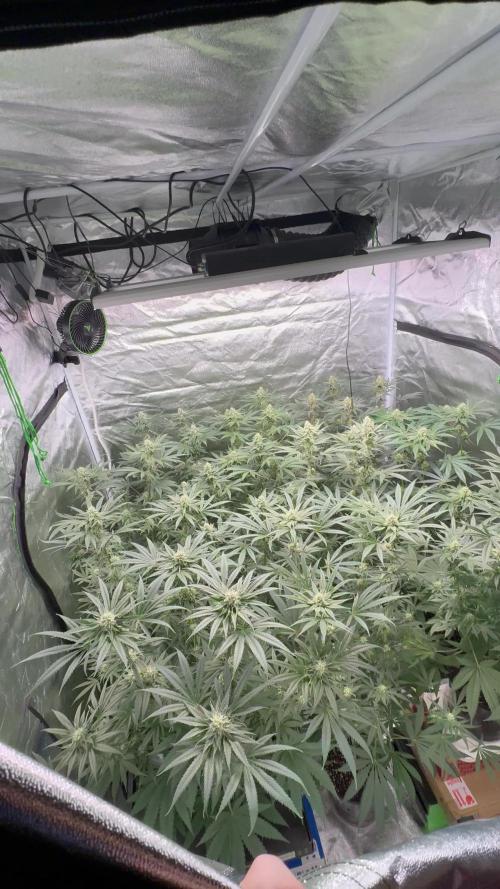
Super Skunk is doing good. She is starting to stretch. I did a solution change on her yesterday. I will likely do another next update. I think I reduced it in grow. And not bloom. So I will do the swap soon. Thank you Spider Farmer, Athena, and Spliff Seeds. 🤜🏻🤛🏻🌱🌱🌱
Thank you grow diaries community for the 👇likes👇, follows, comments, and subscriptions on my YouTube channel👇.
❄️🌱🍻 Happy Growing 🌱🌱🌱
https://youtube.com/channel/UCAhN7yRzWLpcaRHhMIQ7X4g.

Likes
136
Share


@Kitties_and_Colas
Follow
~_~_~_~_~_~_~_~_~_~_~_~_~_~_~_~_~_~_~_~_~_~_~_~_~_~_~_~_~_~_~_~_~_~_~_~_~_~_~_~_~_~_~_~_~_~_~_~_~_~_~_~_~_~_~_~_~_~_~_~_~_~_~_~_~_~_~_~_~_~_~_~_~_~_~_~_~_~_~_~_~_~_~_
1/30/22
😻 7th week of veg and everything is going beautifully!!..lots of growth (comparatively) in the last few days..all plants have a great color, we've been feeding a little with nearly every watering and they seem to be responding to it well to it.. they're still on the small side for being over 6weeks old but seem perfectly healthy besides this...we're still debating flower, it may be another 2 weeks before we flip (unless we're hit with an unexpected growth spurt). We did some pruning, removing any lower leaf touching media, small side growth and a few large fans draping new branch sites... The MarsHydro is hanging at 29" entire veg and we're still getting fat stalks (tons of red), but we intend on closing the distance come flower...I'm hoping for a lot of growth this week, fingers crossed!😼🤞Thanks as always for dropping by and happy harvests everyone!!
❤️💡🌱😽💨
⚡Mars Hydro/SP-3000⚡ Specifications ⚙️:
Diodes: Samsung LM301B / Osram 660nm (960 total!)
Driver: Meanwell 300watt 🔌 (300W±5% @AC120V-277V)
PPF: 824umol/S ☢️
PPE: 2.8 µmol/j 〰️〰️
Lifespan: >50k hrs ⌛
Weight: 10.1 lbs (4.6kg)
Veg Coverage: 3 x 5 ft 🌱
Flowering Coverage: 2 x 4 ft 🌼
-The SP-3000 uses an aluminum heatsink (no fan) and the driver can be placed outside the tent 🌡️⬇️
-IP65 waterproof ratings, tolerant to high humidity grow environments 💦 ..
-Up to 15 can be daisy-chained together and all controlled from a single light!
💡~💡~💡~💡~💡
~_~_~_~_~_~_~_~_~_~_~_~_~_~_~_~_~_~_~_~_~_~_~_~_~_~_~_~_~_~_~_~_~_~_~_~_~_~_~_~_~_~_~_~_~_~_~_~_~_~_~_~_~_~_~_~_~_~_~_~_~_~_~_~_~_~_~_~_~_~_~_~_~_~_~_~_~_~_~_~_~_~_~_

Processing
Likes
27
Share


@HELCIBAO
Follow
the day after being topped the ledies look good😎
Irene (the sativa dominant) reacted very well to LST😄
.
the ladies are growing really fast👌
i've lowered a bit the nutrient

Likes
3
Share

@Ninjabuds
Follow
Everything looks great. Busy week. Check back next week for individual photos. The buds will be starting to get fat at that point
Processing
Likes
37
Share


@Sillyasswhitedude
Follow
10-17 mainly just on a watering schedule...im really just STILL trying to keep them healthy and low...they are having to stretch for light but its workin out good with all the topping I think...im trying to time it so that I can clone again and then flower these...im not transplanting in hopes of restricting their size for awhile...the plan is to get new lights for my closet and invest in a 2x4 or so grow tent for flowering photoperiods in and move these mars hydro 300's in there...for now I'm just trying to get the most from my space as I can...sorry about the purple pics this week guys but like I said the name of the game is just to maintain these for now...im having to water them quiet frequently in these small pots but I don't mind...if you have a spare minute feel free to check out the autos I'm growing for AUTO SEEDS as well...one is measuring 13 inches the other 13.5 inches....

Likes
116
Share


@Hydro_Hiebs
Follow
Hello and thank you for stopping by week 6 with Barney's farm purple Punch Auto! It's been a great week she's starting to bush out real nice after her training she's taking it really well. ✌️

Likes
14
Share

@Shivashamboom1
Follow
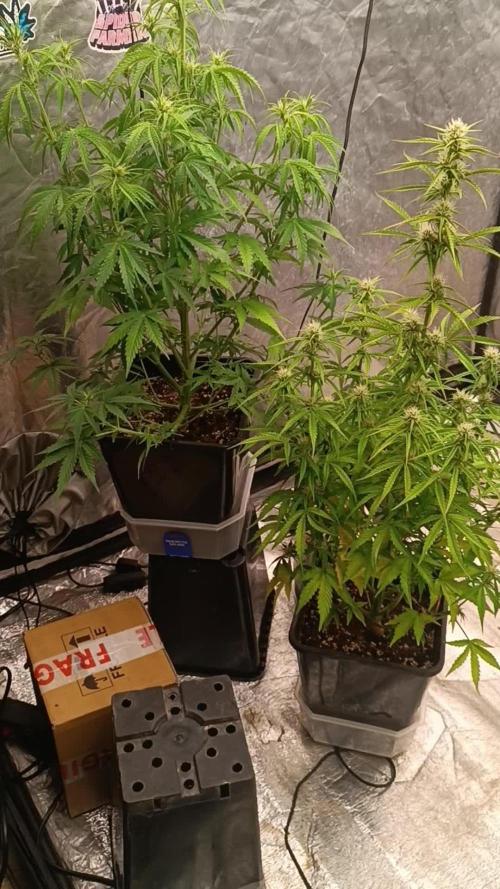
Inizio settimana 2 di fiori tutto procede bene.....la più piccola ha più o meno due settimane in meno della pianta po' ou grande.. stanno crescendo non troppo alte.. piuttosto sono ben compatte. Sicuramente anche le cime(fiori) saranno belli massicci compatte e soprattutto che sia una buona terapia 😉💪

Likes
32
Share


@Hawkbo
Follow
Couple got a little burn I think maybe a little too much soil in there with the coco on top of the light feed? I got all the final pots filled up today they will go in 3 gal bags either today or tmm. It's a Greentree pro ultra coco/perlite mixed with some roots organic soil about 70/30.
Likes
16
Share


@ButterfliesLittleFarm
Follow
Hello Diary,
The third week of flowering has ended, Cherry Pie is progressing very nicely, which is clearly visible in the photos.
Cherry Pie has almost stopped growing, it has grown a scant 3 cm, which means that that is more or less the height.
72 cm is almost ideal considering the size of the grow box.
The main cola rises high above the other branches, it is completely covered with flowers.
As for the flowers, they are developing nicely, it is still early to make any predictions, but if it continues to develop like this, I will be very happy.
Cherry Pie has also started to smell more intensely, when I open the grow box, the smell is immediately noticeable.
The leaves are a healthy green color, there are no signs of a lack of anything.
Watering has become more frequent, they have become much thirstier.
I have continued to add CalMg and Bio Bloom Fertilizer with each watering.
All in all, I am very pleased with how Cherry Pie is progressing,
I try to provide them with the best possible conditions and the plants return the favor in their own way.
Here is what the past week looked like.
29/08/2024 - Day 36.
Watering.
I prepared 9 liters of water, added CalMg and Bio Bloom Fertiliser and lowered the pH to 6.0.
With that amount of water I watered all three plants on the "Farm".
01/09/2024 - Day 39.
Watering.
I repeated the same procedure as three days earlier.
03/09/2024 - Day 41.
Watering.
Same procedure.
04/09/2024 - Day 42.
End of the 6th week, or the third week of flowering. Photographing and measuring the height of the plants.
Cherry Pie - Day 42. - 72 cm.
That's all from me, see you soon.

Processing
Likes
55
Share


@Max1973
Follow
Day 93 - Fattened up good, getting really heavy....posted pic of test bud.... vid of the led uv globe i got on ebay...
works awesome.... highly recommend...... 😎
maybe 1 more week.... they smell delicious, not very strong smell....
just normal water in bottom drip tray, dutch master one gold ....next week, flush em and next sunday pull em..... idk....
Day 95 - had a good look at both girls and worked out a harvest plan...... i've started flushing/watering on the smaller one,
and sunday (day 100) will be her last. i'll leave the larger one (she's still quiet white) for another week and re evaluate her fate next week.
Day 97 - 4 vids .... looks good 😎
getting a 1600x Camera Endoscope USB Digital Microscope from ebay, see if it will help with harvest........ 😎
Likes
72
Share


@BodyByVio
Follow
This week I took out the UC Roots and added Roots Execrator from H&G.
-Day 50- I selective defoliate the center of the plant so the light can penetrate better. Left few big fan leaves on the side of the plant that don’t shadow any nodes.
-Day 53 - I performed another session of defoliation where I took off most of the fan leaves.

Likes
3
Share

@kdifiori_
Follow
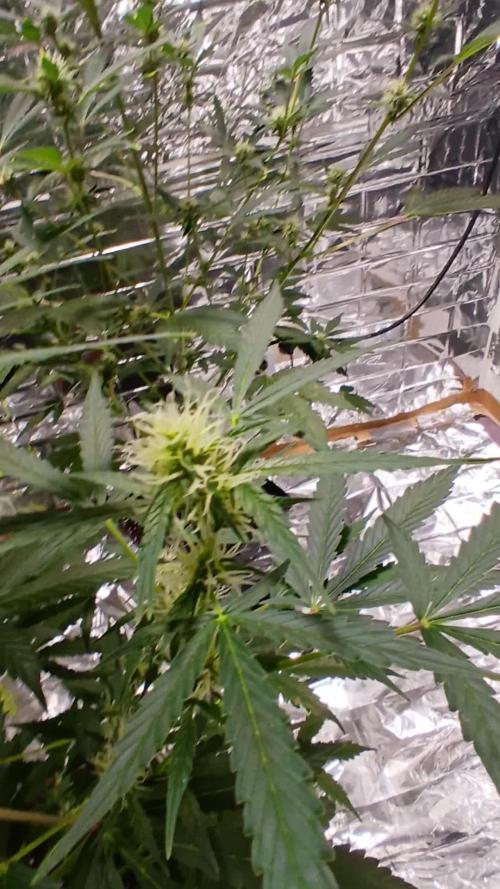
Week seven and this beauty continues to grow. This week it drank 2 L and I slowly started adding Overdrive to the magic mixture. Let's see what happens next week!
Likes
10
Share


@Ultraviolet
Follow
Added top funnel watering wick, most insects/bugs use damp topsoil 1-2" to reproduce. This uses gravity, 👊👊👊fiber wicks water, and spreads evenly, to keep moisture under the topsoil out of the reach of bugs.
Zinc is a chemical element with the symbol Zn and atomic number 30
Neodymium is a chemical element with the symbol Nd and atomic number 60
Thorium is a weakly radioactive metallic chemical element with the symbol Th and atomic number 90.

Likes
18
Share


@gdogfunk
Follow
Day 63 This should be the last week in veg. It might be a partial week...I'll make the call in a few days. I'm excited to see these babes flower!!!
Day 64: Last day of VEG! I set the timer to 12/12 and lower the lights to 18". These babes are ready to switch, based on my past experience. I hope they don't shoot too much in the next couple of weeks! Flower time is here at last!
Day 65: I tore part of a main top branch today and immediately put clonex gel and used some clear packing tape to secure it back together. I think it will be ok. I sure hope so! It's pretty much the biggest top of the plant. I don't know if the potassium silicate treatment is making the stalks too strong, but I only tried to tuck it into the next hole of the screen. Oh well, time will tell. Fed transistion week 1 nutes today.
Day 67: The branch survived! The plants are stretching nicely and I expect to run out of room on the screen at the outer edges.
Day 69: The canopy is so FULL! I'm amazed at how healthy they are and how many bud sites are filling up the screen!
Likes
4
Share


@Ambishen618
Follow
Sorry guys im a lil late with the updates, but I figured you’re only here for the bud porn anyway, so here it go

Likes
1
Share

@letmegrow85
Follow
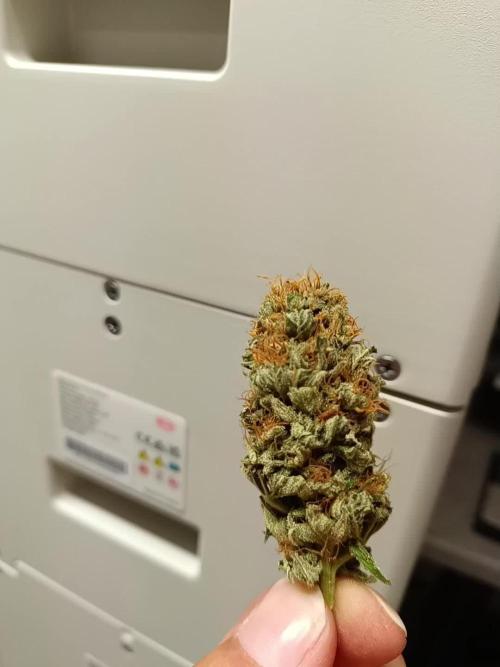
Die gezwitterte pflanze habe ich nicht gewogen und zu früh geerntet, die anderen beiden bin ich mit zufrieden, die eine hat kurz vor 70 abgeworfen und die andere 66 bei 61% rlf Rest feuchte.
Wirkt ganz gut.

Likes
21
Share


@hyphen420
Follow
Die Letzte Woche der Blüte mit zufügung von Dünger für die 3 Red Hot Cookies, ab jetzt werden die Mädels nurnoch mit ordentlich viel Wasser gegossen bis zur Ernte.
El Patron und Strawberry Lemonade bekommen noch 1-2 Wochen mehr, jenachdem wie gut sie den zusätzlichen Platz ausnutzen sobald die 3 Red Hot Cookies das Zelt verlassen haben.
👍 😁😍

Likes
36
Share

@Roberts
Follow
Gorilla Glue has gotten a slow start so far compared to others I have germinated. I cleared the membrane that was still on the leaves before picture ls today. Yesterday she did not look great. I stuck another seed near by. If it sprouts, then I will move it to another potter. I will leave the dome on till likely tomorrow morning. She should open up, and be good to go by then. Looks like everything is starting to look good. Thank you Spider Farmer, and Amsterdam Marijuana Seeds. 🌱🌱🌱👍
Www.amsterdammarijuanaseeds.com
Thank you grow diaries community for the 👇likes👇, follows, comments, and subscriptions on my YouTube channel👇. ❄️🌱🍻
Happy Growing 🌱🌱🌱
https://youtube.com/channel/UCAhN7yRzWLpcaRHhMIQ7X4g
Spider Farmer G300w: https://amzn.to/3S2zvsd
Spider Farmer 10X20 Heat Mat Kit - https://amz.fun/lsa0J
Spider Farmer Amazon Store: https://www.amazon.com/spiderfarmer
Spider Farmer Official Site: https://spider-farmer.com
Discount code: saveurcash


Likes
2
Share


@LoRagTes
Follow
das war bis jetzt mein größter Erfolg, dass Nassgewicht kann ich leider nicht sagen, weil ich das immer erst mach, wenn die Buds trocken und rauchbar sind, aber das hatte sich wirklich gelohnt, diese Dame hat sich auf jedenfalls gelohnt und ich empfehle sie auf alle Fälle weiter.😊😋😍😎

Likes
4
Share

@pHilosophy420
Follow
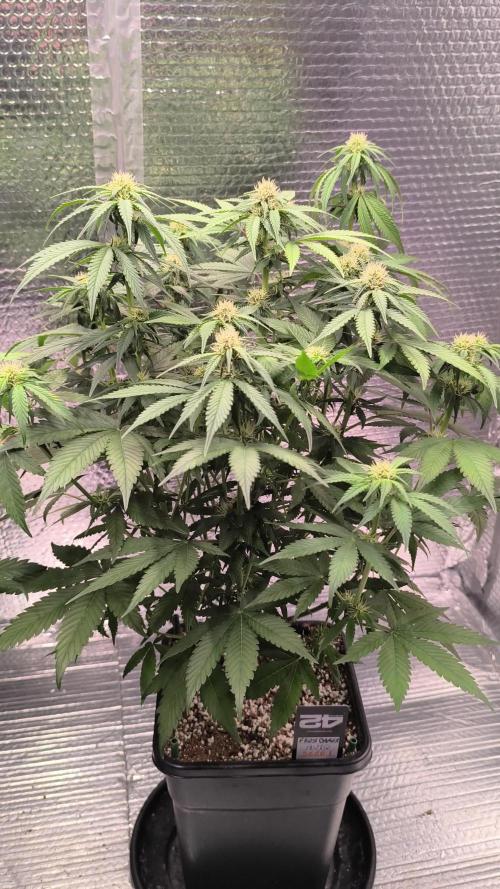
Day 49 - the plant stretch 8cm and morę buds formating, the plants start spreading nice smell and the buds should start getting bigger and fat in upcoming weeks.