


shorts_status_processing


@eldruida_lamota
Follow
Buenas noches familia, siento el retraso fue un día largo pero sigue siendo viernes.
Pues ya estamos en la recta final y esta noche tiraremos el lavado de raíces.
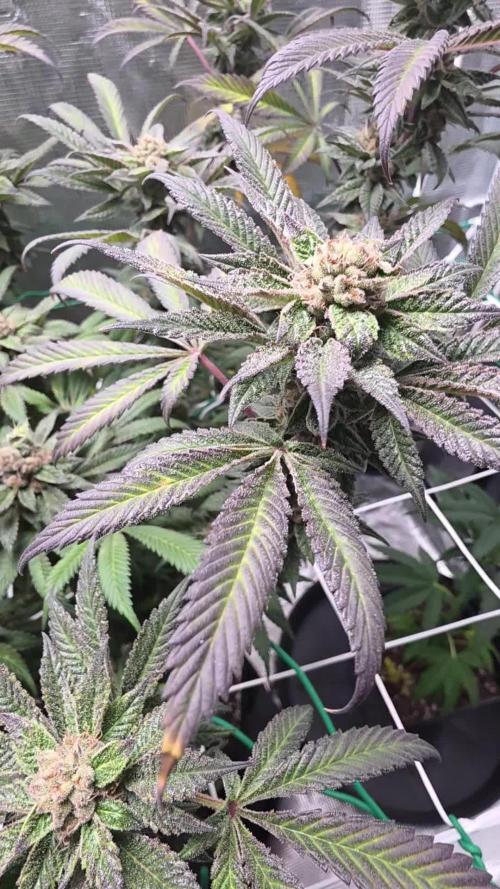
Están formando buenas flores, y desprenden un agradable olor.
Nuestras northern light xL No están compactando mucho pero si empezaron a explotar.
Una semana sin productos ya.
Ph 6,5 todavía regulamos hasta el final el ph.
(IMPORTANTE) cambiar bombilla pal siguiente cultivo.😂
Nos vemos la semana que viene.



@Dottgreenthumb
Follow
Ho iniziato il lavaggio finale. Il fenotipo non ha sviluppato i fiori come volevo evidentemente per i troppi topping o per la genetica cosi predisposta
Run off 1.6
Ph 6.3


@guerilla
Follow
No more base nutrients. Just feeding with extra Boost and a small bit of PK. I will reduce this further nearer to chop.
I think this is the last week now.
2 girls have maybe another 2 weeks to go. But the other 26 are almost done.
2 different phenos. 1 is shorter and compact. Finishing quicker. The other wants to stretch and finish a week or so after.. Both smell like grapes, black current, lemon and a touch of deisal. Very beautiful!
Reduced the light today. 11hrs light. 13hrs dark
Much love
Peace 💚


@EyeMKing
Follow
Started the first top dressing of Gaia Green All Purpose and Power Bloom at a 50/50 ratio of 1tbsp/gal each.


@Mosquito_Haarlem
Follow
Week 7 is begonnen en ze doet het goed.
Bloemen beginnen voller te worden en haar kleuren zien er gezond uit.
Ik heb ook wat onderste bladeren en takken weggeknipt.
Pomp het op 💪🏽
Ik zal gedurende de week nog verse foto's updaten dus hou het in de gaten 🧐




@NEPA-Cultivations
Follow
this was a homemade grow tent grow..i now have x2 Vivoson tents 3x3 and a 4x4


@Tropicannibis_Todd
Follow
🤔🤔🤔🤔🤔Well i was gonna make this diary a little more interactive then normal🤔🤔🤔🤔🤔
👉However Growdiries seems to have other plans 🤔 at this time I can't load any videos 😫 but as soon as GD get there heads out of there @sses then maybe we can get them up 👈
Looks like I've can upload short videos 👉 so I will do what I can my friends 👍
YOUTUBE BACKUP 👉👉👉 https://youtu.be/sSOAJv7cvV4?si=zpF5yDJXlPr-RmeN 👈👈👈
So we are gonna be doing the BIG BAND from Kannabia Seeds , I have grown this before , and loved the terp profile and effects so much that I've decided I need more because it won't be long before I'm out of buds on this one 😁😁
We are now 14 Days in and everything is going great 👍 👈
Except for some watering I haven't really done much 🙃 but plan to do a little maintenance and manipulation of the canopy 👈
👉Soil Medium Provided by ProMix.ca
👉Nutrients Provided by Agrogardens
👉Lighting Provided by MarsHydro.ca
I would like to thank the many growmies for support throughout the years 🙏 So Let's Do This 👊👊👊


@Grower_Of_Persia
Follow
my dry and cure style is this:
4 days of hanging upside down to get water activity lower to around 0.6 in 50% humidity and 26 C temp (i know its a little high but we are in a hot summer right now and i cant get it lower even with air conditioner) and then after 4 days of drying i remove leaves and stalks, trim buds and move them to jar for the rest of their life :D . and in the first 4 days of curing i open the jar door and let hem get some fresh air in the jar for about 5 minutes and close the jar door again, after 4 days of curing like that buds are smokable but they will get better as they getting cured about 1 month.
buds are one of the hardest as fucking rocks type of buds! very dense , compact , sticky , smelly , amazing at every aspect
growing stage was 56 days and flowering stage was 75 days total (harvested tops at day 64th)
the total weight of dry buds was : (plant #1 & #3 top buds 56 G + lower buds 22 G ) 78 G + (plant #2 top buds 47 G + lower buds 18 G ) 55 G + (plant #4 top buds 120 G + lower buds 67 G ) 187 G = 367 G


@Wicked_Stix
Follow
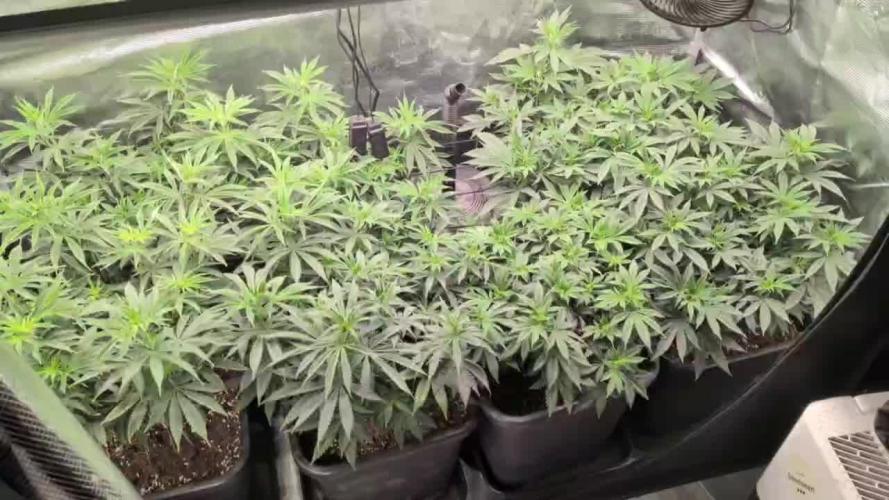
Been a smooth week. The Gelat.OG is looking happy. She is in the back corner. Gave them a flush and fresh nutrients. Been plucking a few leaves here and there to keep light to all of the branches. Just going to keep spreading her out as she grows. Will switch them to flower in a week.




@Edenganj
Follow
They’re loving the heat, even if I am not. They’ve grown substantially within a week. I have been rotating the stem around the stem clockwise to train its strength. Anything else you guys suggest I should consider? Please shoot your advice my way.


@eldruida_lamota
Follow
Que pasa familia, vamos con la tercera semana de vida de estas Wedding Cheesecake Fast Flowering, de FastBuds.
Agradezco a Agrobeta todos los kits obtenidos de ellos 🙏.
El ph se controla en 6.2 , la temperatura la tenemos entre 21/24 grados y la humedad ronda el 50%.
Esta semana realicé el trasplante a maceta definitiva, iremos viendo cómo avanzan.
Agrobeta:
https://www.agrobeta.com/agrobetatiendaonline/36-abonos-canamo
Hasta aquí todo, Buenos humos 💨💨💨


@A1420
Follow
Best result from an Outdoor Auto yet, completely organically grown and natural sunlight only


@Eponymus29
Follow
Transplanted her into a 3 gal air pot, added some mycorrhizae to the soil and watered her with pH'd water 6.0...


@CURATI_DA_SOLO
Follow
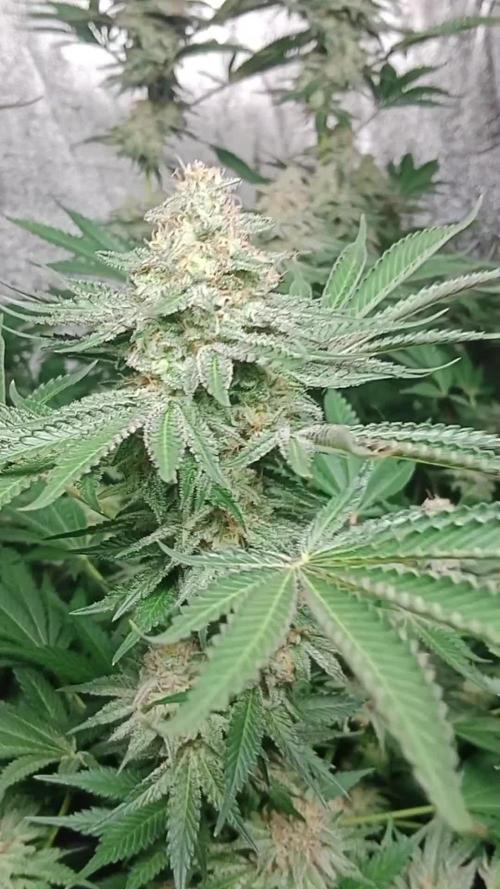
Veramente incredibile, la quantità di tricomi è indescrivibile! L'odore e fortissimo le cime sono durissime!!! I tricomi sono tutti bianco latte...finiró la settimana e poi inizierò a fare il risciacquo finale!!! Non vedo l'ora di assaggiare questa prelibatezza di fast buds!!! Come il solito rimango sempre allibito dalla qualità delle genetiche di questi ragazzi secondo me questo è uno dei migliori ceppi che ho coltivato entrerà sicuramente nella mia top teen!!! Grazie per essere passati da qui peace and love!!!




@Psychopat_od_vedle
Follow
zdravím všechny začínám 8 týden.den 49 holky vypadají skvěle a ta vůně ?stále hnojim dostávají co proto od všeho trošku navíc 😁 jinak fuh musela ven potřeboval jsem místo na zillions který jsem krásně roztahnul ale to znáte 😂nepadnul mě do oka ten škaredý fuh 🤣pár fotek na kukando 🤣🤣🤣🤣





@Ultraviolet
Follow
What's in the soil? What's not in the soil would be an easier question to answer. 16-18 DLI @ the minute. +++ as she grows.
Probably not recommended, but to get to where it needs to be, I need to start now.
Vegetative @1400ppm 0.8–1.2 kPa 80–86°F (26.7–30°C) 65–75%, LST Day 10, Fim'd Day 11
CEC (Cation Exchange Capacity):
This is a measure of a soil's ability to hold and exchange positively charged nutrients, like calcium, magnesium, and potassium. Soils with high CEC (more clay and organic matter) have more negative charges that attract and hold these essential nutrients, preventing them from leaching away.
Biochar is highly efficient at increasing cation exchange capacity (CEC) compared to many other amendments. Biochar's high CEC potential stems from its negatively charged functional groups, and studies show it can increase CEC by over 90%. Amendments like compost also increase CEC but are often more prone to rapid biodegradation, which can make biochar's effect more long-lasting. biochar acts as a long-lasting Cation Exchange Capacity (CEC) enhancer because its porous, carbon-rich structure provides sites for nutrients to bind to, effectively improving nutrient retention in soil without relying on the short-term benefits of fresh organic matter like compost or manure. Biochar's stability means these benefits last much longer than those from traditional organic amendments, making it a sustainable way to improve soil fertility, water retention, and structure over time. Needs to be charged first, similar to Coco, or it will immobilize cations, but at a much higher ratio.
a high cation exchange capacity (CEC) results in a high buffer protection, meaning the soil can better resist changes in pH and nutrient availability. This is because a high CEC soil has more negatively charged sites to hold onto essential positively charged nutrients, like calcium and magnesium, and to buffer against acid ions, such as hydrogen.
EC (Electrical Conductivity):
This measures the amount of soluble salts in the soil. High EC levels indicate a high concentration of dissolved salts and can be a sign of potential salinity issues that can harm plants.
The stored cations associated with a medium's cation exchange capacity (CEC) do not directly contribute to a real-time electrical conductivity (EC) reading. A real-time EC measurement reflects only the concentration of free, dissolved salt ions in the water solution within the medium.
98% of a plants nutrients comes directly from the water solution.
2% come directly from soil particles.
CEC is a mediums storage capacity for cations. These stored cations do not contribute to a mediums EC directly.
Electrical Conductivity (EC) does not measure salt ions adsorbed (stored) onto a Cation Exchange Capacity (CEC) site, as EC measures the conductivity of ions in solution within a soil or water sample, not those held on soil particles.
A medium releases stored cations to water by ion exchange, where a new, more desirable ion from the water solution temporarily displaces the stored cation from the medium's surface, a process also seen in plants absorbing nutrients via mass flow. For example, in water softeners, sodium ions are released from resin beads to bond with the medium's surface, displacing calcium and magnesium ions which then enter the water. This same principle applies when plants take up nutrients from the soil solution: the cations are released from the soil particles into the water in response to a concentration equilibrium, and then moved to the root surface via mass flow.
An example of ion exchange within the context of Cation Exchange Capacity (CEC) is a soil particle with a negative charge attracting and holding positively charged nutrient ions, like potassium (K+) or calcium (Ca2+), and then exchanging them for other positive ions present in the soil solution. For instance, a negatively charged clay particle in soil can hold a K+ ion and later release it to a plant's roots when a different cation, such as calcium (Ca2+), is abundant and replaces the potassium. This process of holding and swapping positively charged ions is fundamental to soil fertility, as it provides plants with essential nutrients.
Negative charges on soil particles: Soil particles, particularly clay and organic matter, have negatively charged surfaces due to their chemical structure.
Attraction of cations: These negative charges attract and hold positively charged ions, or cations, such as:
Potassium (K+)
Calcium (Ca2+)
Magnesium (Mg2+)
Sodium (Na+)
Ammonium (NH4+)
Plant roots excrete hydrogen ions (H+) through the action of proton pumps embedded in the root cell membranes, which use ATP (energy) to actively transport H+ ions from inside the root cell into the surrounding soil. This process lowers the pH of the soil, which helps to make certain mineral nutrients, such as iron, more available for uptake by the plant.
Mechanism of H+ Excretion
Proton Pumps: Root cells contain specialized proteins called proton pumps (H+-ATPases) in their cell membranes.
Active Transport: These proton pumps use energy from ATP to actively move H+ ions from the cytoplasm of the root cell into the soil, against their concentration gradient.
Role in pH Regulation: This active excretion of H+ is a major way plants regulate their internal cytoplasmic pH.
Nutrient Availability: The resulting decrease in soil pH makes certain essential mineral nutrients, like iron, more soluble and available for the root cells to absorb.
Ion Exchange: The H+ ions also displace positively charged mineral cations from the soil particles, making them available for uptake.
Iron Uptake: In response to iron deficiency stress, plants enhance H+ excretion and reductant release to lower the pH and convert Fe3+ to the more available form Fe2+. The altered pH can influence the activity and composition of beneficial microbes in the soil. The H+ gradient created by the proton pumps can also be used for other vital cell functions, such as ATP synthesis and the transport of other solutes. The hydrogen ions (H+) excreted during photosynthesis come from the splitting of water molecules. This splitting, called photolysis, occurs in Photosystem II to replace the electrons used in the light-dependent reactions. The released hydrogen ions are then pumped into the thylakoid lumen, creating a proton gradient that drives ATP synthesis.
Plants release hydrogen ions (H+) from their roots into the soil, a process that occurs in conjunction with nutrient uptake and photosynthesis. These H+ ions compete with mineral cations for the negatively charged sites on soil particles, a phenomenon known as cation exchange. By displacing beneficial mineral cations, the excreted H+ ions make these nutrients available for the plant to absorb, which can also lower the soil pH and indirectly affect its Cation Exchange Capacity (CEC) by altering the pool of exchangeable cations in the soil solution.
Plants use proton (H+) exudation, driven by the H+-ATPase enzyme, to release H+ ions into the soil, creating a more acidic rhizosphere, which enhances nutrient availability and influences nutrient cycling processes. This acidification mobilizes insoluble nutrients like iron (Fe) by breaking them down, while also facilitating the activity of beneficial microbes involved in the nutrient cycle. Therefore, H+ exudation is a critical plant strategy for nutrient acquisition and management, allowing plants to improve their access to essential elements from the soil.
A lack of water splitting during photosynthesis can affect iron uptake because the resulting energy imbalance disrupts the plant's ability to produce ATP and NADPH, which are crucial for overall photosynthetic energy conversion and can trigger a deficiency in iron homeostasis pathways. While photosynthesis uses hydrogen ions produced from water splitting for the Calvin cycle, not to create a hydrogen gas deficiency, the overall process is sensitive to nutrient availability, and iron is essential for chloroplast function.
In photosynthesis, water is split to provide electrons to replace those lost in Photosystem II, which is triggered by light absorption. These electrons then travel along a transport chain to generate ATP (energy currency) and NADPH (reducing power). Carbon Fixation: The generated ATP and NADPH are then used to convert carbon dioxide into carbohydrates in the Calvin cycle. Impaired water splitting (via water in or out) breaks the chain reaction of photosynthesis. This leads to an imbalance in ATP and NADPH levels, which disrupts the Calvin cycle and overall energy production in the plant. Plants require a sufficient supply of essential mineral elements like iron for photosynthesis. Iron is vital for chlorophyll formation and plays a crucial role in electron transport within the chloroplasts. The complex relationship between nutrient status and photosynthesis is evident when iron deficiency can be reverted by depleting other micronutrients like manganese. This highlights how nutrient homeostasis influences photosynthetic function. A lack of adequate energy and reducing power from photosynthesis, which is directly linked to water splitting, can trigger complex adaptive responses in the plant's iron uptake and distribution systems.
Plants possess receptors called transceptors that can directly detect specific nutrient concentrations in the soil or within the plant's tissues. These receptors trigger signaling pathways, sometimes involving calcium influx or changes in protein complex activity, that then influence nutrient uptake by the roots. Plants use this information to make long-term adjustments, such as Increasing root biomass to explore more soil for nutrients. Modifying metabolic pathways to make better use of available resources. Adjusting the rate of nutrient transport into the roots. That's why I keep a high EC. Abundance resonates Abundance.