


Likes
Comments
Share

@Velasko240
Follow
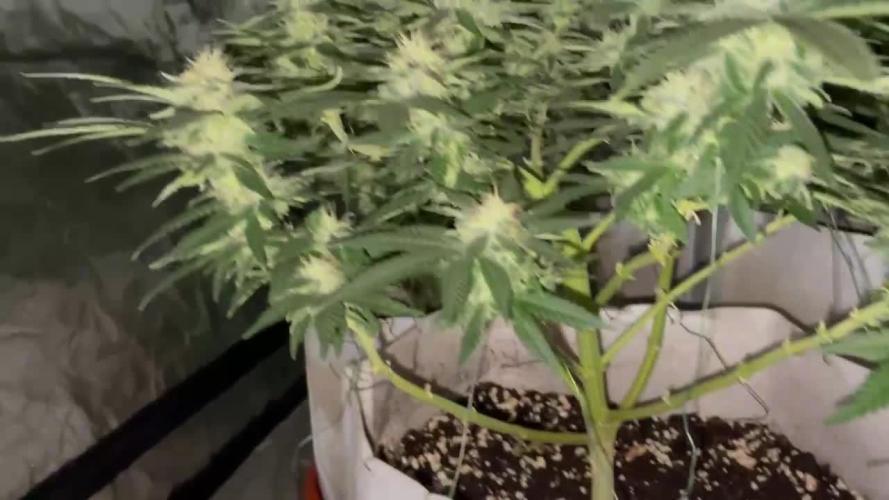
Here we are with some new photos and videos. We're halfway through Week 5.
As you can see, I went a bit overboard with the PK.
All the leaf tips are burned. Whoops.
Next watering will be a bit heavier, and I'll only give a half dose of Bioflores plus a full dose of Cannazym. Then I'll start with the Rokzbastic (Bloombastic?)* hoping it doesn't throw things too far off balance. I think by the end of this week I'll also stop the Bud Factor X – from what I understand, it could leave metallic residues in the smoke later, which would really bother me xD.
I admit I've given Bloombastic with every watering except one, always at low doses, but I should have been more careful and pushed less, or at least alternated it more.
Temperatures have risen slightly with peaks of 28°C (82°F), though most of the time it stays between 26.9°C and 27.5°C (80.4°F - 81.5°F) (lights on).
With lights off, I can't get below 26°C (78.8°F) (except for rare dips to 25.8°C / 78.4°F).
Right now the ventilation is maxing out, with humidity sitting between 55-60%. It’s on the high side, but this is the best I can do.
The plants seem resilient though, even in these less-than-ideal conditions, and seeing them outside the tent with the lights off gives me hope.
Any advice is always welcome! Everything I’m putting into practice comes from others' experiences, carefully followed, and info from friends both online and offline.
Stay tuned!
Peace.

Likes
3
Share

@EchoEcho77
Follow
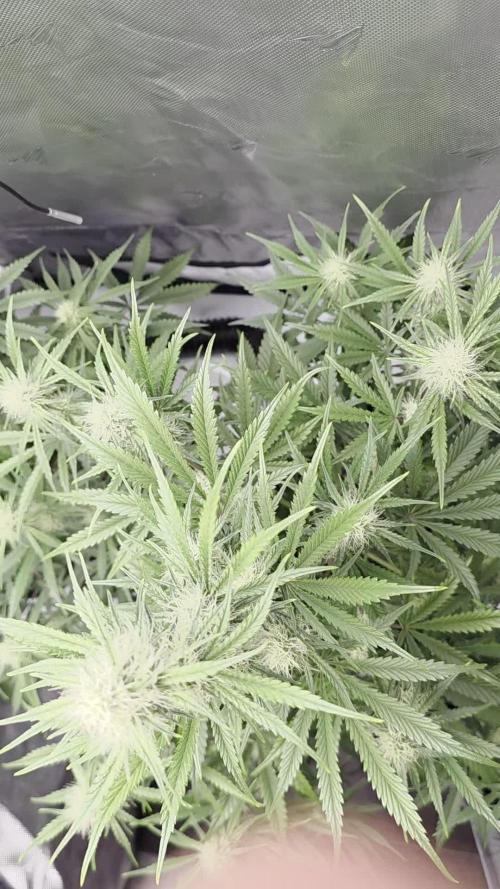
This week is exciting! I lowered the nutrients a little because I was pushing them a little hard, and wound up with a few little brown tips. Overall growth has been solid. Plants are 30.5 and 24 inches tall respectively. Buds are stacking and they are putting on weight.


Likes
16
Share


@Dunk_Junk
Follow
She's looking as pretty as anything this week!!
I think she's almost there. Just waiting on more pistils to change colour. Trichomes are mostly milky. I note she is quite smelly!!!!!!

Likes
18
Share


@Canadian
Follow
The plant responded very well to fim it is growing steady I wish I can leave her vegetating for another week but the other plants in my tent are growing at an incredible rate of speed so I have to rise this one in order to catch up with the rest canopy that's why I flip them to flowering schedule 12/12 I have been defoliatin in order to prepare them for maximum light penetration into the canopy for the flowering cycle .
I will continue to update thank you for reading and have a happy grow.

Likes
16
Share


@valiotoro
Follow
A wonderful genetic thank you Fast Buds ❤️🔥🤩
The trim was super easy the buds are FAT & FROSTY full of resin 🤤
I’m very happy with the harvest 142g !!
For the light i’ve used the Mars Hydro SP-6500💡
Likes
Comments
Share


@BIYEI
Follow
Planta Madre en Conservacion Maximo 6 Meses mismos parametros de Nutrientes y Condiciones
Esquejes Comienzan el Proceso de Enraizamiento
06/01/2025 Se comienza corte de ramas secundarias a planta madre, se realiza el procedimiento adecuado en corte, preparacion del tallo y aplicacion de hormona, se colocan en un domo germinador con ventilacion cerrada obscuridad total primeras 24hrs y se mantiene con humedad relativa de 90% y 20 y 26 grados Celcius.
Likes
6
Share


@Miketama
Follow
Moon Rock - Week Update 🌿
Quick update on Moon Rock! Last fertilization round at day 50 of flowering. Photo from day 54 - approximately 2 weeks until harvest!
Thanks to everyone for checking in! 🙏 Appreciate you taking a look!

Likes
52
Share


@Ultraviolet
Follow
You don't become confident by shouting affirmations in the mirror, but by having a stack of undeniable proof that you are who you say you are, outwork your self-doubt.
Nitrogen fixation is a chemical process by which molecular nitrogen (N2), which has a strong triple covalent bond, is converted into ammonia (NH3) or related nitrogenous compounds, typically in soil or aquatic systems but also in industry. The nitrogen in air is molecular dinitrogen, a relatively nonreactive molecule that is metabolically useless to all but a few microorganisms. Biological nitrogen fixation or diazotrophy is an important microbe-mediated process that converts dinitrogen (N2) gas to ammonia (NH3) using the nitrogenase protein complex (Nif).[2][3]
Nitrogen fixation is essential to life because fixed inorganic nitrogen compounds are required for the biosynthesis of all nitrogen-containing organic compounds, such as amino acids and proteins, nucleoside triphosphates and nucleic acids. As part of the nitrogen cycle, it is essential for agriculture and the manufacture of fertilizer. It is also, indirectly, relevant to the manufacture of all nitrogen chemical compounds, which include some explosives, pharmaceuticals, and dyes.
Nitrogen fixation is carried out naturally in soil by microorganisms termed diazotrophs that include bacteria, such as Azotobacter, and archaea. Some nitrogen-fixing bacteria have symbiotic relationships with plant groups, especially legumes.[4] Looser non-symbiotic relationships between diazotrophs and plants are often referred to as associative, as seen in nitrogen fixation on rice roots. Nitrogen fixation occurs between some termites and fungi.[5] It occurs naturally in the air by means of NOx production by lightning.[6][7]
All biological reactions involving the process of nitrogen fixation are catalyzed by enzymes called nitrogenases.[8] These enzymes contain iron, often with a second metal, usually molybdenum but sometimes vanadium.
Green clover (Fixation)
White clover (Fixation)
Red Clover. (Fixation)
Yellow Clover. (Fixation, deeper roots)
Sweet Thai Basil. (Terpenes)
Italian Basil. (Terpenes)
Chamomile.(Oil production)
Borage.(Pest attraction taste)
Lavender.(Pest attraction smell)
Marigold(Pest attraction visual)
Mycorrhizae are beneficial associations between mycorrhizal fungi and a plant’s root system. Mycorrhizal fungi spores germinate in the soil, creating filaments (hyphae) that penetrate the root cells, thus establishing a symbiotic relationship. This collaboration leads to the development of both intra-radical and extra-radical networks of filaments, enabling efficient exploration of the soil for enhanced access to nutrients and water. Consequently, these vital resources are transferred to the plant, resulting in numerous benefits for crop cultivation.
Various mycorrhizal products are available in diverse formulations (powder, granular, and liquid), concentrations, and qualities. Ongoing advancements in products, technologies, and research are reshaping our understanding of mycorrhizae. Despite these positive developments, certain misconceptions persist. In the following discussion, we aim to clarify the truths and dispel the myths surrounding mycorrhizae products.
MYTH #1
A HIGHER NUMBER OF MYCORRHIZAE SPECIES MEANS BETTER RESULTS.
Contrary to common belief, having a higher number of mycorrhizae species in a product does not translate to better results; in fact, it often yields the opposite outcome. A plant can sustain only one association with a particular mycorrhizal fungi species. Introducing multiple species creates competition among them, which is not advantageous for the plant. The initial colonizer does not ensure the highest success; instead, it gains precedence. It is recommended to select a product with a concentrated presence of a single mycorrhizae species known for its effective performance, rather than opting for a product with multiple species at lower concentrations.
MYTH #2
ECTOMYCORRHIZAE ARE EFFECTIVE FOR CANNABIS PLANTS.
Although ectomycorrhizae can colonize five to ten percent of plant species, cannabis is not among them. Ectomycorrhizae do not penetrate the root cells; instead, they develop around the roots and on the exterior. For cannabis plants, it is essential to seek out endomycorrhizae. Endomycorrhizae are capable of colonizing 70% to 90% of plant species, including cannabis. Unlike ectomycorrhizae, endomycorrhizae penetrate the root cells, forming structures like arbuscules for the exchange of nutrients and water with the plant.
MYTH #3
WHOLE INOCULANT (PROPAGULES) PERFORM BETTER THAN ONLY VIABLE SPORES.
The propagule count specified on most mycorrhizae products indicates the presence of spores (viable and unviable), hyphae, and root fragments. However, it is crucial to note that only viable spores, those with the capacity to germinate, can successfully colonize a plant’s root system. Spores are to mycorrhizal fungi what seeds are to cannabis plants—a fundamental component enabling fungi reproduction. Consequently, even if a mycorrhizal product boasts millions of propagules, its effectiveness hinges on the presence of viable spores. Without viable spores, the product will not contribute to plant development. Therefore, the genuine value of a mycorrhizal inoculant lies in the quantity of viable spores it contains, as only viable spores can efficiently initiate symbiosis.
MYTH #4
ALL METHODS OF APPLICATION YIELD IDENTICAL RESULTS.
To establish the symbiosis, mycorrhizal fungi spores must be close to the plant roots. The optimal recommendation is to directly apply mycorrhizal inoculant to the roots, either in powder, granular or slurry form. This method ensures maximum proximity between the spores and the roots, facilitating a rapid establishment of symbiosis. Particularly with crops like cannabis, which have a short growing cycle, employing this technique is the most effective way to obtain optimal benefits. Alternatively, techniques such as blending the inoculant with the soil are effective, but there may be a delay in the establishment of symbiosis. This is because the roots need to grow and come into contact with the dispersed spores throughout the growing media.
MYTH #5
MYCORRHIZAE CAN ONLY BE GROWN ON LIVING PLANTS.
While the predominant method for commercially producing mycorrhizae involves growing them on the root systems of living plants (in vivo production), it is not the exclusive nor the optimal technique. In fact, this production approach has notable drawbacks that the “root organ culture” method just does not have (in vitro production). In vitro production occurs in meticulously controlled, aseptic laboratory conditions, allowing for the consistent generation of products that are viable, highly concentrated, species-specific, and free from pathogens. Achieving such precision and quality is impossible when relying on the cultivation of mycorrhizal fungi on plants exposed to external conditions.
In conclusion, it is crucial to take all these factors into consideration when choosing the appropriate product for your crop to fully harness the wide array of benefits provided by a high-quality mycorrhizal product.
STRONGER PLANT – Stress resistance.
FASTER GROWTH – Improve plant structure and shorter veg time.
INCREASE YIELD – Overall more biomass.
IMPROVED QUALITY – Increase cannabinoids and terpenes content.


Likes
7
Share


@Fresco_Grower
Follow
Luego de 2 dias de oscuridad se pasa a floracion, ciclo 12/12. La altura promedio oscila entre los 20 y 40cm, a excepcion del ejemplar mas retrazado que esta en unos 15cm, lo muevo al centro del cultivo para que se desarrolle con la luz optima. Se prosigue con riego dias Lunes, miercoles y sabados.
Likes
5
Share


@Naujas
Follow
I came back after vacation, the girl is ready for cutting, the rainy weather has started, so there is a threat of rot, you can say I managed to find just a few small pits in time and removed them and threw them away, the big and stiff flowers look fantastic:) but after a long trip I was tired, so I didn't take quality photos :( no everything else, I am very satisfied with the result I got:) its smell already lets me know that it will be good:) a lot of sugar leaves from which I will make bubble hash:) I will update the weight when it dries.


Processing
Likes
9
Share


@High_Grade_Dadli
Follow
Main crown got damn last week on plant with lil to no training done to it...leave are also a bit yellow going to straighten it out this week



Likes
13
Share


@Stoner_INDICA
Follow
Fday50-Fday65 ripening for koloblom dry
I have 4 plants harvesting maby 250-300 gr
😍


Likes
Comments
Share

@EVD420
Follow
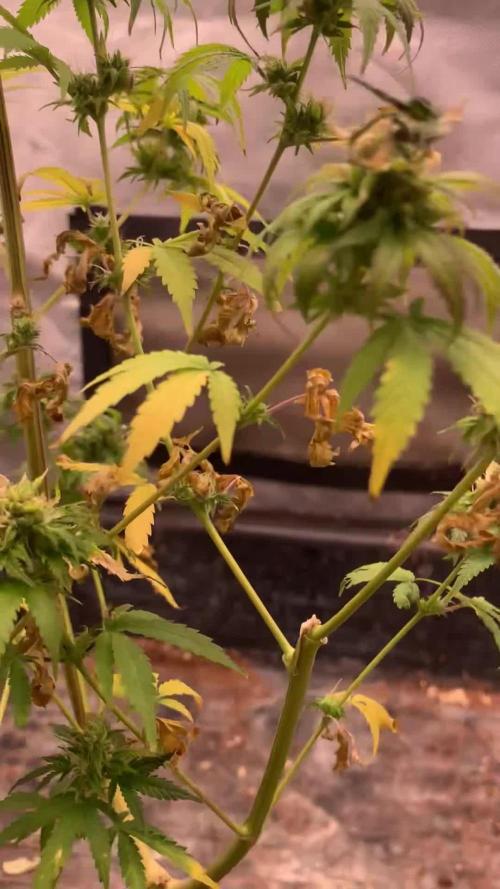
Harvest
Plants #2 and #3 were harvested last weekend.
Further holding was unnecessary as seeds had already reached full maturity.
Seed Development
Seeds are fully matured and ready for further processing.
Next Step
Seeds are now being sent to stratification (storage & conditioning phase).
Result
The grow cycle is officially completed.
The genetic pool has been successfully expanded, providing solid material for future selection and testing.
Likes
6
Share

@Emerald_Gardens
Follow
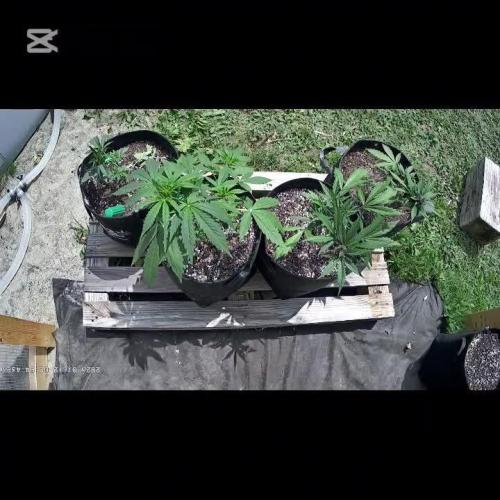
Flower are starting to smell very citrusy and are starting to stack buds. Looks like the stretch isn't leggy and the plant is stsying nice and compact
Likes
93
Share


@MadeInGermany
Follow
Welcome
to the
Zamnesia Spring Cup 🏆.
Harvest day 68
Hey all together 🤗.
Today there is a short update on the harvest before the last update comes with the finished harvest 😄.
I can only say it again and again, the buds look beautiful, and it was very pleasant to cut in terms of the leaf / bud ratio 😍.
After standing in the darkroom for 48 hours, it was finally harvested 😝.
The buds were all sterile with Tool trimmed neatly by hand ✂️.
Then they came back into the darkroom on the net, where they are now gently dried for the next 7-14 days at 62% humidity and 22 degrees temperature, before they are first put in jars with Boeveda pack 62%, which takes another 2 weeks is exchanged for Boveda 58%.
But more about that in the last update, until then I wish you all a lot of fun with the update, stay healthy 🙏🏻 and let it grow ☘️🍀
You can buy this Strain and Nutrients at :
www.Zamnesia.com
Typ:
Sour Diesel (Zamnesia)
Zamnesia Spring Cup 🏆🏆🏆
Type:
Runtz
☝️🏼
Genetics:
Zkittlez x Gelato
👍
Vega lamp: 2 x Todogrow Led
Quantum Board 100 W
💡
Bloom Lamp : 2 x Todogrow Led
Cxb 3590 COB 3500 K 205 W
💡💡☝️🏼
Soil : Canna Bio
☝️🏼
Nutrients : Monster Bud Mix
☝️🏼🌱
Water: Osmosis water mixed with normal water (24 hours stale that the chlorine evaporates) to 0.2 EC. Add Cal / Mag to 0.4 Ec Ph with Organic Ph - to 6.0 - 6.3
💦💧
