


Likes
Comments
Share

@Bread_n_Buds
Follow
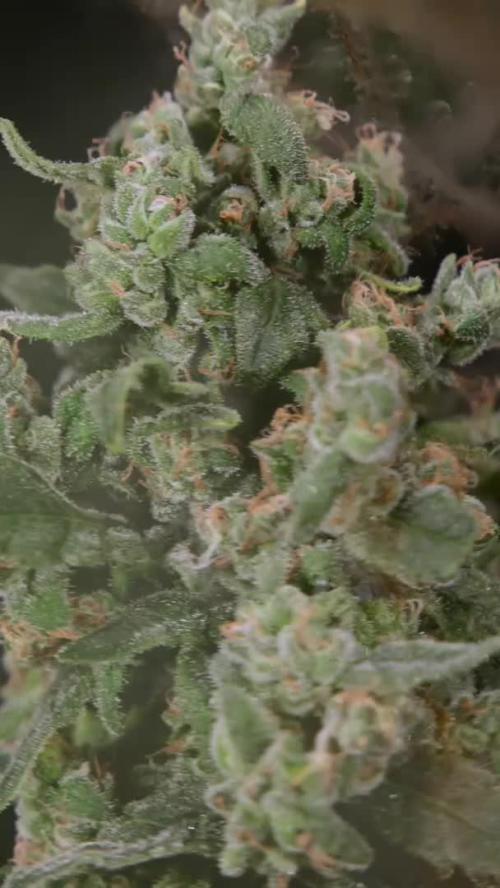
We loved this photoperiod Super Boof from Zamnesia right from the start.
This plant has developed an excellent cannabis body that has allowed it to give us beautiful flowers, with good density, a great scent, and excellent resin production, especially considering the hot periods it experienced.
Up until now, I haven't had the chance to control the temperatures with air conditioning, but I'll soon be able to do so at the new location, and everything will be even more precise. However, finding an ideal spot and making as few adjustments as possible remains the ideal solution. I love hillside locations; at most, you need to cool them a little in the summer and heat them a little in the winter, for sure. In any case, we're gearing up for full control; I'm still a home grower like everyone else.
Our plant has given us good trichome maturation, mostly milky/cloudy, just as I like it, with some amber and still a bit of clear stuff.
Always cultivated from start to finish with Plagron fertilizers in the 100% organic version, soil included.
Leafy's Strain of the Year ---- // https://www.zamnesia.io/en/13317-zamnesia-super-boof-seeds.html
Zamnesia Quick Facts // Here's your chance to grow one of the most sought-after strains of recent years: Super Boof, rightfully crowned Leafy's Strain of the Year 2024. Derived from Black Cherry Punch and Tropicana Cookies, this 70% indica-dominant hybrid takes the already exceptional traits of its predecessors to new heights. Grow it at home to find out for yourself.
The whole world of growing and more is at Zamnesia - just take a look around the site and you'll find "nature's best" in all shapes and colors.
New strains are awesome and old ones are no exception...
-- // www.zamnesia.com



Likes
4
Share

@Chucky324
Follow
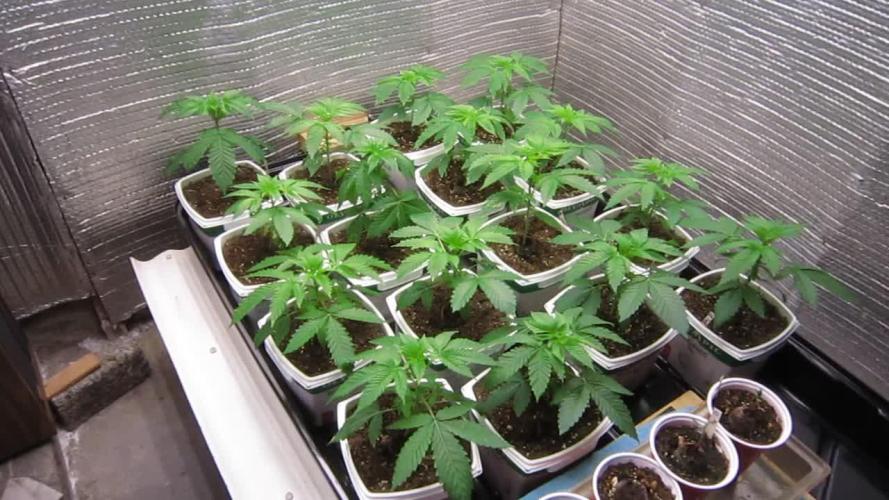
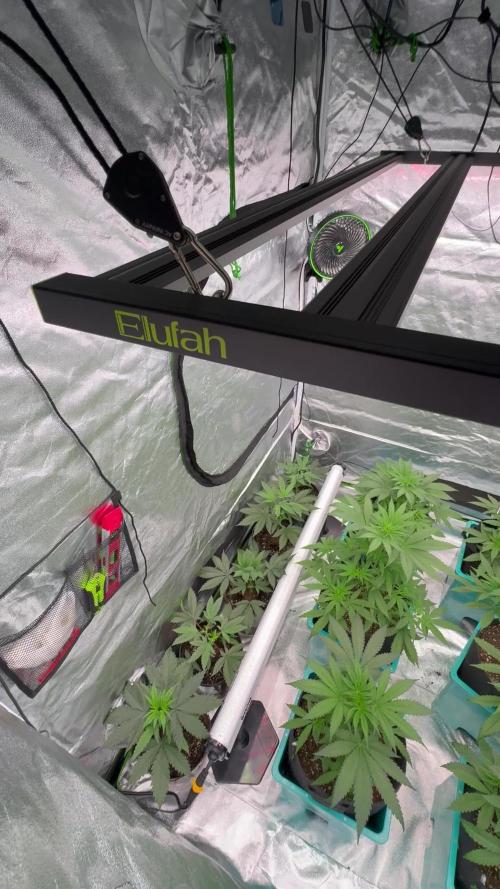
Hello This is the end of week 3 and the beginning of week 4 of veg.
Got them repotted a few days ago and took them off their heating mats. So some of them a looking a bit wilty, because they are cold.
They are doing good otherwise.
Got 5 essential oils coming from Amazon tomorrow. Got Garlic, Clove, Oregano, Rosemary and Cinnamon.
Got those pages off... theindoornursary.com/blog/best-essential-oils-for-plants/
Or try... theindoornursary.com/blog/cannabis-pests/
Just trying to help you fight pests and mold and fungus.
I might have a 50% off your first order, code, from UHKTA Seeds. If your interested check back here next Wednesday to see.
Won some seeds in their contest... Candy House... Then won a 50% off code from their next contest... then won some more seeds in their diary of the month contest. When I know my seeds are coming I'll give out the 50% off code, has to be used by May 1st this year though. Check back if your interested.
OK. Be Great.
Chuck.
Likes
1
Share


@Vincentmad
Follow
End of week 3, last week we removed bottom node and this week removed last node from bottom tpp, heavy lollipoping for pre veg for 2/3 weeks then flip to 12/12


Likes
12
Share


@Sieben
Follow
Well i wanted to harvest , but trichomes say wait a lil , so i give em some days or a week, plants getting ph corrected water only since a week.
I'm still unsure to harvest all or only the big ones and give the bottom buds and the Mutant "Haze" Lemon Orange another week...
But overall i'm impressed and satisfied with the results , guess in germanation seeds may got a lil too warm and thats why Gran Jefa hermaphrodited and other Fullgas Not growed.
Can't wait to harvest 😁
Left Gran Jefa, right back Fullgas , right Front and mid Lemon Orange.


Likes
15
Share


@902EastCoast
Follow
Day 43 of flower: This week was great again. Tied a few branches up that had fallen. All the ladies look and smell amazing. Afghan kush early harvest will be the first done for sure. 🔥💨✌️🏼💚


Likes
Comments
Share


Likes
6
Share


@GRONE
Follow
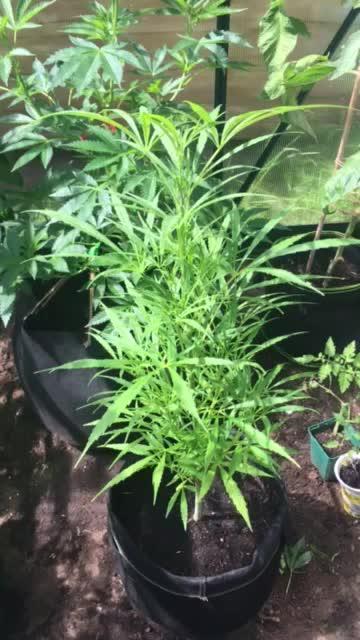
Feliz por el resultado empiezo a aplicar jabón potásico y aceite de nem de manera preventiva
Ordena de ramas con malla SCROG
Ajuste de altura de lámpara

Likes
22
Share


@Dankbudz84
Follow
I’ve added VPD to my dashboard and have now dialed in my climate for a perfect VPD.
Home assitant dashboard controlling lamp, up/down humidity and cooling. Exhaust is going to be used to scrub the air and back into the tent. After adding C02 I’m now doing a sealed grow to take better control of the environment.
I was dealing with high temps I put a evaporative cooler just in case if I need to up the humidity or lower the temps.

Likes
46
Share


@TessaMaria
Follow
This week went well I am continuing to harvest buds as they become ready. The leaves are yellowing more and more letting me know that she is almost complete. I think the lower bids have about one more week until they are ready and that will complete the harvest for Big Girl.
Little girl is now declining, she has not branches out or grown new tops.

Processing
Likes
8
Share


@Chronnoisseur
Follow
Wow the smell in this tent hits you in the face like a sack of lemons if life gives you these kind of lemons you take em and smoke em 🍋🎄🤤

Likes
72
Share


@Green_Mountains
Follow
Quite a week!! I did a light defoliation on day 30... I just did a heavy defoliation again on day 36.... I hope they handle this well!!
I watered them on day 31 & 33... I I fed them a half dose of all 3 nutrients on day 35... They are starting to stink!! The Cloudline T6 works great!!
I also LST'ed them on day 30... they seem to be opening up pretty good... even though I was really late applying the LST.... still learning!!
Alana is 16" tall and Anna is 20" tall... Alana grew 6" this week!!! Incredible! I've been battling some humidity lately... it's been in the low 60's for the most part... that's part of the reason I so heavily defoliated today!
Otherwise, this grow is going really well!! You'll notice I moved them into the flowering 4X4 tent... I needed to make room in the veg tent.... I germinated 2 Seedsman Strawberry Cheesecake Auto seeds and I'll start their diary tomorrow!
Cheers!!

Likes
7
Share


@eYo4Terpz
Follow
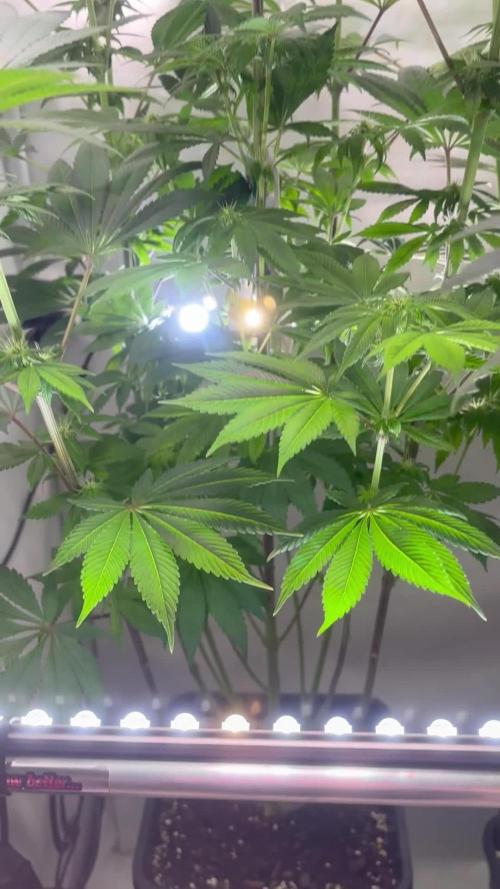
Sie haben in der Vegi 1x Komposttee bekommen und in der Blüte 1x Pro Monat immer am Ende des Monats hin!
Ich nutze mehrere angepasste Rezepte je nach Stadium und Bedarf der Pflanze!
Ein guter Komposttee ist alles!
Ich arbeite außerdem mit 100% Osmosewasser!
BIOCANNA + ZAMNESIA Gute Kombination!




Likes
15
Share


@Shizzlemanizzle
Follow
Day 36
Done nothing just let them grow and trimmed a few leaves
Day 37 - watered them with feeding. Decreased the amount by 25% except the base nutes. Added 12ml CalMag on 4L water by request of the community.
If leaves curl down more, I will consider a flush.
Day 38
No feed. Color changed from the middleone overnight, I think that’s a good sign. Maybe someone can comment on that 💪🏽. For me it looks very good, I know a few leaves show signs of nutrient burn but I decreased already and no new signs appeared
Day 39
No feed until tomorrow.
Day 40
Fed them with very low amount of fertilizer. I aimed for a ppm of 1000 but I went a bit higher until I have osmosis water . Runoff ppm was 2000, but I have to say I am measuring ppm since this week and will fix this problem
Day 42
No feed
Likes
6
Share


@Roberts
Follow
Tangerine Band is getting big. I had to hst a few tops today. They were getting too close to the light. Everything is looking good. I will change her to blooming nutrition soon. Thank you Exotic Seeds, Spider Farmer, and Athena. 🤜🏻🤛🏻🌱🌱🌱
Thank you grow diaries community for the 👇likes👇, follows, comments, and subscriptions on my YouTube channel👇.
❄️🌱🍻 Happy Growing 🌱🌱🌱
https://youtube.com/channel/UCAhN7yRzWLpcaRHhMIQ7X4g.


Likes
35
Share


@Kellykush420
Follow
Started week four with a top dressing of rabbit guano. Growth is very good in my opinion. The lst has produced lots of new stems❤️Used some wooden skewers to open up the plant to the light.
