


Likes
Comments
Share

@DogDoctorOfficial
Follow
🌿 Lava Cake – Week 4 VEG | Queen Energy & Full Ecosystem Build 🌿
Both Lava Cake phenos are thriving post-transplant—zero signs of stress, branching vigorously, and growing like there’s no tomorrow, they’re glowing like true queens under the summer sun. 👑
⸻
🌱 Growth Highlights
• Structure: Lateral branches coming in fast and healthy
• Leaves: Deep green, thick, full of life—new sets coming in strong
• Resilience: No transplant shock observed; they’re in full takeoff mode
• Training: Not started yet, but their shape is ideal for light training soon
⸻
💧 Nutrient Profile
Current feeding recipe (per liter of water):
• Aptus Regulator – 0.15 ml
Supports nutrient flow, strengthens cell walls, anti-stress defense.
• Aptus CalMag Boost – 0.25 ml
Helping frame formation and boosting photosynthetic power.
• Aptus All-in-One Liquid – 1 ml
Serving as the balanced nutrient base.
• Aptus Start Booster – 0.2 ml
Still enhancing root expansion and early leaf vigor.
We’re still watering from below, by filling the tray and letting the substrate absorb from the bottom up, encouraging strong root systems and oxygen-rich zones in the upper soil.
⸻
🌡️ Environment Overview
• Room Temp: 27°C
• Humidity: 57.4%
• CO₂: 632 ppm
• Water Temp: 18.5°C
• pH: 5.83
• EC: 1.01
Everything monitored in real time via the TrolMaster Ecosystem, providing precision control and remote access, yes, even while we’re in the bathroom. 😉
⸻
💡 Lights & Zones
We’ve now expanded our setup into the 8x8 tent, and the Lava Cakes are sharing space with their sisters across two dedicated zones:
• Future of Grow – Black Series 600:
Full-spectrum power delivering compact, colorful growth.
• ThinkGrow Model Ones:
Smart spectrum and PPFD control, perfectly synced with the TrolMaster system.
Both lighting zones are tuned for veg—intensity dialed in, and spectrum tuned for lush photosynthesis.
⸻
🌬️ Airflow & Filtration
• Exhaust: Two 6” inline fans with carbon filters for odor and purity
• TrolMaster Aerofan 6” (controlled by Tent-X controller)
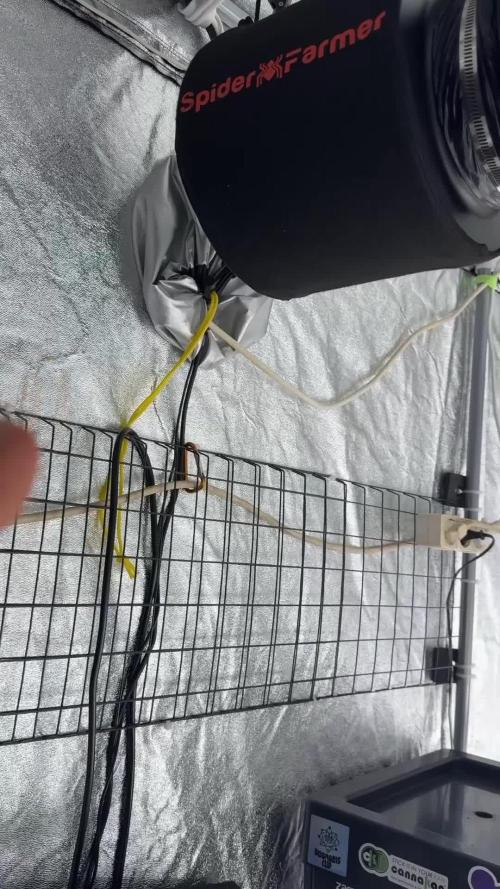
• Spider Farmer 6” Inline (controlled by GGS Controller)
• Intake: One 6” active intake with filter
This full cycle keeps airflow fresh, clean, and optimized, essential for plant metabolism and VPD balance.
💡 Why carbon filters even now?
Because purity matters. Even in early veg, it keeps the air crisp and microbial risks low. Plus, stealth mode always on. 🔇
⸻
📈 Sensors in Action
We’re dialing in with:
• CO₂ sensor (live ppm tracking)
• Humidity/Temp sensor
• PPFD sensor for light mapping and consistency
These tools allow us to optimize every square meter of canopy, ensuring no girl is left behind.
⸻
🌿 Looking Ahead
• Light training coming soon
• Roots will now fully colonize the 11L Amnesia fabric pots
• Expect explosive top and side growth
• Canopy management will begin as needed
• More studio photo sessions—before the girls outgrow the door! 📸
⸻
🧠 Final Notes
This is a very special run. The Lava Cakes are being treated like royalty—from tailored nutrients to cutting-edge control systems. The goal: maximum quality, transparency, and education every step of the way.
We’re not just growing plants, we’re growing understanding, one leaf at a time.
Thank you so much for following our journey. Let’s keep growing beautiful, together. 💚
📲 Don’t forget to Subscribe and follow me on Instagram and YouTube @DogDoctorOfficial for exclusive content, real-time updates, and behind-the-scenes magic. We’ve got so much more coming, including transplanting and all the amazing techniques that go along with it. You won’t want to miss it.
• GrowDiaries Journal: https://growdiaries.com/grower/dogdoctorofficial
• Instagram: https://www.instagram.com/dogdoctorofficial/
• YouTube: https://www.youtube.com/@dogdoctorofficial
⸻
Explore the Gear that Powers My Grow
If you’re curious about the tech I’m using, check out these links:
• Genetics, gear, nutrients, and more – Zamnesia: https://www.zamnesia.com/
• Environmental control & automation – TrolMaster: https://www.trolmaster.eu/
• Advanced LED lighting – Future of Grow: https://www.futureofgrow.com/
• Root and growth nutrition – Aptus Holland: https://aptus-holland.com/
• Nutrient systems & boosters – Plagron: https://plagron.com/en/
• Soil & substrate excellence – PRO-MIX BX: https://www.pthorticulture.com/en-us/products/pro-mix-bx-mycorrhizae
• Curing and storage – Grove Bags: https://grovebags.com/
⸻
We’ve got much more coming as we move through the grow cycles. Trust me, you won’t want to miss the next steps, let’s push the boundaries of indoor horticulture together!
As always, this is shared for educational purposes, aiming to spread understanding and appreciation for this plant. Let’s celebrate it responsibly and continue to learn and grow together.
With true love comes happiness. Always believe in yourself, and always do things expecting nothing and with an open heart. Be a giver, and the universe will give back in ways you could never imagine.
💚 Growers love to all 💚

Likes
32
Share


@KingSalomonsWeed
Follow
05.04. Day 26 under 12 h . Flower 1.
Gut..
06.04. Das wars mit Bioweed. Ade meine guten Vorsätze.
Ab heute bug free weed. Spidermites free.
Chemie war im Einsatz. Minimalste berechnete Menge.
08.04 oh, diese Stille im Zelt. Nix fliegt zirpt summt herum. (bumm bumm ).
Sieht doch gut aus.
11.04. 16 h Licht ab jetzt.
Und, Day 31 flower 7.
Sehr schöne Entwicklung, wie ich finde.

Likes
10
Share


@Gruschel_Muschel
Follow
Purple Punch am 26.12.2024
Tag 49 / 14.02.2025
Meine Purple Punch steht schon in der 7 Woche, ein großer Erfolg für mich.
Habe mit Bio Bloom und Bio Grow in der letzte Woche sie gedüngt, das Ergebnis kann sich sehen lassen.
Heute, wird Acti Vera, Alg A Mic und Bio Heaven in das Gießwasser hinzu gegeben.
Feedback:
Ich bin überaus voll zufrieden wie meine Pflanze sich entwickelt hat, ich denke die gute Erde und der Dünger von Biobizz hat ein großen Teil beigetragen. Ich werde mal schauen wie die Pflanze in der 8 Woche aussieht.
Ich nehme gerne Ratschläge von der Community an.


Likes
167
Share


@PapaNugs
Follow
Here we are. At the end of week 7. This cultivar is scheduled for 45 days but at day 49 I can confidently say she is not ready yet. Thinking another week and she should be ready. All is looking good and these girls buds are super fat! Especially for Humboldt. The smell isn't as intense as I'd like but still there. A sweet smell.
Still defoliating as I can and as needed. Getting watered daily or every other day. Here's to the home stretch! 🍻
Lights at 100% power.
Here are the lights details:
Medic Grow Mini Sun-2 150W LED
Model: MN150-022
Spectrum mode: V1
Efficacy: 2.8 umol/J
Thanks for stopping by!
You can find the light on Grow Diaries:
https://growdiaries.com/grow-lights/medic-grow/mini-sun-2-150-watts
You can find the light on Medic Grow's website:
https://medicgrow.com/

Likes
56
Share


@Aedaone
Follow
The temperatures, humidity, height, and watering volume(if measured) in grow conditions are all averaged for the week. The pH is soil pH. Any watering done by me is well water which is 7.6 pH and 50° F. Any listed nutrients are ml/gallon of soil to be spread evenly on top of the soil. The plants are getting just under 13.5 hours of light now. In grow conditions half hours aren't an option, so I'm noting here.
Day 1 we had a high temperature of 83° F with partly cloudy skies. I watered each pot about 5 gallons once.
Day 2 we had a high temperature of 81°F. There was plenty of sun and I watered about 5 gallons per pot. Even though the girls are drinking more, the cool weather, and them rooting through the fabric pots into the soil, has kept me from watering twice a day. The girls cleaned up nice after the fungicide treatment. They look great.
Day 3 we had a high temperature of 78°F. Skies were clear and sunny. I watered about 5 gallons per pot with well water. The air has been a little drier with this cool from and the girls are loving it.
Day 4 we had a high temperature of 77°, clear sunny skies, and humidity at 66%. This weather is very fall like and the plants are loving it. We've got rain in the weekend forecast though. I hope we miss it. I added 100ml of feather meal top dressed they're getting a little hungry for nitrogen.
Day 5 we had a high temperature of 77°. Skies were partly cloudy to mostly sunny. The humidity dropped into the 40%'s today. The plants are loving this weather. I watered about 5 gallons per pot from the well. The girls are getting their trichromes up.
Day 6 we had a high temperature of 86°F. Skies were partly cloudy and we had just a few minutes of very lite rain. I watered about 5 gallons per pot with well water.
Day 7 we had a high temperature of 85°. Skies were cloudy all day. We had a huge thunderstorm with high winds roll through followed by heavy rain most of the day. I added another 100 ml of feather meal top dressed to each pot.
This week was a success. The girls have really swung into flower. Their trichromes are really starting to pop and these flowers are filling out. I'll treat again for powdery mildew tomorrow.

Likes
24
Share


@TerpTurtle
Follow
Week 8 flower
Average VPD of 1.14
Pheno 3-4 are smaller plants grown with AC infinity watering bases and Build A Soil in 10 gallon pots


Likes
8
Share


@Microsun
Follow
Alright folks! So this harvest was fantastic! I mean! I’m a happy grower at harvest for any plant! I could harvest one amazing and one meh and be just as happy to cut dry and cure them both! This early miss smoked well and is only about two weeks in cure, this is a rank and musky strain with a whole plethora of combining smells, I find it had a massive pepper and spice hit with almost a food like consistency with its smell, I’m finding a even pine, spice, earthy almost cheesy platform with a fine kick of just a odd but interesting odder I can’t put my thumb on! The density of even the popcorn flower is unreal, rocks all of them. A very light almost desert sandy trichome layer in the interior of the nugs but toward the exterior it’s a lush dark green and red hue with purple calyxes also being seen from the top and Bottom inner and some outer calyxes. The trichome production was very impressive also the fast growth in veg was awesome! But I’m telling you! The big bud genetics and the white widow genetics in this are both prominent, and I love it! I’m saying for a auto it’s pretty potent! And not to say that other autos aren't! We all know they can be pretty Damn amazing! But yeah! The flavour is that of pepper and spice! Pine and a gassy greasy fresh herb blend! I wish I had taken more time to run her though because I believe if I had kept running her, her potency would have been a bit higher and definitely would have achieved a more full couch lock. But over all a easy grow and a dense dense grow. I recommend dropping rh and bringing head up a tad at the end to make those nugs as hard as you can! But that’s my bro advice lol

Likes
4
Share


@GrowingGiant
Follow
Day 30. Worried about running out of space. I have been tying the plant down perform LST which is helping. Only change in feeding schedule is I have reduced call mag from 5.0 Ml to 3.0 ML and have added big swell by aurora nutrient lines 2.0 ml

Processing
Likes
1
Share


Likes
10
Share


@Troy_Farms
Follow
LST main stem to one side to promote side branches. No pistils yet. The slight yellowing seems to grow out after leaves have fully opened. Good growth overall.


Likes
21
Share


@Siriuz
Follow
Day 37
We started with nutes today
Then all day long outdoors
From 6AM to 6PM
Plus CFL afterwards
They rest for 3 hours and then CFL again
Btw accidentally snapped one part of one big leave but that okay
Since we don't do defoliation on her
We guessing it's okay she will recover soon
Day 38
Since she's such a queen we wanted to upload a video showing how she starts flowering for the record, thanks a lot
You can Always follow me at Instagram
@cannagrowersiriuz
Also don't forget to add your comment below, it is important to us!
We want to learn, any tips, suggestion, more than welcome my friends
Happy Growing
Day 39 Some mins before installing ScroG
Day 40 Wonderful, she's out of there already so huge, full of buds
Day 41 she's actually doing great full of buds but those 2 first leaves are a little bit sad looking weird plus those black dots idk and it's turning yellow in between I decided to remove it and well, I'm hoping she's doing well what else I could think of guys any help or concerns?
At the end of the day, she's overall healthy and strong
Day 42 Time to feed the babies, so we added 900PPM (300ml) floranova grow
Followed by 1590ppm (300ml) flora nova bloom to make sure she's got all nutrients balanced well, also added 400ml of plain water after that so they could get a nice run off.
I think they're happy and we gonna check on them in a couple days to see how they go, Ph is around 6.2
which is great
Temp outdoors from 7-@
1pm around 25C to 36C
Then back indoors
Temp is 28C and drop to 22 at night and dawn so they're good and comfortable
Keeping humidity lvls around 40/65% top
Nice AC and Fan for air circulation
Thank you all for your support

Likes
13
Share

@smoking_hills9
Follow
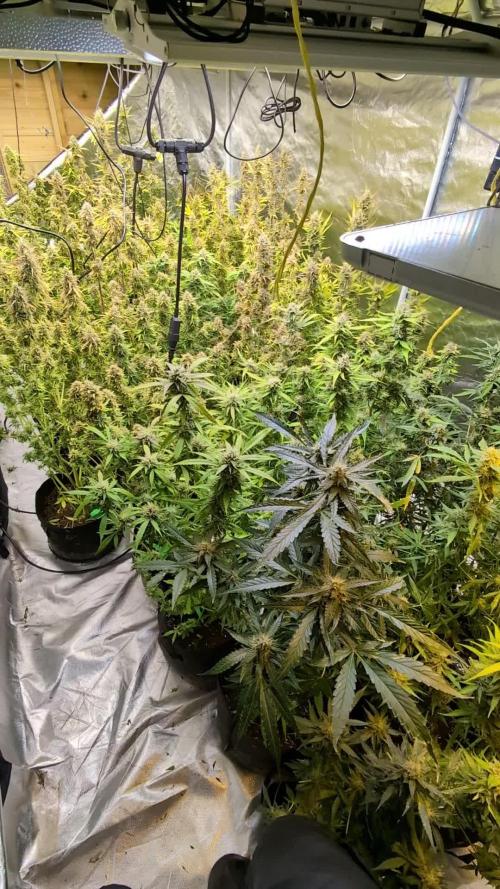
Last final defoliation done, now buds are fully exposed to the lights and the best part, harvest trim will be easier. Still it took me around 8 h altogether to defoliate all of them. Tones of buds and frost , amazing smells. Won't rush will give it a bit more to swell.

Likes
11
Share


@Urunascar
Follow
Harvested a little early because of the diseases in the plants nearby (botrytis, mildew, a little bit of spider mites), didn't wanna risk the whole crop so I just cut everything down and gave it a good cleaning with water and hydrogen peroxide for the first time ever. From my point of view I lost quite a bit of trichomes doing that, but do I regret it? Not a single bit, the trichomes that you actually lose by doing a bud wash are already degrading and aren't holding onto anything, so they would make the flavor worse (also from my pov) if they stayed there, also I didn't have a roof over them for almost 5 months so they had a lot of debris so I rather not smoke all of that
Likes
1
Share

@Mazko
Follow
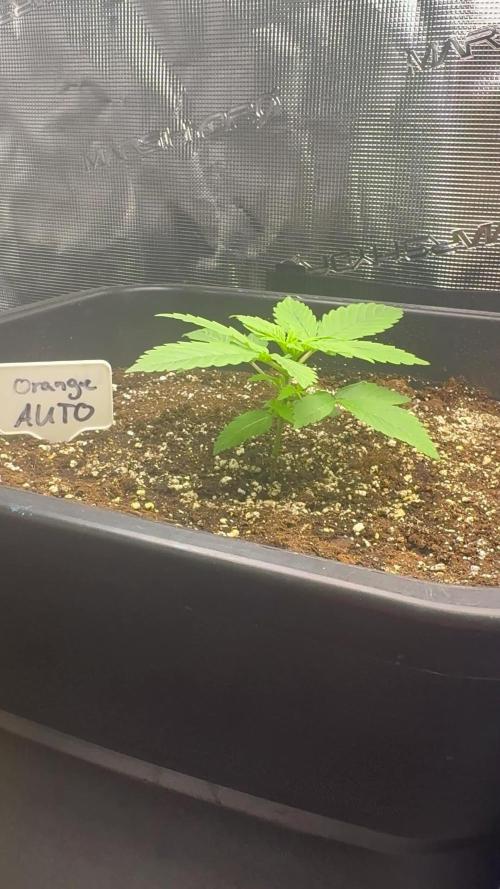
Freunde der Sonne, die Dritte Woche ist fast vorbei.
Sie wirkt etwas hell, was mit den 2 Liter Giesmenge von letztens zutun haben könnte.
Ich werde es beobachten.
Trotz dem habe ich sie heute mit 0,5L Nährlösung gegossen.
Ich fahre immer noch 360 PPFD.
Ich habe mich dazu entschieden die Komponenten Grow, Bloom und Top Max nur zu 50% und die anderen Zusätze zu 100% nach Schema zuzugeben.
Ich bin gespannt ob das ausreichend sein wird.
Bis nächste Woche. 🏻


Likes
91
Share


@Salokin
Follow
Hi Growmies,
I'm excited to share some big news today! Although there have been some unexpected twists, it's all part of the incredible journey of gardening.
I've just completed the harvest, a tad earlier than initially planned, due to finding a bit of mold in one of the buds. Despite this minor hiccup, the trichomes were already at a decent 10% to 15% amber. So, all things considered, the timing ended up being pretty spot-on. The harvested weight was a solid 609 grams after trimming, which is quite a feat!
A lesson learned for next time: perhaps I let her grow a few too many buds, leading to a denser canopy than ideal. But on the bright side, the aroma is absolutely divine. I sampled an airy bud that had dried a bit, and wow, it packs a stronger punch than its clone mother. And the flavor? Pure, unadulterated cheese – no hint of pineapple here!
Now, the anticipation builds for the final dry weight, which I should know in about 3-4 days. It's always exciting to see the fruits of our labor fully realized.
A huge thanks to everyone who's been following along on this journey. Your interest and support mean the world.
And now, the adventure continues! I've started on Epic Buzz by Anesia Seeds. The diary for this new chapter is up and running, and the seedlings have already sprouted, marking the beginning of another exciting phase.
(https://growdiaries.com/diaries/185718-grow-journal-by-salokin)
I can't wait to share more updates with you all. Here's to the continued growth and learning in our gardening adventures!

Likes
31
Share

@Kirsten
Follow
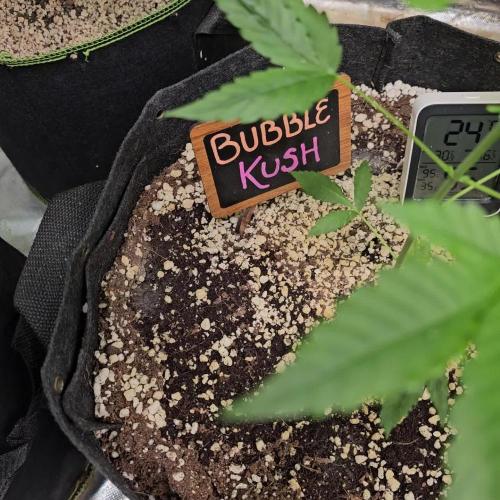
Bubble Kush.
This week, I FIM'ED the plant on 18.8.25. However, the new growth doesn't seem to show any more tops. I'm not sure what I've done there. but regardless, I will have to wait and see.
Other than that, everything is fine, and I'm happy with the progress this week.
The plant is still a nice, healthy green colour, and after I FIM'ED the plant, there was quite a lot of new growth.
20.8.25:
I watered with 2L of dechlorinated water PH'd to 6.0 with;
💜 2ml Trace
PH: 6.0
PPM: 340
The soil is still drying out due to fungus gnats appearing. I am getting some sticky traps, just waiting for tgem to arrive. There are so many, and it's definitely come from the soil. I am never using this again.
Thanks for checking in this week and hanging out in the comments 😊💚✌️🍃🙏
Likes
1
Share


@Ferenc
Follow
Day 72: 600W LED, 18 hours on 6 hours off the same with ventilation. Water intake also remains the same 200ml per day. Humidity approx 35 percent. Day 74: I have to start flushing next week is harvest time :*
