


Likes
Comments
Share

@All_our_small_plants
Follow
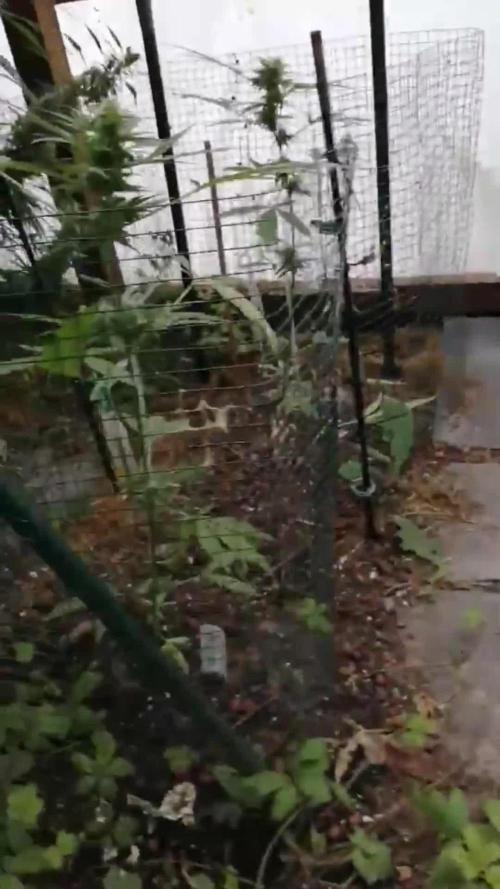
Bewässerung: 500 ml jeden 3 Tag in der zehnte Woche
pH-Wert: 5,8
EC-Wert: 0,4 mS/cm
Temperatur: 20ºC
Luftfeuchtigkeit: 65%
Schädlingsbekämpfung: Diese Woche haben wir ihr Wasser mit Nematoden gegeben da sich doch vermehrt Trauermücken im Bereich aufhalten.
PPFD: Direktes Sonnenlicht
DLI: Direktes Sonnenlicht
-Tag 59 Sie werden naja... aber wir haben die ganze Hoffnung auf die Candy Bubatz XL #3 gesetzt diese sieht schon sehr stabil aus im vergleich zu denn anderen zwei, Sie werden Trotzdem noch etwas wachsen und ein paar kleine Buds abgeben.
-Tag 64 die Candy Bubatz #1 ist dünner als die #2, aber beide werden so langsam dichter 😪 Die bubatz #3 wird auch sehr nice werden.

Likes
9
Share


@DeepRootsGrowTrees
Follow
KICKASS AUTO by KANNABIA
Week #5 Apr 30th- May 7th
This week was the last week of veg as she started to pre-flower towards the end of the week she's 16 inches and so growing she has side branches that are also growing at a good rate she going to be a shorter busy lady. She looking 👍 nice and green no issues this week. She's loving being outside!! Stay Growing!!
KANNABIA.COM KICKASS AUTO

Likes
13
Share

@GERGrowDesigns
Follow
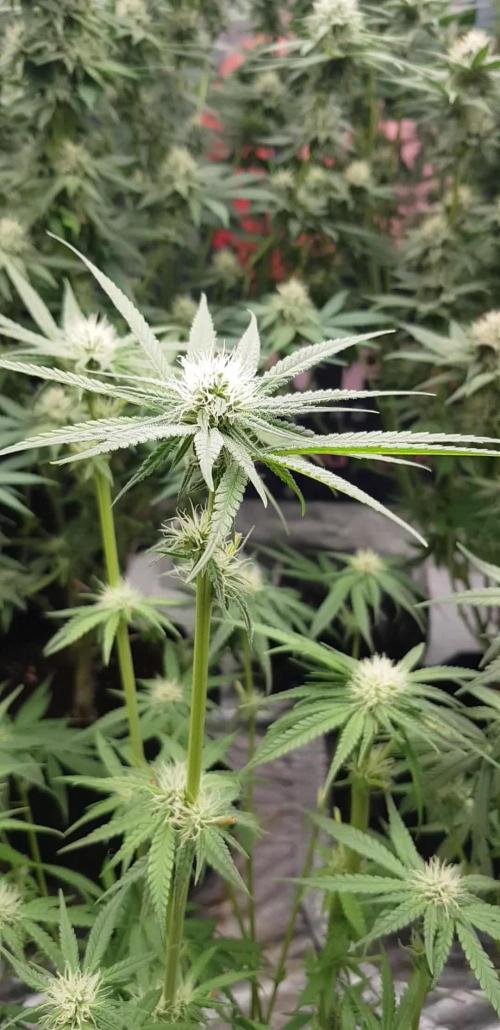
Welcome to Flower Week 3 of Divine Seeds Divine Rapier
I'm excited to share my grow journey with you from my
Sensi Seeds Project . It's going to be an incredible ride, full of learning, growing, and connecting with fellow growers from all around the world!
For this Project , I’ve chosen the Feminized Photo Strain Divine Rapier:
Here’s what I’m working with:
• 🌱 Tent: 120x60x80
• 🧑🌾 Breeder Company: Divine Seeds
• 💧Strain Info : 29%
• ⏳ Flowering Time: 6-7weeks

Likes
67
Share


@GanjaReaper
Follow
Photos taken at Day 25:
They start to recover and grow again.
Sprayed them with Canna Cure to get more healthy leafs.
Removed the humidifier.
Lets hope they will grow for another week before they go into preflowering.
Thats it for now, new pictures and updates will follow within this week.
Stay tuned!
Update:
Day 28:
Canna cure did his thing. The leafs start to get greener again.
Also my feedings made them grow and recover again.
Removed some lower branches and leafs.
They are back in the race!


Likes
5
Share


@Abendkraut
Follow
What an amazing strain, the plant purple all around giving these amazing range of colored leaves. The buds are super tight to the touch and heavy filled with trichomes.
The past week I only gave plain water. Giving her the time to use all the nutrients already introduced. I was thinking about using Flawless Finish but decided to keep it purely PLAGRON nutrient from start to finish.
The competition deadline is close so I hope you all enjoy some of the pictures I was able to share.
Next week I'll harvest, but already I can't tell that she will produce great buds once dried.
Update 30/05
Harvest day!
Added a last set of photos, thanks to Zamnesia and Plagron for setting up the competition, had fun growing this beauty.

Processing
Likes
6
Share


@Loulou84
Follow
Made it to the end of week 3. She's continuing to grow every day and widen out too.
Still only used water until this point but plan on using liquid seaweed this week. Had a few days of sunshine with temps of 28°c which she wasn't keen on and her leaves were curling up so moved her to partial shade and that sorted her out.
I'm super pleased to have made it this far with what looks like a healthy plant. Being a newbie and paranoid it's not right. She looks to be on par with most I've seen at 3 weeks. This particular strain is relatively short at around 60cm when fully grown. I'm not growing for big yeilds, just trying to enjoy the process
Any tips or hints are very welcome.
1/7 Gave seaweed as a foliar spray and next day she had a few claw leaf tips. Nitrogen toxicity?? Flushed her the next day. Not had any more clawing but keeping a close eye.
Barely had any sun for weeks so considering the lack of sun she's still growing.
Can anyone give me opinions in how she's looking?
Likes
35
Share


@StonedandSteady
Follow
9th W/Flower Harvest: No 9th Feed of #HumboldtCountysOwn this last few Weeks! I Flushed them out once a day with 1 Gallon of Cold Declorinated Tap Water for the last 7 days, letting thier pots dry out for 4/5 days and Checking the Triks every couple of days as well! Thier Packed, Stacked Up and Lights Upgraded!!! Cloned with my Steady's Saliva!!! We'll definitely Grow back to everything here soon! #Pre-Sexed 4/9/21 #Opium/#PabloEscobar *Fems* breed by Team #DivineSeeds #DivineSeedsSquad #DivineSeedsBreedingCompany I'm Very Excited and Extremely Gracious!!! These Cannabis plants are Camping out in the Closet for a week or so! Lol
My #PabloEscobar and #Opium *Fems* from #DivineSeeds Regs: SalamiLegF3's×2 and FireAlienRomulan look$ Outstandingly Awesome and Finished Up Phenomenally Fine into thier 9th week of Flower! Thanks Again for All the Love and Support my fellow Growmies and Growmets!!! These Magnificent and Magical Ladies were Growing in our 48×24×60 ViparSpectra Official Club 🌿 ®️ Grow Tent and under our #Osree QB1000w and #GrowStarStore Kokokala QB1000w but Finished out in Flower under our #BloomPlus BP1500w! #TNBNaturals The Enhancer Co2 Despersal canister and ph'd them w/ Declorinated watering w/ TNB ph Up and Down! Totally Top Quality Topz all Around! Thanks Again #GallowGlas420 #HarleyGrower #thehumancannabiniod #AlienBloodGenetix #TNBNATURALS #www.as420.ca #divineseeds #divineseedssquad #divineseedsbreedingcompany #HumboldtCountysOwn Family's and Teams!!! Your Genetics are Merry Magnificent, Mega Marvelous and Mighty Medical! Love um!!! I really Can't stress enough how Thankful and Grateful I am of All of you and what you've Shared with Us! Means the World!!! It's definitely a Pleasure being able to Grow with these Phenomenal Grow Lights! Please Enjoy! BudBrothers4-Life! Cheers Famz!!! Much Props and Much Topz!💯🔥#BloomPlus #Osree #GrowStarStore #Growatt #TNBNaturals #TNBTeam #HumboldtCountysOwn #GrowYourOwn #Bliss
Bloom Plus BP-4000
CA:https://www.amazon.ca/dp/B08DTDP5FF/ref=cm_sw_r_cp_awdb_imm_86Q7H2D5BGFYB9B6PR9K
US:https://www.amazon.com/dp/B08DTN3B84/ref=cm_sw_r_cp_awdb_imm_4B7XWCAS09M4V3W0AFJH
Bloom Plus BP-2500
CA:https://www.amazon.ca/dp/B08DTCYV9Y/ref=cm_sw_r_cp_awdb_imm_YDNA8G16PH3TB002VKGE
US:https://www.amazon.com/dp/B08DS53THM/ref=cm_sw_r_cp_awdb_imm_SX3AEDKRVAYQECF32BE4
Bloom Plus BP-1500
CA:https://www.amazon.ca/dp/B082XYLHRJ/ref=cm_sw_r_cp_awdb_imm_XEBFV7790EHT53B2J9B5
US:https://www.amazon.com/dp/B082XYLHRJ/ref=cm_sw_r_cp_awdb_imm_MB3PYZEVSQRZY096AB79
BloomPlus Instagram Link: https://instagram.com/bloom.plus?utm_medium=copy_link
Thanks Again Broski #SmokinPlantaz for Hosting your Bright and Tight Amazon Prime Day #BloomPlus-1500w Giveaway! I'm still Blinded by the Light!!! Lol (Song Pun) it's Ultimately Lit, Extremely Powerful and Brilliantly Bright! I also Love and Appreciate Everyone out here! Please! Go Over and Spread That Love to my Bro's YouTube Channel and Team #BloomPlus on their Instagram! I'll have thier Links posted ⬆️⬇️! BudBrothers4-L!!! Cheers Famz!!! Much Props and Much Pars!💯
SmokinPlantaz YouTube Channel Link: https://youtube.com/channel/UCDKJthWoS6-miAhq_lLb_-w
HumboldtCounty'sOwn:
Email: [email protected]
Phone: (707) 725-4119
Toll free: (866) 872-9434
Humboldt Bottling
Po Box 429 · Fortuna, CA 95540
HumboldtCounty'sOwn Website Link: https://humboldtcountysown.com/
HumboldtCounty'sOwn Instagram Link: https://instagram.com/humboldtcountysown?igshid=1qj809qkkwych
Vivosun Precision Pruner/Trimmer: https://www.amazon.com/gp/aw/d/B06Y1XVD1P?psc=1&ref=ppx_pop_mob_b_asin_image#
https://youtube.com/c/VIVOSUN
https://www.facebook.com/vivosun.official/
https://instagram.com/vivosun.official?utm_medium=copy_link
https://instagram.com/bloom.plus?utm_medium=copy_link
https://instagram.com/osree.light?igshid=1vrsbdyhzg2h8
https://instagram.com/growstarstore?igshid=2yjn0r00r6ru
https://instagram.com/divine.seeds?igshid=1r90iwe9xiwz8
https://instagram.com/thehumancannabinoid?igshid=17k159pumklkq
https://www.instagram.com/alienblood_genetix_official/
https://instagram.com/as420.ca?igshid=1f116alw054wp
The Grow Bags: https://www.as420
Likes
Comments
Share


Likes
12
Share


@CanarianGrow92
Follow
August 15th water
August 16th nothing
August 17th the weather is better so im not sure if i want to leave this plant on the balcony or if i will put her on the roof again, but at the moment in the 15 liter pot shes getting bigger and bigger, so maybe i will just finish this one on the balcony and accommodate the roof better
August 18th first 'hairs' appeared 😁 we also watered
August 19th nothing
August 20th nothing: but it seems that the plant likes the guanokalong nutrients, no signs of deficiency or overfeeding!
August 21th: water
Likes
11
Share


@Glizzy420
Follow
buds are getting ready , planning on harvesting in 2 weeks... can't wait to taste the sweetness! Buds are looking compact so im already happy with the good results. 😁


Likes
20
Share


@dianne
Follow
Not much to report. About 4 weeks to go.
Everything seems to be progressing nicely but I don't have really have enough experience to really be sure if it's optimal. I'm hoping they really start to fatten up soon.
Started PK 13/14 on day 40 of flower.

Likes
76
Share


@DogDoctorOfficial
Follow
Week 4 in the Pink Rozay journey has been a whirlwind of green magic, and I can't wait to spill the photosynthetic tea on all the juicy details.
First off, the Pink Rozay has officially joined the Scrog Club! I introduced a Scrog net into the mix, and let me tell you, it's like giving our girl a VIP ticket to the greenest party in town. The benefits of a full canopy are immeasurable. It's not just about looks – although a sea of green is a sight to behold – but it's also about maximizing light penetration and promoting even growth. It's like orchestrating a symphony where every bud gets a front-row seat to the light show.
And speaking of light shows, a new rockstar has entered the scene – the Future Of Grow 600W full spectrum LED. I've officially joined Team Future Of Grow, and let me tell you, this light is rocking the place like no other. It's like having a botanical disco in my grow room, and Pink Rozay is the star of the show, basking in the glory of that full spectrum goodness. Thank you F.O.G for bringing me on i fell truly humble and blessed <3 <3 <3
Now, let's talk foliar fun with Aptus Holland's NutriSpray. It's like giving Pink Rozay a spa day, but for her leaves. Here's a quick NutriSpray how-to:
NutriSpray can be used regularly or to treat deficiencies in case of a nutrient lockout.
Always dilute with water. Use 2 ml per 1 L of water and spray the entire leaf surface.
Indoor growers, spray during weeks 1, 3, and 5 of bloom for general nutrition. Outdoor folks, spray 1 week after planting, then once a month until harvest.
And what's in this magical elixir, you ask?
Organic surfactant
Horse chestnut extract
Microelements: Manganese (Mn), Sulphur (S), Zinc (Zn), Iron (Fe)
How does NutriSpray work its leafy wonders?
Horse chestnut extract binds to microelements, making them available to the plant.
It creates a protective shield, keeping nutrients on the leaves for up to two weeks.
It thins vascular fluid, ensuring nutrients are transported faster.
This is it for me :
Corrects deficiencies faster than root feeding.
I Spray mother plants a week before cutting clones for healthier cuttings.
I Spray cuttings weekly for a protective shield and available nutrients.
I Always spray with lights off to avoid burning, not always but for the most or at least i dim them down to 10%. Its good to leave the lights off for 20 – 30 minutes after spraying.
So here we are, ready for the next week and cruising down this green road with confidence. The Pink Rozay is thriving, and the journey continues.
As always, a massive thank you to Aptus Holland for being the backbone of my growing success. And to Future Of Grow for illuminating my grow room with that dazzling LED. The future is bright, indeed!
Genetics -Pink Rozay @zamnesiaseeds
https://www.zamnesia.com/7646-zamnesia-seeds-pink-rozay.html
Nutrition - @aptusholland
https://aptus-holland.com/
Led Power @ F.O.G. Future Of Grow
https://www.thefuturofgrow.com/en/online-store/BLACK-SERIES-600-p489093171
As always thank you all for stopping by, for the love and for it all , this journey of mine wold just not be the same without you guys, the love and support is very much appreciated and i fell honored and blessed with you all in my life
With true love comes happiness Always believe in your self and always do things expecting nothing and with an open heart , be a giver and the universe will give back to you in ways you could not even imagine so <3 <3 <3
Friendly reminder all you see here is pure research and for educational purposes only
Growers Love To you All <3 <3 <3
Likes
18
Share


@MrJones
Follow
Mandarin XL Auto
🔸🔸🔸04/29/23🔸🔸🔸
Day 38 - Above Ground - Target 65 Days
📝Saturday 06.10.23 - As this week comes to an end, I am seeing signs that the plants need a bit of calcium, so today was a topdressing day with a 70/30 blend of Bloom to Grow, watered in with H20 PG to 6.2 with CalMag at 5ML per Gallon of H20.
📝Thursday 06.08.23 - This week is going well, and the ladies are stretching out nicely and loving the Flower Setting that increases the far reds in the LEDs
🔸🔸🔸🔸🔸🔸🔸🔸🔸🔸
◾Mandarin XL Auto
◾Grown By: MrJones
◾Light Source - Medic Grow Smart 8 LED
◾Light Settings - @40% and V1 (Veg-1)
◾Soil - ProMix HP
◾INSTAGRAM - @medicgrow420 - @ganjafarmerseed - @gaiagreenorganics
🔸🔸🔸🔸🔸🔸🔸🔸🔸🔸
📝 Seed Details - Ganja Farmer Cream Mandarine XL Auto is a 4th generation auto-flowering strain. A tall and very productive plant created by combining Cream Mandarine Auto and Super Tai '98. It offers delicate, spicy notes of Super Tai wood and nuts and a sweet, citrus aroma of Cream Mandarine. Produces buds and resin abundantly.
🔸🔸🔸🔸🔸🔸🔸🔸🔸🔸


Likes
3
Share


@cordobes420
Follow
We entered the 7th week of flowering, we are no longer approaching the cut but it is still growing and producing giant buds, the smell remains strong, sweet, little by little we are approaching its end 🙌👏

Likes
69
Share

@DogDoctorOfficial
Follow
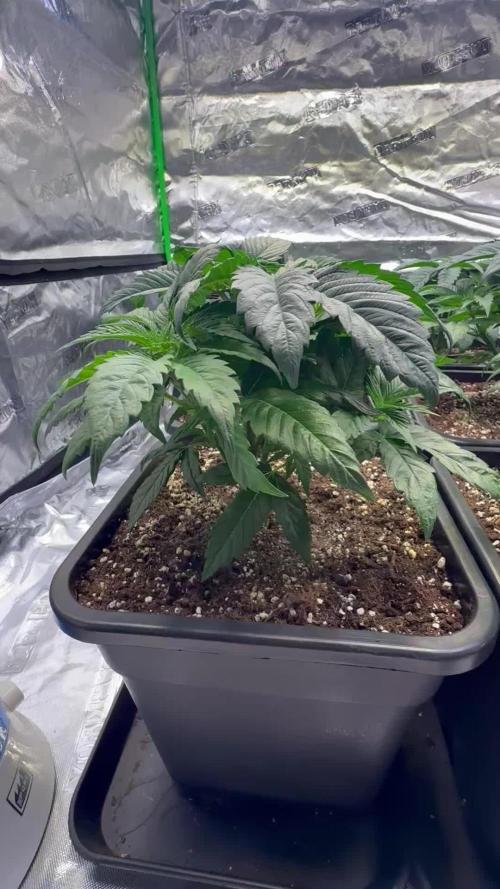
Week 14 from Seed – Week 3 of Flower – Full Bloom Ahead
The garden is shifting, and so are the vibes — we’re now stepping into the serious stages of the Eternity Grow Cup. Week 3 of flower, and what a beautiful time it is. The girls are officially locked into bloom mode and starting to show their power, stretching with grace and stacking flowers that promise magic. They’ve filled up the SCROG like it was meant for them — one look, and you can feel the energy radiating off the canopy.
We started this week a little on the chilly side, with temps dropping down to 16°C, but we found the rhythm. By the end of the week, we had it all dialed in: 24°C with 60% humidity, giving us a clean and steady VPD of 1.22 kPa. CO₂ is rolling at 1107 ppm, and let me tell you, the girls are loving every part of it. They’re responding like pros — strong, healthy, compact, with early signs of dense flower sites setting in all over the canopy.
The ICL 300s are fully in play now, and they’re doing a spectacular job. Light penetration is even, and the plants are soaking it up. We’re still holding off on UV, just letting the full spectrum and reds do their thing for now.
We’ve updated our feeding too — we’re now into Week 4 of the Aptus Holland Clean Program, and we are about to introduce Plagron Green Sensation into the mix. A little booster to spice up the bloom and get those flower stacks rising to the challenge. The water temps were a struggle — stuck at 14°C — so we dropped in a classic aquarium water heater, and now we’re sitting at a comfy 20°C. Small changes, big impacts. You can see it in the leaves, in the way they pray up toward the light.
This week’s visuals? Shot with both the Nikon and Sony setups, featuring different lenses and filters to capture the layers of depth, light, and mood in the garden. The difference between them is clear — two different worlds coming together to tell one story. You’ll feel the vibe through the lens, I promise.
Also, it’s veggie season outside — and in the middle of the flower hustle, I’ve been grounding myself with the babies in the outdoor garden. You’ll find some shots of the onions, peppers, and early green life joining the party. Nature always balances herself.
Looking forward, Day 21 defoliation is just around the corner — we’ll be opening up the canopy, making way for the light to reach deeper, and helping these compact queens shine even brighter in the weeks to come. We’re just getting started.
Massive love and gratitude to Zamnesia, Plagron, and Grow Diaries for building this amazing platform for us to grow, share, and celebrate this journey together. And to my beloved sponsors — Aptus Holland, Grove Bags, TrolMaster, ThinkGrow LEDs, Promix, Cannakan, and Ziggy Papers — thank you for the love, the gear, and the belief.
And to all of you — lovers, haters, OGs, first-timers, and curious wanderers — thank you for being here. For showing up. For feeling the garden. This journey is for all of us.
Let’s keep blooming.
More magic coming in the next chapter. 🌸💨
Genetics - Runtz https://www.zamnesia.com/6000-zamnesia-seeds-runtz-feminized.html
Nutrients - Plagron https://plagron.com/en/hobby
- Aptus Holland https://aptus-holland.com/
Controls - Trol Master https://www.trolmaster.eu/
LED - https://www.futureofgrow.com/en
LED - https://www.thinkgrowled.com
Soil - https://www.promixgardening.com/en
Germination - Cannakan https://cannakan.com/?srsltid=AfmBOopXr-inLXajXu3QFgKXCXXos4F1oEvScjMKIB5MR5dk8-GJ-F49
DOGDOCTOR 15% off
Smoking Papers - https://ziggioriginal.com/
Terpene saver - https://grovebags.com/
As always thank you all for stopping by, for the love and for it all , this journey of mine wold just not be the same without you guys, the love and support is very much appreciloved and i fell honored with you all in my life
With true love comes happiness Always believe in your self and always do things expecting nothing and with an open heart , be a giver and the universe will give back to you in ways you could not even imagine so
As always, this is shared for educational purposes, aiming to spread understanding and appreciation for this plant. The journey with nature is one of discovery, creativity, and respect. Let’s celebrate it responsibly and continue to learn and grow together!
Growers Love To you All 💚
#EternityGrowCup #RuntzHunt #GrowersLove #CannabisCommunity #AptusHolland #ProMixSoil #TrolMaster #Zamnesia #Plagron #ZiggiPapers #Grovebags

Likes
11
Share


Likes
9
Share
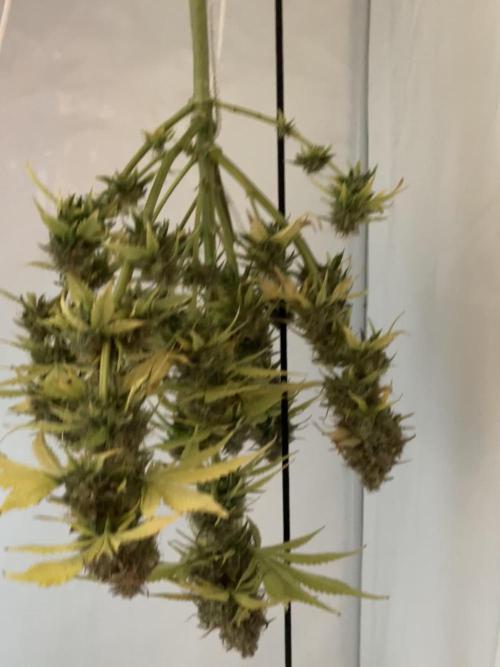

@birdmountain
Follow
Der zu betreibende Aufwand um noch mehr aus der Pflanze herauszuholen hätte sich nicht mehr gelohnt. So stand sie noch 36 Stunden im Dunkeln bevor sie geerntet wurde. Sie hängt nun in der Growbox und wird langsam trocknen und ich noch gegen ende des Monats enen Rauchbericht abgeben können.