


Likes
Comments
Share

@Hempface86
Follow
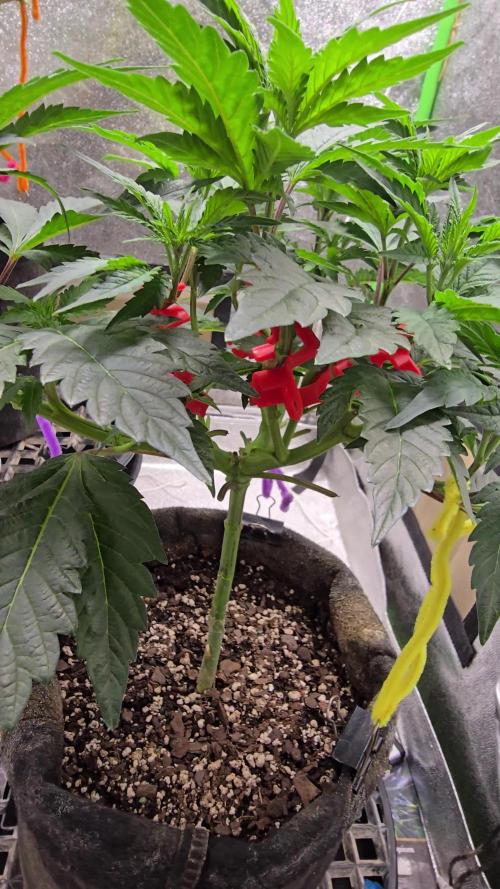
Another week in veg.. she's patiently waiting her turn to get into the other tent where she can start producing fruits ... i'm hoping for a good one with this and I have a feeling it will be.. Thanks again to @Grow4releaf... God bless and happy growing ✌️

Likes
12
Share


@Luke_Lee
Follow
-22.08.2024
The ninth week begins, the plants look really good and are getting frosty.
Some leaves have been removed.
I think there are still 2-3 weeks until harvest.
-24.08.2024
Visual Control
Soil felt dry, Both plants get watered with 1L Of water per plant.
-27.08.2024
Visual Control
Soil was dry, plants get 1L od wster per Plant.

Likes
4
Share


@Weedmonster
Follow
Começaram a cria os primeiros brotos, com um bom desenvolvimento, sem algum tipo de stress… vamos seguir com o sistema😉🤫
Likes
51
Share

@Bread_n_Buds
Follow
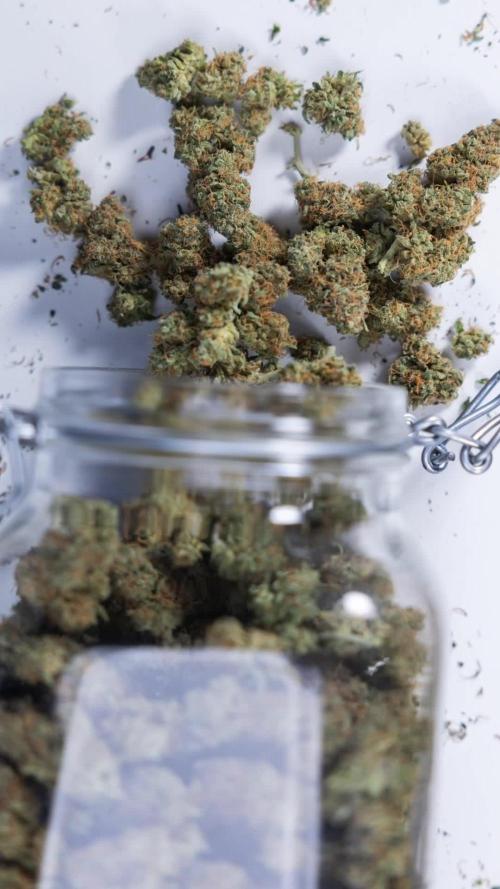
Here we are at the harvest of one of the masterpieces of the season, Ghost Train Haze Automatic by Zamnesia.
** We remind everyone that we have grown two plants per strain, one without the aid of any technique and the other instead worked with the techniques described below.
Technique used // The plant was worked with the MAINLINING technique, particularly successful in this case because the plant with a wide internodal distance put a lot of body until it swelled like a pig.
Better with the techniques or normal? It is a plant with a high distance between internodes, the Mainling was truly perfect. This time I am strong for the main lined plant. You can watch plant and I believe it will think the same
This is another confirmation that MAINLINING on AUTOFLOWERING in my opinion is only indicated in plants with medium-high internodal distance. This is a real monster not usual for soil in 11 lt pot.
Flower quality // The flowers are impressive, the classic haze shape is very long, some are really hard and heavy, I'm not crazy about the taste but by definition the pure haze taste is not among my super favorites but I love it anyway.
Check the article in your language // https://www.zamnesia.io/it/guida-growing-cannabis/333-lavaggio-delle-ceme
Trichomes // Here we have an absolute majority of milky and cloudy trichomes, still some transparent and some amber, it is not super ripe but for me it is fine.
Fertilizers // I am very happy with how I managed to unload the plant which at a certain point before going to flush was fed for a few days only with additives and then went to flush and we are discolored enough. This is a yellow that satisfies me to go to crop and vaporize a delicious plant with no residue of nutrients inside.
All Plagron fertilizers and additives in the green / 100% organic version have fully satisfied me. Choose your soil according to your style and calculate the sheet on the website www.plagron.com
The fertilizers instead are found in convenient all-inclusive packages on the Zamnesia website.
Try a seed of this variety belive in Zammi i superlove this strain..
---- https://www.zamnesia.io/en/12511-zamnesia-seeds-ghost-train-haze-auto.html
Zamnesia Description // From the day her cotyledons emerge from the substrate, Ghost Train Haze Auto will surprise you with her rapid growth and robustness. When she starts to flower, this short sativa will develop long and compact buds with pungent scents of spice, citrus and fuel.
Music and frequencies // For about 4/6 hours a day my plants listen to 432 Hz frequencies made especially for their well-being and sometimes a bit of black music to give them those vibrations that only music can give. www.radionula.com
All the best that mother nature has to offer is on ---- www.zamnesia.com
THE FLOWERS ARE MONSTROUSLY LARGE. HOLY MARY.

Processing
Likes
4
Share


@Andres
Follow
new crop ... we'll see how it grows ... outdoors....let's see what she offers us outdoor ... and what color she can show us ...

Likes
12
Share


@XperencdGmanXG
Follow
We are coming up on the last week of these girls based on time from flower and trich ripeness. I will not feed them again as there is more than enough in the soil for them to finish. I will dry them in the room then clean and reset it for a no till living soil in 10 gal pots. Also upgraded the saucers to heavy duty plastic ones. Something I can lift even full of liquid.
Likes
3
Share


@WEEDSGR88
Follow
Not too bad of a week. Not much to comment on. Hoping to flush the banger in the next week because it should be done by the 15th of May or a little later.


Likes
Comments
Share


@Weedwithwes
Follow
Day 84 from seed
Each auto is in different flowering weeks
So post is sorta confusing as my first diary
Sorry!
Everything seems to be doing good.
Just been feeding water since last update.
I will have new lights soon 4800 evo from mars hydro 2024 version planning to harvest the GDP before switching the lights out.
Day 87 swapped the light to the mars hydro 4800 evo 2024 model running 40-50 percent 12-20 inch from cannopies adjusting them slowly to new light and much higher pffd than before

Likes
1
Share


Likes
8
Share


@BruWeed
Follow
🍀25/01 - Empieza su séptima semana en etapa de floración.
🍀Se encuentra hermosa, con mucho olor y llena de tricomas.
🍀Esta es la última semana con fertilizantes, la semana que viene ya empiezo con su lavado de raiz.
🍀No tuve ningún problema con ella en toda su etapa y su cultivo fue fácil.
🍀Su etapa de floracion es de ocho semanas, tal cual lo dice su banco de semillas “seeds mafia”.
🍀Esta cumpliendo 82 dias de vida desde su germinación.
🍀En estos dias estare subiendo mas imagenes de como viene.
🍀😶🌫️🇦🇷Podes seguirme en instagram como @bruweed_arg🍀😶🌫️🇦🇷

Processing
Likes
52
Share


@CBD_Sweden
Follow
@MephistoGenetics,
Hi all the happy people here in GrowDiaries.
This is my second cultivation ever and it will be fun to try a bigger space than my closet grow.
First, I'm just going to say I'm done with the construction of my new growroom.
The room is 2.14 meters by 1.7 meters and has a ceiling height of 2 meters.
It provides a floor area of 3.6 square meters.
I use a 54 Watt Lightwawe T5 for germination and 2 Pcs 400 Watt HPS lamps.
I have a channel fan that replaces the room air about 40 times an hour to get a comfortable environment in the room, the air enters a fresh air intake from the outside.
The air is purified through a carbon filter to then leave the room to the rest of the basement.
Then I use that heat to heat the rest of the basement.
I will use 10 pcs 15 liter Autopots to grow with and a 100 liter water tank that supplies the pots of water and nutrition.
I will grow completely organically in soil and will watercure my buds to get the best possible medicine for me.
But there are no cultivation rooms to be displayed here, so I continue with what is most important.
Today I have put my seeds in paper towel and hope the seeds have germinated within a few days.
I am very excited to see how the new growroom will work and how this Stilton Special will turn out.
Strain Name: Stilton Special F1
Genetic heritage - Sour Livers F3 x Northern Cheese Haze F3
Strain behaviour - Stilton grows well from the off, and develops into a stout but branchy specimine that leads to a fine yield of awesome flowers. She's not too stretchy but also is sizeable enough with good growth, to train and shape to your liking. Flowers develop pretty fast and grow to a good size, it may to advised to clear out some undergrowth and if needs be a very gentle defoliation mid-way through the grow, although leaf tucking may suffice well enough.The end product is of top shelf quality and she doesn't lack in yield either.Give your garden, nose, and body a treat and be sure to indulge in a slice of Stilton this year, You won't regret it.
Size - 50 - 70 cm
Structure - Medium height but bushy
Flower Density - 9/10
Indica/Sativa - 65/35
Cycle Time - 65 to 70 days from sprout
Yield - 90 to 140 grams as a single plant
Best Method for overall high yield - 9-12 per 1,2m x 1,2m sq in 10-15 Liter pots (Soil)
Aroma - Very strong, Cheesey/fruity/sour/spicey/ with a dash of coffee.
Taste - Dank berries
Effect - Good hybrid powerful but balanced effect
Medicinal Benefits - TBA
Best Grown - Indoor/Greenhouse
Cannabinoids - TBA
Extract information - Ideal extract candidate - High in resin, oil and terps.
.................................................................................................................................................................................................................................................................................................................................................
2017-08-21. Started to germinate the seed.
.....................................................................................................................................................................................................................................................................................................................................................
2017-08-23. Seed germinated and put in small pot in the humidity dome.
.........................................................................................................................................................................................................................................................................................................................................................
2017-08-27. Slow and steady she grows.
----------------------------------------------------------------------------------------------------------------------------------------------------------------------------------------------------
2017-08-28. Transplanted to the 15 liter autopot.
--------------------------------------------------------------------------------------------------------------------------------------------------------------------------------------------------------------
2017-08-29. New movie of the girl and a new pic of the grow room from now.
-------------------------------------------------------------------------------------------------------------------------------------------------------------------------------------------------------------
2017-08-29.
Hello to you who read my diary, I just want to say that I am pleased that you have chosen to check in with me and in my diary.
I just want to say that I do this for myself and for a steady flow of my medicine.
Everything you read and see in my diary is 100% honest and I will never distort or beautify anything here.
I document my crops so that I can learn from my mistakes and also to look back at those different crops.
I try to update with pictures every day and with text if something special has happened in the garden.
This is my strainhunt for the best medicine and the beginning of my journey with cannabis and the cultivation of it.
-----------------------------------------------------------------------------------------------------------------------------------------------------------------------
2017-08-30. Cleaned the room this morning, just vacuuming and cleaning with chlorine solution. Im testing the fan to control temp and humidity, it works great.
Added a movie. Everything is looking great right now.
------------------------------------------------------------------------------------------------------------------------------------------------------------------------------------------
2017-08-31. 3 new pics.
--------------------------------------------------------------------------------------------------------------------------------
2017-09-01. New pics and a video of the room from today.
-----------------------------------------------------------------------------------------------
2017-09-02. New pic
----------------------------------------------------------------
2017-09-03. Video of the girl this morning.
----------------------------------------------------------------------------------------------------------------------

Likes
6
Share


@TerpyOG
Follow
This week I did a fair amount of work on my grow.
I did a bit of defoliation and spent some time tying down branches to shape the canopy.
My goal is to get buds growing wall to wall! I can't wait to see the results of my efforts.
Processing
Likes
47
Share


@Mrs_Larimar
Follow
January 1st.
They were showing up very fast, Iam going for Day one today,,,
,,Because there are more vessels than only the " Ladyhead"
I planted 4 tealightholders in ametal Frame
I hope I can so some training on them
Until now Iam quite Happy , and we will see more soon
Thank you Silky_smooth for this Egghunt_Invitation----- i needed some Challenge for sure
Likes
20
Share


@Boomdrawfyah
Follow
Dia 110 de vida y 2nda para 3ra semana de floración.
Han hecho un estiron final llegando a medir casi 3 m y han empezado a florecer se ven muy sanas sigue todo muy bien algun saltamontes sigue motdiendo las hojas nada grave.
Se avecina tiempo de tormentas y lluvias esperemos que no pase nada grave , las plantas estan preparadas para soportar lo que sea que venga aunque siempre puede haber algun imprevisto

Likes
117
Share


@PEAKYPLANTERS
Follow
Hi everyone, Weed brothers!
This genetics is really a rock!
Strong and resistant stems and a beautiful roof of flowers
No signs of deficiencies .... I think I'm going very well .... hopefully in an excellent harvest
SEE YOU AROUND
Likes
1
Share


@Huckleberry39
Follow
Great grow!! Should end up with over a half a pound off of these 2 and the little I harvested about 2 weeks ago. I got 2 oounces dry off of her. They smell amazing and are covered with trichomes

Likes
24
Share


@DogDoctorOfficial
Follow
🌱 Divine Seeds Week Four & First Flowering Report 🌱
Hey, fellow growers! 🌿✨
Welcome back to our weekly update on the Divine Seeds journey. We’ve reached an exciting milestone as we transition from the vegetative stage into the flowering stage. All our plants are beginning to flower, except for the Big Demon, which continues to grow impressively. Here’s the latest on our Moon Rock, Opium, and Big Demon plants.
🌟 Week Four Highlights 🌟
Our plants are thriving and showing promising signs as they transition to the flowering stage. Here’s a detailed look at each plant’s progress:
1. Moon Rock 🚀
• Growth: Compact and sturdy, maintaining its lush and vibrant foliage.
• Flowering: Starting to show initial signs of flowering with small buds forming.
• Notes: Moon Rock remains the most compact and dense of the bunch, showing exceptional health.
2. Opium 🌸
• Growth: Balanced growth with a steady transition into flowering.
• Flowering: Buds are forming uniformly across the plant.
• Notes: Opium is graceful in its transition, maintaining beautiful symmetry.
3. Big Demon 💪
• Growth: Continues to grow robustly with thick stems and expansive leaves.
• Flowering: Not yet transitioning into flowering but showing vigorous vegetative growth.
• Notes: Big Demon remains a powerhouse, showcasing its strength and resilience.
🌟 Environment and Nutrient Strategy 🌟
Our current environmental parameters and nutrient strategy are as follows:
• Water:
• TDS: 400 ppm
• pH: 6.2
• Temperature: 18°C
• Grow Room Conditions:
• Temperature: 30.3°C
• Relative Humidity (RH): 51%
🌟 LED Lighting and Control System 🌟
We’re continuing to use the Lumatek Zeus 465 Compact Pro LED to provide optimal lighting. This LED is proving to be highly efficient, delivering a balanced spectrum and ensuring even light distribution across our canopy.
The TrolMaster Hydro X controller with its 3-in-1 sensor for temperature, humidity, and light detection is helping us maintain perfect growing conditions. This setup allows us to monitor and control the environment precisely, ensuring our plants have the ideal conditions to thrive.
🌟 Nutrient Strategy 🌟
Our nutrient regimen continues with:
• Regulator (0.15ml/L): To reduce stress and improve overall plant health.
• CaMg-Boost (0.25ml/L): To provide essential calcium and magnesium, supporting strong cell wall development and photosynthesis.
The rich organic soil, combined with these supplements, is supporting robust growth and healthy transitions into flowering.
🌟 Key Observations 🌟
• Plant Health: All plants are super healthy, with no signs of nutrient deficiencies or stress.
• Growth Patterns: Moon Rock is the most compact, while Big Demon continues its vigorous vegetative growth. Opium is gracefully transitioning into flowering.
• Environmental Control: The grow room conditions are stable, with ideal temperature and humidity levels supporting healthy development.
🌱 Next Steps 🌱
As we move further into the flowering stage, our focus will be on:
• Monitoring Flower Development: Keeping a close eye on the formation of buds and ensuring optimal conditions for flowering.
• Adjusting Nutrients as Needed: Observing plant responses and adjusting the nutrient regimen if necessary.
• Maintaining Optimal Conditions: Continuing to use the Lumatek LED and TrolMaster controller to ensure perfect growing conditions.
Stay tuned for more updates as our Divine Seeds continue to flourish and transition into flowering. We’re excited to share every milestone with you on this incredible journey!
Happy growing, and may your gardens be ever green! 🌿💚
#DivineSeeds #WeekFourVegReport #FirstFloweringReport #AptusHolland #MoonRock #Opium #BigDemon #GrowDiaries #PlantMagic #GreenThumb #Inspiration #LumatekZeus #TrolMasterHydroX
Germination method 🌱 @thecannakan
Genetics
@divine.seeds
Nutrition
@aptusholland 🌿
@aptus_world 🌎
@aptus_es 🌍
@aptusbrasil 🌱
@aptus_thailand 🌿
@aptus_portugal 🌳
@aptususa_officiala 🍀
@aptusplanttechnz 🌺
@aptusplanttechaus 🍃
Ambient controls🎮
@trolmaster.eu @trolmaster.eu.support @trolmaster.support @trolmaster.agro
Soil @promix_growers_eur @promix_cannabis
LED - @lumatekeu
Watering- @autopot_usa @autopot_global
Love and attention- @dogdoctorofficial
#aptus #aptusplanttech #aptusgang #aptusfamily #aptustrueplantscience #inbalancewithnature #trolmaster #trolmastereurope #trolmastersecrets #Autopots
#GreenJoy
As always thank you all for stopping by, for the love and for it all , this journey of mine wold just not be the same without you guys, the love and support is very much appreciated and i fell honored and so joyful with you all in my life 🙏
With true love comes happiness 💚🙏 Always believe in your self and always do things expecting nothing and with an open heart , be a giver and the universe will give back to you in ways you could not even imagine so 💚
More info and complete updates from all my adventures can be found ⬆️link in the profile description ⬆️
Friendly reminder all you see here is pure research and for educational purposes only
💚Growers Love To you All 💚

Likes
9
Share


@Siriuz
Follow
Ok guys so she was bushy again and so we did defoliation again.
You can see the difference and then after that started flowering even more
Plus the fact we are increasing the amount of molasses added to the soil plus the floranova bloom nutes.
They are very thirsty girls, taking around 1.5-2lts per 48 hrs
So almost like a 1 liter per 24 hrs
Very good SoG to make them feel even more comfortable
Going to change schedule from 24/0 to 19/5 and see if they evolve!
Thinking about adding some humus to the soil as well, other than that they have been under good conditions
Temp is steady at day time around 24C top and night time is 18-19C minimum
RH around 45-60%
Mostly 45% control environment with AC
Cant wait to see big colas coming soon!
Have fun enjoy the videos!

Likes
11
Share


@YehGreen420
Follow
Grande descoberta esta poundcake, entrou no top 10 das fastbuds 😍

Sour Jealousy Auto · Fast Buds
Pound Cake Auto · Fast Buds
Papaya Cookies Auto · Fast Buds
Orange Sherbet Auto · Fast Buds
Amnesia Haze Auto · Fast Buds
Wedding Cheesecake Auto · Fast Buds
Moby Dick Auto · Fast Buds
Gorilla Cookies Auto · Fast Buds
Lemon AK Auto · Fast Buds

Auto Pineapple Glue · Advanced Seeds
Likes
87
Share


@JKent19
Follow
Pretty good week overall! Day 80, I am posting a little early to coincide with my expected harvest in 2 weeks, and because today I officially started the flush! At this point I am anticipating the harvest between 5 and 14 days from now, depending on how quickly the buds finish ripening up. I am guessing the taller plant has about 75% red hairs and over 50% cloudy trichomes at this point. The shorter plant is slightly behind with maybe 40% of her hairs being red and maybe a third of the trichomes are cloudy. They have made a lot of progress over the past week, so🤞 they will continue that trend. Did a pretty decent defoliation on the shorter plant, due to some fan leaves that were blocking light from the lower canopy turning yellow. I have decided to try molasses with my flush water, hopefully that will improve my final product. One final note is the smell.... it is considerably stronger this time than either of my first 2 grows. Typically I do not bother with a carbon filter, but the smell was so strong it leaked in from my garage and permeated my entire house! So I added filter (and a very strong candle) and it seems to have helped the problem. Super excited for the harvest, will definitely keep everyone posted!
Likes
118
Share


@Grow3rPT
Follow
👉 ( Floração ) 👈
📅 Total de Dias 57 (F 27) - 28/09/2021 / Crescimento normal... 😀
📅 Total de Dias 58 (F 28) - 29/09/2021 / 💦 Rega apenas com agua
📅 Total de Dias 59 (F 29) - 30/09/2021
📅 Total de Dias 60 (F 30) - 01/10/2021 / 💦 Rega com nutrientes ( Grow + Micro + Bloom )
📅 Total de Dias 61 (F 31) - 02/10/2021
📅 Total de Dias 62 (F 32) - 03/10/2021 / 💦 Rega apenas com agua.
📅 Total de Dias 63 (F 33) - 04/10/2021
👉 MARSHYDRO
👉 CODIGO PORMOCIONAL : Grow3rPT
👉 Em marshydro.eu 3% de desconto em qualquer produto
