Likes
Comments
Share
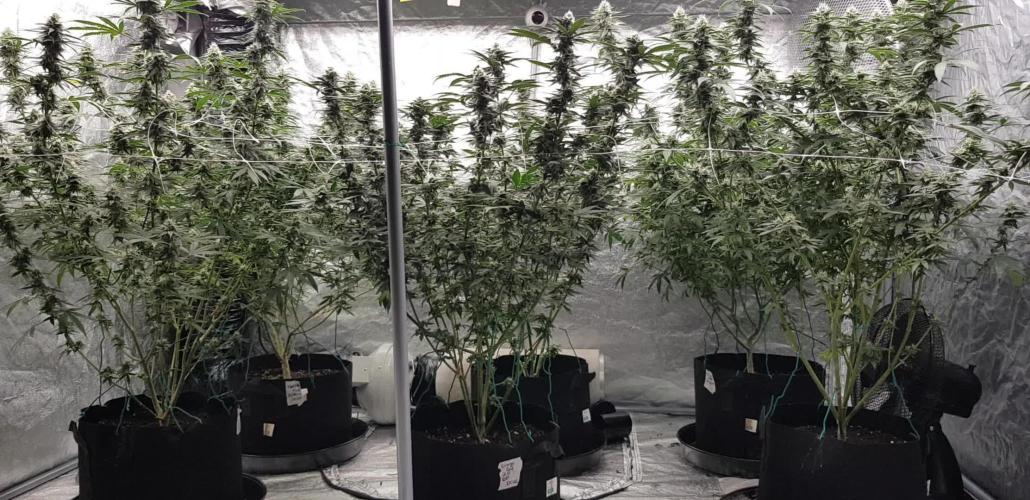
I have a lot to harvest indoor. I pulled over a pound off the plant that produced low quality buds. I put most of my effort in the one grove bag of good good

Likes
2
Share
She sure is turning into a pretty plant. She’s looking good!
Likes
34
Share
@PapaNugs
Follow
Another good week generally speaking. The girls are drinking a lot but nothing crazy. Things are wrapping up here in this tent shortly. This girl is done! Looking at the trichomes she's already amber on the buds. I can't believe how quick that was! Really impressed with the smell too. Will look to run this in the future if I need to run an auto. As long as the smoke comes out good that is Dimmed to 80% Here are the lights details: Medic Grow Mini Sun-2 150W LED Model: MN150-022 Spectrum mode: V1 Efficacy: 2.8 umol/J Thanks for stopping by! You can find the light on Grow Diaries: https://growdiaries.com/grow-lights/medic-grow/mini-sun-2-150-watts You can find the light on Medic Grow's website: https://medicgrow.com/
Likes
3
Share
4 weeks cure buds@54% RH Smoke report: Smooth smoke, at inhale we got a subtle sweetness rolling over the back of the tongue with under it a slight herby flavor, immediate a warmness goes to the head Then the pine/herbs taste start to take the lead at the exhale which is very pronounced.
Likes
2
Share
💜 Purple Haze by Zamnesia – Pheno A Week 7 | A Lush Beauty Finding Her Rhythm Welcome back to another chapter of the 8×8 Adventure! Week after week, this room continues proving why phenotype hunting is one of the most fascinating parts of growing from seed. Every plant shares the exact same environment. The same lighting. The same nutrients. The same irrigation. The same care. Yet every diary tells a completely different story. Purple Haze Pheno A continues writing hers with elegance. She isn't the tallest plant in the room. She isn't the smallest either. Instead, she's quietly becoming one of the healthiest and most balanced ladies in the tent, and every time I unzip the door she's one of the first plants my eyes are drawn toward. 🌱 One Room. One Method. Twelve Different Personalities If this is your first visit to the diary, welcome! This entire project is built around the 12/12 From Seed growing technique. Rather than giving plants a long vegetative period before flowering, every seed was placed directly under a 12/12 light schedule from the very beginning. It's a technique that naturally keeps plants more compact while allowing them to reveal their genetic personality surprisingly early. Every phenotype in this room receives exactly the same opportunity. • The same Plagron nutrition • The same lighting from the Future of Grow Black Series LED • The same environmental control through TrolMaster • The same AutoPot irrigation • The same soil • The same temperatures • The same humidity There are no favourites. No special treatment. No individual feeding. The only thing that changes... ...is genetics. Purple Haze Pheno A is beginning to show exactly what hers have in store. 🌿 A Plant You Can't Help But Admire Some plants impress you with explosive growth. Others with incredible colours. Purple Haze Pheno A immediately catches my attention for another reason. She's simply beautiful. Her foliage is exactly what every grower hopes to see. Large fan leaves. Deep, healthy green. Excellent turgor. Strong petioles. Every leaf looks like it's working exactly as nature intended. Healthy leaves are far more than decoration. They're the plant's solar panels, capturing light energy and converting it into the carbohydrates that fuel root growth, flower development and eventually resin production. When foliage looks this healthy, it's usually a reflection of everything happening beneath the surface. Healthy roots. Balanced nutrition. Stable environmental conditions. She truly looks comfortable in her home. 🌸 Flowers Are Beginning to Tell the Story Week 7 is where flowering really starts becoming exciting. Every branch now carries clusters of bright white pistils emerging from small groups of swollen calyxes. Those little white hairs are the pistils—the female reproductive organs of the flower. In nature, their purpose is to catch airborne pollen. Inside a grow tent they simply become one of the best visual indicators that flowering is progressing exactly as it should. The calyxes surrounding those pistils are equally important. Each one is the tiny building block that eventually forms the finished buds we harvest. Right now they're still small. But over the coming weeks they'll begin stacking together, swelling and filling with resin until individual flowers merge into the long, beautiful colas Purple Haze genetics are famous for producing. Judging by how evenly the flowering sites are developing, she's laying an excellent foundation for the weeks ahead. 🍃 Letting the Plant Do the Work One thing I've continued to avoid is unnecessary defoliation. Throughout the early flowering period I've relied mostly on careful leaf tucking, allowing light to reach developing bud sites without removing perfectly healthy fan leaves. Every healthy leaf is producing energy. Removing them simply because they're large isn't always the best solution. Sometimes the best training is simply understanding when not to intervene. Purple Haze has responded beautifully to that approach. Her canopy remains open. Airflow is excellent. The branches have plenty of space. Nature has done most of the hard work for me. 💡 Lumiflora Under-Canopy Lighting One exciting addition to this grow is the use of Lumiflora under-canopy lighting. Traditional grow lights do an incredible job illuminating the tops of the plants, but lower flowering sites naturally receive much less usable light as the canopy becomes denser. Under-canopy lighting helps change that. By gently illuminating the lower sections of the plant, these fixtures help those secondary flowers receive additional energy without forcing aggressive defoliation. They're not a magic solution. They won't suddenly transform small buds into giant colas overnight. What they do offer is another opportunity for lower flowering sites to remain productive while helping create a more evenly developed plant from top to bottom. I'm genuinely excited to watch how they influence the remainder of this project. 💧 Feeding This Week As flowering progresses, nutrition continues supporting the increasing demand for flower production. This week's feeding schedule includes: • Terra Bloom – 2 ml/L • Power Buds – 1 ml/L • Green Sensation – 1 ml/L • Sugar Royal – 1 ml/L • Pure Zym – 1 ml/L • Careful pH adjustment using pH Plus and Lemon Kick Everything remains balanced and consistent across the entire room, allowing each phenotype to express itself naturally. 🌡️ A Stable Environment Builds Strong Plants Consistency continues to be one of the biggest successes of this project. Current environmental conditions remain remarkably stable: • Flower Week 7 • Height: 120 cm • Day temperature: 29°C • Night temperature: 25°C • Relative humidity: 60% • pH: 5.8 • EC: 1.95 mS/cm • Solution temperature: 22°C • Root zone temperature: 21°C • CO₂: 639 ppm When plants don't need to constantly adapt to environmental swings, they can dedicate their energy to what matters most—building flowers. 📷 This Week's Gallery This week's photographs showcase exactly why I'm enjoying this phenotype so much. The close-up shots reveal healthy clusters of fresh white pistils emerging from every flowering site, while the wider images highlight her beautifully balanced architecture and outstanding foliage. One of my favourite details is the colour. The rich green leaves frame the developing flowers perfectly, giving the entire plant an incredibly healthy appearance. She isn't trying to steal the spotlight. She's simply growing with confidence. And sometimes that's even more impressive. 🔮 Looking Ahead Over the next week I expect the stretch to begin slowing noticeably. More energy should shift toward flower production as the calyxes continue stacking and the buds gradually start gaining volume. I'm also very curious to observe the ongoing influence of the Lumiflora under-canopy lighting as the canopy becomes denser. What I don't expect is explosive overnight change. Purple Haze doesn't feel like that kind of plant. She seems determined to improve steadily, week after week, building quality before quantity. If she continues along this path, I have a feeling she'll become one of the most rewarding plants to harvest—not because she grows the fastest, but because she grows with remarkable consistency. 💚 Thank You Thank you so much for following another chapter of this 8×8 Adventure. Every week reinforces why documenting each individual phenotype has become one of the most rewarding parts of this journey. Watching twelve unique plants express themselves under identical conditions continues to teach me something new every single week. A huge thank you to: 💚 GrowDiaries for providing a platform where growers from around the world can learn, share knowledge, and inspire one another. 🌱 Zamnesia for providing the outstanding Purple Haze genetics that make this phenotype hunt possible. 💜 Plagron for supplying the nutrition supporting every stage of this grow. 💡 Future of Grow LED for delivering the light driving this entire project. 🌿 TrolMaster for helping maintain a stable environment where every phenotype can perform at its best. ✨ Lumiflora for bringing an exciting new dimension to this grow with their under-canopy lighting, and giving these lower flowering sites every opportunity to shine. And finally... Thank you to everyone following these diaries, leaving comments, asking questions, and sharing this journey with me. Every week Purple Haze Pheno A becomes a little more impressive. Not because she's trying to stand out... But because she's quietly showing what healthy, well-balanced genetics are capable of. Growers Love! 💜🌿
Likes
285
Share
👉Alrighty Then👈 So we are at DAY 35 with the Sugar Larry 👈 And she's doing fantastic 👍 It's now time to flip To Flower 👌 😀 decided to showcase pheno #2 , definitely has different traits then #1 very interesting 😀 thoe both are killing it 👈 Day 39 and all is well 👈 Except for some slight watering , ive been doing some defolation as well as some LST manipulation to pull branches to the side 👌 👉I had to Top her during the middle of 4th week 👍 she gonna be a tall girl with long legs 😛 👉WeeklyRoundup Video is finally posted 😕 😒 😪 😢 Happy Growing 👉Soil Provided by ProMix.ca 👉Nutrients Provided by Agrogardens 👉Lighting Provided by MarsHydro.ca Thanks my friends for the great support over the years 🙏 Happy Growing
Likes
3
Share
Buenas farmers!! Después de pasarnos tres dias con sólo agua volveremos con la mitad de nutrientes durante los próximos dos riegos, ya empezamos a prepar nuestras plantas para la fase final ! Un olor espectacular y mucha resina espero guste buenos humos family!💚
Likes
47
Share
2nd net is up. Early bud formations are promising. holding up to the extremes pretty well, some leaves taking minor damage, but overall, she is holding up, gave her 1 night at 50F see how she would react, stressful. Not advised as it messes with her metabolism, but I want to see if it triggers any anthocyanin response. Love to see her purp up but no signs yet. Remember, For every molecule of glucose produced during photosynthesis, a plant needs to split six molecules of water. This process provides the hydrogen needed for synthesizing glucose and other organic compounds, while oxygen is released as a byproduct. Homework. If Rubisco activity is impaired and it cannot properly function or regenerate its substrate, the plant's leaves are likely to turn a pale green or lime green, a condition known as chlorosis. Essentially, Rubisco activity is highly regulated and susceptible to various environmental and metabolic factors that can cause it to become inhibited, leading to an apparent failure in RuBP regeneration due to a lack of consumption. Rubisco regeneration is intrinsically linked to nitrogen supply because Rubisco is a major sink for nitrogen in plants, typically accounting for 15% to over 25% of total leaf nitrogen. The regeneration phase itself consumes nitrogen through the synthesis of the Rubisco enzyme and associated proteins (like Rubisco activase), and overall nitrogen status heavily influences the efficiency of RuBP regeneration. RuBisCO is a very large enzyme that constitutes a significant proportion (up to 50%) of leaf soluble protein and requires large investments in nitrogen. Insufficient nitrogen supply limits the plant's ability to produce adequate amounts of RuBisCO, thereby limiting the overall capacity for photosynthesis and carbon fixation. Maintaining the optimal, slightly alkaline pH is crucial for the proper function and regeneration of Rubisco. Deviations in either direction (too high or too low) disrupt the enzyme's structure, activation state, and interaction with its substrates, leading to decreased activity and impaired RuBP regeneration. (Lime/yellowing) Structural Component: Nitrogen is an essential building block for all proteins, and the sheer abundance of the Rubisco protein makes it the single largest storage of nitrogen in the leaf. Synthesis and Activity: Adequate nitrogen supply is crucial for the synthesis and maintenance of sufficient Rubisco enzyme and Rubisco activase (Rca), the regulatory protein responsible for maintaining Rubisco's active state. Nitrogen deficiency leads to a decrease in the content and activity of both Rubisco and Rca, which in turn limits the maximum carboxylation rate, Vmax, and the rate of RuBP regeneration Jmax, thus reducing overall photosynthetic capacity. Nitrogen Storage and Remobilization: Rubisco can act as a temporary nitrogen storage protein, which is degraded to remobilize nitrogen to other growing parts of the plant, especially under conditions of nitrogen deficiency or senescence. Nitrogen Use Efficiency (NUE): The allocation of nitrogen to Rubisco is a key determinant of a plant's photosynthetic nitrogen use efficiency (PNUE). In high-nitrogen conditions, plants may accumulate a surplus of Rubisco, which may not be fully activated, leading to a lower PNUE. Optimizing the amount and activity of Rubisco relative to nitrogen availability is a target for improving crop NUE. Photorespiration and Nitrogen Metabolism: Nitrogen metabolism is also linked to the photorespiration pathway (which competes with carboxylation at the Rubisco active site), particularly in the reassimilation of ammonia released during the process. To increase RuBisCO regeneration, which refers to the process of forming the CO2 acceptor molecule Ribulose-1,5-bisphosphate (RuBP) during photosynthesis, the primary methods involve optimizing the levels and activity of Rubisco activase (Rca) and enhancing the performance of other Calvin-Benson-Bassham (CBB) cycle enzymes. Biochemical and Environmental Approaches: Optimize Rubisco Activase (Rca) activity: Rca is a crucial chaperone protein that removes inhibitory sugar phosphates, such as CA1P (2-carboxy-D-arabinitol 1-phosphate), from the Rubisco active site, thus maintaining its catalytic competence. •Ensure optimal light conditions: Rca is light-activated via the chloroplast's redox status. Adequate light intensity ensures Rca can effectively maintain Rubisco in its active, carbamylated state. •Maintain optimal temperature: Rca is highly temperature-sensitive and can become unstable at moderately high temperatures (e.g., above 35°C/95F° in many C3 plants), which decreases its ability to activate Rubisco. Maintaining temperatures within the optimal range for a specific plant species is important. •Optimize Mg2+ concentration: Mg2+ is a key cofactor for both Rubisco carbamylation and Rca activity. In the light, Mg2+ concentration in the chloroplast stroma increases, promoting activation. •Manage ATP/ADP ratio: Rca activity depends on ATP hydrolysis and is inhibited by ADP. Conditions that maintain a high ATP/ADP ratio in the chloroplast stroma favor Rca activity. Enhance Calvin-Benson-Bassham (CBB) cycle enzyme activity: The overall rate of RuBP regeneration can be limited by other enzymes in the cycle. •Increase SBPase activity: Sedoheptulose-1,7-bisphosphatase (SBPase) is a key regulatory enzyme in the regeneration pathway, and increasing its activity can enhance RuBP regeneration and overall photosynthesis. •Optimize other enzymes: Overexpression of other CBB cycle enzymes such as fructose-1,6-bisphosphate aldolase (FBA) and triose phosphate isomerase (TPI) can also help to balance the metabolic flux and improve RuBP regeneration capacity. Magnesium ions, Mg2+, are specifically required for Rubisco activation because the cation plays a critical structural and chemical role in forming the active site: A specific lysine residue in the active site must be carbamylated by a CO2 molecule to activate the enzyme. The resulting negatively charged carbamyl group then facilitates the binding of the positively charged Mg2+ion. While other divalent metal ions like Mn2+ can bind to Rubisco, they alter the enzyme's substrate specificity and lead to dramatically lower activity or a higher rate of the non-productive oxygenation reaction compared to Mg2+, making them biologically unfavorable in the context of efficient carbon fixation. The concentration of Mg2+ in the chloroplast stroma naturally increases in the light due to ion potential balancing during ATP synthesis, providing a physiological mechanism to ensure the enzyme is activated when photosynthesis is possible. At the center of the porphyrin ring, nestled within its nitrogen atoms, is a Magnesium ion (Mg2+). This magnesium ion is crucial for the function of chlorophyll, and without it, the pigment cannot effectively capture and transfer light energy. Mg acts as a cofactor: Mg2+ binds to Rubisco after an activator CO2 molecule, forming a catalytically competent complex (Enzyme-CO2-Mg2+). High light + CO2) increases demand: Under high light (60 DLI is a very high intensity, potentially saturating) and high CO2, the plant's capacity for photosynthesis is high, and thus the demand for activated Rubisco and the necessary Mg2+ cofactor increases. Mg deficiency becomes limiting: If Mg2+ is deficient under these conditions, the higher levels of Rubisco and Rubisco activase produced cannot be fully activated, leading to lower photosynthetic rates and potential photo-oxidative damage. Optimal range: Studies show that adequate Mg2+ application can enhance Rubisco activation and stabilize net photosynthetic rates under stress conditions, but the required concentration is specific to the experimental setup. Monitoring is key: The most effective approach in a controlled environment is to monitor the plant's physiological responses e.g., leaf Mg2+ concentration, photosynthetic rate, Rubisco activation state, and adjust the nutrient solution/fertilizer to maintain adequate levels, rather than supplementing a fixed "extra" amount. In practice, this means ensuring that Mg2+ is not a limiting factor in the plant's standard nutrient solution when pushing the limits with high light and CO2. Applying Mg2+ through foliar spray is beneficial to Rubisco regeneration, particularly in alleviating the negative effects of magnesium (Mg) deficiency and high-temperature stress (HTS). While Mg can be leached from soil, within the plant it is considered a mobile nutrient, particularly in the phloem. Foliar-applied Mg is quickly absorbed by the leaves and can be translocate to other plant parts, including new growth and sink organs. Foliar application of: NATURES VERY OWN MgSO4 @ 15.0g L-1 in a spray bottle. For those high-intensity workouts when 1 meal a day is just not enough! Foliar sprays are often recommended as a rapid rescue measure for existing deficiencies or as a supplement during critical growth stages, when demand for Mg is high. Application in the early morning or late evening can improve absorption and prevent leaf burn. The plant was getting a little limey yellow in the centre. Shortly thereafter, she was back in business, green mostly regenerated. The starting point [of creativity] is curiosity: pondering why the default exists in the first place. We’re driven to question defaults when we experience vuja de, the opposite of déjà vu. Déjà vu occurs when we encounter something new, but it feels as if we’ve seen it before. Vuja de is the reverse—we face something familiar, but we see it with a fresh perspective that enables us to gain new insights into old problems. Confidence is evidence... nothing more. You are confident because you have driven 10,000 times, you are confident because you have spoken 10,000 times. People think confidence is a feeling, but it's not. If you want more confidence, then you need to create evidence, take more shots, collect more data, build more experiences, take more risks; fail, confidence doesn't come first; it is the reward you get for doing the work. no one else wants to do.
Likes
2
Share
@Valley
Follow
Geruch etwas weniger als erwartet trdm sehr sehr sehr geile terps bin gespannt wenn’s fertig gecured ist wie es dann schmeckt
Likes
35
Share
@nonick123
Follow
Día 44 (15/07) Wow! No hay shock de trasplante! 😍💥😁 Todas las ramas se han estirado hacia arriba tras el ajuste de LST y se están formando nuevos nodos rápidamente Esta combinación de nutrientes de Lurpe + substrato de PRO-MIX HP es una maravilla 😍 Día 45 (16/07) Ayer tuvimos ola de calor (37 ºC) y han aguantado muy bien! A última hora de la tarde (cuando ya no había sol directo) les apliqué H2O en spray foliarmente para refrescar los estomas Hoy parece que vuelven las temperaturas estándar para esta época del año: 29 - 30 ºC en las horas centrales del día Riego con 1 litro de H20 pH 6,5 Día 46 (17/07) Pequeños ajustes de LST Hay algunas ramas inferiores que no se han formado / estirado mucho Lo más probable es que haga una buena limpieza este domingo, 7 días después del trasplante, para dejar solo los brotes por encima del 4º nudo Día 47 (18/07) Riego con 0,5 litro de H20 pH 6,5 Este domingo (día 50) haré limpieza de partes bajas y tal vez también de nuevo topping en las 4-6 ramas principales 😁 Día 48 (19/07) Día de muchísimo calor con 37 ºC. A ver como lo llevan! Riego con 0,5 litro de H20 pH 6,5 Día 49 (20/07) Para ayudarles a llevar mejor el calor de las horas centrales del día, coloca una malla de sombreo (70%) sobre el invernadero Lo cierto es que se nota que baja mucho la temperatura debajo de la malla! Van a estar más fresquitas! 😍 Riego con 0,5 litro de H20 pH 6,5 Día 50 (21/07) Training session! Hago limpieza del tercio inferior de la planta, de todas las ramas y nudos que no superan la línea del dosel marcada por el 4º nudo (1er topping) También hago topping (2º) a todas las ramas principales La idea es tener 12 ó 14 colas principales para que no se hagan muy altas De paso saco unos cuantos clones de las ramas inferiores eliminadas 😁💥 Para superar el estrés, hago las siguientes aplicaciones y riego: - Riego con 1 Litro de Té Vegetativo de Lurpe Solutions. Preparación: 24 horas con bomba de aire (oxigenación) con ingredientes: Green Sunrise 8 ml/L + Insect Frass 16 ml/L + Hummus Lombriz 8 ml/L + Melaza 1 ml/L + Kelp Hidrolizado 0,25 g/L - Aplicación foliar Kelp hidrolizado de Lurpe Solutions a 0,25 ml/l 💦Nutrients by Lurpe Solutions - www.lurpenaturalsolutions.com 🌱Substrate PRO-MIX HP BACILLUS + MYCORRHIZAE - www.pthorticulture.com/en/products/pro-mix-hp-biostimulant-plus-mycorrhizae
Likes
7
Share
@Exr_300
Follow
I prep the soil 30-20-50 with Gaia green
Processing
Likes
15
Share
Pictures are gonna suck till I get an actual camera my phones camera.. just got CALiMAGic and diamond nectar. So I'm looking forward to see how she likes it . Updated to come
Likes
15
Share
@BastiFarm
Follow
Comenzando la 5ta semana de floración y esto va así, a mi parecer bien, ya que tuve algunas carencias, los medidores de PH y EC murieron a la mitad del cultivo, y no pude seguir mediendo esos parámetros, fuera de eso todo lo demás está bien. Los riegos con fertilizante son 1 vez x semana usando 3ml de cada uno + 1 ml de calmag. @blackcob.official @wonderlandagronutrients @elite91_latam @pyramidseeds @micotruechile
Likes
2
Share
and now it gets slowley vvveeeeryyyyyy slowly to harvest. i cant whait to taste her.. . huh that sounds wierd welll. i think a month more maby.
Likes
33
Share
@Lou_Grows
Follow
She has been doing pretty good, no issues at all, she stretched a little bit more than I like but is fine. I'm very happy with this plant.
Likes
2
Share
First time using diaries just getting accustomed to everything as a new grower. Second crop grown these are all clones from that first grow from seeds. Faced a lot of issues in the first grow was a major learning curve. Produce some average buds. But I think I got a handle of things now. Feel free to leave a comment tell me what you think! First batch of clones done right. Still lost a lot due to humidity and moisture but 80/100%. Planted clones placed under 24/7 light to start the veg. Will replant soon.
Likes
8
Share
Our Watermelon Candy Automatic #1 from Zamnesia Seeds is ready, and we're excited to show it to you. This plant has always performed well, a true powerhouse of nature as it grows, especially as it swells with high-quality central and lateral flowers. Ripeness - The resin content is excellent. The trichomes are mostly white and milky (about 60%), with some clear (20%), and some amber (20%). Some beautiful red-headed trichomes are quite common. The pistils are almost all red (about 80%). Remember, the plant should be harvested according to your taste. Since this is a 50/50 plant, I want to maintain the sativa/day-use characteristics and not turn it into an indica bomb by over-ripening the amber colors. (Amber is a sign of THC oxidation.) The overall shape of the plant is truly splendid. Techniques chosen: As mentioned, we only performed pruning, lollipopping, and defoliation here. Basically, we simply cleaned the bottom parts, which, as mentioned, helps us achieve better results at the top. We're 100% organic and 1000% Plagron, as always. The soil we chose is the recently launched Plagron Bio LightMix, which will allow us to start with smoother and more reliable watering, without the sudden changes that liquid fertilizers can cause. A week's worth of soil is enough, so don't overdo it. Choose your preferred style and calculate your results on the website: www.plagron.com Visit the new Growshop area on the Zamnesia website: Z - https://www.zamnesia.io/it/531-growshop A fantastic strain, not too tall but very bushy! Give it a try! Z - https://www.zamnesia.io/en/7484-zamnesia-watermelon-candy-automatic-semi-seeds.html Z - This feminized strain boasts everything you've come to know and love about the original cultivar, but with some welcome improvements. Combining Watermelon x Candy Kush with a pinch of ruderalis genetics results in a strain you won't want to miss, we promise. Being an autoflowering strain, the growing options are virtually endless. So, whether you choose to grow her indoors or outdoors, one thing is certain: she'll be extremely easy to grow. Otherwise, she'll take care of herself without requiring any special care. With a little general care and pruning, you can control her growth all the way to harvest. She's perfect for beginners growing indoors, as well as more experienced growers looking for easy-to-grow, high-yielding plants. Although she's not a particularly tall plant, her size can be easily controlled with LST, to which she responds positively. So, if you're interested in experimenting with this technique, don't be afraid to try Watermelon Candy Auto. In just 9-10 weeks from seed to harvest, this strain grows rapidly and, just like the original, will display a bushy canopy completely covered in large buds. Regardless of your growing environment, you can expect impressive yields. Indoor plants produce 350-400 g/m², while plants left to flower outdoors produce 50-100 g/plant. These are quite substantial yields for an autoflowering strain. With a THC level of 20%, Watermelon Candy Auto is a 50/50 sativa/indica hybrid, offering users the best of both worlds. After a few tokes, you'll feel more optimistic, and even the most stoic smokers won't be able to suppress a smile. After a few minutes, a deep sense of relaxation will take over, perfect for welcoming you home after a long day. Overall, Watermelon Candy Auto builds on the qualities that made the original so popular, but it also has other qualities that make it a much simpler and more practical option. You know it, but I recommend it. You'll find so much beauty here, essentially "the best nature has to offer." Z - www.zamnesia.com Music // www.radionula.com + Feng Shui Music + Frequency 432Hz
Likes
2
Share
Processing
Likes
4
Share
@sanderad
Follow
Everything is going well with our big girl, switched to ph treated tap water which seems to be working well. It comes out of the tap at 7 ph and around 80 ppm. I have used lemon juice to get it around 6.86 ph after mixing in my nutrients. 2/11- Very hard to water big girl as she seems to be drinking really fast and theres not much room; i'm having to water everyday. Not sure how long i'm going to veg but starting to worry about height for flower in my 3x3