


Likes
22
Share


@Jwjoh
Follow
This was an interesting harvest. Everything was going great and the buds/trichomes were still piling on, when suddenly almost overnight plant "C" shifted to about 20% amber trichomes. So I harvested it, and because the other plant wasn't ready yet I decided to try water curing the first one for 7 days. Then at the end of the 7 days, I figured I'd hack down plant "D" and dry them both on the racks in the tent at the same time before moving into jars.
The water curing was a huge success! After the first day, the water was cloudy with a slight green tinge. Second day was about the same. Then the water was just a little cloudy each change, no green tinge. Compare it to the diary I just opened around water re-curing some cannabis I bought from the government store, where the water is diarrhea brown :O On day 7 of my water cure, the water was perfectly clear so I decided to hack down plant "D" and get them both drying on racks in the tent together.
While water-curing plant "C", I had its trim sitting in a bowl in the freezer. When I hacked down plant "D", I put its trim in the same bowl. After my typical wet-trimming, I hung up Plant "C"'s water-cured buds on the top rack, plant "D"'s buds on the 2nd rack for an old fashioned cure, and random trim from both plants spread out on the bottom 2 racks.
The water-cured buds dried within about 24 hours and went into a jar with a 58% humidipack. The buds are SUPER dense and potent! Nice clean high, doesn't kill my throat. The downside is that the taste is really weak and not that great. But everything has pros and cons. Almost no trichome loss in the bucket during the water curing as well -- I was really worried about that!
The other buds dried in about 36 hours and went into a jar with a 58% humidipack, where I burped it many times a day for a week. The smell and flavour are much more potent than the water-cured bud and it's a little harsher on my throat, but otherwise I'm not sure there's a detectable difference.
However, you can SEE there's a sharp visual difference between the water-cured buds and the jar-cured :) Of course the jar-cured will mature more with time as well.
Once the trim was completely dry, I put it in a bag in the deep freezer and dropped it to about -20. I didn't need to use a grinder this way -- I could just mash it all up in the bag with extreme ease! Sifted it through the kief screen, and pressed down 17 grams of lazy-man's hash!
After processing the trim through the kief screen, I decarbed in the oven at 200F for 1 hour (this converts THC-A into THC or something to that effect -- if you don't do this, the edibles won't get you very high). I put the trim into a big mason jar and back into the freezer along with my bottle of Everclear. Once they dropped somewhere down around -20, I poured in the Everclear, put the lid on, and shook as hard as I could, as often as I could, for 5 minutes or so. I noticed that as I shook it around, the contents inside would alternate between solid and liquid which was kinda cool :) Shake it one way and it freezes, shake it the other way and it thaws... or something to that effect, anyway. I was able to use a double-coffee-filter to extract about 2 cups of dragon tincture!
I threw everything in the coffee filter out -- next time I'm going to do a better job of it as there's a little pile of trichomes that forms at the bottom of the filter which I could put to use. Once I get that down next harvest, I'll have around 99% efficiency milking every last drop out of my harvests!
White chocolate is so yummy, as are candy canes... I wanted to combine the two to make some edibles. Looking around for candy cane crush, I decided to check out Amazon. They had the same candy cane crush I was looking at from popular stores, for only a couple dollars more, so I figured sure why not have it delivered. I was planning to get some white Baker's chocolate, but on checkout of the candy cane crush I got a deal for adding on white chocolate Lindt bars for $1.25 a piece LOL! So I bought 10 of those.
When the Amazon package arrived, I slowly boiled down 1/2 cup of my dragon tincture in a pot, then used a double-boiler setup to melt down 4 of the Lindt bars in the same pot. Once it was mixed well with the hash oil, I set it aside to cool for about 3 minutes before stirring in 1/8 cup of candy cane crush (plus I ended up adding maybe like a tablespoon more), pouring into a pan lined with parchment paper, and putting in the freezer for 30 minutes.
So now I have a nice big chunk of white chocolate candy cane crunch stuff where a piece the size of my thumb gets me super high for like 8+ hours; 17 grams of lazy-man's hash; and 88 grams of bud :) And still enough dragon tincture left over to make 3 more rounds of edibles -- not sure what I'll make next!
From now on I'm going to water cure a large portion of all my buds -- not just the ones I grow myself, but ones I buy from the Gummint too!

Likes
8
Share


@Chubbs
Follow
420 Fastbuds
Cherry Cola Week 10
These lovely ladies are getting super close to being finished. Starting to get a little foxtailing I believe for lowering my lights. I'll be chopping them this coming week to start the drying process. They are so sticky it's unbelievable. All in all I'll say they're coming along great even the one with messed up leafs. Happy Growing

Likes
4
Share


@GandalfsHat
Follow
Starting to come on nicely apart from air pressure issues in the tent since installing a cooltube

Likes
1
Share


@Happygrowing
Follow
Ciao a tutti...sono stato assente sulla piattaforma per un po...ma ora sono ritornato pii forte di prima...
Volevo dirvi che per questo ciclo userò un soil organico italiano al 100% come me 😜
Likes
24
Share


@MediciGrade
Follow
The plants continue to grow although slowly. I turned the Gavita back on this week and even at 42 inches it seems to be too much light at full power because although they're getting adequate nutrients, the leaves appear to be showing signs of damage to the chlorophyll pigments. I'd like to splurge and get the adapter and controller so that I can dim the light and slowly increase the intensity to allow for a more gradual photo acclimation period, but I will probably hold off until my next run. I've also considered adding supplemental Co2 to help the plants more effectively tolerate and take advantage of the light intensity, but it seems like a big expense for an uncertain benefit considering all of the other variables that are sub-optimal. Perhaps I'll give those Excellofizz Co2 pucks a try. Someday I'll build sealed grow room with automated Hvac, feeding, and Co2 enrichment but for now I'll soldier on and hope for the best as the flip to 12-12 approaches.
More to come next week!

Likes
22
Share


@donnythechef
Follow
I'm regretting not removing all of the vertical growing nodes on the mainline now as it's a bit messy and some of the lower budsites won't get enough direct light to produce decent buds. At the time I was very cautious about removing any growth at all as I was worried I would further shock the plant! Seems okay now anyway, and I think it's pretty funny that I managed to turn a fastberry into a slowberry.. How long do we think until harvest now?
Peace
Donny


Likes
3
Share

@Jungle_James_Grows
Follow
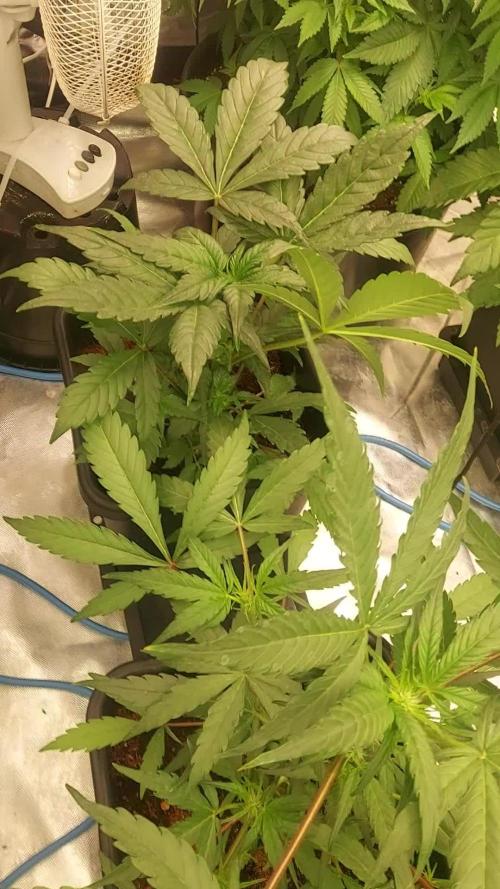
They are stretching their legs now, explosive pre flower stretch is happening. They are doing well now


Processing
Likes
4
Share


@wigglywiggums
Follow
After what felt like a month of waiting for my seeds to arrive- I got them and got to work.
I’m Only doing two plants at a time to start. Both toof decay seeds popped little tails in 24 hours using toilet paper and dechlorinated tap water and a DVD case of mothman prophecies- blockbuster copy. I planted one directly into my fox farms happy frog soil- now shall be called- the runt.The other I planted in a germ pellet and into ocean forest. My cat got into my closet somehow and destroyed the cloth pot with ocean forest in it. Destroyed. Luckily my little lady survived and I put her in a root rocket? Root riot? Anyway- that’s why she is in The corner of this 5 gallon pot with my runt. I am waiting for them both to get bigger before I move either one of them. My cat is fine btw- gave her a bath as payback- muhahahah. Anyway. As I type this it is day 5? I don’t know- I can’t tell time at the moment. It’s def I’m their first week. How do they look?


Likes
2
Share


@Strangelet
Follow
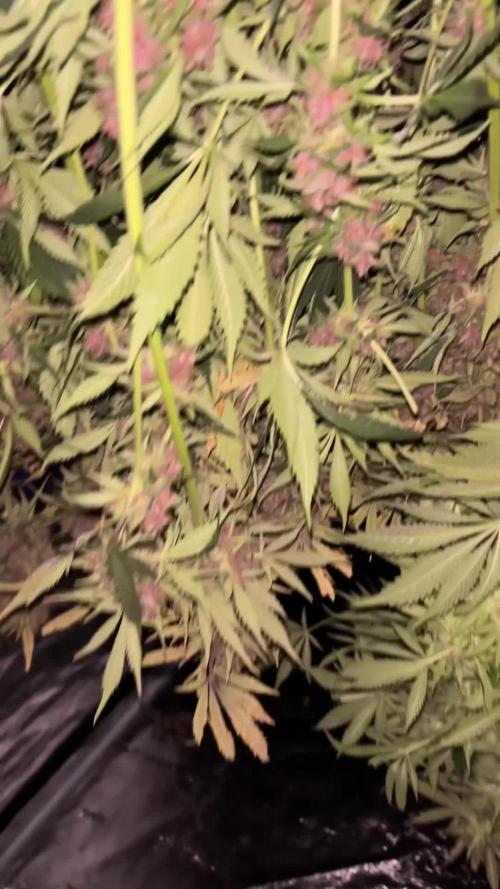
Harvest day 74. 10g dried after 4 days.
Little plant and little yeald.
Didn't respond well to topping, problems with over feeding in late flowering. Also began to foxtail in last week, probably due to 40°C at daytime.
Will update the smoke test curing.




Likes
12
Share


@CampaCavallo
Follow
Buongiorno e buona SPANNABIS a tutti gli amici amanti della CampaCavallo 🍀💐💚🍀🍺🥦🎉🎉🎉
Vediamo la mitica CRITICAL LEMON ⚡🍋 gonfiare i suoi bei bud sotto il solito vigile controllo di TENT-X 🤖 by TROLMASTER 🔝
L'alba ed il tramonto impostate tramite Tent-X Sembrano proprio piacere alla giovane ragazza.💚🌞

Likes
8
Share


@dreamLife
Follow
Sigue creciendo bien, súper frondosa, semana a semana se le van quitando las hojitas que tapan los brotes y se amarran las ramas mas grandes al contenedor.

Likes
119
Share


@Roberts
Follow
Divine indica is growing great. I am topping her today. I also will be removing the 1st node growth as well. Everything is looking really good. She has made it to her own grow space now. She is growing fast and strong. 🤞🏻it continues. Thank you Divine Seeds, and Spider Farmer. 💪🏼🤜🏻🤛🏻🌱🌱🌱
Thank you grow diaries community for the 👇likes👇, follows, comments, and subscriptions on my YouTube channel👇. ❄️🌱🍻
Happy Growing 🌱🌱🌱
https://youtube.com/channel/UCAhN7yRzWLpcaRHhMIQ7X4g

Likes
5
Share

@BalconyBoy
Follow
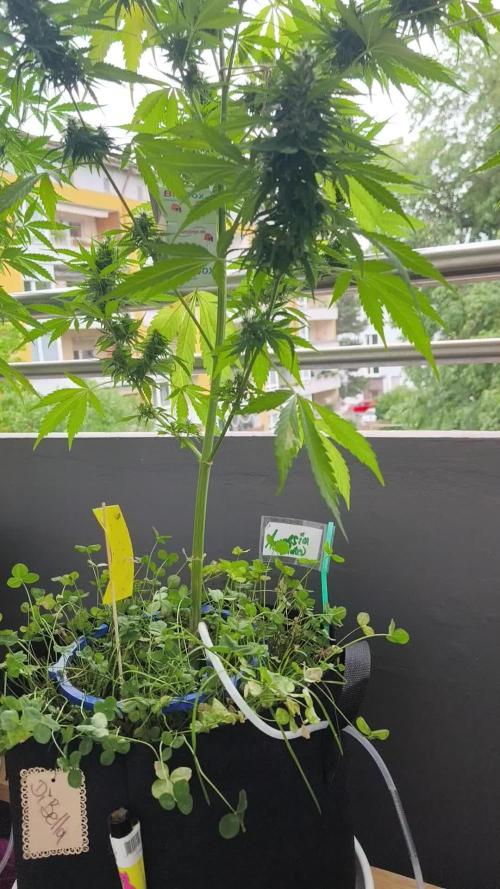
28.07.25 the remaining Auto Amnesia is getting bigger buds by the week and dropping fan leaves. Happy growing!
