Likes
Comments
Share

@BlackForestGrower
Follow
Genetics & Appearance:
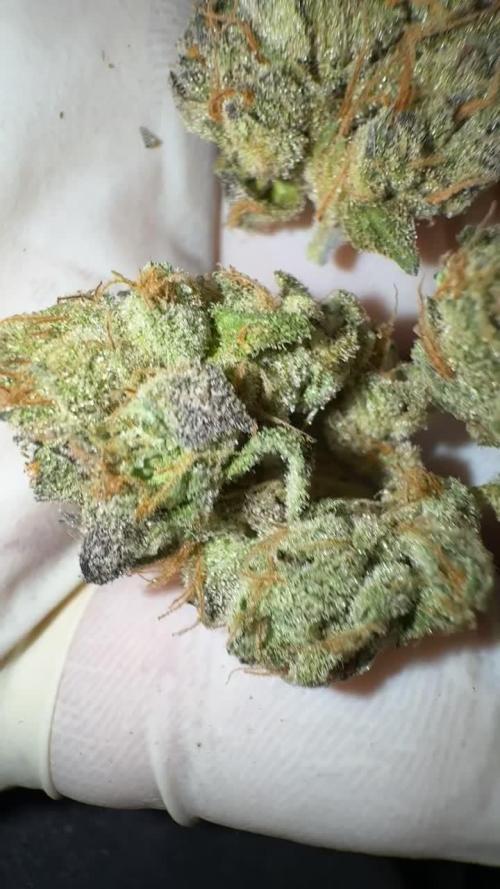
Lemon Cherry Pop stands out with its vibrant appearance — dense, resin-coated buds showing shades of deep green and purple under a frosty layer of trichomes. The name says it all: colorful, fruity, and full of character.
Aroma & Flavor:
This strain delivers an irresistible blend of sweet cherry and zesty lemon notes. On the exhale, a subtle creamy undertone lingers, giving it a candy-like finish. The terpene profile is lively and well-balanced, perfectly blending citrus brightness with sugary fruitiness.
Effects & Potency:
Lemon Cherry Pop is highly potent, offering an uplifting, euphoric onset that transitions smoothly into a deep, relaxing body effect. It provides a balanced high that can elevate mood and creativity before settling into calm and content relaxation — perfect for winding down or enjoying a peaceful evening.
Yield:
The yield is relatively low, making this a connoisseur strain rather than a high-production variety. However, the top-shelf quality of the buds more than compensates for the limited

Likes
15
Share

@Brujha77
Follow
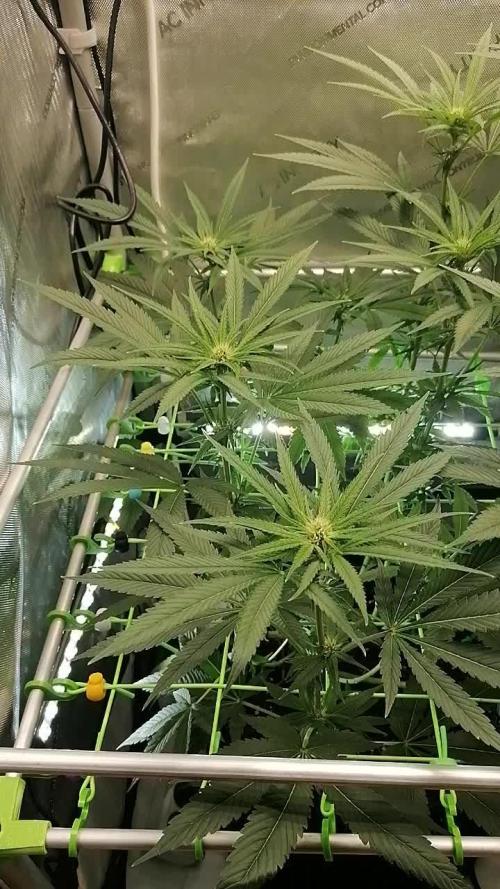
Beginn 4. Blütewoche
Was soll ich sagen.
Die beiden entwickeln sich richtig schön, gerade die rechte.
Schöne stabile Seitentriebe bei beiden.
Sie werden diese Woche noch nen Compost Tee bekommen, ansonsten wird nichts an den Pflanzen getan.
Hoffe nur die rechte ist nun mit dem größten Teil des Strech durch, die Topps haben noch knapp 40cm bis zur Lampe🙏
Tag 25 Blüte
Die beiden bekamen heute jeweils 1l Composttee (15g/l Biotabs PK Booster mit 10g/l Kelp Meal und Melasse).
Zudem gab's noch ein Topdress mit 15g Crustacean Meal.

Likes
Comments
Share


@MellowVibes_CBD
Follow
Definitely satisfied with the results I m getting from purple punch by Fast Buds!! It’s definitely looking beautiful!!!
Likes
5
Share

@Grow_for_Happiness
Follow
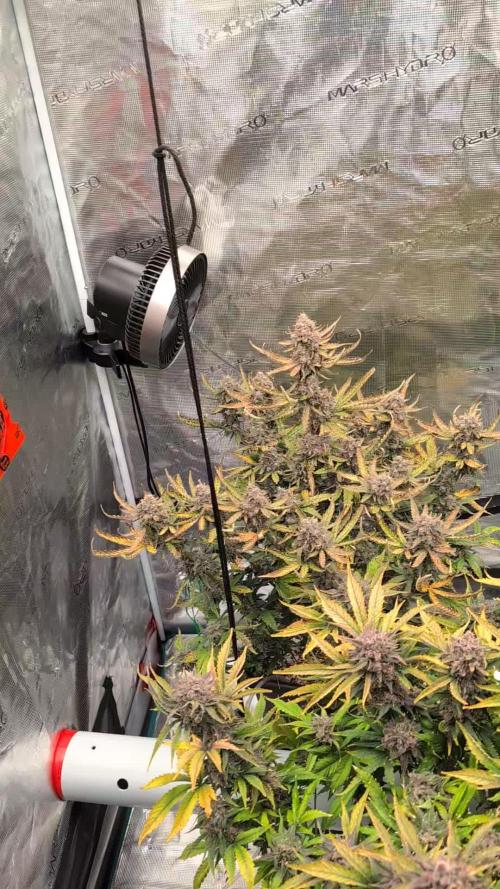
Well this is it, the last week for this little mighty Kushberry. The buds came a long way this week, really darkening in colour and becoming hard as rocks and sticky AF. Oh and the smell?? Absolutely mouth watering purple berries. Trichomes are 100% cloudy and just starting to see reds so she's coming down this afternoon. Nothing really done throughout the week, just tracking the trichomes every few days to try and nail my version of the perfect harvest window.


Likes
2
Share

@Robertgrowsit86
Follow
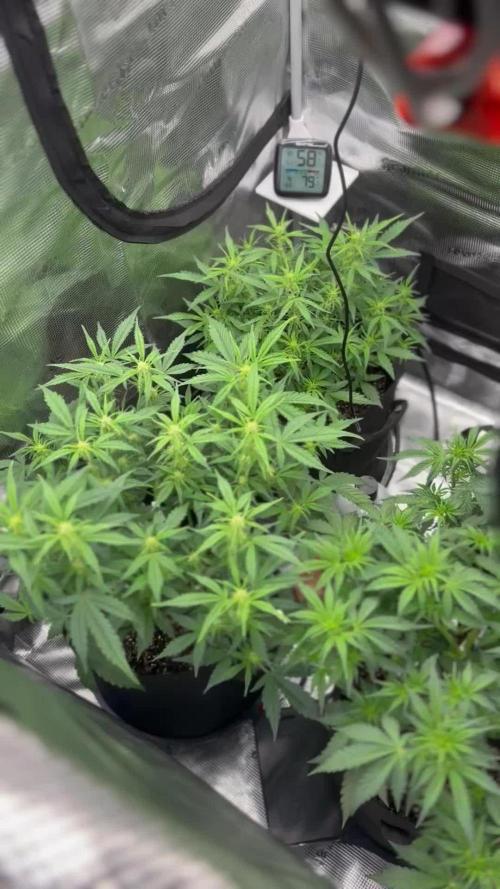
This is a progression of end of week 4 all the way to current date which is closer to beginning of 6weeks of total life span for all four of these auto flowers / seed supreme- Blueberry big devil , they are 20 and 4 lights. With ir-uv supp. Lights. Gh trio and some additives from fox farms, bembe - kelp you , silica gold - tps nutrients , liquid worm castings from wiggle worm all I could get in short notice. we dropped these in water - peroxide mix for 36 hours to pop. Now today’s date is 8-23-25 this where I am at with these. We did have a few issues to overcome but we did it , the autos really came threw even with me learning the ropes!
Likes
15
Share


@Springbokke
Follow
Доброго дня
Сегодня ровно 124 дня жизни моей девочки и ровно 9 недель как перевел ее на цвет. Последнюю неделю я ей давал Ripen. Поливал каждый день. Влажность немного поднялась за эту неделю, ночью она подала ниже 30%, но днем поднимал порой и до 46%, Все в пределах нормы.
Центральные шишки на мой взгляд готовы так 80%-90%, а в от нижние еще не созрели, оцениваю готовность их на 65%-75%. Думаю еще неделю как по плану
Не знаю насколько хорошо видно на фотках, но хотелось бы узнать ваше мнение друзья, по поводу зрелости шишек

Likes
Comments
Share


Likes
9
Share


@I_Identify_As_A_Dan
Follow
Week 6 for Black Lebanon by SSSC,
Like i mentioned on the previous Sunday update, she was transplanted a day after the post. I was planning on not giving water for the first week to let the roots do some growing.... the rain gods had a different plan 😂 Its been storming rain ever since day after transplant now 5 days i think 😂😂 So that didn't go to plan but hoping no rain next week fingers crossed.
I also think i topped her again some point last week. Cant wait for her roots to get moving in the new home.

Likes
1
Share


@Shakazulu
Follow
Getting hot here. Scattered thunderstorms, very windy. The girls are loving life. I am hoping the strawberries and cream will be a male. I’d like to see what I can come up with, breeding it with the Afghani Purple Kush and the Platinum Silk. Watering almost daily until I see a bit of water coming out of the bottom. Supersoil is holding strong and keeping them very healthy. I am going to start another Round of sprays with azamax. I will do once every 8 days at 1.5oz per gallon in a pump sprayer. I have seen several leafhoppers on my plants. Most of the other insect life I posted pictures of have not been seen on my plants, except hover flies!

Likes
64
Share


@Roberts
Follow
Baked Bomb auto is growing nicely. She us kinda droopy, but I think because it is morning for the plant. The light might be a piece strong fir her stage if growth. She should be requiring a lot of light very soon. It has been extra cold this year. That could also be playing a role into some of it. She is growing steady regardless. Thank you Spider Farmer, and Bomb seeds. 💣 🤜🏻🤛🏻🌱🌱🌱
Thank you grow diaries community for the 👇likes👇, follows, comments, and subscriptions on my YouTube channel👇. ❄️🌱🍻
Happy Growing 🌱🌱🌱
https://youtube.com/channel/UCAhN7yRzWLpcaRHhMIQ7X4g

Likes
63
Share


@Chubbs
Follow
420Fastbuds
StrawberryGorillaAuto Week8
What up grow fam weekly update on these 3 gorgeous girls. Getting super hot in my tent as summer time is here. Over all besides some crispy leaf tips and having to water more frequently all is good.
Likes
6
Share

@TrickzGrowz
Follow
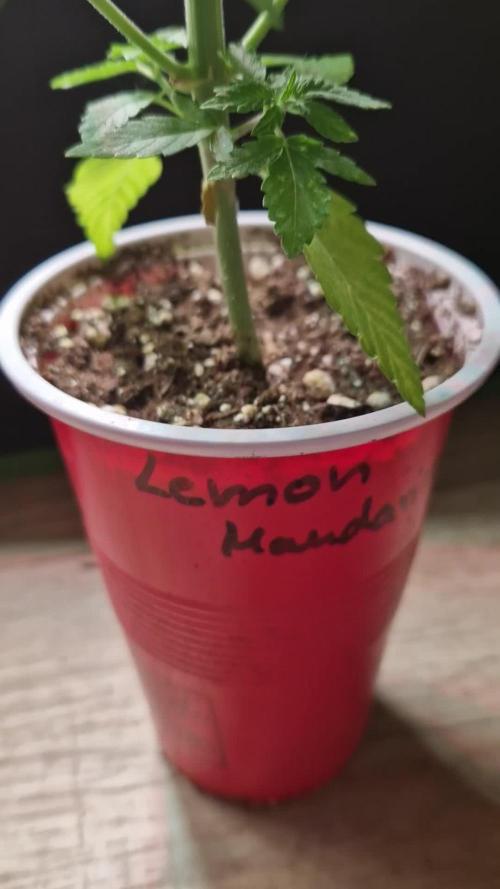
Getoppt um Platz zu schaffen, da mein Wachstumszelt nur 40x40 cm hat. Jetzt kann Sie schon einmal neue Triebe ausbilden.
Likes
149
Share


@CBD_Sweden
Follow
Hi all the happy people here in GrowDiaries.
This is my second cultivation ever and it will be fun to try a bigger space than my closet grow.
First, I'm just going to say I'm done with the construction of my new growroom.
I put some pictures on the construction here in week one.
The room is 2.14 meters by 1.7 meters and has a ceiling height of 2 meters.
It provides a floor area of 3.6 square meters.
I use a 54 Watt Lightwawe T5 for germination and 2 Pcs 400 Watt HPS lamps.
I have a channel fan that replaces the room air about 40 times an hour to get a comfortable theme in the room, the air enters a fresh air intake from the outside.
The air is purified through a carbon filter to then leave the room to the rest of the basement.
Then I use that heat to heat the rest of the basement.
I will use 8 pcs 15 liter Autopots to grow with and a 100 liter water tank that supplies the pots of water and nutrition.
I will grow completely organically in soil and will watercure my buds to get the best possible medicine for me.
But there are no cultivation rooms to be displayed here, so I continue with what is most important.
Today I have put my seeds in my moisture dome and hope the seeds have germinated within a few days.
I am very excited to see how the new growroom will work and how this Blue cheese Auto from Royal queen seeds will turn out.
Blue Cheese automatic cannabis seeds are a cross of Blueberry Automatic and Cheese Automatic that has been perfected over five years of breeding and careful selection. The result is a feminized, autoflowering strain with superior yield, flavor, and effects to either of its distinguished parent strains.
THC: 16%
CBD: Low
Yield Indoor : 325 - 375 gr/m2
Yield Outdoor: 60 - 110 gr/plant
Height Indoor: 40 - 70 cm
Height Outdoor: 60 - 110 cm
Flowering: 7 - 8 weeks
Harvest month: 9-10 weeks after planting
Genetic Background: Blueberry x Cheese x Ruderalis
Type: Sa 35% In 40% Ru 25%
Effect: Cerebral and uplifting
Climate: Mild
..............................................................................................................................................................................................................................................................................................................................................
Update 2017-08-15. All 4 seeds have germinated and planted in small pots inside the humidity dome.
I'm so glad it worked so well and now it's just hoping they'll start growing and become 4 big healthy girls :)
...............................................................................................................................................................................................................................................................................................................................................
Update 2017-08-16. I have mixed my own soil today. Its 40% sieved peat harrow H2-H4 0-30 mm, 45% sieved peat harrow H4-H6 0-30 mm. 5% sand and 10% of compost soil. And i use 15% of perilite and mix it all together.
................................................................................................................................................................................................................................................................................................................................................
Update 2017-08.20. Nr1 and 2 grow and thrive.
Number 3 just got rid of the seedpod and is folding out the sheets.
Number 4 is a bit shy and can only be seen if you look carefully into the soil.
.........................................................................................................................................................................................................................................................................................................................................
Update 2017-08-21. Nr 1 and 2 is doing well. Nr3 is trying to catch up and Nr4 is still shy.
--------------------------------------------------------------------------------------------------------------------------------------------------------------------------------------------------------
2017-08-23. Transplanted 2 girls from humidity dome and the small germinating pots to 15 liter autopots. The other 2 girls have to wait a little more before transplant to the autopots.
................................................................................................................................................................................................................................................................................................................................................................................
2017-08-27. The girls have settled in to there new home of the 15 liters autopot after a little transplant chock. Now the real week 1 starts for me and the girls.
--------------------------------------------------------------------------------------------------------------------------------------------------------------------------------------------------------
2017-08-28. New pic and movies.
---------------------------------------------------------------------------------------------------------------------------------------------------------------------------------------
2017-08-28. Nr3 is transplanted in 15 liter autopot.
-------------------------------------------------------------------------------------------------------------------------------------------------------------------------------
2017-08-29. New movie of the girls. Its no water for 3 days now for Nr1 and 2 so the roots develop more and match the plant above the soil. The temp controlled fan is awesome, its easy to set what temp you like to have in the room. Right now its 28 celcius. And humidity is 56%.
------------------------------------------------------------------------------------------------------------------------------------------------------------------------------------------
2017-08-29.
Hello to you who read my diary, I just want to say that I am pleased that you have chosen to check in with me and in my diary.
I just want to say that I do this for myself and for a steady flow of my medicine.
Everything you read and see in my diary is 100% honest and I will never distort or beautify anything here.
I document my crops so that I can learn from my mistakes and also to look back at those different crops.
I try to update with pictures every day and with text if something special has happened in the garden.
This is my strainhunt for the best medicine and the beginning of my journey with cannabis and the cultivation of it.
-----------------------------------------------------------------------------------------------------------------------------------------------------------------------
2017-08-30. Cleaned the room this morning, just vacuuming and cleaning with chlorine solution. Im testing the fan to control temp and humidity, it works great.
Added some pics with measurements and movie. Everything is looking great right now.
---------------------------------------------------------------------------------------------------------------------------------------------------------------------------
2017-08-31. New pics and videos.
---------------------------------------------------------------------------------------------------------------------------------------------------------------------------------
2017-09-01. New pics and videos. Gave each of the girls with 2 ml Alg-A-Mic, 4ml Bio-Grow, 4ml Bio-Heaven and 10 ml Formulex mixed in 2 liters of water.
I hope they like it :)
-------------------------------------------------------------------------------------------------------------------------------------------------------------------------------------------------------------------------------------------
2017-09-02. New pics and the girls liked the water and nutrients yesterday.
-------------------------------------------------------------------------------------------------------------
2017-09-03. New videos of the girls this morning. Nr1 and 3 looks great and nr 2 is looking a little funny, maby a little stressed.
Kl. 16.00. Did some defoliation on the girls. Added video.
Kl.. 23.00. New videos, defoliation and leaftucking.
-----------------------------------------------------------------------------------------------------------------
2017-09-04. Kl. 11.00. Week 3 starts. Trying to LST the girls and defoliate/leaftuck. New picks.
KL 23.00. New video.
--------------------------------------------------------------------------------------------------------------
2017-09-05. KL 08.00. Cleaned the room this morning, just vacuuming and cleaning with chlorine solution.
KL 12.00. The girls got 2 liters of water each with nutes in it, added a video.
----------------------------------------------------------------------------------------------------------------
2017-09-06. KL 08.00. The girls woke up after their beauty sleep, the leaves are always a bit down after 6 h of darkness, but they will stretch now when the HPS lamp starts.
Everything looks good and I keep trying to tuck the leaves so they get the maximum amount of light where needed. Added pics and video.
The Nr 3 girl is still a little bit behind the other 2 girls and all the 3 girls look like there 3 different pheno of the same plant.
KL 23.30. Did some LST.
----------------------------------------------------------------------------------------------------------------------
2017-09-07. Day 21 from sprouting, Nr3 is 17 days from sprouting. I have never tested PH in my grows, when growing organic in soil iv learned that it adapt PH by it self. But im curious by nature so i had to test.
Kl 10.00 Tested PH in the soil, it was 6.9 and tested my tap water and it was 6.8. Added a video of the girls, its 10 H after defoliation, LST and leaftucking. I think its looking good.
Kl 22.30. New pics.
Likes
Comments
Share


@acidblue
Follow
OMG, so much has happened since my last post, this is way overdue.
My soil went totally hydrophobic, my PH pen was outta calibration so my soil ph was way of, combined with another gnat infestation.
Things are much better know. the gnats are gone, transplanted into larger pots with newly bought soil, changed lighting to 18/6, vegged for a couple more weeks .
One plant showed full male pollen sacs and one had suspicious looking male pre-flowers so I culled both. The last 2 showed what I think look like female pre-flowers.
I just flipped lights to 12/12 on 4/4 so hopefully I have 2 females, started weaving thru scrog net, canopy looks fairly even, plants due look super healthy aside from couple tips have a bit of yellow
But thats from early veg when I had the lights a tad too close.
Wish me luck ;).

Likes
5
Share


@homegrownowngrown
Follow
We have liftoff!
NOTE- the strain I’m growing isn’t listed yet, but it is in fact “Ice Cream Cake” Photo from SNS

Processing
Likes
3
Share


@LittleBigTrees
Follow
Placed the seed about 2mm under damp soil within 48hrs she was above ground 👍

Likes
Comments
Share

@Growfather1
Follow
Hello everyone!
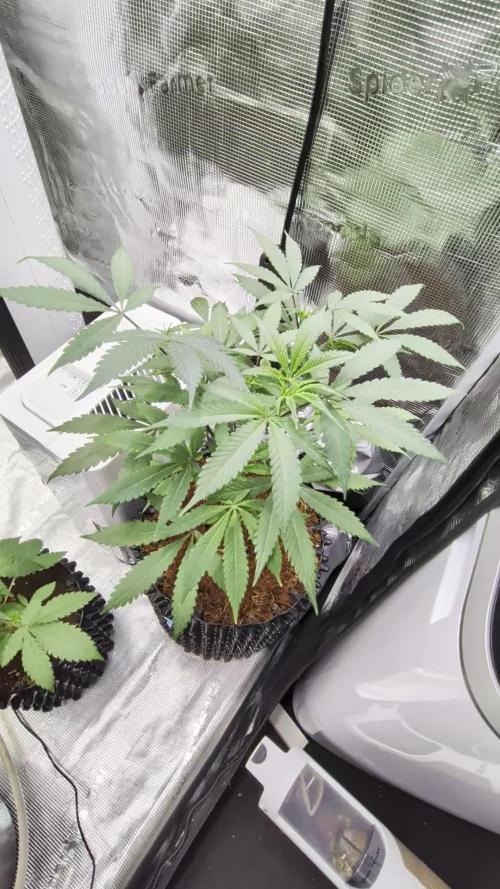
My 2 MAC 1 F1 Hybrid clones are absolutely thriving in their 15L Air-pots.
The environment is staying steady, with temperatures between 20 and 25 degrees Celsius and humidity ranging from 55 to 67 percent.
I've been playing stylist this week, giving them some heavy topping and selectively removing the lazier fan leaves to let the light hit the lower branches. I'll keep working on their shape over the next 2 to 3 days.
And about my last update—I need to issue a quick correction.
I previously mentioned flipping to flower in 10 days, but I miscalculated.
My ladies need a full 21 days, or 3 weeks, to really settle into their new homes after transplantation before we start the bloom cycle. Patience is a virtue, right?
Thank you for stopping by and have a nice day.
Best regards,
Growfather
Likes
248
Share


@OrganicNature420
Follow
Germination date 🌱 12/07/2021
Day 8 22/07/2021
Strain 🍁 Humboldt Purple Matcha (2nd time
(Sherbinski x HSO)
THC% • Unknown
💡 Mars Hydro FC4800
• Power draw 480W + 5%
• Max coverage 5 x 5
• LED 2070pcsSamsungLM30B1&Osram660nm
• Max Yield 2.5g / watt
• Noise level 0 DB
• Removable Driver +2m cable
• Daisy chain (multiple lights)
https://marshydroled.co.uk/products/mars-hydro-fc-4800-led-grow-light-samsunglm301b-commercial-greenhouse-medical-indoor-kit 🇬🇧
https://www.mars-hydro.com/buy-fc-4800-480w-4x4-energy-saving-full-spectrum-commercial-led-grow-light-mars-hydro-for-sale 🇺🇸
PROMO CODE • (ORG420) DISCOUNT 👍🏻 marshydroled.com
⛺ Mars Hydro 120 x 120 x 200cm
📤📥 AC infinity 6inch
💧 10lt dehumidifier
❄️ 3.1kw air con system
💉 Nutrients GreenBuzzLiquids
Organic Grow Liquid • 1-4ml until 2wk flower
Organic Bloom Liquid • 2-4ml flower stage
Organic More PK • 2-4ml +wk3 of flower
Organic Calmag • 1-2ml/lt whole grow
Fast Plants Spray • first 3days at night lights off
More Roots • 2-5ml veg +2wks flower
Fast Buds • 5ml +wk2 of veg until 1wk flower
Humic Acid Plus • 2-5ml whole grow
Growzyme • 2-5ml whole grow
Big Fruits • 2-5ml flower stage
Clean Fruits • 5ml flush 1wk
Ph powder
Root Gel
Living Organics
PROMO CODE • organicnature420 15% off ✌️🏼
https://greenbuzzliquids.com/
🥥 Growing Media • Coco Coir
Notes 📝
Easy first week Plants look good and so does the mrs 😆 .. even better now the ac is in so one complete grow room. Lights doing it's job and Mars have kindly given me a promo code so if you want a cheeky discount use code (ORG420) 👍🏻Lowered it down to 70cm and will keep it there to get some stretch. New Nutrients I haven't had a problem with, the fast plant Spray is decent and I'm loving the pH powder. Gives you extra gains aswell being Organic. Thanks for all the love likes and comments and will update in a couple of days
Happy growing fam ❤️🌱🍁👍🏻

Likes
23
Share


@Antifame
Follow
My new babies from Divine Seeds have arrived. 🙏😇 I gave them a cozy new home.
Looking forward to seeing their little heads poke out. 😊
Boobies for scale. 😋
Origin:Afghanistan / Colombia / Canada
Type:Indica/ Sativa/ Ruderalis
Flowering:60-63 days
THC:25%
Harvest:800-1000 g/m2
Height:130-165 cm
Black Opium Day-Neutral is, generally speaking, a violet version of Opium. Its beauteous coloring comes from crossing Opium with a rare population of Colombian Sativa, both purple-colored and rich in THC. After numerous selection cycles, the result was stabilized to be now presented as Black Opium Auto-Feminized – a tremendously potent Indica with shocking resin production rate and delicious berry aroma. At present, this strain belongs to top most exotic Indica varieties in the world!
A perfect choice for professional growers, while beginners can recklessly enjoy handling these non-demanding vivid plants. Just as its older brother strain, Black Opium fits well for indoor growing as well as outdoor plantations, it has also shown amazingly rich productivity in green houses. With massive resin production and, consequently, aggressive stench, Black Opium marijuana can ward off most insect plants. Appropriate training methods are restricted to non-stress techniques such as LST or ScroG, which allow to multiply your yield almost by 1.5x sometimes. Dense colas, colorful and glistening with crystals are a rich source of extra-potent hasheesh with glamorous berry-like flavor.
Those seeking for extra-potent cannabis should definitely give Auto Black Opium a try! Traditionally such mighty Indica is regarded for solo-use, noticeably restricting users in communication and motion when taken in average portions. The impact of Black Opium smoke creates an immobilizing stone effect for 3 hours, often accompanied with psychological revelations, insight thinking and daydreaming with the feeling of quiet bliss in the background. A highly efficient painkiller and anti-spasmatic agent, eliminates nausea or stress, stimulates appetite and helps forget any trouble. More appropriate for night use.

Likes
4
Share

@Jabbamo
Follow
_______________________________________________________
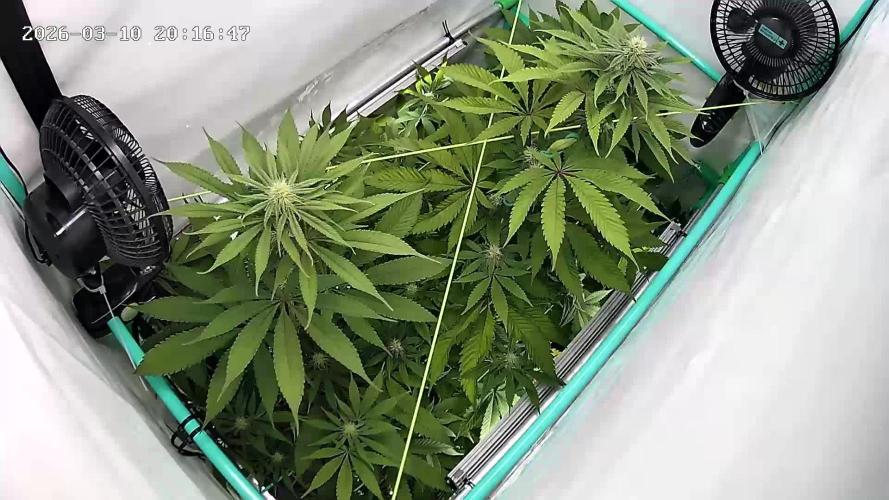
Mo. 9.3.
- 3 Liter pro Pflanze gegossen (ca. 200ml Drain)
1,2 ml / Liter "Calmag"
1,0 ml / Liter "Bio Grow"
3,0 ml / Liter "Bio Bloom"
1,0 ml / Liter "Top Max"
Ph 6,3 / 600 qqm
_______________________________________________________
Di. 10.3.
- Luftentfeuchter in der Dunkelphase AN
(45% / Low / Auto)
_______________________________________________________