


Likes
Comments
Share

@Organic_bud21
Follow
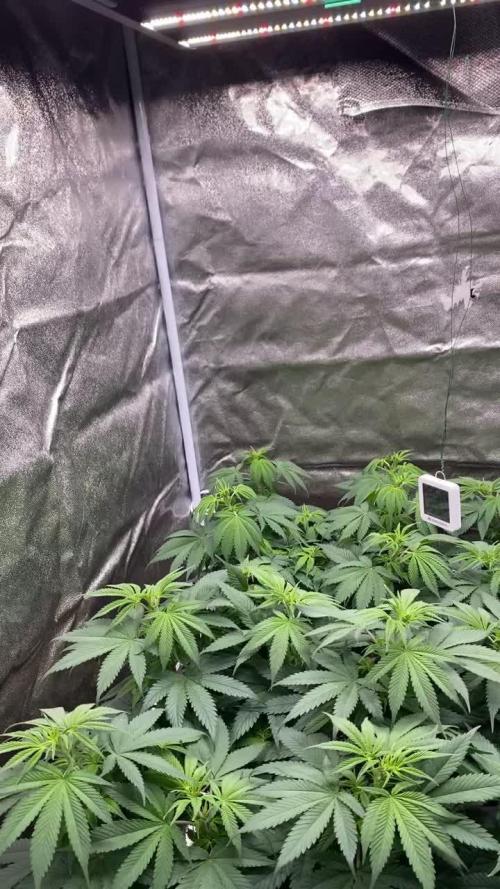
Endlich ist es soweit und die erste Blütewoche stand auf dem Plan. Insgesamt muss ich die vegi nächstes Mal etwas verkürzen. Diese Woche hat sich viel geändert. Angefangen habe ich mit der Einleitung der Blüte unter 24h Dunkelheit. Meine Zeitschaltuhr war noch im Sommer Modus, also lief Nachts. Den Zyklus habe ich auf den Tagesverlauf angepasst um die hohe außen Feuchtigkeit von momentan 85-90% ideal über den Tagesverlauf nutzen zu können. 6Uhr Licht an, 18:15 Uhr Licht aus. 30min auf und Untergang. Natürlich habe ich auch einen Entfeuchter, der dadurch nur selten lief. Die Nährstoffe habe ich Angepasst auf ein 1:1:1 Verhältnis, um langsam Stickstoff raus zunehmen und dafür Kalium reinzubringen. Mit Bud Ignitor habe ich direkt 1 Tag vor Blüteumstellung mit 2 ml pro L begonnen und Bud Faktor X kam auch dazu, Voodoo Juice wieder mit ins Schema und B-52 raus. Außerdem habe ich noch die 2 Ts 1000 gegen 1 FC E 3000 gewechselt, da sie momentan frei war. Gleiche Leistung, gleiche LED, aber bessere Lichtverteilung. Die Temperaturen habe ich auf 27 Grad über Tag und 24 Grad in der Nacht gehoben um das Wachstum zu fördern. Der EC ist quasi gleich geblieben.


Likes
2
Share

@Nucleosynthesis
Follow
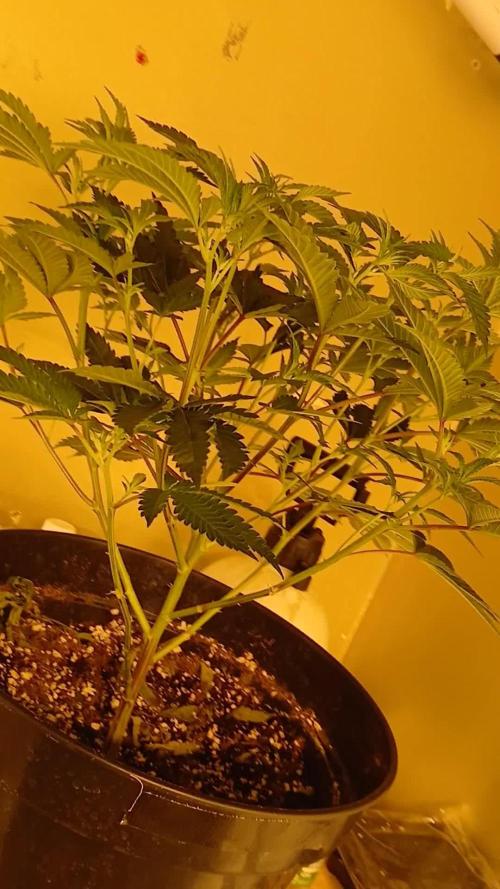
Smashing it as per usual, these girls are just the best to work with, even after 15 years no genetic drift, no watering down, just still goes as strong as she did all those years ago! A truly special cut 💪💪
Likes
6
Share


@field_nigga
Follow
All good here, ain't no complaints yet...not that preoccupied by the LST method anymore. Also I'm gonna bloom when the plant is about 12 inches so prolly at the 8th week of veg.


Likes
45
Share


@masterofsmeagol
Follow
I Messed Up A DAY Here. So one of the days is dated wrong. I tried to correct it the best that I could.
7/24 I decided to label this week as flower. It's more like preflower though. GMOs are stretching like crazy. Due to the rain we weren't supposed to get some of my plants are a little over watered. That's why I love the fabric pots. With the winds we get the bags dry out fast. The GMO's would've needed water anyway if we didn't get this storm. Event Horizon seems to be the furthest in flower amd the most over watered. WE'LL get a LITTLE more rain today and tomorrow but then hopfully my bags will dry out. They are heavy as hell right now. Had we not got rain for what seems like forever. Several plants would've needed to be watered if we didn't get this rain. Still the plants are currently overwatered. All the pics and video so far are from this morning after the horrible pounding rain of yesterday. Like I said before, I need to; defoliate for better air flow, add secondary supports or a vertical trellis, considering using a preventative pest application (e.g. BT), LST and spread branches apart and start using nutes.
7/25 Wasn't supposed to rain today. Like .001. It poured this morning and is still raining VERY LIGHTLY at 2:30. We got an inch yesterday. The total for these 3 days was suppised to be under half an inch. Anyway I went over around two and everything looks great! Things are clearly overwatered and heavy but the plants look happy! Most have their leaves out and everything! I love growing in bags because they dry out so quickly! I don't mind watering more. I defoliated one event horizon and the few yellow leaves I coukd see on other plants after shaking them off. The seedling in the 50 is far behind the others in flower and just showed its sex. I'm fairly certain that one is red runtz. Whatever it is is going to flower much later than the rest. It's going to be good if I have couple early finishers. I did a video but I'll have to upload tomorrow. I have a lot of work to do And not just in the garden so I'm hoping I can balance things out and get this stuff done. Caught three TINY inch worms. I'm wondering if me manually hunting has cut the adult population down and I'm just getting fresh born ones? If that's the case I wouldn't need to spray.
7/26 Plants looked pretty great today. I think me manually removing pillars has made a big difference. It's windy out too so it won't take long for those bags to dry out. Which is good because what wad supposed to be a half inch of rain turned into 3 straight days of rain. I'll be back over to work on the garden today and I'll update then.
7/27 Plants are looking pretty good. Good weather ahead and the bags are starting to lose weight. Found a pillar wrapped in a dead interior leaf all wrapped up. Found a couple more early this morning amd killed them. I did some slight leafing on some plants. I don't like doing that outdoors but since these are monster cropped they have far to many leaves. Airflow is improved. I'm not seeing any nutrient deficiencies yet. Plants are a vibrant healthy dark green. Soon I'll add a base nute like big bloom or ancient amber (I think that's the one, it's applicable to big bloom). I cam see some plants trying to start flowering and I've got one (in the 50) that has just shown sex. Hopfully this will give me some time between harvests. I'll update as I go along.
DAD CALLED IN THE AFTERNOON AND SAID HE THOUGHT A PLANT MIGHT BE STARTING TO DROOP. IT WAS MY GMO CANARY THAT GETS HIT ON ALMOST THREE FULL SIDES BY WIND (ONLY ONE PLANT). I CHECKED THE WEIGHT AND IT WAS LIGHT. IT WAS DROOPING TOO. I WATERED THAT ONE PLANT WITH A GALLON AND WATCHED IT PERK BACK UP. I CHECKED THE WEIGHT ON THE OTHER PLANTS AND LIKE I THOUGHT THEY WERE STILL HEAVY. I PUT MY FINGER IN THE SOIL AND IT CAME AWWY COVERED IN DIRT. MY SEEDLING IN THE 10 WAS KINDA LIGHT SO I GAVE THAT HALF A GALLON. I USED THE OTHER HALF AS "A CUP OF KINDNESS" ON THE PLANTS THAT SEEMED LIGHTEST TO CARRY THEM OVER. I PROBABLY SHOULDVE WAITED BUT I DOUBT IT MATTERS. ILL CHECK IN THE MORNING. I ASSUME ILL HAVE TO WATER THEN OR AT NIGHT. ILL GO BY THE WEIGHT. THE CANARY WILL NEED TO BE ON A SEPERATE SCHEDULE. THATS FOR SURE. Went back over at 6:30 and plants looked better than they have in a long time bags still have some weight. With the sunny weather we are going to have these plants will keep exploding in growth. Found one pillar but I wasn't there long. Seriously considering a spray of BT in the near future.
EDIT: UNFORTUNATELY MY SPIDEY SENSE STARTING TINGLING AROUND NOON. MY ANXIETY WONT LET ME IGNORE IT (IM NOW EMBRACING IT) AND I HAD TO CUT OFF A CONVERSATION WITH MY WIFE TO GO TO THE GARDEN. I IMMEDIATELY SAW THAT ONE OF MY GMOS WAS STARTING TO DROOP. NOT LIKE BEFORE BUT IF I HAD BRUSHED IT OFF AND LEFT IT FOR FOUR MORE HOURS IN THE 90° SUN IT WOULD'VE BEEN. I GAVE THE GMO'S (BESIDES THE ONE I GOT YESTERDAY EACH A GALLON. I DIDNT WANT TO WATER DURING THE DAY BUT THIS WAS MY BEST OPTION. I GAVE THE TOASTED TOFFY A GALLON AND THE 2 EVENT HORIZONS EACH GOT HALF A GALLON, AS WELL AS THE SHERB PIE WHICH GOT HALF A GALLON. I DECIDED TO DO THIS BECAUSE SOME PLANTS USE MORE WATER THAN OTHERS. BEFORE ACTUALLY GOING OVER I CONSULTED MY PREVIOS DIARIES. I HAD THIS SANE PROBLEM LAST YEAR ON THE SAME WEEK OF THE MONTH! THATS WHAT MADE ME TRUST MY INTUITION FULLY. I LEARNED FROM THE MISTAKE OF LAST YEAR. THINGS ARE GOING GOOD. IM STARTING NUTES SOON AND I NEED TO SPEAY FOR BT BUT DONT KNOW IF IT WILL BE TONIGHT.
7/29 Apparently my intuition worked out well. Plants looked great this morning. I may feed today. I defoliated a bit and watered the 10g with a half gallon and gave another half gallon to the gmo on the end that dries out fastest and that I didn't water yesterday. I think I've got the watering down. Now I need to start nutes and spray bt. Need to wait for the rain first though. Suppised to get minor showers the next couple days. I'm gonna try to get the trellis up too.
WENT BACK A LITTPE AFTER FOUR. HUMiDITY WAS 100% AND IT WAS RAINING VERY LIGHTLY. I MEAN AS LITTLE AS IT CAN POSSIBLY RAIN. ALMOST LIKE WHAT IT FEELS LIKE WITH THOSE MISTING FANS IF YOU STAND BACK A WAYS. I DIDN'T WATER. PLANTS WERE LOOKING GREAT! I DID SOME DEFOLIATION AND CAN TELL I NEED TO START NUTES. I CAN SEE SOME SLIGHT DEFICIENCIES IN BIG OLDER LEAVES. SOME SMALL INTERIOR LEAVES YELLOWED. NOT MANY. GRANTED THEY ARE STARTING TO FLOWER. I'LL PLAN ON FEEDING TOMORROW. THE NEXT FEW DAYS IS SUPPISED TO BE SHOWERS. I DOUBT IT WILL GIVE MY BIG GIRLS ALL THEY NEED BUT IT WILL BE A GOOD START. I DID A VIDEO BUT ITS RATHER LONG SO I CANT UPLOAD IT HERE. ITS COOL WATCHING HOW DIFFERENT THE DIFFERENT STRAINS GROW. STILL HAVE A BUNCH OF SHIT TO DO. IT WILL GET DONE THIS WEEK.
7/30 I held off watering today due to a supposed storm and rain we were supposed to be getting. I had early doctors appointments. I got back around 11 and the bags seemed light. After consulting last years diary I saw that I am underwatering. The root system weighs a lot! We haven't got the hundredths of an inch of rain but we got some sun. It's over cast now. I was there working for a few hours. I watered most a gallon. All the gmo's got a gallon. I gave the two event horizons about two thirds a gallon. About the same with the toasted toffy and the sherb pie. About 3/4 of a gallon as they seemed to have a little weight left. Looking at last years diary there were plants I was giving two gallons at a time in a 20 gal bag so I've been u Der watering a bit. I've caught it now and adjusted. I'm not losing leaves at the pace I have in the past. Even though some are in flower. I think I'm getting better. I fed for the first time today. Each plant got 1.75 pints. Except the 10gallon which got half the powerade bottle and the 5gal which got a qtr. By the time I left the plants were standing up nice and tall and looking amazing. Now I just need to apply bt and secondary supports.
7/31 Another eight day week. I'll have to do six days next week. Everything looked amazing this morning. I'm seeing less pest damage. Watering and feeding was the right move. Now I just have a little rearranging to do, add supports and spray if I decide to.

Likes
2
Share


@fabialien
Follow
Lunes 26 de Agosto 2024, segunda semana de vida de estas preciosas, siguen en giffy, próximamente trasplantar a macetita de cartón, iremos a Walmart a comprar sustratito para ese trasplante.


Likes
28
Share


@Adkguerrilla44
Follow
The wicked genetics plants are by far the most potent ones i grew and the most dank smelling like the gary payton x boston kreme pie (gary payton x wedding cake x thin mint cookies) is so dang potent this shit is an indica monster, I can't take more than 3 hits or I'm catatonic 🤣🤣🤣🤣 the gary payton x sour headband is still drying but I tried a little bit and that one is
a sativa monster super nice heady high perfect for daytime smoke but both will rock your world if you take more than 2 or 3 hits I've never grown outdoor like this ever before I always grew local strains or clones but after harvesting these 2 plants I have decided that ill be growing nothing but wicked genetics for a long freakin time..the next line up im germinating are all special and will be my biggest challenge yet growing 8 different strains I have never grown and most of them being chem,sour or og kush crosses along with some more gary payton crosses (gp x king Louie og,gp x unicorn poop) highway og,evil og and kings og and triple threat and triple crown and lemon smoothie(lemon skunk x chemsicle) very excited I love growing fire strains I have never tried before these gp crosses impressed me beyond belief and I'm telling you guys go check out wicked genetics on his discord server or on IG or his website www.wickedgenetics.net, he gives tons of freebies if you buy from his discord and has regular and fem seeds if there's one person who's work needs to be admired it's Joshua's man hes doing some special work with og kush's,chemdawg,skunks,and sour strains it's insane how many fire strains I have from him and only really spent a couple hundered dollars where I was spending 0 with rqs and getting 10 northern lights autos seeds that I won't grow and the strains were never anything special not compared to wicked genetics the best bud I grew from royal queen seeds indoor isn't nearly as good tasting or as potent as the gary payton x boston kreem or gp x shb pie I grew outdoors I've never seen that


Likes
46
Share


@Wastent91
Follow
Ehi ragazzi! La ragazza questa settimana sta davvero cercando di "scalare il cielo" ,tutta la pianta le foglie le cime gli steli , sono tutti propensi verso l alto! È davvero interessante come genetica! Le cime si stanno facendo sempre più grosse e succose! L'odore di runtz sta iniziando a farsi sentire e le cime sono super appiccicose! Cosa posso volere di più?! Penso che la piccola ragazza mi darà grandi soddisfazioni! Grazie a Mars hydro e Sweet seeds che hanno reso questo possibile!! Buon 420 a tutti regazzz!!
Likes
43
Share


@deFharo
Follow
Bienvenidos cultivadores de marihuana clandestinos, y también, a los que tienen la fortuna de no serlo!🖐️👨🌾
16 semanas de vida para esta planta hija de una Reina, nacida en casa y ahora cultivada al calor del hogar, siete semanas en horario de floración 12/12h y todavía tiene mucho que decir, su madre tuvo un periodo de 11 semanas de floración y si esta princesa sigue sus pasos los cogollos vana a ser majestuosos... a jugar
He estado fuera unos días y al llegar todas las plantas gozaban de buena salud, las flores crecen y esta planta apesta, mis dedos se quedan pegados a las flores si las toco!
Hoy al llegar he preparado una comilona para todas mis plantas, ahora, todos reunidos con música de fondo, hemos bebido felices y comido con placer y en abundancia... que siga el juego!
Hasta la próxima...
SALUDOS Y SALUD A TODOS!!
================================
Semilla obtenida el año pasado de la planta original, probablemente un retro cruce S1, un paso más hacia la auto suficiencia total en cultivos de marihuana! Mira el diario original: https://growdiaries.com/diaries/146971-grow-journal-by-defharo
Info de la cepa original: https://en.seedfinder.eu/strain-info/Queen_Mother/Delicatessen/
Floración: 8 semanas
Queen Mother es una cepa sativa estabilizada, gracias al minucioso y sistemático trabajo de selección y mantenimiento de la cepa, que el breeder Mario Bellandi, afincado en España desde hace más de 30 años, desarrolla sin descanso y con la máxima coherencia.
El cruce inicial de esta cepa, y que hoy permanece intacto, surgió a finales de los 90 entre una sativa desconocida, cultivada en los altos de Tarragona (España) por la misma persona desde los años 60, unas semillas de la isla de Reunión y semillas de un cruce estabilizado de dos landrace congoleñas...
==============
Likes
14
Share


@BudXs
Follow
Ya boii, you know the ABC sound!
Playground
Coming from the playground take it straight back to the streets
You know what it is
Well im Roro coming in third
Nows about that time that i get heard,
None of my rhymes have ever ever been heard
Word to herb play tricks on ya mind, a come on
Everybody here is real superb, and ill be right back with part 2 of rhis funky rhyme , B , ya...
Yo red, i dont wanna flow no more man, yall go aheadz im just gonna sit back on this bad old beat
Cuz this is what i do
At the playground
Likes
13
Share


@balansa
Follow
Hello growers!!!
My ladys are near to harvest. I think in a week i will chop them as you see in microscope photos there are about:
70% milky trichoms
25% clear trichoms
5% amber trichoms
I will check again next week
So we have news for this week i added my favorit nutrition dry koolbloom
And next week i will use rippen aswell sooo......
I am excited :)
Likes
8
Share


@LokalGrenz
Follow
Build a soil kind of drys out fast to me so I started to use the barley straw to help with moisture but so far it seems good to go haven’t ph the water yet think imma start next week been using RO water and I’ve used spring deer park water couple times

Likes
Comments
Share

@Dubl_Jointed
Follow
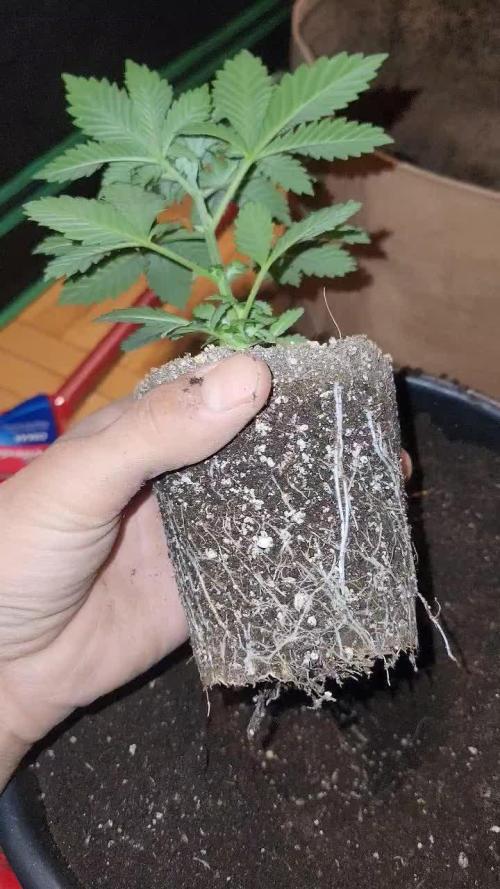
transplanted and ready to go, since shes fully recovered i threw her in a bigger pot now playing more of the waiting game.

Likes
3
Share


Likes
30
Share


@TightNugs
Follow
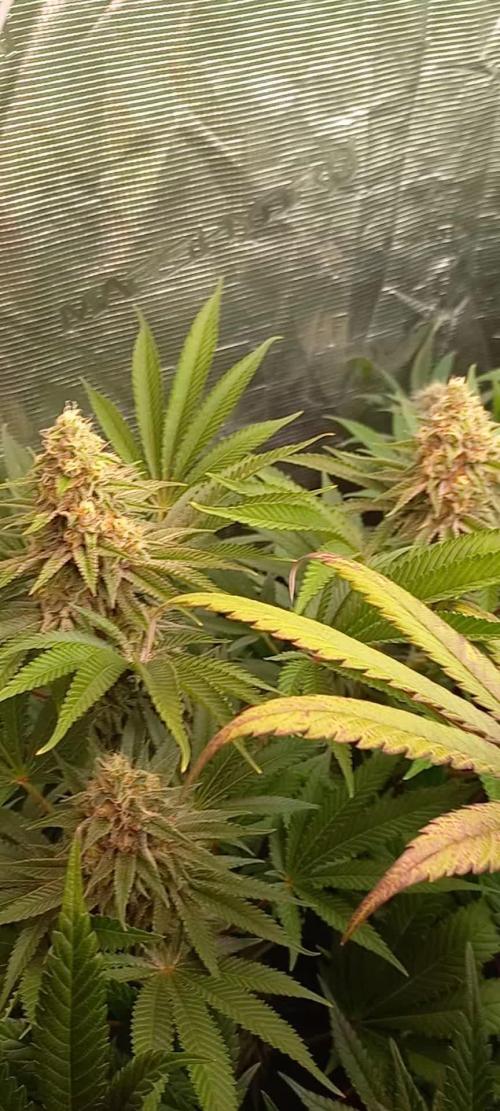
Awesome first week under the light,both plants now into flower and stacking up on plant 1 very fast.
Added big bud and bud candy,last feed till mid flower res change.
No issues so far,other than constant defoilation of light blockers needed.
Happy days and nights 👍🤞🏴🍁
🍁🍁🍁🍁🍁🍁🍁🍁
Breeder-white label purple bud auto x2
🍁🍁🍁🍁🍁🍁🍁🍁
Light-Voost led VST 240(discount code TightNugs) https://voost.com/
🍁🍁🍁🍁🍁🍁🍁🍁
Nutrients-Advanced Nutrients ,Plant Magic,CX Horticulture.

Likes
10
Share


@tontodedoverdee
Follow
18/4
So, we had an amazing week, the Runtz grow of 10 extra cm during the flowering stretching , the buds are getting rich of fuzzy withe pistils, and the smell it's getting much stronger,
from the second node starting from the bottom, both the branches had split creating 2 heads on the same branch, I've never see something like this before.
As you can see from the picture the lower buds are flowering a bit slower than the ones on top, now it's kind difficult take some pics since the plant grow so much!
Likes
3
Share


@Moon_garden
Follow
Finally finally flipped to flower. Should have happened well over a month ago, maybe 2. (Couldn't, because reasons)
This has been a very long Vegg. But it gave me the chance to do all the stress techniques I wanted to try.
Officially fixed my deficiency or toxicity as I come to find out.(I think) Waited at least 5 days before I felt safe to flip.
Doing literally everything I can to bend this crazy tall girl down and at the right distance from the light. Some branches do a loop da loop. Haha. Some sweep way down then come back up. It's crazy!
I am not trying to get quantity here. In fact, I'm doing everything I can to make sure I have very few tops and absolutely no lower canopy anything. Don't want any small larfy buds. Pushing all that energy to the few mainlines to see how large I can get the colas.


Likes
22
Share


@EhJay
Follow
D36 Collected runoff from #1 and was not happy with the results only the ph from the runoff was perfect. Performed a flush until the runoff was at 400ppm. Will give a small feeding when the soil dries up.
