


Likes
Comments
Share

@LIPANJA
Follow
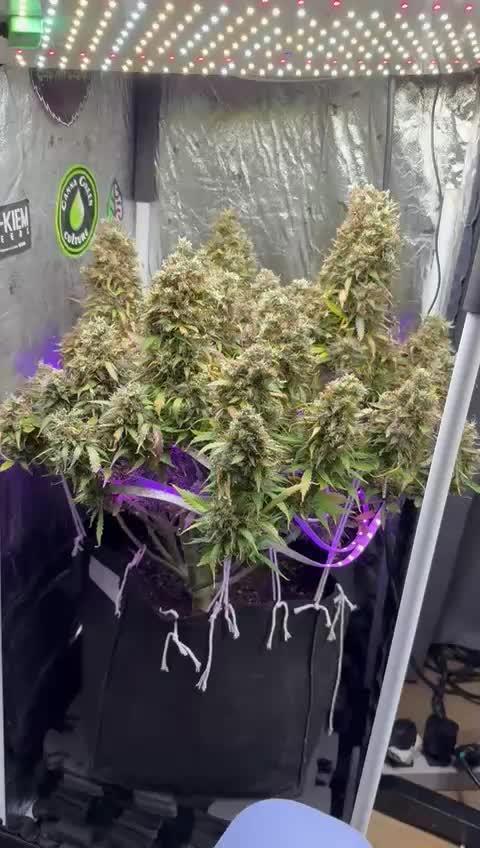
So guys, amber trichomes have started to appear, so today was the last feeding with nutrients. In two days I’ll start the flush (which will last 5 days), and next weekend I'll do the harvest.
A lot of the upper leaves are brittle, the smell is sweet and pleasant, with moderate potency — maybe because I didn’t reach lower temperatures during flowering, and also due to excess nutrients at some stages. Besides the delay caused by keeping it on 12/12 for a few weeks because of other plants, and the fact that it will need to spend the final 3 weeks in my secondary tent, which I normally use for drying, with older lights instead of my new and more powerful one. Despite all the setbacks, it will definitely yield over 100g dry and will have a very pleasant aromatic profile.
Então galera, começaram a aparecer tricomas âmbares, então hoje foi a ultima rega com nutrientes, em 2 dias começarei o flush (que durará 5 dias), e no proximo fim de semana faço a colheita. Bastante folhas superiores quebradiças, cheiro doce, agradável, moderado em potência, talvez porque não atingi temperaturas baixas durante a floração, e também por excesso de nutrientes em algumas fases, tirando o atraso que precisou ficar 12/12 por algumas semanas por conta de outras plantas, e tirando também o fato de que vai precisar ficar as 3 semanas finais na minha estufa secundária que uso pra secagem com luzes antigas ao invés da minha nova e potente. Apesar de todos os transtornos ela com certeza vai render acima de 100g seco e terá um perfil aromático bem agradável.

Likes
4
Share


@Mr_nugs_lover_David
Follow
This lady is amazing, just what I expected, the clasic amnesia haze smell, very sweet andnat the same time very earthy, beautiful nuggets super sticky full of trichomes everywhere, let's see how this lady keeps performing until the end of the road! 💛💚❤️👨🌾

Likes
8
Share


@Northern_Ent
Follow
June 14: this Sunday Punch EV is a very fast growing plant that can handle some cool weather. The ruderalis genetics from the autoflower used to create this fast flowering (Early Version) add some toughness that make it well suited to short season areas. Likes to stretch too. 😎
it was to be a 16 cola manifold but it has grown so fast i realized I can also match another 8 colas from the next lower node. So i did that final round of topping this morning and we’ll see how it goes. Added second layer of Scrog net to stabilize it and keep the fan leaves from shading the growth tips.
June 15: did the weekly foliar spray with Extreme Blend this morning. Rained last couple days which cleared the air of smoke and now it’s a nice sunny Sunday.

Likes
1
Share

@GrowdadGage
Follow
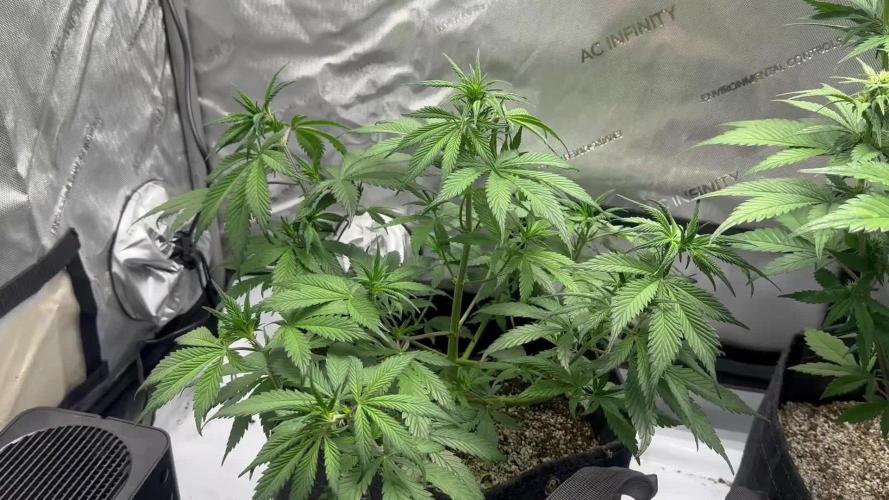
One plant is entering flowering stage beautiful while my one sad stunted plant continues to struggle. Lots of lessons learnt with this grow, was my first time trying out HP Pro Mix and I’m definitely enjoying it but have some notes for the next round of seedlings I can improve upon.
Excited to see how the buds turn out on both these ladies. 💚 Happy growing everybody!

Likes
6
Share

@RakonGrow
Follow
+
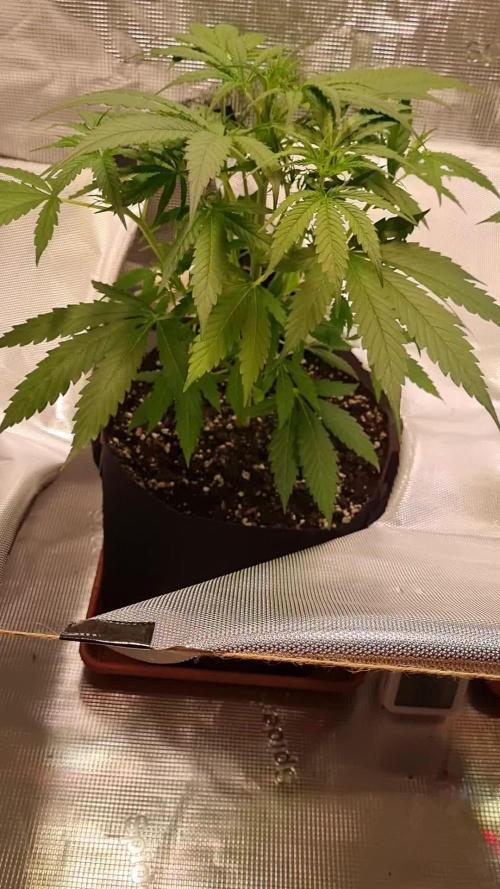
Day 37:
3.0L bottle water EC 0.35 + 0.3ml/l CalMAg , 3.3ml/L Vega . PH 5.8
Suddenly increasing water consumption without saying anything :) It was basically drought in the early stages. This time I'm giving less. I'm going to try Pieters' handbook video (Canna) for mineral fertilizer (Canna). With 30-40% water content in the soil, I'm only watering what is consumed. For this, I got myself a parcel scale that is accurate to the gram up to 40 kg. This needs to be tested.
Day 33:
3L bottle water EC 0.35 + 0.4ml/l CalMAg , 3ml/L Vega . PH 6.07
DIY Project fixed my Problem :
+ Top Values : 25.4°C ; 57%rH
+ Bottom Values : 23.0°C ; 64%rH
Day 32
1L bottle water EC 0.35 with 0.4ml/L CalMag , PH 6.10 . Reduce EC in some spots .
Build a shadow plane with reflective foil (diamnond tent foil).
my new light is large as hell , and heating all around lol . this DIY project should fix it .
Day 29
2.5L bottle water with 0.4ml/L CalMag 3.3ml/L Vega , PH 6.07
+

Likes
20
Share


@CanadianFillmore
Follow
Start of week 7 of flowering. Plant looks good, she recovered well and has shown some nice bud development. Temps have dropped to about 32°c.



Likes
2
Share


Likes
2
Share


@GanjaFarmar
Follow
Started flushing about 3 days ago. The plant itself has reached 12 weeks from germination.
I will be harvesting this later on this week depending on how the flushes are going.
I should of snapped off the lower branches at the start of flowering.
But main goal with this setup was to grow naturally without any low stress training and topping.
I will update the harvest very soon!
One Love

Likes
25
Share


@pifflestikkz
Follow
Day 8
08/07/24 Monday
Light water with De-chlorinated tap pH 6.2 with half t spoon of DyNoMyCo.
They seem to be loving it!!
Germination week complete, Let's start the VEG 🤩
Updated short videos of strains ,✌️💚
Day 11
11/07/24 Thursday
De-chlorinated tap water pH 6 with calmag.
Lite waterings of 250ml. Due to high humidity.

Likes
158
Share


@Cannabeast40
Follow
This genetic's is awsome 😎 i will try and grow it again for sure💯 She grow's very fast, and with the propper setup, I think it can be a high yielder for sure💪
I did some LST to keep them from getting too high👍🌱💚
Something I did along the way, made them a little bit unhappy, and they got some dry leaves i had to remove.😬 But in the end i am just happy they finished up💯🌱💚


Likes
44
Share


@Roberts
Follow
I have not done too much training on her after the rough start. I been letting her grow now after the kst from before. She will need the height to get to the light better. I am not expecting a big plant, but instead to get as much as I can out of her with what time she has left. She is stretching and starting to form her flowers. I did a solution change on her yesterday to blooming nutes. Hopefully she still does something neat. Thank you Medic Grow, Athena, and Fast Buds. 🤜🏻🤛🏻🌱🌱🌱
Thank you grow diaries community for the 👇likes👇, follows, comments, and subscriptions on my YouTube channel👇. ❄️🌱🍻
Happy Growing 🌱🌱🌱
https://youtube.com/channel/UCAhN7yRzWLpcaRHhMIQ7X4g
If anyone needs to purchase fastbuds here is a link for my affiliate program
https://myfastbuds.com/?a_aid=60910eaff2419
Likes
49
Share


@masterofsmeagol
Follow
6/15. Glad I listened to my intuition and held off watering. IT Rained andctheb again last night. Plants seem to be doingvreal well. Slight burn on lower leaves where it was before from being in the garage and I found on spot that LOOKED like it could've been caused by a pillar but it's right on a burn. I sefoliated one leaf. This is minor stuff. Next watering I'll be adding silica. I'm not giving nutes until the plants tell the need them. The 3 gallon ones may receive nutes first as they'll run out. I'll update as I progress.
Went back over at 8:30. It's just overcast with showers. Plants seemed to like it. They all look good. Noticed a chunk out of a leaf and a POSSIBLE pillar spot. I'm going to have to get the BT out and and give the girls an application. I'm waiting until they settle in a bit more though. I need to start LST as well AND the light dep. Unfortunately "life" has made things difficult. I'll get back over there today though and I'll start the light dep. Kinda makes me wonder though. The 1pth planet I wanted to light deo is tge same size as the others in the much bigger containers. The thought came that maybe I should just hold on to them as extras in case something happens. I also am going to start silica next watering but it will be a few weeks before any nutes are given.
UPDATE: WENT BACK OVER AT FIVE AND TOOK ACSHOT TON OF PICTURES. IM TRYING TO UOLOAD NOW. THINGS ARE POPPING OFF AND IM GETTING A NICE SWEET SKUNKY ODOR. WHILE I WASCTHERE WE GOT A QUICK SHOWER. DIDNT LAST MORE THAN TEN MINUTES BUT IT RAINED HARD. I FOUND A TEMPORARY SPOT TO LIGHT DEP THE TWO PURPLE PUNCH AND THE ONE TENTH PLANET. I DONT SEE ANY LIGHT LEALS AND ITS SURE AS HELL DARKER THAN IT IS AT NIGHT. I'LL SEE HOW IT GOES LEQVING THE COVER ON ALL NIGHT. IF IT DOESNT WORK I MAY JEED TO ADD A FAN OR CHANCECTHE SPACE. I ALMOST DIDNT WANT TO DO THIS AS THE 10TH PLANET IS KEEPING PACE WITH ITS SISTERS, DESPITE THE SMALLER POT. OH WELL I WANT TO GIVE IT A SHOT AND I DONT WANT MY CAGE OVER CROWDED. I'M LOOKONG TO DO A 6:30 TO 6:30 SCHEDULE.
6/16 First night of light dep for the three little ones. I won't be able to call them that soon. I'm currently trying to upload a video. My grow buddy mentioned the droopiness of a couple of my plants in this video and how I hadn't been watering. This kinda scared me so I ran over and checked the too few inches on the two that had a little droop and came out dry. I had some water already phed ready to go (I'm hoping that the ph doesn't change if it's stored a day or two) and used the gallon to moisten the dry topsoil. Looking back over my diary we have had nothing but rain. I then tried the "lift the pot method" and came to the conclusion that these bags were indeed still holding moisture. I assumed they would be considering the thunderstorms we've had. I held off on fullt watering because the weather said the next dry day is going to be Monday. Today is Friday so thats two solid days of rain. Three if you count today through the night. I concentrated my watering of the one gallon on the couple plants that appeared to droop. If it doesn't rain like they say it will I will need to water. I need to set up a decent watering schedule but I need it to hold off raining long enough to do so.
UPDATE: I WENT BACK OVER AND PUT THE 3 GALS IN FOR BED AND CHECKED OUT THE REST OF THE GARDEN. I WATERED THE 3 GAL GIRLS A LITTLE MORE SINCE THEY WONT BE OUTSIDE. THE BIT OF WATER I GAVE SEEMED TO HELP LIFT SOME OF THE GIRLS. AT LEAST I THINK IT DID. THE RAIN SHOULDVE COME ALREADY. I WOULDVE WATERED MORE HAD THE BAGS NOT BEEN SO HEAVY.
6/17 Rained all night which is good. Brought the three transplants out but left them under the overhang so they. Dont get soaked. So far light depoing is going good. Well its only been two nights but we'll see. I'll update as I go. Not feeling well today. Went back over and checked on the plants and did a video. Probably won't get uploaded until tomorrow. I'm giving it a shot. It's raining in good shape. Plants looked fine when I was there. I need to get my supports and my trellis in place. Video won't upload. No suprise. I'll get it tomorrow.
6/18 Uploaded videos if they fuck up from me editing I'm gonna be pissed. Anyway it's still pouring with high winds. I added a couple supports where it looked like it needed it. I need to put my trellis up. I've been able to keep up with the light dep and those plants haven't been used and abused. They stay in the building facing the sun when the weather is this bad. I think they're looking great. I may start a new diary just for them. Sun came out around four. Trying to upload a couple videos but doesn't look like it's going to happen. Tucked the three little ones in at six. It had stopped raining and the wind died down some. If adverse conditions create good plants then I'm on the way to a great harvest. Minor bleaching and burns on a few lower fan leaves and some wrinkling on some from wind burn other than that plants seem to be acclimated. Did a video but will have to wait until tomorrow to upload
6/19 It's not raining! We got four inches this past storm lol. Having the bags raised on pollens I believe has greatly helped. As did the high winds that help dry the soil in the bag. Had to add a few temporary supports. Light dep is going good. Adjusted amd found a better spot. I'm considering getting "pool noodles" or some other thing like a Hulu hoops or pvc pipe and making either a frame on the roof for the entire cage or on top of each individual plants posts so I could roll clear plastic over it when it rains. I'm thinking about later on in the fall when this could really help. I found a roll of plastic. Also thought about putting that up on the back wall but I didn't. What I'm doing right now is working. I just need to keep up with it. I also need a solid watering schedule to stick too. It's hard when each plants needs are different. Oh well. I'm just happy to be growing again. I pray to the cannabis gods and the Lord above himself that I'm not plagued with the problems of last year.
6/20. I'm sick as fuck but I got the little girls out in the sun. Light dep is going good. Plants look great. I'll update when I feel better and if I do anything. Still feel like shit. Luckily I looked up just in time to get to the grow and put the little ones to bed. They were thirsty (especially the bushy 10th planet so I gave them about 3/4 of a gallon of water. Got lots of run off from 10th planet. Didn't notice as much from the others but I was hurrying. I'll upload later. Still sick.
6/21 Plants seem to be doing great. I removed some lower growth on a few just to see how they respond. I'm going to do some defoliation down low and I want to see how the plants respond. I'm planning my first full watering Thursday as we have a real good stretch of weather after that. Grow bags are still heavy as hell so they have sufficient water. I'll be adding silica nextcl watering. Not time for nutes but I think it would be okay to start the silica and in another week I might start small doses of nutes. The light dep on the little girls is go8ng great! It's cool I'll get to sample some of these strains before fall. I'll update after I do something. Tucked the girls in at 6. I might need to think about transplanting that 10th planet in the 3 gallon. I watered until runoff yesterday and it's light as hell today. Plus I fimked it and it's bushy as hell. I've Bern turning it si it gets all angles of the sun. I have a bag of 707 left and a 5 gallon bucket with holes drilled all over it like an air pot and a ten gallon grow bag. This will take some thought. Hot af today. I wad able to lift the grow bags so I decided tomorrow will be the girls first real watering. I think I'll be adding silica and possibly kelp me kelp you due to the heat stress I've been noticing. Nothing bad just a few tacoed leaves. I've had several people that have seen my grow in person tell me that this is by far the healthiest (not biggest I've had bigger) but by farcthe healthies5 crop I've grown. They believe I'll have my best year ever this year. I hope they are right. Vid won't be uploaded until tomorrow.
6/22 WATERED TODAY. I'm still a little gun shy with watering. That fusarium last year pretty much traumatized me. I left the container plants alone. I gave them a little water but not enough to do much. I used a pump sprayer on a mist setting and went one by one and back around gently watering the entire medium. This took forever and I'll be finding a different way to water. I hope this was enough water. I'll check later on and if they look like they want more I give it to them. I started LST on the light dep 10th planet and tucked some branches of a another under the tomato cage. I had missed that earlier. I also went around and cleaned up the bottoms on most. Getting rid of things that will amount to nothing. I noticed what looked like thrip damage on ONE leaf on ONE plant. I also saw a chunk missing from a grasshopper bite and a finger of a fan leaf petiol was broken so I'm going to need to get my ipm up and running. I'm unsure whether I'll be using chemicals or predators. Probably BT and spinosad. That's what I've had the best luck with. I also noticed bottom leaves dying off on the bottom of a couple plants. It was where the burns were though so I'm almost 100% its just related to the light burns they got when i first put them up. I'll be updating the diary as I do more stuff.

Likes
285
Share


@Tropicannibis_Todd
Follow
👉Alrighty Then👈
So we are at DAY 49 with the Sugar Larry 👈 And she's doing fantastic 👍 hoping shes done with her stretching 👌
😀 decided to showcase pheno #2 , definitely has different traits then #1 very interesting 😀 thoe both are killing it 👈
Hedgehogs in full bloom 👈
Except for some slight watering , ive been doing some defolation as well as some LST manipulation to pull branches to the side 👌
👉I had to Top her during the middle of 4th week 👍 Happy Growing
👉Soil Provided by ProMix.ca
👉Nutrients Provided by Agrogardens
👉Lighting Provided by MarsHydro.ca
Thanks my friends for the great support over the years 🙏 Happy Growing

Likes
3
Share

@Growfather1
Follow
Hello everyone.
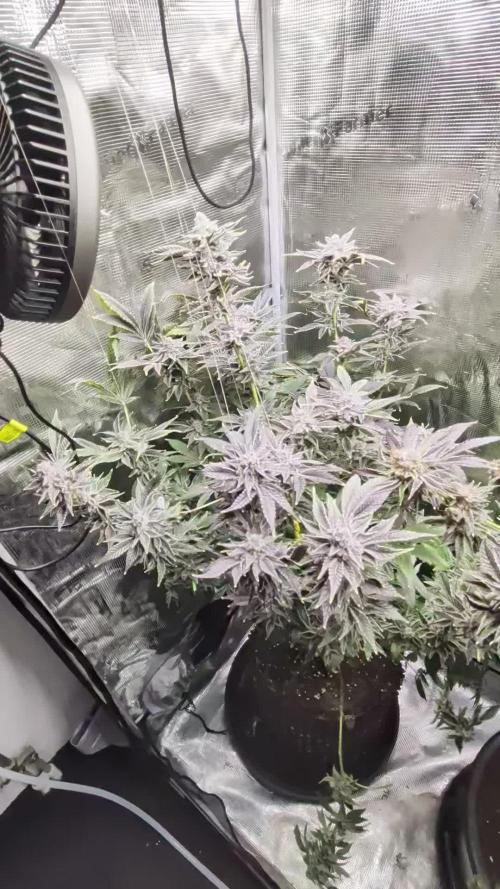
We are officially in week 8, day 11 of the flush for the Gorilla Glue NR 4 x White Widow.
She's purpling up beautifully, and about 95 percent of the hairs have turned orange or brown.
Looking closely at the trichomes, they're about 90 percent milky and no longer clear.
Temperatures are staying right in the sweet spot between nineteen degrees at night and twenty six during the day, with light intensity set at 75 percent.
She is taking a bit longer than suggested by Expert Seeds, the breeder, who says seven to eight weeks, while zamnesia, the seller, says eight to nine weeks.
I've just removed the dehumidifier tube that was feeding the biggest plant, so she's almost ready for harvest.
Thank you for stopping by and following this diary with me.
Best regards,
Growfather.

Processing
Likes
8
Share


Likes
5
Share


@cookingwithninja
Follow
Plants are currently drying
2+ months later. And next project au79

Likes
3
Share


@LittleBigTrees
Follow
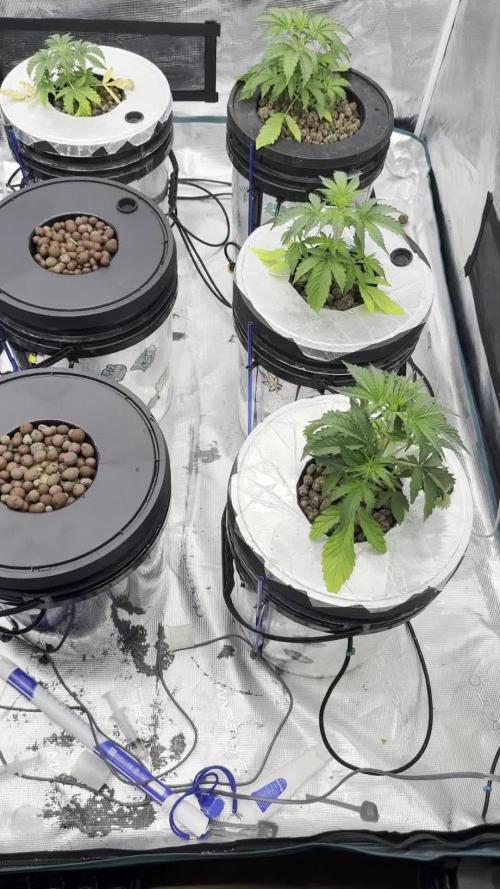
Just been feeding, defoliated slightly.
I've started feeding plagron sugar royal.


Processing
Likes
5
Share


@Ramman
Follow
Put the girls into the new 4x8 flower tent today. Need to get lights for the other half of the tent but these plants are in one half of the tent sitting under Aglex 2000 and Aglex 1200 (total 630 true watts)
They're starting to stack and bulk up a bit and getting a nice sweet stink to them.
Another easy week with no issues showing themselves.