Likes
Comments
Share
@Naujas
Follow
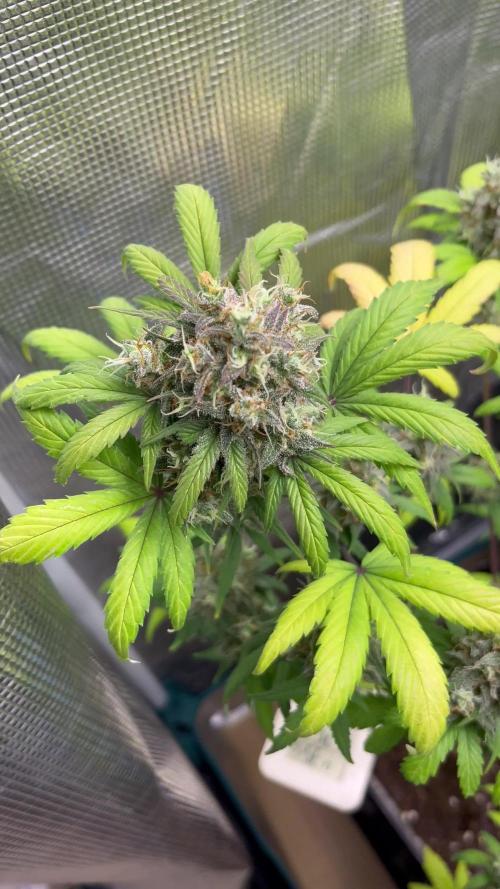
so without waiting for anything, I harvested on day 63 :) although the girl suffered for a long time from overfertilized soil, which did not allow her to grow properly, she died from excess food, but we learn from mistakes :) but despite all this, the flowers ripened just perfectly, they are quite firm and full of trichomes :) and the smell is such that it is impossible to describe in words, amazing!!!!!! good luck to everyone :)
Likes
1
Share
Smooth trim and harvest, very time-consuming. I think we spent over 8 days working on the autos. Now I can rest until early September.
Processing
Likes
18
Share
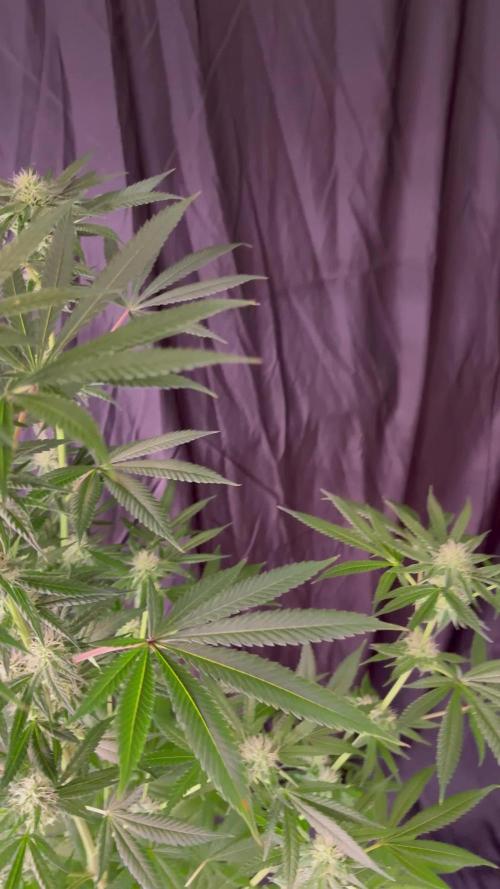
Que pasa familia, estamos de vuelta para actualizaros la 4 semana de floración, las flores van cogiendo forma , en esta variedad las flores Se ponen como pelotas de tenis. Todo va bien , ph controlado , humedad no aumenta por encima de 50%. Y asimilan genial todo el alimento aportado. Hemos hecho defoliación para dejar acceso a mas luz a la altura media de la planta.
Likes
18
Share
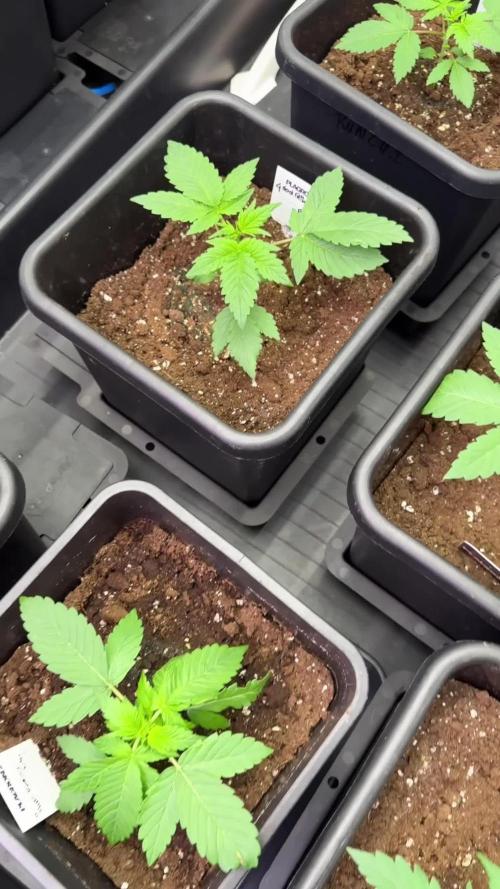
This is week 4 we are about to flip them to flower. 8 strains being test grown new strains.
Likes
71
Share
🌸 Week 7 Flower — Eternity Grow Cup Update 🌸 📍Week 18 from seed 📸 +150 high-quality photos & videos provably more ups but they are shining and they deserve the attention EC 2.5 | pH 6.2 | Full spectrum + under canopy light tuning Welcome back to one of the most breathtaking updates so far in the Eternity Grow Cup. Week 7 Flower has arrived with a storm of frost, color, aroma, and structure — this is the beginning of the final masterpiece, and it’s nothing short of spectacular. Each of the five phenotypes is shining in her own unique way, and the individuality of each plant is now in full display. From deep fruit tones to dense stacking, this week is a celebration of what happens when genetics, environment, and love come together in harmony. 💎 Standouts of the Week • Pheno #1: Still holding the crown for the most intense fruity profile — bursting with sweetness, almost candy-like, and surpassing all expectations week after week. • Frost levels are skyrocketing across the board. These buds are starting to look snow-covered, shimmering under every light source. • Bud structure is really starting to swell — you can see the shift now as things gear up for ripening. We’re talking weight, mass, and beauty. 🔬 What’s Working This is a week where everything is clicking: • The mix of Plagron and Aptus nutrition lines is showing insane synergy. The balance of strength and finesse is just right, and the girls are loving it. • ICL 300 under-canopy lights are performing beyond expectations. They’re lighting up every shaded spot, helping buds form from bottom to top with full integrity. You can see the results in the side buds — tight, frosty, and reaching up. • We’re holding strong on spectrum tuning and DLI, hitting the right numbers at the right time, and that precision is paying off in how fast these ladies are moving forward. • Temperatures and airflow have been key — we’re still running the vortex-style air movement, and it’s doing wonders for the microclimate around each plant. 🌿 Just 2–3 Weeks From Harvest It’s starting to feel real. We’re entering the final arc. The finish line is not far, but right now, it’s all about patience, observation, and letting nature complete its masterpiece. Every moment counts now. 🎥 We’ve documented everything in full 4K and high-res stills. This is a week for the books — every trichome, every pistil, every sparkle. Be sure to head over to YouTube for the full experience and follow the journey with us. 🤝 Special Thanks To all the growers, new followers, silent watchers, lovers, haters, and everyone in between — thank you. This journey is built with you, and this cup wouldn’t exist without your energy. To all the participants in the Eternity Cup — congratulations. Every diary, every tent, every effort is valid. We’re getting close to the finish line, and it’s now in the judges’ hands. But no matter what happens, you’re all already legends for growing with intention and passion. 📲 Don’t forget to follow us on Instagram for sneak peeks, unseen content, and special behind-the-scenes looks. Every plant has a story, and we’re telling it together. With deep gratitude, Grower’s Love DD Reporting directly from 🌍 Eternity Grow Cup to You 🙌 -------------------- Genetics - Runtz https://www.zamnesia.com/6000-zamnesia-seeds-runtz-feminized.html Nutrients - Plagron https://plagron.com/en/hobby - Aptus Holland https://aptus-holland.com/ Controls - Trol Master https://www.trolmaster.eu/ LED - https://www.futureofgrow.com/en LED - https://www.thinkgrowled.com Soil - https://www.promixgardening.com/en Germination - Cannakan https://cannakan.com/?srsltid=AfmBOopXr-inLXajXu3QFgKXCXXos4F1oEvScjMKIB5MR5dk8-GJ-F49 DOGDOCTOR 15% off Smoking Papers - https://ziggioriginal.com/ Terpene saver - https://grovebags.com/ As always thank you all for stopping by, for the love and for it all , this journey of mine wold just not be the same without you guys, the love and support is very much appreciloved and i fell honored with you all in my life With true love comes happiness Always believe in your self and always do things expecting nothing and with an open heart , be a giver and the universe will give back to you in ways you could not even imagine so As always, this is shared for educational purposes, aiming to spread understanding and appreciation for this plant. The journey with nature is one of discovery, creativity, and respect. Let’s celebrate it responsibly and continue to learn and grow together! Growers Love To you All 💚 #EternityGrowCup #RuntzHunt #GrowersLove #CannabisCommunity #AptusHolland #ProMixSoil #TrolMaster #Zamnesia #Plagron #ZiggiPapers #Grovebags
Likes
51
Share
@Natrona
Follow
Lemon Cherry Cookies Week 10 June 1-7 FLOWER 5 Nutrients : 3 gal GH Micro 7,5ml GH Gro 0ml GH Bloom 15 ml CalMag 15 ml Elm Bloom 15ml 6/1 PH 6.62 PPM 646, temp 67 2 ltr each 6/3 PH 6.6, PPM 493, temp 68 2ltr each 6/6 PH 6.31, PPM 506, temp 68. 2ltr each. 6/3 pics 6/4 weekly pics & vid As aways, thank you all for stopping by, for the likes and most of all love and support. Stay green, growers love 💚🌿 💫Natrona💫
Likes
9
Share
@Oldwied
Follow
Holy Sunday She is two weeks in flower and grows so vigours. Every Day I keep on tucking the branches under the strings. The Screen is slowly filling up. In 4 or 5 days I will stopp tucking. Light Power: 80% Day 53 Flower #8 Watered with 2,5L freshly brewed compost tea Sprayed with freshly brewed compost tea Day 56 Flower #11 Watered 2 L tap water
Likes
12
Share
Likes
199
Share
Germination date 🌰 14/03/2021 Day 77 🌱 30/05/2021 Strain 🍁 Peyote wi-fi, Seedsman Nutrients 💉 Advanced nutrients PH perfect sensi grow A+B (veg) PH perfect sensi bloom A+b (flower) B-52 (through veg until week2 of flower) Voodoo juice (🖕🏻) Tarantula (🖕🏻) Piranha (🖕🏻) Sensizym (all the way through) Rhino skin (🖕🏻) add first leave for an hour Big bud coco (week2+ of flower Bud xfactor (🖕🏻) Nirvana (🖕🏻) Bud igniter (first 2weeks of flower) Overdrive (last 2weeks of flower) Flawless finish (flush week) RockHoldings Rockresinator(week2+ of flower) Vitalink calmag Set Up ⛺ amazon special 1.2m x1.2m 💡 spiderfarmer sf4000 📤📥 AC infinity 6inch 💧 10lt dehumidifier Notes🗒️✏️ Nothing to report from last week. Seems to be taking a little while to bud but no complaints as it smells 👃 f**king amazing. Been doing autos that long I forget how good photoperiods smelt. I get why people do autos but personally from now I will never do them again. Next grow will be the one to look out for 👀 Sin city's WHITE NIGHTMARE x Biscotti Sundae (Frosted Biscotti) Sin city's WHITE NIGHTMARE x Purple Yuzu (Yuzu Sorbet) Ethos genetics Grape God x Mandarin Sunset (Banana Hammock Rbx1) Depending on which one comes out better (purple matcha) / (peyote wifi) that will take the 4th spot in the tent for the next grow 🌱 Happy growing everyone 🌱❤️
Likes
Comments
Share
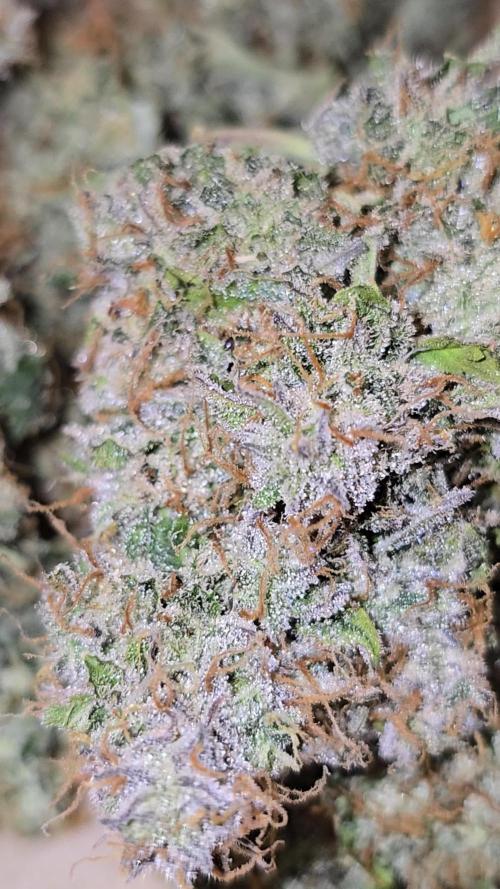
Removed some lower branches at the end of week 9. ✂️ Things were getting a little tightly packed in the flower room. 🤷‍♂️🏽🌿 Both plants are showing signs of female sex.😎 That about some up week 1 of flower. 🌺
Likes
Comments
Share
Everything looking really good. Couple more day then switching to 12/12 with 2 weeks of half strength veg / bloom nutrients. Plenty of height left for the final stretch .
Likes
3
Share
Lights are 58 inches from the main source to the top of the pot and the soil surface. If you added up all the lights in the tent, it would be 1100w-1200w total across 14 lights. Using them all at once is far too much for a plant and incredibly difficult to deal with environmentally. The lights are fixed in position; side lights have dimmers, allowing for pinpoint precision of PPF. Fixed at 58 inches, cannot move them closer to increase intensity. Instead, achieve optimal PPF by distributing smaller wattages across a massive, multi-fixture matrix. Triggering specific plant defenses without melting the canopy. What's the point/blah blah wattage? Never really go above 600W at any one time. Lights come on in the east of the tent and set in the west. At sunrise and sunset, the red-to-far-red R:FR light ratio drops because the sun's low angle scatters red light more than far-red light. This shift reduces active Pfr and increases inactive Pr, mimicking Mother Nature herself. Deployed a lighting system featuring extra 660 nm deep-red and extending the spectrum up to 780 nm achieves the full Emerson Enhancement Effect by simultaneously balancing Photosystem II (PSII) and Photosystem I (PSI) to maximize quantum yield. By pairing deep-red photons with far-red photons, you trigger a synergistic biological response where the resulting photosynthetic rate is higher than the sum of both wavelengths used individually. This practice directly leverages the updated extended Photosynthetically Active Radiation (ePAR) framework. The Emerson effect accelerates plant metabolism and heat capture; you must proactively scale up your ambient room temperature, nutrient delivery, and CO₂ supplementation to prevent the light from stalling out your cannabis plant. UVA stays high all day from morning to night, but UVB peaks at solar noon (middle of 18-hour days) when the sun is peak. Morning color starts at 2k-3k; by noon it goes to 5k- 6k and back to 2-3k for sunset, with differing P:FR at light off. The extra-blue light is to assist with photoreactivation of UVB damage. No more yield loss for me. Using extra blue light for photoreactivation is what I do. Blue/UVA light activates photolyase enzymes, which directly repair DNA damage caused by UVB radiation. But what's the point if it's not for yield? Ultraviolet (UV) radiation—specifically UVA (315–400 nm) and UVB (280–315 nm)—acts as a critical environmental signal that programs a plant's photoprotective genes to unlock its true photosynthetic potential. When growers push crops to their absolute photosynthetic maximum via high-intensity light and elevated carbon dioxide, the photosynthetic machinery easily becomes overwhelmed. Emerging photobiology research demonstrates that UV radiation prevents this limiting bottleneck; it triggers specific transcription factors and signalling networks that fortify the plant's cellular defenses, allowing it to process extreme light levels without sustaining structural damage. There are 8 limiting factors of plant growth; when carbon dioxide becomes the 9th limiting factor of plant growth, it shifts the growth curve from exponential to linear. The restriction after that is "photoprotection" against reactive oxygen species (ROS), managed via non-photochemical quenching (NPQ) and the xanthophyll cycle, which bridges into precise hydrogen and redox dosing. UV radiation, particularly UVA, and the synthesis of zeaxanthin are critical for the xanthophyll cycle to function. It's not chasing purple strains... One likes to call it chasing the limits of growth, trying to make the linear exponential, just like father mathematics prefers. In order to do that, must control every environmental variable and compound the plant’s metabolic rate. True exponential growth means the rate of increase matches the current mass at every stage, requiring a closed-loop system where light, CO2, and nutrition lock into a synchronized upward curve. First, you must attempt to understand what restricts it. Precise hydrogen and redox dosing. Nature mathematically optimizes quantum energy transfer and light absorption efficiency within the photosynthetic machinery, as it naturally dictates energy scaling hierarchies and resonance dynamics. Most won't even understand that; once you do, it changes everything. Constructive interference occurs when two or more overlapping waves meet in phase, meaning their crests and troughs perfectly align. Their amplitudes add together, creating a new, amplified wave with greater intensity than the individual components. Constructive interference is the foundational mechanism that establishes a resonance hierarchy across physical, structural, and acoustic systems. Chromophore spacing is tuned to sub-nanometer precision to match the wavelengths of absorbed light, forcing constructive interference. Light-harvesting proteins form geometric rings and lattices. These shapes act as physical resonators, trapping and focusing the wave energy. This same principle dictates how opera singers shatter glass, how musical instruments resonate, and how bridges withstand structural vibrations. Nature uses the exact same math to harvest a photon as an engineer uses to design a concert hall. When you push high PPFD and elevated CO₂, you create a metabolic bottleneck. The plant cannot process the energy fast enough, leading to electron backup, light-induced damage, and a collapse from exponential growth into a flat, linear rate. UV light acts as the regulatory valve that prevents this collapse. In standard agronomy, Liebig's Law of the Minimum dictates that growth is limited by the scarcest resource. When you maximize water, nutrients, light, temperature, and CO₂, the bottleneck shifts to metabolic processing speed and photoprotection. By controlling the Redox state of the plant using UV, the xanthophyll cycle, and managing ROS, you can prevent the plant from hitting a hard photosynthetic ceiling. Instead of the growth curve flattening out (linear or plateauing due to photoinhibition), the plant continues to compound its metabolic rate efficiently. You are forcing the plant to operate at peak thermodynamic efficiency. By matching the UVB peak with sustained UVA and shifting Kelvin temperatures (2K to 6K), you are damaging the plant just enough to trigger defensive genes, while simultaneously providing the exact light energy needed to repair that damage instantly. UVA radiation and specific blue wavelengths accelerate this enzymatic conversion. Zeaxanthin acts as a structural sponge that absorbs excess excitation energy from chlorophyll and dissipates it safely, preventing ROS formation. Without UV signaling, the xanthophyll cycle cannot keep pace with extreme light, leading to dynamic photoinhibition (yield loss). The addition of Spirulina is primarily for zeaxanthin, as it contains a lot. But on top of that, the active Hawaiian Spirulina in the matrix was cultivated in open ponds using a combination of 100% fresh potable water from Hawaiian aquifers and ultra-pure, deep ocean water containing all 94 trace minerals & elements. Then gently dried using patented Ocean Chill Drying technology and cold-pressed to ensure maximum nutrient levels. Spirulina, a blue-green alga, is rich in nitrogen, phosphorus, and potassium (NPK), making it an excellent source of nutrients for plant growth. Studies have shown that Spirulina can be used as a biofertilizer, effectively replacing chemical fertilizers, especially for nitrogen, with a whopping NPK of 10% (N), 20% (P), and 20% (K). Rich in proteins, amino acids, trace minerals, and plant growth-promoting compounds. Zeaxanthin is a vital plant pigment that accumulates under intense light to drive non-photochemical quenching (NPQ), acting via thermal energy dissipation, direct singlet oxygen scavenging, and thylakoid membrane stabilization. The violaxanthin cycle (or xanthophyll cycle) reversibly converts violaxanthin to zeaxanthin via antheraxanthin to protect plants from photooxidation. Understanding this interconversion is vital for optimizing non-photochemical quenching (NPQ) and pushing photosynthetic limits under high-light stress. Ascorbic acid (vitamin C) is a natural antioxidant that plants produce internally to neutralize harmful reactive oxygen species caused by photosynthesis and high light stress. Acts as a co-factor for enzymes like violaxanthin de-epoxidase in the xanthophyll cycle, which safely dissipates excess light energy. 1g ascorbic acid will neutralize 100% of chlorine in upwards of 30 gallons of tap water. If your local tap water uses chloramines (chlorine bonded with ammonia) instead of free chlorine, you will need roughly 20% to 30% more ascorbic acid to completely break the tougher chemical bond. Molecular hydrogen and hydrogen-rich water act as selective antioxidants that help lower oxidative stress. They neutralize toxic reactive oxygen species like hydroxyl radicals and boost natural antioxidant defense systems in biological and plant systems exposed to high-intensity light or abiotic stress. UVA and UVB act as stress signals that upregulate the plant's secondary metabolism. It forces the plant to build an internal "sunscreen" (flavonoids and anthocyanins) and fortify its cellular defenses before the peak solar noon crisis. This keeps the metabolic highway open. In nature, the ambient ratio of UVA to UVB at solar noon sits roughly between 10:1 and 20:1 (depending on latitude and elevation). In a high-PPFD indoor matrix, maintaining a strict ratio—often aiming for around 12:1 to 15:1 UVA to UVB—provides the optimal signaling threshold. Balancing Far-Red (FR) light at "light-off" to manage the phytochrome photo-equilibrium (Pfr to Pr conversion) in tandem with the UV schedule. Omg, the logic. Hydrogen concentration and redox signaling as secondary messengers in this high-intensity loop. Under the intense solar noon matrix, the pH of the thylakoid lumen drops. This acidic environment activates the enzyme Violaxanthin De-Epoxidase (VDE), which converts violaxanthin into the photoprotective zeaxanthin. VDE cannot function in a vacuum; it strictly requires ascorbic acid (Vitamin C) as an electron donor to run this conversion. If a plant undergoes heavy light stress and runs out of internal ascorbic acid, the xanthophyll cycle stalls. The plant can no longer engage in Non-Photochemical Quenching (NPQ), leading to immediate singlet oxygen O2 formation and destruction of the thylakoid membrane. This is "The Ascorbic Acid / Xanthophyll Engine" Using ascorbic acid to neutralize chloramines in your water isn't just protecting your rhizosphere biology it actively prevents the degradation of your nutrient solution's redox potential before it ever touches the roots. When pushing plants to the absolute edge, traditional antioxidants can be a double-edged sword because they blindly neutralize all free radicals. This is a problem because some Reactive Oxygen Species (ROS) act as critical signaling molecules telling the plant to grow. Molecular Hydrogen H2 is the Selective Kill-Switch. Molecular hydrogen H2 is a revolutionary tool because it is a selective antioxidant. It ignores beneficial signaling ROS (like mild hydrogen peroxide) and targets only the most destructive, cell-shattering radicals—specifically hydroxyl radicals OH) and peroxynitrite. By dosing hydrogen-rich water or managing hydrogen redox signaling, providing an emergency pressure-release valve for the plant's electron transport chain. It keeps the cellular environment stable enough that the plant never has to downregulate photosynthesis to protect itself. This maintains cellular voltage. To trigger this defensive matrix without stunting the plant, you cannot simply blast UV indiscriminately. You must use UVA as the "scout" and UVB as the "enforcer. High UVA acts via the cryptochrome and phototropin photoreceptors to upregulate the expression of the HY5 transcription factor and prime the VDE enzyme. When the sharp spike of UVB hits at solar noon via the UVR8 receptor, the plant's biochemical "sunscreen" (flavonoids and anthocyanins) and its zeaxanthin pools are already pre-staged and waiting. This prevents the temporary stunting or "lag phase" usually associated with sudden UVB exposure." Closing the Loop: Far-Red End-of-Day (EOD) Synergy The final masterstroke is aligning this UV defense with a Far-Red (FR) lights-off routine. The Red-to-Far-Red Drop: At the end of the photoperiod, knocking out the blue/UVA spectrum and leaving a targeted burst of pure Far-Red (730nm) instantly flips the plant’s master switch. It converts active Pfr to inactive Pr in minutes rather than hours. Why this matters for the UV loop: UV radiation and high-intensity lighting keep the plant in a highly alert, photoprotective state that requires massive ATP expenditure to maintain. By forcing an immediate Pfr/Pr) conversion at lights-out, instantly commanding the plant to cease defensive expenditure, lower its metabolic respiration rate, and transition directly into nighttime cellular repair and carbohydrate translocation. You are maximizing the efficiency of its "sleep." every ounce, every last piece. Highly synchronized biological dance, balancing the exact input of electrons with the exact mechanism to dissipate them safely when they overflow. Peace.
Likes
69
Share
Hi everyone, Weed brothers. Here we are ready for a new week of fire! My dolls have been transferred under a wider tent with the hope of opening up their final yield .... It's very hot ... let's get the best
Likes
6
Share
@Tiozin
Follow
Hi! As expected I harvest both plants on the same day. I removed the biggest leaves and now their drying inside the same tent they grew. Humidity is about 62%, which is an very good humidity level, I’m not using humidifier nor ac unit, temperature are between 25-28 degrees Celsius. I amended the soil with wormcasting, some to dust and organic nutrients to prepare for the next cycle, the bed is covered waiting the plants to finish drying and the new light panel to be installed. I’m expecting a drying period of 10 days since humidity is stable at a good range. Thanks for the comments and followers on this cycle. Stay tuned for the next one! Peace!
Processing
Likes
12
Share
OK, we’re getting pretty damn close. I definitely toasted a couple of the taller spears with a new lightbulb. The damage seems to be to the fan leaves and some of the sugar leaves, the buds seem to be spared of any damage. I reduce the nutrients to zero to flush yesterday. I’m hoping they’ll be ready to harvest in a couple three days. The tricombs are still Mostly white and clear, very little if any brown yet. I figure I’ll wack them at 50-50 brown Here is a question for some more experienced growers that might read this. I have read that when buds are light stressed they will make a bud on a bud. I’ll put a couple pictures of this here. Is this what they are talking about? Peace,Take care of each other, and give me the patience to last another week.
Likes
13
Share
@CheeRz
Follow
After 13 weeks of flowering, Lemon Cherry Gelato is finally ready. I haven't watered her for the last three days. Her buds are extremely sticky and shiny. 🍋🍒🍦
Processing
Likes
84
Share
@Beans
Follow
Well this was certainly an unexpected journey. Who wouldve thought a shitty little cutting I was planning on letting die would end up making it and becoming an international superstar? Life is a crazy game lol. Let's take a look back on the life of the plant, the myth and the legend of the 1 Leaf Wonder. RIP LEAF! U were the realest plant to ever have an imaginary personality! u will get smoked....I will forget shit....but u will not be forgotten lol🙏✌️✊