


Likes
Comments
Share


Likes
40
Share


@MadeInGermany
Follow
Info:
Unfortunately, I had to find out that my account is used for fake pages in social media.
I am only active here on growdiaries.
I am not on facebook instagram twitter etc All accounts except this one are fake.
Hi everyone :-)
This week it has developed really well again :-).
I didn't train her this week, I'll do it again next week :-).
It was poured twice this week with 1.2 l each time (see nutrient table above for adding nutrients).
I sprayed them all with GreenBuzzLiquida Fast Plant spray.
I also cleaned the entire tent and checked everyone's health.
Fresh osmosis water was prepared and filled into canisters.
Yellow boards against flies have been put up and blue tags to prevent trips.
Unfortunately I still struggle with them but they have become significantly less pushed.
I think in a few weeks the last story should be :-).
Otherwise, like every day, they were looked at and petted for a while ;-).
I wish you lots of fun and stay healthy 🙏🏻
You can buy this Nutrients at :
https://greenbuzzliquids.com/en/shop/
With the discount code: Made_in_Germany you get a discount of 15% on all products from an order value of 100 euros.
You can buy this Strain at :
www.Zamnesia.com
Type:
Runtz
☝️🏼
Genetics:
Zkittlez x Gelato
👍
Vega lamp: 2 x Todogrow Led
Quantum Board 100 W
💡
Bloom Lamp : 2 x Todogrow Led
Cxb 3590 COB 3500 K 205 W
Soil :
Canna Coco Professional +
☝️🏼
Nutrients :
Green Buzz Liquids :
Organic Grow Liquid
Organic Bloom Liquid
Organic more PK
More Roots
Fast Buds
Humic Acid Plus
Growzyme Big Fruits
Clean Fruits
Cal / Mag
Organic Ph - Pulver
☝️🏼🌱
Water: Osmosis water mixed with normal water (24 hours stale that the chlorine evaporates) to 0.2 EC. Add Cal / Mag to 0.4 Ec Ph with Organic Ph - to 5.8

Likes
28
Share


@DudeGrowsWeed
Follow
November 6, 2021
They are both still going. The Blackberry is starting to foxtail. I still don't see any amber trichomes and I have not seen the calyx's swell yet. These plants have 2 more weeks max. As soon as the photos are ready to flip to flower, I'm harvesting these autos - ready or not.


Likes
20
Share


@clown420
Follow
Flush all this week and harvest for the end of this week.
looking good I think but a few have learnt a few things while on this grow.
excited for the next grow for sure but might need to hold off a bit to smoke and make use of all this good stuff :D
Will update once all has dried and smoked up follow along for an update. Already sampled this week but wanna see how it goes dry.
Likes
2
Share


@Monks_Garden
Follow
It down half the closet sherbet autos half left got about 2-3 weeks on them. Any questions feel free to ask n comment 🤙

Likes
17
Share


@HowtoBubatz
Follow
The plants are thriving in their 4th week of flowering, and I couldn’t be happier with their progress! 🌟
Adjusting the nutrient mix for the coco substrate has really paid off, and both plants are responding beautifully.
The trichome production is impressive on both, but interestingly, the plant without LST is slightly ahead in development compared to the LST variant. 🌿💨
The buds are forming nicely, and there’s already a noticeable aroma in the grow space. It’s predominantly sweet, with hints of something deeper starting to come through. 🍭✨
So far, everything is looking on track, and I can’t wait to see how they progress in the coming weeks!💚💚💚
Processing
Likes
15
Share


@CannabisAprendiz
Follow
Plantas de buenas estructuras y fácil de cultivar ,resistente a las plagas y estrés hídricos.
"WAKA" pasará a ser una de mis favoritas ,( guardaremos madres ) . una genéticas maravillosa muy resinosa de cogollos compactos .
Olores muy marcados a cítricos especialmente limón y otras más dulces esto también se refleja al momento de degustar las flores al fumar.
Seguiremos trabajando esta genéticas con las madres que seleccionamos de los fenotipos que más nos gustaron .
Corte : 08.12.2019 (secado)
Curado : 23.12.2019( puestos en frascos )
Likes
47
Share


@Wicked_Stix
Follow
I had to kill one of my photoperiod plants because it was hermie so I decided to move the FBTO1 and FBTO13 into the room with them since I had space in there. So now they are on 12 hour light and they seem to be much happier with the environment. This will be my first time flowering autos on 12 hours so curious to see how they do.
Nutrients per gallon
.5 tsp maxigro
.25 tsp armor si
.25 tsp calimagic
.1 tsp 90/10 humic/fulvic acid
Likes
3
Share


@Cannabis_Sativa
Follow
In the mid flowering stage smells are amazing like citrus. The roots are full fill in soil, its hard rooted on the top on soil

Likes
17
Share


@CanabisLoverHobbyGrower
Follow
Well 1 week from breaking the soil,
I think they both look fine comparing to other diary's, roll on this time next week, should start to see some proper growth and also start the nutrient chart, will be using all biobizz Nutrients on there lite mix feeding chart.
Likes
14
Share


@CanarianGrow92
Follow
We are going to put the smaller clones higher (on a table or whatever) and soon we will start to flower, i would have flowered earlier but these girls are sharing room with other plants

Likes
13
Share


@DrewbieDoobieNoobie
Follow
This was the best yielder of the 4 but only by 1 gram VS the Tangie-matic Another amazing smelling strain, It is like sweet creamy berries in a candy bar this will be great as desert after a nice meal.
happy with the out come of this auto from MSNL


Likes
10
Share


@hholmesgrows
Follow
We're now at week 10 and about a week or so left until I decide to chop this bush down and begin drying and curing. I haven't really been doing much this week besides trimming one or two leaves off, the week prior I have removed only 4 during the whole week and the plant in whole has still been developing rapidly. This is supposedly the last week from the breeders description that the plant should be mature enough but with the transplant in the beginning stunting it for a week has probably been enough reason why growth was unstable during the whole time, I sort of felt it as well when it started flowering at such a small size. I've learn my mistake have redeemed myself with the care i gave it after the stunting. The lower bud sites are still deep green as if they haven't received enough light and I tried to fix that by lowering the light but the taller colas were getting too close (at least 5-8" close) so I decided to leave it at around 10-13" away so I don't disrupt the growing environment too much. I don't want to open the tent too much too now that it stinks up my small room in seconds and sometimes creeps through the doors out to the other rooms and outside the house if my window is open so I'll be looking into the tent when i need to water, fix something with the irrigation system, fix the height of the light, or get ready to harvest. I don't think I will be defoliating anymore since all bud sites are exposed to an extent and I just overall don't want to bother her and watch her naturally do the rest. I will be giving it another week or so to catch up making it around 75-80 days in total. I will be flushing it by now since i've looked at the trichomes on the most and least developed to find that it's starting to amber already with about a quarter turning white so purging the nutes now will be essential towards the end, i'm pretty excited and hope you guys are too.

Likes
6
Share


@captaincondor
Follow
Im suprised the tent can contain her everytime I take a peak shes just go bigger lol. My recomendation is to flip this to flower very early or if your lucky grow it outside where it I guess could easily grow to the size of a tree


Likes
89
Share


@XII_XII_EarlyRaver
Follow
Happy days my friends 😏
I'm going into the flush periode so I'm thinking one liter with 1 ml flawless finish after 5 or 10 minutes another clear 4 liter water and repeating this every day. I'm really curious what is the best finish, so how is your opinion about that ???
And yea she had a beatifull week and the buds are nice and fat 😶🌫️🤤 so lets finish her up ✌️👽🤤🤤
Likes
16
Share

@Brotanical
Follow
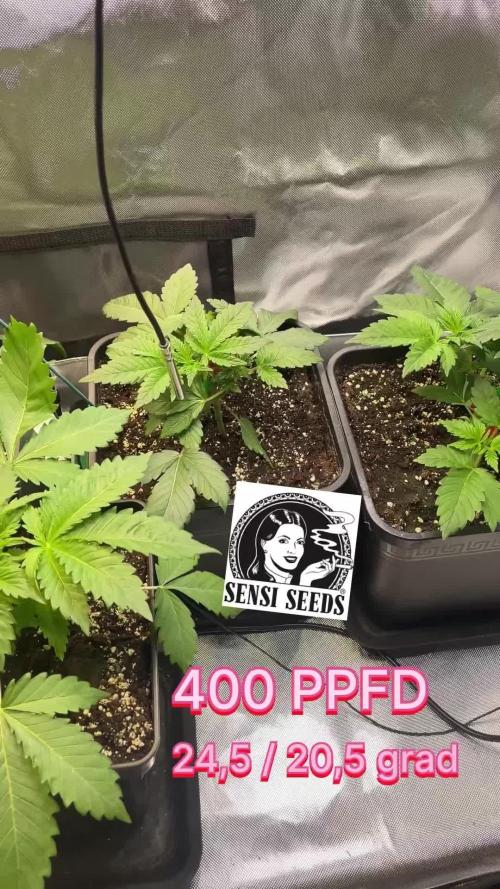
Es wurde zuerst mit drähten gebunden und später wie zu sehen einmal mit den grünen lst clips die verstellbar im winkel sind jedoch etwas zu lang finde ich🤨 aber solide Verarbeitung und die roten sind starr aber es lässt sich super damit arbeiten
Zurzeit fahre ich noch 50% Wizard of Bloom💪
Durch den bruch im ast aka Bahlsen technik weil das Ding gebrochen ist wie ein 🍪 👀lasse ich sie nun noch etwas länger in der vegi🤦♂️ und bei blütebeginn bzw letzte Woche Vegi wird die @ViparSpectraLED XS1500pro zugeschaltet☀️🌱 Die Runtz sind bisher robust und erholen sich schnell @SensiSeeds 👍


Likes
4
Share


@Aleks555
Follow
🚀 Dutch Passion - Melonads Runtz 🚀
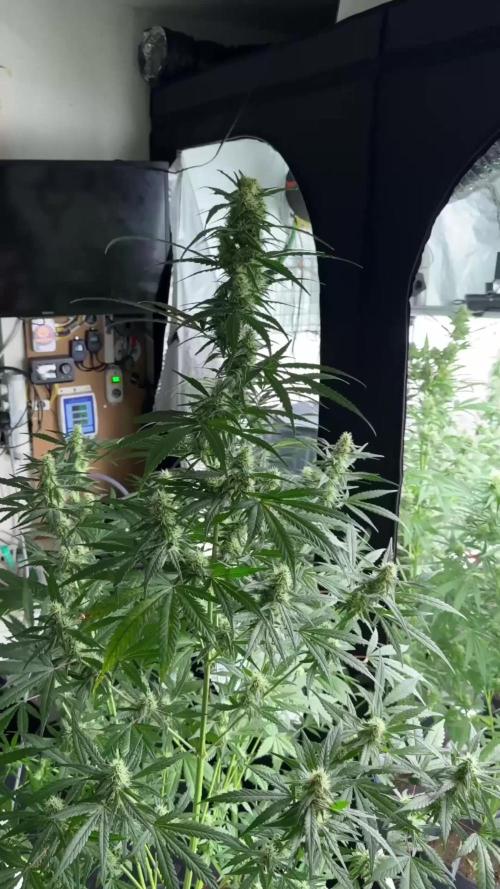
100 days from seed and 52 days into flowering, and what a journey it's been! This beauty has developed into an absolute showstopper, with dense, trichome-covered buds that are sparkling from top to bottom. The sheer volume and frostiness of the buds are simply incredible – even the leaves surrounding the flowers are dusted in sugar, giving them an almost magical appearance.
We’ve been feeding her with the trusted Xpert Nutrients, and the results speak for themselves. The balanced nutrition provided by Xpert Nutrients has allowed the plant to thrive, stacking on weight and producing massive, resinous buds that are not only a joy to look at but also promise a strong and flavorful smoke.
At this stage, we're continuing to give her all the love she deserves, and she keeps rewarding us with impressive growth. We couldn't be happier with how this Melonads Runtz has turned out, and a huge shout-out goes to Dutch Passion for such an exceptional strain and Xpert Nutrients for making it all possible! 🌱💪🏆
Likes
19
Share

@DogDoctorOfficial
Follow
🌸 White Widow — Week 4 of Flower (12/12–11/13 From Seed)
Stage: Week 4 Flower (full flower, no stretch left)
Structure: Compact plant, building a tall main cola (~25 cm target) + tidy “golf-ball” side colas
Frost: Already impressive; trichomes thickening across tops and sugar leaves
Watering: Hand watering (by feel; no runoff chasing)
Light routine: Still running the red-on/red-off sunrise/sunset via TrolMaster (15 min before/after)
⸻
Quick Recap (for anyone just joining)
• Germination: We lost the first batch (uneven heat mat, my mistake). We restarted and this solo survivor is the one you see now.
• Veg under 11/13: She stayed compact and stubbornly vegged a while before showing preflower, great node stacking.
• Early flower: Bud set → second flower push → now deep into Week 4 with clear, even sites top to bottom.
• Environment: Room was hot early on; AC install stabilized temps and RH. Plants never showed stress, credit to genetics, steady care, and balanced feed.
⸻
🍽️ Nutrition (this week)
We’ve removed Top Booster completely. Current, steady recipe:
• Aptus Regulator – supports cell strength, transport efficiency, and stress tolerance
• Aptus CalMag Boost – LED + coco/active soil insurance for Ca/Mg/Fe availability
• Plagron Power Buds – encourages compact flower set at each node
• Plagron Sugar Royal – metabolic push (N-based aminos) to drive energy use + aroma precursors
• Plagron Green Sensation – balanced late-flower support (PK + organics/biostims) for density, oil, and finish
• Aptus All-in-One Liquid – (still in) gentle full-spectrum base; likely to taper/stop soon as the soil biology carries more of the load
Why this mix now?
Week 4 is the “early swell” window: calyx initiation shifts into mass formation. We’re keeping Ca/Mg steady for membrane integrity and photosynthesis under strong LED; using Power Buds to keep sites tight, Sugar Royal to feed metabolism and terpenes, Green Sensation to support density/oils, and Regulator to keep the plant efficient under heat/PPFD. All-in-One remains as a safety net while the super soil’s biology fully ramps, then it can step back.
⸻
🔬 Plant Development (what’s happening physiologically)
• Stretch is done. Auxin dominance recedes; energy diverts to calyx swelling and trichome biosynthesis.
• Trichomes rising. Expect a marked increase in capitate-stalked heads on bracts and sugar leaves from now through Week 6–7.
• Carb sink strength. Flowers become the primary sink; steady water + balanced EC will keep turgor and bulking clean.
⸻
💡 Light & Rhythm
• Sunrise/sunset with reds (TrolMaster): 15 min before and after the white/blue block to smooth transitions and lean into the red/far-red synergy.
• Target PPFD/DLI: With shorter photoperiods (11–12 h), aim ~700–800 µmol·m⁻²·s⁻¹ to land a DLI ~28–32 mol·m⁻²·day⁻¹—a sweet spot for mid-flower without forcing heat stress.
⸻
🌡️ Environment (steady and sensible)
• Temps/RH: Now stable since AC: ~28 °C and mid-60s %RH previously reported—great for mid-flower resin and growth when airflow is strong.
• VPD: Around 1.3–1.4 kPa is ideal for Week 4 bulk—keeps stomata active, minimizes mold risk, and preserves turgor.
• CO₂: Natural room swings are fine at this stage; plant responses are telling us she’s happy.
⸻
👀 What to Expect Next (Week 5–6)
• Calyx stacking & mass gain on the main cola and those side “golf balls.”
• Frost explosion: More trichomes and a greasy feel on sugar leaves.
• Aroma lift: Expect that classic White Widow earthy-spice to start pushing out.
What not to expect
• Height—she’s done stretching.
• True ripening signals (amber heads, heavy fade) — too early.
• Big defoliation needs, she’s compact; keep leaves that drive sugars unless a leaf blocks airflow or a bud site entirely.
⸻
Grower’s Tips (why the choices matter)
• No Top Booster now: Keeps K spikes in check; prevents Ca/K antagonism and tip burn while the plant is setting long-term resin factories.
• Keep Ca/Mg consistent: Under strong LEDs, Ca deficits appear suddenly in fast-bulking weeks. Stay ahead, not behind.
• Watering style: Hand watering gives you feel-level control over moisture fronts and prevents swings—perfect for a compact, single-plant showcase.
⸻
🙏 Gratitude & Shoutouts
🌱 Zamnesia Seeds — for the living legend, White Widow
💧 Aptus Holland — clean, precise fundamentals (Regulator, CalMag, All-in-One)
🌸 Plagron — Power Buds, Sugar Royal, Green Sensation driving flower expression
💡 ThinkGrow & Future of Grow (Black Series 600W) — power + uniformity for dense stacking
🧠 TrolMaster — the ecosystem that lets us choreograph sunrise/sunset and keep the room steady
…and you, reading and riding along. Thank you for being here and sharing the love for the craft.
📲 Don’t forget to Subscribe and follow me on Instagram and YouTube @DogDoctorOfficial for exclusive content, real-time updates, and behind-the-scenes magic. We’ve got so much more coming, including transplanting and all the amazing techniques that go along with it. You won’t want to miss it.
• GrowDiaries Journal: https://growdiaries.com/grower/dogdoctorofficial
• Instagram: https://www.instagram.com/dogdoctorofficial/
• YouTube: https://www.youtube.com/@dogdoctorofficial
⸻
Explore the Gear that Powers My Grow
If you’re curious about the tech I’m using, check out these links:
• Genetics, gear, nutrients, and more – Zamnesia: https://www.zamnesia.com/
• Environmental control & automation – TrolMaster: https://www.trolmaster.eu/
• Advanced LED lighting – Future of Grow: https://www.futureofgrow.com/
• Root and growth nutrition – Aptus Holland: https://aptus-holland.com/
• Nutrient systems & boosters – Plagron: https://plagron.com/en/
• Soil & substrate excellence – PRO-MIX BX: https://www.pthorticulture.com/en-us/products/pro-mix-bx-mycorrhizae
• Curing and storage – Grove Bags: https://grovebags.com/
⸻
We’ve got much more coming as we move through the grow cycles. Trust me, you won’t want to miss the next steps, let’s push the boundaries of indoor horticulture together!
As always, this is shared for educational purposes, aiming to spread understanding and appreciation for this plant. Let’s celebrate it responsibly and continue to learn and grow together.
Friendly reminder all you see here is pure research and for educational purposes only,
With true love comes happiness. Always believe in yourself, and always do things expecting nothing and with an open heart. Be a giver, and the universe will give back in ways you could never imagine.
💚 Growers love to all


Likes
Comments
Share

@Slap22
Follow
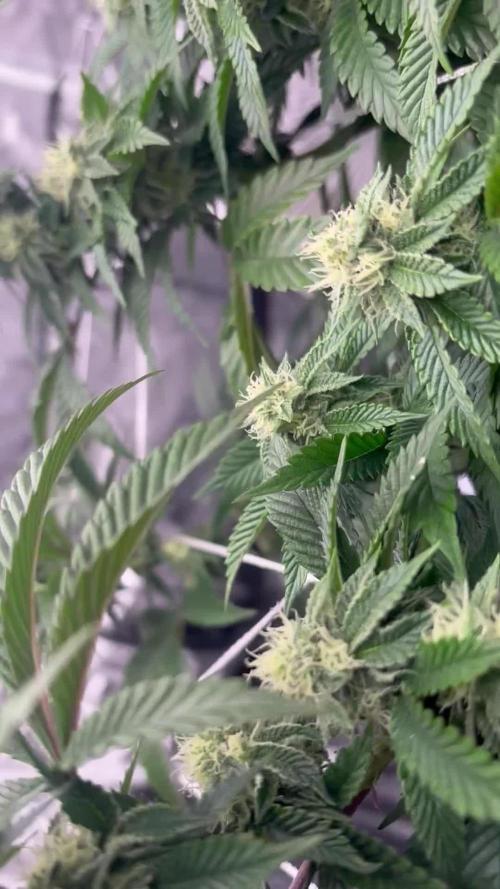
My A/C has been not really working and it’s getting in the 90s outside not sure if it’s stunting it but have been trying to keep as much airflow as possible I have a fan below and above the canopy and the inline on 6-7 with no carbon filter or ducting right on top of the tent hoping it will be enough o keep the mold away