




Likes
2
Share


@Dralph
Follow
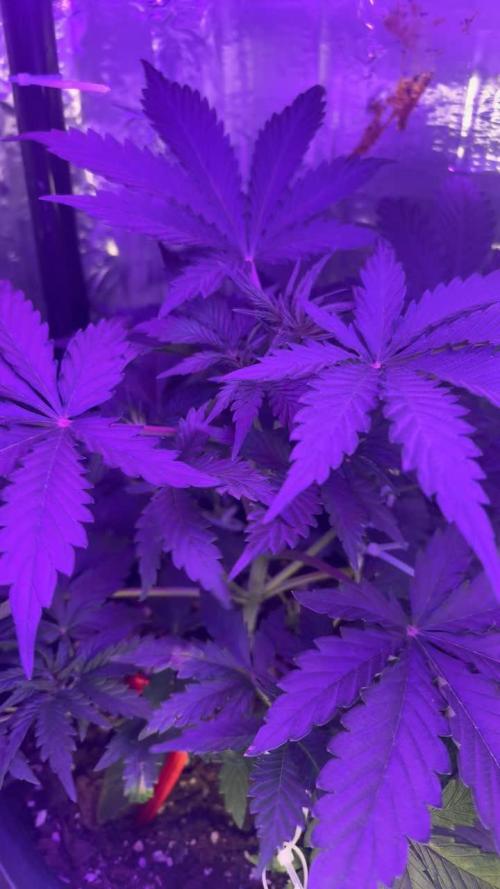
No recuerdo como fue esta semana, las Blackberry tienen 4 semanas, la White widow 6 y añadi un par mas de autos que luego retirare para exterior


Likes
9
Share


@HIAZ_urbanbudfarmer
Follow
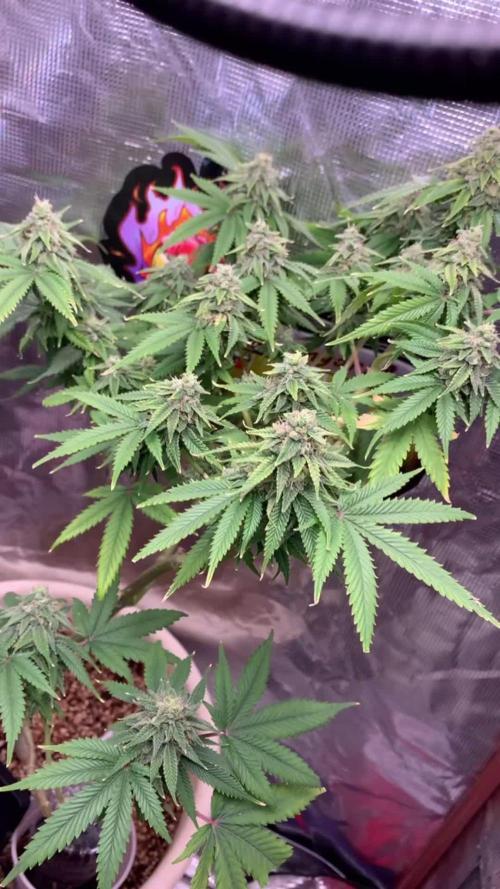
Hello , GG going well , have upgraded light to a Mars Hydro Fce 4800, 480w . Great fit for my 1m X 1m tent. Currently dimmed down to 150w. Good quality build, looking forward to see what it can do. Increased nutes & feedings to every 2 hours for 15 minutes, will start Lst this week. Till next time , smoke up Gromie's 🤙🤘



Processing
Likes
6
Share


@Godsgrower316
Follow
Not training yet. Waiting till she gets bigger to start training.
Likes
24
Share


@SooSan
Follow
90x60x140 (Mars Hydro)
FC-E4800 (Mars Hydro)
Easy2go Aquavalve5 (Autopot)
Living Soil (Demetearth)
Bruce Banner (PEV Seed)
Gorilla GG4 (Ganja Farmer)
Cream Caramel (Sweet Seed)
Gorilla Gelato (Ganja Farmer)
Blueberry (00 Seed)
Kalini Asia (Zamnezia)
Biscotti Mintz (Barney's Farm)
Blackberry Cake (Sensi Seed)
Amsterdam Amnesia (Dutch Passion)
Gelato Cookie (Ganja Farmer)
Purple OG Punch (Ganja Farmer)
Sweet ZZ (RQS)
Rainbow Road (Paradise Seed)
Substrat ~50L:
30L Super Light Mix Biotechnologie
18L coco
2L perlite
1,7kg lombricompost
350g guano de chauve-souris
350g Zéolithe
350g Basalte
170g guano vers de farine
170g biochar
0,7g Endomychorise glomus intraradices
0,7g Bacillus Amyloliquefaciens
Paillage de luzerne alfalfa
Arrosage avec 2ml/L de mélasse de canne 1x par semaine
Pulvérisation avec 1% d’huile de neem


Likes
8
Share

@Dameon0803
Follow
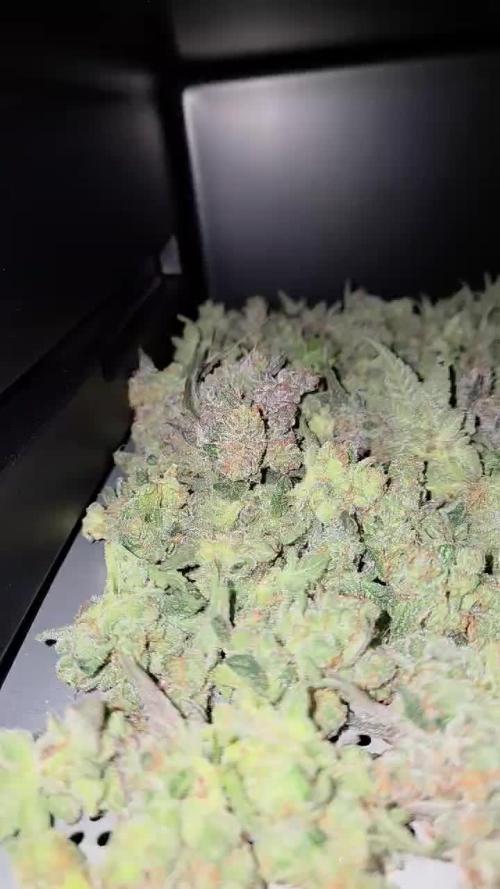
Welp. I honestly didn't expect this. As I have mentioned in previous posts, this plant was no longer on its own timeline, the next plant was going to decide. In addition to this, I had just done a heavy defol and put the leaves and 3 small nugs in my cannatrol. The cannatrol still had 2 days before finishing its dry, so this ended up being interrupted. In some unfortunate mishap, as shown in the pictures, my light was scheduled to turn off at 5am. The device said it did, but as you see in the graph, it stayed on until I had caught it at 12:24pm. I simply disconnected the usbc from the outlet, reconnected it, my light kicked on for a sec, then back off. I think messing with my dehumidifier lastnight glitched the system and I should've done a reset when I was done messing with it. With the stress already playing a chance at mutations, the additional light didnt help. No hurt feelings here. With the weight off the bud and the sugar leaves, my cannatrol is maxed. 2.2 lbs of wet weight is all it can take, and I am pushing that. 900 grams of wet, partially trimmed buds impressed me! Not sure the sugar leave weight. Setting cannatrol to dry for 5 days and cure for 25. I know it can go way quicker, but I read a study about these settings and want to see if it stands any truth. Smoke report and dry weight coming soon!

Likes
61
Share


@MadeInGermany
Follow
Hey friends :-) .
There is not much to tell this week. They smell stronger and stronger, but unfortunately I don't really like the bud production.
It is going very slowly, and she just doesn't want to have many nutrients :-(. Just don't understand why.
I know the genetic, because I have it as a mother, and there are 100% all parameters in the perfect area.
I have prepared a completely new nutrient solution again, and I will watch you closely this week :-). Otherwise everything looks great.
The new update is coming next week. Until then,
I wish everyone a great start to the new week 🍀👍 Let it grow 😎🌱

Likes
3
Share


Likes
12
Share


@Jaindoh
Follow
Got flowers. Adjusted the lights down to 18". Going to play it by ear, as the two in the corners aren't as happy as the others and I'm wondering if they can't handle the light currently. If good, will begin increasing the lamp from 75% of 300w to 100% gradually.
Not impressed with FFOF+Nature's Living Soil supersoil amendment. Very impressed with BuildABloom.

Likes
28
Share


@Professor_Chaos
Follow
Beginning of week...
So the ladies are beginning to stack pistils at the crowns.. The Mandarin Cookies has been stacking a little quicker.. Thicker.. They both are showing purple tips on the stiples.. Not the pistils or leaves.. The stiples.. ETHOS Cookies has been showing that for ever now.. The Mandarin Cookies has just started showing these purple tipped stiples.. Gorgeous plants.. Even tho Mandarin Cookies is super freakishly tall and stretchy.. And the ETHOS Cookies is basically a runt.. Doesn't want to make ANY stems.. But plenty of leaves lol.. She should be able to hold up some super fat colas pretty easily tho so that's awesome! I stopped using the Armor Si and the FloraGro.. As well as the MYCO Plus (powder) stuff.. Also going down on the FloraMicro.. Just basically using 1 tsp/gallon of the CALiMAGic, FloraMicro, FloraBloom, and Kushie Kush.. 30 drops/gallon of the Floralicous Plus (not sure if that's too much to be honest).. 2 tsp/gallon of the FloraNectar Fruit-N-Fusion and last but not least... 2 mL/gallon of Hydroguard... *phew*.. Damn that's alot.. But that's alot less then what I was giving these girls... They should do alot better..
Mid week...
I have defoliated the ETHOS Cookies a bit more.. Mostly trying to make sure there is good airflow and no larfy producing branches in there.. She should produce some really nice colas with how short and stubby she is lol.. As for the Mandarin Cookies, I've just been supercropping the shit outta the really tall branches.. I've never supercropped a plant so much lol.. And I'm not good at it at all.. Most of the branches are split open, bruised.. Just very crappy looking.. It will heal, they always do 😂 I just hate hurting them like this.. Especially in flower.. But it's still pretty early in flower.. And the pistils are still exploding just as much as the non-supercropped branches.. I can't wait!!!...
End of week..
Both girls are exploding with trichomes! I love these super frosted strains! The ETHOS Cookies seems to be stackin calyxes faster than the Mandarin Cookies.. I can tell the ETHOS Cookies is gonna stack some fat ass colas! The ETHOS Cookies runoff is doing good.. pH going in is 6.2 - 6.3 and runoff is usually 6.0 - 6.2.. Foliage is nice and green.. She may be nitrogen sensitive deeper into flower.. Maybe not.. We shall see.. As for the Mandarin Cookies.. Wow.. This girl is super tall.. She is also stackin calyxes, pistils and nicely. The runoff is still giving me issues but as far as I can tell, she is accepting it and making the best of what she has. Going in pH is 6.2 - 6.3.. Runoff is coming out 5.6 - 5.7.. It's bothering the shit outta me! Lol.. It doesn't seem to matter what pH I put in, it will ALWAYS runoff at 5.6 - 5.7 pH.. But like I said.. She is accepting it as long as I keep the "in" pH in my preferred range.. I usually keep the "going in" pH at 6.1 - 6.3 the ENTIRE grow.. I always get great results doing this.. Its best for Calcium uptake and Calcium is a huge issue when it comes to growing in coco coir.. Anyways.. Both ladies are doing great.. Both look gorgeous and healthy.. Oh yeah!! I like to rub the trichomes to get a little idea of what the terpenes are gonna be like.. And hoooooly shit.. ETHOS Cookies smells like nothing I've ever smelled before.. I can't even begin to explain it.. Literally.. And the Mandarin Cookies is starting to give off a nice citrusy scent.. I hope this carbon filter is able to scrub the air enough.. Cuz if these are anything like the Early Lemon Berry, then yeah, this carbon filter is gonna be put thru the ultimate test lol.. Anyways.. On to the next week!....

Likes
4
Share

@Samsationalseeds
Follow
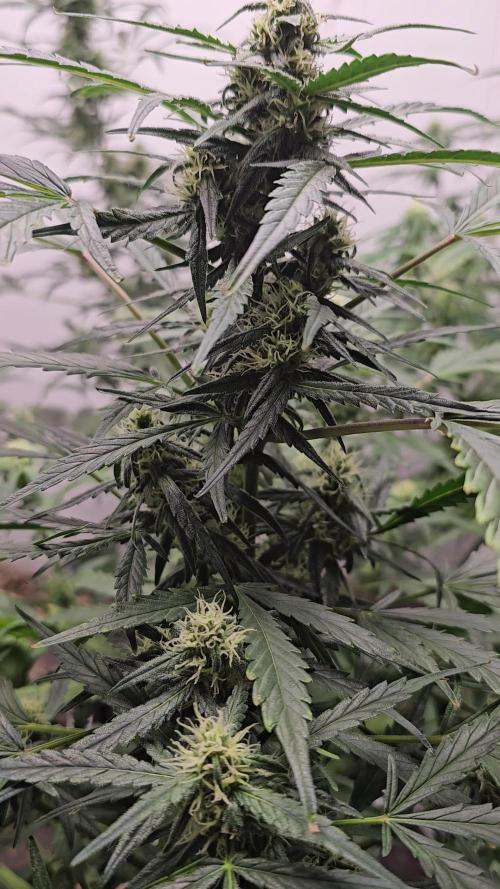
Most of the autos are being moved into my dad's garden or the backyard.
I am happy to test out the genetics that I've bred. I think I've recently found my first. I herm, but this plant was super.Stressed out, and it was a photo auto hybrid.
And I mean, noticeably herm out like it was making pollen sacks, as opposed to one or two nanners.
Out of the photo seeds granted, I haven't grown many deep into Bloom. It's not a good sign, though. That I had one herm, but I know that one was super stressed out, so I put one2 right now. And my current run, that I'm gonna divide for me. And my cousin, and I'll say, how many herm out
Likes
7
Share


Likes
12
Share


@Imagrowboy
Follow
Harvest has gone well PE 1 after 72 days and PE 2 after 67 days harvested PE 2 earlier by a week to see if there was a difference in taste or high compares to PE 1.
Drying had begun will update further with weights once dried.
Day 79 - PE 2 dried beautifully lovely tropical aroma coming from her, PE 1 will need more curing as Budds were denser.
PE 1 - 30g
PE 2 - 28.5g


Likes
12
Share


@KalooNie
Follow
These gals are doing fantastic! Smell is really starting to come out now, smells like a very strong citrus pine 👌🙌 Switched them to full strength flowering nutes and they're doing pretty well. I probably should have transitioned them a little earlier but a little stress doesn't hurt, they're growing just fine! Heat is also an issue but they'll manage 😅
8-4-18 :: Largest plant's bucket got empty on accident; Filled a 15gallon reservoir of full strength nutes and pumped the solution into the bucket as always. Next day my largest plant is dying and the other two are fine, looks like lockout. Flushed for a day and then added nutes, no improvement.. Orange pistils are appearing pretty fast on it too as if it's trying to ripen but not grow. My heart is broken😰
UPDATE: Realized I was an idiot and didn't plug up the holes I drilled into the top of the buckets (I stick a hose in there to fill them up) and the roots were exposed to light.

Likes
3
Share


@MicroHidroGrow
Follow
Día 18. Estoy en la 3ra semana de crecimiento. Apliqué HST en las dos ramas altas para poder igualar la altura con las otras dos. Por el momento viene todo en marcha. Solamente hubo un poco de stress con hojas un poco arrugadas por exceso de nutrientes. Así que hoy rebajé la solución con un poco de agua. En 3 o 4 semanas debería estar en condiciones de cortar los esquejes que voy a necesitar para el sistema completo. Inicialmente voy a usar un módulo que ya tenía armado que hice con un cajón plástico. Ese es para 4 esquejes y la madre. Pero es muy chico para el espacio que tengo. Así que inicialmente usaré este y luego armaré uno para 9 o 7 plantas. Veremos cuan cómodo queda con 5 plantas por ahora, porque quizá prefiero hacer 7 plantas cómodas y no meter 9 y después no poder manejar el espacio. La idea es que la madre vaya al medio y los esquejes alrededor.
Día 21. Rocíe la planta con tierra de diatomeas como preventivo. Sigo aplicando HST para lograr que las ramas bajas tomen protagonismo,y ya que van a ser los esquejes que use. De todos modos estoy viendo en el crecimiento que la genetica no está bien estabilizada. Los bancos de semillas argentinos, hasta ahora han sido decepción en cada siembra que hice, por lo cual no me sorprendería que esta también lo sea. Estoy analizando la idea de pasar a floración la planta así cómo está en el indoor grande y arrancar con una genética europea que tengo guardada para la próxima. Porque correr riesgos innecesarios me costaría mucho tiempo. Por el momento mantengo la solución, ya que en crecimiento la suelo hacer durar 10 o 15 días. Principalmente cuando la planta tiene menos de 4 semanas. Esta semana que arranca voy a definir que hago con esta genética. De paso subo un video con la configuración casi terminada del indoor. Pero cuando esté funcionando se va a entender mejor.

