


Likes
4
Share


@UtterLoudPack
Follow
This Will be wrapping up the purple Queen and blue dream grow leaves on the purple Queen are starting to really color out as So when it's at the end of its life . Just RO water ph down to 6.8 until you get a PPM of 300. I'm going for Around about 150 100.

Likes
1
Share


@Brutustopnotch
Follow
Starting to really fill out smell is 6/10 so far very sweet some pine as well
Likes
20
Share


@Bakeryguy420
Follow
Slowly cutting back on feeding her probably just light feedings this week then 2 weeks straight with plain PH water. Bring down the ppms. I've heard people saying you dont need to flush. What I do people is I give them plain water for two weeks and sometimes I'll add and extra gallon of ice cold water to stress the plant to make more thhricomes. I used to do ice flushing all the time which is putting ice cubes around the base of the plant and then slamming it with ice cold water. I got this method from oldmanindica on Instagram and then notice many people doing it after me. Does it work who knows right? Just science But other then that beautiful fucking plant great outcome I'm sad it's coming to and end already. Dutch passion again with the great geneicts.

Likes
9
Share


@NewOfficialDrillInvaders
Follow
🍍F A N T A
I should give them around 2 more weeks to fully mature but got no more time start my holidays

Likes
16
Share


@nonick123
Follow
Día 15 (27/01) Ha reaccionado bien al trasplante. A ver como se desarrolla en los siguientes días!
Día 16 (28/01) Muestra un buen desarrollo con las primeras ramas formándose
Día 17 (29/01) Subo a DLI 40
Muestra un color verde estupendo 😍
Día 18 (30/01) Tras subir el DLI la temperatura en el indoor ha subido a de 22ºC a 26 ºC, de modo que va a acelerar las necesidades hídricas
Se sigue desarrollando estupendamente 😁
Día 19 (31/01) Seguimos a buen ritmo
Creo que debería haber regado este día... (Visto como estaba de seca al día siguiente...)
Día 20 (01/02) Elimino las ramas más inferiores (1er nudo) que siempre suelen quedar débiles en el stretch
Riego con 350 ml H2O RO
Día 21 (02/02) Empieza a estirarse! 😍
Está sedienta! Riego con 350 ml H2O
En una semana a floración!
FastBuds 15% DISCOUNT code "NONICK" 2fast4buds.com @fast_buds_official_ @fastbuds.official
💦 BioTabs 15% DISCOUNT code "GDBT420" biotabs.nl/en/shop/ @biotabs_official
🌱Substrate PRO-MIX HP BACILLUS + MYCORRHIZAE @promixmitch @promixgrowers_unfiltered
💡2 x Mars Hydro FC1500 EVO Led Grow Light (2024 NEW FC 1500-EVO Samsung LM301H 150W LED) - https://marshydro.eu/products/fc1500-evo-led-grow-lights/ - https://www.amazon.de/dp/B0CSSGN5D8?ref=myi_title_dp

Likes
6
Share


@Terp_Derp
Follow
Do far so good. Fattening nicely. Going to give last nutrient feeding this week and flush around 04/04

Likes
25
Share


@NorseGrower
Follow
Week 8: Everything is going great. I didn't plan on taking them all out again till they got chopped, but decided to get them out one at a time today and give them a good thorough defoliation, peeled off any undergrowth and water and feed them all. Temps remain completely under control and no longer an issue, even in 90 degree weather here. I've continued to alternate between feeding and just water, cal mag and fish shit. The only plant of the 6 to show any deficiencies was the #1 Skunk. Every leaf on leaf chart looks same to me lol. I upped today's feeding to 3/4 strength instead of half strength. If I had to guess, I would say that this is the last feeding for the Creme de la Chem, Strawberry Couch and the Double Grape. Those three will likely all fall in the 70-80 day harvest range and those three are at day 58. Not 100% on the #1 Skunk or not, it may get one more feeding, along with the Watermelon Skittles. The Fruit Punch? Well there is a chance I will be smoking cured Creme de la Chem before that one gets chopped lol. It will continue to get fed for a while as buds still very under developed. Today's defoliation was barely anything for a couple plants like the Watermelon Zkittles. A few big fan leaves blocked bud sites, but the Skunk needed thinned out badly and I took a good 20 minutes to go around the outside them come in from over top to really get in there and try to make some airflow and better light penetration. These are definitely drinking at different rates but in order to not be mixing up stuff daily, I feed them all on the same day and the couple that still had some weight to them just get less. I think these will all meet and exceed my 2 ounce goal per plant and 5 of the 6 after topping and training have conformed to the types of plants I really want to grow with the space I have. Thats 6-8 tops on a short compact plant. The Fruit Punch went off the reservations waiting till day 50 to start flower and is acting like this is a 3 plant grow not a 6. But shoving it in corner and putting short Skunk plant by it on bucket to raise up canopy along with raising one side of my TSL2000 and lowering other side towards shorter plants appears to be working great. Its great to be thinking about the flush. Having plants out, I did check trichomes on a couple just for the fun of it and mainly clear so got couple weeks or more for most of these.


Likes
30
Share


@LeafTucker
Follow
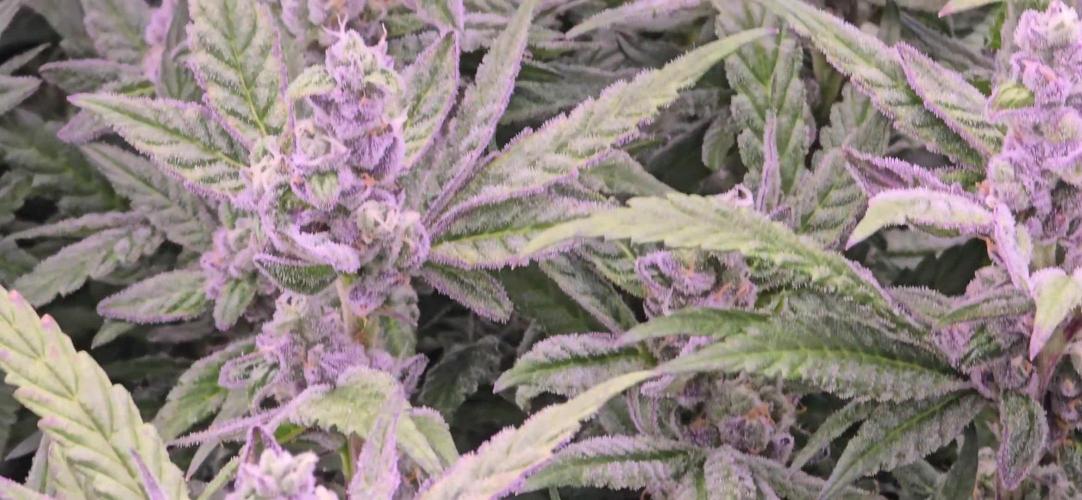
Well, she is 70 days today. She has started to fade. Leaves are yellowing, and showing some red. She is still producing white pistols, and new flower growth daily. Her Trichromes are mostly cloudy with very little Amber on the flower. She has swollen a great deal through the week. I gently pulled her secondary branches away from the primaries to allow more light penetration. I check her maturity about every 60 hours. She was watered with pH'd water last week, and she is getting tap water this week. She should be completely flushed before harvest. Got my humidity packs, humidity sensors, jars, and drying closet ready. It just up to her now. Not so much impatient as I am excited for my first harvest. With her, and a Bubba Kush getting ready to finish together, I am so stoked. Will have a video uploaded later. Thanks for stopping by, much love, and happy farming.



Likes
9
Share


@Oldwied
Follow
Day 63
Flower #18
The SCroG chapter closed.
The largest stretching phase is complete and the inflorescence is becoming denser. That's why I'm letting the lady grow now.
Light Power: 80 to 100% in two days
Day 61
Flower #16
Watered with 2,5L freshly brewed compost tea
Sprayed with freshly brewed compost tea


Likes
9
Share


@AK1210
Follow
This lady is doing really nicely since I being moved from the tent. I made a massive error with my other grow by leaving her in the tent with the front cover closed as we had some shite weather and this made the humidity levels to high causing bud rot. I can't begin to explain how soul destroying it was finding that.
This lady is free from any mould and since I have just defoliated her there will be less chance of it happening. I'll be keeping my eyes peeled for any signs.
I think this one may have around two to three more weeks before harvest.
Likes
40
Share


@GYOweed
Follow
Topped it off with tsp dr earth 222 organics few days ago.
Will fim it week 3 transplant week 3.5?
I dont think a sativa gets greener than this?


Likes
1
Share


@Cannabees_grows7691
Follow
The nugs are starting to get orange hairs on them. Item 9 has thick nugs and red velvet is frosty.
Processing
Likes
15
Share


@Dico29
Follow
Seems to be going good, idk if I should ad more bloom booster or just use molasses. Also the broken cola I replanted, seems to still be alive but don’t really know what else to do. Just hope I can get these out of some random guys back yard soon.


Likes
13
Share


@Bryankush
Follow
Giorno 1 è molto bella e in completa salute, questa settimana sarà la più cruciale per la vegetativa
Giorno 7 la sera viene annaffiata con 2L di acqua


Likes
46
Share


@DogDoctorOfficial
Follow
Hey there, green warriors and cannabis lovers! 🌱🔥 We’re now in week 3 of the flowering stage in our Runtz Battle, and things are really starting to heat up! This week brought an interesting twist as we had to make a strategic adjustment to ensure all our plants are on the same page. Let’s dive into the details and explore how things are progressing.
Week 3 Flowering Progress 🌿✨
Our Runtz plants continue to flourish, and here’s what’s been happening:
• Bud Development 🌸:
• The buds are filling out beautifully, with each day bringing more growth and resin production. The plants are stacking up nicely, with dense flowers forming at multiple sites. The F1 strain remains compact and uniform, showcasing tight, resin-packed bud sites.
• Environmental Stability 🌡️:
• We’re maintaining consistent environmental conditions with a room temperature of 30.3°C, water temperature at 18°C, and humidity at 51%. These stable conditions are key to supporting strong bud growth and overall plant health.
Switching to 12/12: The Light Adjustment 🌟💡
This week, we made a crucial adjustment to our lighting schedule:
• Why the Change? 🌞🌙:
• One of our plants hadn’t yet started flowering, so we made the decision to switch all plants to a 12/12 light cycle. This change is essential to trigger flowering in the plant that was lagging, ensuring it joins the rest of the group in producing those beautiful buds.
• How 12/12 Helps 🌿💡:
• The 12/12 light cycle mimics the natural change in daylight hours as summer transitions to fall, signaling to the plants that it’s time to focus on reproduction (flowering). This shift is a classic technique to ensure all plants in the garden synchronize their flowering process. The reduction in light hours encourages the production of flowering hormones, which will now help the plant that was behind to catch up and start forming buds.
• Impact on the Runtz Plants 🌸:
• The Runtz strains that were already flowering won’t be negatively affected by this change. In fact, the consistent 12/12 cycle can help to further boost their flowering intensity, ensuring that the buds continue to develop fully and evenly.
Nutrient and Care Strategy 🌱💧
Our focus on proper nutrition and environmental care remains a top priority:
• Watering and Nutrients 💧:
• With the Autopots still running smoothly, we’re continuing with Regulator and CaMg Boost in the reservoir. The nutrient-rich soil and organic inputs are keeping the plants well-fed, and the consistent hydration is ensuring steady growth and flower development.
• Lighting and Environmental Control 🌡️:
• The Lumatek Zeus 465 Compact Pro continues to provide powerful, full-spectrum light that supports the flowering process. With the 12/12 schedule in place, the plants are receiving the perfect balance of light and dark, critical for flower development.
• The TrolMaster Hydro-X controller remains essential in managing these conditions, keeping everything dialed in for optimal plant health.
Looking Ahead 🌟🌿
As we move deeper into flowering, the anticipation only grows. The 12/12 light cycle is now in full effect, ensuring all our plants are flowering together. The Runtz strains are on track to produce a stunning harvest, with each plant showcasing its unique strengths.
Stay tuned for more updates as we continue this green journey. The next few weeks are going to be thrilling as we watch these buds fatten up and reach their full potential! 🌟💚
#RuntzBattle #Week3Flower #CannabisCommunity #FloweringStage #LightCycle #12and12 #GreenMagic #LumatekZeus #TrolMasterHydroX #GrowStrong #StayPositive
Germination method 🌱 @thecannakan
Genetics Runtz F1 @zam.nesia Runtz auto @kannabiaglobal
Nutrition
@aptusholland 🌿
@aptus_world 🌎
@aptus_es 🌍
@aptusbrasil 🌱
@aptus_thailand 🌿
@aptus_portugal 🌳
@aptususa_official 🍀
@aptusplanttechnz 🌺
@aptusplanttechaus 🍃
Ambient controls🎮
@trolmaster.eu @trolmaster.eu.support @trolmaster.support @trolmaster.agro
Soil @promix_growers_eur @promix_cannabis
LED - @lumatekeu
Watering- @autopot_usa @autopot_global
Love and attention- @dogdoctorofficial
#aptus #aptusplanttech #aptusgang #aptusfamily #aptustrueplantscience #inbalancewithnature #trolmaster #trolmastereurope #trolmastersecrets #Autopots #RuntzBattle #KannabiaVsZamnesia #GreenJoy
As always thank you all for stopping by, for the love and for it all , this journey of mine wold just not be the same without you guys, the love and support is very much appreciated and i fell honored and so joyful with you all in my life 🙏
With true love comes happiness 💚🙏 Always believe in your self and always do things expecting nothing and with an open heart , be a giver and the universe will give back to you in ways you could not even imagine so 💚
More info and complete updates from all my adventures can be found ⬆️ link in the profile description ⬆️
Friendly reminder all you see here is pure research and for educational purposes only
💚Growers Love To you All 💚

