


Likes
Comments
Share
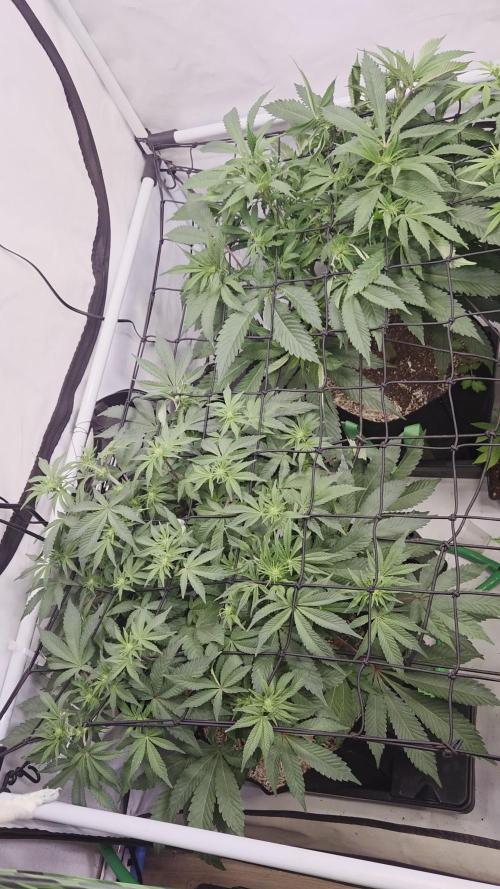

@A-C-H
Follow
Ich werde einen Komposttee zubereiten ich finde, dass ihm Nährstoffe fehlen.

Likes
18
Share


@Joni2017
Follow
hot days🔥🔥good rhythm 👏🏻💪😋 Continue with only water in the irrigation 💦💦 temperature 28º C☀️😅 Humidity 65%💧defoliation 🍃 and music 🎼 😉👍
Day 46: aerating for each liter of water 15 gr of compost tea pk booster and 5ml Orgatrex 24 - 36 h😋 And mini cooler installed👏🏻👏🏻 😉👍

Likes
7
Share


@eldruida_lamota
Follow
Que pasa familia, vamos con la cosecha de estas GG4 Sherbet Fast Flowering, de FastBuds.
Por dónde empezar, las flores son bien compactas , y van repletas de resina, tienen tonos por dentro muy bonitos, y tiene un aromas dulces y afrutados.
Es muy sencilla de cultivar, es de ciclo corto mdio aunque también si le dais una semana más no pasa nada agradecer se agradece al final.
Mars hydro:
Code discount: EL420
https://www.mars-hydro.com/
Agrobeta:
https://www.agrobeta.com/agrobetatiendaonline/36-abonos-canamo
Hasta aquí todo, Buenos humos 💨💨💨

Likes
58
Share


@MadeInGermany
Follow
Flowering day 25
since time change
to 12/12 h.
Hey guys :-) .
The ladies are developing more and more beautiful and fat week after week 😊.
The tent fills up perfectly 👌.
I removed the bottom shoots to allow the energy to flow to the top buds.
This week it was watered 3 times with 1.3 l each (nutrients see table above)
Otherwise everything was cleaned and checked.
Have fun and stay healthy 💚🙏🏻
👇🏼👇🏼👇🏼👇🏼👇🏼👇🏼👇🏼👇🏼👇🏼👇🏼👇🏼👇🏼
You can buy this Nutrients at :
https://greenbuzzliquids.com/en/shop/
With the discount code: Made_in_Germany you get a discount of 15% on all products from an order value of 100 euros.
👇🏼👇🏼👇🏼👇🏼👇🏼👇🏼👇🏼👇🏼👇🏼👇🏼👇🏼👇🏼
You can buy this strain at :
https://www.thegratefulseeds.com/shop/feminized-seeds/limited-edition/blue-javaz/
Water 💧 💧💧
Osmosis water mixed with normal water (24 hours stale that the chlorine evaporates) to 0.2 EC. Add Cal / Mag to 0.4 Ec Ph with Organic Ph - to 5.8 - 6.5
MadeInGermany

Processing
Likes
260
Share


@love_2_grow
Follow
D36.
The start of the second week of flower and all is well in the tent.
It's a very low-maintenance grow. I train her to maximize the canopy in such a tiny tent, but that's it.
She has started drinking from the reservoir and has gone through about a third of it in the first week.
------------------------------
D38.
I gave her one liter of water @ pH 6.8, mixed with SF nematodes, humic acid, fulvic acid, sprouted seed tea, and bokashi juice.
I also put two avocado halves on the soil to keep the worm buddies fed and happy.
------------------------------
D40.
I increased DLI to 50, which raised the temp in the tent, so I changed the exhaust to 15 min on / 15 min off to lower the temp again. The average VPD is 1.2.
------------------------------
D42.
The second week of flower is at an end, and there's nothing to report. This grow is so hands-off that it's slightly boring ;)
------------------------------
Likes
4
Share


@Smokiebear_og
Follow
Hello people, we are here with another update day 34 for all these lady's. We currently have two shorty's and 2 tall girls. I'll be doing plain water with carboload from from now till the end of flowering
Peace and love ✌️✌️


Likes
152
Share


@BioBuds
Follow
So... welcome back! Last week was rather uneventfull. Just the way I like it. They are all getting more substance though. The middle one is more leafy, the two outer ones are more developed and although the biggest buds are maybe only the size of a lighter. Most buds have filled out with calixes and only little leaves. They are dense and compact.
The smell is getting heavier. When close to the buds it reminds of expensive herbal perfumes like Rabane. I distinctly have a 'hug from your poppa' kind of association with it and memories start flowing....
It is citrussy but in the ethereal way, it is spicy in the 'spicetrader' way, a mixture of ginger, cinnamon, black pepper, with a huge funky basetone. This combined, its as if a master perfumer had composed an exquisite fragrance. The funk of an attick full of weed to serve as the musky base undertones upon which, a layer of earthy spices, upon which a floral and citrussy fresh layer. It is bloody amazing and I wished ya'll were with me to smell it and taste it when the time has come. I want to exersize patience but my god this smells better than any weed I recently acquired and we have some excellent dispensaries here.
So I've started giving them up to 4 ltrs ( a gallon) of water each, every two days or so. They seem to need it, no drooping but also bonedry earth till deep in the pot. SInce two days ago with less feed and today only the Biobizz Topmax and PH correction.
Although not really convinced of flushing, Im trying it to see if I get a more pure taste and experience.
So trichomewise I find it hard to see, my magnifier is not strong enough to see the individual trichomes. I do see area's on leafedges etc that seem more amber, trichomes look milky from this distance but have get a better magnifier to get better view. On the images I see that there are many clear ones and not many ambers so we have some weeks to go which is correct according to Advanced Seeds, this Gelato #33 Fast has to flower 45 to 55 days, We are on day 39...
The plant itself seems utterly healthy. Some white points and very little heatstress from checking absolute minimum for these lights. You don't know until you find out. For anyone else looking for reviews on Rubol V3 100 watt QB's in a three in a row setup, with 10 cm spacing between each board, the minimal distance is 28 cm or one foot, when flowering, gradually lowering to this point btw. These lights are excellent, good value for money and with the two years of waranty a good investment. Also great service from Justin at www.rubol.nl. They are helpfull, considerate and very knowledgable.
So far so good, the grand finale is coming in just one or two weeks and I want to thank you for taking time and read all this, everybody who had advice and answered my growquestions, wish you were here for the harvestparty and may your harvest be bountifull!! See you next week!!

Likes
Comments
Share


@Comfrey
Follow
Die Ernte ist zwar lange her, aber ich wollte das Album noch abschließen. Leckere Blüten.

Likes
15
Share


@DaddyPrime2
Follow
5/28/24 oh damn baby, this cultivar is gonna be colorful
6/2 plant is still throwing out pistils but also chunking up quite nicely. I tried to create just mainly top colas. In description she should have a 3-5 nodal colas with disconnected nugs underneath that. But I only ended up with 3 node colas give or take but with maybe 2 more weeks if veg would've given me larger branches and bigger cola structure and can always cut the larfy.

Likes
34
Share


@Ultraviolet
Follow
Yellow butterfly came to see me the other day; that was nice.
Starting to show signs of stress on the odd leaf, localized isolated blips, blemishes, who said growing up was going to be easy!
Smaller leaves have less surface area for stomata to occupy, so the stomata are packed more densely to maintain adequate gas exchange. Smaller leaves might have higher stomatal density to compensate for their smaller size, potentially maximizing carbon uptake and minimizing water loss. Environmental conditions like light intensity and water availability can influence stomatal density, and these factors can affect leaf size as well. Leaf development involves cell division and expansion, and stomatal differentiation is sensitive to these processes. In essence, the smaller leaf size can lead to a higher stomatal density due to the constraints of available space and the need to optimize gas exchange for photosynthesis and transpiration. In the long term, UV-B radiation can lead to more complex changes in stomatal morphology, including effects on both stomatal density and size, potentially impacting carbon sequestration and water use. In essence, UV-B can be a double-edged sword for stomata: It can induce stomatal closure and potentially reduce stomatal size, but it may also trigger an increase in stomatal density as a compensatory mechanism. It is generally more efficient for gas exchange to have smaller leaves with a higher stomatal density, rather than large leaves with lower stomatal density. This is because smaller stomata can facilitate faster gas exchange due to shorter diffusion pathways, even though they may have the same total pore area as fewer, larger stomata. Leaf size tends to decrease in colder climates to reduce heat loss, while larger leaves are more common in warmer, humid environments. Plants in arid regions often develop smaller leaves with a thicker cuticle and/or hairs to minimize water loss through transpiration. Conversely, plants in wet environments may have larger leaves and drip tips to facilitate water runoff. Leaf size and shape can vary based on light availability. For example, leaves in shaded areas may be larger and thinner to maximize light absorption. Leaf mass per area (LMA) can be higher in stressful environments with limited nutrients, indicating a greater investment in structural components for protection and critical resource conservation. Wind speed, humidity, and soil conditions can also influence leaf morphology, leading to variations in leaf shape, size, and surface characteristics. Small leaves: Reduce water loss in arid or cold climates.
Environmental conditions significantly affect gene expression in plants. Plants are sessile organisms, meaning they cannot move to escape unfavorable conditions, so they rely on gene expression to adapt to their surroundings. Environmental factors like light, temperature, water, and nutrient availability can trigger changes in gene expression, allowing plants to respond to and survive in diverse environments.
Depending on the environment a young seedling encounters, the developmental program following seed germination could be skotomorphogenesis in the dark or photomorphogenesis in the light. Light signals are interpreted by a repertoire of photoreceptors followed by sophisticated gene expression networks, eventually resulting in developmental changes. The expression and functions of photoreceptors and key signaling molecules are highly coordinated and regulated at multiple levels of the central dogma in molecular biology. Light activates gene expression through the actions of positive transcriptional regulators and the relaxation of chromatin by histone acetylation. Small regulatory RNAs help attenuate the expression of light-responsive genes. Alternative splicing, protein phosphorylation/dephosphorylation, the formation of diverse transcriptional complexes, and selective protein degradation all contribute to proteome diversity and change the functions of individual proteins.
Photomorphogenesis, the light-driven developmental changes in plants, significantly impacts gene expression. It involves a cascade of events where light signals, perceived by photoreceptors, trigger changes in gene expression patterns, ultimately leading to the development of a plant in response to its light environment.
Genes are expressed, not dictated! While having the potential to encode proteins, genes are not automatically and constantly active. Instead, their expression (the process of turning them into proteins) is carefully regulated by the cell, responding to internal and external signals. This means that genes can be "turned on" or "turned off," and the level of expression can be adjusted, depending on the cell's needs and the surrounding environment. In plants, genes are not simply "on" or "off" but rather their expression is carefully regulated based on various factors, including the cell type, developmental stage, and environmental conditions. This means that while all cells in a plant contain the same genetic information (the same genes), different cells will express different subsets of those genes at different times. This regulation is crucial for the proper functioning and development of the plant.
When a green plant is exposed to red light, much of the red light is absorbed, but some is also reflected back. The reflected red light, along with any blue light reflected from other parts of the plant, can be perceived by our eyes as purple.
Carotenoids absorb light in blue-green region of the visible spectrum, complementing chlorophyll's absorption in the red region. They safeguard the photosynthetic machinery from excessive light by activating singlet oxygen, an oxidant formed during photosynthesis. Carotenoids also quench triplet chlorophyll, which can negatively affect photosynthesis, and scavenge reactive oxygen species (ROS) that can damage cellular proteins. Additionally, carotenoid derivatives signal plant development and responses to environmental cues. They serve as precursors for the biosynthesis of phytohormones such as abscisic acid () and strigolactones (SLs). These pigments are responsible for the orange, red, and yellow hues of fruits and vegetables, while acting as free scavengers to protect plants during photosynthesis.
Singlet oxygen (¹O₂) is an electronically excited state of molecular oxygen (O₂). Singlet oxygen is produced as a byproduct during photosynthesis, primarily within the photosystem II (PSII) reaction center and light-harvesting antenna complex. This occurs when excess energy from excited chlorophyll molecules is transferred to molecular oxygen. While singlet oxygen can cause oxidative damage, plants have mechanisms to manage its production and mitigate its harmful effects.
Singlet oxygen (¹O₂) is considered a reactive oxygen species (ROS). It's a form of oxygen with higher energy and reactivity compared to the more common triplet oxygen found in its ground state. Singlet oxygen is generated both in biological systems, such as during photosynthesis in plants, and in cellular processes, and through chemical and photochemical reactions. While singlet oxygen is a ROS, it's important to note that it differs from other ROS like superoxide (O₂⁻), hydrogen peroxide (H₂O₂), and hydroxyl radicals (OH) in its formation, reactivity, and specific biological roles. Non-photochemical quenching (NPQ) protects plants from damage caused by reactive oxygen species (ROS) by dissipating excess light energy as heat. This process reduces the overexcitation of photosynthetic pigments, which can lead to the production of ROS, thus mitigating the potential for photodamage. Zeaxanthin, a carotenoid pigment, plays a crucial role in photoprotection in plants by both enhancing non-photochemical quenching (NPQ) and scavenging reactive oxygen species (ROS). In high-light conditions, zeaxanthin is synthesized from violaxanthin through the xanthophyll cycle, and this zeaxanthin then facilitates heat dissipation of excess light energy (NPQ) and quenches harmful ROS.
The Issue of Singlet Oxygen!!
ROS Formation: Blue light, with its higher energy photons, can promote the formation of reactive oxygen species (ROS), including singlet oxygen, within the plant.
Potential Damage: High levels of ROS can damage cellular components, including proteins, lipids, and DNA, potentially impacting plant health and productivity.
Balancing Act: A balanced spectrum of light, including both blue and red light, is crucial for mitigating the harmful effects of excessive blue light and promoting optimal plant growth and stress tolerance.
The Importance of Red Light:
Red light (especially far-red) can help to mitigate the negative effects of excessive blue light by:
Balancing the Photoreceptor Response: Red light can influence the activity of photoreceptors like phytochrome, which are involved in regulating plant responses to different light wavelengths.
Enhancing Antioxidant Production: Red and blue light can stimulate the production of antioxidants, which help to neutralize ROS and protect the plant from oxidative damage.
Optimizing Photosynthesis: Red light is efficiently used in photosynthesis, and its combination with blue light can lead to increased photosynthetic efficiency and biomass production.
In controlled environments like greenhouses and vertical farms, optimizing the ratio of blue and red light is a key strategy for promoting healthy plant growth and yield.
Understanding the interplay between blue light signaling, ROS production, and antioxidant defense mechanisms can inform breeding programs and biotechnological interventions aimed at improving plant stress resistance. In summary, while blue light is essential for plant development and photosynthesis, it's crucial to balance it with other light wavelengths, particularly red light, to prevent excessive ROS formation and promote overall plant health. Oxidative damage in plants occurs when there's an imbalance between the production of reactive oxygen species (ROS) and the plant's ability to neutralize them, leading to cellular damage. This imbalance, known as oxidative stress, can result from various environmental stressors, affecting plant growth, development, and overall productivity.
Causes of Oxidative Damage: Abiotic stresses: These include extreme temperatures (heat and cold), drought, salinity, heavy metal toxicity, and excessive light. Biotic stresses: Pathogen attacks and insect infestations can also trigger oxidative stress. Metabolic processes: Normal cellular activities, particularly in chloroplasts, mitochondria, and peroxisomes, can generate ROS as byproducts. Certain chlorophyll biosynthesis intermediates can produce singlet oxygen (1O2), a potent ROS, leading to oxidative damage. ROS can damage lipids (lipid peroxidation), proteins, carbohydrates, and nucleic acids (DNA). Oxidative stress can compromise the integrity of cell membranes, affecting their function and permeability. Oxidative damage can interfere with essential cellular functions, including photosynthesis, respiration, and signal transduction. In severe cases, oxidative stress can trigger programmed cell death (apoptosis). Oxidative damage can lead to stunted growth, reduced biomass, and lower crop yields.
Plants have evolved intricate antioxidant defense systems to counteract oxidative stress. These include: Enzymes like superoxide dismutase (SOD), catalase (CAT), and various peroxidases scavenge ROS and neutralize their damaging effects. Antioxidant molecules like glutathione, ascorbic acid (vitamin C), C60 fullerene, and carotenoids directly neutralize ROS. Developing plant varieties with gene expression focused on enhanced antioxidant capacity and stress tolerance is crucial. Optimizing irrigation, fertilization, and other management practices can help minimize stress and oxidative damage. Applying antioxidant compounds or elicitors can help plants cope with oxidative stress. Introducing genes for enhanced antioxidant enzymes or stress-related proteins over generations.
Phytohormones, also known as plant hormones, are a group of naturally occurring organic compounds that regulate plant growth, development, and various physiological processes. The five major classes of phytohormones are: auxins, gibberellins, cytokinins, ethylene, and abscisic acid. In addition to these, other phytohormones like brassinosteroids, jasmonates, and salicylates also play significant roles.
Here's a breakdown of the key phytohormones:
Auxins: Primarily involved in cell elongation, root initiation, and apical dominance.
Gibberellins: Promote stem elongation, seed germination, and flowering.
Cytokinins: Stimulate cell division and differentiation, and delay leaf senescence.
Ethylene: Regulates fruit ripening, leaf abscission, and senescence.
Abscisic acid (ABA): Plays a role in seed dormancy, stomatal closure, and stress responses.
Brassinosteroids: Involved in cell elongation, division, and stress responses.
Jasmonates: Regulate plant defense against pathogens and herbivores, as well as other processes.
Salicylic acid: Plays a role in plant defense against pathogens.
1. Red and Far-Red Light (Phytochromes):
Red light:
Primarily activates the phytochrome system, converting it to its active form (Pfr), which promotes processes like stem elongation and flowering.
Far-red light:
Inhibits the phytochrome system by converting the active Pfr form back to the inactive Pr form. This can trigger shade avoidance responses and inhibit germination.
Phytohormones:
Red and far-red light regulate phytohormones like auxin and gibberellins, which are involved in stem elongation and other growth processes.
2. Blue Light (Cryptochromes and Phototropins):
Blue light:
Activates cryptochromes and phototropins, which are involved in various processes like stomatal opening, seedling de-etiolation, and phototropism (growth towards light).
Phytohormones:
Blue light affects auxin levels, influencing stem growth, and also impacts other phytohormones involved in these processes.
Example:
Blue light can promote vegetative growth and can interact with red light to promote flowering.
3. UV-B Light (UV-B Receptors):
UV-B light:
Perceived by UVR8 receptors, it can affect plant growth and development and has roles in stress responses, like UV protection.
Phytohormones:
UV-B light can influence phytohormones involved in stress responses, potentially affecting growth and development.
4. Other Colors:
Green light:
Plants are generally less sensitive to green light, as chlorophyll reflects it.
Other wavelengths:
While less studied, other wavelengths can also influence plant growth and development through interactions with different photoreceptors and phytohormones.
Key Points:
Cross-Signaling:
Plants often experience a mix of light wavelengths, leading to complex interactions between different photoreceptors and phytohormones.
Species Variability:
The precise effects of light color on phytohormones can vary between different plant species.
Hormonal Interactions:
Phytohormones don't act in isolation; their interactions and interplay with other phytohormones and environmental signals are critical for plant responses.
The spectral ratio of light (the composition of different colors of light) significantly influences a plant's hormonal balance. Different wavelengths of light are perceived by specific photoreceptors in plants, which in turn regulate the production and activity of various plant hormones (phytohormones). These hormones then control a wide range of developmental processes.
Likes
15
Share


@GERGrowDesigns
Follow
Welcome to Flower Week 4 of Kannabia Pink Gelato
I'm excited to share my grow journey with you from my
Kannabia Seeds Project . It's going to be an incredible ride, full of learning, growing, and connecting with fellow growers from all around the world!
Check out Kannabia Seeds with my link [https://www.kannabia.com/de?ref=61966] and grab the germination device or the strains I used . Trust me – it’s worth it for sure !
Get another 20% Discount at all products using the code [GGD] at the checkout.
For this Project , I’ve chosen the Feminized Photo Strain Pink Gelato:
Here’s what I’m working with:
• 🌱 Tent: 225x150x150
• 🧑🌾 Breeder Company: Kannabia Seeds
• 💧 Humidity Range: 50
• ⏳ Flowering Time: 56-63 Days
• Strain Info: 23%THC
• 🌡️ Temperature: 26
• 🍵 Pot Size: 20
• Nutrient Brand: Hy-Pro
• ⚡ Lights : 600W x 2
A huge thank you to Kannabia Seeds for allowing me to try my Best with this amazing collection from Photo Strains they managed to Sponsore . Big thanks for supporting the grower community worldwide! Your genetics and passion speak for themselves!
Let’s grow together – and don’t forget to stop by again to see the latest updates!
Happy growing!
Stay lifted and stay curious!
Peace & Buds!

Likes
13
Share


@CheeRz
Follow
Unfortunately I can't post as many pictures this week because I'm on vacation. Of course Lady Runtz will still be well taken care of. 💚💚💚

Likes
56
Share


@Aedaone
Follow
The temperatures, humidity, height, and watering volume(if measured) in grow conditions are all averaged for the week. The pH is soil pH. Any watering done by me is well water which is 7.6 pH and 50° F. Coop Poop, Feather Meal, and Soluble Kelp are ml/gallon of soil top dressed. Everything else listed in nutrients is ml/gallon of water fed to plants without checking the solution Ph.
Day 1 we had a high temperature of 79°F. We missed the rain, but had a big dew and it was 90+ humidity. I watered about 5 gallons each.
Day 2 we had a high temperature of 78°F. It was mostly cloudy and super humid, but again no rain. I watered about 5 gallons each. I fed coop poop at 75ml top dressed and Soluble Kelp 50ml top dressed.
Day 3 we had a high temperature of 89° with clear sunny skies. Humidity is still up. I watered about 5 gallons each pot.
Day 4 we had a high temperature of 88°F with mostly sunny skies. I watered about 5 gallons.
Day 5 we had a high temperature of 91. Skies were clear during the day. I watered about 5 gallons of well water
Day 6 we had a high temperature of 91°F with mostly sunny skies. I added 160ml of molasses to top of pot and washed it in with my watering wand. I watered about 5 gallons. Run off isn't an issue. The girls are rooted through the pots into the ground and the loved the K in the molasses.
Day 7 we had a high temperature of 87°F. We had over cast skies, some gusty wind, and rain. Luckily the thunderstorms missed is. We did get enough wind to blow one of landrace crossed over the wch3- which requires some attention. The rain did the watering for me.
This week was a success. Buds are filling out she's super loud and frosty. She's really trying to finish.
Likes
28
Share


@GIR139
Follow
Disaster struck. Lost a whole main cola on Blueberry. My best forensic investigation of the crime scene has determined that one of the many squirrels in my backyard jumped from an overhang. So upset but the rest of it looks happy
KT1 getting very frosty and smelling great. OG tall as ever, into flower but taking her sweet time.
Late summer has brought cool temps to Southern Ontario and they seem to like it
Thanks for looking - happy growing

Likes
42
Share


@Only4passion
Follow
🍀42fastbuds🍀
Guava auto x3: 57/63 days flow
Papaya sherbet x3: 70 days flow
Gorilla melon x2: 70 days flow


Likes
34
Share


@The_Bearded_Grower
Follow
Day 114 harvest has gone exceedingly well unfortunately the vids of the harvest wont post but i will keep trying thanks for following the grow and i hope to see all of you in the next grow
Update a finally got the vids !!!
well holy crap its a good harvest again for just 1 plant 9 oz baby

Likes
165
Share


@HAPPYWEEDS
Follow
She start a little bit weak but then she is a big champion plant. Really nice colors. I recommend give all cares possible the firsts weeks and she will do the rest later. When I read that she is very good to extractions I never imagined how good she is for that. I get 159 g of trim from 3 plants. I honestly recommend this strain.
I will upload better photos and more info about flavor, dry weigh and all the rest

Likes
15
Share


@Nvchods3
Follow
se nota la diferencia de genetica, unas mas avanzadas que otras.
green punch
Likes
59
Share


@AsNoriu
Follow
Day 8. Girl is stretchy and I think it will be biggest obstacle in future.
Colour nice, develops slowly, but steady , guess low temps and no electrics didn't helped at all ;))))))
Tomorrow watering day.
Day 10. Gave one more feed, temps are cold, she looks pitty ;(((
30 ml 6.3 water in.
Day 12. Gave support, girl is lanky and fan is late to be delivered for 2 days now ...
Gave 40 ml 6.3 pHed water.
Happy Growing !!!
