


Likes
55
Share


@Roberts
Follow
Lemon cherry cookies has grown really well in the Agrogardens nutrition, under the Medic Grow Mini Sun-2. I did not have any major issues during the grow. The buds have a slight purple hue to them. She has a strong sweet but sour cherry and citrus aroma. She was a good grow. Thank you Agrogardens, Medic Grow, and Fast Buds. 🤜🏻🤛🏻🌱🌱🌱
Thank you grow diaries community for the 👇likes👇, follows, comments, and subscriptions on my YouTube channel👇. ❄️🌱🍻
Happy Growing 🌱🌱🌱
https://youtube.com/channel/UCAhN7yRzWLpcaRHhMIQ7X4g
If anyone needs to purchase fastbuds here is a link for my affiliate program
https://myfastbuds.com/? a_aid=60910eaff2419

Likes
19
Share


@spacecream
Follow
23Aug
This week I'm ramping up Top Max as per the feed schedule.
26Aug
Spotting some calmag looking brown rusty spot on the top leaves of one of the plants (shortest one, furthest from the fans). Discovered after watering, but still fed it with 1L water pH 6.5 with 1.2mL/L calmag.
I lowered the lights recently but they are not showing signs of light or heat stress.
29Aug
Watering all with deficiency-strength calmag today to get ahead with the three others, just in case.
Buds seem to have fattened a lot in 3 days.
One girl is still showign calmag deficiency.

Likes
57
Share


@LockDownGrow
Follow
Finally at the swelling stage and growing out nicely , this lady has been a joy too grow , no decency's what so ever , she really did stretch in here flower stage going from the size of the Zkittlz plant into a plentiful branched beast she is today stacked with bud sites and let me tell you she smells absolutely amazing !
her buds look frostie already and are starting too swell lovely and there are plenty of them too ,
Likes
16
Share


@MaltaHerbman
Follow
They are more happy than before as they are in my Anesia tent 💜.
For more videos and photos pls visit my social media

Likes
48
Share


@Theia
Follow
I am not sure what the deal is with the Chibans. They look mutant to me maybe due to pollination. There is so much crystal forming up on them and they still look beautiful.
Plant 1 is huge with big colas that are fragrant and very very sticky to the touch.
Plant 2 looks the most normal as far as bud structure to me. She has not got the same flattened of tops but instead are more cone like . Also very very crystal heavy
Clones 1 and 2 look like monsters to me. Their buds are bulbous and fat with a very flat round top and quite a bit larger then golf balls! I have never seen bud look like this but then I have never had pollination issues and watched the plants quite as much as I am at the moment.
We will keep going with them and see what we get. I hope for some smokable bud and also some Sherbert banana seeds maybe🤪👍👍.
Thanks for looking.
Stay safe.
Grow well.🌱🌱

Likes
15
Share

@All_our_small_plants
Follow
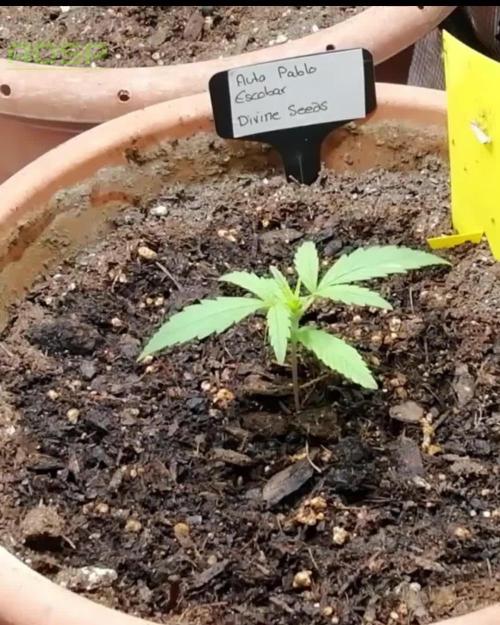
Bewässerung: 500 ml jeden 3 Tag in der Dritten Woche
pH-Wert: 5,9
EC-Wert: 1 mS/cm
Temperatur: 26ºC
Luftfeuchtigkeit: 55%
Schädlingsbekämpfung: im Moment haben wir keine Anzeichen das es was zu bekämpfen gibt, sobald die ersten Anzeichen da sind werden wir handeln :)
PPFD: 200 µmol/m²/s
DLI: 15 mol/m²/Tag
Düngemittel: Sie bekommt CalMag von BioBizz zu Prävention. Ab Tag 8 haben wir angefangen sie mit einem Mineralischen NPK Dünger (NPK 10-4-7) zu Gießen .
Besonderheiten: Sie wird etwas länger im Vorzuchtzelt bleiben da wir das Hauptzelt umbauen und es erst in 2 Wochen wieder bereit haben.
-Tag 15 Heute haben wir sie wieder mit Dünger gegossen, sie wächst sehr gut und ist bald zum Toppen bereit.
-Tag 18 Heute wurde sie wieder gegossen und wir haben angefangen mit Mineralischen (NPK 10-4-7) zu Düngen. Sie wurde heute auch getoppt und muss sich jetzt erholen.
-Tag 20 Sie hat sich gut vom Toppen erholt und die triebe bilden sich gut aus. Wir haben nun mit dem LST begonnen und sie hat heute auch eine Behandlung mit Nematoden gegen Trauermücken bekommen, es sind doch mehr als erwünscht unterwegs 😣

Likes
54
Share


@MrJones
Follow
The yield this run was just amazing, the VIPARSPECTRA XS-2000 performed very well, they run so cool, it's just crazy, you can set the lights about 10 inches from your plants at 70% without fear of burning them, sweet seed cream mandarin auto al, always yields very well, this harvest was even better, largest amount from any Auto Flowers yet, I know that you folks that grow DWC can push it a bit better but when grown in the soil the terpenes and flavors seem to be a click better in my opinion. If you have not tried these seeds you just have to, you will not be disappointed!

Likes
17
Share

@Springtime
Follow
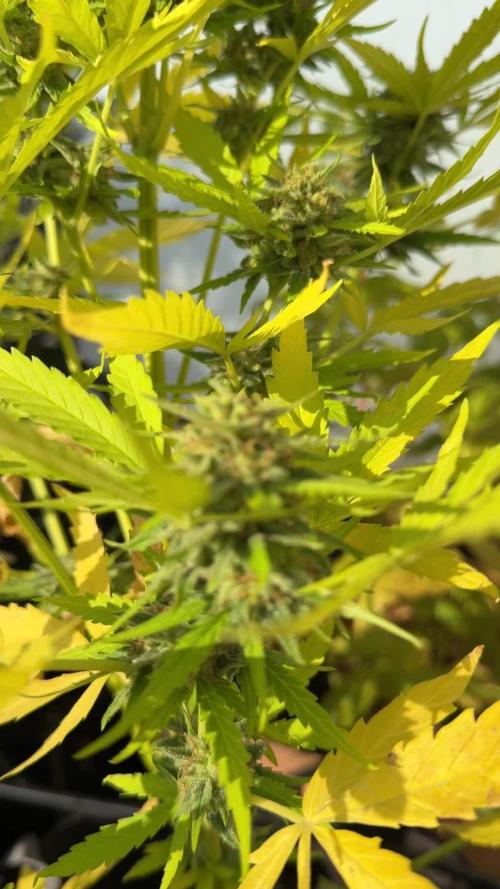
Hallo liebe Growmis! Nach 2 Wochen Urlaub bin ich wieder zurück. Die letzten 2 Wochen gab es nur Wasser aus der automatisch Solarbewässerung für die beiden Damen. Und jetzt sind sie eigentlich auch fertig. Epsilon ist komplett im Herbst, milkyway noch nicht ganz. Aber egal! Morgen werden sie geerntet. Riechen jetzt auch ordentlich. Das wird ein hartes trimmen bei milky way…. Hab mir von Bonsanto den Trocknungskoffer geholt. Hoffe er hält was er verspricht und verhindert das vollstinken der Bude beim trocknen und hoffe er schafft die Feuchtigkeit da raus. Werde euch auf dem laufenden halten
Likes
200
Share


@Ferenc
Follow
Day 96, 15th of December 2020:
Wao and wao... this is what I can say.
A bit late I was on holiday I usually start the week with the first day but now with the last one.
So let's start with the "black sheep" of this group as she is alone here RQS Wedding Gelato.
Easy growing issue free little bushy lady. Absolutely great choice of grow. Pretty much ready for Christmas but she can be cut even now lol....
And now let's speak about the Original Sensible Seeds' girls...
Well Black Ghost OG similarly to RQS Wedding Gelato is calm little bushy and issue free lady.... no problem all good ready for Christmas....
Runtz Gum the thick chick with heavy big buds and excellent appearance is really amazing. I placed a stick there and fixed her to look better... It was not necessarily but i have done it.
She needs more time pretty much done ny Christmas or a bit after....
Gelato from Original Sensible Seeds is similar in terms of acting such as streching and all that ...
The same situation applies not much to really say we wait ;)
I am really happy to have these ladies....
Well, Do-Si-Dos OG is the craziest one ever... lol.... not only due her crazy kind of streching style but the trichome developement that comes along to the fan leaf "holder" stem is pretty crazy....
Those buds are like a diamonds sticky and she would be ready to harvest but need to wait because I need to go....
I really had to fix her by placing a stick there I broke one stem but fixed as it did not come off... so crazy especially now because of the weight of the buds... now she looks even more beautiful...
I think she is the most challenging grow ever.
Original Sensible Seeds genetics is unique really high quality just look at them.
Royal Queen Seeds as well but this is my second grow from them my first was a Green Gelato which is the same calm littlw bushy plant. Amazing very good for newbies ;)
I am going on holiday again and back on 28th of December so after harvest starts.
Girls will be cut after.
The 7th weeks starts with tomorrow 16th of December....
Only flushing and no more nutritient will be used.
Soon full report comes. Lamp is the same 11 hours on and 13 off....
The last 4 days they will get 4 days darkness and only ventilation will be working no even more water ;)

Likes
17
Share


@eldruida_lamota
Follow
Vamos familia, estamos en la séptima semana de floración con estas Purple Og Kush de DutchFem.
Las vemos con un buen color, bien sanas y van engordando y progresando correctamente.
A subido un poco la altura pero no afecto tanto, ya imagino que seguiré dándole de comer porque pedir piden, una semana más por lo menos.
Agrobeta:
https://www.agrobeta.com/agrobetatiendaonline/36-abonos-canamo
Mars hydro:
Code discount: EL420
https://www.mars-hydro.com/
Las maximas de temperatura no superan los 26 grados y las mínimas no bajan 20, así que no me puedo quejar.
Los niveles de humedad también son los correctos van entre 50%/55% de humedad relativa.
Por supuesto el Ph lo estamos dejando alrededor de 6.
Hasta aquí es todo, buenos humos 💨💨💨.

Likes
10
Share

@Alvareas
Follow
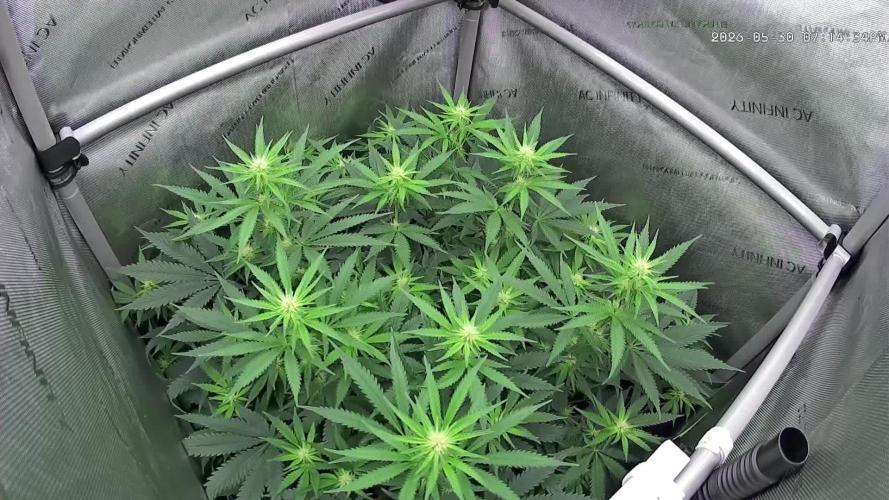
Die Pflanze hat sich diese Woche, wie erwartet, nur noch um 6 cm gestreckt.
Was mich freut, nach oben ist noch genug Platz, dass macht es deutlich einfacher.
Die Blütenstände haben sich schön entwickelt.
Die Nodien Abstände passen.
Generell hat die Pflanze ordentlich Blattmasse und das Zelt gut ausgefüllt.
Zum Ender der Woche hat die Pflanze ein Lolli Popping bekommen.
Ich habe ordentlich was an Blättern und Trieben rausgenommen.
Die Triebe die an die Zeltwand gewachsen sind habe ich rausgenommen, sowie alles was unterentwickelt war oder nicht ans Licht gekommen ist.
Das Scrog Netz habe ich etwas höher gezogen und die 6 Haupttriebe weiter nach Außen gefächert und mit Draht am Netz befestigt.
Jetzt kann die Luft ordentlich zirkulieren und es kommt auch nach unten Licht.
Die Parameter in Woche 9:
Controller Einstellung Tag: Temperatur und Luftfeuchtigkeit 24C°-26C°, 45% - 55%
Controller Einstellung Nacht: Temperatur und Luftfeuchtigkeit 24C°-26C°, 45% - 55%
Durchschnittliche Tagestemperatur: 28,4C°
Durchschnittliche Nachttemperatur: 24,5C°
Durchschnittliche Luftfeuchtigkeit Tag: 52,7%
Durchschnittliche Luftfeuchtigkeit Nacht: 55,7%
Durchschnittlicher VPD Tag: 1,4
Durchschnittlicher VPD Nacht: 1,0
Durchschnittliche Bodenfeuchtigkeit in Mbar: 66
LED Leistung: 40% = 120 Watt
Beleuchtungsdauer: 12 Stunden
Umluft: Stufe 2 oszillierend

Likes
2
Share


@Greenbean420
Follow
One of the plants grew massive! However the smoke wasn’t the best until a good 4 weeks cure. Very hairy buds too which was interesting 😂 Still a nice smoke
Processing
Likes
15
Share


@CanadianFillmore
Follow
Week 8 for the OG Kush and blueberry. Week 6 on the feed schedule for the Super Lemon haze. Last week of feed for the OG's and blueberry. The OG's are super thick, sticky and stank so nice! The blueberry is very sticky, smell's nice but the buds are not as big as I expected them to be.


Likes
37
Share


@NewbieLearner
Follow
This was a beautiful strain to grow. With her flowers getting big towards the end of harvest as well as the purple colours! I would definitely recommend that you try grow this strain. The buds are super dense and very well formed. An absolute treat to smoke and look at.


Likes
53
Share


@xbrico
Follow
Day 8 - Girls starting to come on now. Looks like their roots have settled and starting to see some pokies coming out of the bottom of the root pouches so hopefully start to see some good growth beginning soon. Get them ready for training and the likes.
Not changed the water this week (really should have as temp has been up a bit...into the 25's in the tank but plenty of Great White in there and no roots in water yet but...) - topping up with plain water to keep the EC level and just pH adjusting. Last weeks solution was a bit hot for my liking but no burn signs so should be good for a couple more days yet.
Got some iceline procured so been cleaning/flushing/sterilising the Hailea for getting it installed (That's when the water change will happen...likely to last weeks strength & recipe). Cant wait to get that in to get tank temps down (as roots will be in the water in about 5 days by the looks of things...tops!!! Also have the Torus Hydro pH Perfect Inline run through for a couple of days so it will be ready to go in to keep the pH good for me (A grow off and my pH skills are out the window!!! 😜). Just waiting on a Sicce Syncra 3.0 to pump the chiller and the pH Perfect (Bit overkill @ 2700LpH but looking something for the URDWC I am building for next year...thought the extra pressure would help with the inline pH adjuster too).
Apart from that, will download the stills for the time lapse video and upload tomorrow.
Happy Growing all!!! 💪


Likes
183
Share


@OrganicNature420
Follow
Germination date 🌱 12/07/2021
Day 64 16/09/2021
Strain 🍁 Ethos Genetics Banana Hammock R1
(Mandarin Sunset x Grapegod)
THC% • Unknown
💡 Mars Hydro FC4800
• Power draw 480W + 5%
• Max coverage 5 x 5
• LED 2070pcsSamsungLM30B1&Osram660nm
• Max Yield 2.5g / watt
• Noise level 0 DB
• Removable Driver +2m cable
• Daisy chain (multiple lights)
https://marshydroled.co.uk/products/mars-hydro-fc-4800-led-grow-light-samsunglm301b-commercial-greenhouse-medical-indoor-kit 🇬🇧
https://www.mars-hydro.com/buy-fc-4800-480w-4x4-energy-saving-full-spectrum-commercial-led-grow-light-mars-hydro-for-sale 🇺🇸
PROMO CODE • (ORG420) DISCOUNT 👍🏻 marshydroled.com
⛺ Mars Hydro 120 x 120 x 200cm
📤📥 AC infinity 6inch
💧 10lt dehumidifier
❄️ 3.1kw air con system
💉 Nutrients GreenBuzzLiquids
Organic Grow Liquid • 1-4ml until 2wk flower
Organic Bloom Liquid • 2-4ml flower stage
Organic More PK • 2-4ml +wk3 of flower
Organic Calmag • 1-2ml/lt whole grow
Fast Plants Spray • first 3days at night lights off
More Roots • 2-5ml veg +2wks flower
Fast Buds • 5ml +wk2 of veg until 1wk flower
Humic Acid Plus • 2-5ml whole grow
Growzyme • 2-5ml whole grow
Big Fruits • 2-5ml flower stage
Clean Fruits • 5ml flush 1wk
Ph powder
Root Gel
Living Organics
PROMO CODE • organicnature420 15%off ✌️🏼
https://greenbuzzliquids.com/
🥥 Growing Media • Coco Coir
Notes 📝
Girls look healthy and still only feeding every 2days. They are becoming more thirsty so will up water intake next week. Onelove GD 💚🌱🍁
Remember PROMO codes for both GreenBuzzLiquids and MarsHydro.com in the grow bio above 🖕🏼
Happy growing fam ❤️🌱🍁👍🏻

Likes
6
Share


@Farouk0967
Follow
Good evening my friends. White stigmas began to appear in the third week. Give her banana water or a light fertilizer for aquarium plants.
Likes
33
Share


@EeyoreTheHomie
Follow
DAY 73: The Lucky Charms is just starting to come out of the stunting from potting her up, and should be ready to double in size with the new room and the stretch in early flower. Very excited to see how she transforms. The clone cut I took off the LC has still yet to root, but looks very good, so I'm hoping to get another go at this strain, with more TLC.
Since my flowering room is currently full, I'm still waiting on potting the White Widow up. Since the White Widow is still in veg I've just been LST'ing the hell out of her. And she's been handling it super well. She's a Bondage Queen lol.
