Processing
Likes
Comments
Share
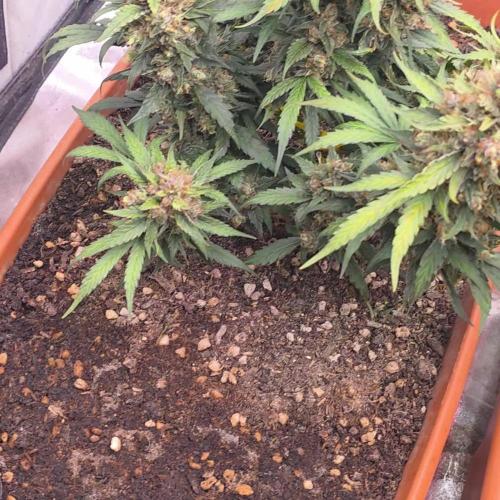
I welcome everyone who came in for the first time or has long been following my blueberries. the girl blossoms and smells and already showers herself with trichomes. two days ago I used iron chelate on a sheet to stimulate photosynthesis and also, due to phosphorus deficiency, introduced dry water-soluble fertilizer NPK 10/54/10
Likes
3
Share
Likes
15
Share
@Aleks555
Follow
42Fast Buds - Gorilla Zkittlez Auto 🌱 Today marks 70 days, and it's finally time to bring this incredible journey to an end. 💫 Honestly, I can hardly bring myself to cut her down, I've grown so attached to her, and she's just so beautiful. But the trichomes have turned a deep amber, and there's no more time to wait. For the last 6 days, we’ve been flushing her roots with ice-cold water, watching as she transformed, her colors changing and becoming even more stunning. It wasn’t just a grow – it was a true process of evolution. I want to give a huge thanks to 42FAST Buds for their amazing genetics and for allowing me to grow such a phenomenal strain. Gorilla Zkittlez Auto is an absolute masterpiece! 💥 Special thanks to Xpert Nutrients for their incredible fertilizers and ongoing support. Without you, we wouldn’t have achieved these remarkable results. You helped grow not just a plant, but a true work of art! 🌟
Likes
Comments
Share
-Oreoz Steckling von 3rd Coast Genetics aus dem Hause von Herby's Hemp Farm ​-Oreoz ist ein robuster Hybrid (70% Indica / 30% Sativa), der aus Cookies & Cream und Secret Weapon entstanden ist. Die Sorte zeichnet sich durch extrem dichte, harzige Blüten und ein süßes Dessert-Aroma (Schokolade, Vanille, Erde) mit einem Hauch Diesel aus. -1 Grow mit der BioHanf Sonnenerde. -18L Stofftopf mit einer 3-4cm dicken schicht BioMulchfaser von Sonnenerde - 15% des Topfvolumes angegossen (2,7L Leitungswasser) Gewicht vor dem Gießen 11,5Kg, nach dem Gießen 14,1Kg. Bei einem verlust von 1,3Kg gieß ich wieder nach auf die 14,1kg. -An Tag 5 war der steckling gut angewurzelt und wurde über der 4ten Nodie getoppt. -An Tag 7 wurden 1,4 Liter Leitungswasser nach gegossen, der topf wiegt jetzt wieder 14,1 kg. Das training hat begonnen, die ersten 2 Pflanzendrähte wurden gesetzt, jetzt gehts erstmal nur in die breite.
Likes
62
Share
6/14 These are some thirsty girls. It seems the roots have filled the grow bags. The added wind makes it so that I need to stay on top of the water. I also need to spray again. When defoliating I saw some WPM on the very inside of a couple plants. I killed a few aphids on one plant. It seems if I just manually kill them it takes a while for them to repopulate. Also found a worm. I should bust out the BT but I am undecided considering I have the WPM as well. Foliar spray will probably be Dr. Zymes or lost coast plant therapy. Note LCPT seems to not do shit against aphids. Will update as the week progresses. UPDATE: Went back over after noticing strong wind. 15mph sustained wind had my plants going as sideways as possible. Luckily the vertical trellis and supports I made have stopped any major damage thus far. I decided NOT to put tarps up on the south which is where the wind is coming from. I hope I do not regret that decision. I plan to spray tonight. 6/15 Rained all night so I was unable to spray. Surprisingly no damage from all that wind. 6/16 Rained during the night and soil was still wet so didn't water this morning. I noticed markings on one of my transplanted seedlings. Found Thrips. I've never dealt with these before. I was planning on spraying BT but now I'll need to switch to something else. LCPT, Dr. Zymes, or spinosid (captain Jack's dead bug). Considering I have been dealing with PM I'll try to use something that will deal with both. I'll update as I go. I have defoliation I need to do on at least one plant. I also need to reevaluate my space and consider moving a couple plants that way it isn't to crowded. Another windy day but it's from the north west which is better as the tree line and tarps help.UPDATE Went back over and watered all plants. One plant had a slight droop which is surprising considering the two days of rain. The wind dries those grow bags out quick and it was sunny day. I watered the one that looked a "little" droopy first before applying Lost Coast Plant Therapy to the entire garden with a half gallon pressure sprayer. I hope this was a good idea. The droopy plant got treated last. We shall see tomorrow. 6/17 Everything looked great this morning. Lightly watered before feeding 2 gallons. Replaced microbe brew with kangoroots this time. Plants looked very happy. No negative results from the lost coast plant therapy. If anything they look better. My cage is getting overwhelmed. I need to remove at least two smaller plants. They are exploding in that 50gal and the tote. If I removed just those two I think it would work a lot better. I would have more room to work as well. 6/18 LCPT doesn't seem to effect aphids. I noticed a few on ONE plant and had been killing them manually. Population was only on literally a leaf or two. I think my follow up treatment will be Spinosid. It works great and hits pretty much everything. I've used it once already. Plants are incredibly healthy. Leaves were wet so it lightly rained last night. I lightly watered as the soil still seemed moist. Different size containers makes a consistent watering schedule difficult. UPDATE: Went over and watered tonight. Checked the one plant that had a few aphids for aphids and found like a dozen lady bug larvae instead! They survived the wind and had babies! These are just wild guys that are all over the place here. Couldn't find a single bug other than that lol. 6/19 I watered early this morning lightly as the soil was not totally dried out but then it started pouring. Plants looked great this morning. After the rain I'll do some defoliating and check for any remaining thrips. Later in the day we had torrential rain that knocked out my cameras. Plants look fine as you can see and all cams and motion sensors are back online. I have backups but still. 6/20 We had torrential rain but plants are fine. Watered what needed it lightly. Bags dry out fast and I've found I need to water often or some will droop. Found spiders that had killed a couple of my lady bugs. I killed what I could. Still need to defoliate and apply second application of whatever I decide.
Likes
18
Share
Settimana 13 Giovedi 15/12/2022 Per livello acqua bassa inizio controllo 2870ec ph 5.8 aggiungiamo 36 lt acqua demineralizzata 4 lt rubinetto (40lt) 32 ml Grow 64 ml Micro 96 ml Bloom 40 ml enzimi 40 gr mega bud 16 gr silicate 20 ml calmagpro Ottenendo ec 2935 ph 6 Domenica 18/12/2022 Per livello acqua bassa inizio controllo ec 3999 ph 5.8 Aggiungiamo 30lt demineralizzata riportando l'ec a 2524 ph 5.9
Likes
9
Share
@Tmasm
Follow
Zamnésia, obrigado por fornecer genética para testes. Entrega segura, dentro do prazo e muito discreta, como você pode ver nas fotos. Experiência para possível plantio em massa, dependendo dos resolvidos. 1 BISCOTTI (SEMENTES DE ZAMNESIA) FEMINIZADO Conforme diário já na 3 semana. 1 JEALOUSY (SEMENTES DE ZAMNESIA) Conforme diário já na 3 semana. 1 SUNSET SHERBET AUTOMATIC (SEMENTES DE ZAMNESIA) FEMINIZADO Já germinada, e com 1cm Panta está linda, crescendo bem. Gosto muito do desempenho dela, barraca com condições mínimas, mas para ela tudo bem. Primeiras fábricas da Zamnésia, estou impressionado com a qualidade dos produtos. Visite www.zamnesia.com, você ficará surpreso com a variedade de produtos, todos da mais alta qualidade. O diário será atualizado toda semana, espero que gostem (eu também).
Likes
61
Share
@Hou_Stone
Follow
j'essaye d'équilibrer la hauteur des plantes avec des sceaux cette semaine puis j'ai posé un filet pour éparpiller les branches à travers.👋
Processing
Likes
10
Share
Nice colas popping up showing to see the hard work pays off
Likes
120
Share
Hi all the happy people here in GrowDiaries. This is my second cultivation ever and it will be fun to try a bigger space than my closet grows First, I'm just going to say I'm done with the construction of my new growroom. I put some pictures on the construction here in week one. The room is 2.14 meters by 1.7 meters and has a ceiling height of 2 meters. It provides a floor area of ​​3.6 square meters. I use a 54 Watt Lightwawe T5 for germination and 2 Pcs 400 Watt HPS lamps. I have a channel fan that replaces the room air about 40 times an hour to get a comfortable theme in the room, the air enters a fresh air intake from the outside. The air is purified through a carbon filter to then leave the room to the rest of the basement. Then I use that heat to heat the rest of the basement. I will use 8 pcs 15 liter Autopots to grow with and a 100 liter water tank that supplies the pots of water and nutrition. I will grow completely organically in soil and will watercure my buds to get the best possible medicine for me. But there are no cultivation rooms to be displayed here, so I continue with what is most important. Today I have put my seeds in my moisture dome and hope the seeds have germinated within a few days. I am very excited to see how the new growroom will work and how this CBD Fast Eddy plant from Royal queen seeds will turn out. CBD Fast Eddy Automatic is combining Cheese x Juanita la Lagrimosa x Ruderalis, Fast Eddy is a rapid growing, flavourful, and CBD-rich auto strain that goes from seed to harvest in 8-9 weeks, produce generous yields, and induce a clear, mellow, and most importantly, functional high. THC: 9% CBD: High Yield Indoor : 400 - 450 gr/m2 Yield Outdoor: 80 - 130 gr/plant Height Indoor: 60 - 100 cm Height Outdoor: 80 - 120 cm Flowering: 6 - 7 weeks Harvest month: 8-9 weeks after sprouting Genetic Background: Cheese x Juanita la Lagrimosa x Ruderalis Type: Sa 50% In 40% Ru 10% Effect: Clear, Painrelief Climate: Mild .............................................................................................................................................................................................................................................................................................................................................. Update 2017-08-15. Both seeds have germinated and planted in small pots inside the humidity dome. I'm so glad it worked so well and now it's just hoping they'll start growing and become 2 big healthy girls :) ............................................................................................................................................................................................................................................................................................................................................... Update 2017-08-16. I have mixed my own soil today. Its 40% sieved peat harrow H2-H4 0-30 mm, 45% sieved peat harrow H4-H6 0-30 mm. 5% sand and 10% of compost soil. And i use 15% of perlite and mix it all together. ............................................................................................................................................................................................................................................................................................................................................... Update 2017-08-20. These girls are much slower to germinate and to start growing than the other 6 girls I started at the same time. One of the germinated seeds split in half, so I had to take a new seed and germinate it. It took 2 days. It was just a smal taproots after germination with this strain as opposed to my Fastbuds cbd. But I hope everything goes well from now and that they live up to their name, Fast Eddy. ................................................................................................................................................................................................................................................................................................................................................ Update 2017-08-21. New pics. ................................................................................................................................................................................................................................................................................................................................................ 2017-08-22. Nr1 dident make it and died. Started germinate a new seed to get another Nr1. .............................................................................................................................................................................................................................................................................................. 2017-08-27. Nr 1 is in a small pot in humidity dome and i hope shes going to break the surface soon. Nr 2 is slow but doing fine. --------------------------------------------------------------------------------------------------------------------------------------------------------------------------------------- 2017-08-28. Nr2 is transplanted in 15 liter autopot. --------------------------------------------------------------------------------------------------------------------------------------------------------------------- 2017-08-29. New movie of the girls Nr2. Its no water for 3 days now so the roots develop more and match the plant above the soil. The temp controlled fan is awesome, its easy to set what temp you like to have in the room. Right now its 28 celcius. And humidity is 56%. ----------------------------------------------------------------------------------------------------------------------------------------------------------------------------------------------- 2017-08-29. Hello to you who read my diary, I just want to say that I am pleased that you have chosen to check in with me and in my diary. I just want to say that I do this for myself and for a steady flow of my medicine. Everything you read and see in my diary is 100% honest and I will never distort or beautify anything here. I document my crops so that I can learn from my mistakes and also to look back at those different crops. I try to update with pictures every day and with text if something special has happened in the garden. This is my strainhunt for the best medicine and the beginning of my journey with cannabis and the cultivation of it. ----------------------------------------------------------------------------------------------------------------------------------------------------------------------- 2017-08-30. Cleaned the room this morning, just vacuuming and cleaning with chlorine solution. Im testing the fan to control temp and humidity, it works great. Added a movie. Everything is looking great right now. ------------------------------------------------------------------------------------------------------------------------------------------------------------------------ 2017-08-31. 3 New pics. ------------------------------------------------------------------------------------------------------------------------ 2017-09-01. New pics and a video of the grow room from today.
Likes
9
Share
@JKennedy
Follow
I took a photo with a flash while the babies were sleeping. I know I shouldn’t cos it could affect them. So I’m sorry if I’ll keep taking bad photo with the growing light, I will make better content for the harvest time :) They are starting to produce a nice amount of crystals and the smell is goin to be quite strong.
Likes
7
Share
@MrGoonai
Follow
01/29/25 Short facts: - 43cm high - Light is @80% but in a distance of 48cm - 650 ppfd - VPD @ 1.0 - but haven't got it higher than 0.9 - had to defoliate the plant - No Root juice anymore --------------------------------------------------------------------------------- She is in flower and did stretch quite a lot, but mostly in two side branches. Still not very happy with the growth, because of den mainbranch. The top is just overcrowded and just looking weird. There are also some leaves, that just look a little bit weird. Maybe it is a mutation? I have to apply the fertilizer for flowering in the next few days.
Likes
1
Share
Likes
9
Share
Day 90: Buds are foxtailing like crazy and they are starting to get more tri's really nothing else that i can tell at least. Girls went through hell and back but we still here lol. Thanks for looking and happy growing. 😁
Likes
21
Share
Love the bud structure, she’s loving life, actually had to attach her to a supporter
Likes
19
Share
Yellow butterfly came to see me the other day; that was nice. Starting to show signs of stress on the odd leaf, localized isolated blips, blemishes, who said growing up was going to be easy! Smaller leaves have less surface area for stomata to occupy, so the stomata are packed more densely to maintain adequate gas exchange. Smaller leaves might have higher stomatal density to compensate for their smaller size, potentially maximizing carbon uptake and minimizing water loss. Environmental conditions like light intensity and water availability can influence stomatal density, and these factors can affect leaf size as well. Leaf development involves cell division and expansion, and stomatal differentiation is sensitive to these processes. In essence, the smaller leaf size can lead to a higher stomatal density due to the constraints of available space and the need to optimize gas exchange for photosynthesis and transpiration. In the long term, UV-B radiation can lead to more complex changes in stomatal morphology, including effects on both stomatal density and size, potentially impacting carbon sequestration and water use. In essence, UV-B can be a double-edged sword for stomata: It can induce stomatal closure and potentially reduce stomatal size, but it may also trigger an increase in stomatal density as a compensatory mechanism. It is generally more efficient for gas exchange to have smaller leaves with a higher stomatal density, rather than large leaves with lower stomatal density. This is because smaller stomata can facilitate faster gas exchange due to shorter diffusion pathways, even though they may have the same total pore area as fewer, larger stomata. Leaf size tends to decrease in colder climates to reduce heat loss, while larger leaves are more common in warmer, humid environments. Plants in arid regions often develop smaller leaves with a thicker cuticle and/or hairs to minimize water loss through transpiration. Conversely, plants in wet environments may have larger leaves and drip tips to facilitate water runoff. Leaf size and shape can vary based on light availability. For example, leaves in shaded areas may be larger and thinner to maximize light absorption. Leaf mass per area (LMA) can be higher in stressful environments with limited nutrients, indicating a greater investment in structural components for protection and critical resource conservation. Wind speed, humidity, and soil conditions can also influence leaf morphology, leading to variations in leaf shape, size, and surface characteristics. Small leaves: Reduce water loss in arid or cold climates. Environmental conditions significantly affect gene expression in plants. Plants are sessile organisms, meaning they cannot move to escape unfavorable conditions, so they rely on gene expression to adapt to their surroundings. Environmental factors like light, temperature, water, and nutrient availability can trigger changes in gene expression, allowing plants to respond to and survive in diverse environments. Depending on the environment a young seedling encounters, the developmental program following seed germination could be skotomorphogenesis in the dark or photomorphogenesis in the light. Light signals are interpreted by a repertoire of photoreceptors followed by sophisticated gene expression networks, eventually resulting in developmental changes. The expression and functions of photoreceptors and key signaling molecules are highly coordinated and regulated at multiple levels of the central dogma in molecular biology. Light activates gene expression through the actions of positive transcriptional regulators and the relaxation of chromatin by histone acetylation. Small regulatory RNAs help attenuate the expression of light-responsive genes. Alternative splicing, protein phosphorylation/dephosphorylation, the formation of diverse transcriptional complexes, and selective protein degradation all contribute to proteome diversity and change the functions of individual proteins. Photomorphogenesis, the light-driven developmental changes in plants, significantly impacts gene expression. It involves a cascade of events where light signals, perceived by photoreceptors, trigger changes in gene expression patterns, ultimately leading to the development of a plant in response to its light environment. Genes are expressed, not dictated! While having the potential to encode proteins, genes are not automatically and constantly active. Instead, their expression (the process of turning them into proteins) is carefully regulated by the cell, responding to internal and external signals. This means that genes can be "turned on" or "turned off," and the level of expression can be adjusted, depending on the cell's needs and the surrounding environment. In plants, genes are not simply "on" or "off" but rather their expression is carefully regulated based on various factors, including the cell type, developmental stage, and environmental conditions. This means that while all cells in a plant contain the same genetic information (the same genes), different cells will express different subsets of those genes at different times. This regulation is crucial for the proper functioning and development of the plant. When a green plant is exposed to red light, much of the red light is absorbed, but some is also reflected back. The reflected red light, along with any blue light reflected from other parts of the plant, can be perceived by our eyes as purple. Carotenoids absorb light in blue-green region of the visible spectrum, complementing chlorophyll's absorption in the red region. They safeguard the photosynthetic machinery from excessive light by activating singlet oxygen, an oxidant formed during photosynthesis. Carotenoids also quench triplet chlorophyll, which can negatively affect photosynthesis, and scavenge reactive oxygen species (ROS) that can damage cellular proteins. Additionally, carotenoid derivatives signal plant development and responses to environmental cues. They serve as precursors for the biosynthesis of phytohormones such as abscisic acid () and strigolactones (SLs). These pigments are responsible for the orange, red, and yellow hues of fruits and vegetables, while acting as free scavengers to protect plants during photosynthesis. Singlet oxygen (¹O₂) is an electronically excited state of molecular oxygen (O₂). Singlet oxygen is produced as a byproduct during photosynthesis, primarily within the photosystem II (PSII) reaction center and light-harvesting antenna complex. This occurs when excess energy from excited chlorophyll molecules is transferred to molecular oxygen. While singlet oxygen can cause oxidative damage, plants have mechanisms to manage its production and mitigate its harmful effects. Singlet oxygen (¹O₂) is considered a reactive oxygen species (ROS). It's a form of oxygen with higher energy and reactivity compared to the more common triplet oxygen found in its ground state. Singlet oxygen is generated both in biological systems, such as during photosynthesis in plants, and in cellular processes, and through chemical and photochemical reactions. While singlet oxygen is a ROS, it's important to note that it differs from other ROS like superoxide (O₂⁻), hydrogen peroxide (H₂O₂), and hydroxyl radicals (OH) in its formation, reactivity, and specific biological roles. Non-photochemical quenching (NPQ) protects plants from damage caused by reactive oxygen species (ROS) by dissipating excess light energy as heat. This process reduces the overexcitation of photosynthetic pigments, which can lead to the production of ROS, thus mitigating the potential for photodamage. Zeaxanthin, a carotenoid pigment, plays a crucial role in photoprotection in plants by both enhancing non-photochemical quenching (NPQ) and scavenging reactive oxygen species (ROS). In high-light conditions, zeaxanthin is synthesized from violaxanthin through the xanthophyll cycle, and this zeaxanthin then facilitates heat dissipation of excess light energy (NPQ) and quenches harmful ROS. The Issue of Singlet Oxygen!! ROS Formation: Blue light, with its higher energy photons, can promote the formation of reactive oxygen species (ROS), including singlet oxygen, within the plant. Potential Damage: High levels of ROS can damage cellular components, including proteins, lipids, and DNA, potentially impacting plant health and productivity. Balancing Act: A balanced spectrum of light, including both blue and red light, is crucial for mitigating the harmful effects of excessive blue light and promoting optimal plant growth and stress tolerance. The Importance of Red Light: Red light (especially far-red) can help to mitigate the negative effects of excessive blue light by: Balancing the Photoreceptor Response: Red light can influence the activity of photoreceptors like phytochrome, which are involved in regulating plant responses to different light wavelengths. Enhancing Antioxidant Production: Red and blue light can stimulate the production of antioxidants, which help to neutralize ROS and protect the plant from oxidative damage. Optimizing Photosynthesis: Red light is efficiently used in photosynthesis, and its combination with blue light can lead to increased photosynthetic efficiency and biomass production. In controlled environments like greenhouses and vertical farms, optimizing the ratio of blue and red light is a key strategy for promoting healthy plant growth and yield. Understanding the interplay between blue light signaling, ROS production, and antioxidant defense mechanisms can inform breeding programs and biotechnological interventions aimed at improving plant stress resistance. In summary, while blue light is essential for plant development and photosynthesis, it's crucial to balance it with other light wavelengths, particularly red light, to prevent excessive ROS formation and promote overall plant health. Oxidative damage in plants occurs when there's an imbalance between the production of reactive oxygen species (ROS) and the plant's ability to neutralize them, leading to cellular damage. This imbalance, known as oxidative stress, can result from various environmental stressors, affecting plant growth, development, and overall productivity. Causes of Oxidative Damage: Abiotic stresses: These include extreme temperatures (heat and cold), drought, salinity, heavy metal toxicity, and excessive light. Biotic stresses: Pathogen attacks and insect infestations can also trigger oxidative stress. Metabolic processes: Normal cellular activities, particularly in chloroplasts, mitochondria, and peroxisomes, can generate ROS as byproducts. Certain chlorophyll biosynthesis intermediates can produce singlet oxygen (1O2), a potent ROS, leading to oxidative damage. ROS can damage lipids (lipid peroxidation), proteins, carbohydrates, and nucleic acids (DNA). Oxidative stress can compromise the integrity of cell membranes, affecting their function and permeability. Oxidative damage can interfere with essential cellular functions, including photosynthesis, respiration, and signal transduction. In severe cases, oxidative stress can trigger programmed cell death (apoptosis). Oxidative damage can lead to stunted growth, reduced biomass, and lower crop yields. Plants have evolved intricate antioxidant defense systems to counteract oxidative stress. These include: Enzymes like superoxide dismutase (SOD), catalase (CAT), and various peroxidases scavenge ROS and neutralize their damaging effects. Antioxidant molecules like glutathione, ascorbic acid (vitamin C), C60 fullerene, and carotenoids directly neutralize ROS. Developing plant varieties with gene expression focused on enhanced antioxidant capacity and stress tolerance is crucial. Optimizing irrigation, fertilization, and other management practices can help minimize stress and oxidative damage. Applying antioxidant compounds or elicitors can help plants cope with oxidative stress. Introducing genes for enhanced antioxidant enzymes or stress-related proteins over generations. Phytohormones, also known as plant hormones, are a group of naturally occurring organic compounds that regulate plant growth, development, and various physiological processes. The five major classes of phytohormones are: auxins, gibberellins, cytokinins, ethylene, and abscisic acid. In addition to these, other phytohormones like brassinosteroids, jasmonates, and salicylates also play significant roles. Here's a breakdown of the key phytohormones: Auxins: Primarily involved in cell elongation, root initiation, and apical dominance. Gibberellins: Promote stem elongation, seed germination, and flowering. Cytokinins: Stimulate cell division and differentiation, and delay leaf senescence. Ethylene: Regulates fruit ripening, leaf abscission, and senescence. Abscisic acid (ABA): Plays a role in seed dormancy, stomatal closure, and stress responses. Brassinosteroids: Involved in cell elongation, division, and stress responses. Jasmonates: Regulate plant defense against pathogens and herbivores, as well as other processes. Salicylic acid: Plays a role in plant defense against pathogens. 1. Red and Far-Red Light (Phytochromes): Red light: Primarily activates the phytochrome system, converting it to its active form (Pfr), which promotes processes like stem elongation and flowering. Far-red light: Inhibits the phytochrome system by converting the active Pfr form back to the inactive Pr form. This can trigger shade avoidance responses and inhibit germination. Phytohormones: Red and far-red light regulate phytohormones like auxin and gibberellins, which are involved in stem elongation and other growth processes. 2. Blue Light (Cryptochromes and Phototropins): Blue light: Activates cryptochromes and phototropins, which are involved in various processes like stomatal opening, seedling de-etiolation, and phototropism (growth towards light). Phytohormones: Blue light affects auxin levels, influencing stem growth, and also impacts other phytohormones involved in these processes. Example: Blue light can promote vegetative growth and can interact with red light to promote flowering. 3. UV-B Light (UV-B Receptors): UV-B light: Perceived by UVR8 receptors, it can affect plant growth and development and has roles in stress responses, like UV protection. Phytohormones: UV-B light can influence phytohormones involved in stress responses, potentially affecting growth and development. 4. Other Colors: Green light: Plants are generally less sensitive to green light, as chlorophyll reflects it. Other wavelengths: While less studied, other wavelengths can also influence plant growth and development through interactions with different photoreceptors and phytohormones. Key Points: Cross-Signaling: Plants often experience a mix of light wavelengths, leading to complex interactions between different photoreceptors and phytohormones. Species Variability: The precise effects of light color on phytohormones can vary between different plant species. Hormonal Interactions: Phytohormones don't act in isolation; their interactions and interplay with other phytohormones and environmental signals are critical for plant responses. The spectral ratio of light (the composition of different colors of light) significantly influences a plant's hormonal balance. Different wavelengths of light are perceived by specific photoreceptors in plants, which in turn regulate the production and activity of various plant hormones (phytohormones). These hormones then control a wide range of developmental processes.