




Processing
Likes
1
Share


@Funkyskunky1
Follow
They are looking real good. I think I may have gotten some nutrients on one plants leaves and it caused some yellowing and leaf curl, I’m hoping it straightens out.
Likes
Comments
Share


@Laylowandgrow
Follow
(Batch#1)Nothing much to report this week. All plants are growing steadily and healthy.Most plants doubled in size and grew wider.

Likes
3
Share

@Count-Dooku
Follow
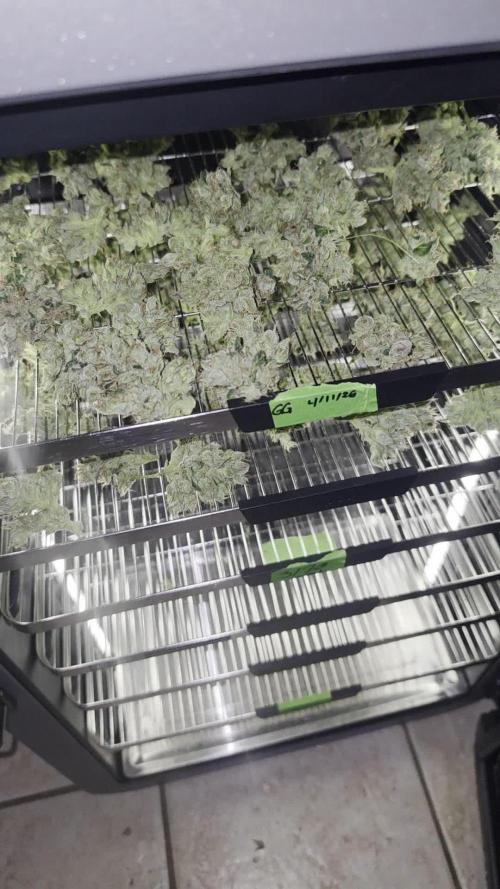
Was up late last night trimming three small plants up to go into the box.
Super fox tail structure, I fked with the light schedule a few times during flower by bringing them inside and taking them back outside to finish. So I think that's why they have that structure.
Ended up being more bud than I thought tho so I'm not upset, trimming was just a pita.


Likes
25
Share


@PacMan420
Follow
All the plants are doing great, the Lsd-25 is flowering the other one is still short, the blackberry Autos are done stretching, the other one is tall. I dont think the blackberry autos will yield much. The short Lsd-25 is real bushy ive defoliated that plant twice and its leaves grows back fast. Next week i will begin to use full tilt and over drive. Im going to stop using fish it and liquid seaweed


Likes
4
Share


@AutoCrazy
Follow
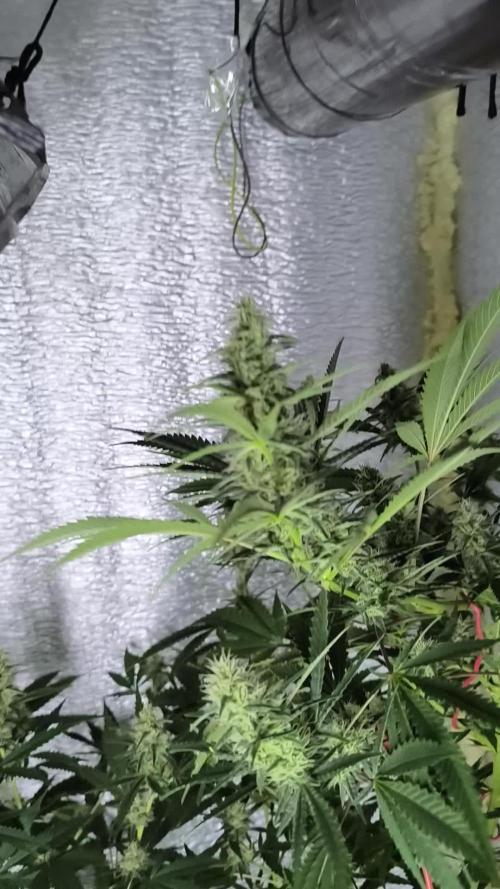
This sweet seeds lady smells really good at this point. Some of the bigger fan leaves are starting to fade a bit so she must be starting to ripen up.
I am finding the bud structure is not overly dense. It’s very foxtailish. But we will see if she fattens up as she swells up in her final weeks.
😎🍿🍻🌱

Likes
26
Share


@Silverback_Guerilla
Follow
10/31:
I fed today with one, signal, sweet & sticky, beastie bloomz, and silica.
Insane frost and super swollen calyx on these plants. 😍
11/4:
Fed with one, signal, sweet & sticky, beastie bloomz, silica, and humic acid.
They're starting to produce a truly foul stench now...love it!👍
Likes
563
Share


@Ju_Bps
Follow
Hello my friends 👩🌾👨🌾,
Week was good, preflowering continues, Buds sites are forming 🌲🌲, we start to have a nice rectangular green screen 😀😍.
The canope start to be good, I stopped to train the stems, I didn't removed leaves this week, just kick off the big leaves, probably a last defoliation next week.
💦 2 Watering this week 1.5l/plant .
Water + Cannazym + Sugar Royal
Water + Terra vega + Canna Boost
PH@6
I continue to spray with water each day, they love it 😀.
Lamp @100%
As you can see, I've added the SP3000, will be setup next week 😋😋💡💡
Bisous 💋😘, and see you next week.
Thanks community for follow, likes, comments, always a pleasure 👩🌾👨🌾❤️🌲
Mars Hydro - TS 1000
https://www.mars-hydro.com/ts-1000-led-grow-light
Mars Hydro - FC3000
https://www.mars-hydro.com/fc-3000-samsung-lm301b-led-grow-light
Mars Hydro - SP3000
https://www.mars-hydro.com/sp-3000-samsung-lm301b-greenhouse-led-grow-light
The High Chameleon - Bisous Au THC 💋💋🌲🌲😘😘
https://www.thehighchameleon.com/shop/bisous-au-thc-83
Processing
Likes
32
Share


@Dunk_Junk
Follow
So she sprung up during the week!!
Lets see what she does. I'm in need of a sativa strain at the mo.


Likes
5
Share


@Willy_Balls
Follow
#43 clones are maturing too fast I feel. Especially that a mother is ripening normally. I would guess it’s because of poor rooting. It’s the only difference.
I keep runoff at around 3 max.
Around week 5 the runoff ph started to drop below 6. Even towards 5.5. Both in rockwool and coco.

Likes
20
Share


@CanadianFillmore
Follow
Start of week 8 of flowering, day 78 for the plant. She's healthy but the buds are slow to fill out in size, this could be the result of the heat stress she suffered. Other than that, I'm still happy with this plant.

Likes
41
Share


@Cannaguy
Follow
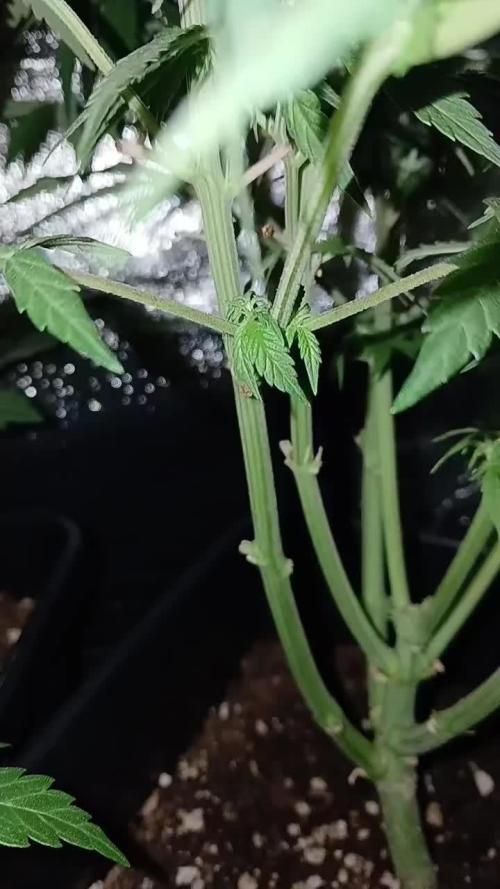
Pests seem to be under control with use of trifecta and insecticidal soap. Applied 1 cup of Jobes organic fertilizer to 5 gallon pots and 2 cups of Jobes organic fertilizer to the plant in 15 gallon container. All plants receive at least 1 gallon of water every other day and 15 gallon plant receives around 2-3 gallons of water every other day depending on rain and soil touch/feel. Decided to grow a bagseed I found of gelato x GMO. While in seedling stage a chipmunk or squirrel tried to bury its stash in the soil and bent the stem over 90 degrees. I taped it up with some medical tape and it bounced right back, which is the picture I have now.



Likes
56
Share


@Ultraviolet
Follow
What's in the soil? What's not in the soil would be an easier question to answer. 16-18 DLI @ the minute. +++ as she grows.
Probably not recommended, but to get to where it needs to be, I need to start now.
Vegetative @1400ppm 0.8–1.2 kPa 80–86°F (26.7–30°C) 65–75%, LST Day 10, Fim'd Day 11
CEC (Cation Exchange Capacity):
This is a measure of a soil's ability to hold and exchange positively charged nutrients, like calcium, magnesium, and potassium. Soils with high CEC (more clay and organic matter) have more negative charges that attract and hold these essential nutrients, preventing them from leaching away.
Biochar is highly efficient at increasing cation exchange capacity (CEC) compared to many other amendments. Biochar's high CEC potential stems from its negatively charged functional groups, and studies show it can increase CEC by over 90%. Amendments like compost also increase CEC but are often more prone to rapid biodegradation, which can make biochar's effect more long-lasting. biochar acts as a long-lasting Cation Exchange Capacity (CEC) enhancer because its porous, carbon-rich structure provides sites for nutrients to bind to, effectively improving nutrient retention in soil without relying on the short-term benefits of fresh organic matter like compost or manure. Biochar's stability means these benefits last much longer than those from traditional organic amendments, making it a sustainable way to improve soil fertility, water retention, and structure over time. Needs to be charged first, similar to Coco, or it will immobilize cations, but at a much higher ratio.
a high cation exchange capacity (CEC) results in a high buffer protection, meaning the soil can better resist changes in pH and nutrient availability. This is because a high CEC soil has more negatively charged sites to hold onto essential positively charged nutrients, like calcium and magnesium, and to buffer against acid ions, such as hydrogen.
EC (Electrical Conductivity):
This measures the amount of soluble salts in the soil. High EC levels indicate a high concentration of dissolved salts and can be a sign of potential salinity issues that can harm plants.
The stored cations associated with a medium's cation exchange capacity (CEC) do not directly contribute to a real-time electrical conductivity (EC) reading. A real-time EC measurement reflects only the concentration of free, dissolved salt ions in the water solution within the medium.
98% of a plants nutrients comes directly from the water solution.
2% come directly from soil particles.
CEC is a mediums storage capacity for cations. These stored cations do not contribute to a mediums EC directly.
Electrical Conductivity (EC) does not measure salt ions adsorbed (stored) onto a Cation Exchange Capacity (CEC) site, as EC measures the conductivity of ions in solution within a soil or water sample, not those held on soil particles.
A medium releases stored cations to water by ion exchange, where a new, more desirable ion from the water solution temporarily displaces the stored cation from the medium's surface, a process also seen in plants absorbing nutrients via mass flow. For example, in water softeners, sodium ions are released from resin beads to bond with the medium's surface, displacing calcium and magnesium ions which then enter the water. This same principle applies when plants take up nutrients from the soil solution: the cations are released from the soil particles into the water in response to a concentration equilibrium, and then moved to the root surface via mass flow.
An example of ion exchange within the context of Cation Exchange Capacity (CEC) is a soil particle with a negative charge attracting and holding positively charged nutrient ions, like potassium (K+) or calcium (Ca2+), and then exchanging them for other positive ions present in the soil solution. For instance, a negatively charged clay particle in soil can hold a K+ ion and later release it to a plant's roots when a different cation, such as calcium (Ca2+), is abundant and replaces the potassium. This process of holding and swapping positively charged ions is fundamental to soil fertility, as it provides plants with essential nutrients.
Negative charges on soil particles: Soil particles, particularly clay and organic matter, have negatively charged surfaces due to their chemical structure.
Attraction of cations: These negative charges attract and hold positively charged ions, or cations, such as:
Potassium (K+)
Calcium (Ca2+)
Magnesium (Mg2+)
Sodium (Na+)
Ammonium (NH4+)
Plant roots excrete hydrogen ions (H+) through the action of proton pumps embedded in the root cell membranes, which use ATP (energy) to actively transport H+ ions from inside the root cell into the surrounding soil. This process lowers the pH of the soil, which helps to make certain mineral nutrients, such as iron, more available for uptake by the plant.
Mechanism of H+ Excretion
Proton Pumps: Root cells contain specialized proteins called proton pumps (H+-ATPases) in their cell membranes.
Active Transport: These proton pumps use energy from ATP to actively move H+ ions from the cytoplasm of the root cell into the soil, against their concentration gradient.
Role in pH Regulation: This active excretion of H+ is a major way plants regulate their internal cytoplasmic pH.
Nutrient Availability: The resulting decrease in soil pH makes certain essential mineral nutrients, like iron, more soluble and available for the root cells to absorb.
Ion Exchange: The H+ ions also displace positively charged mineral cations from the soil particles, making them available for uptake.
Iron Uptake: In response to iron deficiency stress, plants enhance H+ excretion and reductant release to lower the pH and convert Fe3+ to the more available form Fe2+. The altered pH can influence the activity and composition of beneficial microbes in the soil. The H+ gradient created by the proton pumps can also be used for other vital cell functions, such as ATP synthesis and the transport of other solutes. The hydrogen ions (H+) excreted during photosynthesis come from the splitting of water molecules. This splitting, called photolysis, occurs in Photosystem II to replace the electrons used in the light-dependent reactions. The released hydrogen ions are then pumped into the thylakoid lumen, creating a proton gradient that drives ATP synthesis.
Plants release hydrogen ions (H+) from their roots into the soil, a process that occurs in conjunction with nutrient uptake and photosynthesis. These H+ ions compete with mineral cations for the negatively charged sites on soil particles, a phenomenon known as cation exchange. By displacing beneficial mineral cations, the excreted H+ ions make these nutrients available for the plant to absorb, which can also lower the soil pH and indirectly affect its Cation Exchange Capacity (CEC) by altering the pool of exchangeable cations in the soil solution.
Plants use proton (H+) exudation, driven by the H+-ATPase enzyme, to release H+ ions into the soil, creating a more acidic rhizosphere, which enhances nutrient availability and influences nutrient cycling processes. This acidification mobilizes insoluble nutrients like iron (Fe) by breaking them down, while also facilitating the activity of beneficial microbes involved in the nutrient cycle. Therefore, H+ exudation is a critical plant strategy for nutrient acquisition and management, allowing plants to improve their access to essential elements from the soil.
A lack of water splitting during photosynthesis can affect iron uptake because the resulting energy imbalance disrupts the plant's ability to produce ATP and NADPH, which are crucial for overall photosynthetic energy conversion and can trigger a deficiency in iron homeostasis pathways. While photosynthesis uses hydrogen ions produced from water splitting for the Calvin cycle, not to create a hydrogen gas deficiency, the overall process is sensitive to nutrient availability, and iron is essential for chloroplast function.
In photosynthesis, water is split to provide electrons to replace those lost in Photosystem II, which is triggered by light absorption. These electrons then travel along a transport chain to generate ATP (energy currency) and NADPH (reducing power). Carbon Fixation: The generated ATP and NADPH are then used to convert carbon dioxide into carbohydrates in the Calvin cycle. Impaired water splitting (via water in or out) breaks the chain reaction of photosynthesis. This leads to an imbalance in ATP and NADPH levels, which disrupts the Calvin cycle and overall energy production in the plant. Plants require a sufficient supply of essential mineral elements like iron for photosynthesis. Iron is vital for chlorophyll formation and plays a crucial role in electron transport within the chloroplasts. The complex relationship between nutrient status and photosynthesis is evident when iron deficiency can be reverted by depleting other micronutrients like manganese. This highlights how nutrient homeostasis influences photosynthetic function. A lack of adequate energy and reducing power from photosynthesis, which is directly linked to water splitting, can trigger complex adaptive responses in the plant's iron uptake and distribution systems.
Plants possess receptors called transceptors that can directly detect specific nutrient concentrations in the soil or within the plant's tissues. These receptors trigger signaling pathways, sometimes involving calcium influx or changes in protein complex activity, that then influence nutrient uptake by the roots. Plants use this information to make long-term adjustments, such as Increasing root biomass to explore more soil for nutrients. Modifying metabolic pathways to make better use of available resources. Adjusting the rate of nutrient transport into the roots. That's why I keep a high EC. Abundance resonates Abundance.


Likes
6
Share

@MaxWax
Follow
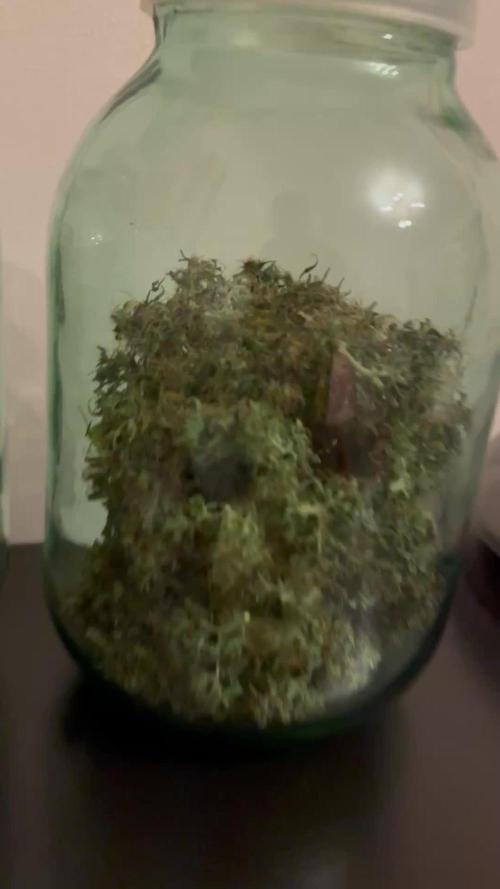
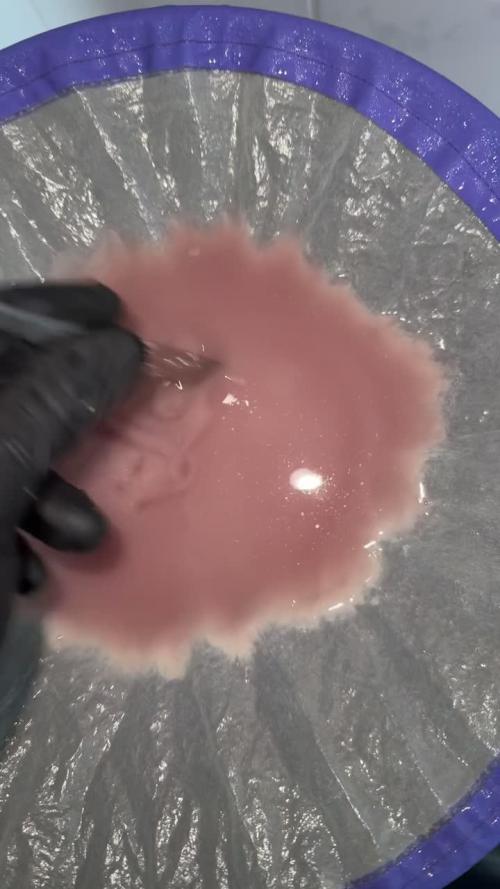
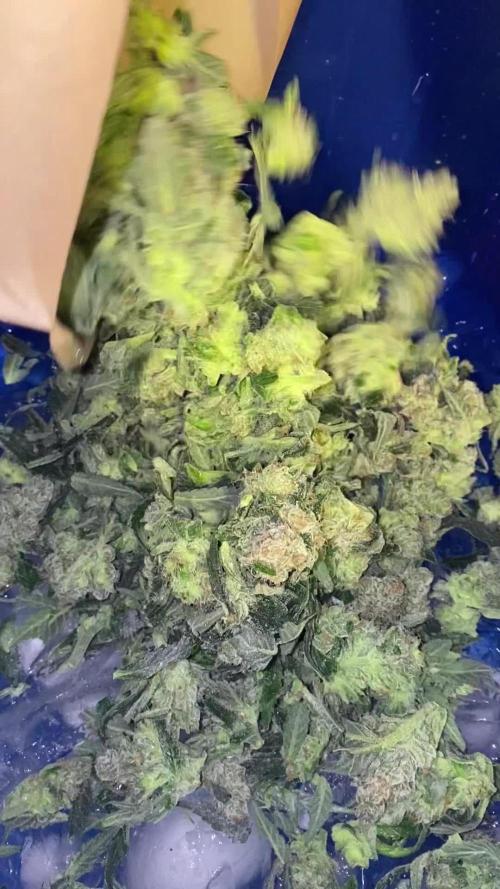
I harvested the smaller plant a bit earlier and decided to make some bubble hash with it. Unfortunately, the yield was pretty disappointing, but that was my own fault since I didn't use enough ice/keep the temperature cold enough during the process. :-/However, I didn't let it go to waste! I saved the material, dried it, and gifted it to a friend. He told me it's actually the perfect strength for him, so at least someone is happy with it! xD 🌿💨
