Likes
Comments
Share
@LST420
Follow
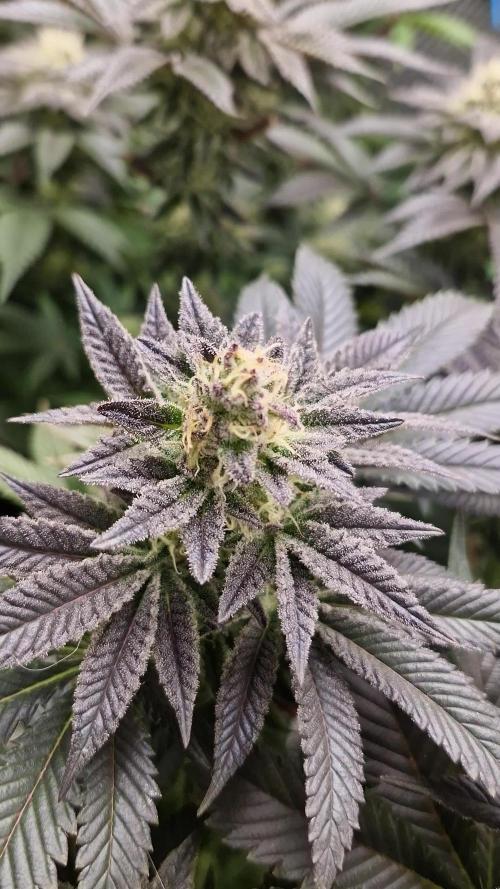
Week 14 The buds have fatten up compared to yesterday (day 96). The terpenes smell nice fruity and sweet.
Processing
Likes
30
Share
@ROM101
Follow
2 more weeks of feeding then flush. Stacking nicely.
Processing
Likes
29
Share
Bit of a difficult start to these girls seeing as this is my first grow and all, but they’re still growing and overall looking pretty healthy, good colour, springy, but I’m suspecting nute deficiency maybe but I’ve upped the food so we’ll see how we do! Now, when to start topping 🤔... Puff, puff, pass ✌️
Likes
52
Share
Lacewings seemed to have mostly killed themselves by flying into hot light fixtures. I may have left the UV on which was smart of me :) Done very little to combat if anything but make a sea of carcasses, on the bright side its good nutrition for the soil. Made a concoction of ethanol 70%, equal parts water, and cayenne pepper with a couple of squirts of dish soap. Took around an hour of good scrubbing the entire canopy. Worked a lot more effectively and way cheaper. Scorched earth right now, but it seems to have wiped them out almost entirely very pleased. Attempted a "Fudge I Missed" for the topping. So just time to wait and see how it goes. Question? If I attached a plant to two separate pots but it was connected by rootzone, one has a pH of 7.5 ish the other has 4.5. Would the Intelligence of the plant able to dictate each pot separately to uptake the nutrients best suited to pH or would it still try to draw nitrogen from a pot with a pH where nitrogen struggles to uptake? Food for stoner thought experiments! Another was on my mind. What happens when a plant gets too much light? Well, it burns and curls up leaves. That's the heat radiation, let's remove excess heat, now what? I've always read it's just bad, or not good, but when I look for an explanation on a deeper level it's just bad and you shouldn't do it. So I did. How much can a cannabis plant absorb, 40 moles in a day, ok I'll give it 60 moles. 80 nothing bad ever happened. The answer, finally. Oh great........more questions........ Reactive oxygen species (ROS) are molecules capable of independent existence, containing at least one oxygen atom and one or more unpaired electrons. "Sunlight is the essential source of energy for most photosynthetic organisms, yet sunlight in excess of the organism’s photosynthetic capacity can generate reactive oxygen species (ROS) that lead to cellular damage. To avoid damage, plants respond to high light (HL) by activating photophysical pathways that safely convert excess energy to heat, which is known as nonphotochemical quenching (NPQ) (Rochaix, 2014). While NPQ allows for healthy growth, it also limits the overall photosynthetic efficiency under many conditions. If NPQ were optimized for biomass, yields would improve dramatically, potentially by up to 30% (Kromdijk et al., 2016; Zhu et al., 2010). However, critical information to guide optimization is still lacking, including the molecular origin of NPQ and the mechanism of regulation." What I found most interesting was research pointing out that pH is linked to this defense mechanism. The organism can better facilitate "quenching" when oversaturated with light in a low pH. Now I Know during photosynthesis plants naturally produce exudates (chemicals that are secreted through their roots). Do they have the ability to alter pH themselves using these excretions? Or is that done by the beneficial bacteria? If I can prevent reactive oxygen species from causing damage by "too much light". The extra water needed to keep this level of burn cooled though, I must learn to crawl before I can run. Reactive oxygen species (ROS) are key signaling molecules that enable cells to rapidly respond to different stimuli. In plants, ROS plays a crucial role in abiotic and biotic stress sensing, integration of different environmental signals, and activation of stress-response networks, thus contributing to the establishment of defense mechanisms and plant resilience. Recent advances in the study of ROS signaling in plants include the identification of ROS receptors and key regulatory hubs that connect ROS signaling with other important stress-response signal transduction pathways and hormones, as well as new roles for ROS in organelle-to-organelle and cell-to-cell signaling. Our understanding of how ROS are regulated in cells by balancing production, scavenging, and transport has also increased. In this Review, we discuss these promising developments and how they might be used to increase plant resilience to environmental stress. Temperature stress is one of the major abiotic stresses that adversely affect agricultural productivity worldwide. Temperatures beyond a plant's physiological optimum can trigger significant physiological and biochemical perturbations, reducing plant growth and tolerance to stress. Improving a plant's tolerance to these temperature fluctuations requires a deep understanding of its responses to environmental change. To adapt to temperature fluctuations, plants tailor their acclimatory signal transduction events, specifically, cellular redox state, that are governed by plant hormones, reactive oxygen species (ROS) regulatory systems, and other molecular components. The role of ROS in plants as important signaling molecules during stress acclimation has recently been established. Here, hormone-triggered ROS produced by NADPH oxidases, feedback regulation, and integrated signaling events during temperature stress activate stress-response pathways and induce acclimation or defense mechanisms. At the other extreme, excess ROS accumulation, following temperature-induced oxidative stress, can have negative consequences on plant growth and stress acclimation. The excessive ROS is regulated by the ROS scavenging system, which subsequently promotes plant tolerance. All these signaling events, including crosstalk between hormones and ROS, modify the plant's transcriptomic, metabolomic, and biochemical states and promote plant acclimation, tolerance, and survival. Here, we provide a comprehensive review of the ROS, hormones, and their joint role in shaping a plant's responses to high and low temperatures, and we conclude by outlining hormone/ROS-regulated plant-responsive strategies for developing stress-tolerant crops to combat temperature changes. Onward upward for now. Next! Adenosine triphosphate (ATP) is an energy-carrying molecule known as "the energy currency of life" or "the fuel of life," because it's the universal energy source for all living cells.1 Every living organism consists of cells that rely on ATP for their energy needs. ATP is made by converting the food we eat into energy. It's an essential building block for all life forms. Without ATP, cells wouldn't have the fuel or power to perform functions necessary to stay alive, and they would eventually die. All forms of life rely on ATP to do the things they must do to survive.2 ATP is made of a nitrogen base (adenine) and a sugar molecule (ribose), which create adenosine, plus three phosphate molecules. If adenosine only has one phosphate molecule, it’s called adenosine monophosphate (AMP). If it has two phosphates, it’s called adenosine diphosphate (ADP). Although adenosine is a fundamental part of ATP, when it comes to providing energy to a cell and fueling cellular processes, the phosphate molecules are what really matter. The most energy-loaded composition for adenosine is ATP, which has three phosphates.3 ATP was first discovered in the 1920s. In 1929, Karl Lohmann—a German chemist studying muscle contractions—isolated what we now call adenosine triphosphate in a laboratory. At the time, Lohmann called ATP by a different name. It wasn't until a decade later, in 1939, that Nobel Prize–-winner Fritz Lipmann established that ATP is the universal carrier of energy in all living cells and coined the term "energy-rich phosphate bonds."45 Lipmann focused on phosphate bonds as the key to ATP being the universal energy source for all living cells, because adenosine triphosphate releases energy when one of its three phosphate bonds breaks off to form ADP. ATP is a high-energy molecule with three phosphate bonds; ADP is low-energy with only two phosphate bonds. The Twos and Threes of ATP and ADP Adenosine triphosphate (ATP) becomes adenosine diphosphate (ADP) when one of its three phosphate molecules breaks free and releases energy (“tri” means “three,” while “di” means “two”). Conversely, ADP becomes ATP when a phosphate molecule is added. As part of an ongoing energy cycle, ADP is constantly recycled back into ATP.3 Much like a rechargeable battery with a fluctuating state of charge, ATP represents a fully charged battery, and ADP represents a "low-power mode." Every time a fully charged ATP molecule loses a phosphate bond, it becomes ADP; energy is released via the process of ATP becoming ADP. On the flip side, when a phosphate bond is added, ADP becomes ATP. When ADP becomes ATP, what was previously a low-charged energy adenosine molecule (ADP) becomes fully charged ATP. This energy-creation and energy-depletion cycle happens time and time again, much like your smartphone battery can be recharged countless times during its lifespan. The human body uses molecules held in the fats, proteins, and carbohydrates we eat or drink as sources of energy to make ATP. This happens through a process called hydrolysis . After food is digested, it's synthesized into glucose, which is a form of sugar. Glucose is the main source of fuel that our cells' mitochondria use to convert caloric energy from food into ATP, which is an energy form that can be used by cells. ATP is made via a process called cellular respiration that occurs in the mitochondria of a cell. Mitochondria are tiny subunits within a cell that specialize in extracting energy from the foods we eat and converting it into ATP. Mitochondria can convert glucose into ATP via two different types of cellular respiration: Aerobic (with oxygen) Anaerobic (without oxygen) Aerobic cellular respiration transforms glucose into ATP in a three-step process, as follows: Step 1: Glycolysis Step 2: The Krebs cycle (also called the citric acid cycle) Step 3: Electron transport chain During glycolysis, glucose (i.e., sugar) from food sources is broken down into pyruvate molecules. This is followed by the Krebs cycle, which is an aerobic process that uses oxygen to finish breaking down sugar and harnesses energy into electron carriers that fuel the synthesis of ATP. Lastly, the electron transport chain (ETC) pumps positively charged protons that drive ATP production throughout the mitochondria’s inner membrane.2 ATP can also be produced without oxygen (i.e., anaerobic), which is something plants, algae, and some bacteria do by converting the energy held in sunlight into energy that can be used by a cell via photosynthesis. Anaerobic exercise means that your body is working out "without oxygen." Anaerobic glycolysis occurs in human cells when there isn't enough oxygen available during an anaerobic workout. If no oxygen is present during cellular respiration, pyruvate can't enter the Krebs cycle and is oxidized into lactic acid. In the absence of oxygen, lactic acid fermentation makes ATP anaerobically. The burning sensation you feel in your muscles when you're huffing and puffing during anaerobic high-intensity interval training (HIIT) that maxes out your aerobic capacity or during a strenuous weight-lifting workout is lactic acid, which is used to make ATP via anaerobic glycolysis. During aerobic exercise, mitochondria have enough oxygen to make ATP aerobically. However, when you're out of breath and your cells don’t have enough oxygen to perform cellular respiration aerobically, the process can still happen anaerobically, but it creates a temporary burning sensation in your skeletal muscles. Why ATP Is So Important? ATP is essential for life and makes it possible for us to do the things we do. Without ATP, cells wouldn't be able to use the energy held in food to fuel cellular processes, and an organism couldn't stay alive. As a real-world example, when a car runs out of gas and is parked on the side of the road, the only thing that will make the car drivable again is putting some gasoline back in the tank. For all living cells, ATP is like the gas in a car's fuel tank. Without ATP, cells wouldn't have a source of usable energy, and the organism would die. Eating a well-balanced diet and staying hydrated should give your body all the resources it needs to produce plenty of ATP. Although some athletes may slightly improve their performance by taking supplements or ergonomic aids designed to increase ATP production, it's debatable that oral adenosine triphosphate supplementation actually increases energy. An average cell in the human body uses about 10 million ATP molecules per second and can recycle all of its ATP in less than a minute. Over 24 hours, the human body turns over its weight in ATP. You can last weeks without food. You can last days without water. You can last minutes without oxygen. You can last 16 seconds at most without ATP. Food amounts to one-third of ATP production within the human body.
Likes
5
Share
@Rizza78
Follow
Made it to harvest w 2 so far! Oozecake is a couple extra days. Boy she tastes amazing! Will ice her tomorrow and put her in 48 hrs of dark before I harvest. What an experience it has been! Can’t wait to try after the cure.
Likes
23
Share
@Vincent11
Follow
Hi Everybody hope you got a great week. And that you will have even a better one this week. Little disappointed this week. All been great after defoliation cleared all leaves in way off buds. Responded well. Been away for 2 nights and because off that that it's a cupboard Grow I needed to close the door at nigh to keep 22/24degrees at night. But like you understand I was away so night temperature dropped to below 20 degrees in 2 nights and I got a cold Burn on my Gorilla Glue Autoflower. By the looks off things all I can do is give her another week maximum Two. And get her down. Next week will be week 8 that's what the Royal Queen seeds site says for finishing it. 8/10 weeks Sorry to disappoint everyone with that grow. Have a great week.
Likes
15
Share
As I predicted the weather last week guess what?... it was a cold and wet week. My main issue its yellowing of the wedding cake. think i as to do with the cold weather as she is the close to the door. I allso burned then a litle with the foliar. The instruction clearly say it may burn withe heat and light aply at night. Guess what?... it was midday.... Black Cream Its Growing Good. Couckush its a litle bit burned. Growing good. Chubby Litle plant for now. Bomberry its starting to become the beast as is leaves size show. Totally diferent genetics Cheers BrotherHood
Likes
32
Share
19-11-2021: Still 4 weeks left... Buds are starting to swell, I think I have to harvest the Runtz a week earlier. Lowered CO2 to 800PPM. Lowered EC to 1.8. Will replace the water by end of the week. 21-11-2021: Some people suggesting I should use PK13/14... But they are not telling why.. Honestly... I have no clue what it could do for me. Already using Green Sensation from Plagron with clearly says..."When you use Green Sensation you don't need a PK fertilizer, enhancer, booster or enzymes!". So I am just continuing as I do. @Hazeydays... Was just rereading your comment but cannot find any grow diary from you :(. Why do you think I should add PK13/14?You said (3 weeks ago) your ladies are in week 7 and 3 times as big as mine. What do you mean by that? Because I think it is quite normal that plants in week 7 flower are bigger then plants I week 1 flower. Do you have a link to your diary? Thanks in advance 23-11-2021: As you can see some buds seem already to be ready for harvest. Very strange, only 56 days of 12/12 now. (I started counting flower on day 27 of 12/12 so only 29 days of real flower. I was told this might be due to adding Green Sensation too early but I would expect all the ladies would suffer from it then. It is just one. Even the lady which is in the same bin doesn't show any signs of amber trichomes. Very Very strange. 24-11-2021: Buds seem to swell very fast now overnight. Looking and smelling great. Today my fans will arrive so from tonight on they will have some windy conditions I hope.
Likes
44
Share
**Encontrarás la traducción a español al final de la descripción** From/Desde: 19/04/19 || To/Hasta: 25/04/19 From day/Desde día: 57 || To day/Hasta día: 63 You can find the Money Maker Diary here: ** Podéis encontrar el diario de las Money Maker aquí:** https://growdiaries.com/diaries/25667-gorillamakingmoney-gorilla-vs-money-m -----IMAGES & VIDEOS----- 1 - Before defoliation 2 - Defoliation 3 - After defoliation -----WEEK SUMMARY----- (Following text was translated with tools and reviewed, sorry for mistakes, misspellings or nosense things) As you can see I've done a defoliation this week. Yes, I have really gone over the top, I have removed many more leaves than I had, and the tails of the plants has not come to join at all due to the failed defoliation. Being the first defoliation I do, I did not really know what I was doing and I went crazy. Now that it has been several weeks since I made this defoliation, I realize that I should not have removed the leaves from the nodes of the tails, because they have stopped growing and have not joined with their superior parts. Anyway, the plants are beautiful today and although they could be much better I feel very happy with them. I know I've made 2 fatal mistakes in this grow  - The first has been the massive defoliation badly done, defoliation yes, but with head ... do not follow my example.  - The second failure that I see today, is that I did not leave enough growth time (18/6) after having made the last pruning and that has made the tails have been a length much less than what would have been desired, I think that 2 more weeks of growth would have been perfect. -----WATERING CALENDAR----- 20/04/19 - 1,250 ml with Sensizym, Silica, Rhino Sk, Bud Ignitor, Big Bud, Bud Candy & Bud Factor-x @ PH6.4 & 1.2 E.C. 23/04/19 - 1,250 ml with All week nutrients - (Silica, Sensizym & Bud Ignitor) @ PH6.5 & 1.5 E.C. *****ESPAÑOL***** -----IMÁGENES Y VÍDEOS----- 1 - Antes de la defoliación 2 - Defoliación 3 - Después de la defoliación -----SUMARIO SEMANAL----- Como podéis ver esta semana he hecho una defoliación. Si, efectivamente me he pasado de listo, he quitado muchas más hojas de las que debía y las colas de las plantas no ha llegado a unirse del todo debido a la fallida defoliación. Al ser la primera defoliación que realizo, no sabía muy bien que hacía y me lancé a lo loco. Ahora que han pasado varias semanas desde que realicé esta defoliación, me doy cuenta de que no debí de haber quitado las hojas de los nodos de las colas, pues estos han dejado de crecer y no se han unido con sus partes superioras. De todas maneras, las plantas están preciosas a día de hoy y aunque podrían estar mucho mejor me doy con un canto en los dientes. Se que he cometido 2 errores gordos en este cultivo - El primero ha sido la defoliación masiva mal realizada, defoliación si, pero con cabeza.... no sigáis mi ejemplo. - El segundo fallo que yo veo a día de hoy, es que no dejé suficiente tiempo de crecimiento (18/6) después de haber realizado las últimas podas y eso ha hecho que las colas hayan quedado de una longitud muy inferior a la que hubiera deseado, creo que 2 semanas más de crecimiento hubiera sido perfecto. -----CALENDARIO DE RIEGO----- 20/04/19 - 1.250 ml con Sensizym, Silica, Rhino Sk, Bud Ignitor, Big Bud, Bud Candy y Bud Factor-x @ PH6.4 & 1,2 E.C. 23/04/19 - 1.250 ml con todos los nutrientes semanales - (Silica, Sensizym y Bud Ignitor) @ PH6,5 & 1,5 E.C.
Likes
4
Share
@Bir7822
Follow
9-10-2025 . je commence mon rincage aujourdhui,le 9-10-2025. je prévoit de coupe rla plante en pot le 18 octobre. je surveilles les trichomes avec le microscope. il ya eut de tres grosses rafales de vent dû à la tempête... des rafales de 70,80 kmh.. une petite branche a cassé sur celle en pot. j ai coupé cette branche et nettoyé les buds pour les faire sécher... l'autre plante en pleine terre, une gross ebranche à cassé, mais hereusement pas totalement cassée... la seve passe encore dedans. les feuilles et buds ont l'air bien. pas fané ni rien. donc le 18 octobre je serai à la 8 eme semaine de floraison pour celle en pot. celle en terre à 2 semaines de retard comparé à celle en pot... je sais que c'est pas top de filmer quand il fait noir, mais c'est + impressionnant. ;-)
Likes
7
Share
If you have been following my diary, you may know I appear to have an auto that started flowing during an 18 hour light schedule. Although the package came as a cookies gelato feminized seed (not an auto) but all indication sure appears to be an auto. Just an added bonus for a quick harvest, no complaints and love the looks of the genetics on the cookies gelato.
Likes
25
Share
Over all an amazing strain to grow and my first experience with this company and their seeds . The @futuregenetix company has many different strains and a newly released CBD line . It had a quick germinating time and was also very good with indoor led lights , bit is flourished outdoors under the sun . She didn't mind nutrients at feeding time and rarely showed yellowing or any issue with bugs and or environmental conditions . The best was it had a great deal of resistance to bud rot and pm . I live in a area which has wet humid and cold flowering times which are usually crop killers. It's good with training and did well with topping and lived a while in a small pot till getting put into the ground . Just a bunch of dense nuggets and frosty buds are my return in the end it's looking to be one of my best outdoors buds in bag appeal and terps . Will be growing these genetics in my garden again for sure ..
Likes
188
Share
This girl is easy to grow and can take all sorts of punishment. The only thing she requires is a lot of nutrients, water and light.00
Likes
6
Share
Likes
20
Share
Ze is zo mooi. Ik ben echt tevreden met haar. We hebben mooi weer dus heb haar uit de tent gehaald en in de volle zon geplaatst. Ik denk dat ze nog anderhalve week te gaan heeft. Nog 2 keer voedingsstoffen meegeven en daarna alleen water. Wordt vervolgd...
Likes
Comments
Share
@GanjOS_OG
Follow
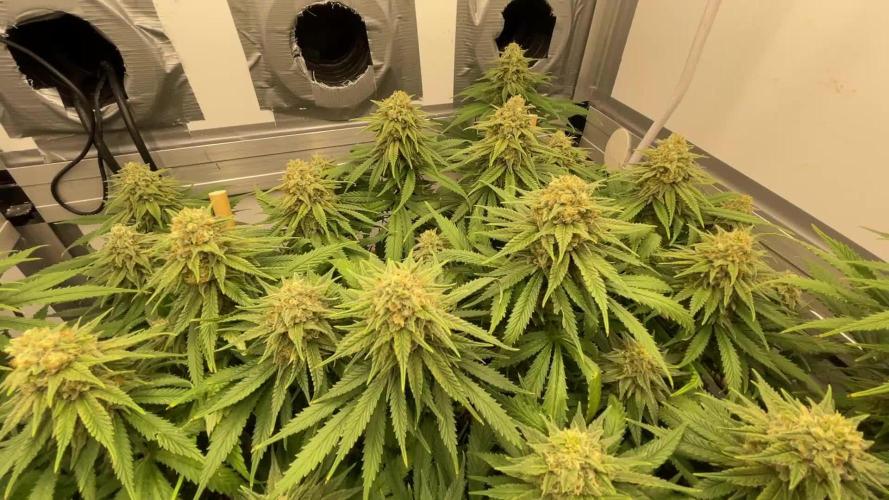
First week of Veg is done after the propagator tent. Clones looking good so far - getting healthy again. Startet LST.