


Likes
Comments
Share

@Tropical_Grow
Follow
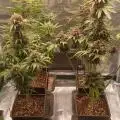
The plants don't have enough space to grow.
The spaces are crowded, and there's poor air circulation between the plants.
I'll give them attention until the end.

Processing
Likes
3
Share


@Ogbangbang2981
Follow
this week was a lil challenging, had to get out of LST due to the fact that I broke a branch and that just tripped me off and I took off all my ties , apart from that i started giving her bloom products because I noticed a few hairs. I started applying tiresias mist to one of my branches so I can get pollen sacks to produce my own fem seeds, as I plan on crossing my fortune cookies autoflower with my ak48 autoflower and creating a new strain called "DRAKO" AUTOFLOWER well till next update . O.G. Bang Bang !! out.....


Likes
2
Share


@burnercorona
Follow
Solid week. She's recovering quite well from training and some pH issues almost time for flower


Likes
55
Share


@Ultraviolet
Follow
2nd net is up. Early bud formations are promising. holding up to the extremes pretty well, some leaves taking minor damage, but overall, she is holding up, gave her 1 night at 50F see how she would react, stressful. Not advised as it messes with her metabolism, but I want to see if it triggers any anthocyanin response. Love to see her purp up but no signs yet. Remember, For every molecule of glucose produced during photosynthesis, a plant needs to split six molecules of water. This process provides the hydrogen needed for synthesizing glucose and other organic compounds, while oxygen is released as a byproduct.
Homework.
If Rubisco activity is impaired and it cannot properly function or regenerate its substrate, the plant's leaves are likely to turn a pale green or lime green, a condition known as chlorosis. Essentially, Rubisco activity is highly regulated and susceptible to various environmental and metabolic factors that can cause it to become inhibited, leading to an apparent failure in RuBP regeneration due to a lack of consumption.
Rubisco regeneration is intrinsically linked to nitrogen supply because Rubisco is a major sink for nitrogen in plants, typically accounting for 15% to over 25% of total leaf nitrogen. The regeneration phase itself consumes nitrogen through the synthesis of the Rubisco enzyme and associated proteins (like Rubisco activase), and overall nitrogen status heavily influences the efficiency of RuBP regeneration. RuBisCO is a very large enzyme that constitutes a significant proportion (up to 50%) of leaf soluble protein and requires large investments in nitrogen. Insufficient nitrogen supply limits the plant's ability to produce adequate amounts of RuBisCO, thereby limiting the overall capacity for photosynthesis and carbon fixation. Maintaining the optimal, slightly alkaline pH is crucial for the proper function and regeneration of Rubisco. Deviations in either direction (too high or too low) disrupt the enzyme's structure, activation state, and interaction with its substrates, leading to decreased activity and impaired RuBP regeneration. (Lime/yellowing)
Structural Component: Nitrogen is an essential building block for all proteins, and the sheer abundance of the Rubisco protein makes it the single largest storage of nitrogen in the leaf.
Synthesis and Activity: Adequate nitrogen supply is crucial for the synthesis and maintenance of sufficient Rubisco enzyme and Rubisco activase (Rca), the regulatory protein responsible for maintaining Rubisco's active state. Nitrogen deficiency leads to a decrease in the content and activity of both Rubisco and Rca, which in turn limits the maximum carboxylation rate, Vmax, and the rate of RuBP regeneration Jmax, thus reducing overall photosynthetic capacity.
Nitrogen Storage and Remobilization: Rubisco can act as a temporary nitrogen storage protein, which is degraded to remobilize nitrogen to other growing parts of the plant, especially under conditions of nitrogen deficiency or senescence.
Nitrogen Use Efficiency (NUE): The allocation of nitrogen to Rubisco is a key determinant of a plant's photosynthetic nitrogen use efficiency (PNUE). In high-nitrogen conditions, plants may accumulate a surplus of Rubisco, which may not be fully activated, leading to a lower PNUE. Optimizing the amount and activity of Rubisco relative to nitrogen availability is a target for improving crop NUE.
Photorespiration and Nitrogen Metabolism: Nitrogen metabolism is also linked to the photorespiration pathway (which competes with carboxylation at the Rubisco active site), particularly in the reassimilation of ammonia released during the process.
To increase RuBisCO regeneration, which refers to the process of forming the CO2 acceptor molecule Ribulose-1,5-bisphosphate (RuBP) during photosynthesis, the primary methods involve optimizing the levels and activity of Rubisco activase (Rca) and enhancing the performance of other Calvin-Benson-Bassham (CBB) cycle enzymes.
Biochemical and Environmental Approaches:
Optimize Rubisco Activase (Rca) activity: Rca is a crucial chaperone protein that removes inhibitory sugar phosphates, such as CA1P (2-carboxy-D-arabinitol 1-phosphate), from the Rubisco active site, thus maintaining its catalytic competence.
•Ensure optimal light conditions: Rca is light-activated via the chloroplast's redox status. Adequate light intensity ensures Rca can effectively maintain Rubisco in its active, carbamylated state.
•Maintain optimal temperature: Rca is highly temperature-sensitive and can become unstable at moderately high temperatures (e.g., above 35°C/95F° in many C3 plants), which decreases its ability to activate Rubisco. Maintaining temperatures within the optimal range for a specific plant species is important.
•Optimize Mg2+ concentration: Mg2+ is a key cofactor for both Rubisco carbamylation and Rca activity. In the light, Mg2+ concentration in the chloroplast stroma increases, promoting activation.
•Manage ATP/ADP ratio: Rca activity depends on ATP hydrolysis and is inhibited by ADP. Conditions that maintain a high ATP/ADP ratio in the chloroplast stroma favor Rca activity.
Enhance Calvin-Benson-Bassham (CBB) cycle enzyme activity: The overall rate of RuBP regeneration can be limited by other enzymes in the cycle.
•Increase SBPase activity: Sedoheptulose-1,7-bisphosphatase (SBPase) is a key regulatory enzyme in the regeneration pathway, and increasing its activity can enhance RuBP regeneration and overall photosynthesis.
•Optimize other enzymes: Overexpression of other CBB cycle enzymes such as fructose-1,6-bisphosphate aldolase (FBA) and triose phosphate isomerase (TPI) can also help to balance the metabolic flux and improve RuBP regeneration capacity.
Magnesium ions, Mg2+, are specifically required for Rubisco activation because the cation plays a critical structural and chemical role in forming the active site: A specific lysine residue in the active site must be carbamylated by a CO2 molecule to activate the enzyme. The resulting negatively charged carbamyl group then facilitates the binding of the positively charged Mg2+ion. While other divalent metal ions like Mn2+ can bind to Rubisco, they alter the enzyme's substrate specificity and lead to dramatically lower activity or a higher rate of the non-productive oxygenation reaction compared to Mg2+, making them biologically unfavorable in the context of efficient carbon fixation. The concentration of Mg2+ in the chloroplast stroma naturally increases in the light due to ion potential balancing during ATP synthesis, providing a physiological mechanism to ensure the enzyme is activated when photosynthesis is possible. At the center of the porphyrin ring, nestled within its nitrogen atoms, is a Magnesium ion (Mg2+). This magnesium ion is crucial for the function of chlorophyll, and without it, the pigment cannot effectively capture and transfer light energy.
Mg acts as a cofactor: Mg2+ binds to Rubisco after an activator CO2 molecule, forming a catalytically competent complex (Enzyme-CO2-Mg2+). High light + CO2) increases demand: Under high light (60 DLI is a very high intensity, potentially saturating) and high CO2, the plant's capacity for photosynthesis is high, and thus the demand for activated Rubisco and the necessary Mg2+ cofactor increases. Mg deficiency becomes limiting: If Mg2+ is deficient under these conditions, the higher levels of Rubisco and Rubisco activase produced cannot be fully activated, leading to lower photosynthetic rates and potential photo-oxidative damage.
Optimal range: Studies show that adequate Mg2+ application can enhance Rubisco activation and stabilize net photosynthetic rates under stress conditions, but the required concentration is specific to the experimental setup.
Monitoring is key: The most effective approach in a controlled environment is to monitor the plant's physiological responses e.g., leaf Mg2+ concentration, photosynthetic rate, Rubisco activation state, and adjust the nutrient solution/fertilizer to maintain adequate levels, rather than supplementing a fixed "extra" amount.
In practice, this means ensuring that Mg2+ is not a limiting factor in the plant's standard nutrient solution when pushing the limits with high light and CO2.
Applying Mg2+ through foliar spray is beneficial to Rubisco regeneration, particularly in alleviating the negative effects of magnesium (Mg) deficiency and high-temperature stress (HTS). While Mg can be leached from soil, within the plant it is considered a mobile nutrient, particularly in the phloem. Foliar-applied Mg is quickly absorbed by the leaves and can be translocate to other plant parts, including new growth and sink organs.
Foliar application of: NATURES VERY OWN MgSO4 @ 15.0g L-1 in a spray bottle. For those high-intensity workouts when 1 meal a day is just not enough!
Foliar sprays are often recommended as a rapid rescue measure for existing deficiencies or as a supplement during critical growth stages, when demand for Mg is high. Application in the early morning or late evening can improve absorption and prevent leaf burn. The plant was getting a little limey yellow in the centre. Shortly thereafter, she was back in business, green mostly regenerated. The starting point [of creativity] is curiosity: pondering why the default exists in the first place. We’re driven to question defaults when we experience vuja de, the opposite of déjà vu. Déjà vu occurs when we encounter something new, but it feels as if we’ve seen it before. Vuja de is the reverse—we face something familiar, but we see it with a fresh perspective that enables us to gain new insights into old problems.
Confidence is evidence... nothing more. You are confident because you have driven 10,000 times, you are confident because you have spoken 10,000 times. People think confidence is a feeling, but it's not. If you want more confidence, then you need to create evidence, take more shots, collect more data, build more experiences, take more risks; fail, confidence doesn't come first; it is the reward you get for doing the work. no one else wants to do.
Likes
9
Share


@En_Eff_Tee
Follow
Temperature fluctuations between 18c and 24c whilst lights are on even with a heater in there. Also putting the humidity up higher into the high 60’s which is not ideal.
Likes
26
Share


@PedroAndHisPlants
Follow
Day 36:
"Hey everyone!
Just a quick update: I removed a few more leaves here and there and did one last round of LST (low stress training). 🌿 The plants are looking great, and I'm going to let them recover now before sending them into the flowering stage. I'm really excited to see them start blooming in 2-3 weeks!
Also, a quick update on our temperature issue: today, the temperature stayed below 26.8°C, which is great news! However, we still need to find a solution to keep the humidity levels up. Our 360 m³/h exhaust system isn't able to maintain the required humidity level. I've calculated that we need a humidifier that can evaporate 1800ml/h to maintain 60-70% humidity, which would help manage the temperature better.
Does anyone have tips for a good humidifier or other methods to control the humidity and temperature? Any advice would be greatly appreciated!
Day 37:
Hey everyone!
Tomorrow, we're planning to buy some Cal-Mag because we suspect the yellowing leaves might be due to a calcium-magnesium deficiency. We're also going to get a pH test kit to make sure everything is balanced properly.
Do you think this is a good idea? Any tips or suggestions would be greatly appreciated!
Day 38:
Hey everyone!
Quick update: it turns out the yellowing leaves were due to a nitrogen deficiency. We increased the fertilizer dosage today, so the plants should start looking better in 4 to 5 days. 🌿
Thanks for all the support and suggestions
Day 39:
Hey everyone!
Another quick update: after increasing the fertilizer yesterday to address the nitrogen deficiency, it should take about 4 to 5 days for the yellow leaves to turn green again. 🌿
We're already seeing improvements! The plants have grown significantly and are developing a dense canopy once more. It's great to see them bouncing back so quickly!
Day 41:
"Hey everyone!
Quick update: we've removed the bands we were using for LST (low stress training) and are now letting the plants grow freely. 🌿 We plan to keep them in the vegetative phase for about one more week before transitioning them to the flowering phase.
Excited to see how they continue to develop!"

Likes
12
Share


@NorthernChemist
Follow
June 11: First week exposed to the full elements. Plants took a beating from the wind but othwise look strong and healthy albeit a bit small. No rain this past week, but soil moisture at 10cm is decent. Preflowers are showing already.
Likes
75
Share


@KCChiefers
Follow
Day 36-
LST adjustments. Each lady received almost a full gallon of water each. I also dosed each gallon with 4ml cal mag plus. I guess I would consider this week 1 of flowering. Next watering I'll introduce bloom nutrients. They getting hairy! I feel like I'm also seeing some improvement in each plant after Foliar Spray, so I'm hoping after this watering they'll perk up and not have more sick leaves to look at.
Day 37-
I did a few LST adjustments on the smaller plants. "Blue Marker" is getting pretty stiff so I'm afraid to tie her down and have only been tucking leaves. Probably just going to try to keep her spread out as much as I can do. No more LST for her.
Day 38-
They've been drinking alot of water and are thirsty! Now normally I water once a week, but they may need it before their next water time. Lowered the lights to 18" above canopy. Will see if I get any canoes or not when I get back home tomorrow evening. It smells good when I open the tent as well 👌. Only uphill from here on!
Day 39-
Ladies didn't show any light stress to me lowering them down to 18". Blue Marker looks like she needs to be watered. The other two are still heavy. Probably be watering blue marker tomorrow evening and starting bloom nutrients.
Day 40-
Watered Blue Marker today with 4ml/gal CalMag+ and 2tsp/gallon of Old Age Bloom. Will be watering Yellow Marker tomorrow with the same ratio. The runt still probably has a few more days until she's ready for a drink.
Day 41-
Watered Yellow Marker with 4ml/gal CalMag+ and 2tsp/gal of Old Age Bloom. Will be watering the runt tomorrow. Went ahead and snapped a lower bud site on the runt. Didn't look promising enough to warrant keeping it. As you can see in the picture, most of the leaves were shriveled up on it anyways. I also tucked fan leaves on all plants and measured Blue Marker (17.5in) tall and Yellow Marker is about 1ft tall.
Day 42-
Watered "Runt" with 4ml/gal CalMag+ and 2 tsp/gal of Old Age Bloom. All plants new growth looks better and doesn't look like it's traveling up plant. More and more bud sites are popping up. Yellow Marker looks farther along than Blue Marker. End of week 6!

Likes
9
Share


@TheGreenGroomer
Follow
Guys, I did it! I managed to get to the end of my grow with no problems and a whopping dry weight of 189 grams (6.6 oz). I am over the moon with the outcome, especially considering this was my first time. The buds have been curing for 12 days now, breaking down extra chlorophyll for a smoother smoke.
The aromas are subtle when putting your nose in the jars—nothing crazy—but when you break into a bud, it smells absolutely amazing. It has an aroma almost like Stardog, with a diesel, piney, and gassy scent.
As for the taste, the buds are just as impressive! They taste exactly how they smell: diesel, piney, and gassy, much like a Stardog. The effect is incredible; it numbed my whole body and put me in a couch lock state. This strain is probably not the best for daytime smoking due to its potent, body-numbing effect.
I can't wait to continue this journey with my next grow!

Likes
12
Share


@Bluemels
Follow
Tag 39: Ein wenig wird es noch dauern bis die Fat Banana das Netz ausgefüllt hat. Heute habe ich sie an 3 Zweigen getoppt und ganz leicht entlaubt um das Gießen zu erleichtern 😁
Likes
11
Share


@Organic_G
Follow
Was soll ich sagen massig an Ernte wieder viel zu viel. 😄 aber so in 3-4 Monaten kommt Nachschub 💪🏽
Likes
13
Share


@Stork
Follow
Day 30 Wed
PH 5.7
EC 0.6
DLI 18h
PPFD
Water 24c
Day 31 Thu
Add Ph Up
PH 5.4 - 5.8
EC 0.6 - 0.7
DLI 18h
PPFD
Water 20
Day 32 Fri
Add water PH Up
PH 5.5 - 5.8
EC 0.6 - 0.5
DLI 18h
PPFD
Water 22c
Processing
Likes
5
Share


Likes
43
Share


@420DeepGrow
Follow
Gracias al equipo de Kannabia Seed y XpertNutrients, sin ellos esta magia no seria posible.
🍁💐: Si Runtz se ha ganado su popularidad a pulso, esta versión autofloreciente es digna heredera de sus atributos. No es de extrañar que nuestros criadores hayan acertado con su programa de reproducción, al combinar dos de las cepas más fascinantes de la actualidad: Zkittlez y Gelato.
planta resistente y robusta, de cuerpo esbelto y fuerte ramificación lateral, que se puede cultivar prácticamente en cualquier entorno; pero prefiere los veranos largos y cálidos, tal y como quiere la madre naturaleza, donde bañada por el sol se eleva hasta los 120 cm. para producir unos rendimientos muy gratificantes de 100-150 gramos por planta.
En interior, y tras solo 70 días desde la semilla, también recompensará con cosechas abundantes de hasta 500 gr./m²
Inmediatamente después de encontrarte con ella, lo primero que notarás es su aroma descaradamente afrutado, con un toque tropical cortado con reminiscencias terrosas y amaderadas, que se entremezclan de forma agradable para ofrecer un combo que hace salivar las papilas gustativas.
Ofrece un sabor confitado, refrescante y similar a sumergirse en una piscina de frutas cítricas y flores de fragancia intensa. Al inhalar, obtienes la bondad de la dulzura; al exhalar, el humo se convierte en suave y cremoso, dejando suficiente profundidad en cada bocanada para satisfacer a aquellos que buscan los matices más complejos.
⛽ XpertNutrients: es una empresa especializada en la producción y comercialización de fertilizantes líquidos 🍶y sustratos🐛, que garantizan los mejores resultados y cosechas de la más alta calidad. A través de una cuidadosa selección de materias primas y un proceso de producción avanzado, sus productos son sinónimo de resultados confiables.
🛒 Consigue aqui tus fertilizantes:
https://xpertnutrients.com/es/sobre-nosotros/#:~:text=Xpert%20Nutrients%20es%20una%20empresa,de%20la%20m%C3%A1s%20alta%20calidad.
📆 Semana 2:
Esta remesa va algo mejor que la de la semana anterior ya que la temperaturas van siendo algo mas elevadas 🌞🌡️.
🌱 sigue con la luz del sol + 12 horas de luz artificial con el Marshydro TS-3000, el frio y la baja humedad dificulta su crecimiento, en los próximos dias ira a su lugar definitivo en medio de algun lugar donde mostrará todo su potencial 🚀😎.
La he estresado debido a la aplicación de infusión de ajo y jabon potasico casero (error) porque las que tengo en el exterior han sufrido la mordida de algun insecto y no quiero que me pase esto con esta XD.

Processing
Likes
5
Share


@Bigsmokes420
Follow
Week 4 - plants have grew substantially and have reacted good to mainline technique.

Likes
14
Share


@FourVentiFarms
Follow
25th of September
24th week for the Critical
22nd week for the Lemon
Critical has very fat buds but not so much stacking only 3 or 4, healthy dark green wide leaves
Lemon had a slight yellowing and buds are not as closely stacked, they are smaller but each branch has 7 or 8
Random one is currently the best as buds size and stacking. Nice size, 8-9 closely stacked and with many sugar leaves.
It started to show some yellow leaves, so I mixed some coffee grounds in it and into the Lemon one too. It should fix the Nitrogen deficiency
Next week I’ll ad the PK Booster
Likes
18
Share


@Pokan187
Follow
All is good so far, the seeds of all the different strains have been quite vigorous. Lost my first sour diesel due to my impatience, but the second time around was a charm .
Likes
19
Share


@Alice_in_Wonderland
Follow
Ladies are smelling strong and ready to be harvested. Chopping Venezia to be hung out to be dried tonight. Cheech can still go another day or two under the light with the lower pistols still a little blush.


