


Likes
Comments
Share

@Hou_Stone
Follow
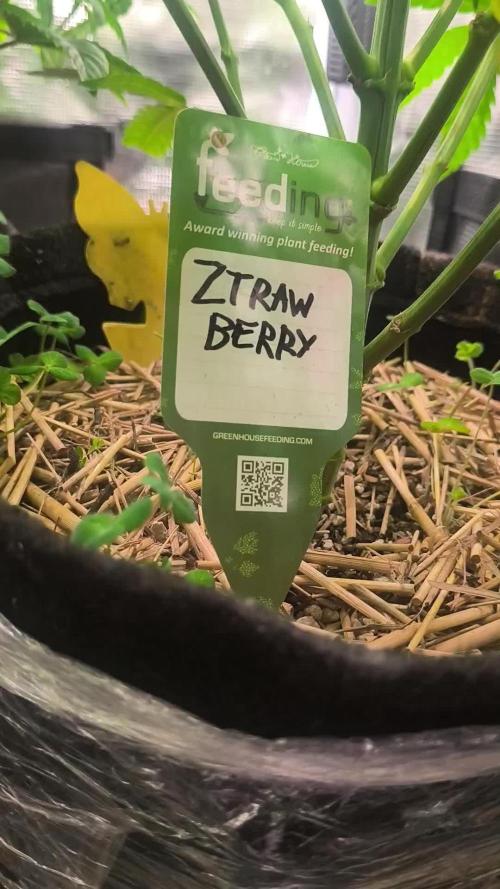
Switching to flowering this week, on the last day of the vegetative stage I added my BioBloom to the mulch before watering.
Approximately 50g of BioBloom for my 15L pot

Likes
6
Share


@Kinary
Follow
day 22 - nothing
day 23 - watered with 700 ml of water and 4 ml of my own biofertilizer, I also did defoliation and LST
day 24 - nothing
day 25 - I did Topping and defoliation
day 26 - nothing
day 27 - nothing
day 28 - nothing


Likes
59
Share


@Rap_a_cap
Follow
Another crazy week, hot days, cold nights, always windy. These are the conditions in which weed grows in nature and my girls seem to love. PK is confirmed as a beast. Perfectly healthy only a few scratches caused by the wind. No parasites. Very rapid response to bending with excellent branching. What a smell !!

Likes
11
Share


@TherealNICOGREEN
Follow
Det går fint det kommer nok lige lidt an på hvordan man ser på det;) jeg prøver dobbelt topping og pt går det virkelig godt og jeg kan også se på bladenes stilke de er helt RØD/LILLA 👌💚😘🤗🙏🏼💚glæder mig til at se 👀 hvordan den kommer til at se ud u fuld blomst og med buds

Likes
7
Share


@sunshinegroww
Follow
All went good this week ,she starting to pack up some weight now ,quite tall so far ,this week ive up the feed to 900ppm so watch this space ,i think i have finished with defoliation too as i have a dehumidifier in the tent now to keep steady 45-50% humidity

Likes
6
Share


@GrowwUp
Follow
So she is growing a lot but not in height so I'm not taking the topping / defoliation this week yet. I'm guessing they are going to grow slowly so I'm extending the bloom phase until I'm happy with the height. I had to add some taps to control the flow on my irrigation system. It looks even cooler now.
Likes
2
Share


@High_Grade_Dadli
Follow
Missed last week update but did some cutting girls have to live up to the mission 73 between the 5 plant....added one more which was a cutting from a seed plant harvested previous...didn't look like I did anything so cut dem a few day later 85 between the same plants... only cut the lower half of G4 n smaller inside branches( going to stop they dont hold up well)

Processing
Likes
32
Share


@Hawkbo
Follow
Pics taken on day 36. Some, if not most of these are lightly seeded, I've checked for herms but cant find no nuts. Sucks but from what I've read and people I've talked to seems like it wont be too big of a deal in the end, some old school growers even prefer lightly seeded nugget, I've never tried it intentionally. The green buzz nutes are working well. I'm almost out of the more PK so I had to add herculean harvest liquid bonemeal to get the ppm where i want it while trying to conserve the Gbl to last the rest of the run. Didnt have the lady to take my pics today so I was limited and had to take them lefty one handed and was shakey af.
#1 is a little weird and compact but looks like it has potential to fill in pretty good.
#2 is exactly what I was looking for. Showing some purple tint and the nugs are perfect nice and chunky. I like they way shes put together.
Likes
24
Share


@AsNoriu
Follow
Day 29. Girl is going , a bit slower than Ice, i was hoping Chocolopez will be same big runner, still very nice plant is forming.
Mars TS1000 - Light is solid and does job. For last week output is on max . Still rotate a lot, but am happy with development. I miss more good wind inside, but i live in shared house ;)))))))))))) even really silent air system is still loud on desired speeds ...
Hope next week ill send her to flower. Will top up with Worm Castings and Mycorrhizae during training in few days, when girls will be watered next time. Rhythm is good, every 3 days pots are light. 1.5 liters to each went straight in after photo shoot.
Day 31. Applied BioBizz Leaf Coat when lights went off. Loads of training was made today too.
Day 32. Now girls are trained daily. Top shoot twisting, leaf tucking, rotation around axis , changing positions inside of tent and so on. Always wash hands before any training, it is a must.
Still havent made mind, scrog or lst ... Think tomorrow will be watering day and i have to decide which way to go , i am fliping them at next watering 100%, otherwise again rush to harvest before late spring holidays ...
Happy Growing !!!

Likes
31
Share


@Targona
Follow
12/09/2022 - 36 days since my little girl sprouted from seeds🌱
The first week of flowering my BCN Power Plant 🌴🌴🌻
Nutrients:
Jungle Indabox - This week I adjust the dose of nutrients to support flowering and added nutrients - flowering stimulators:
Jungle Urban A: 0.5 ml
Jungle Urban B: 1.5 ml
Jungle Urban M: 1 ml
Flower stimulators:
Jungle Environ X: 1ml
Advanced Nutrients - Bud Candy 2 ml
Advanced Nutrients - Bud Ignitor 1 ml
Advanced Nutrients - Big Bud 2ml
Hesi Root Complex - 5ml - last week of adding this nutrient
Atami - ATA Calmag - when growing under LED lights it is recommended to use Calmag and Atami is an excellent brand, I give the same as in vegetation: 0.5ml.
Lights: I don't change Bloom light, I still use Mars Hydro TS1000 - 150w full spectrum, great light to use both in vegetation and flowering 💡💡
Training:
LST: third attachment of all twigs where flowers are formed 🌸🌸
Defoliation: the first big defoliation took place in the middle of the week, I removed the large leaves at the bottom of the plants and those that shaded the flowers 🍃🌞
The little girl has only grown by 5 cm since last week, she is already putting all her strength into flowering. The pistils at the ends of the twigs already form white tufts 😊💓
I can smell a subtle scent of herbs and flowers, but very subtle indeed. I'm already looking forward to the girl smelling the whole room and I can smell all the notes of her aroma🌼
Thanks for the likes and you can follow me on Twitter 🐦: @ Targona666
See you soon 😍

Likes
35
Share


@hornato420
Follow
Week 10 their wasn’t any real changes. Girl #1 starting to gain more weight. Her smell is also increasing. She smells like citrus/ pineapples undertones.
Girl #2 still hasn’t shown any flowering. It’s been 70 days and I’m starting to get worried. I’m gonna let her go until girl #1 finishes than I will start to panic. I fear she may be a 100 day to flower pheno . If nothing changes in the coming weeks I may treat her like a photo or just get rid of her !?
Thank you for viewing my diary.
Likes
22
Share


@Njaak
Follow
pH was important as expected and a bit of light burn later on in the grow but ultimately it was pretty smooth sailing. I used a very common nutrient (GHE) and not overly strong.
Buds were thick, dense, and moderately pine smelling. The plant did not grow excessively tall thanks to LST, and the LST did not seem to have any ill effects at all. Foliage was thick, and I let it go for a very long time before doing any sort of defoliation. Even then it was modest and just to get light to the lower colas.
Still in trimming mode and will continue to update :)
Also, other plants in the house got spider mites. Not this one. Could have been that it was in hydro and others weren't but hard to say.

Likes
44
Share


@RakonGrow
Follow
Note :
+ jegliches Zubehör wird in der GermniationsWoche aufgelistet . Zeitraffer Videos folgen immer nachträglich.
+ videos werden so geschnitten das nur ein geschlossenes Zelt erscheint , ergo Fehlen paar reale Minuten (ca 1 Std) .
Day 71:
Da Phase III , zeigen sich nun deutliche Mangelerscheinungen . Einige Blätter werden aufgefuttert :))
Day 72:
+ 1.75 Liter Flaschenwasser
+ + Dünger für Blühte Generative Phase III
+ + + Canna Terrar Flores (Achtung wirkt wie PH-)
+ + + Canna Boost
+ + + Cannazym
+ + + Canna Rhizotonic
+ + + Canna PH+
+ + PH 5.82
Day 73:
Trichome sind schon OK . Viele Bernsteine . Ergo 8 Stunden Dunkelphase als Erntevorbereitung.
Die Schwester bleibt noch im Zelt und hat dafür Besuch bekommen von der Apple Fritters dessen Platz im 160cm x 60cm x 60cm zu klein wurde.
Final : Komplett Entlaubung . Cut . UpSideDown into the Darktent .
Danke an alle Likes und Watcher und Follower . Es hat viel Spass gemacht und mein 2. Grow ist entscheident besser geworden als der Erste !!!
Wir sehen uns nach dem Trocknen und vor dem Curing .
+ + + + + + + + + + + + + + + + + + + + + + + + + + + + + + + + + + + + + + + + + + + + + + + + + + + + + + + + + + + + + + + + + +
Day 74: ZOE'S SCHWESTER
+ 2.0 Liter Flaschenwasser
+ + Dünger für Blühte Generative Phase II (Düngeplan siehe Germinations Woche)
+ + + Canna Terrar Flores (Achtung wirkt wie PH-)
+ + + Canna Boost
+ + + Cannazym
+ + + Green House Feeding - BioEnhancer (vorher 8 Minuten im lauwarmen Leitungswasser aufbereitet)
+ + PH 5.9
Day 75: ZOE'S SCHWESTER
Heute werde ich mal etwas defloration betreiben da es doch recht dich ist und ich mir etwas sorgen mache was im inneren so abgeht .
Leichte Entlaubung abgeschlossen .
Day 76: ZOE'S SCHWESTER
+ 2.0 Liter Flaschenwasser
+ + Dünger für Blühte Generative Phase III (Düngeplan siehe Germinations Woche)
+ + + Canna Terrar Flores (Achtung wirkt wie PH-)
+ + + Canna Boost
+ + + Cannazym
+ + + Canna Rhizotonic
+ + + Canna PH+
+ + PH 5.9
Day 77: ZOE'S SCHWESTER
Heute macht das Wetter mir unter 55% Luftfeuchtigkeit und ich kann kühlen. Bringt zwar gar nichts in der letzten Phase. Aber so ist es halt. Ich geh also Baden und lass die Tür offen ;)) Da ich hier noch 1 am Trocknen hab und eine Nachbaring im Zelt die auch gerne mehr Feuchtigkeit hätte , muss ich jetzt zwischen pest und kolera wählen . lieber für die Ernte oder lieber für nahende Ernte oder ganz auf den Neuling ... Ich hab mich für die Ernte entschieden , die sollte nie und nicht Schimmeln :))
Woche 11: Day 78: ZOE'S SCHWESTER
Die 11 Wochen seit Samensetzung sind rum . Sie macht sich gut . Und die Trichome sehen auch schon sehr nett aus . Aber noch ist das Trockenzelt nicht frei . Also bekommt es noch Licht bis das Zelt frei wird .
Woche 11: Day 79: ZOE'S SCHWESTER
+ 2.0 Liter Flaschenwasser
+ + PH 7.49
Woche 11: Day 80: ZOE'S SCHWESTER
Sieht super an den Spitzen aus. Ein Meer aus Trichomen. Kollege meinte das muss Schimmel sein. Microskope strafte Ihn mit lauter Trichomen.
Woche 11: Day 81: ZOE'S SCHWESTER
Trockenzeit wird eingeleitet . Morgen dann ins Trockenzeilt für paar Stunden längere Nacht und dann UpSideDown zum Trocknen aufhängen .
Woche 11: Day 82: ZOE'S SCHWESTER
Ist trocken genug , ab ins Dunkelzelt .
Woche 11: Day 83: ZOE'S SCHWESTER
Totalentlaubung , UpSiteDown . Trockenzelt. 480g nass mit Baum.
Woche 12 :
Trockengewicht 90g
Likes
3
Share


@doglas
Follow
Just continue to use canna nutritions and seems like biobizz all mix and canna have a lot of leaf growth other than light mix soil but all growing nicely some leafs yellowing at the bottom but might be light issues its only 2x 150w ts1000 and cant penetrat through the top leaves
Ph 6.2-6.5
Ppm 1100
Humidity during rainy days 70% dry days 60%
Temps not going over 26 and below 17


Likes
28
Share


@Chubbs
Follow
420Fastbuds
FBT2307 Week 6
What up grow fam week 6 update for these 3 lovely ladies. In the past week they've grown quite a bit not only upwards but filling in nice after the last defoliation. Seeing preflower sites all over which is always a pleasant site. Color on them are a nice green, how ever I did notice some rust spots showing up on a few leafs so I upped the calmag when feeding to 1tsp/gal. It seem to resolve that issue. I also fed a molasses tea this week to help the microbes in the soil allowing the plant easier access to notes needed. All in all Happy Growing
Likes
5
Share


@Kikiwindsurf
Follow
Hello Guys this week was quite tricky.
I NEED HELP WITH THE DOSIFICATION OF NUTRIENTS BECAUSE ITS GETTING COMPLICATED FOR ME IN THE LITTLE POTS.
Any solo-cup grow master can give me a hand ? Nutrients Top crop (roots and veg and microvita

Likes
4
Share


@PRZ20
Follow
The babies grow very nicely.
This will be the last grow with NDL after which I will switch to LED ATTIS


Likes
67
Share


@Canna96
Follow
This week went pretty well, but I don't have much time for an update as I literally spent all day trimming up the wedding cheesecake, and now I am heading out of town to coach a baseball tournament. She is growing some nice thick colas, and I am still feeding her the same. I included a video for my final Wedding Cheesecake Harvest, hope you enjoy it, if you have any suggestions for music hit me up!
I hope everyone has a great weekend, stay safe, and Blaze On!
