Likes
Comments
Share
@Centollo
Follow
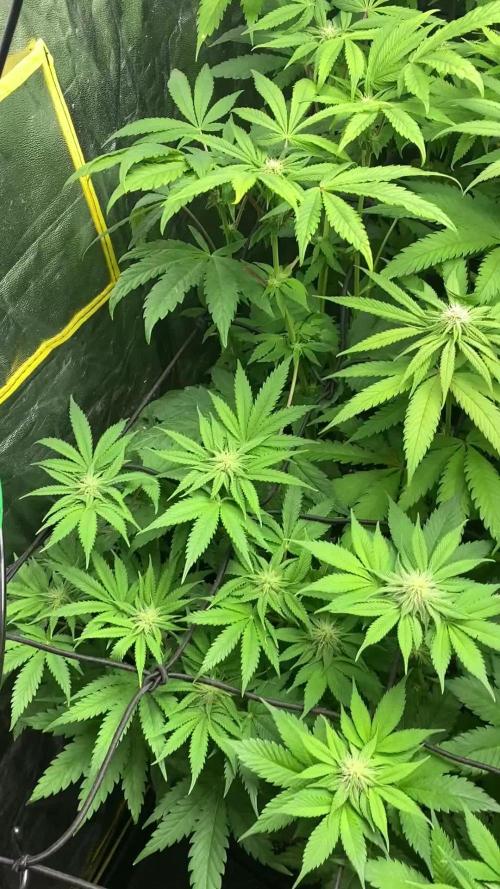
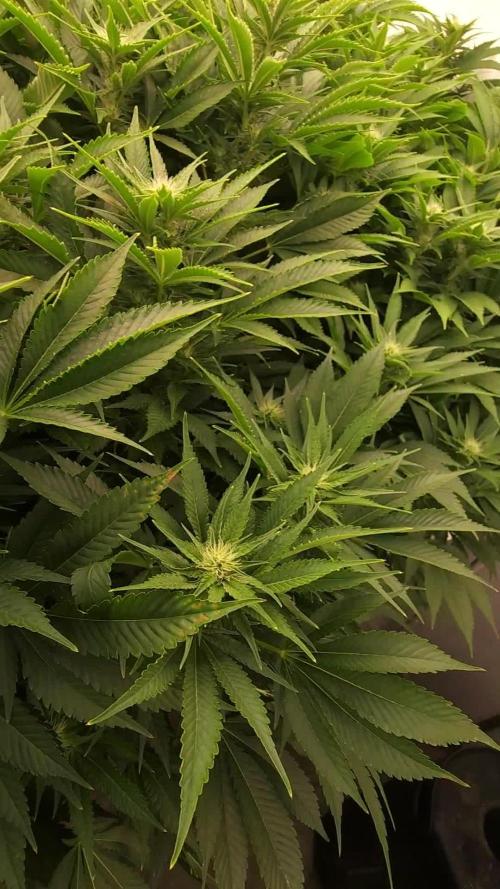
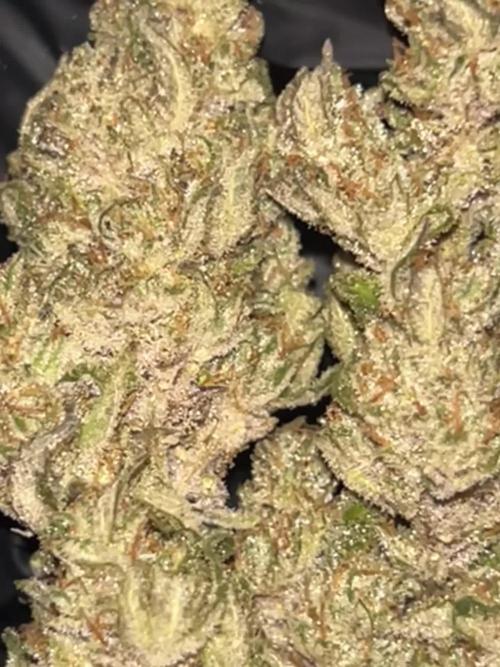
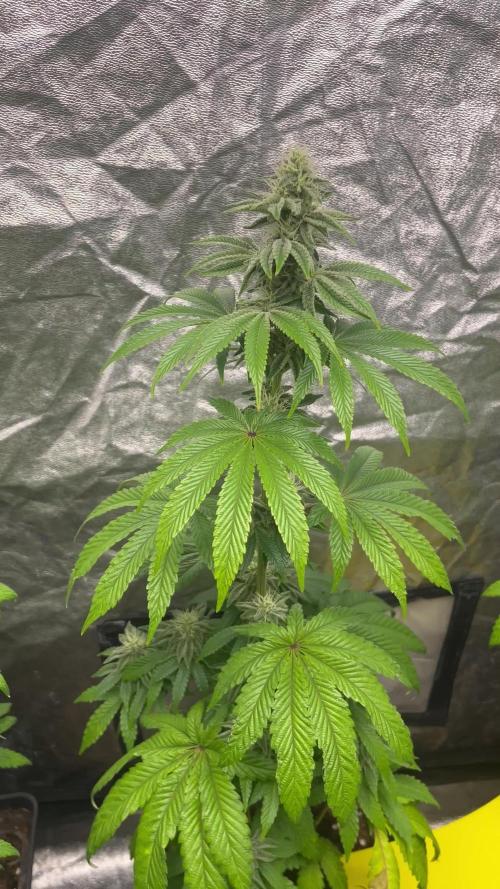
Día 21 de floración. Han parado de estirar y están empezando a resinar. La auto rainbow mints huele de lujo y está engordando. A pesar de no ser fan de las autos, tengo curiosidad por ver qué sale. De momento no he visto bananas, pero no bajo la guardia!!
Likes
6
Share
@Mismatas
Follow
17 DIAS DE CRECIMIENTO, SUBSTRATO LIGHT MIX DE BIOBIZZ REGAMOS CON PIRANHA Y VOODOO JUICE A 2 ML/L
Likes
1
Share
Remember that, however you are played, or by whom, your soul is in your keeping alone. Even though those who presume to play you be kings or men of power, when you stand before God, you cannot say, 'But I was told by others to do thus,' or that virtue was not convenient at the time. This will not suffice. Remember that. Day:18 84°F and 65% RH (VPD) for the vegetative stage. Approximately 1.15kPa(assuming leaf temperature is about 2°F cooler than the air), which falls right into the ideal vegetative sweet spot (0.8kPa to 1.2kPa). At 1.15kPa, plants can draw water and nutrients efficiently without risking stress or wilting. It keeps the leaf pores (stomata) open, allowing for ideal carbon dioxide intake and maximizing vegetative growth. VPD is determined by the leaf's temperature, not just the ambient air. Because leaves usually run 1° to 3°F cooler than room air under bright grow lights, my actual VPD will be slightly lower, closer to the 1.0kPa mark. As she transitions from vegetative growth to flowering, one can gradually lower the humidity (to around 45–60%) and drop temperatures slightly to prevent disease from settling inside dense buds when they appear. Night:6 At 70°F and 60% relative humidity, Vapor Pressure Deficit (VPD) is 0.86 kPa. This is right on the cusp of whats optimal for the vegetative stage. During the nighttime, plants generally close their stomata and undergo cellular respiration rather than photosynthesis. Transpiration slows to a near stop, making VPD less critical at night than during the day. However, maintaining a nighttime VPD between 0.8 and 1.0 kPa is highly beneficial in that it ensures the air is dry enough to prevent powdery mildew or bud rot, but moist enough to keep the plant from undergoing unnecessary stress. This range keeps the environment comfortable for cellular processes and prevents large atmospheric swings. Keeping it all flowing. (Not pushing them yet, these are photoperiods) The optimal soil (root zone) temperature for cellular root respiration and nutrient uptake in cannabis is between 68F & 72F This narrow range balances biological energy production (cellular respiration) with the dissolved oxygen levels in the soil, maximizing plant growth and health. Warmer soils hold significantly less dissolved oxygen. When soil temperature exceeds 74F oxygen depletion occurs, inhibiting cellular respiration almost entirely, At 68-72F root cells generate optimal adenosine triphosphate (ATP) via respiration to power root-tip elongation and the active transport of water and nutrients. Too Hot (Above 78F) Root respiration increases, demanding more oxygen, while the water's oxygen-carrying capacity drops. This creates a prime environment for anaerobic pathogens and Pythium (root rot). Too Cold (Below 60F) Root metabolism and cellular respiration slow to a crawl. This severely impairs nutrient and water absorption, leading to yellowing, wilting, and phosphorus deficiencies. A lot depends on whether it's automatic or photoperiod; with photoperiod, there is not as much of a need to push "hard" as the real countdown only begins once the flower is initiated. Automatics, on the other hand, the chronological "clock" begins ticking the moment the seed germinates. It is of critical importance that the seedling growth gets off to the races, understanding that early growth is like compound interest, which will pay off come harvest. This reality is why getting autoflowers "off to the races" early on yields such exponential benefits. The "compound interest" is directly related to the surface area of the leaves. Larger, faster-growing seedlings process more light and build bigger root networks early on, which translates into an explosion of vertical and lateral growth during their short vegetative window. The margins for error are so thin with autoflowers; this early-stage momentum depends on several critical practices. Seedlings exposed to increased atmospheric CO2 levels early in life will develop at an increased rate. To effectively "extend" or optimize the capacity of Photosystem II (PSII) for increased photosynthetic efficiency. In standard oxygenic photosynthesis, Photosystem II (PSII) is naturally limited to the red-light spectrum, peaking at 680nm. Extending its light-harvesting capacity past 700nm into the far-red region requires bypassing the natural limits of standard chlorophyll a. Adding 730 nm (far-red) LEDs alongside standard red/blue lights has been shown to increase canopy photosynthesis by 20–30% in several crops by acting synergistically with shorter wavelengths. However, the limitation is that excessive, pure IR/Far-red light (without accompanying red light) can trigger the "shade avoidance response," causing plants to grow tall, weak, and spindly rather than robust. Utilizing infrared light (specifically the 700-750 nm far-red range) is a viable method to boost photosynthetic efficiency. It acts as a bridge to allow PSII to utilize a broader spectrum of light, breaking the traditional 700 nm barrier. UVR8-mediated signaling (often in conjunction with CRY proteins) triggers protective mechanisms that maintain the stability of the photosynthetic apparatus (including LHCII and reaction center proteins), thus ensuring that the efficiency of Photosystem II remains higher in UV-B-exposed plants compared to plants lacking this receptor. ΦPSII indictates the rate of electron transfer from water to plastoquinone, which drives the production of ATP and NADPH. There is a close link between ΦPSII and the true rate of CO2 fixation (Φ*co2). ETR stands for Electron Transport Rate. It measures the speed at which electrons are moved through the thylakoid membranes in a plant's chloroplasts during the light-dependent reactions of photosynthesis. Infrared light (particularly Near-Infrared or NIR) improves cellular energy by interacting directly with the electron transport chain (ETC) in mitochondria. This process boosts adenosine triphosphate production, which acts as a metabolic coefficient multiplier by accelerating enzyme activity dramatically. Extend then multiply. Far-Red photons interact with plant photoreceptors to accelerate the plant’s biological "clock" or trigger a shade-avoidance response. Autoflowers don't use the plant's biological clock, although the IR will initiate a shade avoidance and make them stretchy. You can just add equal measures of 660nm-680nm to negate the shade avoidance effect. Replacing nights' "darkness" with a combination of IR+ and 660nm. Because autoflowers don't require a dark period to flower, many growers just blast them with light. 18/6 24/0. However, this ignores the plant's metabolic rhythms, where daytime photosynthesis (light reactions) must be perfectly balanced with nighttime carbon fixation and assimilation (Calvin cycle) to avoid bottlenecking plant development. Cellular respiration is a 24/7 process, but it can only function while the plant has the free oxidative capacity to do so. A 100% photosynthetically active leaf cannot perform cellular respiration. The viral trend of defoliation of every leaf that isn't "getting enough light" is of great detriment overall, putting 100% of the cellular respiratory "workload" and responsibility on the 0/4/6 hours of darkness in sub-optimal conditions for enzymatic activity. Photosynthesis captures nearly 100% of the initial energy as carbon, while cellular respiration is the process that unlocks 90% of that captured energy into usable ATP so the plant can use it. Respiration is considered roughly 30% to 40% efficient. It captures enough of the potential energy in glucose to synthesize around 30 to 38 ATP molecules per glucose molecule. The remaining 60% to 70% of the energy in the sugar is not captured in ATP; instead, it naturally escapes into the environment as heat, which helps regulate plant temperature. In plants, the primary enzymes of the Electron Transport Chain (ETC) and the ATP synthase complexes are typically adapted to function optimally in warmer temperatures (roughly 25°C to 35°C depending on the specific plant strain). As temperatures rise within this physiological range, molecular collisions increase, speeding up respiration and ATP production. The cannabis plant has a branched respiratory pathway. During heat or cold stress, plants activate Alternative Oxidase (AOX). AOX burns sugars to dissipate energy as heat rather than coupling it to ATP production. This pathway actually functions optimally at elevated temperatures to help protect the cell from the damaging build-up of Reactive Oxygen Species (ROS) during heat stress. Enzyme activity generally scales with heat; there is a strict biological limit. If canopy temperatures in a grow room exceed 40°C, the enzymes and their supporting lipid membranes lose stability. Not saying you need to go crazy, just optimize nights the same as we optimize days. Phosphorus is the driving force behind early seedling development. It acts as the "energy hub" of the plant, directly driving cell division, robust root growth, and the creation of DNA. Without an adequate, easily accessible supply early on, the plant's overall growth potential and final yield can suffer permanently. E=MC2 looks like a simple multiplication problem; it describes a fundamental physical truth: mass and energy are the same thing. The equation doesn't just calculate a value; it reveals that mass is effectively "congealed" energy. Energy is just numbers. Energy isn't a physical "substance" you can hold or touch. It is essentially an abstract, calculated number that we assign to a system to predict how it will change, interact, or move. A numerical label we attach to matter to track how it behaves. Because the universe runs on laws of symmetry (specifically, that the laws of physics don't change over time), a single global number must be conserved. We call that number "energy". We don't grow; we facilitate energy conversion. How well a seedling grows is essentially down to how much knowledge one can acquire to increase the level of conversion to occur. Applying knowledge effectively requires intuition, which comes from hands-on experience. A seasoned stoner learns to read subtle signs—like a slight change in leaf turgor (stiffness), subtle color shifts, or the specific texture of the soil—before a textbook diagnosis can be made. Ultimately, growing is the application of botanical science blended with active observation. Knowledge dictates your potential, but adaptability and attentiveness to the plant's immediate environment determine your results. 1.618 nature mathematically optimizes quantum energy transfer and light absorption efficiency within the photosynthetic machinery, as it naturally dictates energy scaling hierarchies and resonance dynamics. External vibration or electromagnetic wave that perfectly matches a plant's natural frequency directly influences plant growth. Low-frequency sound waves and targeted electromagnetic fields stimulate cellular processes and boost photosynthetic efficiency Does it produce better yields? How long is a piece of string? As long as you cut it. But isssss the juice worth the squeeze? The quantum framework of the IVM seems to think so. Good enough for the quantum firmware, good enough for the DNA software. Genetics are not dictated; they are expressed; the rate of that expression is dictated by the environment in which growth occurs. Quantum Coherence in Photosynthesis occurs When a photon of sunlight strikes a leaf, the energy it carries must travel to a reaction center to be converted into chemical energy. This process operates at nearly 100% efficiency. If the energy moved in a traditional "bunching" or random hopping manner, a large portion of it would be lost as heat. Instead, plants utilize quantum superposition. The energy particle (exciton) doesn't just take one path; it exists in a wave state and explores multiple pathways simultaneously. It essentially "chooses" the most efficient route to the reaction center simultaneously. Research shows that molecular vibrations and the specific network arrangements of chlorophyll molecules (like the naturally evolved Chlorophyll A & B ratios) actively protect against energy overflow, optimizing light capture across different light intensities. Enzymes are the biological catalysts that speed up chemical reactions within a plant's cells, allowing them to grow, metabolize, and repair. Rather than relying solely on the classical kinetic energy of molecules colliding, plants use quantum tunneling. Subatomic particles like electrons and protons (hydrogen ions) can literally "teleport" through energy barriers that they normally wouldn’t have the energy to climb over. This makes vital metabolic reactions happen far faster than classical physics could ever explain. Chloryphyll b has peak absorption at 460nm (Blue) and at 647nm(Red). If we take the blue peak wavelength 460nm and a UV-B, UVR8 peak absorption wavelength 285nm, Tryptophan-285 (W285) Sensing protein. 460/285=1.618 Φ If we take chlorypyhll b's Red absorption peak 647nm and a UV-A of 400nm, we get 647/400=1.618 Φ. "Structure of light". The cryptochrome photoreceptor (CRY) is a UV-A/blue light receptor that shares this dual sensitivity with several other biological structures and functions, including significant sequence similarity and a common evolutionary ancestor with DNA photolyase enzymes. These are light-activated enzymes that use blue/UV-A light to repair DNA damage caused by UV-B radiation in plants. Synergistic. But Shhh, it's a secret. Effective quantum efficiency of photosystem II, often denoted as ΦPSII, represents the proportion of light absorbed by Photosystem II (ΦPSII) that is actually used in photosynthetic electron transport. It is a key indicator of how efficiently a plant is using light for photosynthesis, as opposed to losing it as heat or fluorescence. ΦPSII (effective quantum yield of photosystem II) functions primarily as a "multiplier" (a coefficient of efficiency) rather than an additive factor when estimating the overall photosynthetic electron transport rate (ETR). Multipliers are considered far more beneficial than additions because they generate exponential growth, leverage existing resources to their full potential, and create sustainable, self-multiplying capacity, rather than just incremental, linear increases. This fascinating observation is rooted in the intersection of subatomic geometry, fractal scaling, and quantum dynamics. In specific molecular arrangements—such as in conjugated polymer networks or biomolecular architectures—the Golden Ratio (PHI) naturally dictates energy scaling hierarchies and resonance dynamics. Mathematically tied to the fine-structure constant, which defines the strength of the electromagnetic interaction. The Golden Ratio can be mapped geometrically as the Golden Angle (137.5 degrees) in atomic structures, linking the charge of the electron to fundamental quantum constants like Planck's constant. Electromagnetic. The Golden Angle (137.5): This angle is derived from the Golden Ratio (1.618). It is the smaller of two angles created when a circle is divided such that the ratio of the arcs equals the Golden Ratio.
Likes
3
Share
@KcKush
Follow
*Ph in soil seems low added lime let’s see if this fixes the issues. *1 more week and let’s see if clones show Sex. *recovery seems great besides those dificiencies that showed up. *have not watered in a week. Will update tomorrow.
Likes
54
Share
@rhodes68
Follow
1/29 Week 5 Nothing but the kind of problems I asked for, some white tips that mean an increase of runoff is needed. Half expected to see this as I have been varying the amount as a learning experiment. Will up to 20% for a few days In addition will be reducing nuets slightly keeping cal-mag as is until reason to change presents itself. Will be kind of boring the next couple of weeks at least till they get into the big tent. 1/30 Aeryn now at 15 inches Runoff at 40% and nuets reduced to lower pot EC Ive tossed out my old bottle of Cal-Mag I think its turned on me as these white tips did not appear until it was folded into the feed. Just no way this dose of nuets is causing the tips to show burning. 2/1 Major defoliation last night at lights out. Removed perhaps 25-40% or leaf mass on all plants to allow them to stay in the tent another two weeks. It was time to learn the process anyway, took a compromise path to doing it, some recommended taking more some less, hey sounded good to me. Plants doing very well after defoliation except for those aggravating white tips, going to be reducing Cal-Mag again to 1ml/gal and keep CT at 5ml/gal taking C-M to zero based on what I see. 2/2 Dropped Cal-Mag from feed, want to see if that has anything to do with those white tips. Runoff is at 40-50% ppm out under 900 so dam if I know. Will continue to defoliate as we go when something pokes its head where it does not belong. Otherwise they are beautiful, good job so far Fast Buds. 👍 2/3 man they recover fast, removed a few fan leaves that poked their heads where they shouldnt. Add Si to feed tomorrow for stem strength Not comfortable leaving these in veg for two more weeks, just asking for problems. So... Plan for flowering: Flipping this weekend so new week will still be veg. Removing one plant from the Moya tent to the Flowering tent to relieve space pressure as both tents will be set to 12/12 and just flower them all. Should have space in Moya to cover the few days they are in there with just three plants, have a bout 18" of light hang to work with. Thinking of moving Aeryn as she is largest and most likely to cause issues. Just not sure what the stretch is going to be 😳 2/4 The white tips were absolutely caused by the Cal-Mag, considering the doses and PPM that is puzzling to say the least. Adding Si for a few feeds to get em ready for flowering as I have no idea how these are going to grow so heading off some potentials. Plants hit 20" over night still flipping in a few days
Likes
143
Share
@SwissKush
Follow
Day 43 - she is growing very well a. Blue Dream smells amazing, the most fragrant fastbuds strain i have ever grown b. the flowering is going very quickly, there are sites everywhere c. uploaded video Day 44 - removed the under brush a. this plant has a lot of very small branches that need to be removed b. replaced 6L of nutrient solution, raised the ppms to 850 c. the flowering process is going very well Day 45 - beast a. the buds are growing exponentially by the day b. there was 6L of nutrient solution missing from the DWC, replaced with plain water to keep ppms in check between 650 and 850ppm c. the smell is very intense of this plant, it has a very interesting special smell for sure, unlike any other strain ive grown Day 46 a. growing very well, the buds are expanding b. drinking so many nutrients, she is a hungry variety c. the stems on this plant are out of control! d. added 6L to the DWC, raise the PM to 900 Day 47 a. buds are forming nicely b. she is growing very well, still producing new stems! Day 48 - beast a. gave her a 6L shot of Cal-Mag + Mineral Magic booster, the plant is so large she needs more Calcium b. the smell is quite intense, the resin is already forming on the sugar leafs and the buds Day 49 - great a. growing very well, still drinking 6L per day - just giving her spring water, PH 6 right now... once PPMs get down to ~600, I will change the DWC for fresh flower blend. b. the stems are hard like wooden c. she needs a little more LST
Processing
Likes
5
Share
Start of week 7 and her time cas come to show us what she’s got! I’m excited for the next 7 weeks ahead. 4 days into flower I experienced a hellish bit of droop. She didn’t look well although healthy, she was under the weather literally! 24 hours later I realised she needed a flush of Ph’d water 1L to be precise after raising her pot from her tray a little higher and removing the excess water run off. I never achieved this amount of run off before normally very little so I guess she needed it as she perked up within a hour. Will closely monitor and repeat 5 words in my head - DO NOT FEED EVERY DAY Update - recovered and back to herself. What a way to start a week of flower. Lesson learnt. New week tomorrow
Likes
7
Share
Bubba Kush Pre 98 is an easy plant to grow. She gave me no hassles or worries even in a warmer climate than she would like. The leaves are a dark green color naturally. Yield wasnt much, I am waiting for buds to dry and cure to provide the dried weight. I did not feed them any nutrients. The one got so dense that I had to move it indoors to avoid bud rot - im almost convinced it was an autoflower and they made a mistake at the seedbank because it was short and flowered out of nowhere. Outdoor buds were sundried - to lower THC for novice and paranoid smokers, I tried the smoke and it was a very pleasant high - removed anxiety, stress, overthinking, and relaxed my body. Perfect.
Processing
Likes
12
Share
From day 28 to 35 it slowed down a lot on gaining height, going from 24in to 26. It went from a little bit of signs of flowering to boom out of no where a lot more. I started bloom boost for the first time on morning of day 34, day 35 today I realized the bottle I bought says Orchid bloom boost 😂 🤦‍♀️🏼 🤷‍♀️🏼 I have to look for something else probably 😂 It’s fun to watch it change. I sprayed for the fungus knats twice now, just the soil. I recently noticed a lot of shadows as well, so we bought a bigger light and changed our system around a little. I figure if it’s flowering then more light can’t hurt? This is my first grow, although I am familiar with regular plants this Auto flower is all new to me! Any tips and suggestions are welcome! I did not top it or LST it, it seems to be doing so good I wish I would have 🤷‍♀️🏼 Not sure if I should tie it off now? The top is getting heavy anyway and if I could lean it a little the light would get in there more? The smell is amazing! Super excited to see what happens when it’s all done 🤩 Thanks for reading & any info or opinions are welcome lol
Likes
12
Share
Ya estamos en proceso de formación de la flor. Se ven algunas más grandes que otras. Pero a grandes rasgos estan muy parejas. Me preocupa un poco la cercanía a la luz, dado que estoy en 15cm y cualquier estirón extra, sería una complicación. Vamos a ir viendo como se dan las cosas, pero al momento, no me puedo quejar. Las plantas se ven bien y saludables. Día 24. Se empieza a notar el engorde. Esperando a que aparezcan las hojas de azúcar, que ya se empiezan a visibilizar las primeras. Voy a ver si puedo conseguir overdrive de advanced para cuando se terminen de formar las flores. Entre tanto solamente tuve un inconveniente de pérdida de agua por una manguera que moví al atar las plantas, pero ya repuse la solución perdida y todo va encaminado. No sé si van a tardar las 6 semanas que dice el catálogo, pero cuanto mucho serán 8. Seguiré actualizando. Día 26. Las flores empiezan a yomar su forma voluminosa. Estoy en duda sobre si agregar PK la semana próxima o la otra. Quizá empiece a usarlo en el próximo depósito. No quiero tampoco sobrepasarlas y agregar el producto antes porque tengo entendido que puede ser contraproducente. De todos modos me quedan dos días para el cambio de solución, así que voy a ver cuando termine la semana. Entre tanto, ya empiezan las emociones. Día 28. Hice ina poda de hojas bien fuerte. Ya de esa forma dejo expuesto a la luz todo lo que tiene que terminar de engordar y de paso me esquivo posibles problemas de humedad. Al final voy a usar el PK de greenhouse que tengo, pero voy a subir la dosis. Mañana se viene el cambio de solución, para lo que sería la ante última semana en teoría. Vamos a ver como evoluciona, porque los cambios son muy abruptos de una semana a la otra. Y llegado el momento miraré los tricomas, como para ir haciéndome a la idea.
Likes
23
Share
Buenas noches familia, os prometo que os deje lo mejor para el final, esta semana podéis ir despidiéndoos, ya que me parece que va a ser la última semana ✂️. Cambie de teléfono y las fotos son increíbles. El olor de nuestra indica es BRUTAL, huele muy fuerte a cítrico , tiene una pintada terrible, estoy deseando tener estas flores secas. Los cogollos brillan a la vista por una capa de tricomas... se nota sus 18% de Thc. Es una cepa que es 100% válida para proyectos SOG. Genética cruzada con Chemdawg x Lemon Thai x Pakistani Kush. -realizamos un estrés hídrico: Lo cual es regar las últimas semanas en el mismo periodo de tiempo, pero reduciendo las cantidades de riego progresivamente. Zambeza a hecho un gran trabajo con esta cepa y no hay más que verla... 👏
Likes
24
Share
@Hawkbo
Follow
Autos are just starting to flower the photos are dying for some bigger pots. I've been trying to bring up the overall plant health in general since moving everything to a basement the temps are a little lower than ideal. I had a space heater delivered today and monitored the temps but they only went up to around 78°f I want it to be atleast 82°f ideally 85. The heater uses 1500 watt and only increased it about 2 or 3°. I dont think it's worth the extra cost for such little boost. I'm thinking about returning the heater and throwing a 1000w hps in one of the other tents and see if that will raise it anymore. Especially with LED and co2 higher temps would be very beneficial in veg and early flower but the room is so big its gunna be tough to pull off without killing me on electric costs. Any suggestions are welcome. I know this room does decent in flower but I havnt done much veg work down here and I'll have some autos growing this round so it's important I get it up.
Likes
18
Share
Leaves have started to fade but I don’t think she is ready yet. I’ll leave it another week and see what happens.
Likes
8
Share
We really like to test the great new products that Zamensia prepares for our growers, this time we have a great plant that we conventionally call Test #3, it is doing well both in the topping version and in the straight version that I will show you in a few days. We have just done the last topping that brings her 16 tops on almost all the plants after which we grow a few more days and off we go. During the topping the use of nitrogen is a very delicate subject. The topping cuts slow down the plant and the leaves tend to grow bigger going a bit in over, it happened to her then you cut off and it tends to discharge now we are at the moment that we are starting to give nitrogen again to then go into flowering. It is a process that must be nuanced very delicately. Ideally it is to start by preparing the soil with fertilizer and add if necessary. I went a bit in excess with the plants but it is something that I have always managed very well once I got to flowering. Next time we will add something to the fertilizer soil with this technique is very suitable. Wait the uncle BreadandBuds.... We are always using soil, feeding and all the recommended additives from Plagron 100% organic, we have only lowered the amount of grow in this topping phase for the reasons mentioned above. ---- Decide on the right soil and calculate your fertilizer sheet based on the soil on the official website. -- www.plagron.com Try a seed of this strain that drives us crazy.. -------- Strain Coming Soon! Try another Zamnesia Masterpiece instead Zamnesia Description // Strain Coming Soon! Stay Tuned! All the best that mother nature can offer is on ---- www.zamnesia.com
Likes
43
Share
@Roberts
Follow
Bruce Banner #3 fast just went to oh water. She is scheduled for harvest in about 2 weeks. She got nice, and frosty under the Hortibloom Solux 350. Looks better then I expected. I think I messed up somewhere along the way. I will still have a little harvest from her. Thank you Hortibloom, and The Orginal Sensibile seeds company. 🤜🏻🤛🏻💪🏻❄️🌱 Thank you grow diaries community for the 👇likes👇, follows, comments, and subscriptions on my YouTube channel👇. ❄️🌱🍻 Happy Growing 🌱🌱🌱 https://youtube.com/channel/UCAhN7yRzWLpcaRHhMIQ7X4g
Likes
38
Share
A lot going on this week!! Feeding 3 quarts every Sunday and Wednesday at this point. I did a light defoliation on Monday and did a more thorough defoliation on Friday! I opened up a lot of bud sights and it shows in the pics from late in the week!! I just turned the fan and carbon filter on. Temps are currently holding at 73-74F and the humidity is between 43-45%. I'm very happy with that! I hope to keep them both happy!! Enjoy!
Likes
17
Share
Everything is pretty much the same this week the purple punch is doing up numbers, the zkittles is rite behind it with the gelato struggling. Already germinated some seeds for the summer grow hope the gelato grows better out doors
Likes
6
Share
This has been one of the easiest grows I had so far. The feeding was the key. Amending with a ‘Grow’ amendment(rich in Nitrogen) and supplement with Bloom liquid nutrients. Watering as often as possible and using RO water. Even though I had a pest invasion the girls did great.