Likes
Comments
Share

@Chrisandweed
Follow
Bueno, pues ya está, secada, manicurada y enfrascada.
Huele muy muy muy bien, pero que muuuy bien!!
Pues 7 dias de secado han sido al final, hubiera sido mejor algo mas imagino, pero bueno, estaba ya con poco stock asique no está mal reponer ya xD.
Luego, se ve en las fotos, he dividido el recorte, uno en no fumable ya que son hojas mas grandes, y otro recorte o trim, de hojas mas pequeñas y con mas resina. Ambos los juntaré con sus respectivos recortes de las demás plantas para con el Pollinator hacer hash, peeeeeero con la cosa de que, el recorte de hojas mas grandes (también tienen resina) y mas secas no lo fumaré, peeeero el otro si que lo guardaré a modo reserva, para si me quedo sin fumar de aquí a la proxima cosecha (que en casa fumamos 2 😅🤦🏾♂️) pues poder tirar de ese trim de emergencia.
Luego, el tema fotos, hoy el internet de mi proveedor ha dicho de caerse, un sábado 😅, y mi internet va del revés, asique subiré las que pueda e iré subiendo mas fotos y un par de videos conforme pueda.
La he ido fumando haciendo el truco del microondas a lo largo de estos dias ya que me quedaba sin existencias 😂 y ya ahí tenia muy buen gusto y ahora ya seca... Tela! El sabor no lo identifico claro pero se nota el citrico tropical muchísimo! Es como si te tomases un Bifrutas de naranja y le quitases la leche.

Likes
1
Share


@Ti_BR
Follow
This is the day 21 of flowering. I Will defoliate the plants today. This is my First diary, so i dont have pics of veg stage. The OGs and Gorillas ghosts are Very different. The OGs Veg feed was 0.8 EC on first weeks, then 1.0. Now on flowering they feed 1.1. Very low. The gorillas liked 1.3 EC on Veg and now they are feeding 2.0/2.2. I aways mensure de entrance feed and the runoff of each one. I expent almost 90 days on Veg becouse the GG delay a little at the beginning. My mistakes, a little overwatering and low feed. I underfeed the plants on First week of flowering to finish the nitrogen on substrate, so the bigest GG show calcium Def signs (you can see on imagens). But now is solved, they are health green again. Soon i Will post New pics.


Likes
8
Share


@Chuckwaggon420
Follow
This week on the chem dog hs amazing putting on so much weight! The buds have swelled like no bussiness this week! Only been doing straight water for little over a week trying to let her know its time to finish up. Put on alot of color looks like the nodes are just so swollen that they gana pop. Of a tric shot on friday shows they are about 10 % amber on very top buds lower buds r further along. Smell is so strong like a desil lemon possibly. Still dont know where to take the smell will prolly after dry ir cure!!! Sooo
Likes
4
Share

@Cukito
Follow
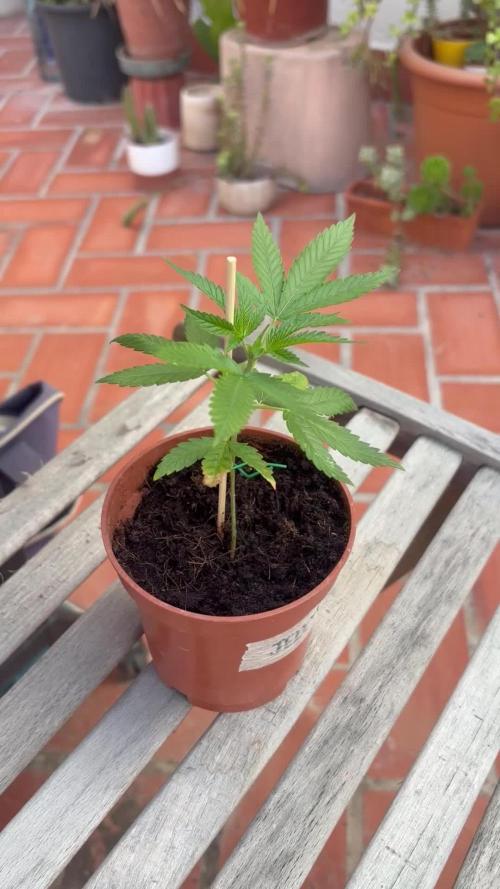
The tomatoe is doing great!! As you can see Ive been away for a week but my dad kept watering the plant nicely. Its growing fast but the base is not getting big :(


Likes
3
Share


@BestBudsGrow
Follow
It was a 8 day dry and cured for bout a month I was left with 1 oz dry wait. the aroma of the buds were a strong musty jet-fule and fermented fruit 🍉. Braking it down by hand left my fingers sticky and covered in triphones❄️ so I switched to the grinder . When smoking the inhale you get a sweet jet-fule taste with a hit of pineapple on the exhale 😮💨 it taste like a dank watermelon pineapple smoothie. I role my self a gram maybe a lil more but the first couple hits really hit the chest and left me with a energetic head high but half way through the joint It was a relaxing full body high that left me feeling like I was floating through time. Is this girl and really want to grow her again.


Likes
11
Share


@BlaKX
Follow
Ajoooooo das ist bzw war mal ne lange check Liste..Gefällt mir definitiv:)
Die WW muss noch trocken habe sie Komplett Manikürt da vielen 30g Zucker Blätter nass ab und zu Butter verarbeitet
Schätze werden so 75g trocken.


Likes
3
Share

@MyLittleGarden
Follow
Ernte & Trocknung – 24.08. - 07.09.2026
Kurz nach Blütewoche 10 habe ich mich dann doch spontan für die Ernte entschieden. Die Trichome waren größtenteils milchig und teilweise bernsteinfarben. Ein bisschen mehr Bernstein hätte ich zwar gerne gehabt, aber irgendwann war für mich einfach der Punkt erreicht.
Zuerst habe ich die großen Blätter entfernt und anschließend die einzelnen Äste abgeschnitten. Im Zelt habe ich ein Stück Maschendraht aufgehängt und daran die Äste für ungefähr zwei Wochen trocknen lassen. Die Bedingungen lagen dabei im Schnitt bei etwa 22 °C und 65 % Luftfeuchtigkeit, mit kleineren Schwankungen.
Mittlerweile sind die Buds trocken, von den Ästen geschnitten und in Gläser gewandert. Dazu kamen 62-%-Boveda-Packs. Dort dürfen sie jetzt beim Curing noch weiter nachreifen. In den nächsten Tagen werde ich die Gläser regelmäßig kontrollieren.
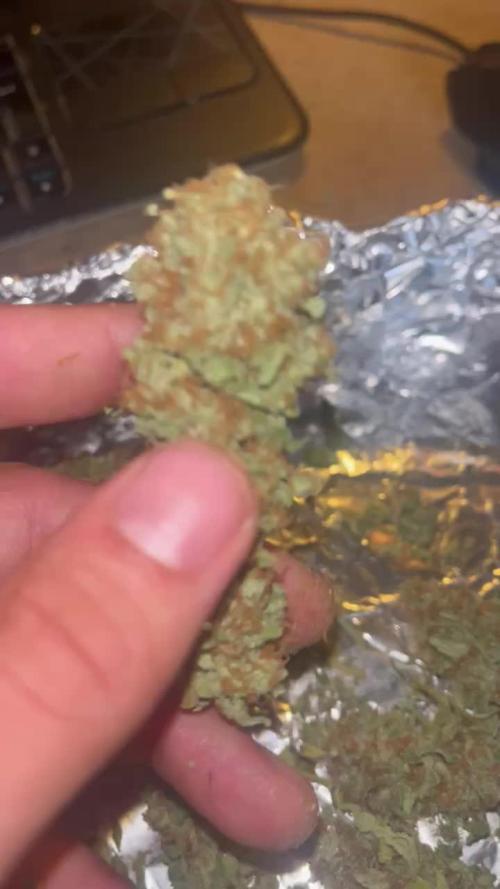
Mit dem Ergebnis bin ich echt zufrieden. Die Buds sind schön kompakt und fest, überwiegend hellgrün und ordentlich mit Trichomen überzogen – teilweise sehen sie wirklich aus wie kleine glitzernde Diamanten. Der Geruch geht aktuell in eine süßlich-würzige Richtung. Im Vaporizer war die Wirkung bisher angenehm und eher etwas kopflastiger.
Auch der Grow selbst hat mich positiv überrascht. Das kleine Living-Soil-Beet hat die kompletten rund 20 Wochen ohne zusätzliche Dünger oder Zusätze durchgehalten und die Pflanze zeigte während des gesamten Runs keine wirklichen Mangelerscheinungen. Abgesehen von Gießen, etwas Entlauben und ein bisschen LST musste ich kaum eingreifen.
Besonders die kleine Greenception hat mich überzeugt. Trotz des kompakten Setups kam am Ende eine Qualität heraus, mit der ich wirklich zufrieden bin – und das bei deutlich geringerem Stromverbrauch als bei meiner großen Lampe.
Damit ist der Blue Sunset Sherbert Grow abgeschlossen. Ein unkomplizierter Run, ein völlig verrückter Stretch und am Ende schöne, feste und harzige Buds. Mit dem Ergebnis und auch mit der Genetik von Barney’s Farm bin ich echt zufrieden.

Likes
20
Share


@NoProbation4Weed
Follow
all in all a good strain that stays small and compact. Taste is not my personal favourite but it grew without any complications.


Likes
25
Share


@Ultraviolet
Follow
Permanent Marker weed strain possesses the genetics for high anthocyanin production, which is responsible for its signature deep purple. While the genes are present, the expression of these colors is often enhanced by "thermal stress" (lower temperatures) during the final three weeks of flowering, which triggers the production of these pigments.
👋 Raising the Carbon-to-Nitrogen (C:N) ratio in the growing medium to avoid over-immobilizing nitrogen, on the flip side, being careful not to trigger early autophagy. Moderate, controlled increases in sugar support the energetic demands of flowering and act as a signal trigger, but excess sugar is more likely to inhibit flowering or damage the plant. Balance, like everything else. Visually, when the chloryphyll green gets darker, it is a subtle indicator that the concentration of nitrogen is increasing / more is being stored than is being used. I noticed when you push very high intensity lighting, it slowly fades the green as the plant degrades chloryphyll faster than it can be replenished. When the green of the leaf continually gets darker, it is an indication that the concentration levels of nitrogen are increasing, and I dont want to increase light intensity.
Turn down the nitrogen faucet. C:N ratio dictates the rate at which nitrification occurs, if at all.
The Carbon-to-Nitrogen (C:N) ratio acts as a critical biological "on/off switch" (or regulator) for nitrogen turnover by determining whether microbes
immobilize (consume/tie up) or mineralize (release) nitrogen during the breakdown of organic matter. This ratio regulates microbial activity by defining the balance between available energy (carbon) and building materials (nitrogen). The C:N ratio in a medium acts as a critical regulator of nitrification, effectively functioning as an "on/off" switch for the dominance of either autotrophic nitrifying bacteria or heterotrophic bacteria.
The shade of green in chlorophyll is subtly linked to the enzyme Rubisco through a co-evolutionary, functional relationship designed to optimize photosynthesis. Chlorophyll absorbs blue and red light for energy, reflecting green light, a process that ensures the "light-dependent" reactions provide the correct, controlled amount of energy (ATP and NADPH) needed by Rubisco to perform its "light-independent" carbon fixation. Because Rubisco is a relatively inefficient and slow enzyme—often considered the bottleneck of photosynthesis—chlorophyll and the overall structure of the leaf have evolved to manage energy distribution to prevent overwhelming the Calvin cycle.
While chlorophyll absorbs mainly red and blue light, it is not perfectly efficient, and leaves appear green because some green light is reflected or transmitted. This reflection allows light to penetrate deeper into the leaf, preventing the surface chloroplasts from becoming overloaded and enabling a more efficient distribution of energy to the high volume of Rubisco located throughout the leaf's mesophyll.
The rate of chlorophyll-driven electron transport (light reactions) is matched to the potential rate of carbon fixation (Rubisco activity). If Rubisco were faster, leaves might be darker; however, the "shade of green" represents a balance that prevents chlorophyll from producing more energy than the inefficient Rubisco can process. The green color itself is a byproduct of a photosynthetic system tailored to feed a slow, yet crucial, enzyme (Rubisco) just enough energy to maximize carbon assimilation without inducing excessive oxidative stress or inefficiency.
The shade of green in leaves is directly linked to the concentration of chlorophyll, which is in turn strongly correlated with the amount of
Rubisco (Ribulose-1,5-bisphosphate carboxylase/oxygenase) and, consequently, the rate of carbon fixation. Darker green leaves generally indicate a higher concentration of both chlorophyll and Rubisco, signifying greater capacity for photosynthesis.
Increase output or reduce input. Subtle tells.
While an excess of nitrogen (specifically ammonium) can cause an imbalance, nitrification—the microbial conversion of ammonia to nitrate—is highly sensitive to a variety of environmental, chemical, and physical factors. Because it depends on specific, slow-growing bacteria (Nitrosomonas and Nitrobacter) and archaea, anything that stresses these organisms can disrupt the process.

Likes
11
Share


@Karl_Heinz420
Follow
Gießen - 💦 Week 6: P-K 7-5 Boost!
1,0 Liter je Lady / Tag
Düngen 1x pro Woche gem. angegebenen Schema. Die letzte Düngung 🌺🍁 anschließend lediglich Osmosewasser PH 6,5 mit 1,2 ml/l Calmag.
Sanlight Evo 3-60 100% (1000-1200 PPFD)
Temperatur: 23-25 grad Celsius
r.Lf.: 50-55%


Likes
13
Share


@Firstautos
Follow
Really struggling this week I've stopped using bio bloom today 17/9 and swapped to plain water shes not taking as much water now and the humidity is off the charts i may fix it before I have a problem she looks good in general tho I don't think I've done too much harm
Likes
19
Share


@CanabisLoverHobbyGrower
Follow
All being flushed now,.. 2 have come down today, 1 blackberry and the purple lemonade,... rest will come down Saturday except the strawberry banana
Likes
28
Share


@foxbberg
Follow
Hey Friends!
Was sick in bed for the entire week - i'll try to give a brief summary:
Kept feeding nutrients....... wasn't able to monitor the drain as close, but average pH was a bit high (+6.6) so i fed without ALL ESSENTIALS the other day.
Girl's kept growing, i kept weaving and defoliating......yet filled about 70% of the net......
still not too happy with the way i prepared them by LST....... i could easily spend another 7 to 14 days filling the net - but will flip them to 12/12 on monday.
Next week:
- flip
- giva a little phosphate boost
- switch to flowering-nutrition
Stay healthy🙏!
p.s:
A little LST on the side-shoots really helped bringing the girls in shape! All of a sudden it appears, there will be a SCROG one day :-))💪
Likes
31
Share

@Hempcules
Follow
WEEK 9
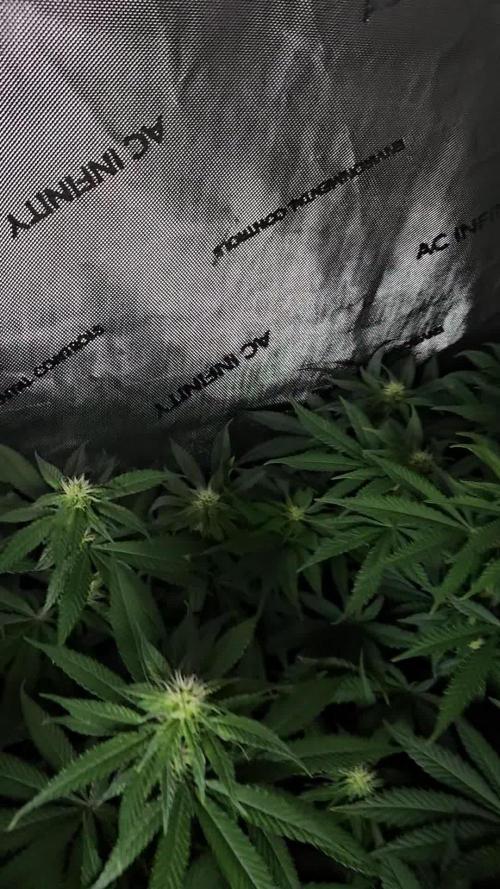
It only went somewhat well with my plant. For several days now, I’ve been dealing with a magnesium deficiency. I’m adding some CalMag to the regular watering now, and it seems like things are starting to improve.
Other than that, the plant is doing okay. It doesn’t have a particularly strong stem, but it does have a nicely bushy shape. It stretched very little — so little, in fact, that I had to prop it up a bit so it would be roughly at the same height as its neighbors.
So far, I’m only mildly impressed. This strain probably won’t be a big yielder and seems to be quite demanding when it comes to nutrients. That would be forgiven if the terpene profile turns out great. I’m hoping for the best, but up to now, this isn’t an overwhelming strain
PPFD: 800µmol/m²/s
Water: 2x water, 2x nutrient solution

Likes
8
Share
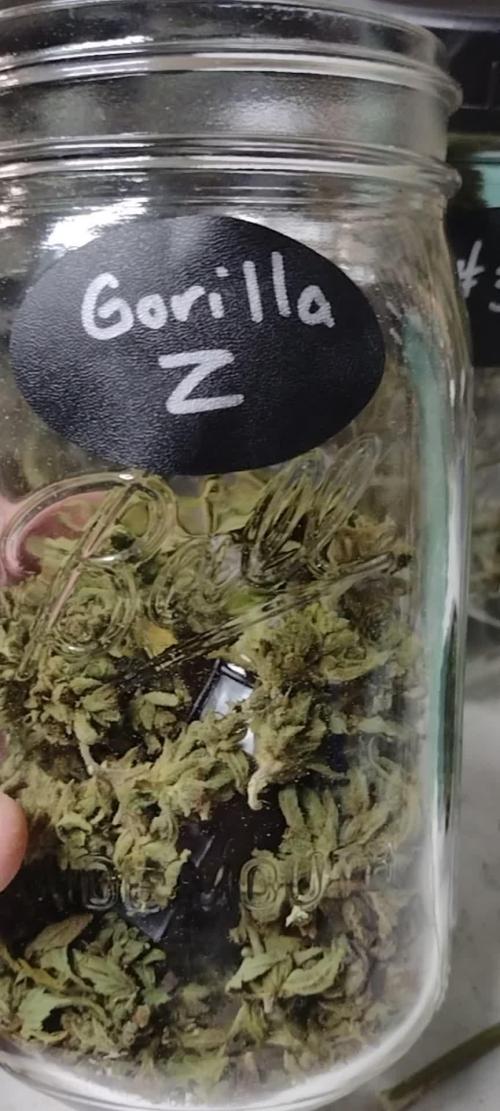

@IndigoMist8
Follow
Chopped on day 73. The last plant in this diary still growing is Mix pack #1.
Likes
19
Share


@Sti_Cazz
Follow
Day 49 today and after yesterday's watering (just 1 watering a week atm) the gorilla's seem to be buffing up slowly.
The Zambeza SSH auto is looking so big so early, I'm curious how much fatter the buds are gonna get, seeing I'm just over half way... Its looking more mature all ready real nice find! (not many seed banks have it I think)

Likes
8
Share


@DogDoctorOfficial
Follow
🌿 8×8 Adventure – Week 14
Amnesia Haze Auto by Zamnesia – Pheno B
👑 The Small-Pot Experiment Has Become a Full-Time Watering Job 😂💦🌸
Hello everyone, and welcome back to another chapter of the 8×8 Adventure! 🌱💚
Well, my friends...
Our little experiment is still our little experiment.
😂😂😂
And by "little experiment," I mean the decision that seemed like a good idea at the time:
"Let's put her in a smaller pot. Maybe she'll stay smaller, and maybe we'll make our lives a little easier."
HAHAHAHAHAHA!
😂😂😂💦
No.
Absolutely not.
This girl apparently received a completely different set of instructions.
She looked at her 11-litre pot and thought:
"Okay, so where's the automated irrigation system?"
And then she looked at me.
"YOU'RE THE AUTOMATED IRRIGATION SYSTEM."
😂😂😂👑💦
And here we are.
Week 14.
She's still drinking like there's no tomorrow.
She's finishing fast.
She's fading beautifully.
She's looking absolutely amazing.
And I'm still standing there, watering her by hand, wondering how I managed to create more work for myself with one supposedly clever little experiment.
😂🌿💚
Honestly, I think we've established something important.
The small-pot experiment was fun.
It taught us something.
It gave us a beautiful plant to follow.
But repeating this exact setup?
Let's just say it's probably not going on my list of things to do again anytime soon.
😂😂😂
And that's perfectly fine!
Not every experiment needs to become a permanent part of the garden.
Sometimes you try something, observe what happens, learn from it, have a good laugh, and move on.
And this girl?
She's given us plenty to laugh about.
So let's put the watering can down for a moment, give her the spotlight, and appreciate this beautiful Amnesia Haze Auto Pheno B.
👑🌿🌸💚
────────────────────────
🌱 WEEK 14 – SHE'S FINISHING, BUT SHE'S STILL THIRSTY!
Let's start with the main story this week.
She's finishing.
She's fading.
She's changing.
And she's doing it beautifully.
But apparently, the fact that she's moving into the later stages of her journey hasn't convinced her to stop drinking like an absolute maniac.
😂💦👑
The small pot remains the small pot.
The plant remains the plant.
And the watering workload remains...
well...
ridiculous.
😂😂😂
It's genuinely funny how things have worked out.
The idea was to try a smaller pot and see what happened.
Instead, we've ended up with a plant that continues to demand regular attention while moving through the final part of her journey.
And I have to admit, I love the irony.
I wanted to make things easier.
She had other plans.
😂🌿
But jokes aside, she's beautiful.
She's changing.
She's fading.
She's continuing to develop her own character right to the end.
And that's what matters now.
We're not trying to force her into another stage or make her follow somebody else's timeline.
We're watching the plant in front of us.
And this week, she's giving us a beautiful view of that transition.
────────────────────────
💦 THE AUTOMATED IRRIGATION SYSTEM IS CALLED DOGDOCTOR 😂
Let's be honest.
This is probably my favourite part of the entire experiment.
😂😂😂
Some growers install automated irrigation systems.
Some growers set up pumps, timers, valves, and controllers.
Some growers enjoy the convenience of having everything scheduled.
And then there's me.
I put an Amnesia Haze Auto into an 11-litre pot and apparently became the irrigation system myself.
😂💦👑
The plant is behaving like she's sitting in a much larger container with a perfectly automated watering system delivering everything whenever she wants it.
Except...
she isn't.
There's no magical reservoir hidden underneath the tent.
There's no invisible irrigation system working around the clock.
There's just me.
A watering can.
And a girl who apparently thinks I'm on permanent duty.
😂😂😂
I can almost imagine the conversation.
Me: "You know you're in an 11-litre pot, right?"
Her: "Yes."
Me: "You know you're not connected to an automated irrigation system, right?"
Her: "Yes."
Me: "Then why are you acting like this?"
Her: "Because you're the automated irrigation system."
😂😂😂💦👑
Fair enough, girl.
Fair enough.
Message received.
────────────────────────
😂 THE SMALL-POT EXPERIMENT — LESSON LEARNED!
I think we can officially close the theoretical part of this experiment.
The idea sounded simple.
Smaller pot.
Potentially smaller plant.
Potentially less work.
But the reality has been rather different.
We've ended up with a plant that still requires plenty of attention, especially when it comes to keeping up with her water demand.
And that has been one of the most interesting lessons of this run.
A smaller container doesn't automatically guarantee a smaller plant, nor does it automatically mean less work.
The actual outcome depends on the plant, its development, the environment, and how the whole system behaves.
In our case?
The experiment has been entertaining, educational, and occasionally a little annoying.
😂💦
But that's why we experiment.
If every decision worked exactly as expected, we wouldn't learn very much.
Sometimes the best lessons come from the things that don't go according to plan.
And sometimes those lessons arrive with a watering can in one hand and a big smile on your face.
😂🌱💚
Would I repeat this exact experiment?
Probably not.
Am I happy I tried it?
Absolutely.
Because now I know what this particular setup has meant in practice.
And I have a beautiful Amnesia Haze Auto to show for it.
────────────────────────
🍃 A BEAUTIFUL FADE — LETTING THE PLANT TELL HER STORY
One of the things I really enjoy about this week's update is the way she's fading.
She's changing beautifully as she moves through the later stages of her journey.
And for me, that's an important part of documenting a plant from beginning to end.
We spend so much time looking at vigorous growth, green foliage, expanding branches, and developing flowers that it's easy to forget the final stages have their own character.
The plant doesn't remain visually identical throughout the entire cycle.
As it matures, its appearance changes.
Foliage can fade.
Colours can shift.
The overall character of the plant evolves.
And watching those changes happen week after week is part of what makes the diary worthwhile.
With this girl, I'm enjoying the transition.
She's beautiful.
She's changing.
She's approaching the end of her journey.
And she's doing it in her own way.
💚🌿🌸
Of course, fading alone doesn't tell us everything about maturity or readiness, so we're not using colour as the only indicator of where she stands.
We're looking at the overall picture and allowing the next observations to guide the story.
No panic.
No forcing.
Just watching her develop.
────────────────────────
🌸 SHE'S STILL BEAUTIFUL — EVEN AS THE STORY CHANGES
I want to make this clear.
The fact that she's fading doesn't make her any less beautiful.
If anything, it gives us another side of her personality to appreciate.
Earlier in the run, we were following her growth, her structure, and the way she continued to surprise us despite the smaller pot.
Now we're seeing another chapter.
The plant is changing.
The flowers remain the focus.
And the overall appearance is evolving as she moves further into the later stages.
This is why I love photographing the same plant throughout the entire journey.
A single photograph can show us a beautiful moment.
A series of photographs shows us how that moment came to be.
And this girl has given us quite a story.
From the small-pot experiment...
to the never-ending watering...
to the beautiful fade we're seeing now.
😂💦🌿
She's been a character from the beginning.
And she's still one now.
────────────────────────
👑 SMALL POT, BIG PERSONALITY
Let's not forget who we're dealing with here.
😂👑
Amnesia Haze Auto Pheno B has been doing things her own way throughout this adventure.
The smaller pot was supposed to be part of the experiment.
It wasn't supposed to become the main character of the diary.
But apparently, nobody told her that.
😂😂😂
She's made the pot size part of the story.
She's made the watering workload part of the story.
And now, as she moves toward the later stages, she's giving us another beautiful chapter to document.
That's what makes individual phenotype diaries so much fun.
Every plant has its own expression.
Every plant develops its own character.
And sometimes, the things we remember most aren't simply the flower photographs.
They're the unexpected moments.
The decisions that didn't go as planned.
The observations that made us reconsider our assumptions.
And the plants that made us laugh along the way.
This girl has managed all of that.
She's not just Amnesia Haze Auto Pheno B.
She's the girl who convinced me that a small pot could still create a full-time hand-watering job.
😂💦👑
────────────────────────
📸 THE PHOTOGRAPHS — DOCUMENTING THE TRANSITION
This week's photographs give us another opportunity to follow her changing appearance.
The wider shots show the overall plant and its structure.
The closer photographs let us appreciate the flowers and the smaller details.
And together, they help us document this transition rather than simply jumping from one stage of the journey to another.
That's one of the things I value most about GrowDiaries.
We can look back at the earlier weeks and compare them with what we're seeing now.
We can revisit our assumptions.
We can remember what we tried.
And we can see how the plant responded over time.
With this phenotype, that comparison is particularly entertaining.
😂
At the beginning, we had an idea about the smaller pot.
Now, we have the actual experience.
And I think the photographs, combined with the weekly notes, make the story much more interesting than simply saying:
"She's doing well."
Because she is doing well.
But there's a whole story behind that sentence.
────────────────────────
💡 SAME ROOM — SAME PHOTONS — HER OWN JOURNEY
The 8×8 environment remains the shared stage for all twelve plants.
We're continuing with the expanded Future of Grow Black Series lighting setup, including the two additional 600W fixtures.
Our established lighting reference has been approximately:
🔌 59% power from the plug.
☀️ Around 1,500 PPFD across the upper canopy.
Those figures are the established room references from previous updates, rather than fresh measurements taken at every point of this plant this week.
The canopy is three-dimensional, and light exposure varies with plant height, position, and the surrounding structure.
But the broader point remains the same.
This girl is sharing the same general lighting environment as the rest of the room.
She's not receiving a special lighting schedule simply because she's in a smaller pot.
She's developing under the same overall lighting philosophy, and she's showing us her own individual progression.
The lighting is one part of the shared environment.
The genetics, the plant's structure, and the way the whole setup interacts are all part of the story.
Same room.
Same artificial sun.
Different plants.
Different responses.
And one very demanding Amnesia Haze Auto who apparently thinks she has a personal irrigation department.
😂☀️💦👑
────────────────────────
☀️ FUTURE OF GROW — MORE CAPABILITY, MORE CONTROL
The expanded lighting setup remains one of the important developments in this run.
The two additional Future of Grow Black Series 600W fixtures have given us more available lighting capability and flexibility.
But more capability doesn't mean automatically running everything at maximum.
The idea is to have greater control over the lighting environment and observe how the different plants respond under the same general conditions.
And that's exactly what makes this project interesting.
Twelve plants.
One shared environment.
Different architectures.
Different development patterns.
Different individual stories.
A huge thank you to Future of Grow for supplying the additional fixtures and allowing us to explore this expanded setup inside the 8×8.
More capability.
More control.
More photons.
And plenty of lessons along the way.
💚☀️🌿
────────────────────────
🔴 RED LIGHT, PHYTOCHROME & THE EMERSON EFFECT
We're also continuing to document the additional 15-minute red-light period after the main lighting period.
Red and far-red wavelengths interact with the plant's phytochrome system, which helps plants interpret their light environment.
The response depends on several factors, including wavelength, intensity, timing, duration, and the rest of the lighting conditions.
The Emerson effect is a separate but related concept in photosynthesis: under suitable experimental conditions, combining light that supports Photosystem I and Photosystem II can produce a greater photosynthetic response than expected from either wavelength region alone.
It's fascinating science, but we should keep the distinction clear.
The Emerson effect doesn't mean that every red-light treatment produces a predictable improvement, and it doesn't establish that a particular 15-minute routine will speed up flowering or determine when a plant is ready.
For this run, we're documenting the routine as part of the overall lighting setup and observing the plants as they progress.
With Pheno B, we're seeing a beautiful transition into the later stages.
But we can't attribute that transition to the red-light period alone.
We're keeping the observations honest, looking at the full environment, and avoiding conclusions that go beyond what we've actually established.
That's the approach I want to keep throughout this adventure.
🔴🌿🔬
────────────────────────
⚗️ NUTRITION — KEEPING THE BIG PICTURE IN VIEW
The room continues under the established flowering nutrition approach, with the programme adjusted progressively as the plants move through their individual timelines.
The nutritional foundation for this run includes the relevant Plagron Terra flowering products and additives.
Our previous room references were around:
⚗️ pH — approximately 6.0.
⚡ EC — approximately 2.05 mS/cm during the previous stage.
These are continuity references from earlier updates, not fresh measurements confirmed specifically for this week's report.
And with this girl, there's one detail that keeps making me smile.
For all the attention we give to the lighting, nutrition, environment, and other parts of the setup...
the thing that keeps demanding the most attention from me is still the watering.
😂💦
The small pot has made this experiment particularly hands-on.
So while the wider nutritional programme remains part of the shared room approach, I'm not going to pretend that every aspect of the plant's development can be explained by one number.
We're observing the whole plant.
We're watching the fade.
We're documenting the flowers.
And we're keeping an eye on how the final stages unfold.
────────────────────────
🌡️ THE 8×8 ROOM — OUR ESTABLISHED REFERENCE
The previously established room references remain approximately:
🌸 Flowering — Week 14.
💡 Light schedule — 12/12.
☀️ Upper-canopy PPFD reference — around 1,500.
🔌 Future of Grow output — around 59% from the plug.
🌡️ Day temperature — around 26.5–27°C.
🌙 Night temperature — around 25–26°C.
💧 Relative humidity — around 60–61%.
🌱 Substrate temperature — around 25–26°C.
💦 Nutrient solution temperature — around 25°C.
⚗️ pH — around 6.0.
⚡ EC — previously around 2.05 mS/cm.
💨 CO₂ — around 693 ppm.
💡 Lighting schedule — 12/12.
🌱 Pot size — 11 L.
These are the established room references from previous reports, not a claim that every measurement was retaken this week.
The smaller pot is the defining variable of this particular experiment.
The room remains broadly shared with the other plants, but this phenotype's water demand has made the practical workload very different.
And that's exactly the kind of detail worth documenting.
────────────────────────
💦 THE REAL LESSON — THE PLANT DOESN'T READ YOUR PLAN
I think this is my favourite lesson from this entire experience.
😂🌱
We make plans.
We choose pots.
We decide how we want to structure a run.
We imagine what might happen.
And then the plants grow.
Sometimes they follow our expectations.
Sometimes they don't.
And sometimes they look at our carefully considered plan and respond with:
"That's nice. Anyway..."
😂😂😂
This girl is a perfect example.
The smaller pot was supposed to be part of a fun comparison.
Instead, it became a reminder that container size alone doesn't tell the whole story of plant size or workload.
The outcome depends on the individual plant and the wider growing conditions.
And the practical experience matters just as much as the original idea.
In this case, I've learned that this exact setup asks more of me than I wanted it to.
That's useful information.
Would I repeat it in exactly the same way?
Probably not.
Was it worth trying?
Yes.
Because now I have real experience to compare with future runs, rather than simply guessing what might happen.
And I have a beautiful plant that has made the lesson unforgettable.
😂💚
────────────────────────
🌿 WE'RE NOT DOING MUCH — AND THAT'S THE POINT
Apart from keeping up with her watering needs, we're not doing a lot physically to this girl right now.
She's progressing through the later stages of her journey, and our attention is focused on observation rather than unnecessary intervention.
We're watching her development.
We're documenting the fade.
We're looking at the flowers.
We're keeping an eye on the wider environment.
And we're allowing the plant to continue its journey without trying to force every detail.
The watering remains the funny exception.
😂💦
Because apparently our Queen has decided that hand watering is a full-time service.
But otherwise, there's no need to invent work just to feel busy.
Sometimes the best thing a grower can do is recognize what's happening, keep an eye on it, and allow the plant to show us what comes next.
────────────────────────
🔮 WHAT COMES NEXT? WE'LL LET TIME TELL US
We're getting further into the later stages.
She's fading beautifully.
She's looking amazing.
And she's still drinking far more enthusiastically than I expected from this small-pot experiment.
😂💦👑
But we're not going to put an exact finish date on her just for the sake of having one.
We'll continue observing the whole plant and documenting how her appearance changes.
We'll keep watching the flowers.
We'll keep following the fade.
And we'll see what the next update brings.
For now, the watering can remains in service.
The small pot remains small.
And the plant remains completely convinced that she has a personal automated irrigation system.
😂😂😂
Which, unfortunately for me...
she does.
It's called DogDoctor.
And it operates manually.
💦👑🌿
────────────────────────
💭 FINAL THOUGHTS — A BEAUTIFUL PLANT AND A VERY FUNNY EXPERIMENT
Week 14.
Amnesia Haze Auto by Zamnesia — Pheno B.
And I think we can officially say that the small-pot experiment has delivered its lesson.
😂🌱
She's still drinking like there's no tomorrow.
She's moving beautifully through the later stages.
She's fading.
She's changing.
She's looking absolutely amazing.
And she's made one thing very clear:
The small pot didn't automatically mean less work.
If anything, it made me the automated irrigation system.
😂😂😂💦
But honestly, I wouldn't change the way I feel about this experience.
It was a fun experiment.
It gave us something to observe.
It challenged an assumption.
And it reminded me that growing is as much about learning from the unexpected as it is about following a plan.
Would I repeat this exact setup?
Probably not.
Did I enjoy the experience?
Absolutely.
And am I happy with this beautiful girl?
You bet.
💚🌿🌸
She's finishing beautifully, she's fading in her own way, and she's giving us another chapter worth documenting.
So keep doing your thing, Pheno B.
Keep showing us your beautiful colours.
Keep moving through your journey.
And please...
at some point, consider releasing your personal irrigation technician from permanent duty.
😂😂😂👑💦
Until then, I'll be here with the watering can and a big smile.
Because sometimes the best stories come from the experiments that don't go quite the way we planned.
Let's keep the photons flying.
Let's keep documenting.
Let's keep learning.
And most importantly...
let's let this beautiful girl shine.
🌿🌸💎☀️💚
────────────────────────
🙏 THANK YOU
As always, a massive thank you to everyone following the 8×8 Adventure on GrowDiaries. 💚🌱
Thank you to Zamnesia for the Amnesia Haze Auto genetics and for giving us this fantastic phenotype to follow.
Thank you to Plagron for supporting the garden with the growing media and nutrition throughout the run.
A huge thank you to Future of Grow for supplying the additional Black Series 600W fixtures and allowing us to explore the expanded lighting setup inside the 8×8.
Thank you to Lumiflora for helping bring additional light deeper into the canopy.
And thank you to TrolMaster for helping monitor and manage the room behind the scenes.
And of course, thank you to everyone who follows these individual diaries, leaves a comment, asks a question, or shares their own experience.
Every bit of support means a lot. 💚
And finally...
a special thank you to Amnesia Haze Auto Pheno B for teaching me that an 11-litre pot can apparently come with an unlimited subscription to hand watering.
😂😂😂💦👑
Twelve plants.
One room.
One shared environment.
And twelve different stories.
This girl's story has been about unexpected growth, a small-pot experiment, a lot of watering, and a beautiful transition into the later stages.
And that's exactly what makes it worth sharing.
So let's keep the camera ready.
Let's keep observing.
Let's keep learning.
And let's see how her next chapter unfolds.
Growers Love, my friends! 💚🌱
Happy growing, take care everyone...
And don't forget to join the Dog Doctor community on Discord:
https://discord.gg/dogdoctorofficial
Come say hello, share your experiences, and join the conversation!
And if you see me carrying a watering can...
please don't ask me if I'm installing an automated irrigation system.
I already am one.
😂😂😂💦👑
See you next week in the 8×8 jungle! 🌿📸💚