Likes
Comments
Share
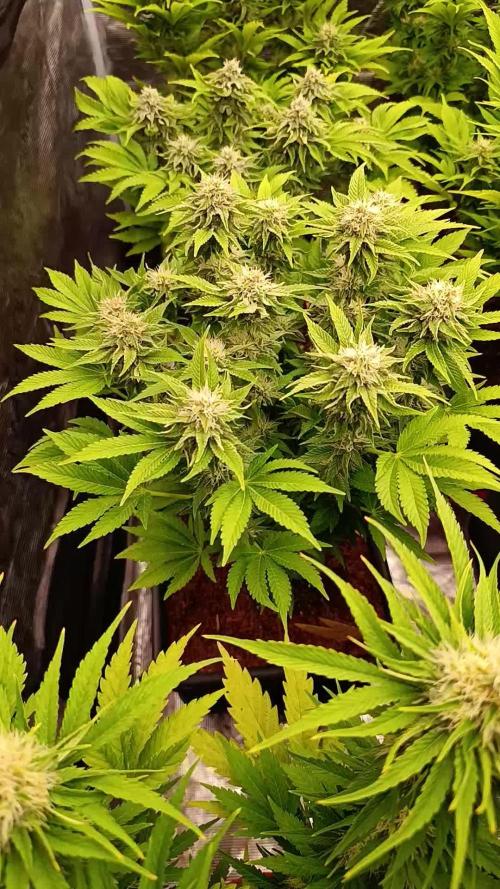
📆 Semana 6: La floración entra en una fase más madura y visible. Los cogollos comienzan a hinchar con más decisión, apilando cálices sobre cálices y ganando volumen real en cada punta. La resina ya no es solo presencia: las flores empiezan a quedar completamente cubiertas, con tricomas expandiéndose por cálices y hojas cercanas. La estructura sigue estable, sosteniendo bien el peso que empieza a aparecer. La planta mantiene una absorción limpia y constante, señal de que el equilibrio nutricional y radicular sigue funcionando correctamente. El perfil aromático se vuelve más intenso y complejo, mientras la planta centra su energía en densidad, resina y desarrollo floral. Semana clave donde el cultivo entra de lleno en la fase de engorde.
Processing
Likes
3
Share
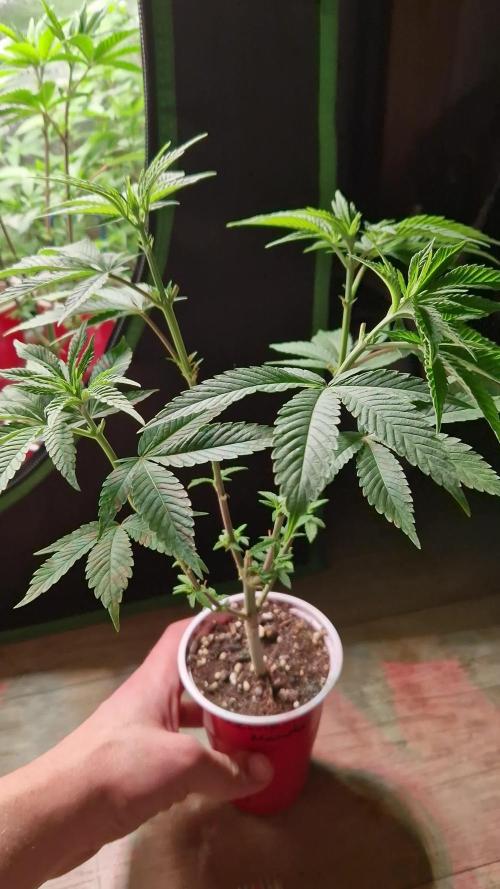
First week of veg, after two weeks of seedling growth. Light schedule: 24 hrs Nutrients: Nitrogen (bokashi), small quantities of potassium and phosphorus in marine algae. First transplant into: 2 lt and 1.5 lt pots
Processing
Likes
34
Share
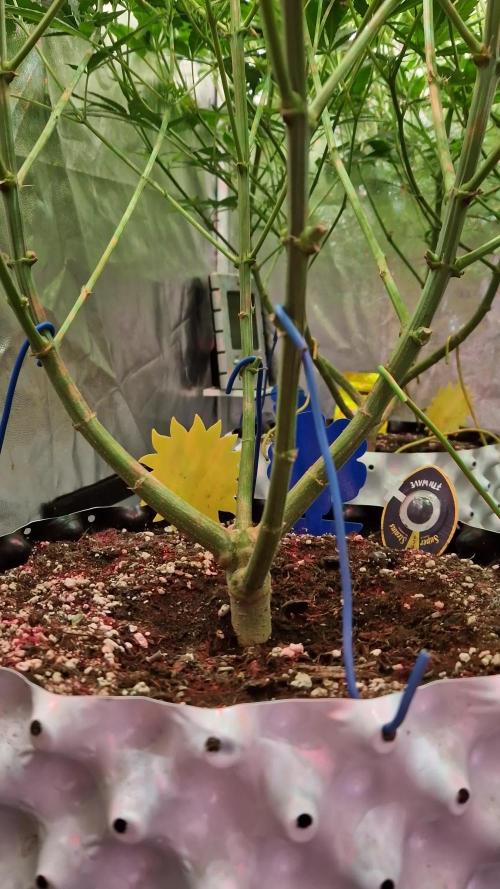
Seedsman Sour Diesel Haze is in its pre-flowering stretch, she grew a lot over the past week and I don't think she's done stretching yet. Excited to see how big she gets! 👍
Likes
2
Share
@RawCare
Follow
Removed some fan leafs and the buds starting to explode. This lush young plant stands proud with vibrant green leaves, a testament to its great genetics. The plant is thriving under optimal nutrient uptake, its buds already beginning to form and swell with promise of a bountiful harvest of top-quality buds. This young lady is growing with a blissful ease and a resilient growth. Ample space to improve on my next run 🙏
Likes
51
Share
And we have arrived at the magic moment for our autoflowering plants, the Zamnesia elves are working their magic and the buds are composing and freezing in the night. A scent of paradise invades my house now. --- Our Black Orchids are beautiful and different from each other. I imagined they were similar until a few days ago but then one started flowering more quickly and kept the main cola quite aligned with the lateral buds; the other instead started a mega central brunch and stands up to 130 cm tall. What we like most is that it seems to be bringing out dark buds. I don't want to bring bad luck but here we are waiting for a Black with fingers crossed, touching wood and everything necessary. Beautiful, tall and powerful, she will still be a champion. The bigger drink 2 litres x day and i found her dry in the morning. ---- Fertilization schedule - As for the fertilization schedule, we have two plants, one further forward and one further back. To the advanced one we are giving the green sensation and all the late flowering program while to this one in the photo that is monstrously big, it seems dark and a little further back we are still giving the early flowering program with a lot of bloom, still power zym and grenn sensation. ---- https://plagron.com/it - Alga Bloom - 2 ml/l - Sugar Royal - 1 ml/l - Power Buds - 1 ml/l - Green Sensation - 1 ml/l --- The dehumidifier now works between 50% and 55% --- The 100% Organic Plagron pack can be found on Zamnesia at the link: https://www.zamnesia.io/it/11457-pla gron-easypack-natural.html // Strain Description // It is said that the orchid symbolizes love, refinement and beauty. Well, we can confirm that the Black Orchid Automatic contains all these attributes and many more. This autoflowering variety has a lot to offer: a particular but very pleasant aromatic profile, and a relaxing and carefree high. Furthermore, this plant is very productive when grown in optimal conditions. - Get a seed of this fantastic strain --- https://www.zamnesia.io/it/9493-zamnesia-seeds-black-orchid-automatic.html - Fully organic soil and fertilizers --- https://plagron.com buy on www.zamnesia.io - Growbox and ventilation system --- https://www.secretjardin.com/ - Light — P2000 - https://www.viparspectra.com - Music and sound --- I made my girls listen to 432hz frequencies and black music from www.radionula.com - Z --- You can find these seeds, much more from the world of cannabis, mushrooms and an incredible series of accessories and gadgets on the reference site not only mine but of many growers ---- https://www.zamnesia.com
Likes
4
Share
@Amazone27
Follow
die Letzte der überlebende Pflanze macht ein Wachstum schub und in Blüte jetzt Scheint ertragreich zu werden für eine Auto
Likes
179
Share
💩Holy Crap We Are Back At It And Loving It💩 Growmies we are at DAY 49 and she's just killing💀it👌 👉We are in full flowering mode and she's doing great 👈 Everything is looking good even the Tiny Cup 🥤 So Shit , I gave them just a tad to much nutes at the start of feeding 👈 But I have since fixed it So I'm still doing some low stress training 🙃 and some defolation 😳 Lights being readjusted and chart updated .........👍rain water to be used entire growth👈 👉I used NutriNPK for nutrients for my grows and welcome anyone to give them a try .👈 👉 www.nutrinpk.com 👈 NutriNPK Cal MAG 14-0-14 NutriNPK Grow 28-14-14 NutriNPK Bloom 8-20-30 NutriNPK Bloom Booster 0-52-34 I GOT MULTIPLE DIARIES ON THE GO 😱 please check them out 😎 👉THANKS FOR TAKING THE TIME TO GO OVER MY DIARIES 👈
Likes
48
Share
@MG2009
Follow
Start of week 8,flowering, looking for amber trickomes,took off a branch at day 52, trickomes,were mostly milky some clear. I want to know the sweet spot for this girl if you know what I mean. I will post other pics of early cut latter. Also I switched to blue spectrum light only, supposedly it gets more UV light and packs on more resin(higher T H C ) ,Not that it needs more, but in the name of science I am willing to put in the extra effort. 🔎😎
Processing
Likes
3
Share
@Budnoob
Follow
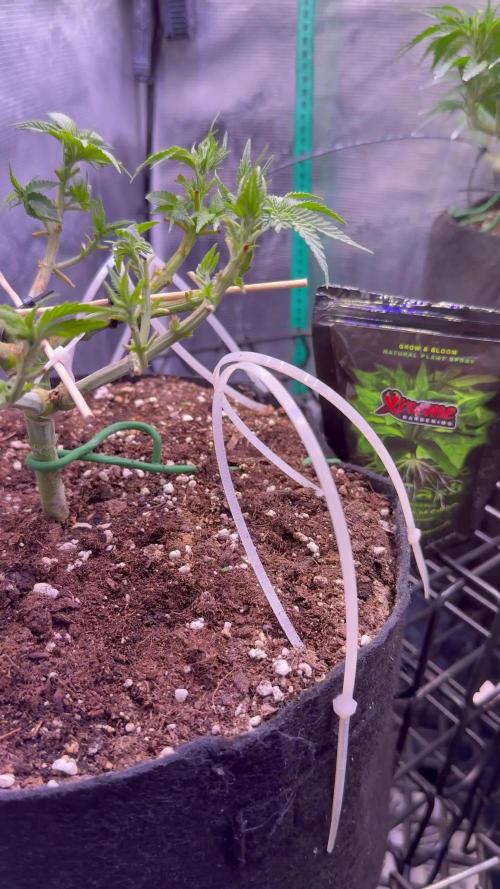
Week 2 (16/03/20) had abit of yellow turn up on the leaf. Took it as nutrient deficiency and topped up on A&B abit more. Now starting to look healthier. Started to tie the babys down to try and make a nice even canopy. Will upload week 3 next week😁👍
Likes
43
Share
We are in week 2 of the flowering. Today I added Bloombastic. The plants forgot they were superscrogged and just grew as fast as before. The height can be a problem in the next weeks, I hope the stretch is over now and they can concentrate on building flowers. Day 36 I gave them some more Bloombastic. And I took off almost every leave and small branch under the net because they would not get enough light and they shall concentrate on getting big buds instead of small flowers. Day 37: Due to size problems I decided not to take a picture of every plant every day but one pictures of all a day. Plus when the flowers are getting bigger, I will stay focused on the growth on some of them (not all, that is business secret 😆). Also I will take pictures of the finished flowers at the end, don't know yet of all or just a few (business secret). But I will definately tell the weight of 'em all in the end so stay tuned 😎 Day 38: I knew I would get size problems again. I brought them all under the net again. A few branches broke during that action. But that's just the way it is. They are too big so I have to find solutions. My solution is "getting them under the net". Kinda works out but I will see the result tomorrow, today it's been kinda tricky not to hurt them. Day 40: I put one branch under the net it was too high and did not get enough light because of that. Should be fixed now. The flowers are coming nice and slowly. I am so excited, I can hardly wait. Day 41: I had to put some branches under the net again.
Likes
22
Share
@Rafael
Follow
Upgrade led system TS-1000 to FC-3000
Likes
17
Share
@Chucky324
Follow
Hello this is the end of week 6 and the beginning of week 7 of flowering. Still 4 weeks to go, and we are getting some color on these plants. 3 plants are showing some purple. Man, these plants smell good now. When they were young I was getting very little smell on my fingers with the rub test. But now, these plants smell wonderful. They have cookie and cake parents. So it smells like some sort of sweet treat in here. The seed description says, Sweet, creamy, vanilla, desert with a touch of butter and fruit cake. Sounds delicious. 😃 Have Fun. Chuck.
Likes
2
Share
@Salokin
Follow
Week 2 | Forbidden Runtz Auto | Vegetation Two out of three are up and looking healthy. The third didn’t make it through the soil — writing her off at this point. Two plants moving forward, both looking clean and on track. Still at 10cm, conditions unchanged: 20h light schedule, lamp at 120cm, 0.1L per plant per 24h. pH 6.2, EC 1.0 mS/cm, humidity at 60%, 26°C day / 23°C night. Nutrient stack same as last week: CANNA Aqua Vega at 1 ml/l, Canna CalMag Agent at 0.9 ml/l, Aptus Regulator at 0.1 ml/l. Selection coming up over the next week. Updates every Sunday. Stay tuned.
Likes
35
Share
@Stinkfox
Follow
I defoliated this week, in the 3rd week of flower. The stretch should be about over. Pistils and bud sites abound. I increased Tiger Bloom. Now we wait.
Likes
16
Share
Seedling managing 93F 30%RH, around 20 DLI. Vpd is in the 3's. No I don't recommend. Signum Magnum. "A great sign appeared in the sky a woman clothed with the sun with the moon under her feet and on her head a crown of twelve stars. Sing ye to the Lord a new canticle: because He has done wonderful things. Glory to the Father, and to the Son, and to the Holy Spirit As it was in the beginning, and now, and ever shall be, world without end." The plant nutrient nitrogen exists in forms with both positive and negative charges. Ammonium (NH4+)(immobile in soil)(Cation) has a positive charge, while nitrate (NO3-) (highly mobile in soil)(Anion)has a negative charge. Nitrogen is unique among plant nutrients in that it can exist in both positively charged (ammonium, NH₄⁺) and negatively charged (nitrate, NO₃⁻) forms in the soil. This makes it a special nutrient. In that it is responsible for providing balance for reactionary trade offs when it comes to ph. Because ph itself in the medium will always slowly drift towards acidicity, such is nature. 80% of nitrogen should be nitrate and no more than 20% ammoniacal nitrogen. Ca, mg, and K are the big 3 cations related to soil composition, pH & base saturation. When nitrogen is in the form of ammonium, it can compete with calcium, magnesium, and potassium for absorption sites in the plant root. This competition can lead to a reduction in the uptake of these other essential nutrients. Nitrogen, particularly in its nitrate form (NO3-), can increase soil acidity, which can also affect the availability of calcium, magnesium, and potassium. The form of nitrogen applied (ammonium vs. nitrate) can influence its interactions with other nutrients. Ammonium nitrogen can have a more pronounced negative effect on the uptake of calcium, magnesium, and potassium compared to nitrate nitrogen. Common forms of ammonium nitrogen include ammonium ion (NH4+), urea, and ammonium compounds like ammonium nitrate, ammonium sulfate, and ammonium phosphate. Common forms of nitrate nitrogen include potassium nitrate (KNO3), sodium nitrate (NaNO3), calcium nitrate (Ca(NO3)2), and ammonium nitrate (NH4NO3). Phosphorus is an essential plant nutrient, and its availability in the soil is strongly linked to the presence of oxygen. Plants primarily absorb phosphorus as phosphate (PO4), and oxygen is a key component of this molecule. Furthermore, the availability of phosphorus in the soil can be impacted by factors like soil aeration and temperature, which in turn affect the oxygen supply to the roots. Phosphorus uptake in plants is most critical during the early stages of growth, particularly within the first few weeks of plant development. Young plants actively growing tissues have a high demand for phosphorus. They may absorb up to 75% of their total phosphorus requirements within the first few weeks of vegetative growth, with up to 51% of uptake happening overnight, primarily in the first few hours or early nightfall. ⑨Anaerobic root respiration, or respiration without oxygen, is detrimental to plants because it's less efficient and produces toxic byproducts, leading to reduced energy production, nutrient uptake issues, and ultimately, root damage and plant stress. ⑨Anaerobic respiration, unlike aerobic respiration, doesn't utilize oxygen as the final electron acceptor in the electron transport chain. This results in a significant drop in the amount of energy (ATP) produced, which is necessary for various plant functions, including growth, nutrient uptake, and maintenance of cellular processes. ⑨In the absence of oxygen, plants produce byproducts like ethanol and lactic acid during anaerobic fermentation. These byproducts can be toxic to the roots and inhibit their function, ⑨When oxygen is depleted in a medium, the pH tends to decrease (become more acidic) due to the production of metabolic byproducts. This is particularly relevant in biological systems where aerobic respiration relies on oxygen as the final electron acceptor. ⑨When oxygen is scarce, plants may switch to anaerobic respiration. This process produces carbon dioxide (CO2) as a byproduct. ⑨CO2 dissolves in water to form carbonic acid (H2CO3). This acid lowers the pH of the medium, making it more acidic. ⑨Anaerobic conditions can impair a plant's ability to regulate its internal pH, leading to a drop in cytoplasmic pH and potentially cellular acidosis. ⑨The change in pH can also affect the availability of certain nutrients to the plant, as pH influences the solubility of micronutrients like iron, manganese, zinc, copper, and boron. ⑨The lack of oxygen in the plant medium leads to a decrease in pH due to the production of carbon dioxide during anaerobic respiration and impaired pH regulation within the plant. In plant cells, cellular acidosis, a drop in the internal pH of the cytosol, is a significant stress response, particularly during conditions like flooding or hypoxia. This acidification can be triggered by a decrease in oxygen levels, leading to the production of metabolic byproducts like lactic acid and CO2. The plant's ability to tolerate and recover from these conditions depends on its cellular mechanisms to regulate pH and mitigate the effects of acidosis. When plants are subjected to low oxygen environments, such as those experienced during flooding, anaerobic metabolism, which produces lactic acid and ethanol, becomes the primary source of energy. This can lead to a build-up of these acidic metabolites in the cytosol, causing a drop in pH. OXYGEN Atomic oxygen (single oxygen atom, O) is the lightest form of oxygen, as it has the lowest mass of the oxygen molecules. Oxygen also exists as a diatomic molecule (O2) and an allotrope called ozone (O3), which have higher masses due to the number of oxygen atoms combined. Atomic Oxygen (O): This refers to a single oxygen atom, which is the most fundamental form of oxygen. Molecular Oxygen (O2): This is the common form of oxygen we breathe, consisting of two oxygen atoms bonded together. Ozone (O3): This is an allotrope of oxygen, meaning it's a different form of the same element, consisting of three oxygen atoms bonded together. Since atomic oxygen has the fewest oxygen atoms, it naturally has the lowest mass compared to O2 or O3. Ozone (O3) Lifespan: Ozone has a relatively long lifespan in the stratosphere, particularly at lower altitudes. For example, at 32 km in the middle latitudes during spring, ozone has a lifetime of about 2 months. Oxygen (O) Lifespan: Atomic oxygen, on the other hand, has a much shorter lifespan. At the same altitude, its lifetime is about 4/100ths of a second. Ozone-Oxygen Cycle: The ozone-oxygen cycle involves the rapid exchange between atomic oxygen (O) and ozone (O3). UV radiation can split molecular oxygen (O2) into atomic oxygen (O), which then reacts with O2 to form ozone (O3). Ozone can also be photolyzed by UV radiation, creating atomic oxygen again, which can then react with O3 to reform O2. Dominant Form: The partitioning of odd oxygen (Ox) between ozone and atomic oxygen favors ozone in the lower stratosphere. This means that a much larger proportion of odd oxygen exists as ozone than as atomic oxygen, especially in the lower stratosphere. Recombination: Atomic oxygen has a high energy and reactivity. When it encounters another oxygen atom, they can combine to form O2. This process releases energy, contributing to the heating of the atmosphere. Ozone Formation: Atomic oxygen can also react with molecular oxygen (O2) to form ozone (O3). Ozone plays a significant role in absorbing harmful UV radiation. Other Reactions: Atomic oxygen can react with various other molecules in the atmosphere, like nitrogen (N2), water (H2O), and carbon dioxide (CO2), forming different compounds. UV light below 240nm (peak 185nm) creates ozone (O₃) through a process called photolysis, where UV light breaks down dioxygen molecules (O₂) into single atomic oxygen atoms (O). These single oxygen atoms then react with other oxygen molecules to form ozone (O₃). Specifically, UV-C light with wavelengths shorter than 240 nm can cause this photolysis. UV light with wavelengths between 240-280 nm, (peak 254 nm) breaks down ozone (O₃) into dioxygen molecules (O₂) and atomic oxygen atoms (O). 280nm does not have the energy potential to break apart the stable bond of (O₂) into enough (O) to make (O₃) At ground level, atomic oxygen (single oxygen atoms) has a very short lifespan. This is because it's highly reactive and quickly combines with other molecules to form stable diatomic oxygen (O2) or other compounds. While the exact timeframe varies depending on the specific circumstances, its lifespan is typically measured in nanoseconds or picoseconds.
Likes
3
Share
Removed some fan leaves and lolipoped and took 4 more clones!🔥💨🍃
Likes
13
Share
Gracias al equipo de AnesiaSeeds, Marshydro, XpertNutrients y Trolmaster sin ellos esto no sería posible. 💐🍁 Oracle Octane: Oracle Octane es una cepa altamente potente y con un alto contenido de THC elaborada a partir de una Blackberry Octane seleccionada, excepcionalmente rica en THC y aromática, y de la pesada Blackberry Oracle, inédita, de nuestro propio acervo genético. El desarrollo de esta carismática e impresionante variedad abarcó 8 generaciones y un enorme esfuerzo de cría. La variedad tiene un sabor intenso e inolvidable que recuerda a bayas dulces y limones frescos. Las plantas a partir de semillas crecen increíblemente hermosas y sus hojas y cogollos a menudo desarrollan tonos de rojo, morado intenso e incluso casi negro. Esta cepa vigorosa y ligeramente índica dominante tiene un tiempo de floración de unas 9 semanas, produce hojas grandes y alcanza una altura de unos 120-130 cm en el interior. 🌻🚀 Consigue aqui tus semillas: https://anesiaseeds.com/product/oracle-octane/ 💡TS-3000 + TS-1000: se usaran dos de las lámparas de la serie TS de Marshydro, para cubrir todas las necesidades de las plantas durante el ciclo de cultivo, uso las dos lámparas en floracion para llegar a toda la carpa de 1.50 x 1.50 x 1.80. https://marshydro.eu/products/mars-hydro-ts-3000-led-grow-light/ 🏠 : Marshydro 1.50 x 1.50 x 1.80, carpa 100% estanca con ventanas laterales para llegar a todos los lugares durante el grow https://marshydro.eu/products/diy-150x150x200cm-grow-tent-kit 🌬️💨 Marshydro 6inch + filtro carbon para evitar olores indeseables. https://marshydro.eu/products/ifresh-smart-6inch-filter-kits/ 💻 Trolmaster Tent-X TCS-1 como controlador de luz, optimiza tu cultivo con la última tecnología del mercado, desde donde puedes controlar todos los parametros. https://www.trolmaster.com/Products/Details/TCS-1 🍣🍦🌴 Xpert Nutrients es una empresa especializada en la producción y comercialización de fertilizantes líquidos y tierras, que garantizan excelentes cosechas y un crecimiento activo para sus plantas durante todas las fases de cultivo. Consigue aqui tus Nutrientes: https://xpertnutrients.com/es/shop/ 📆 Semana 6: Esta semana ha explotado 💣, los cogollos comienzan a tomar densidad y llenarse de resina, me hubiera gustado aplicar algo mas de nutrientes en la fase vegetativa, la próxima vez será.
Processing
Likes
2
Share
Likes
14
Share
@Dre25
Follow
Looking Great.👍🏼 lst and added Tiger Bloom purple lemonade not ready for lst. 6/22