The Grow Awards 2026 🏆
Likes
Comments
Share
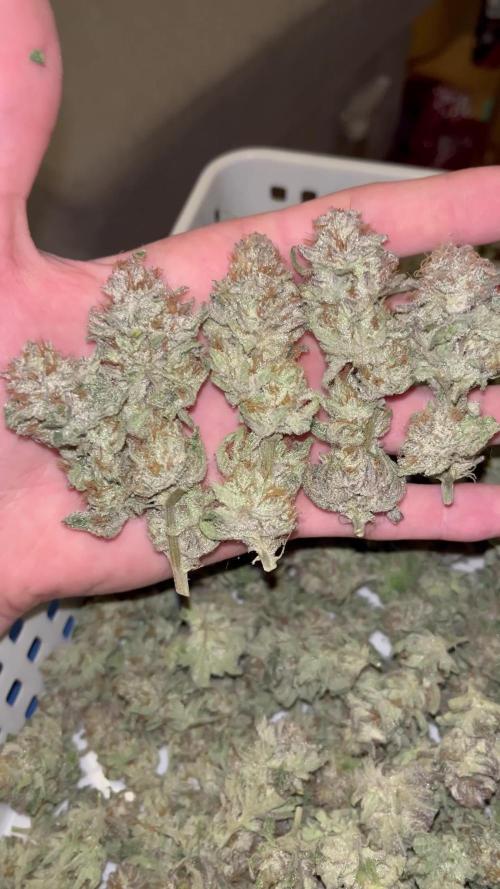
Those Girls started slow, and I had Concerns, But then they decided to grow. And turned out great. I had 3 Phenotypes. Tow high shooters, one with more dense Buds, and the Other one with more fluffy Buds. And a " indica Lasting" Phenotype. With Big Leaves and real nice biiig Buds. All got very similar Scent. Iam courious to the SMOKINGREPORT: We LOOOVED that Weed. Weve had alittle barbecue and smoked during and after. We had a strong Bodyfeeling like " golden Armor".... we felt very close to each other.laughed a lot... very nice Weed for soicial Fun
Likes
43
Share
Welcome to my Dutch Passion Diaries Competition 2025 entry! For this competition, I’ve chosen the Indoor Feminized strain: Orange Bud 2.0 Media from Week 13 or Flower week 2-3 After Moving into the New Tent for the flower weeks. Stage. Here’s what I’m working with for the Final Tent after Moving for the Flower time in the Future : • 🌱 Tent: 220x150x150 • 🧑‍🌾 Breeder Company: Dutch Passion • 💧 Humidity Range: 50 • ⏳ Flowering Time: 8W-10W • Strain Info: 20-25%THC, Sativa • 🌡️ Temperature: 26 • 🍵 Pot Size: 0.5l • Nutrient Brand: Narcos • ⚡ Lights : 720W x 2 Dimmed to 400w Each at the Moment. Because of Heatwave ⭐ A huge thank you to Dutch Passion for allowing me to be a part of this amazing competition and for supporting the grower community worldwide! Your genetics and passion speak for themselves! Curious to try these strains for yourself? You can check them out and support me at the same time through my personal link: https://dutch-passion.com/?a_aid=GGD I would truly appreciate every bit of feedback, help, questions, or discussions – and of course, your likes and interactions mean the world to me as I try to stand out in this exciting competition! Let’s grow together – and don’t forget to stop by again to see the latest updates! Happy growing! Stay lifted and stay curious! Peace & Buds!
Likes
3
Share
Nothing to crazy didn’t really want to run Athena. But i popped little to soon! Should order other stuff soon. But here goes a run of Athena hoping to have as little hypocritical acid as I can
Likes
13
Share
@valiotoro
Follow
Another super terpy tasty baby strain💜 Rockdense buds
Likes
24
Share
@OGOZHigh
Follow
Leider spielt das Wetter nicht so mit daher langsame Fortschritte. Update : 21.06 Das Wetter wird besser und die Ladys geben langsam richtig gas 🥦🔥
Likes
6
Share
@valiotoro
Follow
Super easy trim✂️ The buds are super dense & sticky🤩 For the smell it’s cherry & blackcurrant with a gassy touch the Cherry Cola Diesel ⛽️🍒
Likes
17
Share
Week 4 begins for Mandarin dreams and Divine storm. Both ladies are looking happy and I increased their feed by 1 liter each. Thank you Mars-Hydro for the TSW2000 light, very happy with the light performance so far. Thanks for stopping by growfessors 👽 tune in next week for another episode of growfessor theatre!
Likes
4
Share
@NSABND
Follow
Day 29 massive leave cutting in the morning... but the queens seems to be ok 😃🙏👌👍the Z-Up strain has 5cm more then the others Day 30 all queens are a little bit shocked from cutting 😩 ok chill today but tomorrow back to work bitches 😂😂😆😃🙏👍 Day 31 everything seems to be allright 😃🙏👌
Likes
13
Share
To be honest overall this strain done good so as the others. Reflecting back on how i started with just a tent and light, and slowly buying the fans and filters whiles the plants were growing. But i did want these plants to grow naturally without topping and Low Stress Training. I regret not removing the lower branches becuase i did get alot of small airy buds down there. But it was all trial and error. All i done was remove some fan leaves when good to do so every now and then. Not on a mad level tho, i did have alot of sugar leaves which i will be making some stuff with! At veg the plants had deficiencies due to out of date Biobizz bottles. But that got sorted with the magic of Algimac and Calmag. Overall Next time I will definitely train the plants and maybe top a few. Final Yield: Plant #1 21.88 Grams Plant #2 33.36 Grams Plant #3 56.06 Grams Which yield exactly 110 grams! Ounces come out very fat with these light buds Not bad for the conditions they were brought up in, and with no training! Thanks for everyone who has followed this diary throught out the journey! I hope this diary will help people out. And thank you to Seedstockers for very cheap and quality seeds. And special thanks for the GrowDiaries Team for providing the best platform for growing journals! I couldnt explain how much this Diary helped me. Its like a dream come true finding a site like this! And if you do see this message, i would love to see a Iphone app coming soon! Kind Regards! One love!
Likes
68
Share
Removed autoflower and put her in her own pot outside the tent. Foliars applied in strong blue 430nm with 4000Hz tone. 20-minute dose prior to application. In essence, you're seeing a combination of the infrared light reflected by the plant, which the camera perceives as red, and any residual visible blue light the plant reflects, which results in a purple hue. I was doing more stretching of the stems, adjusting weights, just a little too much, and it snapped almost clean. I got a little lucky in that it was still connected, wrapped her almost instantly while holding her in place with yoyo's. The core framework is now in place. If your soil has a high pH, it's not ideal; you want a pH of 6.4, 6.5, or 6.6, which is ideal. If you are over a pH of 7, you have no hydrogen on the clay colloid. If you want your pH down, add Carbon. If you keep the pH below 7, you will unlock hydrogen, a whole host of new microbes become active and begin working, the plant will now be able to make more sugar because she has microbes giving off carbon dioxide, and the carbon you added hangs onto water. Everything has electricity in it. When you get the microbes eating carbon, breathing oxygen, giving off CO2, those aerobic soil microbes will carry about 0.5V of electricity that makes up the EC. The microorganisms will take a metal-based mineral and a non-metal-based mineral with about 1000 different combinations, and they will create an organic salt! That doesn't kill them, that the plant loves, that the plant enjoys. This creates an environment that is conducive to growing its own food. Metal-based: Could include elements like iron, manganese, copper, or zinc, which are essential nutrients for plants but can exist in forms not readily accessible. Non-metal-based: Examples like calcium carbonate, phosphate, or sulfur are also important for plant growth and potentially serve as building blocks for the organic salt. Chelation in a plant medium is a chemical process where a chelating agent, a negatively charged organic compound, binds to positively charged metal ions, like iron, zinc, and manganese. This forms a stable, soluble complex that protects the micronutrient from becoming unavailable to the plant in the soil or solution. The chelate complex is then more easily absorbed by the plant's roots, preventing nutrient deficiency, improving nutrient uptake, and enhancing plant growth. Chelation is similar to how microorganisms create organic salts, as both involve using organic molecules to bind with metal ions, but chelation specifically forms ring-like structures, or chelates, while the "organic salts" of microorganisms primarily refer to metal-complexed low molecular weight organic acids like gluconic acid. Microorganisms use this process to solubilize soil phosphates by chelating cations such as iron (Fe) and calcium (Ca), increasing their availability. Added sugars stimulate soil microbial activity, but directly applying sugar, especially in viscous form, can be tricky to dilute. Adding to the soil is generally not a beneficial practice for the plant itself and is not a substitute for fertilizer. While beneficial microbes can be encouraged by the sugar, harmful ones may also be stimulated, and the added sugar is a poor source of essential plant nutrients. Sugar in soil acts as a food source for microbes, but its effects on plants vary significantly with the sugar's form and concentration: simple sugars like glucose can quickly boost microbial activity and nutrient release. But scavenge A LOT of oxygen in the process, precious oxygen. Overly high concentrations of any sugar can attract pests, cause root rot by disrupting osmotic balance, and lead to detrimental fungal growth. If you are one who likes warm tropical high rh, dead already. Beneficial, absolutely, but only to those who don't run out of oxygen. Blackstrap is mostly glucose, iirc regular molasses is mostly sucrose. Sugars, especially sucrose, act as signaling molecules that interact with plant hormones and regulate gene expression, which are critical for triggering the floral transition. When sucrose is added to the growth medium significantly influences its effect on floral transition. Probably wouldn't bother with blackstrap given its higher glucose content. Microbes in the soil consume the sugar and, in the process, draw nitrogen from the soil, which is the same nutrient the plant needs. Glucose is not an oxygen scavenger itself, but it acts as a substrate for the glucose oxidase (GOx) enzyme, effectively removing oxygen from a system. Regular molasses (powdered if you can), as soon as she flips to flower or a week before, the wrong form of sugar can delay flower, or worse. Wrong quantity, not great either. The timing of sucrose application is crucial. It was more complicated than I gave it credit for, that's for sure. When a medium's carbon-to-nitrogen (C:N) ratio reaches 24:1, it signifies an optimal balance for soil microbes to thrive, leading to efficient decomposition and nutrient cycling. At this ratio, soil microorganisms have enough nitrogen for their metabolic needs, allowing them to break down organic matter and release vital nutrients like phosphorus and zinc for plants. Exceeding this ratio results in slower decomposition and nitrogen immobilization, while a ratio below 24:1 leads to faster breakdown and excess nitrogen availability. Carbon and nitrogen are two elements in soils and are required by most biology for energy. Carbon and nitrogen occur in the soil as both organic and inorganic forms. The inorganic carbon in the soil has minimal effect on soil biochemical activity, whereas the organic forms of carbon are essential for biological activity. Inorganic carbon in the soil is primarily present as carbonates, whereas organic carbon is present in many forms, including live and dead plant materials and microorganisms; some are more labile and therefore can be easily decomposed, such as sugars, amino acids, and root exudates, while others are more recalcitrant, such as lignin, humin, and humic acids. Soil nitrogen is mostly present in organic forms (usually more than 95 % of the total soil nitrogen), but also in inorganic forms, such as nitrate and ammonium. Soil biology prefers a certain ratio of carbon to nitrogen (C:N). Amino acids make up proteins and are one of the nitrogen-containing compounds in the soil that are essential for biological energy. The C:N ratio of soil microbes is about 10:1, whereas the preferred C:N ratio of their food is 24:1 (USDA Natural Resource Conservation Service 2011). Soil bacteria (3-10:1 C:N ratio) generally have a lower C:N ratio than soil fungi (4-18:1 C:N ratio) (Hoorman & Islam 2010; Zhang and Elser 2017). It is also important to mention that the ratio of carbon to other nutrients, such as sulfur (S) and phosphorous (P) also are relevant to determine net mineralization/immobilization. For example, plant material with C:S ratio smaller than 200:1 will promote mineralization of sulfate, while C:S ratio higher than 400:1 will promote immobilization (Scherer 2001). In soil science and microbiology, the C:S ratio helps determine whether sulfur will be released (mineralized) or tied up (immobilized) by microorganisms. A carbon-to-sulfur (C:S) ratio smaller than 200:1 promotes the mineralization of sulfate, when the C:S ratio is low, it indicates that the organic matter decomposing in the soil is rich in sulfur relative to carbon. Microorganisms require both carbon and sulfur for their metabolic processes. With an excess of sulfur, microbes take what they need and release the surplus sulfur into the soil as plant-available sulfate A carbon-to-sulfur (C:S) ratio higher than 400:1 will promote the immobilization of sulfur from the soil. This occurs because when high-carbon, low-sulfur materials (like sawdust) are added to soil, microbes consume the carbon and pull sulfur from the soil to meet their nutritional needs, temporarily making it unavailable to plants. 200:1 C:S 400:1: In this range, both mineralization and immobilization can occur simultaneously, making the net availability of sulfur less predictable. This dynamic is similar to how the carbon-to-nitrogen (C:N) ratio regulates the availability of nitrogen in soil. Just as microbes need a certain amount of nitrogen to process carbon, they also require a balanced amount of sulfur. Both mineralization and immobilization are driven by the metabolic needs of the soil's microbial population. Sulfur is crucial for protein synthesis. A balanced ratio is particularly important in relation to nitrogen (N), as plants need adequate sulfur to efficiently use nitrogen. A severely imbalanced C:S ratio can hinder the efficient use of nitrogen, as seen in trials where adding nitrogen without balancing sulfur levels actually lowered crop yields. Maintaining a balanced carbon-to-sulfur (C:S) ratio is highly beneficial for plant growth, but this happens indirectly by regulating soil microbial activity. Unlike the C:N ratio, which is widely discussed for its direct effect on nutrient availability, the C:S ratio determines whether sulfur in the soil's organic matter is released (mineralized) or temporarily locked up (immobilized). Applied 3-day drought stress. Glucose will hinder oxygenation more than sucrose in a solution because glucose is consumed faster and has a higher oxygen demand, leading to a more rapid decrease in oxygen levels. When cells respire, they use oxygen to break down glucose, and this process requires more oxygen for glucose than for sucrose because sucrose must first be broken down into glucose and fructose before it can be metabolized. In a growth medium, glucose is a more immediate and universal signaling molecule for unicellular and multicellular organisms because it is directly used for energy and triggers a rapid gene expression response. In contrast, sucrose primarily acts as a signaling molecule in plants to regulate specific developmental processes by being transported or broken down, which can be a more complex and slower signaling process. Critical stuff. During wakefulness (DC electric current) life can not entangle electrons and protons. During the daytime, the light is sensed as multiple color frequencies in sunlight. Coherence requires monochromatic light. Therefore, at night, IR light dominates cell biology. This is another reason why the DC electric current disappears during the night. The coherence of water is maintained by using its density changes imparted by infrared light released from mitochondria in the absence of light. This density change can be examined by NMR analysis, and water is found to be in its icosahedral molecular form. This is the state that water should be in at night. This is when a light frequency is lowest and when the wave part of the photoelectric effect is in maximum use. 3600
Likes
2
Share
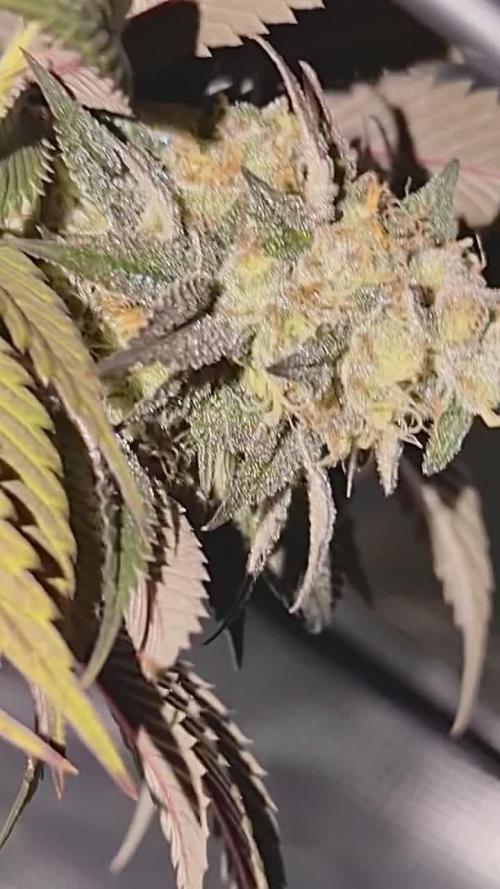
7 weeks into flower final flushes . Small foxtails forming
Likes
5
Share
They smell great. Not a hard grow, but not stabilized genetics. 4 different phenos all with differing flowering times. Make it tough when you use your grow tent as a dry tent to contain smell. Had to buy another tent just to dry the ones that were finished instead of risking them herming. 5.8 oz dried and trimmed bud. Didn't weigh larf/trimmings but will be dry sifting it for the press.
Likes
22
Share
8/25/23 - Day 73 - Another week down. We did a water change today. The buds are getting fatter and WAAAAAAY smellier. I have had a couple of times now where I lost a battle to the Skunk BOSS. I have had to reach in to move some buds around because they are too close to the light on some bud sites. You can see one of the buds up top, it has some white to it, I think that's due to being too close to the light. But once I move the buds around, I smell EXACTLY like a skunk. The smell is crazy strong. It's taking several full showers and it's still all over my fingers. Gloves will be an ABSOLUTE must when just reach in for a second. 8/28/23 - Day 76 - The buds are starting to grow even more, that the buds are growing buds out of them. That sounds weird but it's the only way to describe it. It looks like Romanesco. The buds are getting more dank, fatter, and more crystals are forming. 8/29/23 - Day 77 -I did some trimming today. I push some of the buds down and really got my arms in there today. All of the buds have gained so much mass to them when I squeeze them, they are really dense. I left a time laps video of me doing some late trimming, I was noticing some of the cannabis leaves were taking some of the light from the buds. 8/31/23 - Day 79 - The trichomes are still see-through and crystal clear. IM looking for a glossy-type look. My guess is still two/three weeks out. If you are looking for this experience, check out https://www.getleaf.co/
Likes
167
Share
⭐ TrolMaster tracking ⭐ I started to track my crop during week 15, when I got the Tent-X TCS-1 by TrolMaster. First impression was: this is too professional for me, I can't handle setting it up and using it well. Then I started reading some posts on Instagram, I visited their site and in 5 minutes my cultivation experience took a huge step forward with disarming simplicity, I couldn't believe it. I have uploaded tracking videos from the TrolMaster app for each week from the 15th to the 19th, as well as the two weeks of drying stage. ⭐ Controller Chronicles ⭐ Day after day I appreciated the clarity and precision for data, access to all settings and instant readings by connecting a WIFI router to the controller's LAN port. I loved the possibility to dim my lamps remotely, or even automatically based on the temperature in the box! 🌱 GERMINATION (2 days) Seeds in a glass of EC 0.4 tap water for 10 hours, then in root riots and under the lamp. They sprouted after 48 hours from dry seed. 🌿 GROWING STAGE (10 weeks and half) I decided to give these plants a long vegetative growth and this allowed me to do a lot of training on both. Starting from the 4th veg week I started with defoliation sessions every two weeks, for a total of four during the entire vegetative phase. The last defoliation was done a couple of days before the switch, in order to allow the lower parts of the plant to get as much light as possible. Furthermore I did Topping on week 6, cutting the apical branch, then on week 8 I did Topping again on several sites, as well as SuperCropping on the highest branches to make the canopy uniform. The light cycle I used is 18/6 and the last two veg weeks I lowered the light hours to 16/8 first and 14/10 then. During the veg stage I made 4 DWC change, PH was always between 5.5 and 6, about EC I started with 0.6 and was 1.4 on the last veg week. 🌸 FLOWERING STAGE (9 weeks) I started this phase after 36 hours of darkness, I then changed the DWCs solution (adding a flowering stimulator). Then I mounted the ScrOG-net about 50 cm from the base of the plants and I wove the phenotype #1 through the net occupying at least 60% of the available space; the phenotype #2 stretched shortly after the switch and I used the net only to widen the central branches. They showed the pre-flowers two weeks after the switch, then I made two defoliations on week 3 and 5 flo. During the last four weeks of flowering (weeks 6-9) I simply paid attention to the PH-EC levels to provide the roots with optimal conditions. I then kept the TEMP-RH-VPD-PPFD values ​​under control and this also thanks to the Tent-X controller by TrolMaster which allows me to provide optimal conditions also above. I chopped them when trichomes were about 85% milky and 15% amber. During the flowering stage PH was always between 5.8 and 6.2, about EC I started with 2 and was 2.3 on the last week before flush. ✅ HARVEST - From dry seed to harvest: 140 days (2 days germination + 75 days veg + 63 days flo). - Chopped after 4 days flush and 48 hours in dark; - Wet trim, removed fan leaves. ✅ DRYING STAGE - Time: 14 days; - Average: 20° C - 50% RH. - After that I made a dry trim, removed branches and sugar leaves. ⚖️ DRY WEIGHT - Phenotype #1: 230 gr buds + 25 gr larf; - Phenotype #2: 105 gr buds + 50 gr larf. So, the overall dry weight is: 335 gr buds + 75 gr larf. ✅ CURING STAGE - Curing is done after 30 days with Boveda 62%.
Processing
Likes
2
Share
@Pauwela
Follow
7/28 7-days old,, 4 clones survived, on their way at 2.5” a 3.5” tall
Likes
86
Share
@Ageddd
Follow
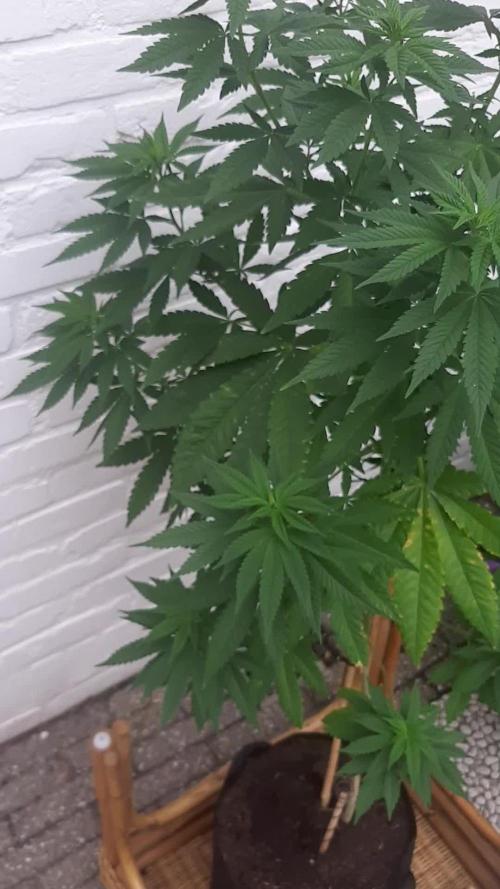
Only gave her water and Deeper Underground, not feeding yet, and has a beautiful dark green colour. Vigorous mode : ON :) Summer has arrived... Edited : 17/06
Likes
150
Share
Hello my companions. I have been very busy with work lately and have spent very little time on my cultivation diaries. Soon I will be completely free, so I dedicate every minute to my plants and make a big tent. My Neville is 15 weeks old. It's the longest auto-blooming plant I've ever grown. I decided to give him 16 weeks to live and then harvest. I also started to prepare new plants for new diaries, but due to lack of time they were standing on the window without intense light for more than 3 days. Now I'm still germinating 2 plants to start a new diary of 8 plants. In General, I have very big plans and ambitions, and I hope that everything will be fine. I can't wait to finish the main work to fully devote myself to the plant.
Likes
7
Share
@gablmo
Follow
I had a long week and a lot happened in the garden. The plants were growing too slow and their leaves were closing like they were trying to protect themselves, some of the leaves ends were dropping downwards, purple stems and I also had tecnical problems; the GoGro ( auto feeding equipment ) valve didn't work and I ended up with a flood twice, which brought a few freaking little flies, and the lights were disconnected for 7 hours on sunday morning by accident. To solve this issues I had help from the folks here and some research online, I raised my lights up because it was cooking the plants, i adjusted the ppm giving more food to stop the leaves tip dropping, got Calmeg for the purple stems, pest control spray, I fixed the valve a gave a pretty good cleaning with Clorox in the tent. There were good things too. I did fimming technic to make the plants shorter and to get a more even canopy to get more ligh to them and more flowers. The girls are doing great, they are 4 feet taller now. I learned more about how they work and how to take care of them thanks to some free online books and lots of youtube. It has been hard work with lots of hours of dedication. I'm loving it. Thanks people from here. Thanks GrowBoss.
Likes
9
Share
@DreamIT
Follow
Sponsored by: 🦎THE HIGH CHAMELEON🦎-💡VIPARSPECTRA💡-💐GREEN BUZZ LIQUIDS💐-🛠️WEDRYER🛠️ 🏁 10/8 New sponsor at DreamIT. I am delighted to warmly welcome The High Chameleon to my journals and growboxes. The shipping was fast and the package was anonymous. Instead of the usual plastic to keep the seeds in place, I found a nice bag of chopped hemp, a smart and ecological choice. In addition, a very practical grass holder with attached grinder, really practical and comfortable. I will open a diary for each seed that I will try to grow with different types of training techniques, I will decide which ones along the way. let's begin !! 12/8 open seed without help. super yeah! 18/8 everything is OK __________________________________________ Personal advertising (contains affiliate links) __________________________________________ 🦄 Check out The High Chamaleon website, their first selection criterion is the strong signature of terpenes by taking rare strains while being 100% organic and respecting nature. Safe anonymous shipping! ✅ https://bit.ly/TheHighChameleon __________________________________________ Did you know that Green Buzz Liquids fertilizers are 100% vegan? A complete line of products ready to give the best to each of your plants! Visit the site and see my journals to see how they work 🦄 🤯 And with the code "dreamit" you will immediately receive a 15% discount on your purchases ✅https: //bit.ly/GreenBuzzLiquidsPro __________________________________________ 👀 Are you looking for a good lamp to start with? 👀 🌞Viparspectra has something more than the others, take a look at their site. ⏩ Use "GDVIP" for an extra discount or "DREAMIT3" for an extra 5 %% discount 👀 Search for it on Amazon ✅Amazon USA: https://amzn.to/30xSTVq ✅Amazon Canada: https://amzn.to/38udUVe ✅Viparspectra UE: bit.ly/ViparspectraUE ✅Viparspectra USA: bit.ly/ViparspectraUS ______________________________________________ 🌈 Tired of blowing on your weed hoping it dries quickly? Check out the Wedryer website! You will find a well-made accessory that will help your weed dry in just 8-10 days without the annoying risk of finding mold or other annoyances! (no affiliate links) ✅https: //bit.ly/Wedryer_ ______________________________________________ 📷🥇Follow the best photos on Instagram 🥇📷 https://www.instagram.com/dreamit420/ Backup https://www.instagram.com/dreamit4200/ 🔻🔻Leave a comment with your opinion if you pass by here🔻🔻 🤟🦄💚 Thank you and good growth 💚🦄🤟