


Likes
Comments
Share

@Bowser45
Follow
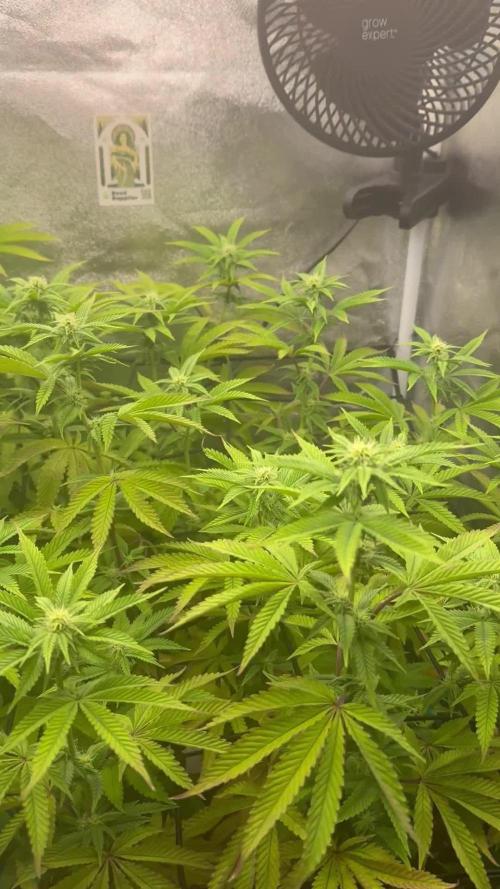
This week the strech reached almost 70cm , and the ladies almost grew into the growlight one day so i moved it higher up to stay at a distance if 30cm. i alo defoliated more this time and started strecheing some branches out so everything gets enought light down. they seem to really like the feeding schedule too. The werent any nutrient issues anymore. trhichome production also started and is already about to cover the surrounding keafes. they are going to be pretty frostyy🍀❄️❄️

Likes
8
Share


@RootsandBudsGrow
Follow
Finally we cut this plant 13 weeks plant, it isn't a 8 weeks plant this is my main complaint about it, the bank should change the information because most of the people select this strains because are "faster".

Likes
5
Share


@Dsant
Follow
D73 - 31/03
We’re almost at the finish line with these girls!
Haven’t done anything lately, just watching them grow and making sure everything is dialled for them.
This week I’ll be mostly away, so I’ll set up my reservoir with only plain water. Hopefully everything goes smoothly.
I’m very very happy with this grow so far, looking forward to the harvest and curing!

Likes
18
Share


@Chubbs
Follow
420Fastbuds
Gelato Auto
Week 1 of Veg
What up grow fam. These 3 have sprouted amazing with no issues. All 3 had popped after 48hrs of being in the soil. Still misting the top soil with my sprayer to keep the soil moist but will start regular manual watering of 500ml every other day this week.
All in all Happy Growing

Likes
15
Share


@OrganikTek
Follow
Good weather is Back.
Gave them some epson salt to bring black cream colours out.
Black Cream is now turning red and fatning buds. Shes yellowing dont now if its light stress(her lst is 27/28 and ppfd about 600 and i event gave her so much CO2 now) colors changing or senescense.
Bomberry think shes reduce grow rate abd dont know why.
Wedding cake Jumped and its taking over the scrog net
Couskush growing good some wilting caused by fan. Shes the smallest and at her hight her LST its on the lower edge.
Chears BrotherHood


Likes
12
Share


@viriato0811
Follow
I am loving how strong this sativa strain is. I keep defoliating her to expose as many bud sites as possible. At the same time, I am trimming those side branches with low chances of making it to the top. 🌱🌱👍🏻👍🏻

Likes
5
Share


@GoodTimesOrganics
Follow
Jetzt entwickelt sie langsam ihr volles Profil.
Der Wuchs ist richtig schön anzuschauen und erinnert mich ein wenig an die Pink Sunset von Silent Seeds.
Nur die Einfärbung ist nicht so stark und bleibt eher im grünen Bereich 😄
Noch zwei Wochen bis zur Ernte. 💚🍭🍇

Likes
16
Share


@Ultraviolet
Follow
Seedling managing 93F 30%RH, around 20 DLI. Vpd is in the 3's. No I don't recommend.
Signum Magnum.
"A great sign appeared in the sky
a woman clothed with the sun
with the moon under her feet
and on her head a crown of twelve stars.
Sing ye to the Lord a new canticle:
because He has done wonderful things.
Glory to the Father, and to the Son, and to the Holy Spirit
As it was in the beginning, and now, and ever shall be, world without end."
The plant nutrient nitrogen exists in forms with both positive and negative charges. Ammonium (NH4+)(immobile in soil)(Cation) has a positive charge, while nitrate (NO3-) (highly mobile in soil)(Anion)has a negative charge. Nitrogen is unique among plant nutrients in that it can exist in both positively charged (ammonium, NH₄⁺) and negatively charged (nitrate, NO₃⁻) forms in the soil. This makes it a special nutrient. In that it is responsible for providing balance for reactionary trade offs when it comes to ph. Because ph itself in the medium will always slowly drift towards acidicity, such is nature. 80% of nitrogen should be nitrate and no more than 20% ammoniacal nitrogen.
Ca, mg, and K are the big 3 cations related to soil composition, pH & base saturation.
When nitrogen is in the form of ammonium, it can compete with calcium, magnesium, and potassium for absorption sites in the plant root. This competition can lead to a reduction in the uptake of these other essential nutrients. Nitrogen, particularly in its nitrate form (NO3-), can increase soil acidity, which can also affect the availability of calcium, magnesium, and potassium. The form of nitrogen applied (ammonium vs. nitrate) can influence its interactions with other nutrients. Ammonium nitrogen can have a more pronounced negative effect on the uptake of calcium, magnesium, and potassium compared to nitrate nitrogen.
Common forms of ammonium nitrogen include ammonium ion (NH4+), urea, and ammonium compounds like ammonium nitrate, ammonium sulfate, and ammonium phosphate.
Common forms of nitrate nitrogen include potassium nitrate (KNO3), sodium nitrate (NaNO3), calcium nitrate (Ca(NO3)2), and ammonium nitrate (NH4NO3).
Phosphorus is an essential plant nutrient, and its availability in the soil is strongly linked to the presence of oxygen. Plants primarily absorb phosphorus as phosphate (PO4), and oxygen is a key component of this molecule. Furthermore, the availability of phosphorus in the soil can be impacted by factors like soil aeration and temperature, which in turn affect the oxygen supply to the roots.
Phosphorus uptake in plants is most critical during the early stages of growth, particularly within the first few weeks of plant development.
Young plants actively growing tissues have a high demand for phosphorus. They may absorb up to 75% of their total phosphorus requirements within the first few weeks of vegetative growth, with up to 51% of uptake happening overnight, primarily in the first few hours or early nightfall.
⑨Anaerobic root respiration, or respiration without oxygen, is detrimental to plants because it's less efficient and produces toxic byproducts, leading to reduced energy production, nutrient uptake issues, and ultimately, root damage and plant stress.
⑨Anaerobic respiration, unlike aerobic respiration, doesn't utilize oxygen as the final electron acceptor in the electron transport chain. This results in a significant drop in the amount of energy (ATP) produced, which is necessary for various plant functions, including growth, nutrient uptake, and maintenance of cellular processes.
⑨In the absence of oxygen, plants produce byproducts like ethanol and lactic acid during anaerobic fermentation. These byproducts can be toxic to the roots and inhibit their function,
⑨When oxygen is depleted in a medium, the pH tends to decrease (become more acidic) due to the production of metabolic byproducts. This is particularly relevant in biological systems where aerobic respiration relies on oxygen as the final electron acceptor.
⑨When oxygen is scarce, plants may switch to anaerobic respiration. This process produces carbon dioxide (CO2) as a byproduct.
⑨CO2 dissolves in water to form carbonic acid (H2CO3). This acid lowers the pH of the medium, making it more acidic.
⑨Anaerobic conditions can impair a plant's ability to regulate its internal pH, leading to a drop in cytoplasmic pH and potentially cellular acidosis.
⑨The change in pH can also affect the availability of certain nutrients to the plant, as pH influences the solubility of micronutrients like iron, manganese, zinc, copper, and boron.
⑨The lack of oxygen in the plant medium leads to a decrease in pH due to the production of carbon dioxide during anaerobic respiration and impaired pH regulation within the plant.
In plant cells, cellular acidosis, a drop in the internal pH of the cytosol, is a significant stress response, particularly during conditions like flooding or hypoxia. This acidification can be triggered by a decrease in oxygen levels, leading to the production of metabolic byproducts like lactic acid and CO2. The plant's ability to tolerate and recover from these conditions depends on its cellular mechanisms to regulate pH and mitigate the effects of acidosis. When plants are subjected to low oxygen environments, such as those experienced during flooding, anaerobic metabolism, which produces lactic acid and ethanol, becomes the primary source of energy. This can lead to a build-up of these acidic metabolites in the cytosol, causing a drop in pH.
OXYGEN
Atomic oxygen (single oxygen atom, O) is the lightest form of oxygen, as it has the lowest mass of the oxygen molecules. Oxygen also exists as a diatomic molecule (O2) and an allotrope called ozone (O3), which have higher masses due to the number of oxygen atoms combined.
Atomic Oxygen (O):
This refers to a single oxygen atom, which is the most fundamental form of oxygen.
Molecular Oxygen (O2):
This is the common form of oxygen we breathe, consisting of two oxygen atoms bonded together.
Ozone (O3):
This is an allotrope of oxygen, meaning it's a different form of the same element, consisting of three oxygen atoms bonded together.
Since atomic oxygen has the fewest oxygen atoms, it naturally has the lowest mass compared to O2 or O3.
Ozone (O3) Lifespan:
Ozone has a relatively long lifespan in the stratosphere, particularly at lower altitudes. For example, at 32 km in the middle latitudes during spring, ozone has a lifetime of about 2 months.
Oxygen (O) Lifespan:
Atomic oxygen, on the other hand, has a much shorter lifespan. At the same altitude, its lifetime is about 4/100ths of a second.
Ozone-Oxygen Cycle:
The ozone-oxygen cycle involves the rapid exchange between atomic oxygen (O) and ozone (O3). UV radiation can split molecular oxygen (O2) into atomic oxygen (O), which then reacts with O2 to form ozone (O3). Ozone can also be photolyzed by UV radiation, creating atomic oxygen again, which can then react with O3 to reform O2.
Dominant Form:
The partitioning of odd oxygen (Ox) between ozone and atomic oxygen favors ozone in the lower stratosphere. This means that a much larger proportion of odd oxygen exists as ozone than as atomic oxygen, especially in the lower stratosphere.
Recombination:
Atomic oxygen has a high energy and reactivity. When it encounters another oxygen atom, they can combine to form O2. This process releases energy, contributing to the heating of the atmosphere.
Ozone Formation:
Atomic oxygen can also react with molecular oxygen (O2) to form ozone (O3). Ozone plays a significant role in absorbing harmful UV radiation.
Other Reactions:
Atomic oxygen can react with various other molecules in the atmosphere, like nitrogen (N2), water (H2O), and carbon dioxide (CO2), forming different compounds.
UV light below 240nm (peak 185nm) creates ozone (O₃) through a process called photolysis, where UV light breaks down dioxygen molecules (O₂) into single atomic oxygen atoms (O). These single oxygen atoms then react with other oxygen molecules to form ozone (O₃). Specifically, UV-C light with wavelengths shorter than 240 nm can cause this photolysis.
UV light with wavelengths between 240-280 nm, (peak 254 nm) breaks down ozone (O₃) into dioxygen molecules (O₂) and atomic oxygen atoms (O). 280nm does not have the energy potential to break apart the stable bond of (O₂) into enough (O) to make (O₃)
At ground level, atomic oxygen (single oxygen atoms) has a very short lifespan. This is because it's highly reactive and quickly combines with other molecules to form stable diatomic oxygen (O2) or other compounds. While the exact timeframe varies depending on the specific circumstances, its lifespan is typically measured in nanoseconds or picoseconds.
Likes
18
Share


@DjDaveAtHome
Follow
Nov 9, 2019
Orange Juice (1) – Day 42 Veg/Day 0 Flower
(30% Indica/70% Sativa)
(63-70 days)
Blueberry Headband (2) – Day 42 Veg/Day 0 Flower
(70% Indica/30% Sativa)
(65-70 days)
Cheese (1) – Day 42 Veg/Day 0 Flower
(60% Indica/40% Sativa)
(50-60 days)
Plants got a strong tea as well as a final leaf strip and tie down to spread the canopy. Flipping today. 12/12. Drying the medium more. Day and night temps will go down by 5°F to 70°F at night/75°F during the day.


Likes
2
Share


@TTerpz
Follow
4/22/25: last flush 2 tsp of sledgehammer with 1 gallon of water used 2 gallons between all three plants…more cool colors coming in with the fade
4/24/25: fed with recommended dosage for week 11 on my schedule card (day 31 of flower)
4/27/25: watered with plain ph water at 6.8
Likes
6
Share


@Jakep721
Follow
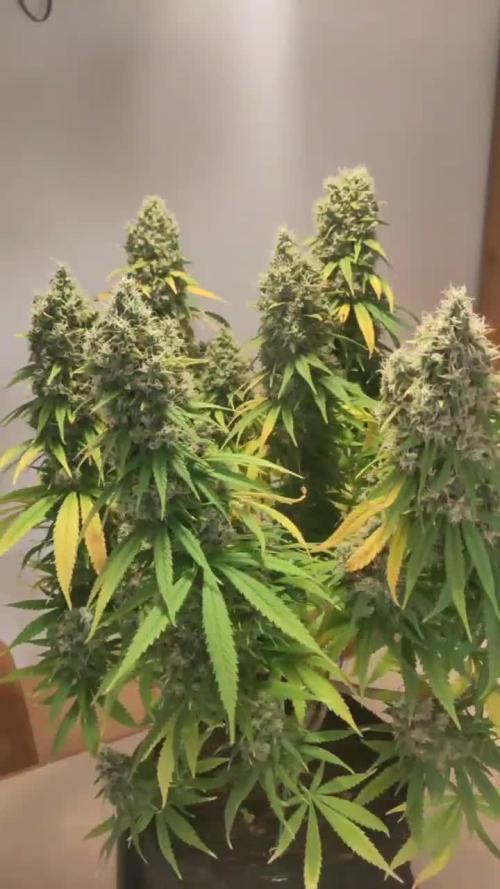
Began flush
Canna boost is only additive till harvest
Punch Berry will be chopped within week
Tagalongz within next 2 weeks



Likes
19
Share

@TrickzGrowz
Follow
Servus Moin!
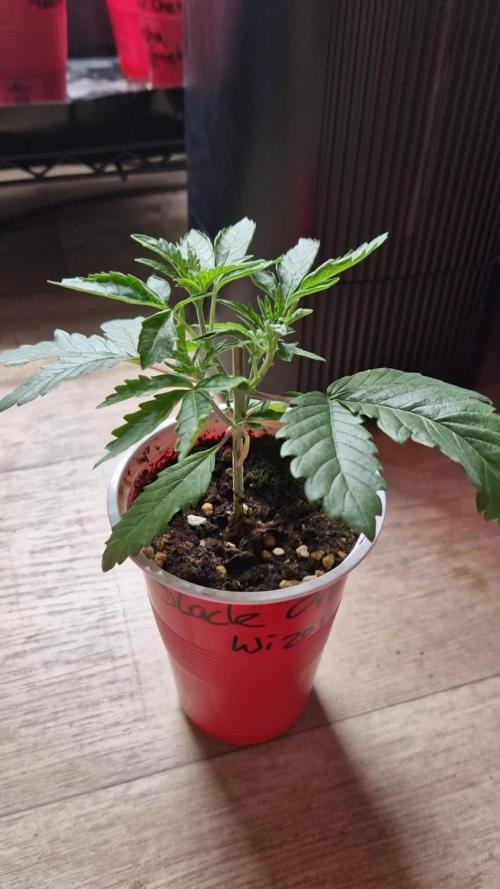
Die Black Orchard hat wohl ein wenig Hitzestress und sie war dadurch zu lange nass. Das hat ein wenig die Blätter missgebildet und eingerollt. Mal schauen ob es wirklich nur der Stress war.
Likes
13
Share


@DaisyNabis
Follow
cada dia mas glotonas mis bellas, estoy aplicando riego casi día por medio, solo una vez a la semana las abono, el resto solo con agua. hice algunos amarres a los tutores ya que están en pleno crecimiento

Likes
10
Share

@Susquihanna
Follow
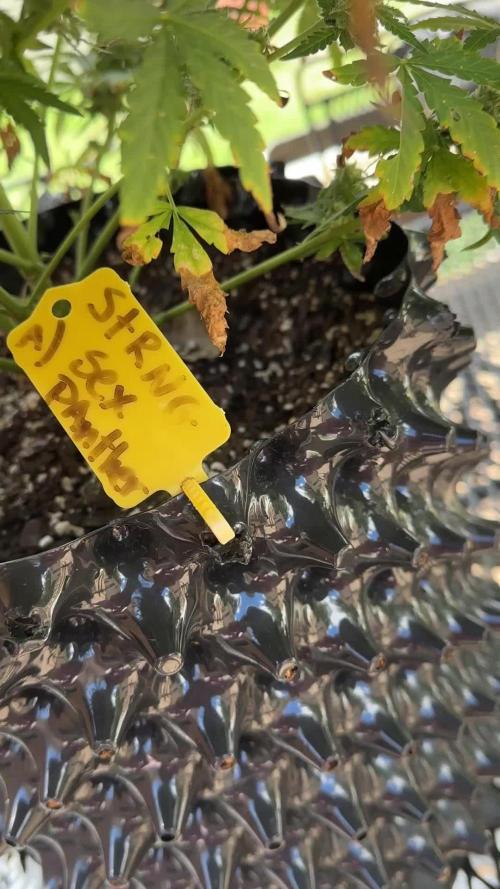
I bought Sexy Moma out of the grow tent to get some good pictures for you. I am in the 5th week of flowering, and STRNG seeds says it needs 8 to 9 weeks to flower.
It's still a little too hot in my grow tent so I have been opening it up and letting cool air inside. I am not sure how to get my temperature down using the lights?? As usual, I included the temperature in this area because it plays a part in how hot my grow tent gets in my garage.
As usual, I clipped off a bud so I could get some close up pics of her. I smelled the bud and it smells great; but I just can’t pinpoint how to describe her just yet. What I can say for sure is she smells and so does my tent! a look at the close up pictures I took with my Max-see magnifier!! Her buds continue to get bigger and she definitely sticky!! A couple of more weeks and I will be flushing her!!
Stay tuned to next week to see how Sex Panther Auto is doing!
As always, Be Happy!! Comments and Likes are appreciated!!
Susquihanna
Likes
167
Share


@PapaNugs
Follow
Here we are. At the end of week 7. This cultivar is scheduled for 45 days but at day 49 I can confidently say she is not ready yet. Thinking another week and she should be ready. All is looking good and these girls buds are super fat! Especially for Humboldt. The smell isn't as intense as I'd like but still there. A sweet smell.
Still defoliating as I can and as needed. Getting watered daily or every other day. Here's to the home stretch! 🍻
Lights at 100% power.
Here are the lights details:
Medic Grow Mini Sun-2 150W LED
Model: MN150-022
Spectrum mode: V1
Efficacy: 2.8 umol/J
Thanks for stopping by!
You can find the light on Grow Diaries:
https://growdiaries.com/grow-lights/medic-grow/mini-sun-2-150-watts
You can find the light on Medic Grow's website:
https://medicgrow.com/

Likes
5
Share

@HoneyBlunt42
Follow
I started the spring with the experimental "Black Mamba 42," and here are my impressions. The plant spent 108 days indoors. Roots appeared on day two, and the seedlings shed their seed shells on day four.
The plant stretches significantly in height; I managed to fit it into a 130 cm tall grow box by topping it and training the branches outward with plastic clips. At day 108, the buds were still a bit small; they could have easily gone another 2–4 weeks.
The scent was moderately intense—nothing overpowering. Visually, the buds turned out to have medium density. The maximum wet weight for the two plants combined was 300g; I expect to harvest a solid 50g dry.
We’ll know the exact figure in seven days—I don't like weighing wet material with the stems attached. As for issues: one plant suffered from acidification around day 15 (due to a faulty meter), which severely stunted its growth. Towards the end, the grow box was hit by spider mites. I also left it on an auto-watering system (using a 15L jug) for a week, and it dried out a bit. I had another plant from an international seed bank in the same group for comparison, and it handled the identical conditions perfectly.
This strain isn't the easiest to grow and is a bit finicky. It requires a 2-meter-tall indoor grow space; in a one-meter space, without bending or training, the tops will get burned by the light around day 30–40 from seed. Bottom line: I didn't love the strain, though I’ll give it another shot later with the remaining seed. I plan to try seeds from two other banks.
I recommend this strain to anyone with a 2-meter grow box who enjoys long grow cycles and cultivating massive Sativa monsters—and to anyone wanting to support our local breeders.
Thanks for the experience! See you in future reports.
Likes
247
Share


@PremiumBudsEU
Follow
Hello dear growers and growmies 👊💚
my lemonade haze girls turned into little green bushy trees :)
the scent that comes from my closet smells like a candy store 🍬🍭 just delicious 🤤
They get 0.75 l of water 3 times a week
and a light dose of fertilizer.
The microbe soil life seems to be active, they get a small replenishment of microbes and micro nutrients every 2 weeks.
i hope to see first signs of blooms by the end of this week , gotta do a heavy defoliation this or next weekend 🤙😃
thanks to everyone who stopped by I appreciate it very much , stay healthy my friends 🍻💚

Likes
1
Share


@Jakor420
Follow
un dia de 4ml por litro de BLOOM A+B - Y otro dia BUD CANDY 2ml x litro
un increible crecimiento
muchas ansias de que llegue su momento de cortar


Likes
12
Share


@SwaggyP
Follow
Hallo, ich möchte mir aus ästhetischen Gründen kein Zelt holen und betrachte die Pflanze als „Zimmerpflanze“. Der Geruch stört mich und meinen Mitbewohner auch nicht von daher.
Das ist jetzt mein zweiter Grow mit der kleinen Sansi Growlight, welche ich vorher einfach für Zimmerpflanzen genutzt hatte.
Habe den Samen 48 Stunden in nassem Zewa keimen lassen und dann direkt ins Substrat eingetopft.