Likes
Comments
Share
@Colonel
Follow
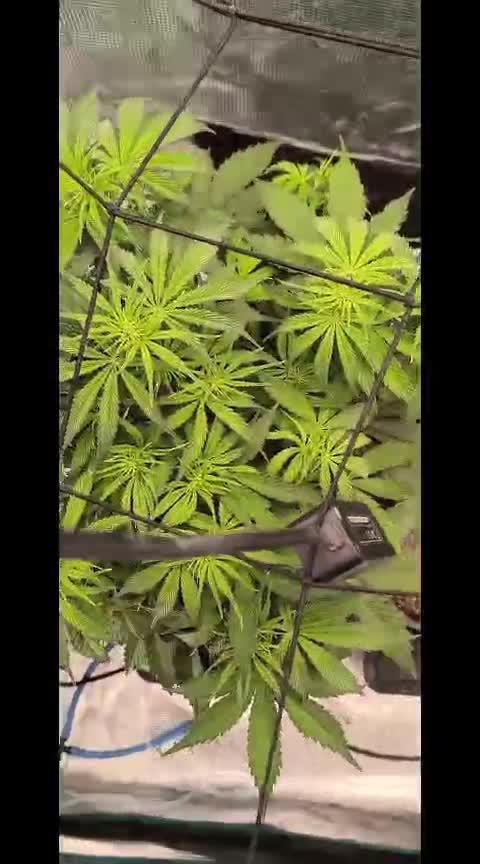
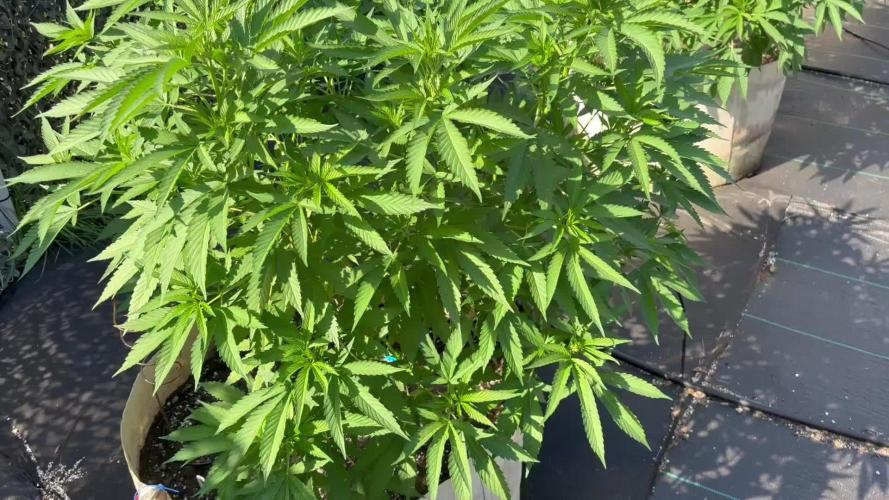
Well, looks like autumn is here, so I’m starting the flush. The next waterings will be plain water at 260 ppm — pretty much the lowest I can get without extra cost. Upd: I was trying to understand the plant through the readings, but due to my lack of experience, I still kept bouncing back and forth with the ppm. That’s definitely not ideal. Next time I’ll try to rely on both experience and the meters.
Likes
10
Share
Not a great week lost one due to being away for 4 days total dehydration think missed her when watering before I left 3 looked bad but saved 2 of the 3 lesson learned ☹️
Likes
Comments
Share
@Nillenium
Follow
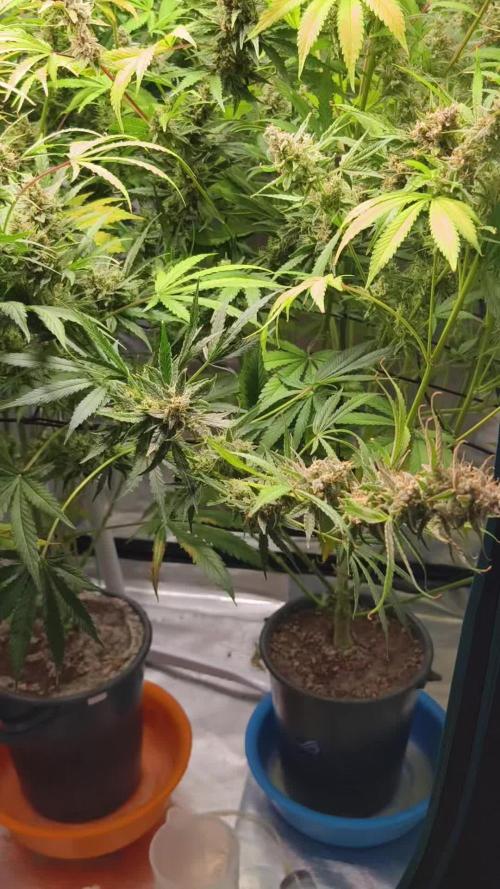
Bis auf das die Lampe zu dicht an den beiden längsten Blüten ist, gibt es nichts besonderes. Leider ist der Platz nach oben hin ausgereizt.
Likes
1
Share
@Foxbud420
Follow
All going fine. Terps smell getting more intense. Dated the booster today. Ph now on 6.5. Light on 70% Happy Xmas and a lot of green trees 🎅🏼💚
Likes
13
Share
Was actually very fun growing it. Gave me some problems since it's my first grow but all in all was pretty easy. I harvested it 2 weeks ago and today I have put them in the jars for curing. Already smoked pretty much a lot of it ahhahaha I must say I love everything from taste to smell and looks.. smooth smoke and even the dry weight was 102 and I had already smoked a week worth of bud from it before taking a reading.. didn't even care how much... Always told myself... I'm just gonna taste it ahhahahaha 😭😭👿🤤🤤 so I guess the outcome would be like about 120g maybe?.. soo happy that my girl made it to the end and soo happy with results. Thanks so much to Royal Queen Seeds !!! It was a pleasure and Green gelato is now officially the best thing I've smoked soo far. Makes me sleepy and very relaxed!! Love it. After a crappy tiring days it's was I need. And a big thanks go to Mars Hydro!(amazing quality grow tent. Love it)and also all who wished me luck and helped me out on this one. I've learned a lot. 🌲🌲🌲💪💪👿👿👿👿 Cya in my next grows.
Processing
Likes
2
Share
Likes
42
Share
Thank you. Gave her a cocktail to help with stress. Added 1st net for lateral support, not so much now, but for later. Blue light is absorbed by photoreceptor proteins called phototropins, which trigger a hormonal response that causes cells on the shaded side to elongate, making the plant bend toward the light. Try and fill this side a little. She is quite big already, just needs to find her stride again after the undue torture. 5 apex stems with 20-30 mini cola, let them develop a little, with the apical dominance shattered, all those 20-30 will all compete with each other as soon as that stretch is initiated. Key to a good stretch is making sure the plant is cycling efficiently, with large ATP conversions occurring lights out. For now, I'm keeping light intensity high. A plant will slow its vertical growth in very high light intensities, leading to a more compact form with thicker stems and leaves. This response is a protective mechanism against light stress, which can damage the photosynthetic apparatus and lead to symptoms like leaf scorching, yellowing, and brittleness. Instead of growing taller, the plant invests its energy into creating a more robust, stress-tolerant structure. Providing plants with necessary antioxidants helps protect the photosynthetic apparatus by scavenging reactive oxygen species (ROS) that cause damage from excess light. UV light exposure can impact the xanthophyll cycle by either enhancing its photoprotective role or causing damage, depending on the intensity and type of UV radiation. UV exposure can trigger the synthesis of more xanthophyll cycle pigments to increase the plant's capacity to dissipate excess energy, but it can also cause direct damage, particularly to Photosystem II, and may lead to a decrease in the de-epoxidation state (DEPS ratio) which indicates a reduced capacity to dissipate excess energy. Plants can respond to UV stress by increasing the synthesis of xanthophyll cycle pigments, such as violaxanthin and zeaxanthin, to improve their photoprotective capacity. UV-induced changes in xanthophyll cycle pigments can be linked to a plant's overall tolerance to high radiation stress. The xanthophyll cycle helps protect against photoinhibition, which is especially important when the plant is exposed to high levels of both UV and visible light. High doses of UV radiation can directly damage photosynthetic components, including the proteins, lipids, and pigments in the thylakoid membranes. Exposure to UV radiation can have a mixed effect on the de-epoxidation state (DEPS ratio) of the xanthophyll cycle pigments. In some cases, UV can inhibit the conversion of violaxanthin to zeaxanthin, resulting in a lower DEPS ratio and a reduced capacity for energy dissipation. However, the total pool of xanthophyll cycle pigments may increase, and this enhanced pool size could provide a greater potential for photoprotection despite a lower DEPS ratio. The xanthophyll cycle works alongside other mechanisms, such as the accumulation of flavonoids (UV screens), to protect the plant from UV-induced damage. Blue light repairs 100% UV-induced damage in plants through a process called photoreactivation, which uses a light-dependent enzyme called photolyase. This enzyme uses energy from blue and UV-A light to directly reverse the damaging pyrimidine dimers in the DNA caused by UV-B radiation, a key mechanism for maintaining the plant's genetic integrity. After carbon, light, water, temperature, and nutrients, the limiting factor of a plant's growth is often its own internal factors or the amount of a key ingredient. Chlorophyll concentration is one such factor, as the amount of this pigment limits how much light can be captured for photosynthesis. Other factors include chloroplast number, respiration rate, and the concentration of carbon dioxide in the atmosphere, as plants are often in a CO2-deficient condition. 60x60x18=64800seconds x 700 = 45,360,000moles. 45DLI Exposure to 165 µW/cm² of ultraviolet-B (UV-B) light for 3600 seconds = 1 hour, a extremely high, acute dose triggering stress responses and protective mechanisms. . The plant's photoreceptor protein, UVR8, senses the UV-B radiation. This triggers a signaling cascade that activates specific genes to protect the plant from damage. In response to the UV-B signal, the plant ramps up the biosynthesis of protective compounds like flavonoids, phenolic acids, and anthocyanins. These compounds absorb UV radiation and accumulate in the epidermal layers of leaves to shield inner photosynthetic tissues. The plant may increase leaf thickness or deposit more cuticular wax, creating a physical barrier to the radiation. The plant will produce more enzymatic and non-enzymatic antioxidants to neutralize the reactive oxygen species (ROS) produced by the UV-B radiation. The plant activates enzymes, including photolyases, to repair DNA damage caused by the UV-B. These repair mechanisms are critical for preventing permanent genetic mutations. While protective measures are activated, a high dose delivered over a short period can cause stress that overwhelms the plant's defenses. Photosynthesis is highly sensitive to UV-B. A high dose can inactivate Photosystem II (PSII), damage thylakoid membranes within the chloroplasts, and reduce chlorophyll content, which lowers the plant's overall photosynthetic capacity. Despite repair mechanisms, high UV-B doses can inflict persistent damage on the plant's DNA. One study found that acute, high-dose UV-B had a greater effect on genome stability than chronic, low-dose exposure. The overproduction of reactive oxygen species can cause oxidative stress, leading to the oxidation of lipids and proteins and disrupting cellular function.
Likes
4
Share
eighth week veg, the ladies were fine i defoleated them again before i sent them into flower
Likes
1
Share
Lemon cherry cookies auto first 2 in video and last one is frozen face auto they iall in 2nd week of flushing and they thickening up and has pretty much stoped stretching and just been focusing her energy on thrichome production and filling out the buds
Likes
12
Share
@Colepus
Follow
I tried wettrim and drytrim to understand what i prefer. The wettrim dried inside dryferm bags inside a drybox with ventilation that i build myself. The drytrim dried inside the tent and got a trim after 9 days. Havent tried the buds yet since they have to cure first but they smell very lemony so far. Curing happens in grovebags. Half of the bags also got a boveda to see the difference if its worth it for the future or not.
Likes
6
Share
This plant is finally over. This was my very first plant in general and I went with DWC. The learning and experience I have got has been bountiful. This was not as easy as I figured to be but I have a huge appreciation now. --------Mistakes------------ I topped the plant twice super stunted snapped a main branch. Put it back together with tape it survived Took me 1 full month to figure out the nutrient ratio to provide got discouraged from the mistakes and neglected the plant for 3 weeks Had light burn while trying to figure out what light it can handle ---------Overall Results------- With this being my first run in a DWC I am happy with the results. I got 50grams overall of very sticky covered with trichomes larf that has a beautiful fruit loops aroma to her She smokes really good for what it is. She has small buds that aren't very dense and burns pretty fast because how leafy Taste great, gives a great high, smooth smoke through a Volcano With the grow and the overall way the plant has came out with this harvest I give myself a grade A lot of room to improve but with it being my first grow and the amount I learned overall I give myself a GRADE: C+ Was a great experience and I can't wait for what the future holds with my homegrown experience!! Grow on peeps Grow on.
Likes
10
Share
LSD Zamnesia Tripping 🙂 | Fresh Frozen, Ice Water & Temple Balls — Week 16 From Seed First of all… Yes 😄 We are once again dividing the harvest reports into multiple chapters, and once again we apologize for that. But honestly, there was simply no way to fit: * harvest, * drying, * trimming, * curing, * smoke review, * macro photography, * fresh frozen work, * washing, * extraction, * and hash making… …into a single GrowDiaries update without rushing through important parts of the process. And this part? This part deserved its own spotlight completely. Because this week was not about flower anymore. This week was about resin. Living resin. Fresh frozen material. Ice water extraction. Patience. Cold temperatures. Sticky hands. And slowly transforming trichomes into beautiful hash. For everyone joining only now, quick recap: These LSD girls were grown under 12/12 from seed from the very beginning. Minimal training, mostly natural structure, gentle leaf manipulation, and environmental balance instead of aggressive intervention. Part of the harvest was dried traditionally and already covered in the previous report. But another part… …never got dried at all. Straight during harvest, selected flowers were removed fresh from the plants and immediately vacuum sealed before going directly into the freezer. No drying. No curing. No waiting. Fresh frozen. And that changes everything. The goal here is preservation. When flowers are frozen immediately after harvest, a large portion of the volatile compounds: * terpenes, * flavonoids, * aromatic compounds, * and delicate resin characteristics… …can remain much closer to their living state compared to traditionally dried material. This is why fresh frozen extraction became so respected in modern hash making. It captures a version of the plant that only exists for a very short moment in time. Alive. Wet. Fresh. Fully expressed. And honestly? Opening those frozen bags weeks later felt like reopening harvest day itself 😄 The flowers still looked incredibly resinous even after sitting frozen for weeks waiting for wash day. Now let’s talk process. For the wash itself, we used the Bubbleator machine courtesy of Zamnesia , and honestly huge thanks to them for providing it. They knew I wanted to start exploring ice water extraction properly, and they were kind enough to support the journey. The setup itself is actually beautifully simple. First: ice. Lots of ice 😄 The machine was filled partially with ice first before adding the fresh frozen material inside the working bag. The flowers themselves were placed inside a closed 220-micron washing bag. This is important because the bag keeps the plant material contained while still allowing the trichome heads to separate during agitation. After placing the material inside: * more ice on top, * cold water added, * everything submerged, * and then… …we waited. Around 30 minutes or so. And this step is actually extremely important. A lot of people think washing starts when the machine turns on. But honestly? The wash starts before that. This resting phase allows the frozen material to: * slowly rehydrate, * absorb water again, * become fully saturated, * and most importantly… * become extremely cold throughout the entire plant material. Why does this matter? Because trichomes become brittle at very cold temperatures. The colder everything gets: * the easier the resin heads separate, * the cleaner the release becomes, * and the less physical force is required. That is also why ice exists under and above the material: * lower temperatures evenly, * protect the resin, * and maintain the cold environment throughout the wash. Once the water temperature approached near freezing… …the machine came alive 😄 And honestly? Watching the water slowly transform during the wash is always magical. At first: just ice, water, and flowers. Then slowly: foam, cloudiness, resin separation, and finally that beautiful milky golden water hash makers love seeing appear. Meanwhile on the side, we prepared the filter bags. We did not use every single micron separation individually because honestly sometimes over-separating becomes unnecessary depending on goals and material quality. Instead, we focused on collecting the grades we actually wanted to work with and enjoy. And then came one of the most satisfying parts of the entire process: Collection 😄 Slowly lifting the bags. Watching the resin gather. Carefully scraping. Separating grades. Observing texture and color differences. Beautiful creamy resin everywhere. Some lighter. Some slightly darker. Some sandy. Some greasy. Every layer carrying slightly different characteristics. After collection, the resin was carefully freeze-dried. And this part also requires patience. First freeze drying. Then breaking it apart. Then more drying. Then more waiting 😄 Depending on environment and conditions, full drying can take several days because trapped moisture inside hash is dangerous long term. Rushing this step can ruin months of work later. In this case, the process stretched closer to about a week before everything felt properly stable and ready to work. And honestly… This is where the magic really started. Once dry enough, we allowed the hash to rest briefly before beginning the hand-working process. No extreme heat. No giant pressure. No fancy machinery. Just: room temperature, body warmth, gentle pressure, folding, rolling, stretching, and patience. The room itself stayed around 15°C, which turned out to be perfect for working the resin slowly without overheating it. And this step matters far more than many people realize. When hand-working hash properly: * oils redistribute, * compounds begin merging, * terpenes spread through the material, * oxidation starts slowly, * texture evolves, * and curing begins transforming the resin itself over time. You are not simply “rolling hash.” You are starting a living curing process. And slowly… The texture changed completely. From sandy loose resin… to creamy material… to sticky dough… to smooth beautiful temple balls. Honestly, seeing that transformation happen in your hands never gets old 😄 Final result? Three temple balls total: * two smaller ones from smaller micron collections, * and one large main temple ball that became the true star of the session. Final weight: 46.5 grams.( big one ) And honestly? I was extremely happy with that result. Especially considering the quality, texture, color, and how beautifully this LSD washed overall. Once formed, the temple balls were wrapped carefully in parchment paper before being vacuum sealed for long-term curing. And now? They rest. Months. Maybe longer. Waiting. Because the goal here is not “fresh hash.” The goal is evolution. Traditional temple ball style curing allows: * oils to redistribute, * compounds to merge, * texture to transform, * aroma to deepen, * and the entire resin profile to mature over time. Almost like aging wine. Or curing cheese. Or fermenting traditional products slowly and intentionally. This is medicine with patience built into the process. And honestly… That part alone deserves respect. We also included: * detailed process photos, * collection stages, * macro photography, * texture closeups, * curing progression, * and multiple stacked macro images showing the resin in insane detail. Some of these stacks reached: * 62 frames, * 87 frames, * 114 frames, * and even 152-frame focus stacks. Because honestly, hash under macro magnification becomes another universe completely. The textures stop looking real. Tiny resin mountains. Oil rivers. Micro-crystals. Glossy surfaces. Soft creamy structures. It almost starts looking geological instead of botanical 😄 Mr. Baggy of course supervised the entire operation like the professional resin inspector he clearly believes he is. And next week… The final chapter arrives. Smoke review. Curing review. Flower review. Hash review. Terpene evolution. Effects. Textures. Lessons learned. Mistakes made. And final thoughts after this entire LSD journey from seed to cured medicine. And finally… Thank you. To Zamnesia for the genetics and the Bubbleator. To Plagron. To F.O.G. To all the LEDs, gear, and equipment involved. To GrowDiaries. To the community. To the OG followers. To the new curious visitors. To the silent supporters. To the skeptics. To the lovers and even the haters 😄 To everyone spending time sharing this strange beautiful plant journey with us. Wishing everyone: cold water, sticky fingers, healthy plants, beautiful resin, and enough patience to let good hash become great hash 🌱
Likes
41
Share
@Cannaguy
Follow
Started to have problems with insects munching on the leaves, I applied trifecta and insecticidal soap simultaneously so they do not get used to one or the other and it has seemed to stop their destruction for now. Will continue to apply one a week as a preventative measure. Have not given the plants any nutrients up to this point since they have not shown any problems during growth
Likes
1
Share
I keep saying I’m just gonna let this one grow out just to see what happens but it’s getting so bushy. I’m really really tempted to defoliate. I’ll look more into it this week and if I decide, I’ll update the girl journal for the most part. I am definitely probably gonna do foliate at this point. I did also add bud candy to my nutrient list.
Likes
13
Share
Bewässerung: 1000 ml alle 2 Tage pH-Wert: 6,1 EC-Wert: 1,2 Temperatur: 22ºC Luftfeuchtigkeit 62% Schädlingsbekämpfung: PPFD: 500 µmol/m²/s DLI: 33 Düngemittel: Mineralischer Dünger 3.5-6-6 PK 13/14 Besonderheiten: Wurden direkt in die erde gepflanzt in einer Kokos-Quelltabletten. -Tag 51 Heute haben wir sie wieder gegossen und Dünger gegeben -Tag 53 Heute haben wir mit effektiven Mikroorganismen und mit Plagron Power Buds gegossen 😜 -Tag 55 Heute haben wir sie mit Wasser und Dünger gegossen, sie entwickelt so langsam ihre Blüten und sieht sehr gut bis jetzt aus 😍
Likes
9
Share
The next 5 weeks can't come fast enough.
Likes
16
Share
Likes
12
Share
@Bassmop
Follow
2 der Ladys haben etwas Probleme, habe jetzt Calmag hinzugefügt und benutze Leitungswasser anstatt Saskia still. Die anderen sehen alle soweit ok aus. Fasziniert bin ich ja von der Lsd-25, die schon eine schöne Cola entwickelt hat.