


Likes
59
Share


@DogDoctorOfficial
Follow
she performed like a champion and delivered the same way, the fruit quality is out of this world, now needs rest for full potential but i can already tell she is a winner to me!!!
As always thank you all for stoping by, for checking my journey , for the love support and for it all, i am blessed and humble with you all.
Just a reminder , all i grow is medicine for myself, for me and for my best friend with is me nothing to sell, so don’t even ask.
All info and full product details can be find in can find @
https://ganjafarmer.com
https://aptus-holland.com/
#aptus #aptusplanttech #aptusgang #aptusfamily #aptustrueplantscience #inbalancewithnature #trueplantscience #Ganjafarmer #growerslove
With true love comes happiness 💚🙏 Always believe in your self and always do things expecting
nothing and with an open heart , be a giver and the universe will give back to you in ways you could not even imagine so 💚💚💚
More info and updates @
https://growdiaries.com/grower/dogdoctor
https://instagram.com/dogdoctorofficial
https://youtube.com/channel/UCR7ta4DKLFMg2xxTMr2cpIg
💚💚💚Growers love to you all 💚💚

Likes
21
Share


@Budhunter
Follow
P. Punch is probably the one is going to be harvest first and it’s frosty. Gorilla punch is a really nice looking plant. Mimosa cake is the largest but the buds are thin. Hopefully they get fat 🙏🏼💥
Happy grow folks

Likes
6
Share


@DogDoctorOfficial
Follow
# 💙 Project Blue Tent – Week 12 💙
## Blue Waffle F1 – Pheno B
### 🌸 466 Photos. 600 Photos. One Ridiculously Frosty Girl! ❄️😂
Hello everyone, and welcome back to another chapter inside Project Blue Tent! 💙🌱
And my friends...
I REALLY DON'T KNOW WHAT TO SAY ANYMORE! 😂❄️
Well, actually, I do. I have plenty to say, because this beautiful girl deserves her own report!
Last week, we talked about the incredible uniformity we're seeing throughout this tent. Four plants, two different cultivars, the same environment, the same irrigation system, and the same nutritional program.
And this week?
Her sister is looking ridiculously beautiful too!
But today, we're giving the spotlight to Blue Waffle F1 – Pheno B, because even when plants share the same room and the same conditions, each one deserves to have her own story documented.
And honestly, what a story she's giving us.
The flowers are stacking. The buds are developing. The frost is becoming increasingly impressive, and the whole plant is showing us why I love documenting every stage of a grow.
We've made a few small adjustments to the environment, increased the power of the overhead LEDs, and left the nutrient recipe unchanged.
No unnecessary interventions.
Just a beautiful ecosystem, some seriously frosty flowers, and a grower who's spending far too much time staring at them.
😂💙🌸
Let's get into it!
## 🌿 PHENO B – SAME ROOM, SAME ENVIRONMENT, SAME BEAUTIFUL STORY
If you've been following Project Blue Tent, you'll already know how much work went into getting these girls to this point.
The long vegetative period gave us the structure. The topping and training helped organize the growth. The SCROG supported the canopy, and the second layer of support helped us manage the flowering structure after the stretch.
We also improved the available space inside the tent by moving the extraction equipment outside and raising the main lights.
All those decisions helped us establish the environment we're working with today.
And now?
We're watching the flowers develop within that structure.
Blue Waffle F1 Pheno B is approximately 145 cm tall, and the overall framework is already established. We're not looking to reshape the plant every week or make changes just to have something to report.
At this stage, I'm much more interested in observing the flowers, following their development, and seeing how the plant responds to the environment.
And she's giving us plenty to look at!
## 🌸 THE FLOWERS ARE STACKING BEAUTIFULLY
One of the things that really catches my attention this week is the flower development.
Look at those close-ups!
The flowering sites are becoming increasingly defined, the buds are developing along the branches, and the amount of visible resin in the photographs is absolutely beautiful.
The white pistils are still prominent, and the flowers are continuing to develop.
This is such an interesting stage because the plant is gradually shifting our attention away from the structure and toward the flowers themselves.
Earlier in the project, we were talking about stretch, canopy management, training, defoliation, and support.
All of that work established the framework.
Now we're looking at what that framework is carrying.
And Pheno B is certainly giving us a reason to keep the camera ready.
She's stacking. She's budding. She's developing.
And she's looking ridiculously frosty!
😂❄️💙
## ❄️ THE FROST IS REAL, MY FRIENDS!
I know I keep saying it.
And I know I'm probably going to keep saying it next week too.
But LOOK AT HER!
😂😂😂
The close-up photographs show an incredible amount of detail across the developing flowers and surrounding sugar leaves.
And that's precisely why I enjoy taking the time to photograph these plants properly.
From a distance, you can appreciate the overall structure and the way the flowering sites are distributed.
Get closer, though, and there's an entirely different world waiting to be discovered.
The trichomes. The pistils. The tiny details across the flowers.
It's beautiful to see, and it's even more satisfying when we can document those details and compare them with the previous weeks.
And the best part?
Her sisters are looking just as impressive.
This isn't a story about one plant doing all the work while the others watch.
The entire tent is giving us something to appreciate.
But today, Pheno B gets the spotlight.
And she's absolutely shining! 💙🌸❄️
## 📸 PHOTO STACKING – 466 PHOTOS AND 600 PHOTOS COMBINED!
Now, let's talk about something a little different in this week's report.
The photography!
For this girl, we managed to create two separate photo stacks.
One combines 466 photographs, while the other combines 600 photographs.
And yes, my friends, that's a lot of photographs!
😂📸
We weren't able to take this plant out of the tent and move her into the studio setup, so we had to work with the conditions available to us inside the grow room.
It's not the same as stacking photographs in the studio, where we have much more control over the environment and the shooting conditions.
But we made it work!
And honestly, I'm happy with the results.
The two stacks give us a closer look at the flowers and allow us to appreciate details that can be difficult to capture in a single photograph.
More importantly, they give everyone following this diary a better view of what's happening throughout the flowering structure, including the lower portions of the buds.
Because the top of the plant isn't the whole story.
There's plenty happening further down, too, and I want to document as much of that development as possible.
These photographs are another way of bringing the community closer to the plants.
We can't all stand inside the tent together, so let's bring the tent to the community!
😂💙
And if you're interested in photography, this is also a nice opportunity to see what can be achieved through stacking hundreds of images, even when we're not working in a dedicated studio.
Are the results identical to studio stacking? No.
Am I happy with what we managed to achieve under the circumstances?
Absolutely!
Two stacks. Hundreds of photographs. One very frosty Pheno B.
I'll take that!
📸❄️🌸
## 🔬 WHY PHOTOGRAPH THE LOWER FLOWERS?
This is something I particularly wanted to highlight this week.
When we photograph a flowering plant, it's very easy to concentrate on the most accessible tops.
They're usually easier to reach, easier to frame, and often the first places our eyes are drawn to.
But the plant is a three-dimensional structure.
There are flowers at different heights, branches extending in different directions, and flowering sites that don't all sit in the same position relative to the main lights.
That's why I wanted to make these stacks available.
They help us look more closely at the flowers beyond the most obvious parts of the canopy.
And that matters for documentation.
We're trying to record the plant as a whole, not simply collect a few attractive photographs of the uppermost flowers.
The more detail we can preserve, the better we can appreciate the development we're documenting.
The stacks aren't a substitute for observing the whole plant, of course, but they're a fantastic addition to the diary.
And personally, I love having the opportunity to show everyone a little more of what's happening inside this beautiful ecosystem.
## 💡 MORE LIGHT FROM ABOVE – A SMALL BUT INTERESTING CHANGE
This week, we increased the power of the overhead LEDs.
We're now running the main lighting at the highest level we've decided to use in this 1 × 1 metre tent.
Notice the wording!
We're not necessarily running the equipment at its absolute maximum output. We're using the maximum level we've currently planned for this particular setup.
I honestly don't think we need to push everything to 100% just because we can.
The goal is to give the plants an appropriate amount of light while maintaining a balanced environment.
Light intensity is an important factor in plant development and flower production, but more light doesn't automatically mean more weight.
The response depends on how much light actually reaches the canopy, how the plants tolerate it, and whether the surrounding conditions remain suitable.
So we're increasing the available light without treating maximum output as the objective in itself.
And now we observe.
How will the flowers continue developing?
How will the plant respond to the additional light?
How will the environmental adjustments work alongside the lighting?
Those are the questions we're interested in answering as the project progresses.
We're not making promises about the outcome.
We're documenting the experiment.
And that's what makes this interesting!
💡🌿
## 🌡️ SLIGHTLY LOWER TEMPERATURES AND HUMIDITY
Alongside the lighting adjustment, we've also reduced the temperature by approximately one degree and lowered the relative humidity slightly.
We're making small adjustments rather than changing the entire environment.
The structure is established, the equipment is working, and we're happy with the overall direction of the grow.
So there is no reason to introduce unnecessary changes everywhere at once.
We want to maintain a comfortable environment while observing the plants as flowering progresses.
The increase in lighting power makes it particularly important to keep paying attention to the relationship between light intensity, temperature, humidity, and the plants' overall condition.
It's all connected.
And this is where I think a well-organized ecosystem really makes a difference.
You can adjust one part of the system while keeping the rest as consistent as possible.
That gives you a much clearer picture of what you're observing.
The temperature has come down a little. The humidity has come down a little. The lights have gone up a little.
And the nutrition?
Exactly where it was.
No need to change everything just because we've adjusted a few settings.
## 🌱 NUTRITION – KEEPING THE RECIPE CONSISTENT
The nutrient recipe remains unchanged this week.
We're continuing with the PLAGRON Hydro line, and we're keeping the same mixture in the reservoir.
Our current recorded recipe is:
- PLAGRON Hydro A — 2.2 ml/L
- PLAGRON Hydro B — 2.2 ml/L
- PLAGRON Power Buds — 1 ml/L
- PLAGRON pH Plus — 0.03 ml/L, recorded quantity
- PLAGRON pH Minus — 0.03 ml/L, recorded quantity
Hydro Roots is not part of the current recipe.
We're keeping the nutrition consistent while making the environmental adjustments, which means we're not introducing another variable into the picture.
The current recorded pH is 6.01, and the last recorded EC is 2.24 mS/cm.
Those readings give us a reference point, but we shouldn't automatically assume they're unchanged without taking fresh measurements.
For now, the important point is that the recipe itself remains the same.
We're observing the plants, maintaining the system, and recording what happens.
Consistency is part of the experiment too!
## 💧 IRRIGATION AND DRAINAGE – STILL PART OF THE BIG PICTURE
The automatic irrigation and drainage system continues to play an important role in this setup.
All four plants share the same reservoir, and the system allows us to maintain a consistent approach across the tent.
That's particularly useful for this project because we're documenting the individual plants while keeping the shared inputs as consistent as possible.
The irrigation system doesn't need to be the star of every report.
When everything is working as expected, that's already a positive result.
Our job is to keep an eye on the system, monitor the plants, and make adjustments when there's a reason to do so.
And that's the philosophy we're following this week.
Keep things running smoothly, avoid unnecessary changes, and let the plants continue developing.
💧🌿
## 🕸️ THE STRUCTURE IS READY – NOW THE FLOWERS TAKE CENTRE STAGE
Remember how much work went into creating this structure?
The topping and training.
The original SCROG.
The management of the flowering stretch.
The defoliation.
The second SCROG for additional support.
The changes to the extraction system and the available vertical space.
All those steps helped us reach the stage we're at now.
The plant has an established framework, and the support system remains in place.
We're not trying to redesign her this week.
Instead, we're observing how the flowers develop throughout the existing structure.
And this is one of the most satisfying parts of a long grow.
You make decisions weeks earlier, sometimes without knowing exactly how everything will look when the plant reaches flowering.
Then time passes.
The plant develops.
And eventually, you can stand back and appreciate the result of all that work.
That's what I'm enjoying right now.
The structure has done its job.
Now the flowers are telling their story.
## 💡 TWO LUMIFLORA FIXTURES – THE LOWER CANOPY MATTERS TOO
Our two LumiFlora 150W full-spectrum under-canopy fixtures remain part of the setup.
The main LEDs provide the primary lighting from above, while the LumiFlora fixtures supplement the lower portions of the canopy.
This is an interesting experiment because the plants have substantial vertical structure, and the light reaching different parts of the plant naturally varies with position.
We're interested in observing how the lower flowering sites develop as the plants progress through flowering.
We're not assuming that supplemental lighting will automatically produce a particular result.
We're watching, documenting, and learning.
And this week's photo stacks complement that experiment beautifully.
They allow us to inspect the flowers more closely and give the community a better view of the details we're observing.
The lights are one part of the experiment.
The photographs are another part of the documentation.
Together, they help us tell a more complete story of what's happening inside Project Blue Tent.
## F1 UNIFORMITY – THESE SISTERS ARE INCREDIBLE
And now we come back to something that continues to amaze me.
The similarity between these plants!
We have four individual plants sharing the same tent, with two different cultivars represented.
Blue Waffle F1 and Pickle Lemon Haze F1.
They're sharing the environment, irrigation, reservoir, and general cultivation approach.
And when I look across the room, the similarities in their development are genuinely impressive.
Similar overall structure.
Similar flowering progression.
And now, increasingly impressive flowers across the tent.
Of course, we're still keeping individual diaries because each plant deserves to be documented separately.
Even when two plants look remarkably similar, we shouldn't assume they'll remain identical throughout the entire flowering cycle.
The subtle differences are part of what makes these comparisons interesting.
But right now?
I'm extremely happy with what we're seeing.
And I have to say, Blue Waffle F1 Pheno B is absolutely holding her own.
Her sister looks incredible too, and so do the other girls.
Four plants. Two cultivars. One beautiful ecosystem.
What a pleasure it is to document this!
💙🌸
## 🌿 SOMETIMES THE BEST DECISION IS TO LEAVE THINGS ALONE
One of the biggest lessons from this stage of the project is that not every week requires a major intervention.
There was a time when we were constantly managing the structure, training branches, opening the canopy, and making room for the stretch.
Now, the main structure is established.
The support is in place.
The irrigation is running.
The nutrition remains consistent.
And the flowers are developing.
So we're making a few deliberate adjustments to the environment, but otherwise, we're allowing the plant to do what she needs to do.
There's always a temptation to change something simply because another week has passed.
But that isn't a good reason by itself.
If the system is working, sometimes consistency is the most valuable thing we can provide.
We observe.
We record.
We learn.
And we intervene when there's a genuine reason.
That's how I want to approach the rest of this journey.
## 🌸 CURRENT GROW CONDITIONS
- Cultivar: Blue Waffle F1
- Phenotype: Pheno B
- Flowering: Week 12
- Height: Approximately 145 cm
- Light schedule: 12/12
- Day temperature: 27°C, last recorded
- Night temperature: 27°C, last recorded
- Relative humidity: 59%, last recorded
- pH: 6.01, last recorded
- EC: 2.24 mS/cm, last recorded
- Solution temperature: 25°C, last recorded
- Substrate temperature: 24°C, last recorded
- CO₂: Approximately 666 ppm, last recorded
- Pot size: 8 L
- Watering volume: Approximately 1.6 L per plant per 24 hours, recorded value
- Main lighting: Increased this week to the maximum planned level for this tent
- Under-canopy lighting: 2 × LumiFlora 150W full-spectrum fixtures
- Nutrient program: PLAGRON Hydro
- Nutrient recipe: Unchanged this week
The environmental readings above are the last recorded values shown in the diary. This week's temperature and humidity were reduced slightly, but the new readings have not yet been provided.
## 🔭 WHAT I'M WATCHING NEXT
At this stage, my attention is on the details.
I'm watching the flowers continue developing.
I'm watching the pistils and the way the buds are forming.
I'm watching the overall appearance of the plant and the visible resin across the flowers and sugar leaves.
I'm interested in how the plants respond to the increased overhead light intensity and the slightly cooler, less humid environment.
And I'm particularly interested in continuing to document the lower flowering sites.
The two photo stacks have already given us a fantastic opportunity to look more closely at Pheno B.
I want to keep building that photographic record as the plant progresses.
Because every week adds another piece to the story.
And we're not finished yet!
## 💙 FINAL THOUGHTS – SHE'S FROSTY, AND HER SISTERS ARE TOO!
My friends, if I had to describe this week in a few words, I'd say:
Same room. Same environment. Same beautiful cultivar sisters. And a whole lot of frost!
😂💙❄️
Blue Waffle F1 Pheno B is looking fantastic.
The flowers are stacking.
The buds are developing.
The frost is beautiful.
The structure is established.
The nutrient recipe remains unchanged.
We've slightly reduced the temperature and humidity, increased the overhead LED power, and continued observing the plants without making unnecessary changes.
And we also managed to create two photo stacks, combining 466 and 600 photographs, giving us a closer look at the flowers and the lower parts of the buds.
I'm genuinely happy with the results.
It's not the same as taking the plant into the studio, but it gives us another way to appreciate and document the incredible details we're seeing.
And honestly, I think that's what matters.
We're working with the conditions available to us, finding ways to improve our documentation, and sharing the results with everyone following the project.
I also have to say how much I'm enjoying this entire ecosystem.
Four plants. Two cultivars. Shared conditions. Individual diaries.
The similarities between these girls are fascinating, and the flowers are becoming more impressive every week.
But today, Pheno B gets her moment.
And she deserves it.
We've done the structural work.
We've established the system.
We've made a few small environmental adjustments.
Now we're watching these beautiful flowers develop.
Let's see what the next week brings!
More flowers. More photographs. More observations. And hopefully, even more reasons to stand in front of the tent and say...
"MAN, SHE'S FROSTY!"
😂💙🌸❄️
## 🙏 A HUGE THANK YOU
A huge thank you to Zamnesia for making Project Blue Tent possible and giving us the opportunity to document these beautiful Blue Waffle F1 and Pickle Lemon Haze F1 plants individually.
Thank you to PLAGRON for the Hydro nutrient line supporting this project.
A massive thank you to Mars Hydro for the irrigation and drainage system helping us maintain consistency throughout the tent.
Thank you to Zamnesia for the Phytonaut LED lighting, curved scissors, and clip fans that have become important parts of this ecosystem.
And a special thank you to LumiFlora for the 150W full-spectrum under-canopy fixtures that we're using to explore supplemental lighting beneath the canopy.
Thank you to GrowDiaries for providing the platform where we can document the entire journey, including the experiments, the photographs, the unexpected moments, and the lessons we learn along the way.
And, of course, thank you to everyone following Project Blue Tent!
Your support makes sharing these individual diaries even more enjoyable.
We're continuing to learn, observe, photograph, and appreciate every stage of the journey.
Four plants. Two cultivars. One beautiful ecosystem.
And four girls giving us plenty of reasons to smile.
Growers Love, happy growing, and take care everyone! 🌱💙🌸

Likes
8
Share
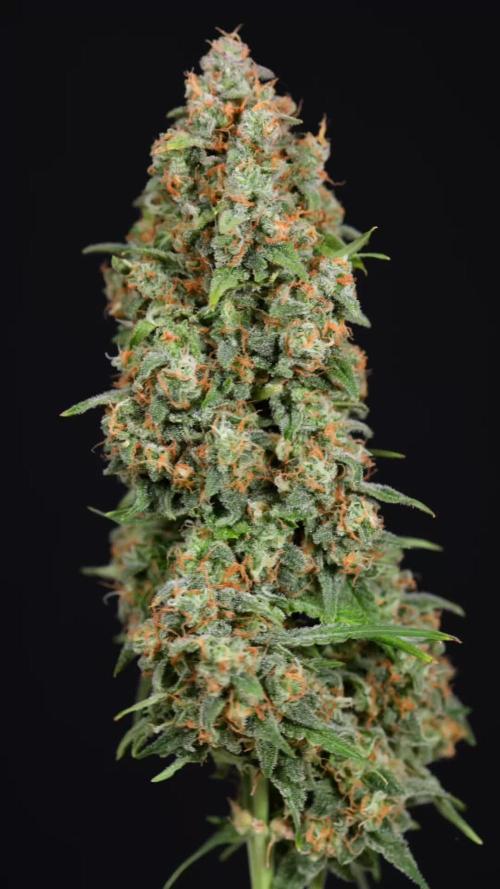

@Bread_n_Buds
Follow
Our Watermelon Candy Automatic #1 from Zamnesia Seeds is ready, and we're excited to show it to you.
This plant has always performed well, a true powerhouse of nature as it grows, especially as it swells with high-quality central and lateral flowers.
Ripeness - The resin content is excellent. The trichomes are mostly white and milky (about 60%), with some clear (20%), and some amber (20%). Some beautiful red-headed trichomes are quite common. The pistils are almost all red (about 80%). Remember, the plant should be harvested according to your taste. Since this is a 50/50 plant, I want to maintain the sativa/day-use characteristics and not turn it into an indica bomb by over-ripening the amber colors. (Amber is a sign of THC oxidation.)
The overall shape of the plant is truly splendid.
Techniques chosen: As mentioned, we only performed pruning, lollipopping, and defoliation here. Basically, we simply cleaned the bottom parts, which, as mentioned, helps us achieve better results at the top.
We're 100% organic and 1000% Plagron, as always.
The soil we chose is the recently launched Plagron Bio LightMix, which will allow us to start with smoother and more reliable watering, without the sudden changes that liquid fertilizers can cause. A week's worth of soil is enough, so don't overdo it.
Choose your preferred style and calculate your results on the website:
www.plagron.com
Visit the new Growshop area on the Zamnesia website:
Z - https://www.zamnesia.io/it/531-growshop
A fantastic strain, not too tall but very bushy! Give it a try!
Z - https://www.zamnesia.io/en/7484-zamnesia-watermelon-candy-automatic-semi-seeds.html
Z - This feminized strain boasts everything you've come to know and love about the original cultivar, but with some welcome improvements. Combining Watermelon x Candy Kush with a pinch of ruderalis genetics results in a strain you won't want to miss, we promise.
Being an autoflowering strain, the growing options are virtually endless. So, whether you choose to grow her indoors or outdoors, one thing is certain: she'll be extremely easy to grow. Otherwise, she'll take care of herself without requiring any special care. With a little general care and pruning, you can control her growth all the way to harvest. She's perfect for beginners growing indoors, as well as more experienced growers looking for easy-to-grow, high-yielding plants.
Although she's not a particularly tall plant, her size can be easily controlled with LST, to which she responds positively. So, if you're interested in experimenting with this technique, don't be afraid to try Watermelon Candy Auto.
In just 9-10 weeks from seed to harvest, this strain grows rapidly and, just like the original, will display a bushy canopy completely covered in large buds. Regardless of your growing environment, you can expect impressive yields. Indoor plants produce 350-400 g/m², while plants left to flower outdoors produce 50-100 g/plant. These are quite substantial yields for an autoflowering strain.
With a THC level of 20%, Watermelon Candy Auto is a 50/50 sativa/indica hybrid, offering users the best of both worlds. After a few tokes, you'll feel more optimistic, and even the most stoic smokers won't be able to suppress a smile. After a few minutes, a deep sense of relaxation will take over, perfect for welcoming you home after a long day.
Overall, Watermelon Candy Auto builds on the qualities that made the original so popular, but it also has other qualities that make it a much simpler and more practical option.
You know it, but I recommend it. You'll find so much beauty here, essentially "the best nature has to offer."
Z - www.zamnesia.com
Music // www.radionula.com
+ Feng Shui Music
+ Frequency 432Hz
Likes
6
Share


@CityFarmer
Follow
Hello everyone,
The girls are finally outside in 20 gallon fabric pots. This season I have a greenhouse for them and I hope it goes good. Still have to build the first cages around them and start stretching them. 🎊🎉 finally, summer is here 🎉🎊
See you guys next week 🤞🤞🤘🤘👊👊👊


Likes
57
Share


@MadeInGermany
Follow
Hey everyone 😃.
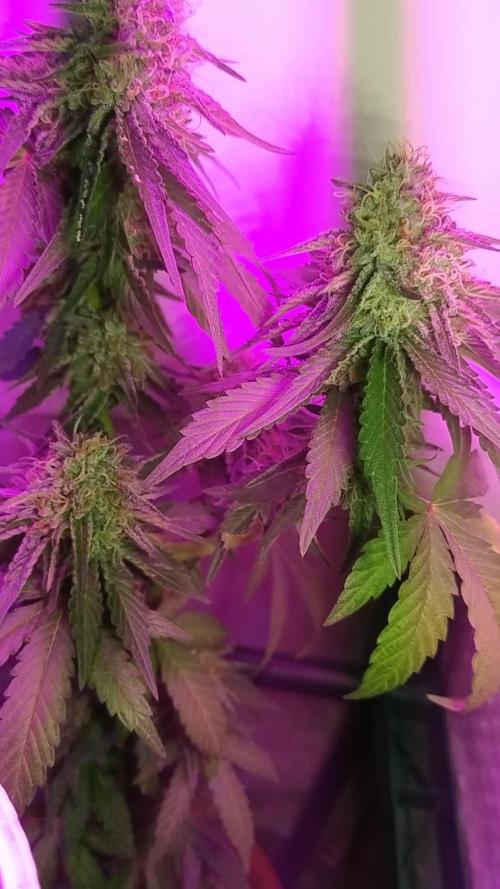
Both phenotypes are beautiful, the Pehno 1 is of course the more beautiful due to its red color 😍.
Both smell really delicious 😃.
Now to the weekly overview.
Days of flowering 42
Since the water was only poured on day 41, both were only checked for their health today.
Flowering day 43
Today both were poured with 1 l each, completely without additives as they should use up their remaining nutrients :-).
Flowering day 44
The tent was cleaned and the humidifier refilled.
Flowering day 45
Today both were checked for health and sprayed.
Flowering day 46
Today everything in the tent was tested for functionality (fans, etc.).
The humidifier has been refilled.
Flowering day 47
Again today it was poured with 1.2 l each time, and the tent was cleaned.
Flowering day 48
Both plants were checked to see how wide their trichomes were (70% milky, 20% clear and 10% amber).
The plants are really extremely fast 👍.
Everything was cleaned again and the humidifier was filled.
That was it pushed with this week, and I have to say the Fast Version lives up to its name 😳😃.
I wish you all a lot of fun updating these beautiful phenotypes, stay healthy and let it grow 🙏🏻🍀
You can buy this Strain at :
https://sweetseeds.es/de/red-mandarine-f1-fast-version/
Type:
Red Mandarine F1 Fast Version
☝️🏼
Genetics:
Red Poison Auto®️ (SWS39)
X
Tangie (California Orange x Hybrid Skunk)
👍
Vega lamp:
2 x Todogrow Led
Quantum Board 100 W
💡
Bloom Lamp :
2 x Todogrow Led
Cxb 3590 COB 3500 K 205W
💡💡☝️🏼
Soil :
Canna Coco Professional +
☝️🏼
Fertilizer:
Green House Powder Feeding
☝️🏼🌱
Water:
Osmosis water mixed with normal water (24 hours stale that the chlorine evaporates) to 0.2 EC. Add Cal / Mag to 0.4 Ec Ph with Organic Ph - to 5.5 - 5.8 .



Likes
2
Share


@Grandillustrator
Follow
This week the plant finally gets the tent to itself and I began training for a wider canopy , poor girl looks tortured lol in this week I notice a mutation on one of the branches fasciation which I show in the video I’m unsure as what to do because in the week because I want to switch the plant very soon to flower and don’t want to waste a branch but I kinda wanted to see what the buds would look like if I left i ultimately decided to chop it

Likes
132
Share


@Crashoverite
Follow
Hi all👨🌾👋
Welcome to my another Fastbuds journey.This time strain of choice - Tropicana Cookies Auto. One of the strongest and tastiest autoflowers available. Just couldn't resist to give a go 😁🤤
Week 0
Germination
Jan 25-Feb 1
Germination in propagator. beans landed directly in substrate within 5 min after opening the package. Started believing that all methods like glass water, paper towel etc. are really useful if seeds are old, stored incorrectly or coming from shady seedbank. If seeds are from trusted source with strong genetics wouldn't be bother trying anything else than planting your beans directly to substrate.
So far 100% success
This time both baby girls started showing their heads within 2 days after planting seeds.
Jan 25
Seeds planted. Propagator at 20 degrees and 90% humidity.
Jan 27
Girls popped through the soil. Warm welcome to Kitana and Aphrodite 😍
Jan 28-30
Both babies growing at the same pace.
Jan 31
Time to move from this baby size propagator to a better and more comfortable place.
Feb 1
End of germination week. All went painlessly and successfully.
I am super excited for whats to come 😁
Hopefully this will be another easy and successful ride.
Much appreciate all your likes, follows and comments. 🙏💚❤️💜
Peace and love brothers and sisters 👨🌾✌️💚
Stay tuned for more updates
Links
https://2fast4buds.com/seeds/tropicana-cookies-auto


Likes
6
Share


@Mr_nugs_lover_David
Follow
I love this strain to pieces man! Another high quality genetic by original sensible seeds, very very hard dense nuggets like rocks, sticky, stinky as hell, high quality, as always by original sensible seeds. 100% organic grown

Likes
60
Share


@BOMbolenath
Follow
The plant is developing well despite the high temperature.
During the week the weather got better, the plant is growing well.

Likes
79
Share


@bioaccessory
Follow
Как я и предполагал, разница между харвестами "медицины" и лемонада составила почти месяц, но цикл все-равно получился интересным, буду и дальше тестировать генетику FastBuds.
Спасибо всем, кто интересовался этим дневником, дальше будет еще интереснее, оставайтесь на связи!💚💛❤️
Likes
22
Share


@EhJay
Follow
Buds are coming along nicely, they started off with a not so appealing smell but eventually started to smell very sweet.
Increased dosage for increased blooming and ripening.
Missed update for day 49 but vids from previous day makes up for it.
Side note, I created a homemade Co2 bag with ingredients that is easily available and affordable. I don't think I let is have an effect on my buds but it sure did smell awful. After the 5th day, I got rid of it.

Likes
2
Share


@cafer
Follow
Today is the day my big bud seeds come out of the soil, they have all started to take root in 25 liters of soil without any problems

Likes
26
Share


@KeiserOrganics
Follow
Wow they are really going strong. They are getting really bushy. I am still doing LST and I am still feeding the fish twice a day. They are all developing multiple tops. I will begin some defoliation this week. I posted a video this time. that other plant in the video is a pineapple.
Likes
13
Share


@FlavoursUk
Follow
New week, new growth. So we have done another defoliation to allow the lower shoots to be exposed to the lights which equal to a better yield come flower time, they always need a day or 2 recover after being put under any stress, especially if its an extreme amount of leaves being taken off.
They were also lollipoped to clear up and messy under growth and to improve airflow under the canopy. I also took clones from each of these.
Paying close attention to the EC and pH. Increasing and decreasing as and when I need to going off what the plants show me.
Close to flower now. A few days to go!
Stay tuned and feel free to follow my instagram and youtube channel for a closer look. Peace x
